Archive for Interviews & Appreciations

Letter from a Former Teacher

It’s something I don’t do enough: say thank you, say I remember you. But recently I recalled a former teacher, Mr. Mullen, whom I studied under for two art classes at the College of Oneonta. I was an English major, but the approach I took at the time was to take as many classes as possible, with an emphasis on the best teachers regardless of discipline. That’s how I found Mr. Mullen, who taught a variety of art survey and appreciation courses in addition to studio art classes for practicing artists.

Original digital drawing by James Mullen -- and the cover of the card he sent to me.

Original digital drawing by James Mullen — and the cover of the card he sent to me.

I really liked and admired this man. I’d see him around campus and he always had time for me. I’d stop by his office to talk. I can still remember the thrill I felt when he suggested we go for a cup of coffee, as if we were equals. At the time I’d been writing sporadically for the school newspaper — freelance style, where the editor basically printed whatever I gave him, without deadlines — and Mr. Mullen was always interested and thoughtful in his comments. He liked my righteous indignation, I guess. We talked about stuff. And, obviously, clearly, he cared about me. I’m still grateful for that.

I located Mr. Mullen a few years back. He’s retired now, living in Endwell, NY, of all places. We joked about that, how I supposed he had picked the perfect town for his retirement years. Let’s hope so, right? Anyway, I hadn’t written to him in a while until recently when, out of the blue, I popped a book in an envelope and included a brief note. I’m sure I told him how well I remember his kindess, and what a great teacher he was, and, well, thank you, again.

Still a practicing artist who favors working in the miniature, Mr. Mullen replied with a card of his own, a paean of sorts to Wegman’s, and to friendship.

Inside it read:

Mullen 2


I think that card tells you something about Jim Mullen and the graceful, dignified way he walks through life. He is a good man and, therefore, a treasure.

I don’t often do the right thing. Or at least, not often enough. But I’m trying, in my old age, to do a little bit better in terms of kindness and generosity. And what I keep learning, over and over, is that every time I give, I invariably receive more in return.

I wrote an old teacher a letter. A note of thanks. And I’m here today to suggest to you that maybe you should consider trying it yourself, if you haven’t already. Send that note. Say thank you, say I remember. I promise that you’ll be glad you did.

In his response to me, Mr. Mullen recalled a book I had sent him a few years back, a Young Adult novel titled BEFORE YOU GO. I hesitated about including a section of his handwritten response here in blogland, but in the end I think there’s value in sharing it, if only to underscore that it meant something to him.

Teachers’ hearts are made glad to be remembered. And now I have a new goal in life: to have a cup of rotisserie chicken noodle soup in Wegman’s with good, old Mr. Mullen. Wouldn’t that be something?


Mullen 3

What the Hey?! Some Guy Named “James Preller” Is Featured in an Interview at Kirkus — and It’s Pretty Good!

Tomorrow is Halloween, and author James Preller wants to scare your children—the safe, exhilarating type of scare, that is, which comes from a well-constructed set of spooky stories just for the younger set. He’s been doing this not just on Halloween but all during the year with Scary Tales, his chapter book series of ghost stories, launched last year and illustrated by Iacopo Bruno.Chilling and thrilling and very often spine-tingling, the series offers up serious page-turners for students who enjoy reading frightening tales while on the edge of their seats. It’s a far cry from Preller’s Jigsaw Jones series of chapter books, which debuted in 1998, the beloved fictional detective stories for children that are still circulating in libraries. The latest and fifth book in the Scary Tales series, The One-Eyed Doll, was just released. It brings readers hidden treasures, deserted houses, and a creepy one-eyed doll, who moves and tells stories. Needless to say, it’s a good fit for Halloween—or, really, any time of year.Next year, Preller will also see the release of a middle-grade novel, one that follows 2009’s Bystander, which the Kirkusreview called “eminently discussable as a middle-school read-aloud.” The Fall, as you’ll read below, addresses bullying, but not for the sake of jumping on the bullying bandwagon. That’s to say that as soon as many schools kicked off anti-bullying crusades in recent years, we suddenly saw a flock of books about bullying in the realm of children’s literature. But Preller isn’t one for the “bully” label.Let’s find out why.
–
The Scary Tales series started in 2013, yes? How much fun has it been to scare the pants off of readers?
–
 
OneEyedDoll_cvr_lorezWriting “scary” has been liberating. A blast. In the past, I’ve mostly written realistic fiction. But for these stories I’ve tapped into a different sort of imagination, what I think of as the unpossible. The trick is that once you accept that one impossible element—a zombie or a ghost in the mirror—then the story plays out in a straightforward manner.All storytelling has its backbone in realistic fiction.
–
So many kids, even at a surprisingly young age, are eager to read scary stories. I tried to fill that gap. “Scary” thrills them. It makes their hearts beat faster. Yet I say to students, “I’m sorry, but nobody gets murdered in these books. There are no heads chopped off. No gore.” To me, the great sentence is: The door knob slowly, slowly turned. That delicious moment of anticipation, of danger climbing the stairs. I’ve tried to provide those chills, while still resolving each book in a safe way.
–
You do a lot of school visits, as I understand it. What do you see the very best teachers and librarians doing (best practices, if you will) that really get children fired up about reading? 
–
In its essence, teaching is enthusiasm transferred. The best educators seem to do that naturally—the excitement, the love of discovery. It leaks into everything they do. I think it’s about a teacher’s prevailing attitude, more than any specific activity.
–
Speaking of school visits, I assume you still visit schools to discuss Bystander, especially given the subject matter. How have middle-schoolers responded to that book in school visits? 
–
DOLL_Interiors_07The response to Bystander has been incredible—and humbling. Many middle schools have used it as their “One School, One Book” community reads, which is such an honor.I attempted to write a lively, unsentimental, informed, fast-paced story. I hope that I’ve given readers something to think about, while leaving them to draw their own conclusions. I didn’t write a pamphlet, 10 steps to bully-proof your school. Robert McKee, in his book Story, says that stories are “equipment for living.” I believe in the power of literature to help us experience empathy.
–
What’s next for you? Am I right that there’s a new Scary Tales coming out in 2015, as well as a new novel? Working on anything else you’re allowed to discuss now? 
–
I have an ambitious hardcover coming out next year, titled The Fall (Macmillan, Fall 2015), in which I return to some of the themes first explored in Bystander. We’ve seen “the bully” become this vilified subcreature, and in most cases I don’t think that’s fair or accurate. Bullying is a verb, a behavior, not a label we can stick on people to define them—especially when we are talking about children. Walt Whitman wrote, “I am large, I contain multitudes.”The book is told in a journal format from the perspective of a boy who has participated in bullying—with tragic results—and now he’s got to own it. A good kid, I think, who failed to be his best self. To my surprise, the book ended up as almost a meditation on forgiveness, that most difficult of things. The opening sentence reads:

“Two weeks before Morgan Mallen threw herself off the water tower, I might have sent a message to her social media page that read, ‘Just die! die! die! No one cares about you anyway! (I’m just saying: It could have been me.)”

I was guided throughout my writing by a powerful quote from the great lawyer and activist Bryan Stevenson: “I’ve come to understand and to believe that each of us is more than the worst thing we’ve ever done.”

THE ONE-EYED DOLL. Copyright © 2014 by James Preller. Illustrations copyright © 2014 by Iacopo Bruno and used by permission of the publisher, Feiwel & Friends, New York. 

Julie Danielson (Jules) conducts interviews and features of authors and illustrators at Seven Impossible Things Before Breakfast, a children’s literature blog primarily focused on illustration and picture books.

How to Tip the Chambermaid

Over the past five years, I’ve traveled a lot to visit schools in far-flung places: Oklahoma, California, Texas, Florida, Michigan, Virginia, South Carolina, Massachusetts, etc. Mostly I stay in the NY/NJ area. But regardless, the basic fact remains: I’m not at home. I’m often alone, away from my family, unwrapping a plastic cup from inside a plastic wrapper. Sigh.

51LvdCXV+dL._SY344_BO1,204,203,200_One of life’s little puzzles is how to properly tip the chambermaid. For the longest time, I was never quite sure. So I faked it, without much rhyme or reason. Last year I met author Kate Klise in a hotel in Rye, NY. We share the same tour administrator, the awesome Kerri Kunkel McPhail, who organizes and coordinates our school visits in the greater Westchester area and beyond. It’s a rare treat to meet real, live authors, especially since we spend most of our working lives alone, tapping out words on a keyboard. I quickly learned Kate is a hugely talented author, dedicated and wise to the ways of the world, and a kind person, too. I liked her a lot.

Sitting in the lobby, we hit upon the topic of hotel living. I must have said something about tipping the chambermaid, because Kate gave me a suggestion that I’ve used in every hotel stay since.

I leave $5 each morning. In the past, I’d often waited for the end of my stay, but I realized that it might cause an unfair distribution. A different hotel maid might be working that day. Better to leave a smaller amount daily. Five seems like the right number to me, though I didn’t arrive at that figure scientifically. Here’s where Kate told me her approach. She said, “I always leave a little thank you note.”

2698349-1“You do?”

“Yes. It’s such a tough job — think about it. I feel like the least I can do is just write a short note of appreciation.”

Nice, right?

It immediately made sense to me. After all, that’s all anybody ever wants in this life. Some basic recognition, a note of appreciation. The tip is one thing, certainly, but taking one minute for a quick note brings it to a higher level.

Now every morning in a hotel before I’m rushing out for a day’s work, I quickly grab a piece of paper, write “THANK YOU!” or some variation, and leave a tip.

And every time, I feel good about leaving behind a little extra kindness.

And last week, for the first time, I got a response . . . with three exclamation marks.

photo(3)

Reading “Danny the Champion of the World”: And Wonderful It Was

I guess it’s true of most readers. We have these embarrassing gaps in our reading lives, all those books we didn’t get to, the awful holes we hope to one day fill. It’s an impossible task, a job (and a joy) that can never be completed.

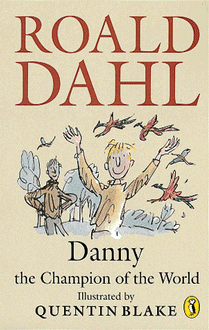
To that end, I’m currently reading Roald Dahl’s Danny the Champion of the World.

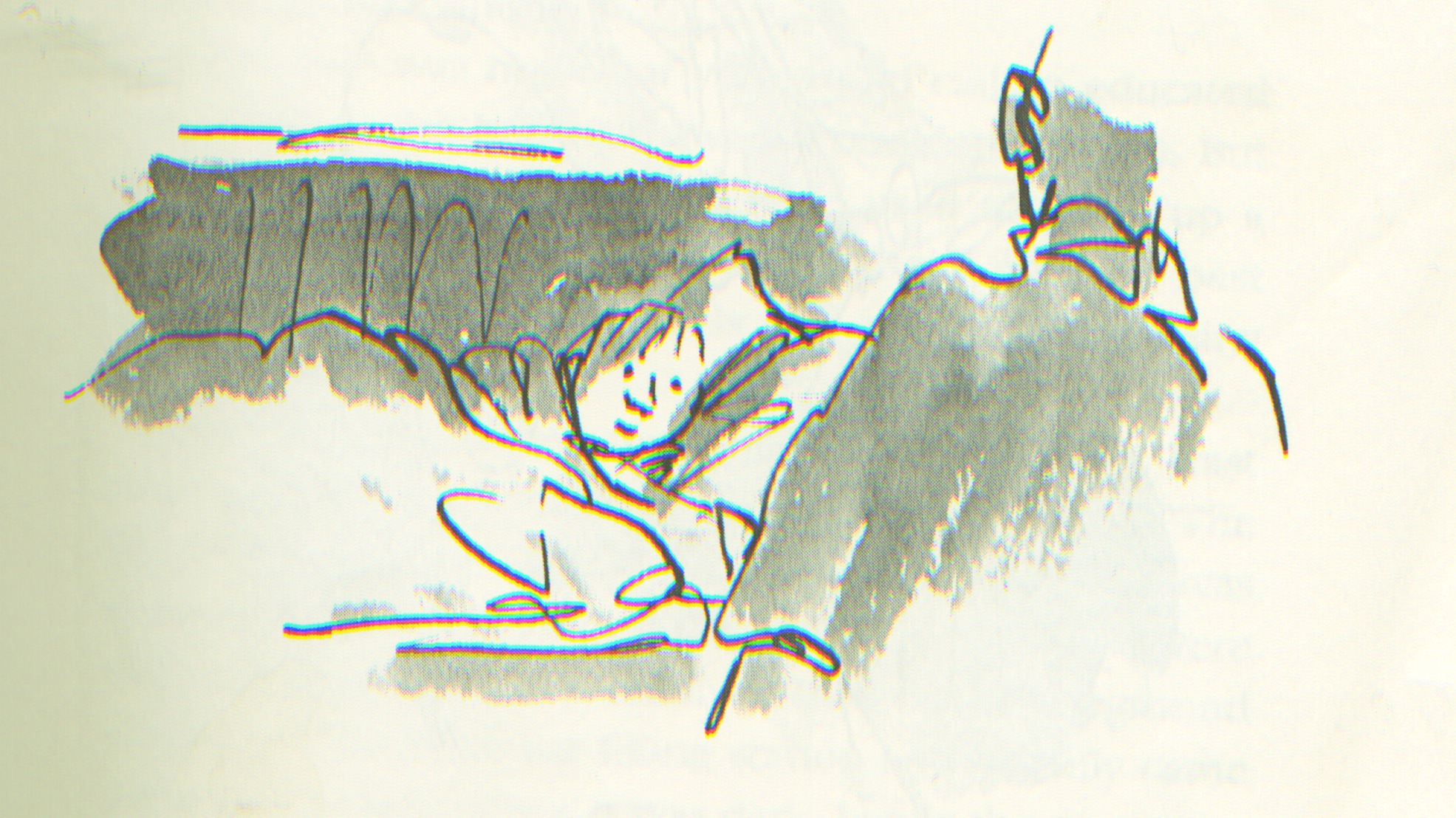
I haven’t finished it yet, and I’m disinclined to offer up a review. But I wanted to share a few thoughts, beginning with this incredible illustration by Quentin Blake.


Dahl


I keep returning to that page, staring at that picture. Just a few simple lines that capture such depth of feeling. There it all is, being a kid, looking up at a parent with love and wonder while snuggled up warm in bed. Two dots for eyes — two dots! — and yet they seem to express the essence of that relationship. The father registers only as a looming presence without detail, like a great tree in a forest. He is, simply, there. A force of nature and comfort. It’s amazing, I’m stunned by it, in awe of it. So that sums up an important part of today’s blog.

Wow: Quentin Blake.

Then there’s the storytelling of Mr. Dahl, which is a gift I’ll never have. The man tells stories. Whoppers. But here, today, I want to focus on Dahl’s writing style. I admire the clarity and directness. I’m also charmed by the Englishness — the strangeness to my American ears, the weird things they happily eat, the peculiar names of things — where every detail seems just a little other-worldly, even in a fairly straight-ahead, naturalistic novel such as this one. This is the distance of time and place. A different world, yet still familiar.

Here’s the paragraph that went before the illustration above. I keep reading it over and over again. Now I get to type it, feeling like a weekend musician at home with a guitar banging out a Beatles tune, channeling that great artistic beauty through my fingertips (I love typing out great passages from books):

I really loved living in that gypsy caravan. I loved it especially in the evenings when I was tucked up in my bunk and my father was telling stories. The kerosene lamp was turned low, and I could see lumps of wood glowing red-hot in the old stove, and wonderful it was to be lying there snug and warm in my bunk in that little room. Most wonderful of all was the feeling that when I went to sleep, my father would still be there, very close to me, sitting in his chair by the fire, or lying in the bunk above my own.

That paragraph, to me, is absolutely perfect. The writing is direct, specific, concrete (not abstract), interesting (lumps of wood) and for the most part, quite plain. I really loved living in that gypsy caravan. Few would claim that as an example of great writing — except for the obvious fact that, wow, that’s great writing. The absence of flash. An arrow doing its swift work, slicing to the next sentence.

danncover3The only tricky moment in this paragraph, where the language uplifts and surprises us, giving the reader temporary pause, occurs in that more elaborate third sentence, which was perfectly set-up by the direct predicate-verb structure of the previous two sentences. I really loved, and, I loved. Which leads to this: The kerosene lamp was turned low, and I could see lumps of wood glowing red-hot in the old stove, and wonderful it was to by lying there snug and warm in my bunk in that little room.

You heard that, right?

And wonderful it was.

Again, all I’ve got is wow. There’s so much there, the essence of being loved, of feeling secure, of being a child safe from harm, snug and warm. Can writing really do that? It feels like a small miracle. Is this why I love books?

And it all happens on page 7.

Reading as a Kid: A Nod to Kurt Vonnegut in NIGHTMARELAND


the-sirens-of-titan


“A purpose of human life,

no matter who is controlling it,

is to love whoever is around to be loved.” 

― Kurt Vonnegut, The Sirens of Titan


It’s something I started doing in the Jigsaw Jones series, so it’s nearly a 20-year-old tradition. I make small references to real books in my fictional novels. There’s no great reason for it, and as far as I know, nobody cares one way or the other. It’s just something I do to please myself. A tip of the hat.

In Scary Tales #4: Nightmareland, I throw in a reference to an old favorite, The Sirens of Titan by Kurt Vonnegut. It happens in the first chapter. A boy, Aaron, is about to make an ill-fated purchase at a video game store.

And here we go, from page 6:

nightmareland_cvr_lorezA black-haired girl with dark eye makeup sat at the counter. She hunched forward with her feet tucked under her chair, reading from an old paperback called The Sirens of Titan.

“Is this game any good?” Aaron asked. “I never heard of it.”

The girl wore clunky bracelets and silver rings on most of her fingers. She glanced at Aaron and shrugged. “Sorry, I just work here. Those games are all the same to me.”

And that’s it. Aaron buys the video game and our plot soon thickens.

As I’ve said elsewhere, I have no childhood memory of my parents reading to me. And I mean, ever reading to me. It must have happened, surely, but just as surely, it could not have been too often. Or I’d remember.

I was the youngest of seven, my father worked a lot, all those mouths to feed, and I don’t think it was something we did. I’m not complaining. Things were different in those days, and seven kids is a handful. I got the book bug — at least those first bites that ultimately led to the more serious infection (or should I say, affliction) — simply by growing up surrounded by readers. My brothers read, my sisters read, particularly Jean, the 6th oldest and closest in age to me; Jean always, always had a book. I think of her reading Tom Robbins and Richard Brautigan, though of course she read everything, and voraciously.

illustratedmanNaturally I became accustomed to the idea that reading was a source of pleasure. It was my destiny; someday I’d get a crack at those same books. My brother Billy, whom I worshipped at that time, favored science fiction. He read the “Dune” series, and Bradbury’s The Illustrated Man and, of course, Vonnegut. I think all my brothers read Vonnegut in the 70’s.

Strangely, I never got around to Sirens until I was in college, taking a class in American Literature while I was attending school in — wait for it — Nottingham, England. Because that made no sense at all! I even wrote a paper about it. I doubt the paper was any good. If you are going to spend time abroad, the last thing you want to do is waste it by studying. There was too much to learn, too many people to meet, too much wild fun to pursue.

But I did read Sirens while I was in England. And today I’m glad to tell you that I gave that book a nod in Nightmareland.