Archive for Interviews & Appreciations

Check Out My Interview

Over at Feiwel and Friends, they are celebrating the publication of Mighty Casey like it’s 1999. They are even blogging about it. Please click the link because Matthew Cordell just interviewed . . . me! Their blog is pretty great even without us (imagine that!) because other F & F  authors and illustrators contribute often, most recently John Coy and Maria von Lieshout.

Here’s two brief excerpts from that longer piece.

—–

MC: I can assume that many writers, like many illustrators, are particular about how they work and where they work. Where do you like to do your writing? And what are your tools? The pen, the old-timey typewriter, word processor, or personal computer?

JP: Matt! Let me begin by saying — and since this is your first interview, no one would expect you to know this, but — you don’t actually have to sit on my lap during an interview. It’s not like a Santa thing.

MC: Whoops!

—–

MC: What do you see are the major differences in crafting picture books vs. novels? With the novel format, you generally have the space to open up and write more at length. Less confined, I’d imagine, than picture books, where you really have to choose words wisely. Do you prefer writing one over another?

JP: Well, there are two things at play here: picture books are dependent upon illustrations, so the writer is already in a strange position. With novels, you have more control over the finished product. Secondly, novels probably better suit my sensibilities. I find that I can’t force a picture book, which tends to be concept-driven and needs to perfectly distill an experience to its essence. With a novel, you have more opportunity to wander in and out of different rooms, and I think that better reflects how my mind natively operates.

James Preller Interviews . . . Author Karen Roosa

A while back, I stopped by Julie Fortenberry’s most excellent blog and noticed the cover of her new book, Pippa at the Parade. The author’s name was Karen Roosa.

And I thought, I wonder if that’s my Karen Roosa? My Karen was an old stall buddy from Scholastic, back in the mid-to-late 1980s. We were copywriters together, working on book clubs and catalogs. Neighbors, we shared a cubicle wall, but had lost touch twenty years ago. So I contacted Julie, who kindly passed along Karen’s email, and here we are: She’s a big-shot famous author and I knew her when!

– – – – –

Karen, it’s so nice to catch up with you. You must be excited about your new picture book, Pippa at the Parade. It takes a long time, doesn’t it?

It is great catching up with you too, Jimmy.   It really does take a long time to see a picture book published. I had sent a different manuscript to Boyds Mills Press in late 2006, and got a call from the editor saying that story wasn’t quite right for them, but to send others.  They were looking for stories that would appeal to very young children.

Actually, I’ve heard that picture books are trending younger these days; publishers seem to be looking for titles that will appeal to the preschool crowd. We’re seeing less of the text-heavy, William Steig-type picture book.

Yes, I think that’s true — picture books for the very young child. So I sent a collection of summer poems and the Pippa manuscript, and he replied about a month later in early 2007 that they’d like to publish Pippa at the Parade. My part was essentially done right then, but an illustrator needed to be chosen, the artwork completed, and the book printed. Two years, or even longer, is fairly common.

Tell us a little bit about the inspiration for the book.

I was trying to write a “musical” story, something rhythmical and fun to read aloud, but nothing seemed to work. Once I started thinking about feeling the rhythm through the sound of the instruments, the idea of a little girl at a parade came to me.

I get the sense that your first love is poetry.

I do love poetry, reading and writing it. Trying to pare language down to its essence.

Did you have any input into the illustrations? How did that relationship with artist Julie Fortenberry work? And be careful, Julie might be reading this.

I didn’t have any input, which is not unusual. My editor fortunately chose Julie Fortenberry, a fine artist and illustrator.  I saw her work online and really liked her style.  Then I just had to wait to see the finished illustrations.

What was it like when you finally saw the illustrations? It’s an exciting but also a frightening moment.

It was very exciting. The art director at Boyds Mills sent me a PDF last summer to check the text one last time.  It was then that I could see the illustrations for the first time and I really loved them, very whimsical and playful.  They fit the story perfectly. It was a thrill to receive the finished book in the mail.

I see you already got a great review from Kirkus Reviews. And I quote in part:

“The marching band booms by and the onomatopoeic text enlivens the rhythm, “Clapping hands! / Clappity-clap. / Band is coming! / Tippity-tap.” As each section of the parade passes by Pippa is enchanted by the many instruments, which include trumpets, trombones and drums. First the gymnasts flip past, then the ten-foot-tall man on stilts . . . Fortenberry’s rippling illustrations, at once serenely indistinct and lovingly detailed, combine misty, milky hues with thick, robust pastels, presenting a celebration of excitement and indulgence that can only be fully appreciated in childhood.”

Pretty nice, Karen — you too, Julia, and thanks for the use of your illustrations. Personally, I’m frightened by reviews.

It is a little scary. But I have to look. And by the way, congratulations on Six Innings being named an ALA Notable Book — very exciting.

Thanks. I’m sorry that I missed your first book when it came out, Beach Day, illustrated by Maggie Smith. You must have been thrilled when it was named a Bank Street College of Education Best Children’s Book of the Year. Now it looks like you are on a roll. What’s next?

I have a couple of picture book manuscripts that I’m sending out, and I’ve always liked the idea of trying a longer story for older children.  Plus maybe poetry, short stories . . .

Well, obviously, the big bucks are in poetry.

Yes, of course!

We shared a cubicle wall for at least a few years back in the way back, the late 80’s, when we both worked as copywriters for Scholastic Book Clubs. Was I good neighbor? I tried to keep the music down when I had large parties. You never called the cops.

Those were good days at Scholastic. The 80s!

Let’s pause here for a salute to the decade . . . and yes, I wore a black Members Only jacket. Their tagline: “When you put it on, something happens.”

A  touching tribute, Jimmy. That job at Scholastic was one of the best ever.  It was great being cubicle neighbors with you. I actually do remember a lot of parties on our floor.

As one of the few heterosexual males in the department, I used to joke with Craig Walker that I felt personally responsible for all the sexual tension in the building. It was pretty much up to me, Greg Holch, and the mail room guys. The pressure on us was enormous. I’d come home from work exhausted.

That’s funny, Jimmy, but you might be exaggerating a little.

Never! Eva Moore was the editor of Lucky Book Club back in those days. Each month, we had to read and describe more than 30 books for both teachers and young readers. It was quite an education, wasn’t it?

You’d get your box of books from Craig Walker for Seesaw Book Club, I’d get mine for Lucky Book Club, and I remember quite a few conversations about Curious George and Clifford the Big Red Dog.

I remember getting advice from Ed Monagle, the Chief Financial Officer for Scholastic at the time. Ed was a money guy, not necessarily a book guy. So one day he tells me, in his avuncular way, “Jimmy, you should really make up one of these popular characters. Look at Clifford the Big Red Dog. He’s a dog. He’s big. And he’s red. How hard can that be?”

I remember Ed and can hear him saying that. If only it were that easy!

Yeah, I told him I’d get right on it.

It was great working with Eva, and reading all of those books really was a terrific education in children’s literature.

Not to mention posters of cute kittens.

I recall many cute kitten posters in my box . . . and also glow-in-the-dark Halloween stickers.

Do you have any favorite memories from those days? I remember writing the first hardcover catalog, when Jean Feiwel launched the line back in 1986 or so. It had four books, total. Harry Mazur, Norma Fox Mazur, Julian Thompson, and I forget the other book, I think it was some kind of “stay away from strangers” type book. Anyway, we came up with an awful catalog cover that Jean absolutely (and correctly) hated. A simpler time.

I remember meeting Joanna Cole because the Magic School Bus was really big at that time, Ann M. Martin when she came in for the Babysitters Club, and a lunch with Norman Bridwell.  I still have the big red plush Clifford from our table that day.  It was a lot of fun just being immersed in children’s books all day with others who had the same interests.  And the camaraderie was great.

There’s a long gap from after you left children’s publishing to when you published Beach Day. It’s like the missing seventeen-and-a-half minutes of the Watergate Tapes – except it’s like seventeen years. What have you been up to –- and why or how did you decide to get back into it?

I left the city in the early 90’s and moved to Pennsylvania.  My children were very young and I wanted to try freelance writing. I’d send out manuscripts, but had no luck for a long time.

Many others have been defeated when faced with the same situation. What kept you going? Any advice?

I think it’s important to not give up. You never know when your story might match an editor’s tastes and needs for their list at that particular moment. I still have a huge stack of rejection letters. Occasionally a publisher would jot, “Send us more,” so I kept at it. One day I received a letter from an editor asking if I’d be willing to make a few changes in a manuscript that I’d sent; after tweaking the text a bit back and forth, Beach Day was published.

Did you celebrate?

I jumped up and down on the kitchen floor.

Okay, Lightning Round. Favorite children’s books?

Charlotte’s Web by E.B. White, From the Mixed-Up Files of Mrs. Basil E. Frankweiler by E.L. Konigsburg, A Wrinkle in Time by Madeleine L’Engle, and the books of Kevin Henkes, Kate DiCamillo, and Mo Willems.

Kevin Henkes is just spectacular. I really admire his work. Such a talent, almost in an Old School tradition. Mo Willems is great, too. I met Kate a couple of times, I liked her a lot, very down-to-earth. She has a wonderful essay on her website, titled “On Writing.” You have to read it. Go on, I’ll wait.

Okay, I just finished. That is fantastic. It is all about really seeing, then doing the work of writing. Sitting down to write. Rewriting. And then somehow mysteriously having those ordinary moments undergo a magical transformation on the page.

What about favorite adult books?

Atonement by Ian McEwan, The Collected Stories of Amy Hempel, Savage Beauty by Nancy Milford, The Secret History by Donna Tartt, the poetry of Mary Oliver, Basho, and William Carlos Williams.

I’m a huge fan all three poets, though moreso Basho and Williams. My favorite Basho line is, “The journey itself is home.”

Last question: Favorite movies?

The Crying Game, Pan’s Labyrinth, Once, The Graduate, The Ice Storm.

Thanks, Karen. I’m really glad to reconnect with you after all these years. I wish you all the success in the world, you deserve it. And as a parting gift, I was going to give you a plush version of Clifford the Big Red Dog, but you already have it. So I guess I just saved eight bucks. Sweet!

As a consolation prize, please enjoy this video of Mr. T’s fashion tips — “Hey, everybody got to wear clothes!” — and be glad we survived the 80’s with (most of) our dignity intact. (The link works, but it might take a double click.)

You need to a flashplayer enabled browser to view this YouTube video

James Preller Interviews . . . Jack Rightmyer, author of A Funny Thing About Teaching

I recently picked up Jack Rightmyer’s book, A Funny Thing About Teaching. The subhead/tagline reads: Connecting with Kids Through Laughter . . . and Other Pointers for New Teachers.

A secondary teacher since 1980, Jack currently teaches seventh grade English at Bethlehem Middle School in Delmar, New York. Yes, that’s around the corner from me. Jack is also a book reviewer for a Schenectady newspaper, The Daily Gazette. Though we have some mutual friends, Jack and I have only spoken once in real life (and it was fabulous).

Not to belabor a point I’ve made before, but as a reader I often seek out books that will help me as a writer. Reading Jack’s book inspired me to totally rethink a character in my new (untitled) book. I initially felt that the story needed an unsympathetic teacher, someone who was unable to deal with a difficult student. But after reading Something Funny About Teaching, I saw that teacher in a whole new light. He became human. And I felt the story gain heft, and truth, and I watched as it turned like a big boat in troubled water.

Anyway, it’s a Snow Day here in the Great Northeast. Here’s Jack walking up the path now . . .

Day off today, huh, Jack? Life’s rough. Are you familiar with any snow day superstitions? Did you wear your pajamas backwards last night?

I don’t do that pajama thing, but I do pretend there’s no storm coming and I make my lunch and go to bed at the usual time. That way if I get a day off it’s a real treat!

Congratulations on publishing your first book, A Funny Thing About Teaching. I really enjoyed it. I’ve been doing some research about, for lack of a better term, “class clowns.” You know, those kids who fall into the “bright but challenging” category. And I came across something that reminded me of you. The writer advised teachers that rather than try to squelch the “bad” behavior, they should go with theirs guts — and laugh.

It took me a while to learn this, but that’s true. Most of the ‘class clowns’ are usually pretty funny. In fact, I was a class clown most of the time when I was in school. It took me a while to feel confidant that they weren’t really laughing at me, but at the atmosphere and restrictions of school itself. In 29 years of teaching I’ve encountered maybe 5 kids that seemed scary and dangerous to me. Kids are generally energetic and fun and why should teachers try to stop that. We should use that to teach our classes. It also helped that just down the hall from me was a teacher, Paul O’Brien, who modeled how to teach and have fun at the same time. Kids never seemed to give him a hard time, and I used to sit in his class and watch how he did that, how he juggled the content with the humor. He was a magician.

In some ways, I see you passing on that torch with this book. Not that you come off like Charlton Heston coming down from the mountain . . .

. . . but that in an informal, friendly way you are mentoring, passing along some of the things you’ve learned as a teacher.

I hope so. I also hope that my students see that I’m having so much fun teaching they might want to try this when they have to get a real job.

When you first began your career, you were anxious and insecure. You took the task very seriously. In other words, you were scared out of your socks.

That’s right. I thought I was supposed to be some tough, no-nonsense teacher, and I hated every second of it. In the afternoons though I coached the cross country team and was able to laugh and joke and coach the runners at the same time. I’ll never forget one of the runners saying to me, “Mr. Rightmyer, you’re so much fun at practice. How come you don’t teach this way?” That line really got to me.

Tell me about that advice you got in the teacher’s lounge, “Don’t smile until Christmas.”

I think a lot of the veteran teachers saw me as this young twenty-two-year old kid who was going to get chewed up and spit out by the high school classes. I actually grew a mustache the summer before I began teaching so I could look a bit older.

Oh, that’s hysterical. Nobody would dare mess with The Mustache! Was it one of those baseball mustaches, you know, nine hairs on each side? Or were you like some studly Keith Hernandez?

A photo is worth a thousand words . . .

Good God, Jack! I just fell off my chair! Warn me next time you do that. That photo is so great, it should have its own website. Anyway, you were saying about the advice other teachers gave you . . .

These teachers cared about me. They wanted me to get off to a good start, and they felt I needed to come down hard on the students. Before my first class, some of these teachers got me so worked up I felt like I was going in as a prison guard and not as an English teacher.

The irony was that while you accomplished many of your disciplinary goals in the classroom, you discovered that you had made yourself miserable in the process. And the kids were bored out of their minds.

I was a fake. I hated everything about it. I hated being a tough guy. That has never been my personality, and the truth was, I could never be a tough guy. The tough kids saw through that right away.

Kids can spot a phony a mile away. If you aren’t real, they will eat you alive. I think it’s true with books, too.

And I was a definite phony. But the track kids liked me from the start because they knew who I really was. We’d go for eight mile runs and laugh the whole time. My runners were doing well, improving their times, winning meets, and most importantly we were having fun. All I needed to do was figure out how to do this in the classroom!

It was as if a light bulb went off and you decided, “Why not have fun?”

It occurred to me pretty quickly that I loved the coaching because it was fun, and the teaching had not been fun. When I taught I was uptight, nervous, and unsure of what I was doing.

But not every teacher can be, or should be, George Carlin. And honestly, reading your book, it wasn’t so much the humor that jumped out at me, but the importance of being true to yourself.

My job is to teach and not to be a comedian, but funny things happen all the time in the classroom, and if I’m relaxed and aware I’m able to see those things happening and I can usually use them to teach the class or at least energize and motivate my students.

While you give due credit to the central importance of delivering content in the classroom, you also spend a lot of time and effort on relationship-buildiing.

I teach seventh grade, and many of these kids aren’t so cute anymore. These are some difficult years for many of my students and I might be the only one that will really listen to them during the day. They’re not quite adults and not quite kids anymore, and I actually find them very amusing. I love their insights into the stories we read. I love how raw they can be. Most of them don’t have filters yet, and I think they know they’re safe to say things to me and I won’t get upset. Yes, the content is important, but connecting with them is just as important.

There’s a blog I enjoy reading, called Two Writing Teachers. These women are so dedicated and talented, I’m really impressed by them. One of them, Ruth Ayres, spoke to this issue the other day. Forgive me for quoting this at length, but it’s so right on:

“Sometimes we get caught up in having the perfect plan, the perfect lesson, the perfect unit, the perfect curriculum, and our students producing the perfect pieces. This isn’t what really matters. A middle school student, Jessica, reminded me of this.

I was simply walking to my office when I saw her in the hallway. She smiled and I said, “Hi Jessica.” Her response — “You remembered my name.” I smiled; I had been in her classroom for two days. Then she chatted with me about the trouble she was having with her draft — getting the meaning to come out. Later in the week I conferred with Jessica. We talked about focusing her poem and a bit more about her meaning. Friday afternoon Jessica saw me in the hall again, smiled, and waved. It struck me then. Jessica probably won’t remember the details of our writing conference in years to come. What she will remember, though, is that I cared about her. I cared enough to remember her name. I cared enough to sit down one on one and have a conversation with her. I cared enough to smile and wave good bye on a Friday afternoon.

Those are the things that really matter. The things we do to care enough for our students.”

That’s what it’s all about, and I wish more teachers knew that. I didn’t know that when I started teaching. All I knew was that my students were supposed to be quiet and doing work. Once I began to see them as REAL people that I actually cared about, that’s when they started to do some REAL work.

What about when humor gets out of hand? Aren’t you opening up a can of worms when you give everyone permission to yuck it up?

I explain early in the year the differences between appropriate and inappropriate humor, and I still have quite a few students who never get it.

Put-down humor? I still have trouble with it. And by the way, your ears are really stupid, Mr. Rightmyer.

I wish my ears were the problem. I usually get bald jokes from the kids.

Once I had a kid tell me in front of the entire class “Your fly is down.” I said, “There’s no way I’m gonna fall for that one.” And that’s when the entire class laughed. My fly actually was down and my shirt was even sticking out of my fly. You either laugh at that or quit your job and move to Canada.

I also mention that I like to laugh, but if we can’t settle down and get back to our lesson then we can’t have the freedom to laugh on occasion. The kids get it, and most of them know when enough is enough. I’ve been teaching twenty-two years at Bethlehem, and I haven’t sent anyone out of the room for misbehavior in at least twenty years. I think the kids have learned to respect me and when I say, “Enough,” they don’t push the envelope.

In the book, you quote an article, “Discipline Zingers,” by John O’Neil (NEA Today, January, 2004). The author made an interesting point: “Kids today have the same needs as always – to be accepted, competent, respected – but they seem needier than ever.” Has that been your experience?

Yes, I think kids are needier today. So many families are in distress. So many families are broken up and dysfunctional, and so many kids today don’t know how to form relationships. They’re plugged into their iPods and playing video games. But at their core, all kids are still very much the same from one generation to another.

Overall, how did the publishing experience go for you? Obviously, as is true for all writers, now you are fabulously wealthy like J.K. Rowling.

I was lucky to find this publisher. My book isn’t quite a memoir and it’s not quite a teacher resource book either. It’s a small company in Colorado, Cottonwood Press, but they put together nice books. I haven’t made a lot of money, but that was never what it was all about for me. I just love the idea of writing as a way to reflect on something and think through a problem. I just finished another book about how I wanted to be a writer but ended up as a teacher. I had fun writing that one, too.

Wait up, hold on, you lost me. You think writing is . . . fun? What in sweet Lincoln’s mullet (gratuitous Anchorman reference) are you talking about?

Writing is more fun than correcting 120 essays. And I once had a job cleaning out sewers, writing is more fun than that!

Point taken. When will your new book be published? Will it have a title — or are you going for, like, a Beatles “White Album” effect?

I just finished my first draft and I’m calling it “Disturb the Universe: Write.” It’s another part-memoir and part “How To” book. I explain why I always liked to read and write as a kid, how I thought I’d one day be a famous journalist with Time Magazine, and how I ended up teaching at my old high school. I also give some advice about how to write and how to teach writing. Hopefully the book will have a few laughs and also some good advice in it. I’m hoping it will come out next fall some time, but I’m still very early in the publishing process
with it.

Good luck, Jack. It sounds like you are on a roll. Okay, buckle up: Lightning Round! Favorite books to use in your classroom?

Al Capone Does My Shirts by Gennifer Choldenko; The Martian Chronicles by Ray Bradbury; And Then There Were None by Agatha Christie; Endor’s Game by Orson Scott Card; The Girl Who Owned a City by O. T. Nelson; Trouble with Lemons by Daniel Hayes; poems, short stories; essays by Dave Barry. On the adult side, I love books by Richard Russo. My favorite of his books is The Risk Pool. Probably my favorite book of all time is The Things They Carried by Tim O’Brien.

Yes! The Things They Carried is definitely in my Top Ten. It’s perfect. I’ve read it a few times. The audiotape is also outstanding. Russo, of course, is always great. I’m also a huge, huge Richard Ford fan.

My favorite book on writing is Bird by Bird by Anne LaMott, and I love the wacky humor of David Sedaris especially found in his collection Naked.

Favorite music?

I love all types of music from REM to Radiohead to Neil Young and Coldplay. I’m one of the few people who can play a Ramones CD and then follow it up with a Beethoven symphony.

Wow, Jack. I just realized: We’re brothers from another mother! How about movies?

My favorite movie of all time is “Chariots of Fire,” and I’m a sucker for those sports movies like “The Cinderella Man” and “Rudy.” If I could I’d go to a movie every night of the week. My two favorite movies this year have been “The Visitor” and “Frozen River.”

Athletes?

My favorite athlete of all time was Carl Yastrzemski. I also admire Jesse Owens and Jackie Robinson.

Yaz! As a kid, I used to imitate how he held his bat. I’ll have to tell you my Carl Yastrzemski story one day — he taught me how to read! Sort of. Anyway, thanks for stopping by, it was a real pleasure. Please accept this XB-500 electric moped, equipped with brushless rear hub motor and powered by three chipmunks, as a parting gift.

I promise to drive it responsibly!

What It Is: The Lynda Barry “Distraction”

I think it’s time we talked about the supreme awesomeness of Lynda Barry . . .

. . . and maybe a little bit about why I love her most recent book, What It Is.

I’m not practiced at writing reviews, but fortunately there’s already a ton of great material out there. I’ll bust out the links as we go, and you can get distracted just like me.

Let me back up for a minute. Here I am, okay, it’s Monday and I’ve got a lot of work ahead of me. I’m trying to figure out a new book, so I started the day determined to FOCUS and CONCENTRATE (two excellent candidates for 2009 OLWs, if you haven’t grabbed one already). But here am I, DISTRACTED by Lynda Barry. Rather than resist it, however, I’m thinking maybe that’s the entire point of her book, of creativity itself. Or at least an aspect of it: That you can’t always direct creativity. And that maybe it’s absolutely the worst thing you could do, like attempting to “master” nature, when what you need to do is ride that wave.

If I had a motto, it would be this: Follow Your Enthusiasms. Take that walk into the deep dark woods. And trust your instincts, even if you don’t know where you are going. So today it’s Lynda Barry. I can’t shake her out of my mind and I’m thinking that it’s wrong to try, like trying to push away a dream.

My distraction — this impulse I have today to “deal” with Lynda Barry’s work — to read her, watch her on youtube (genius clip beow!), to think and read and write about her, may be feeding my soul. It might even be, strangely, helping me work on this unwritten book. It may be exactly what I need, because really, who knows what we need? Or how “work” works? We only know what we want, or think we need, and often that may be the opposite of Need.

I mean to ask, is this UNPRODUCTIVE?

All I know is that I have to answer it, this tug. I am compelled to respond. I can’t and won’t push it away. And at the same time, I know that by doing this, writing about it, I will be able to get back to where I once belonged, start doing what I “need” to do.

It is a dance between conscious motivation and the wellspring of unconsciousness. No matter how busy you are, it’s seriously bad Mojo to push away the things that inspire you.

So I’m loving Lynda Barry’s most recent book, What It Is. Douglas Wolk wrote an excellent review of it at Salon. Here’s an excerpt:

Every page of Lynda Barry’s book demands to be stared at lingeringly and lovingly. What It Is is nominally a book about writing rather than cartooning; it’s jumbled and digressive, occasionally vague on the details. Even so, it’s likely to be useful and even inspiring to anyone who wants to make comics, or any kind of narrative art, for that matter, because what it’s meant to serve isn’t the mechanics of creative work but the creative impulse itself.

To give you a feeling for the book, check out these screen captures (some of these borrowed from the Pop Candy blog):

And on and on it goes. One amazing page after another. (Visually, it reminds me of what Vera B. Williams did with More More More Said the Baby, the way she felt compelled to fill each inch of every page with paint, had to pour everything into it.)

As a reader, and a writer, I’ve often sought out books that will feed my imagination. Books that inspire me. Books that I can use. And at the same time, when I’m writing, there are so many books that could get in the way, could stop me cold. Which is why a lot of writers don’t read novels when they are deep into working on a book. For example, I’m writing a school based-story, so I absolutely can’t go near anything by Andrew Clements.

But this book, What It Is, well, that’s just food. It sustains me, urges me forward. It is not a “how to” book but, come to think of it, a “Do” book (which aligns nicely with my OLW for 2009). A book you want to close after reading dreaming through a few pages. A book that goads you into action.

Lynda Barry also teaches workshops, “Writing the Unthinkable.” Her Myspace page is a revelation, staggeringly good. I’m stunned by how much I don’t know about this woman, though I’ve read her comics, it seems, all my life:

Now check out this three-minute clip from a bookstore talk. Isn’t she great? Don’t you love her? Aren’t you distracted and inspired and happy? I am.

You need to a flashplayer enabled browser to view this YouTube video

POSTSCRIPT: For more Lynda Barry goodness, click like crazy right here!

James Preller Interviews . . . the Bloggers Behind “Literate Lives.”

WARNING: Long Post Alert!

After I began this blog, it slowly dawned on me that I wasn’t alone. There were other like-minded bloggers out there, dozens maybe. Which led me to a site called Literate Lives, hosted by a classroom teacher and a school librarian, Karen Terlecky and Bill Prosser. Karen wrote what I considered a kind, insightful review of Along Came Spider. So naturally I fell in love.

Looking around the web today, I’m continually awed by the dedicated literature-lovers out there. All those people who night after night devour the written word. The real readers who, like Bill and Karen, find no greater pleasure than to bring a child and a good book together.

As for the below, please be advised: I will now be attempting the perilous two-headed interview . . .

Okay, Bill and Karen, life wasn’t busy enough. So you started a blog. What on earth were you thinking?

Bill: When I became a librarian last year after twenty-four years of classroom teaching, I knew I wanted to try blogging about books. Around that same time, Karen casually mentioned that she was interested in starting a blog. She wondered if I wanted to team up. It was a no-brainer. I got to accomplish a goal, work with a great teacher, and cut my workload in half. Now almost a year later, we are being interviewed by James Preller.

Well, Mitzy Kafka couldn’t make it. She’s at a health spa outside of East Orange, New Jersey. And if you want to read that as “rehab,” that’s entirely up to you.

Karen: I am so glad Bill remembers the exact train of events, because my over-fifty brain has blanked out on the specifics. What I do remember was Franki and Mary Lee from A Year of Reading gently prompting me to do this. Then, another friend, Katie, started Creative Literacy. I was very motivated by her success. I’ve loved every minute of it, and I so appreciate that I share the blog with Bill.

I know when I started this blog in early May, I felt a little like Vincent Price in “The House of Usher.” I was filled with an overwhelming sense of talking to myself in an empty room.

Bill: Sometimes I still wonder why anyone cares about what I have to say. But then I’d get the one comment from an author, or parent, or friend — and I was hooked!

Karen: We were fortunate that Mary Lee and Franki decided to “launch” us at their blog. That brought some visitors to see us that we might not have otherwise had. I have to admit that once we added SiteMeter to our blog, it became an addiction for me.

Oh, I hear that. I need a daily shot of Google Analytics in my coffee.

Karen: I know people stop by, but I wish that more people would leave comments. That would make it feel more personal for me, and less like me by myself. I love the back and forth of a conversation –- sort of like this interview!

It’s all done with mirrors, Karen. I’m a lot like David Blaine that way. For me, the real revelation has been how the kidlitosphere began to open up — all sorts of different blogs, by people who cared passionately about the same things, from booksellers to editors, librarians and teachers and authors. People like Roger Sutton, Jen Robinson, Matthew Cordell, Dennis Cass, Nan Hoekstra, and on and on. I’ve found it really inspiring.

Karen: I am amazed at the connections I’ve made. Last year, shortly after Bill and I started our blog, we presented at a literacy conference here in Dublin. We met one of the bloggers whose posts I followed on a regular basis –- way fun! In addition to our group of Central Ohio Bloggers (fabulous people!), I have also had an opportunity to chat online with authors who have stopped by our blog, and even two publishers. This concept of internet connectedness is pretty amazing!

What have you learned along the way?

BIll: It’s helped me be better at finding and recommending good books to my students.

How so?

Bill: Blogs help me stay ahead of the curve. A lot of the bloggers are getting advanced copies, so I know what’s coming out, before it comes out. Even with things that are released, blogs are quicker than waiting for the monthly journals that review books. In most cases I’ve already heard of or read many of the books being reviewed because I got a heads up from somebody’s blog.

What about you, Karen?

Karen: I’ve learned a lot about myself as a writer. I’m so jealous of my blogger friends who can read a book and dash off a post. I’m very critical of my own writing, and revise multiple times. It takes me at least an hour per post before I hit that “publish” button.

I saw Ariana Huffington on The Daily Show the other day –- I was panting along on the elliptical at the YMCA –- and she emphasized, “First thought, best thought.”

Huffington really believes in that “first draft of history” concept. But with a book review, there are definite responsibilities.

Karen: I think you’re right –- I wish I could get on board with Ariana’s thinking. I’m just always considering my audience. For better or worse, what I put in my blog posts is how most of the reading audience (students, parents, fellow bloggers, authors, publishers) know me as a person. I guess with that thought comes some responsibilities.

Like Uncle Ben’s line from the first Spider-Man movie, right? With great blogging powers comes great responsibility.

Karen: Bingo.

Anyway, Bill, you revealed in your first blog post that you set a goal, ten years ago, to read every Newbery winner.

Bill: I try to read the winner before it’s announced, so I can feel really smart and informed. So far I’m batting zero on that. I’ve managed to hit a few of the Honor Books.

After all those years of teaching, Bill, you decided to become a librarian. Was that a mid-life crisis? Shouldn’t you have just bought a fancy red sports car?

Bill: I hadn’t thought of the sports car. I’m still driving a minivan, zero to sixty in twenty minutes.

My wife complains that our minivan sucked the last ounce of coolness right out of her. I tell her that it isn’t true; she still has a few ounces left.

Bill: Thanks for that, now I’ll never be able to convince my teenage children that minivans are cool. When I got my Masters about 20 years ago, I looked into getting the library certificate. But at that point in my life, it was too big of a time commitment. I’ve always loved the library from when I was a kid, so it seemed a natural fit. The sports car may have been more fun, but I doubt it.

Reminds me of a favorite poem by Arnold Lobel from Whiskers & Rhymes:

Books to the ceiling, books to the sky,
My piles of books are a mile high.
How I love them!
How I need them!
I’ll have a long beard by the time I read them.

Karen, you are a fifth-grade teacher and . . . a part-time proctologist? Do I have that right?

Karen: I’m fairly certain they’re not paying me enough if I am a part-time proctologist! The idea of that makes me laugh –- it gives a whole new twist to my beginning of the year assessments!

That’s right, I heard you can be a real pain in the assessment.

Karen: LOL! My high school daughter got quite a kick out of that last statement! Back on topic — this year, I am a full-time fifth grade teacher. This is after two years of splitting myself between jobs, teaching language arts and social studies half days, and then giving curricular support to other teachers in those two areas as well. I love the all-day community in my classroom this year. I have a fabulous class, and enjoy each moment with them.

Karen, let’s just ignore Bill for a while . . .

Bill: Hey!

. . . I was taken by how you described, in your first-ever post, your “great reading life.” It feels like this blog is an outpouring of that life, that love.

Karen: I have loved reading my entire life. I can remember being the first in line on the days the bookmobile came to our neighborhood. I had very understanding parents who allowed me to collect all the books in the Nancy Drew, Cherry Ames, and the Bobbsey Twins series.

I used to be in book clubs with my friends way before it was a trendy thing to do. Being able to share this love of reading and books with my students on a daily basis is a gift for me. Together, we really create a community of readers. The blog is just an extension of my own reading life and my love for books.

I’m staggered by readers of your knowledge and commitment. In that, I think being a writer pretty much prevents me from becoming a great reader –- in the sense of a broad reader, expansive and up-to-date.

Bill: I think our profession sort of demands it so we can keep up to date for our kids. In your profession it might get distracting to your writing? What do you think?

That’s it, exactly. In fact, I shouldn’t even be here right now.

Karen: I feel like it comes in cycles for me. My avid reading times are in the summer, at the beach, and at any holiday break. I am in a “down” time right now, but I am eagerly awaiting our holiday break in two weeks! A few things help me stay up-to-date with current books: Bill introduced me to the awesomeness of the “new book” section at our public library, I have friends who are willing to share their Advanced Reader Copies, and we have a fabulous independent children’s bookstore here in Columbus called, Cover to Cover. The owner, Sally, is gracious about sharing the best of the new books in the store.

Well, we’re all in it together, right? Isn’t that the subtext of this discussion?

Karen: Absolutely! When the small group of Central Ohio bloggers gets together, we never seem to run out of things to talk about. And central to all our conversations are books –- we love being able to refer books to each other, and talk about mutual books we love.
And then I look at how we’ve connected with you over such a short amount of time, just because I happened to review Along Came Spider –- it’s back to being connected to one another’s lives through books.

I get a kick out of how you guys flip out over books you love. What’s the big deal?

Bill: There is nothing better than connecting with a kid over a great book.

Karen: When I read a book I thoroughly enjoy, I want to share that with others. I agree with what Bill said about the connections you make with kids. The students who come to school and tells me they read a post about a book and had to get a copy so they could read it themselves –- that’s the big deal about books for me.

Let’s talk about the Newbery Award. In reading them all, Bill, did you come across any stinkers?

Bill: Definitely. School Library Journal just did an article on this last month, “Has the Newbery Lost Its Way?” written by Anita Silvey. It was well done and so true. I tend to like the Honor Books better than the actual Medal Winners. Somewhere along the way the voters forgot that these were books for kids, not adults who read books for kids.

I spoke with an editor recently who felt that it hurt the entire industry when they name a book that isn’t kid-friendly. Not that it should be a popularity contest, but that child-appeal should be an important factor. Or do you believe that the committee should rise above any commercial thought of “promoting the industry?” I guess the question is, are some of these committees out of touch with what kids are willing to read?

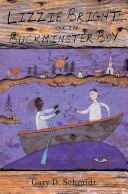
Bill: I don’t think the Newbery committee has the responsibility to sell books, or that it is a popularity contest, but they do have the responsibility to pick books that kids will read and enjoy. Otherwise why say the award is for fiction geared for ten to fourteen year olds? If the books they pick aren’t written for those ages — what’s the point? And yes, I think some of the committees are out of touch. That said, there are examples recently, especially in the Honor selections of books that might not have made much of a splash without the award. Once they had medals attached, teachers read them and then put them into the kids’ hands. A couple that come to mind are Al Capone Does My Shirts and Lizzie Bright and the Buckminster Boy.

So what book is going to win the Newbery this year?

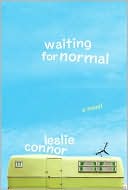
Bill: I like Waiting for Normal by Leslie Connor; Diamond Willow by Helen Frost, and my dark horse is Itch: A Novel by Michele D. Kwasney. However, The Underneath will probably win and I don’t really like it much.

Karen: I’ll be rooting for Waiting for Normal.

Wow, good for Leslie Connor. She grew up not far from here, outside of Schenectady. Arnold Lobel grew up in Schenectady, too. Must be something in the water. Okay, lightning round. Favorite books?

Karen: All-time favorite, Little Women. Adult favorite –- I’m a Jodi Picoult junkie!

Bill: Hattie Big Sky; Johnny Tremain; Make Way for Ducklings; Twelve Terrible Things . . . I could go on and on.

Favorite blogs?

Karen and Bill (talking really fast, together): A Year of Reading! Jen Robinson! 100 Scope Notes! The Miss Rumphius Effect! The Reading Zone! Two Writing Teachers! Creative Literacy! Barbara O’Connor! And, of course, your blog!
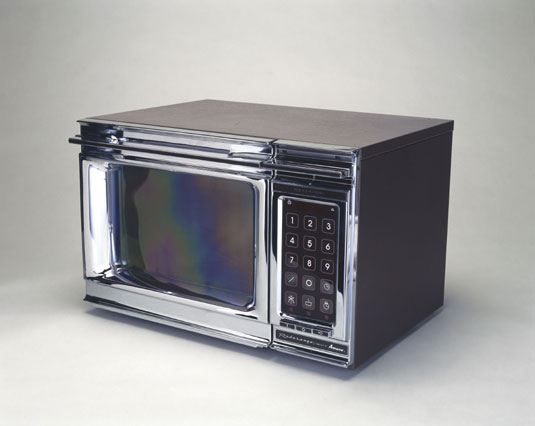
You had to say that or I’d never let you out of here. Anyway, Karen and Bill, thanks for the interview. And thank you, most of all, for the very real contribution you make to children’s literature. Please accept this 1978 Amana Radarange Touchmatic microwave oven as a parting gift.