Archive for 5 Questions

5 QUESTIONS with JESSICA OLIEN, author/illustrator of “THE BLOBFISH BOOK”

51tnzieil-_sx394_bo1204203200_

Are we all good? Everybody set for another installment of our weekly “5 Questions” interview series? Because here’s Jessica Olien. Maybe she’ll stop signing books long enough for a friendly chat. Her blobfish book just might surprise you.

jessica-olien

Jessica, hey. There’s a great scene in “The Sunshine Boys,” starring Walter Matthau and George Burns, where Uncle Willy explains that “Words with k in it are funny.” He lists: pickle, chicken, Alka-seltzer. Uncle Willy adds, “’L’s are not funny. M’s are not funny. Cupcake is funny, tomatoes is not funny, lettuce is not funny, cucumber is funny . . . Cockroach is funny — not if you get ‘em, only if you say ‘em.” The idea is that certain words are inherently funny. Which leads me to Blobfish. How do you not smile when you hear that word?

Indeed. Poor lettuce, what a terrible dinner party guest. Blobfish is most definitely funny, but as with most comedians is also seriously misunderstood!

There’s a deeper layer to your book, slowly revealed, that leads the reader to an unexpected place. First, on the surface, there’s straight-forward science. From what I understand, there’s been significant advances deep ocean research, where we’re now getting glimpses of these incredibly weird fish. My favorite is Vampyroteuthis infernalis (loosely translated as “Vampire Squid from Hell”). It all gets pretty bizarre down in the Hadalpelagic Zone. All of that information in your book is conveyed in a fairly conventional photographic manner. Then we meet your illustrated Blobfish character. Which came first?

902088_2fdab99d6bdc4820aed4bbb5f71f6489mv2

Definitely Blobfish came first. I had this idea kind of whole — an attention-seeking fish looking to recognize himself in the pages of a dry textbook. To get the photos (which are mostly of the deep deep sea) I had to contact different scientists around the world, which was fun but challenging when they were off searching for Japanese Spider Crabs or whatever and couldn’t get back to me for permissions.

What I love about your book -– and there’s so much to love –- is that moment when it pivots about halfway through. We are yucking it up with an interrupting blobfish, thinking we’ve got this book figured out, when we learn, “The blobfish was once voted the world’s ugliest animal.”

9780062394156-2

At that moment, you start tugging, ever so gently, on emotions. The book quietly sends signals from the deep about kindness and how we treat each other. Even blobfish have feelings! And words can hurt. I imagine you coming across that factoid and thinking, “Hmmmm.” Is that when you knew you had a book? Because that’s a real thing, isn’t it? We all have folders of half-baked ideas, snippets and notions and unfinished manuscripts, but not many books. Then there’s a moment when, yes, this is a book. Or as my friend Matthew McElligott puts it, “You know you can land the plane.”

Well thank you! I think I actually read that the Blobfish was voted the ugliest animal on BBC or something and that’s where the idea for this book came from. That and a bunch of really weird sketches of Blobfish — you should see one of the early ones, he looks kind of like Danny DeVito.

DeVito should play him in the movie. I can totally see that. He has the range. But continue.

I loved thinking about a lumpy fish with this child-like enthusiasm about his own worth. Blobfish craves validation and belonging and while he looks for it he finds out that some people have not very nice views of him. I think this is a defining moment for many kids too. When they realize people aren’t all on their side. It feels so unfair (it is unfair). Different versions of this happen our entire lives and it is up to the kindness of others and our own ability to recognize and embrace that kindness (as well as to forgive our own flaws) that keeps us going.

I see that you live in Brooklyn, as required by law for children’s authors and illustrators (I think it’s a five-year minimum, then you are free to move to Connecticut). Yet you are a native Midwesterner. Where’s that?

I was born in Michigan and raised in Wisconsin. I never felt like I fit in anywhere. All I wanted to do was explore the world and be a writer, an artist, an actor. Being from the Midwest you are taught to keep your expectations low and your ambition in check. I couldn’t wait to leave. I moved to Chicago to study photography, then dropped out of school and moved to Thailand where I worked as a journalist. I finished my degree remotely while studying Arabic in Egypt.

Right. Given that progression, writing and illustrating a children’s book about a blobfish makes perfect sense. Because: inevitable. Your voice strikes me as something new. How did you arrive at children’s books? It’s like you climbed in a window or something.

It does sometimes feel that way — “This is not my beautiful house.” I always say I didn’t do this until a few years ago, but recently I looked back at some of my sketchbooks that I kept while traveling and mixed in with these serious sketches of urban decay and poverty were these funny cartoon animals and people. I am so glad I didn’t pursue picture books right out of school though. Something about not caring as much what people think when I did start out made it easier to have an authentic voice. Also, I was lucky to have Alessandra Balzer buy my first book (and four after). If she hadn’t taken it I might not even know there was a window for me to climb into.

Thanks for visiting, Jessica. Keep up the great work.

wceggdunlca8rphoz66abhhs4ri12vqgoobrgbrkx2plcphekar3aiznsrpughkiodzcs4glrs3lnnbucm2t9tndb06zszzgaib6wpypvq5idkycbwtzawmsmq7pk-1JESSICA OLIEN is also the author/illustrator of Shark Detective! and Adrift. She has several books in pre-publication, but the one I’m most excited about it titled Right Now (2018). I guess we’ll have to wait for it. Hum-dee-dum, dee-dum-dum. Jessica keeps a fancy website that you can visit. Google’ll get you there.


Coming soon: London Ladd, Matthew Cordell, Lizzy Rockwell, Nancy Castaldo, Aaron Becker,  Matthew Phelan, and more. You can look up previous interviews in this series by clicking on the “5 Questions” icon under the “categories” on the right sidebar.

5 QUESTIONS with MATTHEW McELLIGOTT, author/illustrator of “MAD SCIENTIST ACADEMY: THE WEATHER DISASTER”

msa2-jacket-green-mockup

Here we are, oh sunny day, the latest installment of my “5 Questions” interview series with luminaries of the children’s book world. Here comes my friend, Matt McElligott!

msa2-author-portrait


Matt, I’m looking at the second book in your “Mad Scientist Academy” series, The Weather Disaster. And all I can think is, Boy that looks like a lot of work! Seriously, I’m exhausted. So I’m just going to take a brief nap and, yawn, we’ll pick this up later. Zzzzzzzzzz.

You’re not the first person to tell me my books put them to sleep! 

Okay, I’m up! For readers who might be unfamiliar with this science series, you are essentially taking a nonfiction topic and giving it a fresh, contemporary spin. All told in an appealing format that’s a hybrid between the graphic novel and traditional picture book. As someone who has admired your work for many years, it strikes me that this series –- which is spectacular in every way — represents a culmination for you, a distillation of your many and varied talents. I don’t think you could have done this ten years ago. All of your past work informs this one book: your intellectual curiosity, your love of comic books and old Hollywood movies, your silliness, your experience with book design and storytelling, plus the signature McElligott sense of what kids genuinely like. How did this series begin?

The sentiment is much, much appreciated. And I agree completely -– I don’t think I could have done this ten years ago, and I’m not sure I could even do it now without the tremendous help of my wife Christy. It really is a lot of work. Not only does the story have to be compelling, but it also has to deliver a lot of real science along the way, hopefully while still captivating the reader. Finding that balance has been, by far, the trickiest part of putting these together, but I can honestly say I enjoy every part of it.

msa-weather-spread

The idea began with a suggestion from my longtime editor, Emily Easton, who felt that there was a real opportunity for a new series that could make science accessible for kids. We spent about a year and a half trying out various ideas and approaches until it finally started to gel. The graphic novel format came from both my love of classic comics and a practical need to fit all the information into thirty-two pages.

There must have been a point, early on, when you thought to yourself, “Uh-oh.” Just that pure terror of, What have I gotten myself into? Can I actually do it?

Boy, you nailed it with that question. The feeling of terror hit me a couple weeks into the first book and has lingered ever since. There are roughly a hundred illustrations in each book, and the thought of how long it will take to draw the next book keeps me up at night. I’ll spend about a year, maybe a little more, researching, plotting, sketching, and illustrating pretty intensely until it’s finished. But the good thing is that I’m not in it alone. I happen to be married to a very talented woman who’s a whiz at both researching and drawing (we met thirty years ago in art school) and we can divide up many of the tasks to keep everything manageable. Three books in, and we’re still married!

msa-weather-balloon

Now correct me if I’m wrong, but your cruel editors don’t allow you to just make up stuff for this book? Is that true? So you’ve actually got to know what you are talking about? What’s the research process like? In this book you thank an actual weatherman, Jason Gough. Otherwise known as a, cough-cough, “stratospheric meteorologist.”

Oh, no. I make most of it up. (That part about how rain forms? That totally came to me in a dream.) Seriously, there’s a ton of research for each book, and meeting real scientists has been one of my favorite parts. For The Weather Disaster I worked with Jason Gough, and for the Dinosaur Disaster I worked with a man named Carl Mehling, a paleontologist who’s in charge of all 32,000 fossils at the American Museum of Natural History. For the upcoming Space Disaster, I worked with the astronomer Bob Berman, who you may know from his work on the radio station WAMC.

All of these scientists were so helpful, patient, and fully willing to engage my strange questions. (“Say, Jason, if you needed to create a tornado from scratch, how would you do it?”) Best of all, they embodied a perfect combination of science and imagination, and I was really lucky to find them. I’ve posted interviews with Carl and Jason on my website, and will be posting more soon.

Matt, you and I are both active with school visits. And I always recommend you to media specialists. The funny thing is, they usually say, “Yeah, he was already here.” At which point I figure out that I’ve been invited because they are working their way down, down, down the list. Not that I mind playing second fiddle –- I’m happy to be in the orchestra! But talk to me a little about your experience in schools. I mean, there you are at home, slaving away on these impossible books. Then you get out of the house! What do you hope to achieve when you visit a school? And also, if you don’t mind me cobbling questions together, what do you think that you get out of your school visits?

Don’t sell yourself short –- you have quite a reputation in the schools! I suspect you’re there because the teachers are actually working their way up the list. (Preller? Why not? Anyone’s got to be better than McElligott.)

I get paid in Ramen Noodles and old Lotto tickets. I think that’s a big part of my appeal.

I love your questions about author visits. The first is pretty straightforward: I hope the kids see that authors are real people, that making books is a thing that real grownups do, and that the writing and illustrating process can be hard, but is totally worth it. (Authors, after all, get to control the world.)

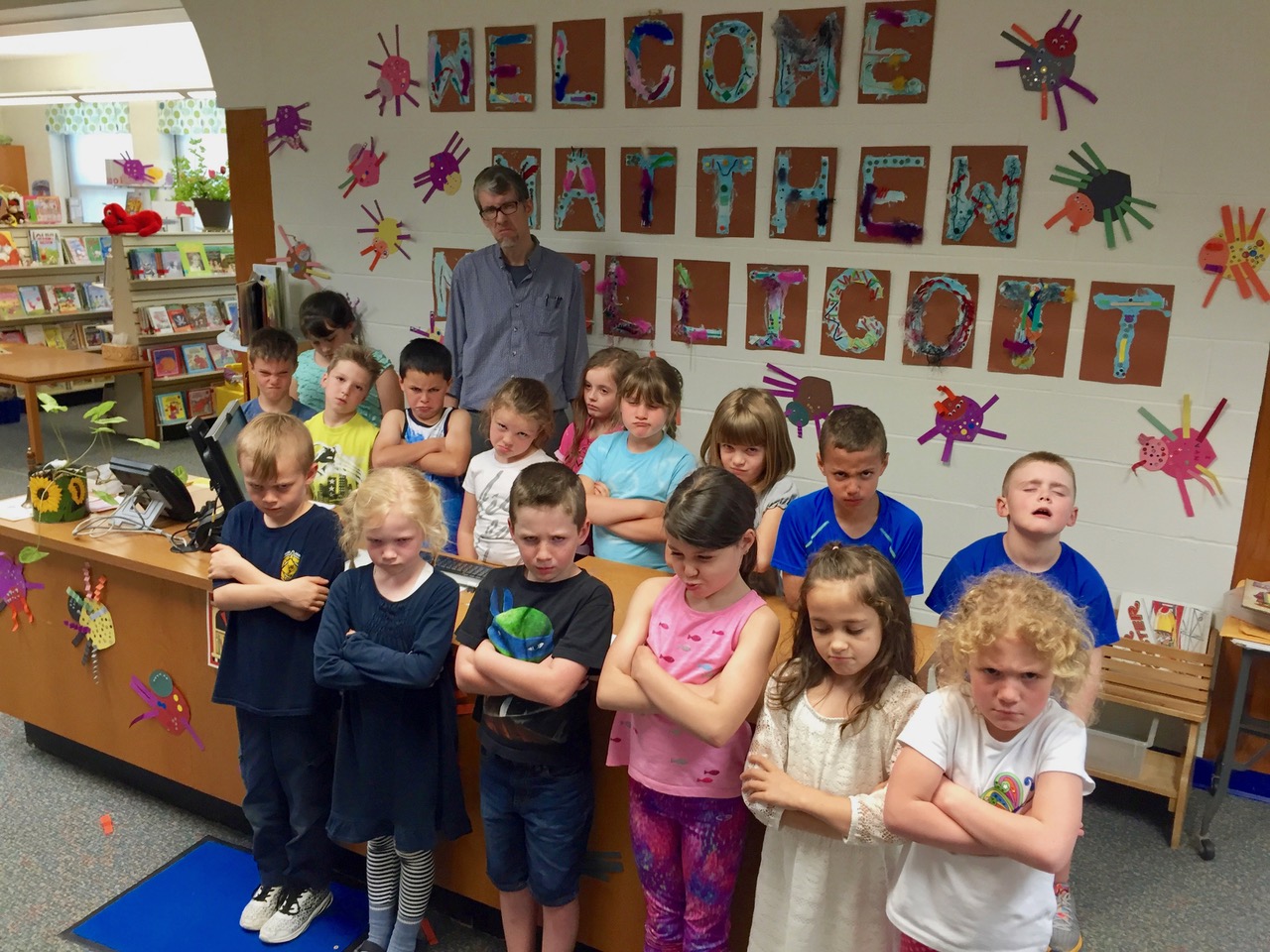
On school visits, Matt always shows readers the joy of . . . the thrill of . . . nevermind!

On school visits, Matt always shows readers the joy of . . . the thrill of . . . nevermind!

As for what I get out of the visits, I’m not sure anyone’s ever asked me that. I know I get to share my love of books –- that’s a big part –- and get to meet future authors and illustrators, as well as terrific librarians and teachers. But I also get to represent something bigger than myself, a duty I take very seriously. When a school hosts an author, and when they present the author/illustrator as someone of importance, the school is sending a message about the value of the arts that kids are almost certainly not getting anywhere else. I’m honored to be that representative, if even for just a day.

I like that, we are ambassadors from a distant land. I’ve never been comfortable with the “rock star” aspect of being a visiting author. Sometimes we get put on a pedestal. But when you view it as beyond the self, that we are representing something bigger than “Jimmy” or “Matt,” then it makes more sense.

Ambassadors is such a great word for it. We may be the only authors some of those kids will ever meet. If we’re funny, if we’re engaging, if it shows that we love our jobs, they’ll assume that all authors are that way. Those kids will come away with the idea that reading and making books is something they want to do too.

I recall Tedd Arnold telling me in an interview that he enjoyed checking in with their “squirmy reality.” That phrase always stuck with me. You get to look at those faces, and interact, and reconnect with the fact that, hey, a second grader in October is still really, really young. The visits land us in their world. You know what? It’s like going on a safari! You drive the jeep, Matt. I’ll grab the pith helmets!

tumblr_m7bk9kxo731qcidxzo1_500

Exactly! It’s field research, and we can learn so much from studying the indigenous population of the elementary school.

You’ve tackled dinosaurs, you’ve wrestled with weather. What’s your next topic?

I can tell you that next up is The Solar System Disaster, out next summer. After that, maybe the ocean? Or maybe the science of belly-button lint. It’s probably between those two.

Well, I think we’ve all learned something today. Every book in this series is a disaster.

In more ways than one!


MATT McELLIGOTT keeps a terrific website which you can visit by clicking, madly, here


AND IF YOU’D LIKE TO READ PREVIOUS “5 Questions” interviews, thank you — just click on the names below. Coming next week: Jessica Olien and her blobfish! And after that: London Ladd, Matthew Cordell, Lizzy Rockwell, Nancy Castaldo, Matthew Phelan, and more (but not necessarily in that order).

* Hudson Talbott

* Hazel Mitchell

* Ann Hood


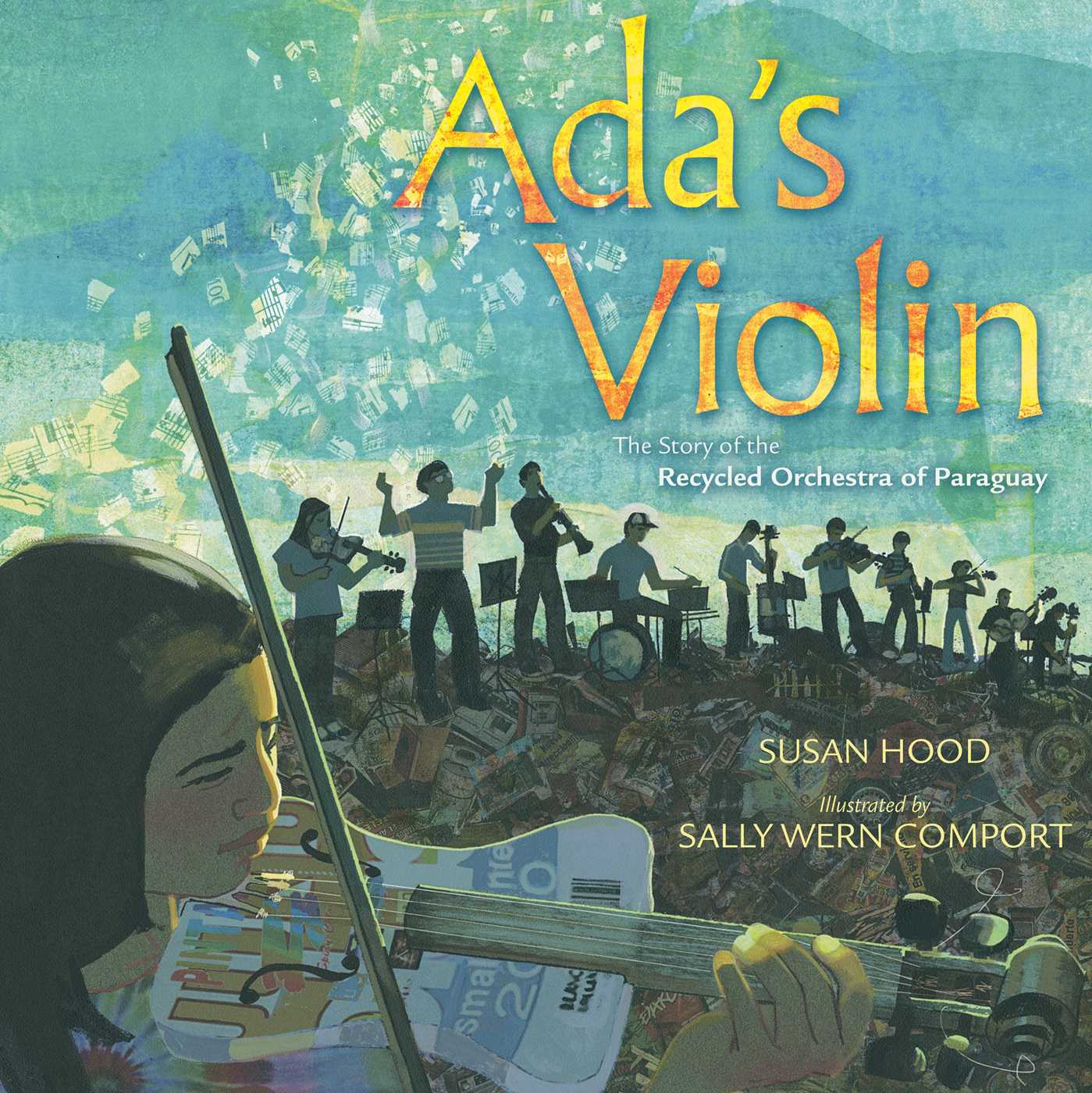
5 QUESTIONS with SUSAN HOOD, author of “ADA’S VIOLIN”


adas-violin-9781481430951_hr

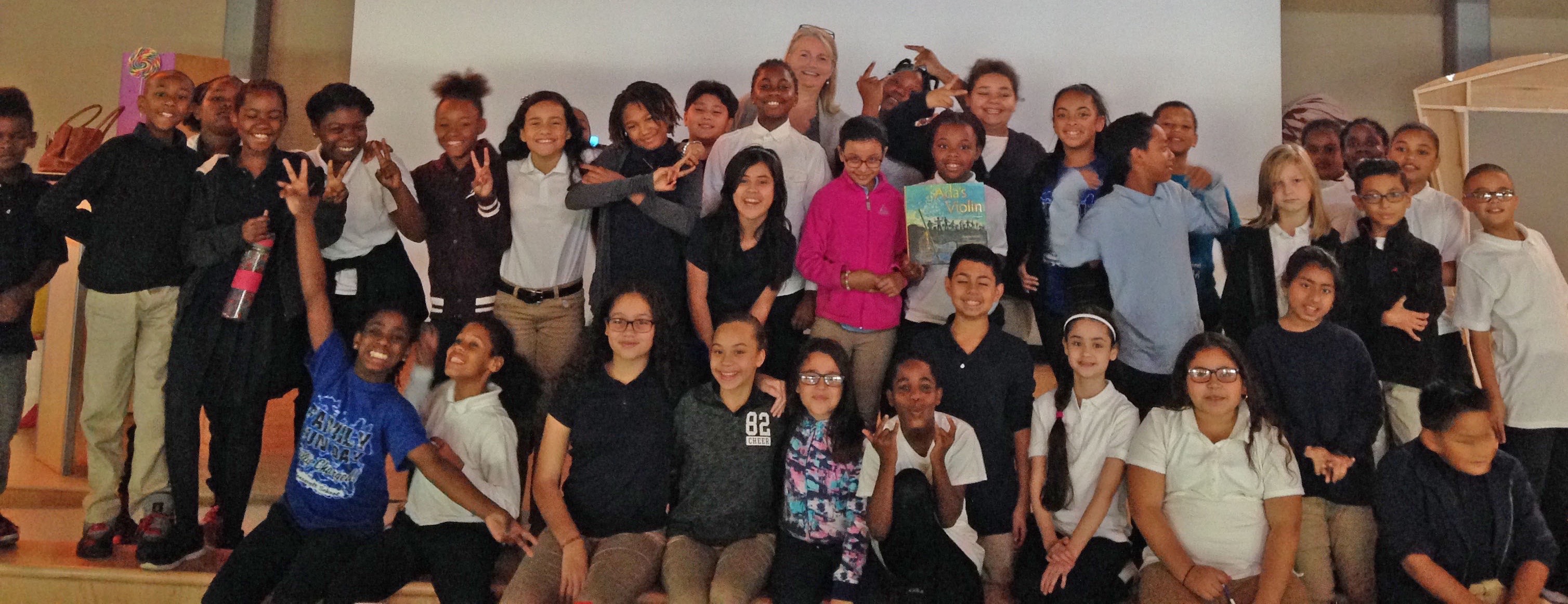
Welcome to my interview with author Susan Hood. This is part of an ongoing “5 Questions” series, where the discussion revolves around one specific book. On a weekly basis, we’ll be hearing from Matthew McElligott, Jessica Olien, Lizzy Rockwell, Matthew Phalen London Ladd, Matthew Cordell, and more. That’s a lot of Matthews! This is a gift that I’m giving myself, forcing myself to spend time and thought on some terrific books. Hopefully I’ll learn something along the way. Oh, look. Here comes Susan Hood up my walkway. Not a bad view out my front door, you think?

author-photo 

Greetings, Susan. Tell us about finding this story. Did you immediately see it as a potential picture book?

Hi, Jimmy. Thanks for having me. I can’t take credit for discovering the Recycled Orchestra. All kudos go to the late great Bob Simon who did a fantastic story about it on 60 Minutes and to my editor Christian Trimmer who saw the segment and the story’s potential for a picture book. I’m so grateful I’m the author who got to write it.

Looking into the story, there was a lot of press about Favio Chávez, the conductor of the orchestra. But for a picture book, I wanted to shift the focus and talk to a kid in the orchestra. That’s how I decided it was Ada’s story I wanted to write.  

This book is such an accomplishment. I’m in awe of what you’ve done. Big respect. I mean, wow, you’ve done it; you made a great, great book. I’m actually standing up and clapping right now, while typing with my toes.

Ha! I always knew you were a man of many talents. (The secret to writing so many books?) But seriously, thank you. As I’ve told you, writing this book was one of the best experiences of my life. I fell in love with these kids and I guess it shows.


adas-violin-9781481430951-in03

Yes, your affection for this story comes through loud and clear. It’s such a challenge to take a story this big -– with so much depth and detail – and find a way to condense it into a picture book format without losing the heart and soul. What a struggle that must have been. How did you even begin? Sometimes writers will find a sentence, or an image, or even a word that sort of lets them enter the story through a side door. Does that make any sense to you?

I wrote many, many drafts of this book, but the first sentence was always: “Ada Ríos grew up in a town made of trash.” The kid in me knew that that was a killer statement; just imagine growing up in a place where everything in your life — houses, beds, toys, clothing — comes from other people’s trash. And then imagine taking that trash and transforming it into music. Pure magic.

 
roosevelt-1


Obviously, for Ada’s Violin, there are real people involved. It’s a true story. So that had to be an added weight, this huge responsibility to do justice to their story. Tell us about your research, and your interactions with Ada in particular.

Yes, I worked hard to get it right. In the beginning, I decided I could tell this story in one of two ways: the easy way and the hard way. The easy way: use the news reports as background, make up a kid, and tell a story “based on a true story.” But why would I make anything up when the true story is so astonishing?

Um, wild guess, but: because it was the easy way?

No, I knew I had to do it the hard way: find an actual kid, do interviews, and tell a true story.

Yeah, I suppose that also works.

The obstacles seemed daunting. I couldn’t afford to go to Paraguay; Cateura has no postal system and little electricity; I don’t speak Spanish and no one in the orchestra speaks English. When I talk to kids about the story, I tell them, “Don’t be afraid to ask for help.” I hired a translator and asked 60 Minutes if they could put me in touch with Favio Chávez. The producers loved the idea of a picture book and were incredibly generous and supportive.

It turned out that Favio had access to email and Skype so I did several rounds of interviews with him and later Ada online. The tricky part was that they were on tour so much, it might be months between questions and answers. My editor was extremely understanding about extending deadlines.

For picture book authors, we write the words and then we wait, and wait, and wait. Then there’s always that remarkable, heart-in-your-throat moment when the art arrives. Tell us about your reaction to seeing Sally Wern Comport’s work for the first time.

 ada-first-page

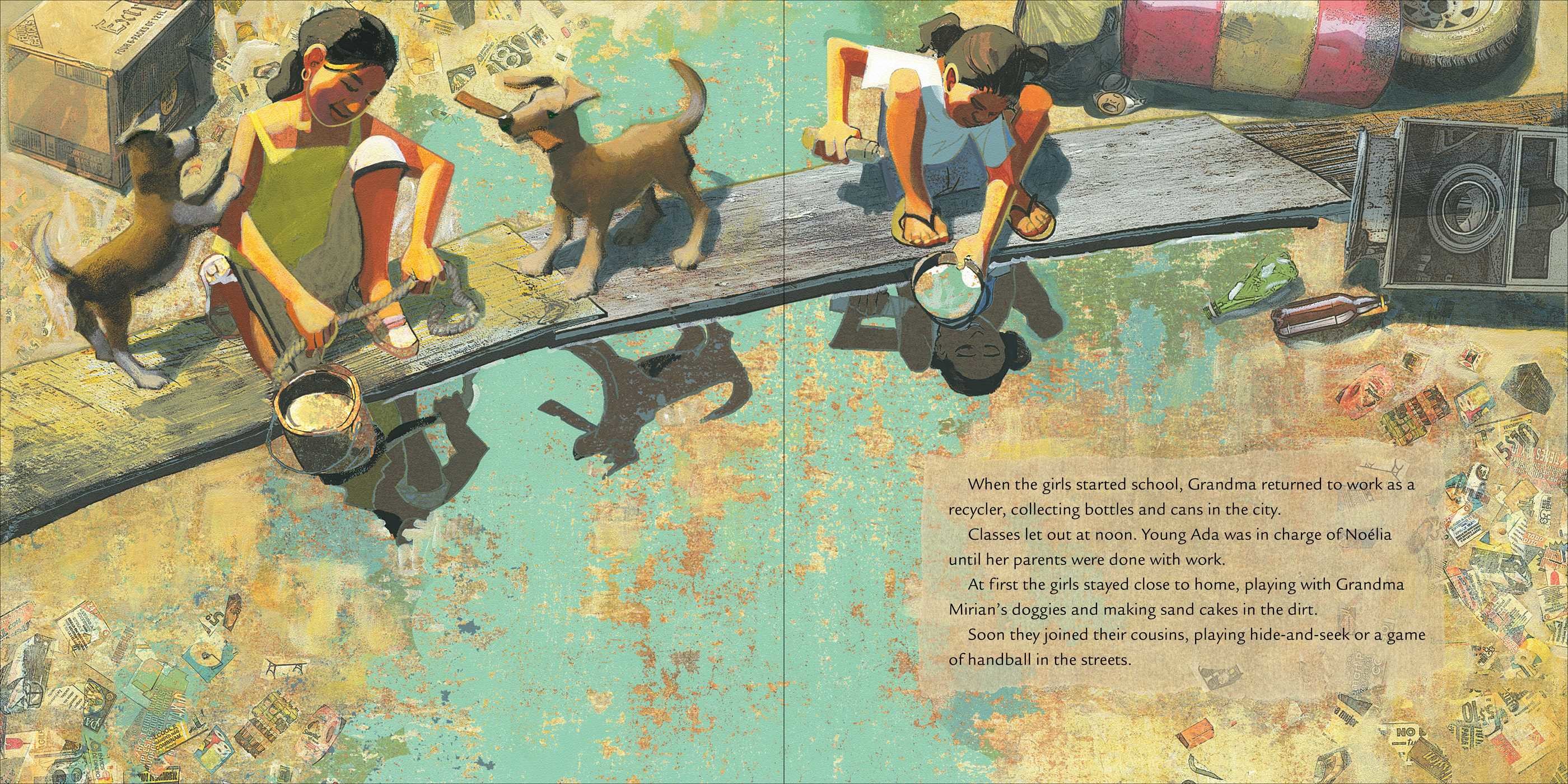
Jaw on the floor! Sally sent us color sketches and I was stunned at her use of found objects and mixed media that so perfectly mirrored the bits and pieces of landfill, the houses, the recycled instruments. And as hope comes to Cateura, her palette moves from dark shadows to light-infused scenes of gorgeous color, sprinkled with musical notes that take to the sky. I’m still in awe of what she’s accomplished.

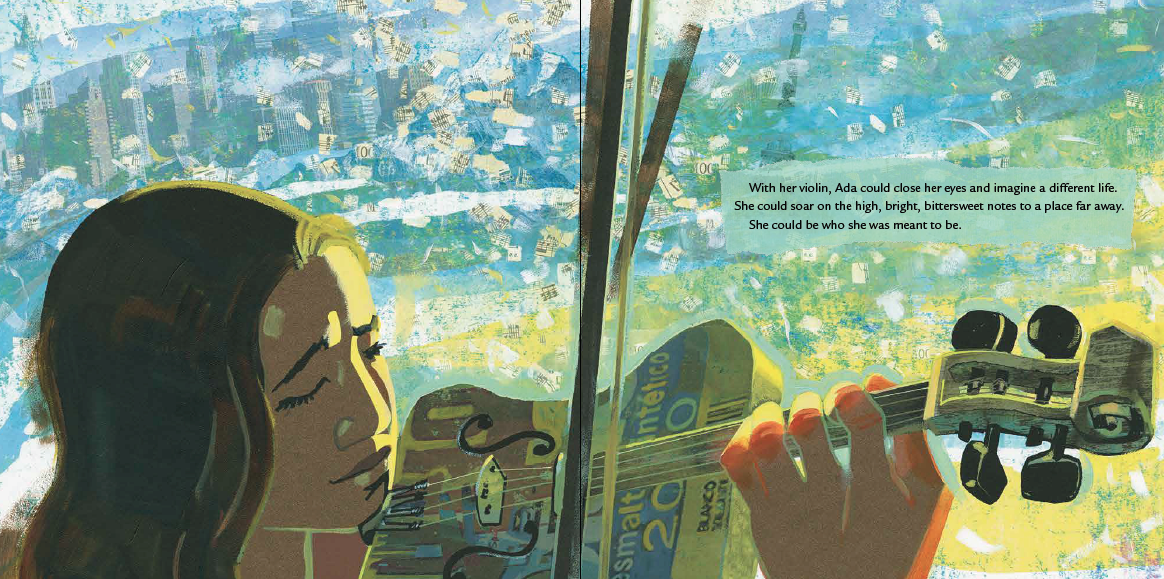
I love every blessed inch of this book. But I’m especially moved — transported — by a spread two-thirds of the way through the story. The visual focus is tight on Ada playing her violin. The words are few and absolutely perfect: “With her violin, Ada could close her eyes and imagine a different life. She could soar on the high, bright, bittersweet notes to a place far away. She could be who she was meant to be.” The language is clear and direct, but also there’s the uplift of that poetic phrase -– “the high, bright, bittersweet notes” –- where the sentence soars right along with Ada. And we, as readers, soar with you. That right there is some fine writing, Susan.

violin-1 

That makes me so happy because that’s my favorite spread in the book, too. The art is simply spectacular. I listened to a lot of violin music as I was writing and it was that word “bittersweet” that rang true, both in the sound of the music and in Ada’s thoughts of leaving Cateura. While her town is undeniably “a noisy, stinking, sweltering slum,” it’s where Ada’s friends and family are, where she’s grown up. It’s the only home she has ever known.

I understand that you worked at “Sesame Street.” I’ve always wondered: Was Oscar really that grouchy? Or was that only when the cameras were rolling?

Funny that I’ve gone from Oscar’s trash can to Ada’s landfill. As Carroll Spinney has said (and I’m paraphrasing) the only thing that kept him sane playing Big Bird was that he got to play Oscar, too. So yes, he was always grouchy…unless he was revelling in trash.

And when Cookie Monster went on the Paleo Diet, that had to cause tensions on the set, yes?

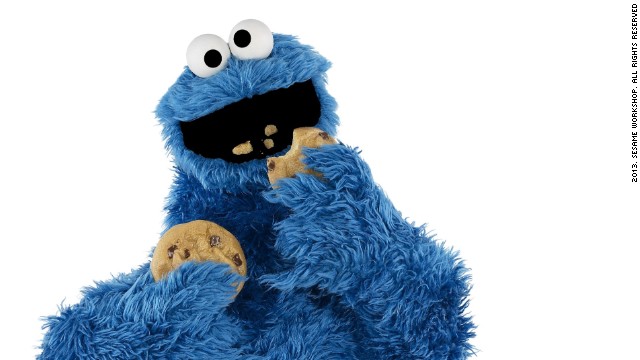
Cookie Monster, during happier times.

Cookie Monster, during happier times.

It was brutal! No cookies, no milk.

An experience like the one you had at Sesame Street must have had a profound impact on your work. What do you think was your single, great takeaway from those years?

You’re right. We still need diverse books, but Sesame Street has been nurturing diversity since 1969. There’s a great big world out there and that’s always informed what I want to write about. Another takeaway for me was the idea of layering. Sesame Street jokes and stories work 100 percent for little kids and yet there’s an extra layer for their parents, which encourages families to watch together. A win-win for everyone. The best picture books give that same 110 percent. And finally, Kermit and friends taught me the exquisite joy of making a little kid laugh.


You need to a flashplayer enabled browser to view this YouTube video


SUSAN HOOD is the author of Spike, the Mixed-Up Monster; Rooting for You; Leaps and Bounce; Mission: New Baby, and many others. Her new book, The Fix-It Man, will soon be published. Susan keeps a tidy blog that’s easy to find.

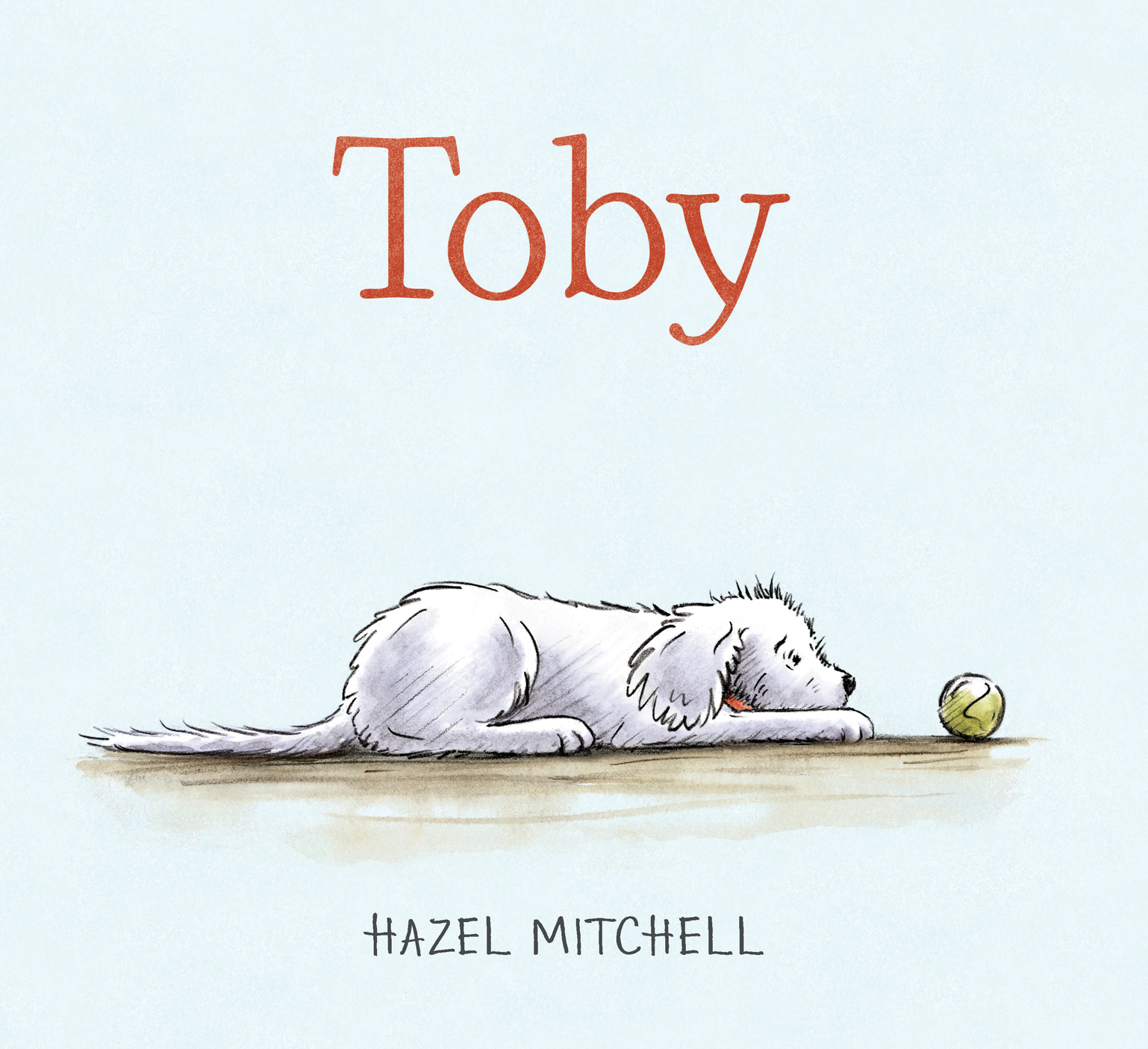
5 QUESTIONS with HAZEL MITCHELL, author/illustrator of “TOBY”

toby-cover-large-150dpi-rgb
Welcome to the second installment of my “5 Questions” series. On a weekly or bi-weekly or completely random basis, I will interview an author or illustrator and focus on a specific book. In the coming weeks, we’ll spend time with Matthew Cordell, Jessica Olien, Matthew McElligott, Lizzy Rockwell and more. Why? I like these people and I love their books. Sue me. Today we get to hang out with Hazel Mitchell, who is as glorious as a glass of champagne at a good wedding. Drink deeply, my friends . . .

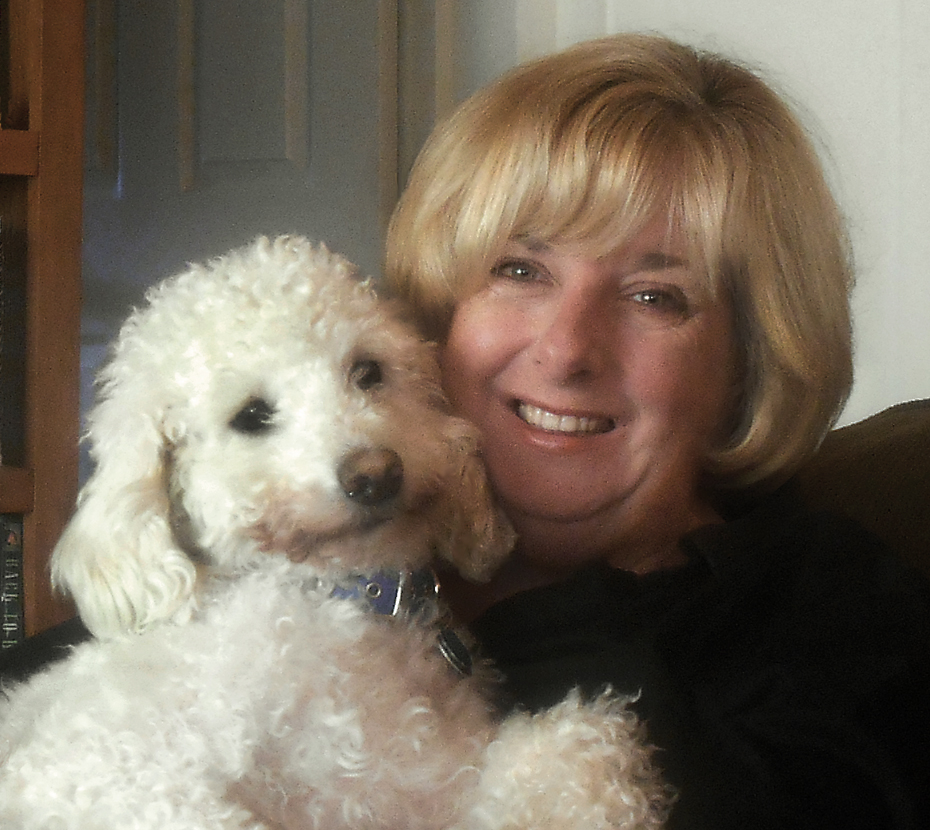
hazel-and-toby-large-150dpi-rgb


JP: Greetings, Hazel. Thanks for stopping by my swanky blog. I hope you don’t find the vibe too intimidating. I put up the tapestry just for you. The lava lamps have been here for a while. Because nothing says “classy” quite like a lava lamp. Sit anywhere you like, but the milk crates are most comfortable.

screenshot2014-08-29at11-07-47am-1

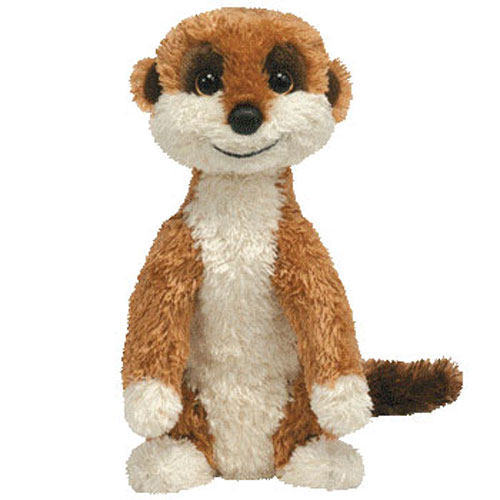
Hazel: Thanks, JP. This is certainly an eclectic place you’ve got here. Wow, is that a glitter ball? Next you will be wearing a white suit. Excuse me while I remove this stuffed meerkat from the milk crate . . . 

1c971b5bc7c4a067d09cad45ee38361cCareful with that meerkat, it’s expensive. Hey, do I detect an accent? Wait, let me guess! You are from . . . Kentucky?

No getting anything past you! Kentucky, Yorkshire, England. OK, just Yorkshire, England. I’m a late pilgrim.

We recently sat side-by-side at the Warwick Children’s Book Festival, where I got the chance to read your wonderful new picture book, Toby, and eavesdrop on your lively interactions with young readers. At times, alarmingly, you spoke in the voice of a hand puppet. So let me see if I’ve got this straight: Toby is a real dog, but not a true story, exactly? How does that work?

toby-realistic-sketchesYes, we did sit next to each other and it was a lot of fun to see you in action! I didn’t know you were eavesdropping, I’d have dropped in some of those Shakespearean ‘asides’ just for you. And I must watch that hand puppet voice, I even do it without the hand puppet . . .

OK, to the question: Yes, Toby is a real dog. I rescued him from a puppy mill situation back in 2013. He was so endearing and his journey from frozen dog to bossy boots captured my heart. I began drawing him, because that’s what illustrators do, and before I knew it I was weaving a story round him. But I didn’t want to feature myself as the owner in Toby’s story, that was kind of boring and I figured Toby needed a younger owner, one who children could relate to. So I gave Toby a boy who adopts him and a Dad who is struggling with moving house, looking after his son AND now a new dog. The fictionalized setting gave me lots of ideas and emotions to play with, but the stuff Toby gets up to in the book is taken from things he did in real life.

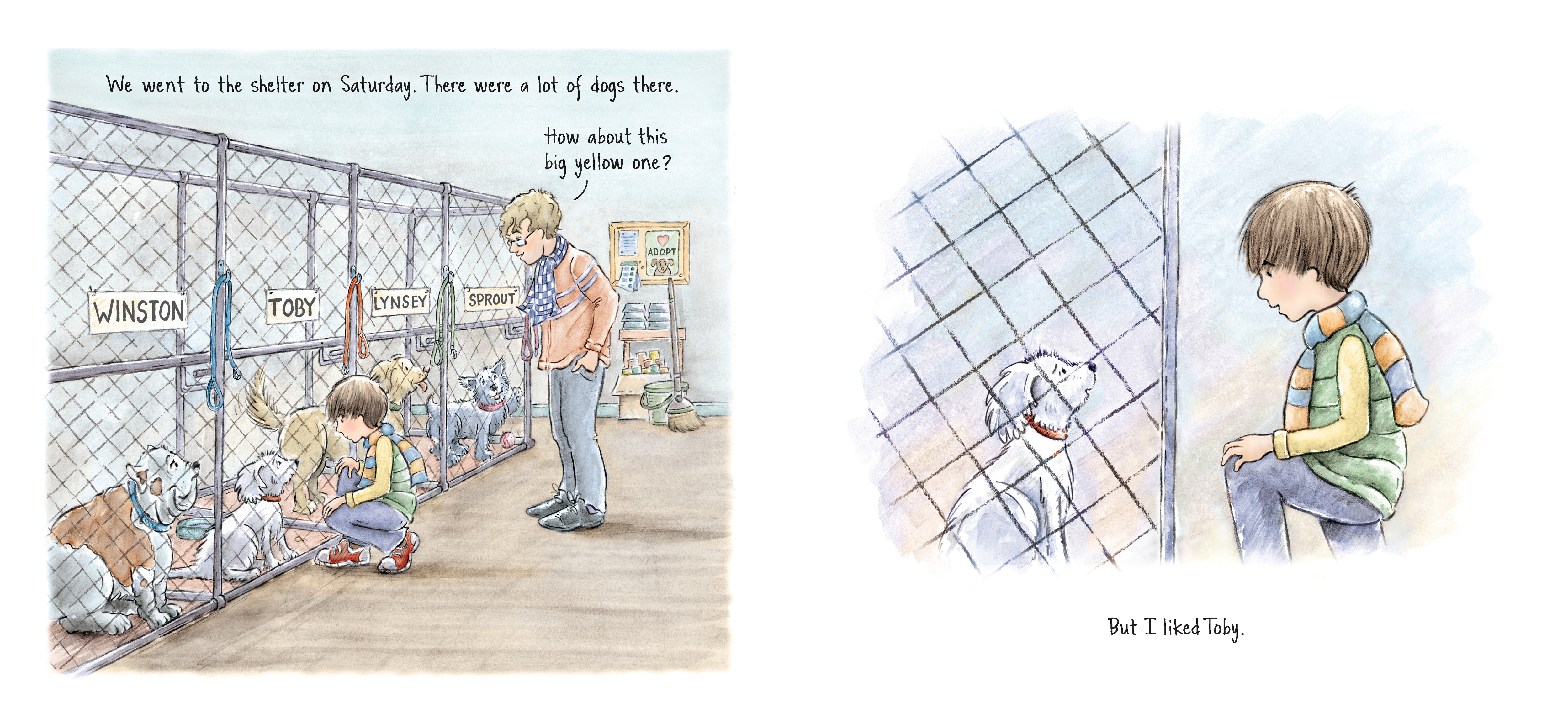
shelter-rough

I can see it’s a work that comes from your heart. And by “see” I mean: I could feel it. A heartwarming story for young children living in a cynical age. The book is beautifully designed. I especially admire the pacing of it, the way you vary the number and size of the many illustrations. Please tell me a little about that decision-making process.

toby-spread-1

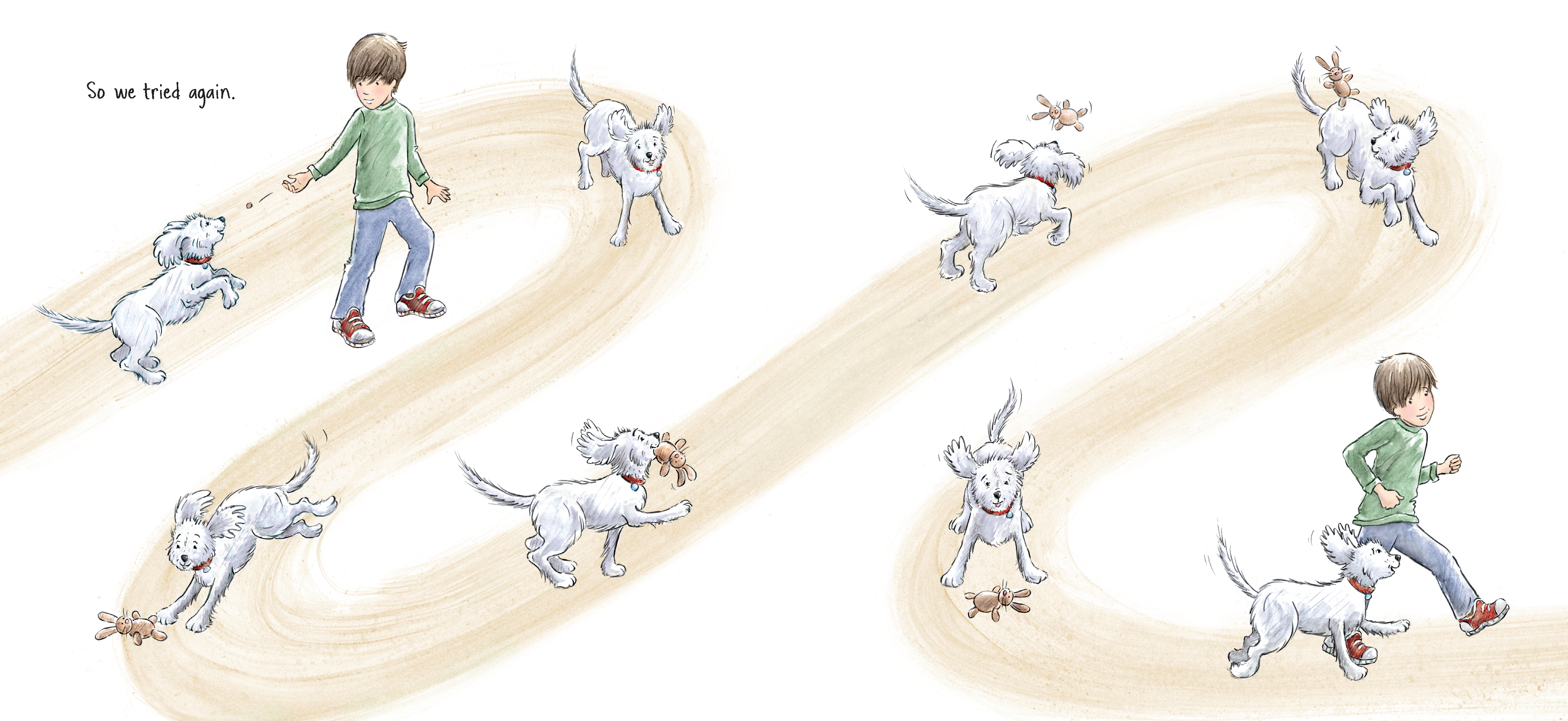
Thank you. I love that you say ‘feel.’ I wanted this book to be about emotions and feelings and bring the reader into the internal dialogue of the boy and dog’s fears and frustrations. Just small things you know, but life is full of small things that make up the big things. And again, thank you for your kind words on the design, working with Candlewick, my editor (Liz Bicknell) and art director (Ann Stott), was a joy. We did a lot of drafts at rough sketch stage and as the layout of the book evolved a lot of graphic novel style panels crept in and then the wide double-spreads to open out the story. I like how it flows. The choice of colors really adds to the story I think, moody blues and beiges that reflect the emotions and then brighter colours when things are going well. The boy and dog are connected by the colour red –- Toby’s collar and the boy’s sneakers. 

Oh, thank you, Hazel, for sharing those behind-the-scenes details. I appreciate seeing the black-and-white sketches, too. I think even when readers don’t consciously notice those subtle details, they still manage to seep into our unconsciousness. It’s fascinating how much thought goes into the work that most readers probably don’t think they see.

toby-spread-2-2


I like that your book doesn’t gloss over the challenges of owning a dog. It’s not always cuddles and sunshine. Why did you feel it was important to include the downside of dog ownership?

Because that is the reality of life and children are very capable of dealing with realities and working through problems. Sometimes it’s adults who want everything to be cuddles and sunshine, and try to save youngsters from the real world. Well we can’t do that, because it comes at us fast. I never get tired of seeing or hearing about a child responding to a book and saying, “Yeah, that happened to me,” or “I know that feeling.” It’s like you’ve been given a gift. 

rough-layout

I see that you live in Maine. You must get this question a lot, but why isn’t Toby a moose? Do you see many moose up there? Can we please just talk about moose for a little while? And what goes on in Maine? Do you eat lobster all the time? While reading Stephen King? Or do I have some misconceptions? How did you end up there?

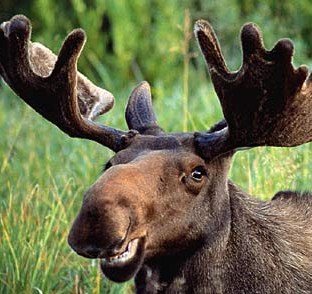
Toby channels his inner moose at times, which is scary in a poodle. There aren’t so many moose around our way, but drive a little North and there is moose-a-plenty (that could be a good name for a snack?). 

Sounds delicious.

I once drove home from a school visit in the FAR NORTH at twilight (that was my first mistake), it was misty and I was driving down a road where I swear there was a moose every 5 yards. I drove 30 miles at 5 MPH. I got home after six months. These moose were SO darn big and SO close to the car I could literally see up their nostrils. Man, moose need help with superfluous hair.

moose

Wow, you really did see up their nostrils. You are scaring me a little bit, Hazel. Eyes on the road. Speaking of scary . . .

Stephen King lives in the next town over, but you know, he’s a recluse. I eat lobster with lobster on top. Delish. When I moved to the US of A from over the pond I landed in the South. Then moved to Maine. I like the cold much better! (And the lobster).

Do you have ideas for any more Toby stories? I think readers will want more.

I do have more ideas about stories for Toby. But we will have to wait and see. Readers! Write to my publisher! 

I’m so glad you visited, Hazel. It’s nice spending time with you. I hope Toby enjoys a long and mischievous life in children’s books.

It’s been fun. Best five questions anyone asked me all morning. Thanks for having me drop by … oops … there goes a lava lamp!

Six bucks down the drain. We’re done here.


imanismooncvr_300-819x1024In addition to Toby, Hazel Mitchell has illustrated several books for children including Imani’s Moon, One Word Pearl, Animally and Where Do Fairies Go When It Snows? Originally from England, where she attended art college and served in the Royal Navy, she now lives in Maine with her poodles Toby and Lucy and a cat called Sleep. You may learn more about Hazel at www.hazelmitchell.com

TOBY Copyright © 2016 by Hazel Mitchell. Illustrations reproduced by permission of the publisher, Candlewick Press, Somerville, Massachusetts

5 QUESTIONS with HUDSON TALBOTT, author/illustrator of “FROM WOLF TO WOOF”


9780399254048


I’m kicking off a new, recurring series of posts where I interview one author or illustrator, limiting our conversation to 5 questions, with a focus on a specific book. I’ve got a terrific list of talent planned for upcoming visits — they just don’t know it yet.

Today we get to hang out with Hudson Talbott. And come back next week for a visit with Hazel Mitchell and her dog Toby.


Hudson (left) and I got to catch up at the Warwick Children's Book Festival.

Hudson (left) and I got to catch up at the Warwick Children’s Book Festival.


JP: Hudson, I love your new picture book, FROM WOLF TO WOOF: THE STORY OF DOGS. You manage to deliver a lot of information within the context of “story.”

Hudson: Thanks, James. I love research and the process of absorbing as much as I can and then distilling it down to its essence. I come from Kentucky. We’re known for distilling.

 150616134355-moonshine-sutton-still-exlarge-169

And God bless Kentucky for that! But let the record show: I haven’t asked a question yet. I feel like one of the poor fisherman bargaining with a magic fish. I still have three wishes left –- or in this case, five questions!

I don’t think that was a question either. But thanks for calling me a magic fish.

Now that you mention it, you do look a little green around the gills. Maybe it’s the light in here. Anyway! I remember long ago reading Desmond Morris’ classic book, The Naked Ape, and in it he speculated about the first dogs. How they might have come to be domesticated. Which is a poor term for it, as I type those words. Because we’re talking about these wild animals that, over time, became intensely, passionately interconnected with human beings. The beginning of a long relationship. I’ve always found that a fascinating subject, so I was immediately drawn to your book. How did that story begin for you?

intimagewolftowoof6-1024x427

The love of animals, the love of dogs, the love of history. Not facts-and-dates history, but the how-did-we-get-here? kind of history. So it was bound to happen. You and I have this privileged platform to address and explore things that we think matter, or at least, things we’re curious about. That look in a dog’s eyes of knowing, of asking and loving, of aligning him/herself with us had to come from someplace. Plenty of theories about where and when — I like to think that the two species found each other useful and could see the advantage of throwing their lots in together to survive. Like two kids finding each other in kindergarten and growing up together in a rough neighborhood. At some point we both stepped across that magic threshold of trust and realized that we have each other’s backs.

Well said. Do you self-identify more as a writer or an artist? Does one always come before the other? Responding to a similar question, Bernard Waber, who also wrote and illustrated his books (Lyle, Lyle Crocodile, and many more), replied that “The writer in me tries to please the illustrator.”

I think of myself primarily as a storyteller. Whatever serves the story best is my priority. That said, I am a visually-oriented person so usually if I come up w/ an idea for a book I first look at what points in the story would be good “photo-ops” or actually illustration ops. While I’m doing sketches for the plot points I’m also getting ideas for the text, the plot, the characters, etc. It’s not uncommon that something I’ll stumble onto while writing some text will lead to changing the picture, or even the whole story line. So it goes back and forth a lot between art and text. Art is much more expendable to me because there’s always more where that came from. But when I have to throw out a paragraph that I’m attached to but no longer serves the story — that’s painful! Picture books actually have more in common with making movies than they do with chapter books.

river_sm

Yes, especially when we consider the storyboarding tradition. After all, movies are simply “moving pictures.” Back to your book, I have to say there’s just a beautiful moment that comes right in the middle. It floored me, because it was such a deep and yet profoundly simple moment to capture. Just masterful storytelling. Before that moment, I was intellectually engaged. But on that double spread, the book stole my heart. I was all in. We’ve been watching the boy slowly gain the trust of this wild creature. They draw closer and closer. Until one day . . . everything changes. Tell me about the thought process that went into that illustration, that pivotal turning point in the book?

 intimagewolftowoof3

Wow, I should’ve read ahead to this question because I think I already answered it a couple of questions ago. It makes me happy to know that you really got the book, and felt what you felt from it. I started this book with a whole other concept, even another title: The Wolf Who Cried Boy. But when my editor, the brilliant Nancy Paulsen, saw the sketches I had at the end of the book showing where dogs evolved to, she immediately said, “More of that! More of that!” So it got re-balanced to a shortened fictional story leading to an extended nonfiction portion. But that was good because it gave me a chance to get in a plug for saving the wolves today, as well as my own theory that dogs played a strategic part in the development of civilization (with their help we could stay in one place with domesticated herds rather than having to constantly roam in search of wild herds).

Wow, Nancy Paulsen: legend! I was wondering, Do you have a wolf at home?

I have two cats. One does his best to be a dog for me because he knows that’s what I would have if I didn’t travel so much. I had dogs growing up and usually spend more time with dogs at friends’ houses than I do with the friends.

You’ve been at this business for a while, and I guess that’s part of the reason why I connect with you. We’ve both been around the block a few times. Let’s just confess to the world that we still have our AOL email accounts. Can you point to any primary inspirations in your work? Do you have heroes in the business? And tagging on to that question (I’m cheating here, oh Magic Fish), how do you keep your work fresh?

maxresdefault

Primary inspirations: my apparently insatiable curiosity keeps me alive. It also drives me crazy sometimes but at least it keeps me from being bored. My first book [We’re Back! A Dinosaur’s Story] was a hit and it would’ve been easy to build a career on it but I wouldn’t have lasted long — I’m too restless, there’s too much other good stuff to fall in love with. A quote from Leonardo da Vinci captures it for me: “For in truth, great love is born from great knowledge of the thing loved.” That’s how I remember it anyway.

Yours in AOL,
Hudson Talbott


Hudson Talbott is the author/illustrator of many outstanding children’s books, including River of Dreams, O’Sullivan Stew, United Tweets of America, and more. He lives in upstate New York, not far from the town Hudson, not from from the Hudson River. It’s pretty much Hudson, 24/7, when it comes to Mr. Talbott. For more info, please visit his website. Readers might also enjoy clicking on this thoughtful review at Librarian’s Quest.