Tag Archive for Liz Szabla

GUEST BLOGGER: Lewis Buzbee Interviews James Preller About His Upcoming YA Novel, “Before You Go”

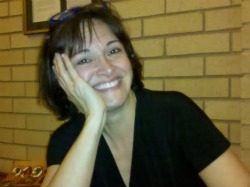
Greetings, I’m Lewis Buzbee, guest-blogger for the day.

Guest blogger: Lewis Buzbee.

It’s true, I’ve hi-jacked James Preller’s blog to bring you a very cool conversation with Mr. Preller (he makes me call him that) about his newest book, Before You Go (Macmillan, July 2012), which is his first Young Adult novel. I’ve taken control here because Mr. Preller is a very generous writer who frequently trumpets and supports the work of his fellow writers, and I figure it was time to hear from him. James has interviewed me twice, and our conversations have been so enjoyable, so thoughtful, I wanted to turn the tables, see what he had to say.

Before You Go, I must tell you, is a deliciously good book, whether you call it YA or not. It centers on a tough summer in the life of Jude, who has to face all of the toughest questions — what is love, what is death, what comes next? It’s everything a novel should be; it’s funny, moving, troubling, smart, and illuminating. Forget the labels, it’s a beautiful novel, and you should read it.

James, you’ve written picture books, chapter books, and middle grade novels; Before You Go is your first Young Adult novel. Why now?

Before You Go was the most logical step in a haphazard career path. You could argue that writing older and longer has been a gradual process for me, roughly parallel to the growth of my own children (Maggie, 11, Gavin, 12, Nick, 19). But you asked, “Why now?” and frankly I don’t have an easy answer for that. Except: opportunity. I’m lucky to have an editor, Liz Szabla, who doesn’t look to put me in a box or turn me into a brand. She supports my randomness.

How was writing Young Adult different?

I felt that writing for young adults came closest to my natural voice. I loved going back to my 16-year-old self, tapping into that rich and vigorous vein. So many ideas and feelings and memories bubbled forth. First love, big emotions, friendships, wild times, painful times, all of it. Location became central to this story, and I set it in my hometown, including real places I’d been. That trip out to the Amityville Horror House, for example, that’s something many of us Long Island kids did in our boredom, in our driving-around-looking-for-something-to-do lives. I am instantly transported back into that car with my high school friends, Kevin, Eric, Billy, and Jim –- a bunch of guys, a little lost, trying to figure out Saturday night.

Amityville: one exit in our driving-around lives.

Tell us where and/or how this story came to you?

After glancing through the pink-and-fanged world of Young Adult fiction, I felt a desire to write a realistic book, and a love story from a male perspective. There seemed to be many rescue-type love stories that were extremely romantic, but I felt as a guy, “There’s not one freaking thing here that my teenage self would read.” That’s a slight overstatement, but only slight. So that was the impulse, number one, but where was the story? I got the idea for a car accident out of two experiences: teaching my oldest son how to drive; and my recollection of two boys from my high school, Jesse and Mark, who died the first few months after getting their licenses. I remember driving by the tree where it happened, staring at that big oak, seeing where the bark had been chewed up by metal, imagining the horror. I got the idea to start the book with the accident, page one, then rewind six weeks into the past and tell the story from that point. We catch up to the accident about two-thirds of the way through, meet the characters, wonder who will be in the car and who will die, and so the book is divided into two parts, “Before” and “After.” Thus the novel’s opening sentence:

This is the moment between before and after, the pivot point upon which story, like a plate, spins.

I hoped the accident would give my story enough of a hook to keep readers hanging on, as this isn’t a story that offers one big action scene after another. It can’t be described as a typical book that average boys typically like. I don’t feel at all comfortable with these clichéd, empty-headed notion of what boys supposedly like.  As a guy, I’d like to proclaim, “We are more than just farts and fire trucks.”

Farts = still comedy gold after all these years.

I feel there’s a certain self-defeating, self-prophecy in a lot of publishing these days, i.e., boys are big galoots, so let’s give them farting fire trucks, or girls are princesses, etc. Funny, that’s not my memory of being a kid — I had all sort of interests.

When you first glance at a list of “books for boys,” well, yes, certainly, there are many appealing books on there. Action, sports, humor (bodily, mostly), and so on. But that kind of list depresses me, because it boils down boys to caricature. Boys only like X and Y and Z.

So while there is always a degree of truth to every stereotype, I know boys who are sensitive and thoughtful, funny and frightened, lonely and confused. Boys who don’t fit the mold. Or I should say, boys who can’t be contained by the mold; they keep surprising us in new ways. Our so-called “books for boys” should not pander to an extremely narrow view of what “boy” is and what “boy” can become. I am saying as a father and an ex-boy: It’s hard not to feel insulted. I don’t intentionally set out to write for “boy readers” or “girl readers.” I write about characters and situations; readers will relate or not. I don’t know which sex will read Before You Go, but I know the story involves boys and girls, so I’m hoping for a variety of readers. Fat ones, skinny ones — come all.

Didn’t anyone tell you that teenagers “just don’t read anymore?”

I can’t listen to that stuff. Statistics, numbers, none of it connects with what I do as a writer, or what any individual does as a reader. The thing for me about this particular “market,” as they say, is that I have no experience with it, and no idea who if anyone is going to read my book. This might sound phony, but I wrote this book for myself –- I wanted it to exist, and I took my time writing it, too. I’ve been involved in children’s publishing since 1985, much of the early years with book clubs, where there’s direct, immediate feedback from the marketplace. I usually have a pretty good idea when a book might sell or when it won’t. But for this novel, I haven’t a clue. But yes, certainly, I would love to get starred reviews and awards and all that stuff –- I’d love that — and I do wish for readers to find and enjoy Before You Go.

This seems a huge oversight, but didn’t your editors point out that there are no vampires in here, no angels, no dystopias? What were you thinking?

I was recently inspired by a blogger who encouraged us to “read out of our comfort zone.” You know, the books you don’t usually pick up. So I grabbed Laini Taylor’s The Daughter of Smoke and Bone –- which has gotten gigantic buzz, sold the movie rights, amazing cover. I was curious about what I might be missing.

It’s a beautifully written story about angels and dystopias and underworlds and bizarre creatures and idealized romantic love, paranormal or otherwise, and on and on. And you know what? I was unmoved. I could admire much of it, particularly the language and the imaginative feat of creating an alternate universe. I respect it, but it’s not where I want to live as a reader. That’s not a criticism of the book, more a reflection of my own interests. Same thing with me as a writer. I am stuck with the person I am. Which does not rule out, by the way, magic realism or other elements of fantasy. See my comment about, re: haphazard career. I like to try new things, so I wouldn’t rule out anything. And to be clear: I’m glad I read Laini Taylor’s book.

Tolstoy said a writer can get lots of things wrong, but not the psychology, meaning, a work, no matter how fantastical, had to ring true to human life. This is what I find so wrong with so much vampire/fantasy/dystopian literature these days. It works on the page, but not in real life.

Realism is the coin of the realm, the heart of all fiction, including the most imaginative fantasy. It has to connect to the human heart, it has to feel true. That is, credible. In a book I’ve been writing for a long time, I began with an impossible idea. Something that couldn’t ever happen. But . . . what if? And the essential thing, I think, is to play that out as credibly as possible, there has to be a cohesive internal logic. It’s been a struggle, frankly, but I view that as a good sign. I believe a writer can accomplish powerful things in any genre, even if it involves, oh, fat vampires on a spa retreat in New Mexico. But sooner or later it’s got to deal with the human heart — or else who really cares beyond the momentary diversion?

You write: “He was in between, a lit fuse, a teenage rocket exploding, and he felt there was nothing for him on this Wrong Island.”

I am a child of suburbia and this book reflects that.

Wrong Island, New York. Levittown, specifically.

Many of my friends and I shared a sense of not belonging, of having inherited a world not of our making. I just wanted to get out, you know, create my own reality –- and I think a lot of teenagers feel the same way. Isolation, alienation, I used to think they were teenage feelings. But now at age 51, it seems like a lifelong perspective. You learn to become okay with not quite fitting neatly into the world’s puzzle.

It seems to me that, no matter outward appearances, this is how all teenagers feel, outside, stuck between childhood and adulthood, “in between.”

Literature is a powerful force –- the written word mightier than the sword, and all of that. Sometimes we forget it, but it’s still true. Ideas do change the world. Atticus Finch and how important it is to walk in someone else’s shoes, for example. To go somewhere else, or to be someone else, if only in your mind. To imagine the possibilities. That’s what’s so exciting about YA, this incredible in-between moment in a life. I was listening to a renowned speaker the other day and it’s clear that right now, today, the universally-accepted answer among educators is that kids need to read in volume. Don’t worry about what they are reading, so much as that they are reading. In other words, it’s about quantity over quality, to the point where quality isn’t even in the equation. And I get that, I really do, the way a young soccer player needs “touches” on the ball, and a musician needs hours with his instrument, but there’s a part of me that thinks, “Yeah, but that doesn’t connect with why I personally love books.” We also need soccer players, and musicians, and readers to love what they do . . . or else they quit.

Told in the third person, the novel stays with Jude’s character most of the time, but there are two places where you dip into his girlfriend Becka’s consciousness, and later we have access to Jude’s mother’s thoughts. Tell me about this choice.

I often begin my books by writing out of sequence and from spontaneous inspiration — building on random scenes and sentences — and as a result my rough drafts tend to lack consistency. But I revise continuously, endlessly, and over time the editor-in-mind cleans up the mess. Conventional thinking would have me “fix” all those lapses. Fortunately, I was able to talk over each scene with Liz, my editor. Sometimes I made those revisions, other times we mutually concluded, “No, this feels right, let’s keep it.” We have the same conversations about split infinitives, by the way. Oh, those are exciting times. Other editors might have told me those point-of-view lapses had to go. But as Thoreau said, “Consistency is the hobgoblin of small minds.” The guideline I try to follow is, “Does this work?” Another way of saying, I don’t pull every dandelion.

One of Steinbeck’s editors pointed out to him that a character early in a novel had blue eyes, but later brown, and was he going to fix that. I believe he told them to go to hell. All good books have flaws, which I believe adds to the sense of their rightness, oddly.

Right, you want to honor the mistakes. It’s a matter of taste. I compare it to music. Some bands are really polished, everything sounds perfect, slick and smooth, labored over in the studio, whereas other artists prefer to keep the rough spots, the grit –- they resist the surface sheen and focus more on making that direct emotional connection, warts and all. There’s a native distrust of polish and shine and, more significantly, even of that part of the brain, the parent-in-the-mind, where something essential gets lost in the refinement process. Most of the Beat writers felt that way. Perfection has a certain blandness, don’t you think? Don’t get me wrong. I work very hard to make the book the best it can be –- according to my own taste and ability — so I can’t pretend that my failures are intentional.

Much of the first half of the book takes place at Jones Beach, where Jude has his first job in a grease palace by the sea.

That was my summer job, age 16, flipping burgers, hauling garbage out to the Dumpster, sneaking out beer in big, plastic mustard jars. The sun, the heat, the beach, the bikinis, and that first paycheck.

I knew it would make for a vivid setting for a teenage story, that classic dumb summer job we all suffered through and secretly loved. Jude is not me, he’s his own character, but I worked that job, I know that world.

That’s the Field 6 concession stand at Jones Beach.

You’ve spoken previously about that reader who is, how did you put it, able to be bored, that is, able to enjoy being bored and sink deeply into a book, let the hours go by.

A lot of ways to answer this, and I’m afraid I might try them all, so you better grab a chair. More and more, I see writing is an act of faith, a trust. This comes back in some ways to the boy reader, which is a code, by the way, for the impatient reader, the barely-willing-to-put-up-with-it reader. And we’re told that the way to reach this hard-to-reach reader is through short chapters, lots of action, one conflict after another, etc. It rewards a certain kind of typing. But I feel as a writer and as a reader, that I’ve always (also) liked the slow parts. There are forty books in the Jigsaw Jones series, and the mystery is always the engine that drives the action forward. But my favorite parts are often the closely-observed, domestic moments. Three brothers in a room, or the parents painting a bathroom together, or the conversation at the dinner table. I saw one of my writing heroes in New York City back in the late 80’s, the great Roger Angell. During his talk, Angell compared reading to being a baseball fan, which I am.

Baseball fans and avid readers both share a willingness to be bored.

He contended that both occupations are for people who are not afraid of being bored. I’ve never forgotten that observation. I’ll quote Angell here, because I have a recording of that talk and I recently transcribed it: “It really is one of the great pleasures of baseball. If you sit there in the early innings, there’s that wonderful time when you wait and see what kind of game this is going to be. Every game is so different from the other, and you need those early chapters, sometimes very slow moving, in order to lead up to the end of the book, the end of the game.” First off, that’s brilliant. And so true. To me, at any given moment a story moves horizontally (the plot advances) or vertically (characterization deepens). Those directions are not mutually exclusive, the line may be slanted, but that’s basically the two main thrusts. I’ve always been drawn to the slowing down, the sinking into character and setting, more so than the headlong forward rush to the next big climax.

For example, there’s a small moment in Before You Go, a few paragraphs early on, when we see Jude at home for the first time, and we meet his mother. His father has already told Jude that she is in bed with a headache, not to be disturbed. So Jude enters the house after his first day of work, tired and dirty. I love that mother and son are separated by a shut door, the staging tells us all we need to know.

In the hallway, he paused outside the closed door of his parents’ bedroom, tilted an ear, listening for movement.

“Jude?” his mother called.

“Yeah, it’s me, Mom,” he answered. “How you feeling today?”

A long silence. “I’m sorry, I’ve got nothing for you in the kitchen,” she finally said, her voice muffled, as if groaned into a pillow.

“That’s okay, Mom, I’m good,” Jude replied. He considered telling her about work, how some girl saved him from getting pummeled by a trio of behemoths, but it felt awkward trying to talk through a door. He placed his right hand on the door as if to push it open, and he saw his fingers as the legs of a fleshy spider perched there, tingling. Jude rested his head against the jamb, shut his eyes. He waited in the hush for something to happen, some change to occur, but nothing did.

Nothing ever did.

I’m proud of that little encounter. “I’ve got nothing for you,” she says. To like my book, I think you have to enjoy those quiet moments. You must have the patience of a baseball fan. Admire the way a pitcher drops that 0-2 slow change just off the outside corner, low and away, trying to entice the hitter to chase. The art, the craft, the whole of it. In this scene, I’m plunging downward, not across. It’s slow, not fast. And I need a reader who is okay with that. I have faith that that reader exists, just as any reader must have faith in the writer –- that eventually he’ll deliver. But nonetheless, I wrote it anyway. That’s the thing. You just write. Because it’s what you do.

James Preller Interviews . . . Lewis Buzbee, Author of “Bridge of Time”

Lewis, I was just so impressed with your new book, BRIDGE OF TIME (Macmillan, May 2012). Congratulations. When I was reading the Advance Reader’s Copy, I wished I could talk to you about it, ask questions, dig a little deeper. Then I realized: Hey, I operate my own fully-licensed blog right here in America. I’m kind of a big deal. So I figured I’d invite you over and we’d talk it out. (Besides, Vonnegut is not answering my emails.)

That’s odd. Kurt and I were just talking the other day. So it goes.

I mentioned Vonnegut almost randomly, since as a matter of policy I drop Vonnegut’s name as often as possible, but thinking of it now, old Kurt dabbled quite a bit in time travel himself. Billy Pilgrim — of Ilium, New York –- tumbling from past to present to future. And it seemed totally natural, not science fiction –- that yes, life is like that, we’re constantly traveling through time in our heads.

“Unstuck in time” is the phrase Twain used here to describe Time Travel, and I lifted unapologetically from SLAUGHTER-HOUSE FIVE. Vonnegut is too important, I agree, to overlook, especially today. But it also seems to me that Vonnegut is a direct heir to Twain. In the book, Twain makes a passing reference to his friend Kurt, whom he met while unstuck in time, and it was Kurt who coined the phrase.

That’s a wonderful detail, Lewis. In my upcoming Young Adult novel, BEFORE YOU GO, one of the central characters just finished reading BREAKFAST OF CHAMPIONS. There’s really no big reason for it, other than to tell you something about that character’s likes and interests. Frankly, I loved the idea of four teenage boys in a car, talking — however briefly — about Kurt Vonnegut — and it leading to a minor argument. That’s Kurt, always stirring things up. We do what we can to pay homage to our heroes.

Writers, for the most part, become writers because they started as readers. We’re nothing without those who came before us. We owe them all the props. Especially Vonnegut for me. When I was sixteen, I read SLAUGHTER-HOUSE FIVE, and my world was never the same.

This is the third book in what I like to think of as your “Dead Author” trilogy, following STEINBECK’S GHOST and THE HAUNTING OF CHARLES DICKENS. In this story, we meet Sam Clemens, who later goes on to fame and fortune under the pen name, Bret Easton Ellis.

I prefer to call these “literary mysteries.” And no, not Bret Easton Ellis. Some of Twain’s writings are actually in the more advanced past tense.

Oh, wait, you’re right. My bad. The girl who usually comes in to shuffle my note cards has been out sick. Hold on, give me sec.

Color coding, my friend, that’s what it’s all about. Works for socks and other underthings as well.

Ah-ha, Twain! That’s it. Um, okay, each book is thematically linked, but not at all formulaic. Reading one tells you nothing of the others.

I really didn’t want to write the same book with plug-in characters. And I tried to offer different aspects in each book. Steinbeck has a male protagonist, Dickens a female, and with Twain, one of each. I also tried to look at different aspects of a writer’s life. In Steinbeck, the writer himself is dead and remains as a spirit, in the form of his books. With Dickens, I was looking at The Great Man as a living author, but a fully successful one. With Twain I focused on that crucial summer when Twain made the jump from journalist to fiction writer, when Clemens really became Twain.

To me, that decision was central to the book’s success. We meet Sam Clemens, struggling writer, not “Mark Twain,” established literary lion. Clemens, like the main characters, Lee and Joan, is still unformed. We can relate to him. All three main characters are poised on the verge of becoming. The future awaits them, exciting and terrifying. I love that about your story, and really it’s what I love about children’s literature in general. There’s this beautiful sense of self-realization, of youth unfurling, of learning how to be. Your book celebrates the cusp of life.

This is one of the reasons I love to write for middle grade readers, because that’s what their whole lives are about, bidding farewell to childhood and entering into the murkiness of the grown-up world, with just enough awareness to be both brilliant and naive in their choices. I remember that so much from my own junior high life, how much I tried on different costumes and personae, trying to see what fit, and all the while watching the adults around me and trying to figure out how they became who they were now.’

I’m fascinated by middle schoolers, it’s such an age of transition, false starts and new beginnings. Filled with self-doubt and uncertainty. Who am I, where do I belong? Everything is up for grabs, which is tremendously exciting, because it’s also a time of great possibility. As you know, I have a 7th grader in my own house, and as maddening as he’s become –- and I confess to sometimes wanting to strangle him, his eye-rolling impatience — I often feel great sympathy for my son: the hormones, the emotions, the explosion of brain cells in the frontal cortex. It’s a wild ride. The saddest aspect about middle school life is their desperate desire to fit in, their longing to belong, and that often manifests itself in dull conformity. Everyone wearing the same clothes, worried about what everybody else thinks.

That’s the great conflict, isn’t it? Wanting to fit in, yet dreaming of being your own self. My daughter is in 8th grade — more eye-rolling than 7th — and I see her working hard at both. I do think this is one thing that the best middle grade novels — heck, any of the best novels — can do, give the reader permission and courage to find themselves in that grand sea of confusions.

By the way, “This American Life” did a brilliant episode on Middle School –- so insightful and entertaining. Please, by all means, check it out. You know I wouldn’t steer you wrong. You can access the full transcript, too.

You did steer me wrong once, but I called AAA and they got me out of that ditch.
Back to the main river: I think if you wrote about the later Mark Twain, it could have easily led to a tone that was too reverential, all hail The Great One, full of wisdom. But this way, Sam is as flawed and vulnerable –- as human — as Lee and Joan.

I love that Twain here frequently says to Joan and Lee, listen, I’m new to this whole time-travel thing, too, and I’m as clueless as you are. That’s a great thing to hear from an adult. I think it gives you more confidence in yourself at that age, and it also makes you feel like less of a freak. If I’d gone for full-blown Twain, the white-suited figure we all know, it would have become, I think, an exercise in bad down-home imitation. In early drafts of the novel, it was that, to an extent, and I had to work hard to resist it.

The book also serves as a love note to San Francisco. The city itself stands as an essential character.

I end up writing about San Francisco over and over again, and it’s always a love note. I’ve lived here twenty-six years now, and not a week goes by that I don’t look up and thank my lucky stars. But San Francisco is also a perfect setting for this book in particular because it’s a place people have always come to in order to become who they most want to be. There’s that freedom here, that license, if you will. It’s not a mistake, really, that it was here that Clemens found his Twain.

Yes, exactly. In the book, Miss Greta speculates on the question of why San Francisco? Why are these time-traveling incidents –- where some select few travelers get unstuck in time — — happening here, in this city, of all places. She tells Joan:

There are other places we’ve heard about. But San Francisco’s a good one. Very popular that way. People come here to find their futures. You can be who you want to be here. Keep a remember on that.”

Keep a remember on that. Very nice. You love this city, don’t you?

I do love it, for its natural beauty and for the freedom of it. It’s been a true gift to raise my daughter, now 13, in this city, and see how that’s worked out for her personally, and how she views other people. Everyone here is a freak, in some way, an eccentric, which means of course that everyone is an individual and treats others with the same respect.

Obviously, you must have done a lot of research.

One of the great things about writing these books has been able to say, “Oh, I have to go work now,” and then settling down to read Steinbeck, or Dickens, or Twain. I mean, really, Work?

I was happy to come across a video interview with M.T. Anderson. He was asked about his typical workday and he talked about the importance of exercise –- that it was a perfectly valid, essential part of his day as a writer. And I need to be reminded of that permission, you know, that it’s okay to do yoga or take a walk or whatever, that it’s part of my job. So, thanks for that, M.T. (By the way, did I say “do yoga”? I meant, “lift enormous amounts of heavy weights.” I don’t want my Nation of Readers to get the wrong idea; I’m a very tough guy.)

Hey, for some of us, doing yoga is lifting enormous amounts of weight. Listen, writin’ ain’t coal-mining, let’s be clear on that. But it’s true, so much of a writer’s job — at least in my experience — takes place away from the desk. Staring out the window, taking walks, whatever. Writers are, Stein said, “those upon whom nothing is lost.” It’s part of the job. You look at everything, are interested in everything.

Huh? What? Are you still here?

Focus, focus. You take your ritalin this morning?

Look: a bird!

I’ve also become a rather devoted historical researcher — histories, biographies, fashion, technologies, and my favorite of all, maps. Whenever I’m working on a new novel, I’ve got tons of old maps pinned up over my desk, as if they were blueprints and I were just the contractor on the job. Building a whole city in your head and populating it. Work, indeed.

Joan discovers that taking a bath in 1864 was a major hassle.

Listen, no one really wants to go back into the past. Even for the wealthiest of the wealthy, they were mean and dangerous times. A simple infection could kill you, if you made it past childhood. These issues rarely come up in time travel, so I wanted to touch on that. The past? Great place to think about, but no thanks. I’ll stay here with hot showers and antibiotics. It’s silly to romanticize the past, which, at one time, of course, was the absolute present. One of the things Joan notices about SF in 1864 is how new it looks. To her 2012 San Francisco is sort of old and falling apart.

You take delight in the language of the times. “Sorry don’t milk the goat, “ Miss Greta says at one point.

I may have stolen that from Dr. Phil, I’m afraid.

Ha! We stand on the shoulders of giants.

But it also comes from steeping myself — again and again — in Twain, whose language just pops all over the place. I’ve got notebooks filled with expressions and words I just couldn’t fit in. My two favorite Twainisms that made it into the book — he uses these in both Huck and Tom Sawyer are, “Honor Bright,” a mild oath along the lines of “I’ll be,” and “Hang fire,” meaning it’s time to chillax.

Literally, to hang the lantern on a hook. Settle in. Hang fire.

I also had fun teaching Twain — who would have been curious to learn it — about the slang of Joan and Lee’s time. Lee teaches him how to say ”Dude” at one point, and “Freak out.”

You write powerfully about the discrimination experienced by the Chinese residents in San Francisco during the 19th century. The so-called “Chinese Menace” or “Yellow Peril.” For Joan as a fully assimilated Chinese-American to see it, and feel it, and by frightened by it, well, I just thought you brought that period home in a very real, hard-hitting way. Joan was the key to telling that part of the story.

San Francisco was a horrid place to be Chinese, for long, long decades, but now the Chinese community in SF is very powerful and very much the majority. These are my neighbors I’m talking about, my daughter’s schoolmates. This goes back to what I was saying about the past. Things have gotten better — slowly, slowly, but better.

In each of these books I’ve tried to bring in really urgent social issues: racial discrimination and violence in both Twain and Steinbeck, child labor in Dickens. It seems a disservice to any reader — young or old — to overlook these matters. And besides, that’s one reason we still turn to these three writers, their concerns for social justice, their unflinching attitudes toward our cruelties.

The book is also, at its heart, an old-fashioned adventure. Amidst all the research and big ideas, it’s important to remember that.

In the first draft, it was all adventure, all chase and struggle. My editor, Liz Szabla, told me time travel was really hard and I needed to be careful. I came to discover, through Liz’s editing, that I’d used time travel as a gimmick, when what I really wanted to do was write a book about time. That was hard. The adventure has to serve the bigger concerns of the book; a book that’s just car chases and gun fights is really only a lousy movie.

I think far too many books today aspire to only that, the dream that somebody in Hollywood will turn it into a lousy movie. Ca-ching!

I’m not saying I’m not interested in a movie deal. No chump, me.

No, of course, we’d all love to pay off the mortgage and get college squared away. Fame and glory on the red carpet with Brad and Angelina. However, there seems to be an increasing amount of books written as if, well, they were not intended for readers. Plot, plot, plot; frantically paced. I decided that, for me, the ultimate reader is someone who isn’t afraid of being bored. Like a baseball fan. That is, I have to trust that the reader is going to hang with me a little bit, because I’m not really set up to write every story like it’s a roller coaster ride. Does that make sense? I don’t plan on boring anybody, exactly, but I can’t be overly worried that I need a car chase in the next three paragraphs or my readers won’t turn the page.

I write, I believe, for people who like to read, who want to see the world in a slower, more engaged way. We have enough “fast” media in the world. Books are meant to be slow, which of course, takes away nothing of their excitement.

Lewis, don’t tell my wife, but I think I’m falling in love with you. Anyway! Almost midway into the book, Joan and Lee realize that this fellow they’ve been hanging around with, this Sam Clemens guy, is actually . . . Mark Twain, the famous author. I wondered about that a little bit, how many typical middle schoolers would know about Twain. Or care. And the great thing about BRIDGE OF TIME is that it’s incidental: Twain, the great author, doesn’t really matter. A reader doesn’t have to know a thing about him to enjoy this story.

Lots of middle schoolers will have read Tom or Huck already, though not most. However, when I visit middle grade classrooms I always ask about Twain, and most know something about him, or at least about Huck. The interesting thing about these writers — especially Twain and Dickens — is if you haven’t read the work you still know about them because they are such a part of the cultural currency. Yes, even in this iMac iMad world we live in. Bah Humbug. There you have it. I also chose each of these writers, however, with the hope of getting that one interested reader to move on to Steinbeck, Twain, or Dickens. This is the age, really, when kids will begin to read their first adult books, and these writers are perfect for that time.

Yes, we’ve touched on that topic before. How for readers of our vintage, there was no “YA” exactly, we just merrily went on to Steinbeck or Bradbury or Vonnegut or Brautigan. Then I guess S.E. Hinton came along, Paul Zindel, and others who became intensely interested in those earlier stages of life, the teenage years, and the publishers figured out there might be a market for it.

When I think of the best MG and YA writers, I don’t make any distinctions in age groups. For example, I’d put Virginia Hamilton’s PLANET OF JUNIOR BROWN up against any “adult” novel, and the adult novel would pale. Good writing is good writing: period. Alas, much of what gets published in the MG and YA niches is just dreck, plain and simple. But in this way, it resembles most of what gets published in the adult trade, pure dreck. This is as old as publishing itself.

I identified with an aspect of Sam Clemens, the part of him that was fearful, that lacked self-confidence, doubted if he was good enough. You know, I’ve really felt that all my life –- I feel that right now with the book I’m writing — and I’d bet that most artists have experienced those same doubts. Clemens is scared out of his mind, paralyzed, that he’s not up to the task of becoming the writer he always wanted to be. Is that something you’ve felt?

I feel it every day. I mean, no matter what I’m doing, I still feel a fraud, and that I might get caught out at any moment. Don’t we all feel that way a bit? And kids especially. But I never feel it more intently than when I sit down to write. From having read so many journals and biographies and letters, etc., of other writers, I’m convinced this is true of all artists. No matter how much I’ve written, when I sit down to begin a new project, I think, I have no idea what I’m doing. And this is good. If you set out knowing exactly what you’re doing, well, then you’re probably going to write something stale, without surprises. The poet Richard Hugo put it so gracefully: “Hope hard always to fall short of success. It’s the doubt that makes you work harder.

Finally there comes a time when Sam must face his own future –- which is what the book is about, for all of us, daring to become our very selves. There’s a lovely scene between Joan and Sam. She recognizes the fear he’s experiencing. And Joan tells him what she believes Twain would say to him (Sam), if he (Twain), only could: “He would tell you that you must try. That you should cast off.”

Sam would not look at Joan.

“I am afraid to even try,” he said.

It was strange to see Sam this way, all the brash taken out of him. Deflated. But oddly reassuring, too. It made Sam seem more real.

“I am afraid of trying,” Sam said, “because I want so badly to be who I think I might one day be. And if I fail . . . I’ll have no future at all.”

We’re back to the doubt. You can be paralyzed by it, or you can recognize it and make the big leap forward. Kids, too, know that adults are often full of b.s., and can see through facades like x-ray machines. It’s just better for them to have it acknowledged. Sam’s doubt does paralyze him for a while, but in the end, it’s his doubt that propels him forward.

I have to say this. As a rule, I hate time travel. It never makes sense to me, and too often it’s handled crudely, non-sensibly. I mean, yes, there’s a conceit, as readers we have to take that leap of faith and go with it. But, but, but. It still has be remain credible –- the reactions, the motivations, even the science, to a degree — and I think you achieved that in the best possible way.

Time travel — which we believe to be impossible — is mostly a wish-fulfillment fantasy. If only I could have saved Lincoln . . . But I don’t believe the world can be changed that way. I do believe, however, that our awareness of time — through history and literature and other media — can give us a much clearer sense of ourselves. In the end, this is what I aimed for.

But, my goodness, it must have been complicated to write. No? I mean, just keeping it straight, keeping the internal logic in line with some kind of familiar reality. Was there a lot of revision?

Oh lord. There were long chapters in the early drafts — I did five MAJOR revisions of this book — where Lee and Joan and Twain just sat around talking about time and how it worked. It took me forever to get it down to just what I wanted. And finally the answer came from Twain. In the book, Sam talks about the Mississippi and how sometimes it’s so large, you think you’re still on the river but you’ve really gone into a side channel and you’re away from the main current, often for miles. That’s what Sam says to Joan and Lee about Time Travel — it’s just a diversion, one that gives you a better view of the real thing, and in the end, you’ve got to go back to the main current. That’s where life happens.

I see that you dedicated the book to your editor, Liz Szabla.

Liz took a huge chance on me with STEINBECK’S GHOST, buying it on a proposal, and then when that was done, took another chance on these ideas about Dickens and Twain. Really did change so much for me. Not only is she a brilliant editor — meaning she see through to the essential heart of a story and leaves behind the silly “market” questions, she offers what writers really need, the sense of support. Publishing a book hardly ever “changes” your life in some miraculous way, but it does give you the support you need to go on, write the next one. She’s the rarest of editors.

Agreed. We’re very, very lucky to have her on our side. You know, my hair bristles when I hear complaints about messages in books. As if that’s a bad thing, or an avoidable thing. I contend that you can’t tell a story without values and messages embedded throughout. The issue is one of craft –- how artfully these messages are delivered. And in this book, one message can be reduced to two words: CAST OFF. “Have fun. Look around. It’ll be okay.” Dare to dream. Or as Maurice Sendak ended his recent interview with Terry Gross on Fresh Air, “Life your life, live your life, live your life.

There’s a huge difference between a message and a moral. Messages are deeper, more subterranean, closer to the heart, unsaid. Yes, Twain does come out and say it, but it seems almost frivolous at the time. What better message could there be? It’s what friends do for one another, offer that permission and challenge.

Good distinction. Joan again seems to get the deepest thoughts:

“Joan no longer believed what Sam had said, back on the Paul Jones, about lessons and morals and how they could ruin an exciting adventure. She now firmly believed, from her own experience, that the best adventures offered you lessons, no matter what. If not, an adventure was just a roller coaster ride. An amusement. A true adventure, Joan realized, took you places –- or times –- you could not have begun to imagine. Always something to be learned in the unknown.”

If a book is true to life — and not just some pre-fabbed fantasy world—then there have got to be lessons — or messages. A book is a way for the reader, I think, to examine the world deeply and courageously. Or at least a way of finding that courage. I read books because they talk about the world, and when I’m done, they make me want to go out into it.

Do you have a favorite part of the book?

There’s a scene where Lee and Joan and Twain, while being chased, take a small sailboat out onto San Francisco Bay, and I think it’s my favorite bit of prose ever. The danger of the pursuit has passed, but the danger of the black water is still there. I like that.

While the flames from the Paul Jones licked into the night sky, Sam unfurled and hoisted the sail, and a soft southerly breeze caught and inflated it. The boat jerked once, then set off gliding over the black water.

Lee stared forlornly after the Paul Jones.

The waning moon offered enough light to enchant the night. The bay was black but visible. It was perfectly quiet out here, and Lee was happy with that.

They emerged from their sheltered cove into the open bay, and a stiff wind caught the sail. It felt to Lee as if a hand was pushing the boat from behind.

Up ahead was the black silhouette of Yerba Buena Island, partway between San Francisco and Oakland. Where the Bay Bridge and the man-made Treasure Island was supposed to be.

As the boat came even with the southern tip of Yerba Buena Island, a sharp hissing noise filled the air. But before Lee could turn, three sleek sails hove into view on their starboard. The three boats were longer and thinner than Sam’s old clunker, and their sails were enormous. The boats rode low in the water, the sails tipped so far over they etched the surface of the bay. One dark shape manned each tiller.

You write beautifully, Lewis. And readers should know that the above passage came on the heels of a tumultuous scene with butchers, cleavers, shotguns and burning ships (are you listening, Hollywood?!). The veritable calm after the storm: Expertly paced. My old friend, the great Scholastic editor Craig Walker, used to say that the best thing Twain ever did was get Huck out on the water. Because then it was all there, the physical liquid space, sliding through the solid world, but also floating on literature’s richest metaphor: water -– of consciousness and time, currents and dangers, life’s eddies and so on.

That’s why Huck is Huck. He’s out on the water, watching the placid, unchanging towns go by. You get a better view of the world from there, and you’re going some place, changing with the world as it changes you.

Lewis, thank you for giving us this beautiful, inspiring book. Look, as you know from my private complaints, I’m often brutally dissatisfied with children’s books. There are so many that I find to be cynical, commercial, copycat, disappointing. And, yes, the counterpoint holds true: many are rich and wonderful, the best books imaginable. With the BRIDGE OF TIME, I declare you on the side of the angels. I respect and admire what you’ve achieved here. Because you wrote an adventure, a fun story, but also a story that is deep, that has meaning, and heart, and enduring value. It’s the genuine article. I wish for this book to find the audience it deserves –- and earn some starred reviews in the process. Good luck to you, Lewis. And now, if you’ll excuse me, I must . . . cast off.

James, all I can say to such praise is, “the check’s in the mail.”

Forget that, Lewis. My dream is to make it out to the Left Coast someday. Catch a baseball game, watch Timmy pitch, and chat our way through nine innings.

You’re on. We have the best garlic fries in the league, and Gulden’s Spicy Brown mustard for our dogs. Or we can even go for free. Part of the right field fence at AT&T has a clear view from outside the park, and anyone can go there and watch the game in what we call The Arcade. I think that’s where writers belong anyway, outside looking in.

—–

If you enjoyed this interview, please check out my 2009 interview with Lewis, back when he was a hirsute middleweight, boxing under the name Louie “The Buzz Saw” Buzbee. The interview is in three parts, it’s lively and fun and features a taser.

Want to see Lewis on television? Sure you do! Click here for a nice interview, based on his wonderful book, THE YELL0W-LIGHTED BOOKSHOP.

James Preller Interviews . . . Carmen Deedy, author of “THE CHESHIRE CHEESE CAT”

As an author, mine was not the story of the wide-eyed boy who loved weekly trips to the library, the happy ritual of laden arms lugging home precious treasures. No, we didn’t do that stuff in my family. For starters, my mother didn’t drive. Besides I was a do-er, not a sit-around-and-read-er. So I came late to children’s books. The first time I read Where the Wild Things Are or Harold and the Purple Crayon, for example, was as a 24-year-old junior copywriter, living in Brooklyn in a railroad apartment, and working on the Scholastic Book Clubs. That’s when I first appreciated children’s literature, if you’ll pardon the expression.

I realized that there was more here than met the eye, that a children’s book, in the hands of a true artist, could be as psychologically deep and powerful as any other work of art. It changed my whole way of thinking about children’s books — and about what they (and I) could aspire to become.

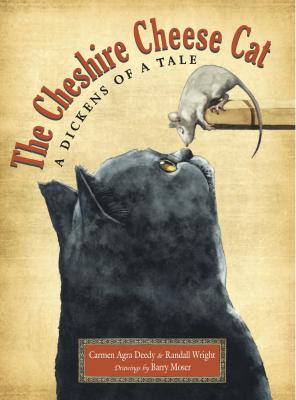
I was reminded of that dawning while I read Carmen Deedy’s new book, co-authored with Randall Wright, The Cheshire Cheese Cat — a clever romp, certainly, a delightful fast-paced read, yes, a charming tweak on historical fiction, surely, but also . . . more. This is simply a lovely, near-perfectly rendered work, with surprising depth at its core, marvelously illustrated by the great Barry Moser. After reading it, I asked my friend Carmen if she wouldn’t mind answering a few questions. And look, here she comes now.

I take it the Ye Olde Cheshire Cheese pub is an actual place on Fleet Street, in London, and you’ve been there. Was that for research, or did the idea for the book originate from that visit?

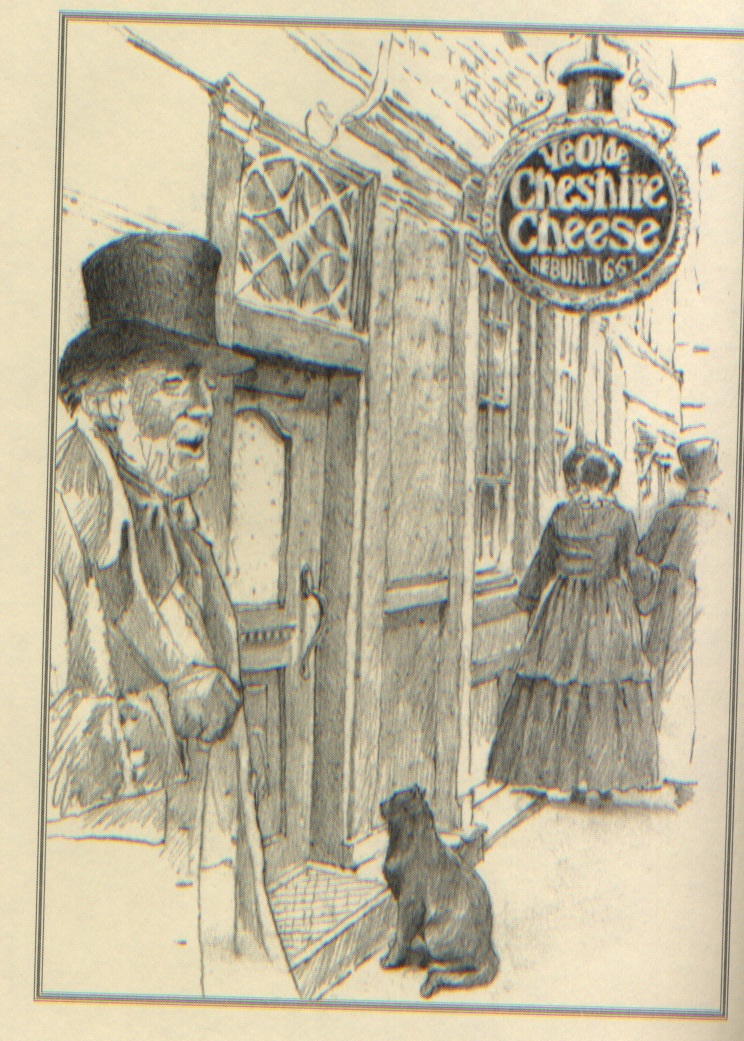
The blame lies squarely on the shoulders of the organizers of a lovely Welsh event, the Beyond the Border Storytelling Festival. In 2002, I was invited to tell stories on the grounds of a 13th Century castle. No lie. As if that were not fanciful enough, on our first night in London we stumbled (by purest happenstance) upon this gem:

My three daughters were with me that night and everyone began to talk at once. Rebuilt in 1667? Hadn’t the Great Fire of London taken place in 1666? That meant this inn had been rebuilt a mere sixty-three years after the death of Queen Elizabeth! Once inside, we discovered a place as enchanting, anachronistic, and mysterious, as we could have wished for. As we stood in the small entryway and looked around, one of the girls leaned toward me and whispered, “Best Harry Potter set, EVER . . .“

I’ll say. A more thorough investigation of the premises turned up this:

(Think of it as the British equivalent of “George Washington Slept Here.”)

The idea for the story came from a game of “What If?” What if . . . every mouse in London with means had come to the inn, in search of the best cheese in the realm? And what if . . . the cats were there for mice? But, what if . . . ONE of those cats hated eating mice. Rather, he secretly loved, um, cheese?

It struck me that here is a book that delights in language. You were inspired, in part, by words themselves. And you didn’t hold back.

We second-guessed ourselves more than once. Still, my fellow writer (Randall Wright) and I had decided from the onset that we wanted to tell the story in language that was reminiscent of books we had loved as children. If those stories engaged us, we would faithfully slog through unfamiliar words and odd phrases. And if we had prevailed, we reasoned, why shouldn’t today’s children be able to do the same? We decided to trust our young readers.

Oh, that’s interesting. I was just expressing a similar thought to my editor, Liz Szabla, about my upcoming young adult novel, Before You Go. It’s a story that takes some time to introduce characters, explore setting, set wheels in motion. It’s not plot, plot, plot every step of the way. On bad days, I worry about that: Does the book start too slow? Are those first 50 pages not dramatic enough? And ultimately I came to the same conclusion as you did, that I have to trust in my readers. That is, that they actually like to read.

I can’t wait to read Before You Go! Sounds wonderfully beguiling. When do I get that Advanced Reader’s Copy? Nudge, nudge.

Hold that thought. The book’s not out until July, and the ARC seems far away. I can’t wait for it, I’m super proud of it, but . . . we’re not here to discuss me. I’m sorry I brought the whole thing up. You were saying?

Once we decided to use words we loved, we dove into the text with semantic abandon. It was so liberating that, frankly, we went a little nuts. Before the Great Vocabulary Purging we had over six hundred higher level words—words that were not anywhere near the suggested lexile for middle grade readers. Worse yet, they had begun to interfere with the story. That was the deal breaker. We ultimately replaced, removed, or contextually defined over 500 words. Nonetheless, with a nod from our brilliant and long-suffering editor, we still managed to subtly retain many words of which we were particularly fond –– roughly seventy. We then added a glossary as part of the back matter . . . and decided, once again, to trust the young whippersnappers.

That’s the writing process, isn’t it? Get it all down on paper. You can always pull back in later revisions.

Absolutely. My first drafts are pitiful in the extreme. It takes me four or five rewrites to stop cringing as I edit. And I swear, every few years I seem to end up sharing a table with an author who will drolly insist, “I just sit down and write without much revision at all.” Where do these people come from? I think they grow them under florescent lights in some green house in Nova Scotia.

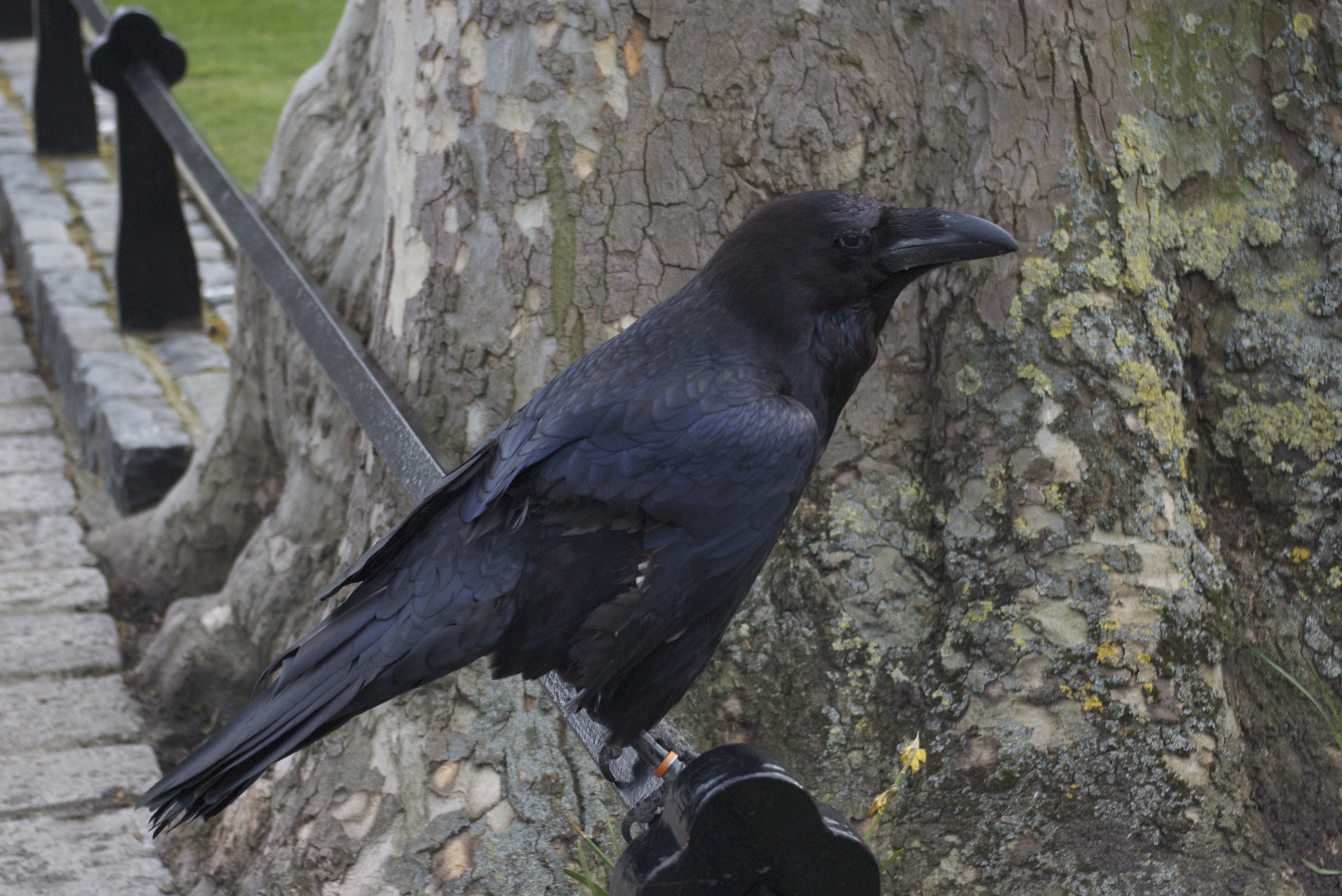
In a crucial moment, the feline protagonist, Skilley, is advised by Maldwyn the Raven, “You want the truth, Master Skilley? Then find out just what manner of cat you really are . . . and brazenly, unabashedly, boldly, be that cat.” Of course, that’s the toughest task of all, isn’t it? Be yourself. Especially for a middle grader, looking at everybody else for social cues, who to talk to, what to listen to, what movies to like, how to dress, who to sit with, and so forth. Tough on cats, too.

Tough on Skilley, that’s for certain. But the careful reader may find that Skilley’s greatest challenge is not, in fact, protecting the mice, neither is it out-witting Pinch, or even returning Maldwyn to the Tower –– but rather becoming, well . . . Skilley.

“Outing” himself as a lover of cheese, as it were.

Here I am, world, my true self. Emerson had some thoughts on this topic . . .

Because the storyline is meant to appeal to a “chapter book” crowd, we tried to tackle difficult subjects by couching them in language that softened their gravity; friendlessness, abuse, betrayal, death . . . okay, and we spared Too.

I have to admit this here. Too was not meant to live. I mean, the mouse was DEAD until the near final draft. Great pressure was brought to bear, however; the Save Too lobbyists were small, but thunderous in their disapproval of her death. We caved. Since the book was released, I’ve had a couple of elementary readers tell me it was a good thing Too didn’t die or they would’ve been reeeeeeeeally mad. Phew.

I’m a pretty tough-minded person when it comes to stories. I want them to be true, not phony, and certainly not convenient. But that has to be balanced with an awareness of your reading audience. Their expectations don’t have to be met, exactly, but they do need to be considered. For that age group, I felt that Too’s survival was appropriate.

I confess that I was happy to pull a Lazarus for little Too.

Because I’ve heard you speak a couple of times over the years, I guessed that there might have been a bit of your father in the character Maldwyn. That no-nonsense, tough-minded advice the Raven gives about apologies:

“It is not enough to say you are sorry. You must utterly own the terrible thing you have done. You must cast no blame on the one you’ve injured. Rather, accept every molecule of the responsibility, even if reason and self-preservation scream against it. Then, and only then, will the words ‘I am sorry’ have meaning.”

My father is 87 years old and the finest storyteller I know; his stories are very real, and if they do teach you something, they don’t bludgeon you with truth. And he is funny. Funny is something Maldwyn doesn’t “do.” He’s a bit too self-important. And yet, I do adore Maldwyn. The old thing is petulant and snappish. And it would be easy, and understandable, to misread him. But I suspect that beneath Maldwyn’s curmudgeonish exterior there is a wealth of sadness and conflict. He has betrayed his Queen and his country (at least under the very strict code of honor he holds himself to), and yet somehow he knows, I think, that to forbid a bird his right to flight is a harsh sacrifice for Queen and country to exact.

You co-wrote the book with Randall Wright. What was your process for that –- and what led you to make the choice of collaborating. Pure laziness?

Nope –– paralyzing fear, more like; the fear of uncorking what might be an unending flow of words. I like perimeters; rubrics comfort me. I mean, once you tell picture book writers to disregard the word count, they are often undone for days. It’s . . . dizzying. Lucky for me, I met Randall Wright. Randall and I were working at a children’s conference. We were seated next to one another at a dinner table and quickly engaged in the requisite “So what are you working on?” author swap. I’d been recently toying with Pip and Skilley, so I told him the story.

Randall had published several YA novels with Henry Holt. He kept saying things such as, “It’s just like a picture book, Deedy. You just keep writing until you don’t have anything left to say .” Then he’d start laughing. I’ll admit I toyed with the idea of poking him in the eye with my salad fork — but I didn’t. As Pip would say, we weren’t close enough friends for that yet. By the time the meal was over, we had agreed to collaborate.

You guys seem really inspired by the literary tradition, particularly the multi-scene, fast-paced ending –- the mouse, Pip, melting away in the cooking pot, the ferocious battle between Pinch and Maldwyn, and Queen Victoria’s startling arrival. As writers, you must have felt like circus entertainers, all those plates spinning at once.

I’m afraid we made our own heads spin a bit. But we enjoyed building up to those final scenes. Admittedly, toward the end of the book we felt as though we were in the midst of a game of literary high-stakes Jenga. Can we add just one more element? Will the whole thing topple?

The rewrites, research, and fact checking, were endless, as well. And I loved it to bits. Truly. Research is my favorite part of writing. Since I’ve mentioned research, if your readers want to know more about ravens, Dickens, Ye Olde Cheshire Cheese, etc., please check out the new website: www.cheshirecheesecat.com

Oh, dear. This is awkward. I’m afraid there’s been a misunderstanding. I don’t actually have, um, what one might call actual readers, per say. I’ve had folks stop by, but usually it’s by mistake, a search gone terribly wrong. You didn’t think that this conversation would actually help your career in any way? That there would be . . . readers?

Sorry, kid. I’ve been to the blog and I’m on to you. You don’t have readers, you have FOLLOWERS.

Followers? I kind of doubt it. Besides, I prefer to think of them as my zombie hordes. And I mean that in the nicest way possible, people. Nothing a good dermatologist couldn’t fix. They are doing incredible things with embalming fluid and Botox these days.

As to the plate-spinning (love that) dénouement . . . well, it was meant to be a hat-tip to the Victorian detective novel.

I know you are deep into Dickens. Without thinking too hard, can you name one thing you admire about his work?

Hmmm. Names. He was brilliant at creating names for his characters. Here’s a sample: Magwich. Sweedlepipe. Drood. Pecksniff. Havisham. Pumblechook. Sykes. Bumble. According to Greenfield’s Dictionary of Literary Characters, Dickens created 989 named characters in his career!

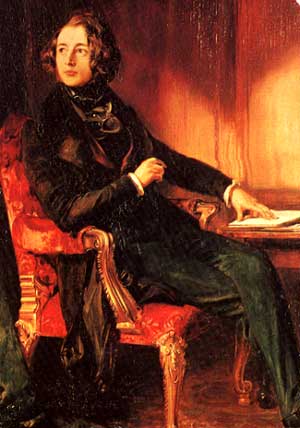
Charles Dickens himself becomes a minor but crucial character in the story. In fact, you even write in the voice of Dickens in his journal. No shortage of guts, have you? I would have found that terrifying.

Randall wrote most of the first drafts for Dickens’ journal. Our system –– one that quickly emerged on that first writing weekend –– was for each of us to take on a chapter, which would then be edited or even rewritten by the other person. After the edit or rewrite, back to the original author it would go. We would continue to pass a chapter back and forth fifteen or twenty times before we signed off on it and moved on. I don’t know if this would serve as a model for other writing teams, but we found it to be a great system for us.

As to writing in dear Boz’s voice? I know, I know. Leave that sort of cheek to Americans. But we did so with fear and trepidation, truly . . . gulp. Next question, please? Would you like to know how old I am?

That sounds like a trick question. A trap! So I’ll sidestep that, thank you very much, in favor of another one. Barry Moser’s illustrations strike me as exactly right. How lucky are you to be so well published. Tell us about when you first saw his illustrations.

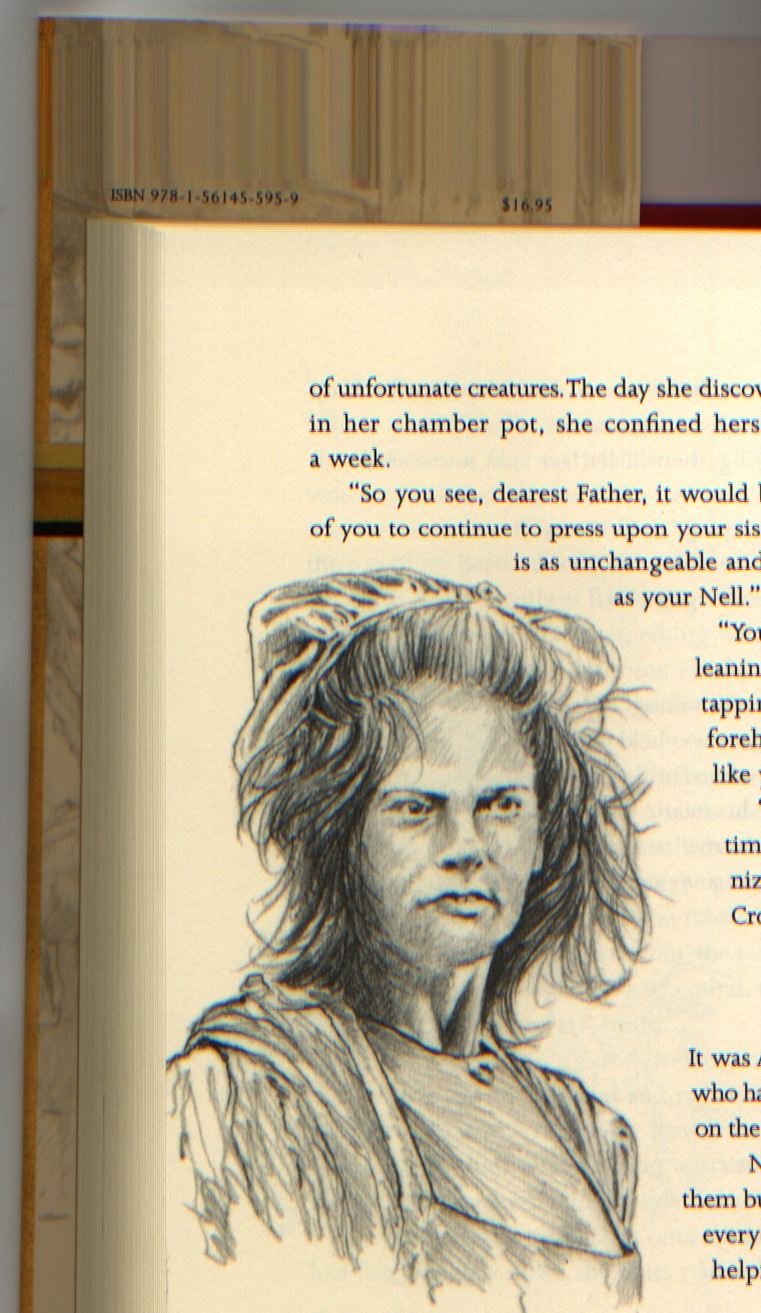
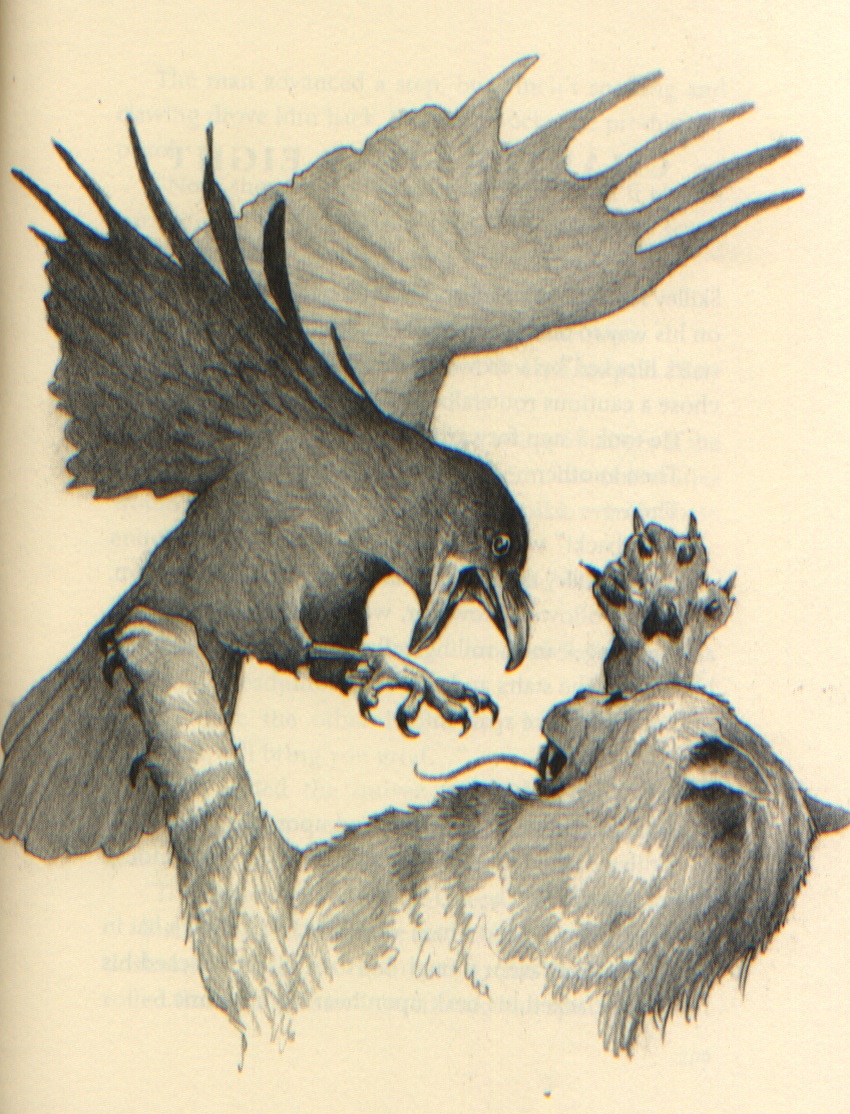
Barry is brilliant. Period. I first discovered him twenty years ago and have been his shameless acolyte to this day. As you can imagine, I was over the moon when he agreed to illustrate the book. Randall and I love every character that Barry’s keen mind and graphite pencil have rendered –– although I will admit the battle scenes are among my favorites. Huzzah, Mr. B!

Good luck with this book, Carmen. I’m so proud of you. It’s already received starred reviews from School Library Journal, Publishers Weekly, and Kirkus — you must be thrilled. Look, I don’t read enough contemporary children’s literature to make an informed opinion on what should or shouldn’t win a Newbery Medal. However, I did accurately predict both The Graveyard Book (though I didn’t think it deserved the actual Medal) and When You Reach Me. Like most folks, I didn’t know about last year’s winner, Moon Over Manifest. (And by the way, that was very nice — to be surprised at a time when the so-called “kidlitosphere” has made it almost too easy to quickly and decisively form the illusion of consensus, even if, in reality, it represents only .001 percent of readers; to me, the Moon Over Manifest selection was as if the traditional establishment reasserted itself and said, “Not so fast, bloggers! We decide.”)

Anyway, about the Newbery . . . um, Carmen, are you all right? You look pale. Why have you got your eyes and ears plugged? Don’t you want to talk about the Newbery?

Lalalalalalalalalalalalalalala.

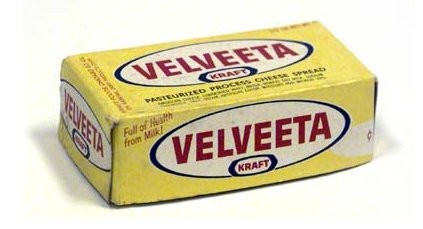
Okay, well, I can see that we’re out of time. I’ve just received word that there’s no more space on the internet. Please accept this hefty log of Kraft Velveeta Cheese as a token of our appreciation. And good luck with the book!

Bad Words in Books: Censorship, and Self-Censorship, in Children’s Literature

I recently did an interview — honestly forget where, but it was with a middle-school reader — who asked the following question about Bystander:

Q. What was the reason you added some questionable or inappropriate words?

I replied:

I don’t understand the question. I think the word “ass” is in the book a couple of times. Was there anything else? Given what’s on television, and in PG movies, and in middle school buses and playgrounds, I’m sure the language in my book is extremely restrained and tame. When someone smashes his thumb with a hammer, the typical reaction is stronger than, “Oh, gee, golly darn,” and as a writer you have to decide whether to be true or false to that moment. Often it’s a matter of degree. In Bystander, again, there are no curse words — and I contend that it’s far tamer than most middle school playgrounds.

I don’t know that my answer is all that great. I find myself unable to give pithy answers to deep questions, since as a thinker I tend to circle and circle back, over and again, nuancing the damn thing to death. I faced this issue far more seriously with my debut YA novel, Before You Go (Spring, 2012), where there were no rules governing what could be included in the book. I was free to color outside the lines, because there were no lines. “Anything goes,” my editor, Liz Szabla, told me. Ultimately, I had to decide what I needed for this particular book, and what I personally wanted to put out into the world. And, yes, certainly: I had to at least consider the gatekeepers, whether certain choices might keep my book out of classrooms and school libraries. This included issues not only of language, but drug use, sex, jokes, interior thoughts, etc. It becomes a balancing act of “how true,” and “how much,” and “why.” I ended up following the basic principle of, a little bit goes a long way. But I respect writers who take it as far as they need to go to get it right, to be true, or real, or relatable.

Tricky stuff involving censorship, self-censorship, and our responsibility (the ethics) of being an adult working in the broad, vast, ever-expanding field of “children’s literature,” whatever that is. I don’t have the answers. But I am learning the questions.

By the way, I have to recommend that you check out this link, from a blog post by Laurel Snyder, that addresses many of the above issues (as they pertain to the recent YA brouhaha caused by this WSJ article by Meghan Cox Gurdon). Great job, Laurel, balanced, poised, beautifully said.

It’s Revision Week at Jamespreller.com!

This week we’re all about the revision process here at Jamespreller.com. I’d say that we’re celebrating revision . . . but let’s not get carried away. It’s not really a party.

I’ve found that one of the keys to revision involves a mental trick: I try to never allow myself to think I’m done. So I reserve some energy, some well of enthusiasm, for every writing project, no matter how close we get to publication. Because once I let down my guard to relax, that makes revision almost impossible and truly heart-breaking.

Last week I needed room to spread out, so took over the kitchen table upstairs. Even though the book, Before You Go, feels thisclose to finished — this stage marks the third time through the entire “finished” manuscript (not including dozens of edits I’ve made along the way) — I still needed to take one last macro look at the entire thing.

Often revision is confused with little tweaks and fussy details, but at it’s core revision is exactly that:

Re + Vision. To see again. It’s like a painter stepping back from the canvas.

On the table, on the lower left there’s a marked-up manuscript that was returned by my editor, Liz Szabla. I love Liz, and I’m grateful every day that she’s in my life. But if there’s ever a moment of strain in our friendship — a silence over the phone, a clipped response — it’s during the revision process. Because I want to hear only how wonderful I am, and that my book is perfect. Liz has a different agenda, and we have to work things out. Really listen, really hear, and in my case, most of all, to trust.

That’s why it’s so vital to still have a reserve of energy in the tank. This is the 18th mile of the marathon, the dreaded wall, and it’s tempting to give up.

I grabbed a stack of index cards and wrote out the basic events of each chapter. This, again, is what I think of as Big Picture Revision or Macro Revision. I’m looking at Chapter 8, for example, and thinking about sliding it up to Chapter 4, actually grafting it on to the first few pages of Chapter 4, while eliminating large pieces of old Chapter 4. This, naturally, will effect the content of chapters 5, 6, 7 and I’ll need to really examine those, too. For example, in the book Jude meets Becka outside on a bench at Jones Beach. This has been their first conversation since the first draft of the book. I probably wrote that scene ten months ago. And while the dialogue has evolved over time, the basic meeting has been unchanged from the beginning. But now at the 11th hour I’ve decided to blow things up, flip it around, to turn their second conversation into their first meeting. It feels more dramatic, and more true (more accidental, less intentional).

I didn’t ask Liz for permission for this — that’s not how she edits — but I did bounce it off her over the phone for a reaction. As always, while Liz will react to concepts, she reserves the right to see how it works on paper.

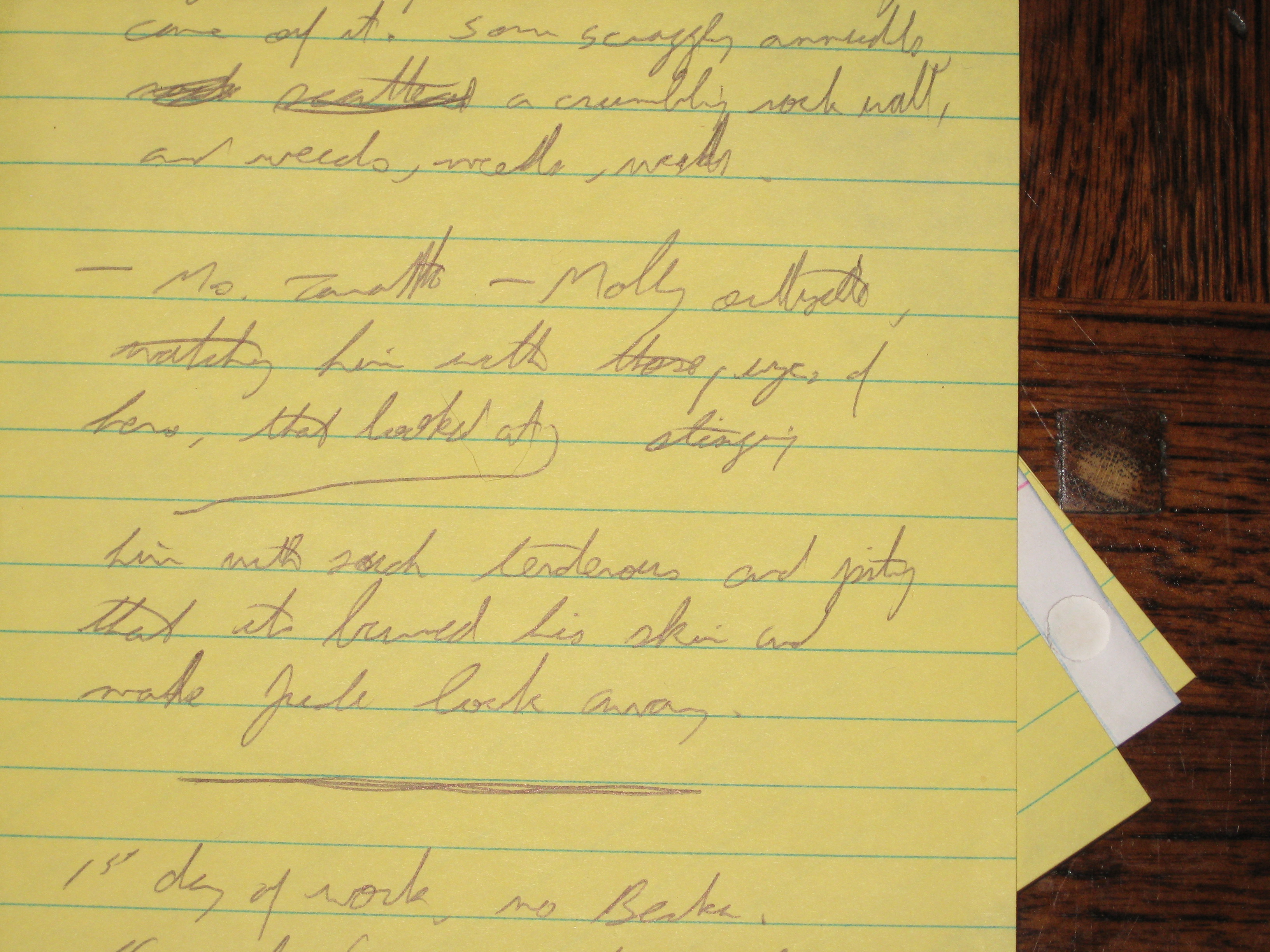
Back to the photo: The yellow lined pages come from various notes I’ve made over the past months, isolated ideas that have come to me, often while I’m in supposed to be asleep in bed. Very sloppy, in a kind of shorthand. Again, revision: These pages represent new ideas, new scenes or paragraphs or moments, that I may insert into the story.

I was thinking about a failed memorial garden in Jude’s backyard. To translate my lefty scrawl:

came of it. Some scraggly annuals,

a crumbling rock wall,

and weeds, weeds, weeds.

The second and third text blocks represent Jude’s awareness of a neighbor’s watchful eyes, and it’s a new layer I’ve added to the story. Extremely minor, but it needs to be there . . . it tells us something important about Jude, I think. It still remains to be seen how it works on the page, in the context of the entire book.

It reads:

— Mrs. Taranto — Molly, outside,

watching him with those eyes of

hers,  that looked at

[edit: the next word is stinging, to be inserted before eyes]

him with such tenderness and pity

that it burned his skin and

made Jude look away.

More, later. As always, thanks so much for stopping by.