Archive for Interviews & Appreciations

On Dogs, Grief, and Kindness: A Conversation with Author Audrey Verick


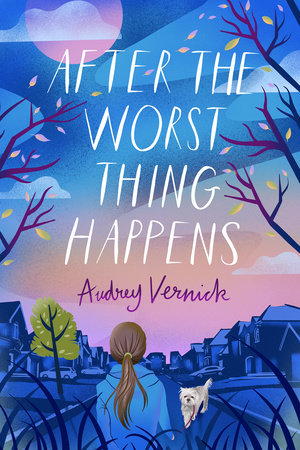
I’ll admit it: Audrey Vernick is one of my favorite people on the planet. I’m crazy about her. She’s very funny, a terrific writer, and she loves baseball. Though Audrey might not readily admit it, she is, in fact, infinitely kind. What more could anyone ask for? Audrey has a new middle-grade novel coming out early this May, After the Worst Thing Happens, so I invited her over to visit with my Nation of Readers to talk about dogs and grief and life’s other inspirations. But first, let’s take a minute and gaze at this book cover, illustrated by Helen Crawford-White.
–


Audrey, you are well-known for your collaborative efforts, including picture books that were co-authored with Liz Garton Scanlon as well as two works of middle-grade fiction with Olugbemisola Rhuday-Perkovich. What happened this time around? Were you not able to get somebody else to do half the work?

They got wise to my scam.

Art by Norman Rockwell.

Figures. You Tom Sawyer’d them! “Boy, am I ever having fun white-washing this fence writing this book!”

Actually, some books declare themselves as a joint project and this book, which I started writing seven years ago, before I’d ever collaborated on a novel, did no such thing. But it is a brilliant concept, finding someone to write HALF A BOOK with you! I highly recommend it.


I sometimes hear writers claim that “the book wrote itself.” I need one of those! With my books, I do all the work. It’s exhausting.

Amen! It’s why my challenged work ethic is better suited to picture books. Novels take forever.

You credit Liz in the dedication for her support? How did that work, exactly?

I had written and abandoned an awful start to this book. I dreaded getting back to work on it, and sent it to her, hoping she’d say, yeah, stick that one in a drawer for a long time and by that I obviously mean forever. But she was really moved by how raw and tender Army was and she friendly-insisted that I keep going. She’s very wise, so I generally listen to her.

Army is a twelve-year-old girl whose parents are in the disaster business. They do repairs to homes and businesses after floods, fires, and storms. I laughed at the name of their business: Never Happened. You’re funny. But that’s not just a quick joke. It becomes a metaphor for one way of dealing with disasters of the heart.

–

–

Yeah. I’m sure an insightful person would have a lot to say about how emotionally vacant many of the parents in my books are, but yes, Army’s mother, in particular, is a big believer in out of sight, out of mind. Never happened. No sense in dwelling. It’s a less than perfect ideology for Army as she struggles with genuine grief for the first time in her life.

So you went ahead and did it: the dog dies.

Audrey Vernick: Dog Killer.

I admire how you handled it. The death wasn’t used to emotionally manipulate the reader –- it occurs off the page, to soften the blow –- and yet Army’s grief is real. As a long-time dog owner, I know that death and loss is built into the experience. Children love their pets.

Dog death, or pet death, is often the first true, deeply felt tragedy in a child’s life. Also, I want to be clear that anyone who picks up this book knows from reading the flap copy that the dog dies. It happens near the beginning.

What I couldn’t have known when I wrote an early draft of this book is that the very day I heard this book would be published I was in the midst of a beloved dog, Hootie, dying. She had just turned seven. So the doggie-grief parts? Truly and deeply felt.

–


Yet this is a book about what happens after the worst thing happens. Most significantly, Army, the 12-year-old main character, encounters a new neighbor, Madison. Tell us about her. What drew you to that subject matter?

This book came together so oddly. I was hit by three images, all of which hit me, inexplicably, on the same tiny stretch of sidewalk up the block from my
home over a period of years. First—I passed a ServPro van, which has the tagline painted across the back, “Like it never even happened.” I was drawn to that idea, of erasing disaster (especially in the wake of Hurricane Sandy, which hit my community hard).

–

There’s a scene early in the book in which Army sees a young child she doesn’t know walking alone down the middle of the street, barefoot. This happened to me.

And years later, in that same spot on the sidewalk, that child’s mother told me that her young daughter often wandered and was once spotted on the roof of her house. All of those combined to become this book. Oh, and the way the dog dies -— that almost happened to our dog, Rookie (who thankfully lived a very long life).

It’s challenging to write a book about a grieving character. Most folks don’t want to read sad books that depress us. We can just watch Fox News instead. Yet in After the Worst Thing That Happens, there’s so much humor and kindness and quirkiness, and that’s what shines through for me: Army’s journey and growth. Booklist recently came out with a very positive review. I thought they nailed it with this line: “Vernick’s story covers so much, but it manages to weave the different elements into a cohesive whole, with Army at the bright center of it all. The subjects are heavy, but Army’s young voice infuses them with humor and warmth.”

Army really surprised me. There are a lot of adjectives people could use to describe ME and kind isn’t likely one of the first for most people.

Personally, the word “short” leaps to mind.

Wow, Jimmy. Thanks! At a recent school visit, I listened as the first group—kindergartners and first-graders—settled into the media center. One boy looked me over and then leaned over to the kid sitting next to him and said, “The author’s not very big.”

Ha! Not that there’s anything wrong with that. On a completely unrelated note, let’s interrupt this interview to pay tribute to NBA legend Mugsy Bogues. 

–


Okay, we’re back!

Army’s drive to do this kindness for neighbors who need help really surprised me. In fact, I worried that her desire to be so proactively helpful to relative strangers would come off as unbelievable, because at the start I wasn’t clear what exactly would drive that when she was mired in grief.

I believed it for a couple of reasons. First, kids are like that. It’s one of the great things about our jobs, we get to see these young people in action and many of them are downright amazing. In a world that sometimes feels hopeless, they remain our best hope. Army, who has been brought so low –- her heart just aches and swells –- almost feels a physical need to put something positive into the world. To give, and love, and care. She’s really a terrific kid, I liked her very much. And I believed in her. Well done!

Thank you, Jimmy P.!


Audrey Vernick lives in New Jersey, near the ocean, with her family and one black dog. Her new book will hit the shelves on May 5th, 2020, published by Holiday House. Presales available now where fine books are sold. Also look for
Scarlet’s Tale, a picture book illustrated by Jarvis — that’s it, just Jarvis — coming in July.

On Emotional Literacy, Community & Quilting: A Conversation with Author Lizzy Rockwell

–

There is not a single person in all of children’s literature who I admire more than Lizzy Rockwell. She is everything a children’s book artist, and citizen of the world, should be. Lizzy has not only dedicated a lifetime to making books, she connects with readers and community members and quietly makes a difference in the universe. She does it without fanfare or ego; Lizzy simply puts her head down and goes to work. I invited her over to chat about her latest book, How Do You Feel?

–

–

Hey, Lizzy. I’ve been thinking about your book, How Do You Feel? It features a repetitive structure, with just four words on a spread. “Deceptively simple” would be one way to describe it. And maybe that’s true of a lot of your work. There’s much more at play than immediately meets the eye.

Hi Jimmy! Happy winter. How are you? No, I mean it, tell me, how do you feel? Deceptively simple question, right?

I’m fine, thanks. But, actually, now that you ask –- hey, I see what you did there!

I guess the whole point of the book is to take a moment to just ask the question, “How do you feel?” with sincerity, and then really listen to the answer. I think so often we ask questions in a way that suggests what we want the answer to be, not necessarily what the answer actually is.

There’s a subcategory of books I like to think of as “talking books.” That is, the book, in the right hands, serves as the starting point for valuable conversations. How Do You Feel is very much that kind of book.

–

Yes, the whole point of art is to elicit a reaction or a connection with the viewer or reader or listener or watcher. So I do like works of art that are very open-ended and ask more questions than they answer. I write a lot of non-fiction, and even there I don’t feel my job is to just provide information and facts, as much as to spark curiosity and exploration. I often use question marks somewhere in my non-fiction texts. This is the first book where I use only question marks.


–

As adults, we assume we’re supposed to be the suppliers of the answers. We dispense the info. We’re big and we know stuff. But a better gift is to help readers learn the right questions.

Yes, I totally agree.

–

One of the reasons why I love your books –- why I have so much respect for your work –- is that you have a clear sense of who your books are for. You work with intention and purpose. It strikes me that you know these young children, and you know exactly what you are attempting to do with this book. How do you stay in touch with your audience?

I think young kids are just the most interesting people in the world. No offense Jimmy, you are very interesting too, especially for a grown-up.

It feels like there’s going to be a “but” in this.

But —

I knew it!

— three-year old kids absolutely fascinate me because they give great insight to the human condition. They are emotionally honest and very insightful. Even though they can’t easily regulate emotions or even name them, they feel them and notice them in others much more readily than we do. And the world is wide and fresh, and language is this new superpower, so they have a knack for articulating big existential truths and questions. I find them quite philosophical. I think some of these powers will be diminished and replaced by new ones as they become more verbal, and more social. I just feel it’s a privilege to chat or play with these little people and get a window into that profound point of view. I have some young friends, I have a vivid memory of being a mother to young children, and I spend a lot of time as visiting reader and workshop leader in preschools.

–

Tell me about that role, visiting preschools. How does that work? 

I volunteer to read at preschools in my community, whenever I can. For three years, 2015-18, I was hired as an artist-in-residence to teach literacy workshops with three and four-year-olds in the Head Start preschools in Bridgeport, CT. I ran about twenty-four sessions a year. On a given day I would visit two classrooms and work with the kids, with staff support, for 40-minute sessions. I would read a book of mine, model a drawing on the easel, then they would “write” and illustrate their own little booklet which I made from folded and stapled copier paper. Each booklet had brightly colored card stock for the cover, and stickers for writing the book title and author name.

–

–

What have you learned about emotional literacy? Are young children confused about their feelings?

I think that kids are searching for the words to name their feelings, because words are powerful, and being listened to is powerful. But I think they are better at actually feeling emotion and expressing it than we are, or they will be by the time they get to middle school. But they do need to be equipped with the language and strategies for managing feelings. I read Marc Brackett’s book, Permission to Feel, and it gives excellent actionable guidelines for making schools, homes and businesses more emotionally supportive, and filled with more serene and connected people. I love that this is becoming a high priority in public schools. By focusing on the emotional lives of these little people, we give them lifetime skills at a crucial moment of their development. While doing so, we learn how to be better and more emotionally aware people.

Was your manuscript always this sparse? Did you have that vision from the beginning?

I had tried writing emotional wellness books in the past. They were all terrible. Since being a mother of young kids, and writing books about physical wellness (Good Enough to Eat: A Kid’s Guide to Food and Nutrition, and The Very Busy Body Book: A Kid’s Guide to Fitness), I wanted to write a book promoting emotional health. And, like those books, I wanted to write in a tone that made this self-care stuff seem like the reader’s idea, not mine. But my texts for the emotion books just kept sounding like greeting card copy. I finally realized, when I saw these great Level A, four-words-on-a-spread books from the Holiday House I Like to Read series, that I could approach this theme best, by saying almost nothing at all.

–  

–

Yes, the writer clears out of the way for the illustrator to tell the story.

Most of our emotions are expressed not so much with words, but with body language, facial expression and tone of voice. And most emotions are triggered by events outside of our control. So by focusing on the visual narrative, I could show the most variety and nuance. By capturing a crucial moment in time, I could provide the opportunity for my reader to step back, study the clues and act as emotion detective. By leaving the explanatory language out, I kind of demand that someone else fill in that missing piece, which gets kids talking.

–

–

In improvisation, in music or comedy, that’s called leaving space. You aren’t filling in every gap, thereby giving your creative partner — in this case, the reader — more room to enter.

Oh, I like that term! 

David Bromberg, the musician, talks about that. He’s widely considered a gifted and generous accompanist. He says that the key is to know when not to play. In other words, to leave space. That resembles your process, which is often a stripping away, trying to get down to the essence?

Oh yes definitely. But I think this is true of most of the art I love. What’s there is precisely what needs to be there. What’s left out, in between the spaces, is up to me to ponder.

–

–

I appreciate the way you are connected with your community. Tell us a little bit about your quilting projects.

For the past twelve years I have been making community quilts with a bunch of wonderful people in Norwalk, CT, where I lived when I started the project in 2008. (Now I live a couple of towns over in Bridgeport.) We are an intergenerational group of senior citizens, adults, and kids (elementary school to high school). We meet in the community room of public housing complex for seniors, and almost every Friday after school till dinner time, we roll sewing machines, cutting mats, boxes of unfinished projects, snacks and a quilting frame out of a tiny closet and set to work. We make quilted objects for personal use and as teaching samplers, and simply as an excuse to get together and have fun.

–

–

We have also made seven, to date, quilts that hang in public places. For these installation quilts, I design them on a theme, with areas of the quilt which will showcase fabric art made by a variety of individuals. Once on the quilting frame we sit around and hand quilt them at our meetings, and they go on tour for pop-up quilting bees in public places like schools, libraries, and festivals. I have two public quilts in the sketch stage right now which will be unveiled in the fall (yikes!). We are a big family. We are called Peace by Piece: The Norwalk Community Quilt Project.

Any new books coming out in 2020?

The All-Together Quilt is being published by Alfred A. Knopf in October 2020. A labor of love all about a labor of love.

–

Fun fact: Lizzy is the extremely proud daughter of Anne Rockwell, author of more than 100 titles and a pioneer in nonfiction for very young children. Anne passed away in 2018. Lizzy Rockwell lives in Bridgeport, CT, and can be found on the web at lizzyrockwell.com. She’s kind of my hero.

–

–

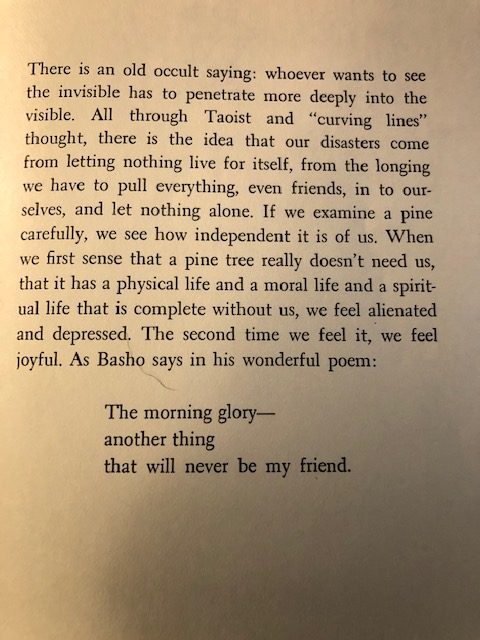
INSPIRATION: When Trees and Haiku Meet — Robert Bly, A Pine Tree, and Basho


–

I try to spend some time each day thinking in haiku. Often I find that space while walking the dog in the woods or by the river or an open field. It’s a quiet, interior time without earbuds or podcasts. My haiku is almost always written in the traditional three-line, 5-7-5 form, with a focus on nature. I usually try to include a kigo word (a reference to the season of the year) and a division, breath, or caesura (often in the form of a colon or a dash that both separates and connects). There are endless variations, and that’s the beauty of haiku. Sometimes a lighthearted one might come, more senryu than serious haiku, and that’s what gets written. It’s something I started doing with more intention a few years ago. I’m not saying that I’m great at this. My focus is on process, not product. Basho’s great line, “The journey itself is home.” I accept that most of the ones that come to me aren’t going to be exemplary.

Thinking in haiku has given me an outlet for calm reflection, a brief time for thinking outside myself and the endless, grim news feed of our troubled world. This morning I wrote this one:


This pine has a life             

Of its own: there is nothing

It requires of me.


However, I’m not posting today to show one haiku. Mostly I was eager to share one of the sources of my inspiration, taken from the introduction to Robert Bly’s book of prose poems, The Morning Glory. 

I love this passage so much, as if it were written precisely for me, bringing together in one page my growing enthusiasms for trees and haiku and poetry and, importantly, this essential idea of getting “the self” out of the way. I hope you like it. Maybe Bly’s passage here, along with Basho’s haiku, will inspire thoughts and feelings in you, too. Embrace the process. Forget thoughts of “good” or “bad.” And see what happens. 

–


While we’re gathered here, I might as well tack on a few others . . . I’ve got hundreds of them.

–

I have failed to learn

The name of the bird that calls

From the high poplar.

–

Three twisted sisters

Beneath the great canopy,

Roots and arms entwined.

–

The soft grasp of dusk

Upon the winter shore: black-

Hooded plover waits.

–

Steel-gray buckets tapped

Into maples; the crows watch

From snow-covered limbs.

–

January rain –-

The old cat stretches, circles,

Eyes slant shut again.

–

The beech holds its leaves

Shimmering like winter moons

Papery and light.

—

–


On Dialogue and “Harriet the Spy”: A Further Conversation with Author Kurtis Scaletta

–


Back in November I posted about reading Harriet the Spy by Louise Fitzhugh. I was struck by the crisp dialogue in that book, and ended up focusing my post on that aspect of her writing. I even included a PRO TIP! free of charge. That led to a comment from my friend, Kurtis Scaletta, who told me that he uses Fitzhugh to teach dialogue. I decided to invite Kurtis, who is an accomplished author, for a further chat on the subject.

–


–

Greetings, Kurtis. What is it that you admire about Fitzhugh’s dialogue? 

When I was re-reading her books as an adult, I realized how dialogue-heavy they are, and how much of the character and even the plot is revealed through dialogue. I don’t think it was clear to me as a kid, but I really noticed it as an adult. I mean, I guess good writing is like that–you don’t notice what the author is doing.

That’s what I say on school visits when asked to give advice. Read like a writer. Try to notice what the author is doing. If you feel excited, if you strongly dislike a character, or even if you grow bored. What is the author doing to create that effect in you?

I’ll try to remember that answer because it’s better than mine. 😉

You mentioned that you use Fitzhugh’s work to teach dialogue. Could you give us a mini-lesson?

I have used the first chapter of Sport, which is about two pages and almost completely dialogue. It’s an emotionally devastating passage because the mother is really a terrible person. But in her little harangue you learn everything you need to know about the premise, a sketch of the three main characters (Sport, his mom, and his dad) and their personalities. I would just have people read it and then take a few minutes to write what they know about the characters and their situations. It actually helps here that not nearly as many people have read Sport as Harriet, because they had to draw only on that chapter instead of their memory.

That’s a heartbreaking scene. What a way to open the book.

It is, and I’ve learned that “unlikeable mother” is one of the hardest things to slip past the gatekeepers of middle grade, right up there with killing an animal. Fitzhugh could do what she wanted to because she was Louise Fitzhugh.

Why do you think dialogue is important?

It helps creates a scene from something that’s just. . . a passage, if that makes sense.

For example, I’ll have written something that’s all expository then think, oh, I could have this kid talking to another kid and give people all this info while also introducing the other character. And then I can show their personality and crack a few jokes at the same time. And even then, once I’ve revised, I find it all happens in fewer words and is more fun to read.

It’s definitely faster to read. And, of course, it gets us away from too much interior monologue. In dialogue, the presence of “the writer” really falls away and the characters step forward.

I also pull up a scene in Harriet with three friends chatting — Harriet, Sport, and Janie — which is less expository but the interactions, the way the characters talk to each other, is very revealing of character. I love the scene where she and another girl are talking about the best way to get away with murder–like literally, how they could kill someone and get away with it. Girls are allowed to be so human in her books.

There are parts of Harriet’s personality that are shocking by today’s standards. Fitzhugh allows Harriet’s flaws to shine through. She thinks awful things. Even better, Harriet goes right on without always learning the easy lessons. There isn’t a big group hug at the end of the book –- and I love that.

The scene I actually use in class was from chapter two, where Harriet and Sport and Janie meet up before the first day of school and size up the other kids. They are being pretty mean to the other kids, but it really reveals their own insecurities. And even with the meanness there’s some empathy there. I feel like the topic of bullying has become very cut and dried; there are victims and bullies. This scene shows it as more complicated. But as I’ve told you before, I think your book Bystander is special for the same reason, it shows that the same kids can be bullies one day and victims the next.

Thanks, I appreciate that — and, hey, I agree! But let me ask: Where are you teaching? I thought you were a fancy children’s book author, sitting on soft cushions, looking down from some high tower?

Well, cushion dry cleaning isn’t cheap. I teach (and work full time) at the Loft Literary Center in Minneapolis. I’ve run a middle grade fiction class every couple of years, sometimes online and sometimes in person. 

When I was in college, I spent a summer recording conversations with friends. We’d just hang out and I’d roll tape. Then I’d type up all the spoken words –- the pauses and ums, the wrong turns and overlaps and abandoned thoughts — eventually adopting a free verse style of spacing and line breaks. I was such an English major! It taught me a lot about how people really talk. But books are artifice, even realistic fiction, so I also learned that you can’t often do that in a written work. You have to veer away from “real talk” in order to tell a more realistic story.

Yeah, people don’t talk in dialogue do they? Even Sam Shepard and David Mamet with all their incomplete sentences and non-sequiturs and interruptions are making something a bit tidier than real dialogue. So dialogue is an artifice, sounding realistic but still artifice.

Are there common mistakes that you see in students when they are writing dialogue?

I think in middle grade with dialogue or first-person narratives writers can try too hard to “sound like a kid,” and it generally means a lot of sarcasm, self-deprecating remarks, and slang. That’s probably the most common problem. I think it’s OK to do that in a draft, then dial it back. But it really comes down to getting a feel for your characters and not making them cookie-cutter “kids,” but real people.

Tell us a little about your next book?

I have a book coming out this year about a video game competition now called Lukezilla Beats the Game. It’s entirely inspired by my own gamer son, his interests and ambitions, so that made it a lot of fun to write. It’s probably not going to win any Newbery awards or get starred reviews describing it as “beautiful and important,” but when I tell kids about it they get really excited. 

That’s how I feel about my “Scary Tales” series. The enthusiastic readers are out there – it’s just a matter of getting through the gatekeepers who may not, you know, really dig the scary thing. Or, in your case, approve of video games. 

My son was an enthusiastic reader of those books, in fact. Especially the one with the swamp monster and the twins.

What a great kid! But again, as an author, you are able to watch your (obviously amazingly intelligent) son, Byron, interact with books –- and also NOT interact with books. He’s not the biggest reader in the world. How has it changed your perspective on children’s literature?

He’s nuts about Dav Pilkey, and so are all his buddies. He loves Phoebe and her Unicorn by Dana Simpson. He met her in person and she was incredible. And he likes the Dragon Master series by Tracey West. Those are about the only books he’ll drop what he’s doing for. Like mom comes home with a new book and he quits his video game or turns off the TV to read it.

It’s great to see kids get as excited about a new book as they are about a video game or a toy. He’s a very different kid than I was. I was a pretty quiet and solitary kid, and write books like the ones I loved reading as a kid. He’s very social and hates to be alone. His favorite books are the kind Ramona calls “noisy.”

–

–

Right. We sometimes forget that when we ask children to read, we are asking them to be quiet, and solitary, and passive. For many boys, that’s the direct opposite of what they love to do — to be active and boisterous with a gang of friends.

I think that’s the big difference in this new book, which was written more for him than the kid I used to be. It’s noisier. But there’s still some quiet stuff.

That’s really interesting. And I relate. There’s long been a literary conversation about audience, the ideal reader, this question of who we’re writing for: to try make the general reader happy, or a specific person, or maybe write for the child we used to be. With this book, you are clearly writing primarily for one specific reader. Did it clarify the task for you?

Very much, I didn’t have all these other critics in my head saying different things. I just had one real kid who’s the target audience actually reading it with me as I went.

Yeah, you weren’t trying to please the librarians on the awards committee. You wanted to write a book that Byron would actually read and enjoy. I love that.

He wants the next book — the one I haven’t even started writing — to be about cats. He loves cats and there aren’t as many cat books as dog books. I think he’s imagining something like Dogman but with cats. We’ll see where that goes.

Ha, it sounds like the perfect Hollywood elevator pitch: “It’s Dogman – but with CATS! We’ll get Julia Roberts to play the lead!”

Or Taylor Swift, since she has experience. Hmm . . .

–

–

Thank you for your time, Kurtis. It’s always a great pleasure talking with you, because you are a real book person and it comes through in everything you do and say and ponder. I wish you the best of the luck with Lukezilla Beats the Game. Sounds like a winner to me.


Kurtis Scaletta lives in Minneapolis with his wife, nine-year-old son, and five (!) cats. His website is kurtisscaletta.com and not-always-child-appropriate twitter is @kurtisscaletta. You can get occasional essays by email at tinyletter.com/skutir.


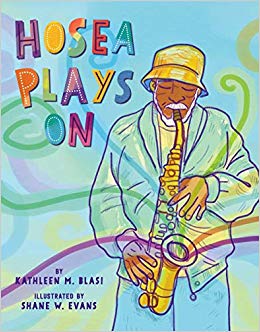
Author Interview: Celebrating Kathy Blasi’s Picture Book Debut, “HOSEA PLAYS ON”

–


“Fourteen years of writing,
revision, submission,
rejections, more revisions,
setting projects aside and starting new ones.
And boatloads of self-doubt.
But glimmers of hope, too.”

— Kathy Blasi


JP: Kathy, I am so happy to be holding your DEBUT PICTURE BOOK in my hands. You’ve traveled a long, hard road to reach this point. Now here we are: this beautiful book with your name on the cover. How does it feel?

KB: Ahh, to finally get an acceptance after years of stories not quite getting there, through getting close via an agent only to have that relationship end.
Now, with my new book, I have a sense of complete joy in seeing my words brought to life — through an astute editor, Ada Zhang, who championed the piece, a publishing house which embraced it, and through stunning illustration. I feel a sense of accomplishment and validation in not giving up over the course of years of ups and downs. I feel humbled and honored to bring to readers this particular story of a beautiful, everyday person, and I’m thrilled Sterling felt there was a place for it on bookshelves.


Before we get to the book itself, can you give us some background on your writing journey?

My first book, A Name of Honor, was released in 2006 through Mondo, an educational publisher. That was quickly followed by a nonfiction book about sports, also with Mondo. Not-so-fast forward to 2016, with the acceptance of Hosea Plays On, my third published book (though not the third I’ve written), due out in January 2020. Yes, that is 14 years. Fourteen years of writing, revision, submission, rejections, more revisions, setting projects aside and starting new ones. And boatloads of self-doubt. But glimmers of hope, too.


What in particular helped keep you hopeful?

Good rejections! It’s not easy for those outside of this business to grasp the concept of a “good rejection.” Early on, I received “Dear Author” responses to my work. Then, the “Dear Ms. Blasi” variety. Oh, and the ones with my name and pointed feedback. I knew I was getting somewhere. That if this is a continuum, I cannot give up. I could be embarrassed by that span of 14 years. But giving up would have been more embarrassing. I look at that span as a testament to always learning, to building bridges through respecting the business and the process, and above all, not giving up.


Do you participate in a writer’s group?

I have writing colleagues with whom I exchange manuscripts. We critique each other’s work online, via phone, and/or in person. They all make me a better writer. One writing friend, Elizabeth Falk, and I frequently meet at local libraries or at one of our houses. We spend the day plugging away and taking breaks to discuss about what we are working on. There’s something magical about working away and being able to look up and say, “When you have a second, I’d like to bounce something off of you.”


What helped you keep going, when at times it must have felt like you were running into a brick wall?

My writing peeps, absolutely. Brick walls have a way of propagating self-doubt. The external voice of rejection that suggests you’re just not good enough. But the voice of my discerning readers, holding the bar high, urging me on — is louder in the end. And for that, I’m so grateful. Another thing that keeps me going is after the sting of a rejection, over which one has no control, is to send it (or something else) again. The only person who is in control over sending out your work — is you.


What inspired you to write this particular story?

I credit my inspiration to insomnia and the magical hour of 3AM when in an effort to distract myself from the runaway thoughts in my head, I turned to reading the news. I read an article about Hosea Taylor’s passing, and his story tugged at my heartstrings. I had to learn more. I started with the reporter, Sarah Taddeo of the Democrat & Chronicle, who wrote the story, the beginning of a trail of breadcrumbs. When I learned of what Hosea did with the money folks placed in his saxophone case, I knew I had found the heart of a story I wanted to write for young readers.


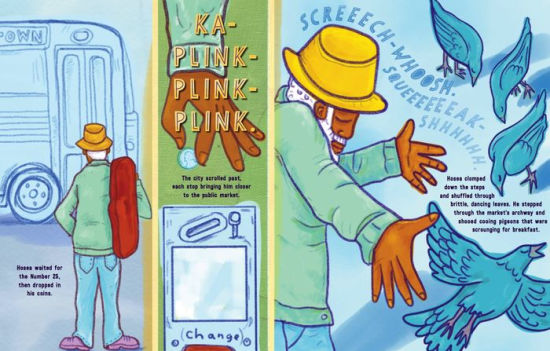
You have a poet’s eye for detail and lyrical language, all told with directness and economy. “Fingers fluttered. Keys clicked. Smoky notes lifted through the air, treading along to waiting ears.” There’s a musicality to your language. Is that the result of endless revision?

What a lovely thing to say! Once my early draft took shape, part of my revision process was to focus on word choice that could carry a tune, so to speak. To build a cadence for the read-aloud experience. Similarly, I incorporated sound wherever I could, such as coins dropping and the sound of a truck passing over a bridge.

Your illustrator, Shane Evans, did an amazing job bringing Hosea and his music to life. Do you have a favorite spread or moment in the book?

Shane did a beautiful job, indeed. I love the whimsical element he brought to the story. My favorite spread is that of Hosea playing his saxophone in the rain. When I wrote the story, I saw the three words “Hosea played on” standing alone, precipitated by the drum roll of the page turn. I wanted the reader to pause and take that in. With a leap of faith, the author must let the illustrator, editor, and art director do their jobs. Shane nailed it. 

–

Actually, Kathy, you and I have a funny connection with Shane. Back in the previous century, in 1999, I ghost wrote a book for Shaquille O’Neal, titled Shaq and the Beanstalk and Other Very Tall Tales. It’s actually a pretty entertaining story of six fractured folktales, all featuring Shaq (“Little Red Riding Shaq,” and so on). Shane illustrated the book and his name is included on the cover. My role went uncredited, of course — ghosts are invisible, that’s the agreement — and such is life when you ghost a book for a celebrity. I’ve been quietly rooting for Shane, whom I’ve never met, all these years. 

What an interesting connection! I like to believe that your quiet rooting led us all right here. Here’s another interesting connection. Shane lived in Rochester during his high school years and visited the market where the story takes place.

What’s the best writing advice you ever got?

Two things stand out. First (I will credit Elizabeth Gilbert and Jane Yolen): show up. Talking about writing and wanting to be a writer are not actually writing. Show up to the blank page, or the messy page, because the status of those pages will not change on their own. Work hard, so that eventually that and opportunity will intersect. This often, as is the case with me, requires balancing family life and another career.

Second: Once you are writing, focus on what’s in front of you (Kate Messner). You have no control over how long it takes editors and agents to read your work. You have no control over their decisions on your work. And you have no control over the schedules of others in the process, once you are under contract. Focus on the new piece. Or the one that needs revising. Have multiple projects going at once.


Do you have any advice for aspiring writers?

Begin by writing for you and the story you want to tell. That’s where the bones come from — from your excitement, interest, and passion for the story. That’s what will sustain you.

Surround yourself with those with similar interest and ambition. Join a writers and illustrators group. Join SCBWI and/or one of its regional chapters. There is a treasure trove of information and inspiration waiting for you. Learn all you can. Read all you can. Write. A lot!

–

–

Kathleen M. Blasi is active in the children’s literature community. She has long served as an organizer for the Rochester Children’s Book Festival. Readers may visit her online at kmblasi.com and on Twitter @kmblasi.

–

–

–