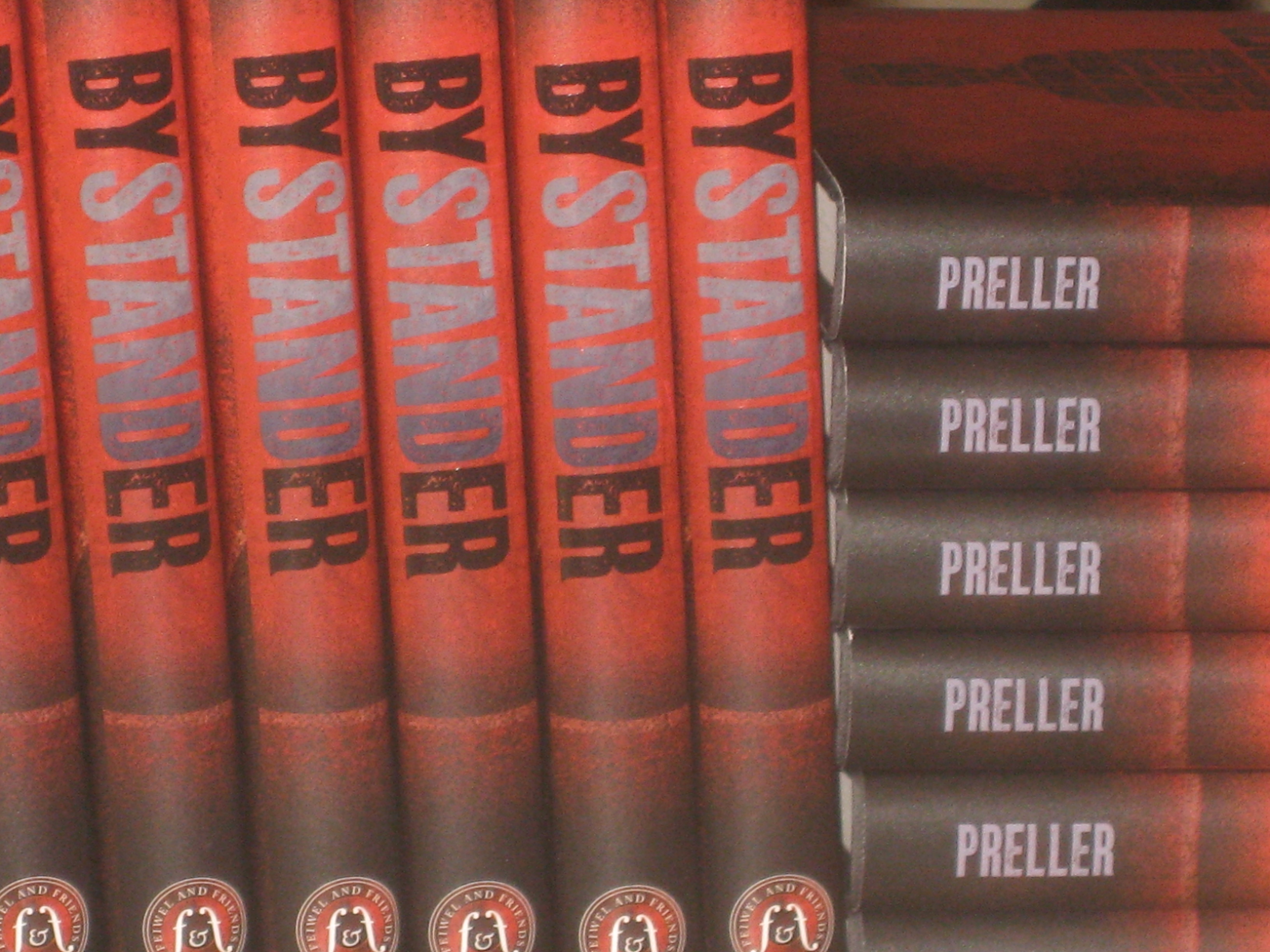
As I write this, my bully-themed novel, Bystander, is due out in stores tomorrow, the 29th. There seems no better time to share John’s story . . .
During my work on the book, I naturally reflected on my own experiences with bullying. Different incidents I’d encountered, large and small. I remembered a boy in 7th grade, who was in my Junior High homeroom. To ensure his privacy, I’ll call him John.
John was teased a lot. He was short and unathletic. Defenseless, basically. In memory, going back through the gauze of thirty-five years, I remember John as an innocent, harmless kid.
Drawing by Minhoon Kim
I felt sympathy for him. I tried to be nice to John: I wanted to be somebody who didn‘t pick on him. So I talked to John and, I sincerely hope, showed him some kindness.
Now we fast-forward across more than three decades. Thanks to one of the popular social networking sites, I came across John’s name again. There he was. That same boy. So I wrote to him.
You see, I thought of John many times as I wrote Bystander. He inspired me and, in some minor physical details, helped stand in for the book’s initial target, David Hallenback. I imagined John’s pain and his rage. To my knowledge, John was never punched, never pushed. Just teased. Ridiculed. An object of humor.
Good times, good times.
I’d like to think that I would have stepped in if it went too far. Surely I wouldn’t have stood by and watched if things got violent. And even as I type those words, I am reminded of Hemingway’s ending to The Sun Also Rises: “Isn’t it pretty to think so?”
In my brief note to John, I never talked about my life as a writer, or bullying, or anything of that nature. I told him who I hung out with in school, wondered if he remembered me, and concluded, “I just remember you as a sweet kid, curly hair, in some homeroom class or something like that.”
I was stunned by John’s response. I’ve edited the following comments for the sake of brevity and anonymity, but otherwise won’t narrate much. John’s story speaks for itself.
Wow, Jim, it’s been 34 years. Now that’s insane. I never would have thought you would remember me. Yes, I remember you, too. You were quite funny. I looked at your pictures and you look the same, a little older like all of us . . . Unfortunately, when I left Wantagh, I never looked back. I did not have pleasant memories of junior high. Being the sweet kid I was with curly hair which is straight now, unless I let it grow out. Many people that you may know or are friends with took advantage of my kindness both physically and mentally.
John, at this point in his response, named four people specifically. Popular boys, I knew their names. One of them was, in fact, a friend of mine at that time. It occurs to me that if those four men were confronted with this story today, they might be surprised. Would they know? Would they even remember? John continued:
. . . that whole group was not very kind to me and really left a negative mark. If confronted today I would not be that sweet kid as you say. I don’t know but life goes on right. It’s been hard. I don’t wish what happened to me on any child or adult. In any case I am a lot stronger now and am not that easy going anymore. I would never let what occurred to happen again.
I wrote back to John, shared more memories and my sense of regret and failure — if only as witness. I was the “nice” guy who stood by and did nothing. I guess they don’t give out prizes for that. I apologized to him as best as I could. The pain was still so raw inside John, the anger so real. One mention of junior high and it all rose screaming to the surface.
John, thanks for your thoughtful, frank reply. I’ll be honest. I remember that. I remember how you were often treated unfairly. I think all of us have culpability, responsibility, for any bullying behaviors we witnessed. By doing nothing, we abdicated our responsibility, our humanity, and became just as guilty. Sometimes we fail to see how it feels for the victim; we lack empathy, compassion.
Idon’t wish to share my full note to John, so again I’ve edited things out. I concluded:
I apologize for the hard times you had. I’m truly sorry. I hope that my memory is accurate, that I was kind to you. I always felt bad and tried to do the right thing, to treat you as the equal you always were. Thanks for reading this. And thanks, again, for writing to me with such heartfelt honesty.
John replied one final time:
Thank you for your kind words and you are correct, you were always nice to me not like the others. And if I never mentioned it THANK YOU. It was nice to have a friend or someone who may have not said anything but did not add injury, hurt or insult. Anyway I would love to read your book and if I could help you or anyone else in the future please let me know. It’s amazing sometimes why things happen in life and why people are brought together. God works many miracles.
When I was writing the first draft for BYSTANDER, I had to contend with the issue of the new boy in town, Eric Hayes. I knew he would have a problem with a bully — but why? My sense of bullies is that they are cunning, predatory, keen and careful in the targets they select. So Eric, I decided, needed some kind of vulnerability. Something subtle, but nonetheless something that an astute boy could perceive, the way the wolf pack selects the weakest in the herd.
I thought of my brother, John, eight years my elder, who had been living with a diagnosis of Schizophrenia for many years. He had been married in college, and quickly had two beautiful boys, my nephews. But it could not last. John went through many stages of mental illness, from terrible times to placid years of dulled medication. He was unable to be a husband, and struggled to be any kind of father. As the boys grew older, the distance became more acute, their fragile relationship almost untenable. Everyone did their best. All of us. But it was not good enough. Not even close.
As I wrote the book, I allowed John to stand in as a loose model for Eric’s absent father, like a shadow cast by a guttering flame. I didn’t do much with the character, it was not where I intended the book to go, so I quickly explained him away, took a few traits from John, a few moments from his life (he used to send my son, Nick, these crazy CDs in the mail, out of the goodness of his wild heart, as some act of connection). Eric’s father in the book would do the same.
For Eric, it was simple. His father was not there anymore; and worse, he was sick in a challenging way, one that was difficult for a 13-year-old boy to understand. His father went off the meds, as my brother did, as so many others who suffer from mental illness do. Because the medications can bring their own kind of death.
So the mother took her two boys and moved to Long Island. There: I had what I needed for my story, Eric’s vulnerability. And I had that other important thing, a little bit of soul.
Here comes the bizarre part. One day after I turned in that first draft to Liz Szabla, I received word that John had died in his home in Virginia. Suddenly, irrevocably, gone. A final loss after endless years of loss. Heartache, suffering. I thought of his boys. What did they feel? How have they felt all these years? I thought of my book, and how John had hovered around its edges like a ghost, a spectral presence that was felt, but scarcely heard.
Liz and I talked about it. John’s tragic life and death. The book, in Liz’s view, was almost clean. It barely needed revision. Yet we both knew that I’d have to honor this strange almost spiritual coincidence, and dig deeper, and do more to flesh out this character, my brother, Eric’s father-in-the-mind.
I wrote a new chapter that focused on Eric and the absent father, Chapter 11. I added small pieces in a couple of other places. A scene at Jones Beach. Changed the ending of the book, the longing expressed in that final sentence. Here’s a few paragraphs from Chapter 11, with Eric reflecting on life with his father in Ohio, and later, without:
It was scary. Because his father was still around, drifting aimlessly from room to room. When things were okay, when Eric didn’t think about it too much, Eric could sit quietly in the same room with his father and feel . . . good. Pretend everything was okay. He still had a dad. Not just any dad, but his dad, his one and only. That guy over there, the innocent one with the gentle soul, who loved trees and music and laughter and his two sons, that swell guy whose thoughts were eating him alive.
Then some things happened — other memories now, the water of remembering rising ever higher — when Eric’s father lost control, smashed a mirror and some lamps, ripped down the blinds off a bay window — and was gone the next morning before Eric awoke. And here was the truly shameful thing, the horror in Eric’s heart: He was glad. Good riddance. Who needs to live with that?
People can lose a leg. People can get their hands stuck in machines and have their fingers torn off. Terrible car accidents robbed people of their sight, their ability to walk, their dreams and hopes of a healthy future. But there was nothing worse — nothing on this earth, of that Eric was sure — than losing your mind, your peace of mind, because that was like losing your self. It was losing everything.
His father was a walking absence, a faint duplicate, a watered-down version of his former self, without substance enough to cast a shadow.
There was no way Eric could tell Griffin Connelly that story. So he told bits and pieces and white lies. Eric wondered if Griffin sensed it, the whole truth, if somehow Griffin already knew, saw into Eric’s secret heart and smiled.
——
I dedicated the book in memory of my brother John, loving father to David and Ryan.
I’m sure my Nation of Readers will remember this sketch, which I talked about here, fifteen months ago.
Well, lubbers, double quick, set your deadlights on the final art:
“Ahoy, me hearties!” I cried. “Prepare to be boarded!”
Interestingly, in the above final piece the pirates and boy appear rather small, almost lost. But I’m looking at the proofs, which I recently received, and can assure you that, thanks to tight cropping across a two-page spread, it’s anything but the case. You have to see it on the page (a thought to keep in mind during the Dawn of Kindle).
For many artists, rough sketches are exactly that — rough. Sometimes extremely rough — more shape and placement and perspective than detail — to the point when you almost wonder, “Can this person draw?”
Funny, that question never arose when it came to Greg’s rough sketches.
One of the things that editor, Liz Szabla, loved about the art for this book was, in her words, “The pirates look like REAL PIRATES!”
That’s Liz, sometimes she talks in all caps, sometimes italics.
Below, please find the uncorrected, unapproved — read: still fretting the details, tweaking color tones, debating everything, etc. — cover design. A collaborative effort, indeed, involving the skill of many folks whose names do not appear on the front cover. (Please do click on the image, and double click, to see in greater detail.) I think this is part of what we mean when describing a book as “well published.” The tone of the relationships involved, the professionalism and courtesy, which is always hidden from view, plus the attention to detail throughout the entire process. I’ve experienced a wide range of extremes across the previous 20+ years; these days, I’m just feeling fortunate, because essentially all this good stuff happens without any help from me. To which I can only say, over and over again: Thank you.
——-
NOTE: If this aspect of the creative process is at all interesting to you, and if you are not a long-time reader here, please check out my seven-part series of posts, “What’s in a book cover?” In it, I detail the cover process from concept memo to rough sketch to final cover — including interviews with an editor, art director, and illustrator — of an upcoming Jigsaw Jones title, beginning here.
——-
POSTSCRIPT: Just realized that this is my 300th post since I started this blog, back in May, 2008. Each one, healthy and nutritious and self-absorbed.
There was a good article in yesterday’s Science Times section of The New York Times. Written by Perri Klass, M.D., it looks at bullying from a pediatrician’s point of view, and provides news about how the American Academy of Pediatrics will be publishing a new policy statement on “the pediatrician’s role in preventing youth violence.”
The article had this to say about the upcoming policy statement:
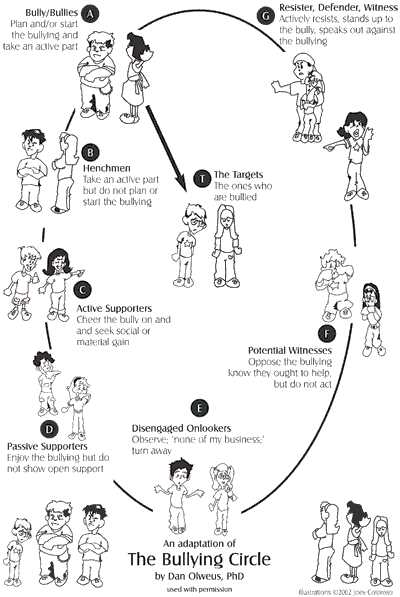
For the first time, it will have a section on bullying — including a recommendation that schools adopt a prevention model developed by Dan Olweus, a research professor of psychology at the University of Bergen, Norway, who first began studying the phenomenon of school bullying in Scandinavia in the 1970s. The programs, he said, “work at the school level and the classroom level and at the individual level; they combine preventive programs and directly addressing children who are involved or identified as bullies or victims or both.”
Dr. Robert Sege, chief of ambulatory pediatrics at Boston Medical Center and a lead author of the new policy statement, says the Olweus approach focuses attention on the largest group of children, the bystanders. “Olweus’s genius,” he said, “is that he manages to turn the school situation around so the other kids realize that the bully is someone who has a problem managing his or her behavior, and the victim is someone they can protect.”
As the author of a new book titled Bystander (Feiwel and Friends, September, 2009), a book that was informed and inspired in part by Olweus’s work, I’m thrilled to read that the American Academy of Pediatrics is taking this issue seriously. I came away from my own research with the belief that our focus has to be on the community, on the school environment, on the bystander’s social and ethical responsibilities. That is, yes, we are our brother’s keepers.
Dr. Sege used a nice turn of phrase later in the article. He spoke of “activating the bystanders.” Here’s another clip from the article:
Dr. Sege said, “activating the bystanders” means changing the culture of the school; through class discussions, parent meetings and consistent responses to every incident, the school must put out the message that bullying will not be tolerated.
So what should I ask at a checkup? How’s school, who are your friends, what do you usually do at recess? It’s important to open the door, especially with children in the most likely age groups, so that victims and bystanders won’t be afraid to speak up. Parents of these children need to be encouraged to demand that schools take action, and pediatricians probably need to be ready to talk to the principal. And we need to follow up with the children to make sure the situation gets better, and to check in on their emotional health and get them help if they need it.
Anyway, this is an issue that means a lot to me, and means a lot to my editor at Feiwel & Friends, Liz Szabla. It has always been my hope that Bystander — not a handbook, but a work of fiction with tension and drama — would help in some way with this issue. That maybe teachers would use it in school, discuss it in classrooms, get kids talking and thinking.
More and more, as this writing career moves into its third decade, I’ve come to the conviction that a book is not an end, but a beginning. It’s about what happens after you read the book. The thoughts that occur, the conversations that take place.
But that’s a big topic, and better left for another day . . .
It doesn’t take long for a book-loving blog-hopper to discover Betsy Bird’s A Fuse #8 Production. It is so consistently good — full of personality and life and enthusiasm for children’s books — that many of us return on a regular basis. Heck, she’s practically a Cult Figure, though without the flowing robes or talk of alien spaceships riding behind Comet Hale-Bopp.
I thought it might be fun to hang out with Betsy for a little bit. Hopefully you’ll think so, too. Hey, here she comes now . . .
Betsy, thanks for stopping by. Can I get you anything? A drink, some Ritz crackers, a cheese log?
A cheese log? Seriously? Man, I haven’t seen a good cheese log since the Blizzard of ’08. I will have some M & M’s if you have them, though.
Sorry, I’ve only got the brown M & M’s, which I save for emergencies. My cheese log memories are not blizzard-related like yours. Mine are associated with my mother’s famous Monday Bowling Nights. With seven kids, she deserved one night out, and that’s all she got. She’d return home with her bowling partner and neighbor, Mrs. Kleinberg, and they’d drink Gallo wine, smoke cigarettes, and chat. I’d crawl under the coffee table, eavesdrop, and ponder the mysterious appeal of a nutty port wine cheese log.
For me, cheese logs are entirely mythical. The kinds of things that “other people’s families” ate. A log o’ cheese seemed so weird to me as a kid. But enough about cylindrical cow by-products! Let’s get this interview ah-goin’.
Betsy, you are a librarian, blogger, bon vivant, and soon-to-be-published author. So let’s start with that last part first. I understand that you recently sold two manuscripts. Congratulations, that’s really exciting. Have you been dreaming of this for a long time?
Many, many thanks! I have indeed been dreaming of this, but sort of in a lazy “that’s something I should do when I’m a grown-up” way. Then this illustrator comes along, asks if I’ll write a book if he illustrates it, and voila! I become the luckiest librarian in the Western Hemisphere. I cannot account for the Eastern Hemisphere at this time.
I loved your “happy dance.” Understated, dignified, professional.
I try. You should see my slightly more complicated “Dance of Joy”. It involves ferrets.
The mind reels. So, tell us a little bit about the stories.
Ah. Well, when said illustrator (I’m waiting for his name to be officially released before I “out him”, so to speak) contacted me he only had one idea. To wit: “Giants leaping.” Awesome. So book #1 is Giant Dance Party. A small girl teaches a troop of gigantic, gangly, clumsy giants to dance. Hilarity ensues. Book #2 is still in the works, but it involves giants in New York. I can say that much.
Come on, don’t make me beg. Tell us the name of the illustrator. Or at least give us a hint. Does it rhyme with “Maurice Sendak?”
You got me. It’s Four Piece Svensack, the great Swedish performance artist of 33rd and Broadway. Okay, here’s a real hint though. My illustrator is blond. Ha! Didn’t see that coming, did you?
That narrows it down, thanks. So that was the trigger for you, just two words, giants leaping? Did s/he show you an illustration? Did you talk about it? Or did the ideas just instantly flow?
The illustrator did send a sketch or two, now that you mention it. But only after I said something equivalent to, “That’s a frickin’ AWESOME idea!” Then I wept. We talked a lot about it, sometimes over email and sometimes over the phone. It was nice. I hear that in most cases an author doesn’t get to interact with their illustrator like this, but it’s much more fun if it’s a joint effort, I think.
That’s correct, writers and illustrators rarely have much contact. And I suspect something may be lost in that great divide. I don’t think it’s an accident that so many great books come from one person, the multi-talented writer/illustrator. At least in those cases, there’s back-and-forth (even if it’s only inside one mind), rather than the publishing standard of writer finishes, illustrator takes over, and never the twain shall meet. Anyway, I can’t wait to see your book. When should I start camping out in front of my local independent bookstore?
No idea. I mean, some idea. It’s won’t be 2010, I’m pretty sure. Being a cynical sally I assume 2013. My illustrator is a happy, sweet, wonderfully optimistic sort and says 2010. Probably 2011 or 2012.
Soon you’ll be joining the fraternal organization of children’s authors and illustrators. We’re a semi-secret society, loosely modeled after the Freemasons. I’m sorry, but I can’t show you the secret handshake until the first book hits stores. Homeland security, you understand.
Understood. We librarians have our own super secret handshake anyway. It involves being double jointed (which all real librarians are anyway). And now I can be a part of the super secret children’s-librarians-turned-authors club. As it happens, my children’s room here at NYPL has had two authors before me. Marcia Brown wrote Stone Soup while working in my room, and Claire Huchet Bishop wrote The Five Chinese Brothers. So, y’know. There’s a precedent.
It makes sense that a dedicated children’s librarian would become a talented author. What’s next, “Dancing with the Stars?”
Absolutely! I mean, the first book’s all about dancing giants, right? I’m envisioning a Giant Dance Party song, a dance craze (that would involve a lot of galumphing), a music video, the works.
Where did you grow up? What brought you to the Big Apple?
I grew up in Kalamazoo, Michigan, where the tourist board’s slogan is “Yes, there really is a Kalamazoo!”
There is, really? I thought it was like a gag.
Nuh-uh. No gag. I’ve since made friends from Eureka and Kokomo. If I can get a pal from Walla Walla I have it made. Anywho, I was raised there, went to college in Richmond, Indiana (“Fight, fight, inner light, kill, Quakers, kill!”), lived in Portland, Oregon for a time, moved to Minneapolis, Minnesota and then my husband got into Columbia University’s screenwriting program. We’ve been here ever since, but we’re probably headed for L.A. next.
You seem to have one of the busiest, most popular blogs in the kidlitosphere. How did that all begin for you?
Ironically, with a School Library Journal article (ironic, I mean, since they now host my blog). I can’t remember what it was called, but the piece discussed children’s literary blogs, and it sounded fun. I’d already been writing reviews on Amazon.com for a lark. It wasn’t much more of a step to just start writing them on my blog as well. Then I added news. Then I started reporting on publisher events here in NYC. And then SLJ decided to buy me up so I sold out to the man and have been very happy ever since.
It’s clear from Fuse #8 that you a voracious reader, print and new media. What makes a good blog, do you think?
Personality, for one.
Personality?! Oh, rats!
Regular updates for another. If a blog can give me something I’ll find nowhere else, that’s a lure. Plus, I’m a sucker for a catchy name.
Like, um, James Preller’s Blog? How’s that for catchy?
It’s got a beat and I can dance to it. Gold, kid! Authorial blogs are sort of exempt from the whole “Catchy Name” requirement, y’know. If you start calling your site “Tin Can Phone” or something, how’s anyone going to know it’s you?
You recently published the results of a reader’s poll, asking folks to name their top ten picture books of all time. You compiled those lists to create a master list of “Top 100 Picture Books.” In what way did the results surprise you?
Ooh. Excellent question. I think I was very surprised that people didn’t send in the books they solely loved when they themselves were small children. It was a nice mix of books from the canon, books people liked now (and that their kids like right now), and books from their youth. And who could have predicted two top slots for Mo Willems? Surprising to say the least. I was also surprised that Dr. Seuss didn’t do better than he did. The man was clearly too prolific. His books split the vote over and over again.
Split the vote? You are bringing up bad memories of Ralph Nader and the 2000 election. For me, when Go, Dog. Go! wasn’t included, that pretty much made the whole list meaningless in my eyes. But still fun!
Go, Dog. Go! will have it’s day. I didn’t allow Easy Readers on my Picture Book Poll. At some point I’ll do an Easy Reader poll as well. Then you can see how the book stacks up against the likes of Frog and Toad and The Cat in the Hat.
I don’t really get the need for that distinction — but it’s your poll! Reading the results, I was happy to be reminded of old classics (never expected Millions of Cats to rank so high), or discover recent titles that I’d missed. Were you disappointed that any specific titles that didn’t make it?
Oh sure. The list is totally lacking in diversity. I think we figured out that only two of the creators were people of color. A little weird, actually. And there were certainly titles I would have considered shoo-ins. The Carrot Seed by Ruth Krauss for one.The Man Who Walked Between the Towers by Mordecai Gerstein for another. There’s no predicting what showed up. Except for the Top 10, of course. Those were a little easier to predict.
There’s also that critical difference between “favorite” books and “important” books. Charlotte Zolotow’s William’s Doll was a landmark book, I think, as was, in a different way, something like Emily Arnold McCully’s Mirette on the High Wire. Top 100? No idea. But among the Top 100 most influential books, I’d think so. These lists get complicated.
Well, there will always be beloved books that are considered “important”, and titles that are “important” but people don’t gravitate naturally towards. As a reader poll, my list is limited to the individual preferences of my readers. It’s completely subjective. Which is fine, but it’s not the be all and end all of lists.
You did a lot of research on each book. I think that’s a big part of Fuse #8’s success –- you put a ton of effort into it. How many hours a week do you put into the blog?
Hours a week? Oo-de-lally. Hmm. Well, we’re going to pretend that the poll was the exception rather than the rule. On average, though, I’d say I spend a good 14 hours a week on the blog. Two hours a night or so. That’s just a rough estimate.
You’ve met a lot of authors over the years. What have been some of the highlights?
Having tea with Ursula LeGuin was quite the thrill. And getting to speak at The Eric Carle Museum where I later had dinner with Jane Yolen, Jeanne Birdsall, and others. My contact with Mo Willems and Jon Scieszka is flattering. And getting to sit at the Newbery Award winning table two years in a row (first for Susan Patron who mentioned me in her speech, and the second time for Laura Amy Schlitz). Those are some of them, certainly.
Is it true that one of the items on your Bucket List is to sing Karaoke with Ed Young?
Absolutely. If by “Bucket List” you mean “Thing That Will Never Occur in This or Any Other Lifetime”.
Who are you still dying to meet?
The Golden Fleece is, and shall evermore be the aforementioned Sendak. Of course if I met him I’d just flap my gums for a while and be destroyed by his single withering glance. But it might still be worth it.
Blogs are a growing force in children’s literature: influential, timely, free. Is that a good thing –- and why?
I see it as a good thing on the whole. With the decline of newspaper book review sections and the shift to online resources, blogs are becoming a new voice in the marketplace. They will never replace professional reviews, of course, but if a purchasing librarian or parent trusts a blogger’s voice and title selection then they’re going to be more inclined to get their book suggestions from that source. And as long as the bloggers keep their opinions sharp and their heads on straight, the relationship will be beneficial for all.
Your answer suggests there might be a downside.
Well, there’s always the danger of getting too darn cozy with the publishing types. Or reviewing stuff just to make people happy, and not because it’s actually any good. Like I say, you have to trust your blogger. If you suspect they might be compromised (I suddenly have a flash from a movie where someone yells over a phone, “The librarian blogger is compromised! I repeat…!”) then find another. There are plenty of fish in the sea.
With great power comes great responsibility. How do you choose what to review?
It’s tough. I receive boxes of books from publishers, titles from individual authors and illustrators, and additional books from people who want Amazon.com reviews (that’s a whole different market right there). What I tend to do is to put them on my bookshelves in the order of publication date. January books first, February second, etc. I organize them within each month in the order I would like to read them. Then I read through them in this pattern: current month title, past months’ titles, future month title. These I put on the old To Be Reviewed shelf where they wait. Now my reviewing is a different pattern. I prefer to review a picture book, then a novel, then a graphic novel or poetry book or non-fiction title. Because of the sheer amount of non-fiction out there, however, I usually will alternate between a non-fiction book and a graphic novel, then another non-fiction book and a book of poetry. Deciding which book to review next usually depends on how well a book has stayed with me. If I read your book two months ago but can’t remember the plot or the characters, it’s not going to get reviewed. But if it really gripped me in some way (or was memorably awful) it’s getting a review at some point.
If kids like it, is it a good book?
Sometimes. Kids also like eating snot and watching Barney television shows, so I dunno if you should necessarily consider them to be the number one arbitrators of taste. But taking a kid’s opinion on any book is important. Just so long as you remember that there are different kinds of kids with different tastes out there.
Okay, Lightning Round: Five favorite movies?
Jump Tomorrow
Happy-Go-Lucky
The Brave Little Toaster
Memento
Young Frankenstein
I have “Happy-Go-Lucky” on my Netflix cue. Love Mike Leigh. Okay: Five favorite places in New York City?
Bank Street Bookstore
Central Park
Books of Wonder
The Jefferson Market Library branch
My library (whoop!)
Five favorite children’s books?
The Secret Garden by Frances Hodgson Burnett
A Drowned Maiden’s Hair by Laura Amy Schlitz
Ultra-Violet Catastrophe by Margaret Mahy
Fly By Night by Frances Hardinge
The Mysterious Tadpole by Steven Kellogg
The Mysterious Tadpole? I’m surprised. Why that title?
Well, I’ve a weakness for it. And I should clarify that I’m talking about the original. Not the subsequent reillustrated monstrosity they’ve started selling recently. The original had everything. Mystery. A friendship between a magical creature and an everyday child. A satisfying conclusion. Plus it has a moment (in the original) when you get to see an American Indian single-handedly taking down an evil pirate ship. Where else are you going to see that in a picture book, I ask you?
You are on a rooftop in the city, peaceful under the stars. There’s a song playing and a drink in your hand. What’s the song? What’s the drink?
Ah. That would be a glass of Pims (the mysterious British summer drink that never lists its ingredients on the bottle) and the song would be “This Is the Life” by Amy MacDonald.
Here’s two girls sweetly covering Amy MacDonald’s tune . . . just for Betsy.
Almost forgot: Where’d you get the name, A Fuse #8 Production?
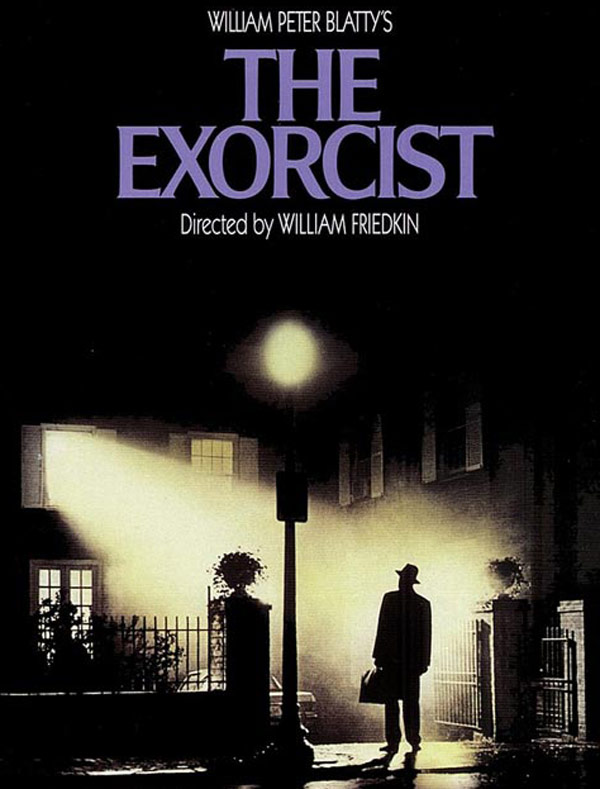
Fuse #8? Hasn’t a thing in the entire world to do with children’s literature. Here’s the scoop. When I graduated from college I was given my grandmother’s dilapidated 1989 Buick Century. The paint job had long since peeled away thanks to a permanent parking in the lot next to her nursing home, but I didn’t care. It was my first wheels. So I park on the street one day in good old Richmond, Indiana and after I take the key out of the car the automatic locks start leaping up and down and up and down. Convinced that my car is possessed (she was christened Linda Blair from there on in) I eventually discovered that the lock situation was killing my battery.
So I’ve just graduated, I’m broke, and I take it into the shop for repairs. The repair guy takes one look at it, opens the glove compartment, and removes Fuse #8. I am told that if I just take that fuse out, it won’t kill itself and he doesn’t charge me a cent. Mind you, Fuse #8 controls the horn, the radio, and the automatic windows, but it’s not like I care. That man was a saint. Fast forward a couple of years and my husband’s looking for a good name for his new film production company. He really wants to call it A Widow Be Damned Production since he’s having rights-related difficulties with Erskine Caldwell’s widow. I counter with A Fuse #8 Production. It’s got everything! A number. A weird word. My suggestion is summarily rejected but I vowed from there on in that I would name SOMETHING A Fuse #8 Production someday. And so I did. Since then I’ve wanted to name something Tin Can Phone, but nothing appropriate has presented itself yet.
Thanks, Betsy. You’ve been wonderful. Good luck with your writing. And thanks, especially, for the great job you do at Fuse #8 — it’s always an entertaining, informative read. As a parting gift, please accept this John Deere “Select Series X300 Tractor,” featuring Edge Xtra Deck, Twin Touch Pedals, V-Twin Engines, and Cast-Iron Front Axles. It comes with a four-year warranty, or 300 hours, whichever comes first.
Awesome! I’ve had this John Deere Striping Kit that fits 48″ & 54″ Decks for the X300 and X500 kicking around my tiny New York apartment for about a year or so. Finally some way to make use of it! Cheers and thanks so much for having me here on your blog. It’s been a hoot.
—–
If you enjoyed this interview with Betsy, you might like interviews with other stars of the kidlitosphere, the bloggers behind Literate Lives (Bill and Karen) and The Happy Nappy Bookseller (Doret).