Archive for Greatest Hits

The Charles Chips Man

Does anybody remember Charles Chips?

I do, or just did, recently, after not remembering it for years and years. Suddenly, once again, there it was: a specific object of memory newly recovered, pressing up against my skull. That big 16-ounce drum of Charles Chips.

For me, pushing 50, closing out the first decade of the 21st century, it’s an almost dreamlike memory. Not that there was once a company that made chips and pretzels. But that those items were delivered, from home to home, in a truck that looked like this:

My brother, Billy, you see, was once a Charles Chips Man. He drove a truck exactly like that, wore some kind of brown uniform, and had a route that carried him to various points on Long Island. I don’t really know the specifics of his job; I’ll have to ask him about it over Thanksgiving. But I do remember, as concrete image (for “image” is the container of memory; we need to “picture” those wisps of time), those tan-and-brown tin drums on top of our refrigerator. I can remember my fingers prying open a tin, working around the lid in a circle, lifting bit by bit. We loved our Charles Chips at 1720 Adelphi Road in Wantagh, New York. Seven kids, remember. So on a regular basis, that familiar truck would pull up to our house and the delivery man would ring the bell. Oh, the excitement!

“Mom, the Charles Chips Man is here!”

He’d ask if we needed any, and of course we did, three or four cans every time. We’d return the old cans, which I suppose were reused, and then off he’d drive to the next Charles Chips-loving house on the route.

How was such a thing ever possible? Could it be true? Oh, it was true, and glorious. A man would drive around in a truck delivering potato chips and pretzels from house to house, and how we loved it.

And one day — I suppose it was one day — he was gone. Not enough business to sustain the route, or perhaps not enough children left in our house. The Charles Chips Man stopped coming, stopped ringing our bell. And this afternoon, when I told Nick and Gavin about it, they looked at me as if I had lived in another land, a distant impossible time before they existed, when their father was a boy.

Does anyone else remember?

And So It Goes: Rereading Vonnegut, and a quote on semicolons

Listen: I’ve been on a little Vonnegut kick lately, and it’s been a happy time.

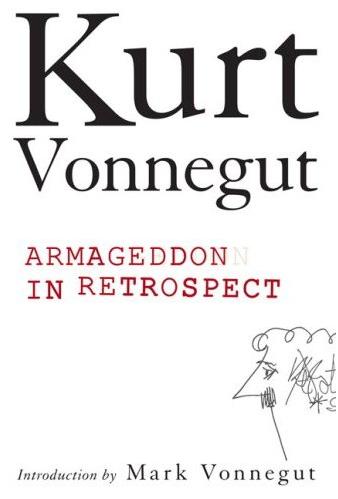
I just reread Breakfast of Champions, and I’m halfway into Cat’s Cradle, after tearing through this one, published posthumously:

While I’ve got you — as my father would say — take a gander at this photograph from the back of that book.

Wonderful, right? He was a true American Original.

I don’t know how Mr. Vonnegut is regarded in the ivory towers these days, though I do know there’s a large number of loyal fans that will always read and adore him. When he connects with a reader, it comes with a jolt. I’ve gotten my oldest boy to read a couple. Maybe more in the future. He can’t fend me off forever.

As I said before, Vonnegut was my version of YA back in the 70’s — along with guys like Steinbeck and Bradbury. And hey, remember that long-haired hippie, Richard Brautigan?!

My sister Jean, an avid reader, read all of Brautigan’s books and I borrowed them from her. Trout Fishing In America! The Springhill Mine Disaster! Revenge of the Lawn! The Abortion! It’s been years since I recalled those titles. Reading Brautigan’s breezy style possibly set my writing back ten years, or turned me into a writer, I can’t decide which. Maybe it was a combo offer: Turned me into a seriously flawed writer — but a writer nonetheless! And if that’s what’s in the case, Howie, I’ll take that deal.

There was something undeniably cool about the experience of reading Vonnegut and Brautigan, something authentic and accessible and fun. Dad wasn’t reading those guys, that’s for sure (come to think of it, Dad wasn’t reading at all — but that’s a problem for another day). Vonnegut and Brautigan, and why not, let’s throw in the Beat Writers before them, had attitude, a combination of cynicism and idealism, as opposed to today’s more common brand of empty cynicism, minus the hope. Their ideology seemed to matter a lot more than semicolons. They took literature, blew off the dust, and passed it along to me, a lousy teenager. Reading those fast, easy books gave me the idea that maybe I could do it. Write a poem or a short-short story. Take a look around and maybe assess things a little.

By the way, I looked like this around that time, 7th-8th grade:

Here’s me and my brother John, probably five years later (and yes, I’m wearing a macrame belt):

I think what’s happening between Vonnegut and me is that I’m currently writing a new book for older readers, a notch above Bystander. So I’m remembering being 15, 16 years old. The things we did. How it felt. And somehow Vonnegut so perfectly captures those essential youthful feelings. Not that there was intentionality to my selection. I didn’t go to him as a conjurer. I just stumbled upon old Kurt in a couple of bookstores and, for the first time in 30 years, thought, Now feels right.

Part of it is the counter-culture current that runs through everything both men wrote. Their freedom, independence, iconoclastic proclivities. All I can say is: I totally identify with that, growing up in suburbia at the time I did, with a brother off in Vietnam, another constantly smoking a pipe in the back bedroom while banging away on a typewriter, listening to Dylan and trying to write a book on James Joyce, a time of Nixon and Watergate, then Belushi and Radner on “Saturday Night Live” exposing our absurdities . . .

I’m rambling, forgive me. Usually I try to have something coherent to say.

Oh, yes, I remember why I began this entry in the first place! Here’s what Kurt Vonnegut wrote about semicolons in Armageddon In Retrospect:

My advice to writers just starting out? Don’t use semicolons! They are transvestite hermaphrodites, representing exactly nothing. All they do is suggest you might have gone to college.

What Is a Book for Boys? One Suggestion: “Patrick and Ted” by Geoffrey Hayes

I’ve been dwelling lately on the concept of “books for boys.” It’s a huge topic, one that I can’t possibly address in a single blog entry. I mean, yes, we’re all aware of the gender gap in reading, that many teachers and parents struggle to inspire in their boys a love for reading. There’s been progress made, an awareness that boys are different from girls, and that their tastes in books often reflect those differences. Enlightened teachers are allowing boys to self-select more of their own reading material; graphic novels are gaining popularity and respect; and so on.

Bu when I encounter lists of “books for boys,” I’m often left deeply dissatisfied — even troubled. Because these well-intentioned lists are often guided by limited stereotypes: boys like action, boys like trucks, bodily humor, adventure, violence, etc. Okay, true enough. But these lists led us to an extremely narrow view of what a boy is, and what a boy could be. What about friendship stories? What about sensitivity to others? Gentleness? Don’t boys love their mothers, don’t they struggle with relationships, don’t they ever feel lonely or afraid?

I’ve been thinking about an old favorite book, Patrick and Ted by Geoffrey Hayes. It is out of print. I first encountered this quiet little picture book back in the 80’s, when I wrote copy for the SeeSaw Book Club, edited by Craig Walker. Yet it has lingered in my memory ever since. I think it’s a perfect story, one of the few books I wish I’d written. So I finally got around to purchasing a used copy. Let’s take a look at it:

Whoops. Because the image is not available on the internet for screen capture, we’ll have to go to my cheap scanner. My apologies to Mr. Hayes — and to you, Dear Reader — for the darkness, the low resolution. The actual book looks a lot better.

It is the story of two boys, best friends. They did everything together, even quarrel sometimes. But those brief spats did not matter . . . “because Ted was Patrick’s best friend, and Patrick was Ted’s.”

Then, one summer things changed . . .

A quick aside: This is such a classic story format, and a great model for new (and veteran!) writers. So many stories begin by establishing a timeless permanence. The well-ordered past, where time is frozen and things are always true. We meet the character, or the place, find out what he or she or it is like. And somewhere along the line we turn the page to find a phrase like this: “And then one day . . .” The story leaps into the present moment (if not literally the present tense). Now the real story begins. I think of these as “and then one day” stories. You’ll find that  structure everywhere.

Back to those best friends, Patrick and Ted. One summer, Ted goes to stay with his aunt and uncle at their farm. He even advises Patrick, “Don’t let anyone else use our hideout.

Patrick is sad and lonely.

But as the days pass, he makes new friends, has new experiences. He joins in with others, he goes to the movies with Mama Bear, he plays alone.

A hideout of his own. Patrick is learning something valuable here, something vitally important.

Then, happy day, Ted returns — with two pet geese!

I love that sentence: “They were loud and quick, and Patrick did not like them.”

The boys argue, get angry with each other — Patrick pushes Ted against their hideout! — but they resolve the conflict to play happily together once again.

And yet there’s been a fundamental shift. Their world has changed . . . inside and out.

“. . . because Ted was still Patrick’s best friend, and Patrick was Ted’s.”

End of story. And by the way, isn’t that great, when you look back at the book, those two illustrations of the swing? First we see Patrick in solitude, seated on the swing, motionless. On the last page of the book we see the swing again: Patrick is smiling, swinging high, pushed by his friend. Again: just right.

Is this not a book for boys? My guess is you won’t find it on many lists. So when we try to serve boy readers, let’s not be so quick to put them in a box labeled, “What Boys Like.” Let’s remember that they have feelings, and struggle with friendships — that they experience confusing emotions — just like everybody else.

One of my favorite comments about my book, Along Came Spider, came in a blog review by Karen at Literate Lives. It was the first time anyone had reviewed the book:

I’ve read a lot of books recently about girls trying to make sense of friendships and themselves, so it was a delightful surprise to find and read an advance review copy of a book that deals with boys trying to find where they belong in Along Came Spider, by James Preller (due out September 2008).

Interesting, isn’t it? It came as a surprise to the reviewer, a fifth-grade teacher, to find a book that dealt with content typically found in a book for girls. Things like friendship, discovery of self, fitting in. Does that mean Spider, like Patrick and Ted, is destined for obscurity, the furnace where “out-of-print” books go to die? Perhaps so. Perhaps it’s not a book that most boys will naturally pick up. I mean: I realize that it isn’t. Just as I know that a book titled “Patrick and Ted” isn’t going to bring boys clamoring. But I can’t believe that when they read it, they won’t see themselves reflected in those pages.

It is, after all, a book for children.

——-

To learn more about Geoffrey Hayes, click here to read an interview.

He is also featured at everyone’s favorite blog, the always great Seven Impossible Things Before Breakfast, just click like crazy right here.

And thank you, Geoffrey Hayes, for writing and illustrating that wonderful book.

“So How’s the New Book Going?”

Today, I got asked this question three times before ten o’clock: “So how’s the new book going?

It’s a well-intentioned question, and it comes from friends. I don’t know how to answer, in part because I don’t know the answer. It’s not like I get daily phone calls from my publisher, “We just sold seven in Maine!”

I guess I could say, “Um, no word from The Today Show or Oprah just yet — though my publisher did send an ARC to a blogger in Boise, Books I Feel Like Blogging About . . . And Other Stuff! So we’re hoping!”

Though I first published at age 25, in 1986, I don’t have a lot of experience in the hardcover world. My first hardcover, Cardinal and Sunflower, went to HarperCollins and sank like a stone. “Temporarily Out of Stock” on Amazon for the past nine years. It did not earn back the modest advance, was never picked up in paperback. I don’t think that’s an atypical story. How’d that book go? Um, it went, but thanks for asking.

For ten years, I wrote Jigsaw Jones books — and there was never any professional reaction, other than the letters I’d get from kids (fabulous!) or random comments I’d receive from teachers and parents. But hey, let’s not forget the ultimate measure: royalty checks. All that creative work gets reduced to simple mathematics. If it’s a big number, the book went well; if it’s a small number, disappointing, worrying. Those Jigsaw Jones books were never reviewed. Series paperbacks, you know. The kids seem to like ’em, but. If one was better or worse than another, nobody said so. After a while (read: after the first book), the publishing folks at Scholastic didn’t much read them either, other than those young editors who did so as part of their job description.

The furnace beckons. If sales go well, my publisher asks for more. If sales go down, the furnace grows cold. They try burning something else. It’s almost entirely outside of any concept of quality. (Perhaps that sentence was too generous, I’m not sure.) The numbers don’t lie. And again, this is a business. I get it. Chug, chug, chug. The train has got to keep moving down that track.

I want to be clear about this: This doesn’t make anybody a bad guy. It’s reality. I don’t curse the sky when it rains. But I’m not going to pretend the sun is shining, either. Books are products, after all; they must move. For most of us — who don’t land on the New York Times Bestseller List, or who don’t somehow cut through the clutter, as they say — it’s just how things go. Don’t cry for authors, Argentina.

Now, of course, writers today can get another helpful number over at Goodreads — if they dare. At the present moment, four people read Bystander, two reviewed it, and the score is 2.67. Or something close to that. I’m guessing that somebody didn’t care for it much. I have a nervous disposition; I generally don’t read reviews.

So how’s the new book going?

No parades yet. One official review, which was brief and mildly positive (read: bums me out they didn’t love it), and that’s about it. I think, in truth, that’s the way things go for the overwhelming majority of authors. It’s not like the world changes. Or even stands up to take notice. With Six Innings, I was lucky. Some good things happened. A blog review here, another there. A starred review, then another! It took time for the book to find an audience, and it was astonishing to me when a year later it hadn’t fallen off a cliff. Miracle  of miracles, it was named an ALA Notable Book. I mean to say: It kicked Cardinal & Sunflower’s butt up and  down the block.

With Bystander, who knows. I wrote the book, it’s out there, it’s out of my hands — like a little craft I built of balsa, cork, Krazy Glue, and dowels. A boat I pushed out into the water. I don’t control the journey. It floats, it sinks, it gets caught up in a current and travels hundreds of miles. I’m that kid staring helplessly at the edge of the pond. Swim, boat, swim. Go find readers.

I also get useful advice, like that same boy, now at home plate, after he swings through a fastball. “Elbow up, head in, lay off the high ones.” In this case: Hire a publicist, get an agent, promote yourself, go on Twitter, make a Facebook page, film a book video and put it on Youtube, etc.

Do you blog? Oh boy, do I ever!

Anyway: Please check out this short, satiric piece in The New Yorker, “Subject: Our Marketing Plan,” by Ellis Weiner. Every author should read it. A tip of the hat to Deborah Kovacs for bringing it to my attention. The one-page article begins:

Hi, Ellis—

Let me introduce myself. My name is Gineen Klein, and I’ve been brought on as an intern to replace the promotion department here at Propensity Books. First, let me say that I absolutely love “Clancy the Doofus Beagle: A Love Story” and have some excellent ideas for promotion.

To start: Do you blog? If not, get in touch with Kris and Christopher from our online department, although at this point I think only Christopher is left. I’ll be out of the office from tomorrow until Monday, but when I get back I’ll ask him if he spoke to you. We use CopyBuoy via Hoster Broaster, because it streams really easily into a Plaxo/LinkedIn yak-fest meld. When you register, click “Endless,” and under “Contacts” just list everyone you’ve ever met. It would be great if you could post at least six hundred words every day until further notice.

If you already have a blog, make sure you spray-feed your URL in niblets open-face to the skein. We like Reddit bites (they’re better than Delicious), because they max out the wiki snarls of RSS feeds, which means less jamming at the Google scaffold . . .

James Preller Interviews . . . Lewis Buzbee, Author of “The Yellow-Lighted Bookshop.”

As a kid, I used to come home from St. Frances De Chantal Elementary in the late 60’s and early 70’s to find my grandmother sitting in front of the television, sipping brandy, watching the soaps. She especially loved “The Edge of Night.”  Then at 4:30, I’d get up and switch the channel for her, turning the big knob over to “The Mike Douglas Show.”
It was a daily, syndicated variety show, and Mike would begin each day’s show by singing a popular song. I loved it. I sat with Granny Good Witch — as we called my grandmother — for many, many hours watching Mike Douglas. He seemed like such a nice man.

One of the great things about the show was that he’d have guest co-hosts who would stay for the full week. It could be Sammy Davis, Jr., Richard Harris, Charo, Soupy Sales (photo, below), Barbra Streisand, whoever. Most famously, Mike snagged John Lennon and  Yoko Ono for the week-long co-host gig, February 14-18, 1972. It was an inspired invitation, and made for legendary, if at times uncomfortable, television.

That’s how I want to play it this week. I’m Mike Douglas, and my guest co-host will be author Lewis Buzbee, and he’ll be hanging out all week long. There will be laughs and there might be pie.

Originally, we set out to do a standard interview. But as happens with good conversations, we couldn’t stop talking. Lewis is a terrific guy, quick on his feet, with deep thoughts and insights, and a sense of humor, too. Mostly, he’s a book lover and a man of great passions (fortunately, I carry a taser). I know you’ll like him.

What follows is Part One of a Three-Part Mini Series, titled “The Never-ending Lewis Buzbee Interview.”

——

Hey, everybody, look — it’s my co-host for the week, Lewis Buzbee! The man who asks the question, “How do you press a wildflower into the pages of an e-book?”

Everything all right, Lewis? You look a little drawn. Ho-ho. Seriously, thanks for stopping by, Lewis. No, we don’t need to hug. I mean it, DUDE. That’s enough. I’m warning you! I keep a taser in my man purse . . .

. . . and I will tase you, bro. Go sit in the big comfy chair.

Don’t tase me, bro!

And don’t tase my bro, either.

Congratulations on your first children’s novel, Steinbeck’s Ghost. I definitely want to talk about that book later in the week. But first, I have to say: I loved The Yellow-Lighted Bookshop.
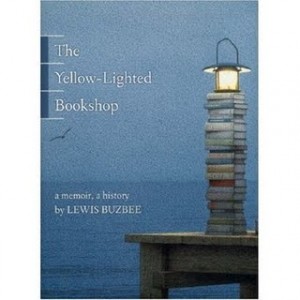
Thank you, Mr. Preller.

Please, not so formal. “Mr. Preller, Sir,” is fine. Your book opens with a confession of sorts:

“When I walk into a bookstore, any bookstore, first thing in the morning, I’m flooded with a sense of hushed excitement. I shouldn’t feel this way. I’ve spent most of my adult life working in bookstores, either as a bookseller or a publisher’s sales rep, and even though I no longer work in the business, as an incurable reader I find myself in a bookstore at least five times a week. Shouldn’t I be blase about it all by now? In the quiet of such a morning, however, the store’s displays stacked squarely and its shelves tidy and promising, I know that this is no mere shop. When a bookstore opens its doors, the rest of the world enters, too, the day’s weather and the day’s news, the streams of customers, and of course the boxes of books and the many other worlds they contain — books of facts and truths, books newly written and those first read centuries before, books of great relevance and of absolute banality. Standing in the middle of this confluence, I can’t help but feel the possibility of the universe unfolding a little, once upon a time.”

First, Mr. Buzbee, Sir, that was beautiful. But as I read your book, I kept worrying about your family. Do they have enough to eat? Does his daughter have new clothes for school? You seem to buy a LOT of books.

You know, we do buy a lot of books, but now that I’ve given up bookselling for the glitzy life of a writer, well, it’s just money, money, money.

It’s a funny question, though, that I get a lot. People assume if you buy hundreds of books a year that, well, it’s somehow superfluous spending. But people with $60,000 cars never get the same sort of grief. I mean 60 G’s for a car? You’ve gotta be kidding.

You’ve lived a life that’s been centered around the reading life. Tell us about your background.

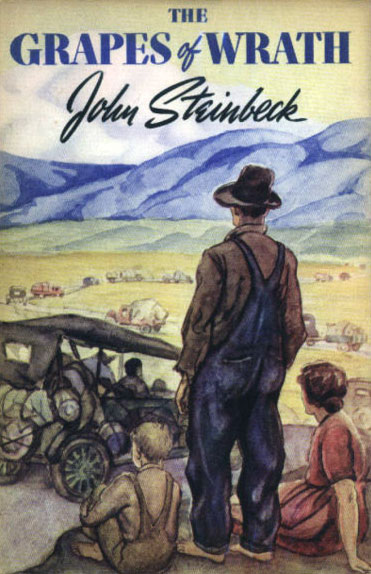
I grew up in a very working class home in San Jose, California, where we had books, of course, and where my parents read for their own pleasure, but nothing too New York Review of Books about it. My parents, children of the Great Depression, looked at books as a way for their kids to get a better education. But I never set out to be a bookseller or a writer. It happened, and quite by accident. I was on my way to being a rock star,  when my life was changed by a high-school book report on Steinbeck’s The Grapes of Wrath.

I was fifteen. I had never before felt anything so powerful, his words, and I had never felt so connected to the rest of the world either. After that, the other pieces of my life followed, if not purposefully, then easily. When I was eighteen, I got a job in a bookstore; I’d heard you got a discount on books. And when I discovered that booksellers sometimes got free books, well, that was it.

Can you remember a specifc scene in the book when the light turned on for you? I have to confess, I read it for the first time this summer — and I was staggered by the writing, the pure telling of it. Also, Steinbeck’s humanity, the strong feeling he so obviously had for those characters.

It’s that first chapter, the description of the Dust Bowl, one of those epic, overview chapters. Seeing the world described with such power — that’s magic isn’t it? You put some black squiggly lines  on a page, and an entire world appears.

And it was that sudden. I read that first chapter — somewhat grudgingly — and put the book down, deciding there and then that I would become a writer. Then I wrote my first short story, and it was only I finished that story, that I went back to the book. And the world just kept getting bigger and bigger.

The Yellow-Lighted Bookshop feels like an inevitability — this unlikely book that absolutely had to happen — and that it had to come from exactly you.

I knew a long time ago — many years into my writing career, and after my first novel, that I would have to write this book. Perhaps fifteen years before I actually sat down to write it. There were, I knew, a lot of books about the antique book trade, but nothing, really, that was a general appreciation of the new bookstore. I suppose I needed to write it, too, because, as I said earlier, the bookstore had given me so much. So much pleasure.

Easy, Lewis. Get back in the chair.

Not the ta —

BbzzzzzzzzttTTTT!

Man, I love that crackly sound! You should have seen your face, Lewis, the way your eyes bulged out! Hysterical. Now please continue . . .

Um, okay. Just let me get the feeling back in my arms and legs. I think I waited to write the book until my bookselling career — as both a bookseller and sales rep — had come to an end. I needed that distance. I never wanted to write a critique or an expose. It had to be an appreciation.
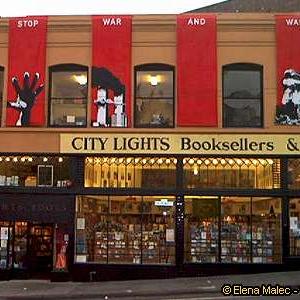
I can identify with that, because I knew I’d always have to write a baseball book of some kind or another. Baseball had seeped into every aspect of my life, as a boy, as a father, in my relationships with people, these powerful associations with my own mother, my sense of competition and play. It had to spill over into my writing.

There is a tired old maxim, write what you know. It’s often misinterpreted, of course. I think it has to be this: write what you love. Even if you’re arguing with it, or hating it at the moment, write what you love. Yes, I know bookstores, but thousands of other people know much more than I do about the business. No one, though, has quite loved the bookstore as much as I do. I’ve stared at it for decades, and always with love.

Yes, write what you feel. We can learn about all sorts of things, do research, find out, know. But unless the heart attaches to it, well, I don’t know how you can go to work each day.

I once had a student who offered up a great piece of advice — write about what you are most ashamed of. An interesting tack, that. It immediately calls you to powerful emotions.

Obviously, you analyzed the marketplace and decided: What the world needs now (besides love, sweet love) is a book that’s part memoir, part history of bookstores. Instant bestseller! Why James Patterson didn’t do it already is beyond me.

Well, that would have required Patterson to write much longer paragraphs. So, that answers that. But a psychotic murderer in the bookstore — hey, let me  write that down.

Actually, I did know the book would do well — it did quite well, thanks. Because I’ve spoken with too many people over the years who feel as deeply about the bookstore as I do. And I knew they would want to the words to express that feeling, words to help them see it new.

I love that observation, Lewis. Writers can provide that, I think; so can good public speakers. Many people don’t seem to have the language to articulate those feelings. We see it at weddings, funerals, toasts at family events. I’m always so grateful to those people who can kind of, I don’t know, say it for us.

Of course, I am thinking of all those copywriters at Hallmark.

My mother is possibly the greatest supporter of Hallmark cards in the country, by the way. I get Thanksgiving cards from her! Thanksgiving cards? Amazing. And very specific ones — Thanksgiving cards that extol the virtues of a “very special son.”

I’m not dissing this, by the way, I’m glad people have that outlet. Otherwise, whoo, what a world.

There were so many moments in the book that I enjoyed — and not just that it came in at the optimal length of 225 pages — but sentences I had to underline, paragraphs where I’d put exclamation points in the margins. There’s a line you wrote, “to remember a book is to remember the child who read that book.”

It’s sort of a crib from Proust actually. I had the idea, of course, for a long time, but in his wonderful essay, “On Reading,” he helped me put words to it. When I remember a favorite book, I’m remembering, too, who I was at the time I read it. I just re-read Ray Carver’s first book of stories, Will You Please Be Quiet, Please?, and as well as being reminded of his genius and moved by the stories, I also remembered being a freshman in college who did nothing during spring finals week but read Carver instead. It was not a good semester grade-wise.

I guess that’s where the memoir aspect of this book became inevitable for you. You couldn’t talk about books without memories flooding back — it was impossible to separate the reading life from your actual life.

I knew that the memoir of a bookseller was bound to be pretty dull stuff. It’s not an amazing life, in that way. My father was a deep-sea diver for the Navy; now that’s a life worth writing about. I included the memoir bits kind of strategically. I wanted to put in enough of my own experience — but not too much — so that the reader would be able to relate to the memories, and yet still have enough space to put in their own memories. My memoir, as if were, is really only there as a touchstone.

But it’s true. I am a reader — and I would guess you are, too. In fact, anyone reading this, well, it goes without saying. But I’ve always been suspicious of people who want to separate the “reading” from the “life.” For many of us, reading is an integral part of life, not a vacation from it. And not in a self-help way, either. It’s just a part of what I do, and it influences how I go into the world, how I engage with it. I’ve always considered reading an active undertaking, not passive.

Wow, Lewis. Word.

——-

End of Part One. Please come back on Wednesday for Part Two (or click here right now!) of “The Never-Ending Lewis Buzbee Interview” — he’ll be here all week! We’ll talk about the Kindle, Star Trek, Facebook, Katharine Ross, the “death of the novel,” the twitterverse, and raise a glass to idiots everywhere!

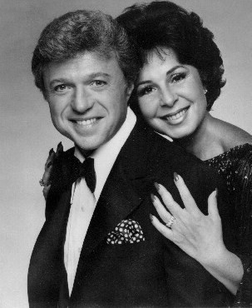
Next week my co-hosts will be: Steve Lawrence and Eydie Gorme!