Though I published my first book in 1986, it wasn’t until recently that I experienced book reviews. Despite a crazy assortment of books, plus forty titles in the Jigsaw Jones series, the books were never, to my knowledge, reviewed.
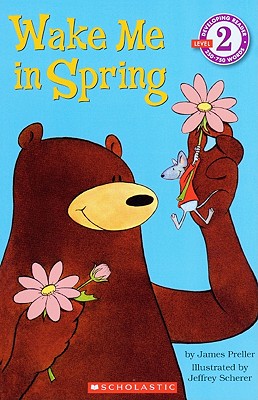
That’s the paperback world. I began to think my name was James “Critically Ignored” Preller. The consoling factor was the books were being read by their intended audience, with titles like Hiccups for Elephant and Wake Me In Spring selling more than one million copies (thanks to the might of Scholastic Book Clubs). Beats a review any day. And yet, and yet. There’s something about the validation that comes from a positive, industry-sanctioned review. I think I longed for somebody to say, “Okay, he’s in the club!”
Things changed when I entered the hardcover world in 2008 with Six Innings. Suddenly my work was deemed review-worthy. The coach tapped me on the shoulder; I grabbed my helmet and raced in from the sidelines: I was a playa! I’ll admit it: the world of reviews represents a confusing, seemingly arbitrary process. While I’m grateful to each reviewer who spends time with one of my books, I’m still afraid to read most of them. Some reviews are perfunctory at best, even when they say decent things about a book. Other reviews are canny and insightful. The whole process feels like a crapshoot. Who are these reviewers, anyway? These strangers who can fill my head with praise or cut me off at the knees (example: for the generally well-received Mighty Casey, a book-lover for Kirkus Reviews snarked: “As a writer of verse, Preller, author of Six Innings, makes an excellent prose novelist.”)
Freaking ouch. I’ll never rhyme again!
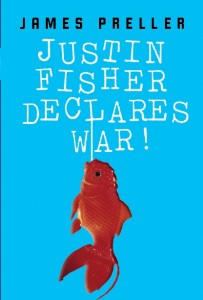
And then there are rare reviews that are just incredible, because of the source. That’s how I feel about this latest blog review by Franki Sibberson for Justin Fisher Declares War!
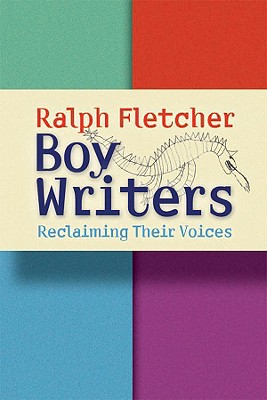
I first learned of Franki when I became a fan of her blog, A Year of Reading, which I discovered on the blogroll over at Literate Lives. I figured that Franki was just another fabulous Ohio-based teacher who loved books (they seem to grow like mushrooms out there). Later I noticed Franki’s name referenced in Ralph Fletcher’s most excellent book, Boy Writers: Reclaiming Their Voices.
I did a little research and soon learned that Franki was an accomplished author herself, co-authoring Beyond Leveled Books (with Karen Szymusiak and Lisa Koch), Still Learning to Read (Karen Szymusiak), Day-to-Day Assessment in the Reading Workshop (again with Karen Szymusiak), and more.
Clearly, Franki knows and cares about teaching reading in the elementary school. She’s invested and dedicated. As a former school teacher told me over lunch earlier this week, “teaching is an act of hope.” My guess is that Franki would nod her head at that comment.
So I’m honored by Franki’s review of Justin Fisher Declares War! A book that has not gotten much attention to date.
Click here to read the review in full — and then be sure to bookmark Franki’s site, because it’s an inspiration and an education. Here’s an excerpt from the review (I confess that it amounts to more than half of Franki’s review, because I didn’t have the heart to cut any good parts):
I am a huge James Preller fan but this may be my favorite from his list. Most of my teaching life has been in grades 3, 4, and 5. I feel very at home in 4th and 5th grade classrooms. I love the age and James Preller must also love this age. He really understands them and the struggles they deal with. Over the years, I have learned what a huge transition this age is for kids. They go from being little kids, to being big kids and it is sometimes a little confusing.
In this book, we learn that since 3rd grade, Justin Fisher has been the class clown. He is always up to something. He has good friends but in 5th grade, that seems to be changing. His friends and classmates have had enough and are starting to keep their distance. For me, this book is about figuring things out. Things that are cute and funny when you are 8, are no longer cute and funny when you are 11. This is a hard lesson for kids and finding their place in the world gets trickier. But Justin finds his way, thanks to an amazing young teacher (one that clearly deserves a spot on 100 Cool Teachers in Children’s Lit!).
If I were in the classroom this year, this would probably be my first read aloud. The first read aloud has always been key and the choice is always a hard one but there are so man reasons that JUSTIN FISHER DECLARES WAR would make a great first read aloud.
<< snip >>
—–
Franki recently listed some recent raves for middle grade fiction — and I know I’ll be checking them out soon (if not reading every one, at least buying a few for my fourth-grade daughter, Maggie):
Out of My Mind by Susan Draper
Touch Blue by Cynthia Lord
Keeper by Kathi Appelt
Mockingbird by Kathryn Erskine (already on my night table)
As Simple as It Seems by Sarah Weeks
Obviously, Franki really likes books with blue covers (goldfish and water optional).
And you know what else? She’s a huge James Preller fan!
Ha! Actually, Bill created a photo mosaic inspired by the book and I thought it was a very clever, creative response to a book with some real pedagogic potential. In the comments section, Bill explained how he did it, so I thought I’d share that with my Nation of Readers (see below).
Yes, that sums up my book quite nicely. War and Peace it is not. According to Bill:
“I use Flickr to collect the pictures and use BigHugeLabs to create the mosaic. It’s really very simple and fun. I haven’t tried it with my students because I’m still looking for good picture collections that are accessible to my students.”
Bill is an old school guy, meaning that he’s hopelessly stuck on books, but by dint of effort he’s forced himself, admirably, to keep apace of technology. While I personally remain averse to Twitter (Bill just took the plunge into the Twitterverse — Ashton Kutcher, watch your back!), I do think he hit on something with this mosaic concept. Bill’s been happily making a few based on some of his favorite books (Savvy, Make Way for Ducklings, and more). Check out this post, “Some Tech Stuff for the Summer,” for the glorious details, cool images, and happy links.
Sorry, you’re going to have to wait a minute. I know you’re in a big hurry and everything. People nowadays expect their blog entertainment to run like clockwork, click, click, click on that mouse. Well, go grab a seat. There’s some old Field & Stream magazines on the table.
It shouldn’t be too much longer. Please have your co-pay ready.
I’m waiting for author Kurtis Scaletta, who agreed to come here all the way from his home in Minneapolis for an interview. But you know how that goes, bad weather, costly delays: snow, ice, Vikings . . .
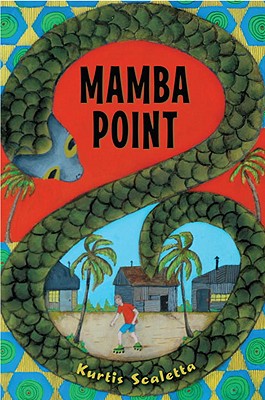
Seriously: Kurtis is an original new voice in children’s literature. His first book, Mudville, earned him wide acclaim, including being named one of the Top 10 Sports Books for Youth in 2009 by Booklist. His next book, Mamba Point, is due out in July, 2010. Even better, Kurtis claims to be writing a completely crazy book, hopefully for 2011. The truth is, I’m rooting for Kurtis Scaletta — and I know that after meeting him, you will be, too.
Hey, Kurtis. Finally, you’re here! Thanks for coming all the way from Minneapolis. Take off your wet things. Yes, the snow pants, socks, and mittens, too. I’ll throw them in the dryer while we talk. Here’s a terry cloth bathrobe and some bunny slippers.
Thanks. It’s great to be here in balmy Albany. Your orange tree is doing great. Um, do you mind turning on the A/C?
Not a problem. Are you bothered by the noise from the steel drum band in my backyard? I could ask them to stop, but like most of my neighbors in upstate NY, I could listen to “Shake, Shake Senora” all day long — and frequently do.
I actually listened to a lot of Caribbean music while writing the last one, but more Marley and less Belafonte.
Now that you mention Harry Belafonte, I remember that song gets featured nicely in Tim Burton’s “Beetlejuice.” But don’t try to sidetrack me, Kurtis. I’m onto your tricks. We’re primarily here to talk about me. I mean, Mudville. The book turns on what strikes me as just a wonderful, imaginative leap –- a rain delay that lasts 22 years. Do you remember the circumstances of getting that idea? Was it a lightning bolt moment?
It’s kinda predictable, but I was watching a baseball game that went into a rain delay and one thing led to another. I did already have some of the characters in mind and I was trying to figure out what to do with them.
But that was a fantastic idea, literally, and introduced an element of magic realism into the story. Have I got that right? Is it something you resisted at first? Or do you have an interest in speculative fiction?
I like to tread a fine line between the improbable and impossible. All of my books do it. I call them “tall tales” myself. Sounds less pretentious. I mean, I ain’t Marquez or Borges. I read a lot of speculative fiction when I was younger, especially Harlan Ellison, but I don’t really see myself in that arena.
Are you excited about Mudville coming out in paperback?
Definitely. Something about the Yearling logo makes it especially neat. I remember a lot of great books having that horsey from when I was a kid.
It’s cool because Six Innings is coming out in paperback around the same time. Come to think of it, we should be bitter rivals. Where’s my trident?
Yeah, I guess other kids baseball writers are in competition. Unfortunately, they’ve also proved to be decent dudes. I’ve met John H. Ritter, Mick Cockrane, and John Coy, and in all three cases had to pocket my shiv.
Ah, disappointing. Nothing quite beats a brawl between children’s authors. After Mudville, was there an expectation that you were going to follow with another sports book?
I did worry for a while that I would be expected to deliver a series of sports books. I figured I could write one or two, but I’m not Mike Lupica and I have a lot more interests besides sports. I remember my wife saying, “In seven years when you’re writing the lacrosse book, you’ll wonder what the heck you’re doing.” But when I started talking to my editor about ideas for a second book, she was more taken with the Africa book than other suggestions, which included sports books. So I chalk that up to landing at a great house with a great editor.
I had a similar experience after Six Innings. I remember when your lovely wife said to me . . .
She encouraged you to write the Africa book, right?
Exactly! She’s been helpful in so many, many ways. I was wondering, how do you deal with reviews? You received such wonderful notices for Mudville. Are you thick-skinned, or more of a whimpering baby like me?
I really appreciated the good reviews, and the non-mention in one major outlet actually hurt more than the slam in another. I mostly just want people to know I exist, I think.
Are you hungry? I’ve got a Yodel, a Ho-Ho, or a Devil Dog. Which one do you want? Orange soda or root beer? And yes, Kurtis, it’s raining gum drops. That’s the way we roll here at jamespreller.com.
Yeah, and I guess the definitive word is “roll,” with that kind of diet. I’ll have the Yodel and the Orange pop, thanks.
Sorry, all out. Here’s a can of tuna fish and a hammer.
I’ll bring the tuna home. My five cats will appreciate it.
Five cats? I’m not going there. You went to school for writing, didn’t you? So is it safe to assume that you believe writing can be taught?
Well, the truth is that it was 17 years ago and I mainly had to figure out what to do with myself. But I do think I benefited from working with my advisor Elaine Ford, who is a terrific writer and was very frank and helpful with her feedback on my works in progress.
I can’t deal with “frank and helpful.” I’m more of a looking-for-false-praise kind of guy.
I’ve read that a lot of sensitive geniuses are like that. Anyway, it was a long time before I actually got published, but that had to do with me and not the University of Maine. Still, I think creative writing is in a weird position where there is both an abundance of non-academic “how to” manuals and workshops but very little serious scholarship on teaching and learning and very little about best practices or pedagogy that is based on evidence. My day job in higher ed is showing here I think.
Kurtis, you have a pretty active blog and I enjoy reading it. Do you think it’s helped you professionally? And if so, in what ways?
Now I use my blog as a way to connect to readers, librarians and teachers, but the biggest help it’s given me was before I got published. Before I had my professional authorial blog I had a book review blog, now defunct, and a personal/chatty blog, also defunct. Blogging was a turning point for me as a writer because I started writing every day and I met and started talking to other writers and people who care about kids books. My day job is not in writing or literature and I was way out of the loop, so I’m glad I got connected to a community and started writing again.
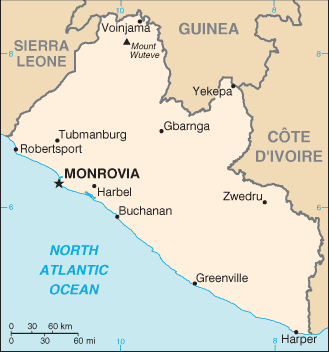
You have a new book coming out, Mamba Point, inspired in part by your experiences living in Monrovia, Liberia. That’s not near my old haunts on Long Island, is it?
Well, they’re on the same ocean, so sure. Just a skip across the pond.
So the story involves . . . dancing?
You’re just trying to get me worked up, aren’t you? One of my missions now is to get people to learn the difference between a mamba, which is a deadly snake, and a mambo, which is a risque latin dance.
A confusion that has led to many senseless deaths, I might add.
Seriously, because those mambo dances are tougher than they look!
Do not confuse the Mamba with the Mambo. Kurtis Scaletta is here to help.
Please, Kurtis, continue about your book.
Mamba Point is about a kid who moves from a small midwestern air force town to Montrovia, Liberia, in 1982. He’s worried about making new friends, just starting to get curious about those creatures called girls, and mostly wants to read comic books and play games. So far, that’s pretty autobiographical. But this kid is harassed by a black mamba… at first he’s scared out of his wits, but ends up kind of befriending it. They have a kind of connection. Then there’s a little adventure story thrown in, for good measure. Needless to say, that gets pretty far away from my own experiences. But there’s a lot of stuff that’s straight from my own life, and a lot about what it’s like for an American kid to move to Africa.
We both felt the death of J.D. Salinger, in my case more than expected. You mentioned “The Laughing Man” as your favorite Salinger story. What’s so great about it?
There’s lots to love about that story. The outer story is the typical spare, haunting modern story we all read in lit classes, but then there’s a completely ridiculous, endless, laugh-out-loud adventure story that’s narrated throughout. And there’s a pretty sweet baseball scene, too.
You’ve also written elsewhere about your admiration for the books of Betsy Byars.
You identify with the misfit, don’t you?
That was definitely what attracted me to her books. In the late 70s/early 80s when I reading her books, there was often a quirky misfit kid at the center. I really connected with them. I think she’s one of by biggest influences; I think I learned a lot of what I know about creating characters from Betsy. I really became aware of it in the middle of writing Mamba Point.
Do you read a lot of children’s books?
Yep. More than I read grown-up books. You kind of have to know what’s going on in the industry, so I read a lot so I know how to position my own books in a crowded marketplace. I do try to work in a couple of grown-up books but it’s hard to keep up as it is. Right now I’m in the middle of several books including The Evolution of Calpurnia Tate and Marchello in the Real World. They are both great.
Okay, tell me about this new “work-in-progress.” But it has to be in 139 characters or less; I’m tougher than Twitter and I think it’s time people knew it.
Wake, ME is about a small town in Maine that’s taken over by a giant fungus and couple of kids who believe it portends the town’s doom.
I want that book right now! Lightning Round: I know you’re into music, Kurtis. Give us ten songs on your imaginary mixed tape.
This one goes to eleven: “Train Whistle Blues” by Merle Haggard; “Driver 8” by R.E.M., “Play a Train Song,” by Todd Snider, “Waiting for a Train” by Jimmie Rodgers, “The Train Carrying Jimmy Rodgers Home” by Greg Brown, “Trains” by Ryan Adams, “Let the Train Blow the Whistle” by the Old 97s, “Freight Train Blues,” by The Weary Boys, “King of the Road” by Roger Miller, “Downbound Train” by Bruce Springsteen, and “Downtown Train” by Tom Waits (not Rod Stewart). Sorry, I have a one track mind.
Got any Oscar favorites? Best Picture of the Year?
I seriously love “Up.” It’s probably the only nominated movie I saw, and I don’t think it’ll win best picture (just best feature-length animated film), but the first 15 minutes of that movie are beautiful. It’s a really wonderful and imaginative story after that, and the dog was great, but it’s that long prologue that gets to me. Sniff. That being said, the smart money is on “Avatar.”
I thought the opening minutes of “Up” were extraordinary, compressed storytelling. Beautiful. After that, I didn’t care so much. I’m going to go with “The Hurt Locker.” Five favorite blogs?
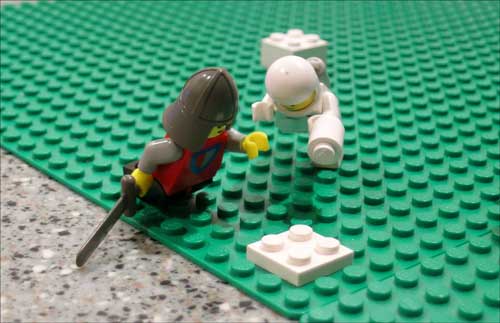
Oh, I loved bat-girl! “Less stats, more sass.” She also did those incredible Lego recreations of great (and not-so-great) moments in Twins baseball history.
I’m glad she’s appreciated even outside of Twins’ territory. You might also know her alter ego, Anne Ursu, who’s written a terrific fantasy series for kids. My wife says her grown up books are good, too, but I don’t really read grown up books.
I’m your reverse in that way; I read mostly adult.
Besides the time issue, I’m like an open pitcher of milk in the refrigerator. It’ll take on the taste of whatever’s around it. So when I read something, especially something really stylized, it affects my own voice. So I have to avoid getting deeply immersed in a novel when I’m writing. And these days I’m almost always writing. Kids books, I can usually read in a day, and shake it off.
Interesting, and again, that’s the exact reason why I don’t read them — especially when I’m deep into my own writing, when it’s an absolute no-go for me. We’re like two peas living in completely different apartments.
I worry about having too much consciousness about the marketplace. You start to hear about what sells and what doesn’t, and become too familiar (I think) with the conventions of the business — a business that’s often predicated on ripping off ideas from the bestseller list. Follow that to the end and you’re writing about a boy wizard with a sassy friend who falls in love with a smoldering vampire who’s really a geek who . . . and on and on. It seems like too much information can get in the way of originality. Thoughts?
It’s more about voice than subject matter. I’ll read a collection of essays by David Sedaris and start writing like David Sedaris, even though I’m still writing my own completely original work about the boy wizard who falls in love with a fairy, but to win her love he has to battle the vampires in dystopia with his werewolf buddies and his pet dragon. Or I’ll read Cormac McCarthy and start writing like Cormac McCarthy, even though I’m working on a tween romance.
You know what I like about you, Kurtis? Even though you strike me as having this heightened awareness of the business, you went out and wrote Mamba Point, a personal, deeply-felt story that has NOTHING to do with the trends of the marketplace. Last I looked, kids were not clamoring for more books set in Liberia. Yet you wrote from the heart. And that sound you hear is cheering, my wishing you success with this story.
Okay, whew. I hate it when Jamespreller.com gets all soggy. It seems like we’ve drifted a fair distance from our original list of bloggy goodness. By my count, you’ve only listed four.
Well, you know, I know a billion writers with blogs, but yours stands out. A newby writer like me learns stuff about the profession of writing. I also like the reader mail, which I’d love to do myself but I don’t get enough of to do. I think your blog is a good example of what writer/bloggers should do, connecting with teachers and readers. So much of it ends up being us writers just talking to each other.
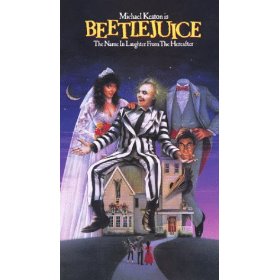
That’s very kind of you to say, thanks. But I can tell from the buzz of my Kenmore dryer that your clothes are dry and it’s time for you to depart balmy Albany — alas, before you had time to visit nearby Cohoes, just ten miles north on 787, alleged home of Kilgore Trout — to brave the Minneapolis winter. As a parting gift, please accept this rare, 1988 VHS edition of “Beetlejuice.” It may look like it’s just a crummy old tape found in the bottom of my closet, but that doesn’t mean it’s not true.
Um. So, thanks for the interview . . . yeah. Are you sure you don’t have an extra Yodel?
Oh, fine. Knock yourself out.
——-
FOR MORE INTERVIEWS . . .
If you enjoyed this interview with Kurtis Scaletta, you might not like the others. They aren’t very good.
I thought this passage was particularly interesting:
What I really loved about this book is the fact that it doesn’t end with the teacher or another adult solving the problem and dealing with the bullies. Eric and his friends need to decide for themselves how to handle the situation. As a teacher, I admit to being a little frustrated at first when I read the last page. But then I realized it is exactly what tween are looking for. They don’t need us stepping in all the time and solving their problems. They need to learn how to work within their own cliques and peer groups. As much as we might want to see the bully “get what he deserves,” that isn’t always realistic and kids know that. So kudos to James Preller!
The ending to this book has gotten some attention, not all of it positive, in part because there is no clear (or happy?) resolution. Though I contend that many loose ends can be inferred: most of Griffin’s friends have started distancing themselves from him, Griffin is involved in petty crime and we know that the police are investigating, and Eric and Mary have gained new insights and strength. Note that bullying tends to peak in middle school, whereas in high school many of the Griffin types tend to lose their group appeal (upon which their behavior depends).
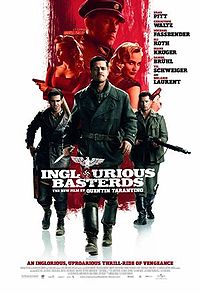
But, no, Bystander is not a revenge fantasy in the mold of “Inglourious Basterds.” (Loved that movie, btw.)
From the outset, I was determined to avoid the easy wrap-up, the unrealistic solution — mostly because that’s what I was writing against, all those simplistic “bully books” that tied everything up in a neat bow. I just don’t think it helps to pretend these are simple issues with clear resolutions. At the same time, I do understand that fiction depends upon artifice: most of us thirst for that big payoff at the end. I recall the famous test screenings for “Fatal Attraction,” when the audiences clearly wanted to see Glenn Close get it, and in as horrific a manner possible, before the credits rolled (and the studios listened — and made gobs of money, too; to read more on that, click here and scroll down to “alternative ending”).
In my book, Eric’s father doesn’t magically appear to save the day. Griffin, the book’s antagonist, doesn’t seem to have learned any big lessons. But look at the book’s title. That’s the focus here — with the silent majority — and, I believe, where there’s the best hope for meaningful progress. It’s not unlike the world wide war on terror, in the sense that there’s no easy victories to be won and it’s a disservice to pretend otherwise; Afghanistan (or Iraq, or Iran, or Pakistan, etc.) can’t be fixed in twelve months or five years. The struggle is ongoing. It’s not something that can be definitively “won” and walked away from, mission accomplished, satisfied with a problem removed.
On a related note, there was a recent discussion over at Read Roger, titled “too damned long,” about the length of book reviews. Opines Mr. Sutton, who is a master at stirring the pot:
Vine reviews, customer reviews, and, sorry, blog reviews–they are all too damned long. That’s the problem I have with ’em. Just because the technology allows one to prattle on forever should by no means encourage one to do so.
As an author, still fairly new to the world of reviews — none of the books in my paperback Jigsaw Jones series, with 40 titles, ever got a print review as far as I know — I confess that I find myself unimpressed with many reviews, print or otherwise. But the most disappointing is the brief review, which amounts to a quickie plot summary with an opinion-based sentence tagged on at the end. I guess those reviews serve a purpose, but where’s the thought, the engagement? So if anyone wants to write at length about a book, good or bad — and here’s somebody who consistently takes the care to do it extremely well — I for one appreciate the effort, both as a reader looking for books and as someone who has perpetrated more than a few myself.
In our time of Twitter book reviews — thumbs up or thumbs down in 140 characters or less — I want to thank you, again, Sarah, for not only reading my book but for giving it your time and consideration. It was also nice to see you purchased your copy — ca-ching! Baby needs a new iPod nano.
Oh, yes, one last thought that pertains to bullying, from Martin Luther King, Jr.:
“Cowardice asks the question, ‘Is it safe?’ Expediency asks the question, ‘Is it politic?’ But conscience asks the question, ‘Is it right?’ And there comes a time when one must take a position that is neither safe, nor politic, nor popular but because conscience tells one it is right.”
I confess: I sometimes have misgivings about the kidlitosphere. At times it feels like just another clique, and one dominated by women. I recognize that one woman’s ceiling is another woman’s floor; a “clique” could easily be described as a “community” — a source of strength and positivity.
There’s nothing wrong with women, of course. It’s just that I’m a guy. I have a male point of view. For example, the writers I most love tend to be men. Actually, that’s not true: They are men. I’m just like that second grade boy who won’t pick up a Junie B. Jones book (I know, I have two sons, and I’ve tried to press those books in their hands). If it seems like girl stuff, I’m not all that interested. Or at least, there are hurdles, dispositions, to overcome. Sorry. I have a gender bias. That’s not news, right?
The nature of this clique, or community, has always been at the center of the children’s book world, back from my earliest days as a junior copywriter at Scholastic in the late 80’s. Women, women everywhere. They were the editors, the librarians, the teachers, the reviewers — and now, the bloggers.
Just to make myself crazy, I did a quick look at the 101 names listed as judges of the Cybils. By my estimation, which involved a little guesswork, 86 of them are women. That’s a lot, right? I’m not complaining, exactly, and I certainly don’t blame anybody. If more men were around, then . . . more men would be around. It’s our fault: guys need to step up or shut up, I suppose.
I don’t know if I have a thesis point. I’m mostly just typing out loud. Other than to say that as a man in a woman-dominated kidlitosphere, I feel like an outsider. And I wonder if there might be some connection to boys and reading. If they feel as disconnected as I sometimes do.
Yet through this blog I’ve made some meaningful connections. A few friendships here and there. Last year I was invited to Dublin, Ohio, by Bill and Karen from Literate Lives. I still go back to their blog from time to time, because they inspire me with their enthusiasm, their dedication, their sense of purpose. Clicking on today, I saw that Bystander was the recent topic of discussion on a Tuesday night, as part of Bill’s annual “Grand Discussion” series. Check it out, here.
Bill even sent me this photo:
I was supposed to be a part of it, through an iChat link-up. But I couldn’t figure out the technology in time, to my great disappointment. If there was a lake next to my computer, you would have heard a groan of frustration followed by a splash. It’s one more hurdle I’m going to have to figure out, because it seems like a great way to connect with readers.
Thank you, Bill, for the friendship and the support.
——-
In other news, Musings of a Book Addict recently reviewed Bystander and had some nice things to say. But that’s assumed, isn’t it? I mean, if she didn’t have nice things to say, I wouldn’t link to it. I’m superficial that way.
For the full review, click here. For those short on time, here’s the money quote:
I see the problem of bullying in my school everyday. Sometimes it takes the form of a kid saying something mean to another. Sometimes it is a child saying something nasty about the other kid’s parents. All of it is a form of bullying. However, most kids don’t realize that just standing around saying nothing, doing nothing, when they witness bullying is just as bad. This was an awesome book and one I look forward to placing on my shelves at school.