I’ve been dwelling lately on the concept of “books for boys.” It’s a huge topic, one that I can’t possibly address in a single blog entry. I mean, yes, we’re all aware of the gender gap in reading, that many teachers and parents struggle to inspire in their boys a love for reading. There’s been progress made, an awareness that boys are different from girls, and that their tastes in books often reflect those differences. Enlightened teachers are allowing boys to self-select more of their own reading material; graphic novels are gaining popularity and respect; and so on.
Bu when I encounter lists of “books for boys,” I’m often left deeply dissatisfied — even troubled. Because these well-intentioned lists are often guided by limited stereotypes: boys like action, boys like trucks, bodily humor, adventure, violence, etc. Okay, true enough. But these lists led us to an extremely narrow view of what a boy is, and what a boy could be. What about friendship stories? What about sensitivity to others? Gentleness? Don’t boys love their mothers, don’t they struggle with relationships, don’t they ever feel lonely or afraid?
I’ve been thinking about an old favorite book, Patrick and Ted by Geoffrey Hayes. It is out of print. I first encountered this quiet little picture book back in the 80’s, when I wrote copy for the SeeSaw Book Club, edited by Craig Walker. Yet it has lingered in my memory ever since. I think it’s a perfect story, one of the few books I wish I’d written. So I finally got around to purchasing a used copy. Let’s take a look at it:
Whoops. Because the image is not available on the internet for screen capture, we’ll have to go to my cheap scanner. My apologies to Mr. Hayes — and to you, Dear Reader — for the darkness, the low resolution. The actual book looks a lot better.
It is the story of two boys, best friends. They did everything together, even quarrel sometimes. But those brief spats did not matter . . . “because Ted was Patrick’s best friend, and Patrick was Ted’s.”
Then, one summer things changed . . .
A quick aside: This is such a classic story format, and a great model for new (and veteran!) writers. So many stories begin by establishing a timeless permanence. The well-ordered past, where time is frozen and things are always true. We meet the character, or the place, find out what he or she or it is like. And somewhere along the line we turn the page to find a phrase like this: “And then one day . . .” The story leaps into the present moment (if not literally the present tense). Now the real story begins. I think of these as “and then one day” stories. You’ll find that structure everywhere.
Back to those best friends, Patrick and Ted. One summer, Ted goes to stay with his aunt and uncle at their farm. He even advises Patrick, “Don’t let anyone else use our hideout.”
Patrick is sad and lonely.
But as the days pass, he makes new friends, has new experiences. He joins in with others, he goes to the movies with Mama Bear, he plays alone.
A hideout of his own. Patrick is learning something valuable here, something vitally important.
Then, happy day, Ted returns — with two pet geese!
I love that sentence: “They were loud and quick, and Patrick did not like them.”
The boys argue, get angry with each other — Patrick pushes Ted against their hideout! — but they resolve the conflict to play happily together once again.
And yet there’s been a fundamental shift. Their world has changed . . . inside and out.
“. . . because Ted was still Patrick’s best friend, and Patrick was Ted’s.”
End of story. And by the way, isn’t that great, when you look back at the book, those two illustrations of the swing? First we see Patrick in solitude, seated on the swing, motionless. On the last page of the book we see the swing again: Patrick is smiling, swinging high, pushed by his friend. Again: just right.
Is this not a book for boys? My guess is you won’t find it on many lists. So when we try to serve boy readers, let’s not be so quick to put them in a box labeled, “What Boys Like.” Let’s remember that they have feelings, and struggle with friendships — that they experience confusing emotions — just like everybody else.
I’ve read a lot of books recently about girls trying to make sense of friendships and themselves, so it was a delightful surprise to find and read an advance review copy of a book that deals with boys trying to find where they belong in Along Came Spider, by James Preller (due out September 2008).
Interesting, isn’t it? It came as a surprise to the reviewer, a fifth-grade teacher, to find a book that dealt with content typically found in a book for girls. Things like friendship, discovery of self, fitting in. Does that mean Spider, like Patrick and Ted, is destined for obscurity, the furnace where “out-of-print” books go to die? Perhaps so. Perhaps it’s not a book that most boys will naturally pick up. I mean: I realize that it isn’t. Just as I know that a book titled “Patrick and Ted” isn’t going to bring boys clamoring. But I can’t believe that when they read it, they won’t see themselves reflected in those pages.
* “Ritual” would be too big a word for it, too religious; “tradition” doesn’t feel quite right either. But when I begin a new book, I go to my local CVS and buy one of these bad boys:
Which I did yesterday. It’s more than a little daunting. I don’t know what this book will be about, exactly. I mean, yes, I have some notions, a few seeds, but mostly: a boatload of blank pages and a world of possibilities. Exciting, to venture out into that snow.
* I’m really happy that my fifth-grade son, Gavin, just read and enjoyed this book:
I discovered it over at Literate Lives and the book sounded interesting. So I went to the library and picked up a copy, hoping that it might pass Gavin’s sniff test. I think the baseball on the cover helped. As some sort of boy’s defense mechanism against poetry, Gavin still contends that the book — written in free verse — “wasn’t really poetry so much.” He identified with the main character, who plays piano and baseball; but the book also stretched him in new directions, in terms of format and content. You can read some reviews here and here. Congratulations to first-time author, Ann Burg. You did good.
* I’m plotting a long conversation with author Lewis Buzbee. I just finished reading (and loving!) this book . . .
and I intend to read this one, too . . .
Sometimes you read an author, or a blog, and you just simply like that person. Which is not at all a requirement for liking a book, mind you. Anyway, I’m excited about getting to spend time with Lewis, and I know my Nation of Readers will enjoy him, too.
* I get it, nobody really thinks they have thirty minutes to waste spend watching a video. But think about it. If the time invested inspires you, gives you ideas, colors the way you look at the world, entertains you, than thirty minutes is a low, low price to pay. That is: You do, you really do. I found this over at Talkworthy and all I can say is, make the time. The video is titled “The Art of Possibility” and features a talk given by Benjamin Zander. It will inspire you. And as a parent with three kids who take piano lessons, in a house where music is important and valued, I found it especially relevant. Check. It. Out.
* The next book I’m reading:
* Let me send you away with this great cover of “What’s Going On” by Los Lobos. Silky cool, like the other side of the pillow on a warm summer night.
It doesn’t take long for a book-loving blog-hopper to discover Betsy Bird’s A Fuse #8 Production. It is so consistently good — full of personality and life and enthusiasm for children’s books — that many of us return on a regular basis. Heck, she’s practically a Cult Figure, though without the flowing robes or talk of alien spaceships riding behind Comet Hale-Bopp.
I thought it might be fun to hang out with Betsy for a little bit. Hopefully you’ll think so, too. Hey, here she comes now . . .
Betsy, thanks for stopping by. Can I get you anything? A drink, some Ritz crackers, a cheese log?
A cheese log? Seriously? Man, I haven’t seen a good cheese log since the Blizzard of ’08. I will have some M & M’s if you have them, though.
Sorry, I’ve only got the brown M & M’s, which I save for emergencies. My cheese log memories are not blizzard-related like yours. Mine are associated with my mother’s famous Monday Bowling Nights. With seven kids, she deserved one night out, and that’s all she got. She’d return home with her bowling partner and neighbor, Mrs. Kleinberg, and they’d drink Gallo wine, smoke cigarettes, and chat. I’d crawl under the coffee table, eavesdrop, and ponder the mysterious appeal of a nutty port wine cheese log.
For me, cheese logs are entirely mythical. The kinds of things that “other people’s families” ate. A log o’ cheese seemed so weird to me as a kid. But enough about cylindrical cow by-products! Let’s get this interview ah-goin’.
Betsy, you are a librarian, blogger, bon vivant, and soon-to-be-published author. So let’s start with that last part first. I understand that you recently sold two manuscripts. Congratulations, that’s really exciting. Have you been dreaming of this for a long time?
Many, many thanks! I have indeed been dreaming of this, but sort of in a lazy “that’s something I should do when I’m a grown-up” way. Then this illustrator comes along, asks if I’ll write a book if he illustrates it, and voila! I become the luckiest librarian in the Western Hemisphere. I cannot account for the Eastern Hemisphere at this time.
I loved your “happy dance.” Understated, dignified, professional.
I try. You should see my slightly more complicated “Dance of Joy”. It involves ferrets.
The mind reels. So, tell us a little bit about the stories.
Ah. Well, when said illustrator (I’m waiting for his name to be officially released before I “out him”, so to speak) contacted me he only had one idea. To wit: “Giants leaping.” Awesome. So book #1 is Giant Dance Party. A small girl teaches a troop of gigantic, gangly, clumsy giants to dance. Hilarity ensues. Book #2 is still in the works, but it involves giants in New York. I can say that much.
Come on, don’t make me beg. Tell us the name of the illustrator. Or at least give us a hint. Does it rhyme with “Maurice Sendak?”
You got me. It’s Four Piece Svensack, the great Swedish performance artist of 33rd and Broadway. Okay, here’s a real hint though. My illustrator is blond. Ha! Didn’t see that coming, did you?
That narrows it down, thanks. So that was the trigger for you, just two words, giants leaping? Did s/he show you an illustration? Did you talk about it? Or did the ideas just instantly flow?
The illustrator did send a sketch or two, now that you mention it. But only after I said something equivalent to, “That’s a frickin’ AWESOME idea!” Then I wept. We talked a lot about it, sometimes over email and sometimes over the phone. It was nice. I hear that in most cases an author doesn’t get to interact with their illustrator like this, but it’s much more fun if it’s a joint effort, I think.
That’s correct, writers and illustrators rarely have much contact. And I suspect something may be lost in that great divide. I don’t think it’s an accident that so many great books come from one person, the multi-talented writer/illustrator. At least in those cases, there’s back-and-forth (even if it’s only inside one mind), rather than the publishing standard of writer finishes, illustrator takes over, and never the twain shall meet. Anyway, I can’t wait to see your book. When should I start camping out in front of my local independent bookstore?
No idea. I mean, some idea. It’s won’t be 2010, I’m pretty sure. Being a cynical sally I assume 2013. My illustrator is a happy, sweet, wonderfully optimistic sort and says 2010. Probably 2011 or 2012.
Soon you’ll be joining the fraternal organization of children’s authors and illustrators. We’re a semi-secret society, loosely modeled after the Freemasons. I’m sorry, but I can’t show you the secret handshake until the first book hits stores. Homeland security, you understand.
Understood. We librarians have our own super secret handshake anyway. It involves being double jointed (which all real librarians are anyway). And now I can be a part of the super secret children’s-librarians-turned-authors club. As it happens, my children’s room here at NYPL has had two authors before me. Marcia Brown wrote Stone Soup while working in my room, and Claire Huchet Bishop wrote The Five Chinese Brothers. So, y’know. There’s a precedent.
It makes sense that a dedicated children’s librarian would become a talented author. What’s next, “Dancing with the Stars?”
Absolutely! I mean, the first book’s all about dancing giants, right? I’m envisioning a Giant Dance Party song, a dance craze (that would involve a lot of galumphing), a music video, the works.
Where did you grow up? What brought you to the Big Apple?
I grew up in Kalamazoo, Michigan, where the tourist board’s slogan is “Yes, there really is a Kalamazoo!”
There is, really? I thought it was like a gag.
Nuh-uh. No gag. I’ve since made friends from Eureka and Kokomo. If I can get a pal from Walla Walla I have it made. Anywho, I was raised there, went to college in Richmond, Indiana (“Fight, fight, inner light, kill, Quakers, kill!”), lived in Portland, Oregon for a time, moved to Minneapolis, Minnesota and then my husband got into Columbia University’s screenwriting program. We’ve been here ever since, but we’re probably headed for L.A. next.
You seem to have one of the busiest, most popular blogs in the kidlitosphere. How did that all begin for you?
Ironically, with a School Library Journal article (ironic, I mean, since they now host my blog). I can’t remember what it was called, but the piece discussed children’s literary blogs, and it sounded fun. I’d already been writing reviews on Amazon.com for a lark. It wasn’t much more of a step to just start writing them on my blog as well. Then I added news. Then I started reporting on publisher events here in NYC. And then SLJ decided to buy me up so I sold out to the man and have been very happy ever since.
It’s clear from Fuse #8 that you a voracious reader, print and new media. What makes a good blog, do you think?
Personality, for one.
Personality?! Oh, rats!
Regular updates for another. If a blog can give me something I’ll find nowhere else, that’s a lure. Plus, I’m a sucker for a catchy name.
Like, um, James Preller’s Blog? How’s that for catchy?
It’s got a beat and I can dance to it. Gold, kid! Authorial blogs are sort of exempt from the whole “Catchy Name” requirement, y’know. If you start calling your site “Tin Can Phone” or something, how’s anyone going to know it’s you?
You recently published the results of a reader’s poll, asking folks to name their top ten picture books of all time. You compiled those lists to create a master list of “Top 100 Picture Books.” In what way did the results surprise you?
Ooh. Excellent question. I think I was very surprised that people didn’t send in the books they solely loved when they themselves were small children. It was a nice mix of books from the canon, books people liked now (and that their kids like right now), and books from their youth. And who could have predicted two top slots for Mo Willems? Surprising to say the least. I was also surprised that Dr. Seuss didn’t do better than he did. The man was clearly too prolific. His books split the vote over and over again.
Split the vote? You are bringing up bad memories of Ralph Nader and the 2000 election. For me, when Go, Dog. Go! wasn’t included, that pretty much made the whole list meaningless in my eyes. But still fun!
Go, Dog. Go! will have it’s day. I didn’t allow Easy Readers on my Picture Book Poll. At some point I’ll do an Easy Reader poll as well. Then you can see how the book stacks up against the likes of Frog and Toad and The Cat in the Hat.
I don’t really get the need for that distinction — but it’s your poll! Reading the results, I was happy to be reminded of old classics (never expected Millions of Cats to rank so high), or discover recent titles that I’d missed. Were you disappointed that any specific titles that didn’t make it?
Oh sure. The list is totally lacking in diversity. I think we figured out that only two of the creators were people of color. A little weird, actually. And there were certainly titles I would have considered shoo-ins. The Carrot Seed by Ruth Krauss for one.The Man Who Walked Between the Towers by Mordecai Gerstein for another. There’s no predicting what showed up. Except for the Top 10, of course. Those were a little easier to predict.
There’s also that critical difference between “favorite” books and “important” books. Charlotte Zolotow’s William’s Doll was a landmark book, I think, as was, in a different way, something like Emily Arnold McCully’s Mirette on the High Wire. Top 100? No idea. But among the Top 100 most influential books, I’d think so. These lists get complicated.
Well, there will always be beloved books that are considered “important”, and titles that are “important” but people don’t gravitate naturally towards. As a reader poll, my list is limited to the individual preferences of my readers. It’s completely subjective. Which is fine, but it’s not the be all and end all of lists.
You did a lot of research on each book. I think that’s a big part of Fuse #8’s success –- you put a ton of effort into it. How many hours a week do you put into the blog?
Hours a week? Oo-de-lally. Hmm. Well, we’re going to pretend that the poll was the exception rather than the rule. On average, though, I’d say I spend a good 14 hours a week on the blog. Two hours a night or so. That’s just a rough estimate.
You’ve met a lot of authors over the years. What have been some of the highlights?
Having tea with Ursula LeGuin was quite the thrill. And getting to speak at The Eric Carle Museum where I later had dinner with Jane Yolen, Jeanne Birdsall, and others. My contact with Mo Willems and Jon Scieszka is flattering. And getting to sit at the Newbery Award winning table two years in a row (first for Susan Patron who mentioned me in her speech, and the second time for Laura Amy Schlitz). Those are some of them, certainly.
Is it true that one of the items on your Bucket List is to sing Karaoke with Ed Young?
Absolutely. If by “Bucket List” you mean “Thing That Will Never Occur in This or Any Other Lifetime”.
Who are you still dying to meet?
The Golden Fleece is, and shall evermore be the aforementioned Sendak. Of course if I met him I’d just flap my gums for a while and be destroyed by his single withering glance. But it might still be worth it.
Blogs are a growing force in children’s literature: influential, timely, free. Is that a good thing –- and why?
I see it as a good thing on the whole. With the decline of newspaper book review sections and the shift to online resources, blogs are becoming a new voice in the marketplace. They will never replace professional reviews, of course, but if a purchasing librarian or parent trusts a blogger’s voice and title selection then they’re going to be more inclined to get their book suggestions from that source. And as long as the bloggers keep their opinions sharp and their heads on straight, the relationship will be beneficial for all.
Your answer suggests there might be a downside.
Well, there’s always the danger of getting too darn cozy with the publishing types. Or reviewing stuff just to make people happy, and not because it’s actually any good. Like I say, you have to trust your blogger. If you suspect they might be compromised (I suddenly have a flash from a movie where someone yells over a phone, “The librarian blogger is compromised! I repeat…!”) then find another. There are plenty of fish in the sea.
With great power comes great responsibility. How do you choose what to review?
It’s tough. I receive boxes of books from publishers, titles from individual authors and illustrators, and additional books from people who want Amazon.com reviews (that’s a whole different market right there). What I tend to do is to put them on my bookshelves in the order of publication date. January books first, February second, etc. I organize them within each month in the order I would like to read them. Then I read through them in this pattern: current month title, past months’ titles, future month title. These I put on the old To Be Reviewed shelf where they wait. Now my reviewing is a different pattern. I prefer to review a picture book, then a novel, then a graphic novel or poetry book or non-fiction title. Because of the sheer amount of non-fiction out there, however, I usually will alternate between a non-fiction book and a graphic novel, then another non-fiction book and a book of poetry. Deciding which book to review next usually depends on how well a book has stayed with me. If I read your book two months ago but can’t remember the plot or the characters, it’s not going to get reviewed. But if it really gripped me in some way (or was memorably awful) it’s getting a review at some point.
If kids like it, is it a good book?
Sometimes. Kids also like eating snot and watching Barney television shows, so I dunno if you should necessarily consider them to be the number one arbitrators of taste. But taking a kid’s opinion on any book is important. Just so long as you remember that there are different kinds of kids with different tastes out there.
Okay, Lightning Round: Five favorite movies?
Jump Tomorrow
Happy-Go-Lucky
The Brave Little Toaster
Memento
Young Frankenstein
I have “Happy-Go-Lucky” on my Netflix cue. Love Mike Leigh. Okay: Five favorite places in New York City?
Bank Street Bookstore
Central Park
Books of Wonder
The Jefferson Market Library branch
My library (whoop!)
Five favorite children’s books?
The Secret Garden by Frances Hodgson Burnett
A Drowned Maiden’s Hair by Laura Amy Schlitz
Ultra-Violet Catastrophe by Margaret Mahy
Fly By Night by Frances Hardinge
The Mysterious Tadpole by Steven Kellogg
The Mysterious Tadpole? I’m surprised. Why that title?
Well, I’ve a weakness for it. And I should clarify that I’m talking about the original. Not the subsequent reillustrated monstrosity they’ve started selling recently. The original had everything. Mystery. A friendship between a magical creature and an everyday child. A satisfying conclusion. Plus it has a moment (in the original) when you get to see an American Indian single-handedly taking down an evil pirate ship. Where else are you going to see that in a picture book, I ask you?
You are on a rooftop in the city, peaceful under the stars. There’s a song playing and a drink in your hand. What’s the song? What’s the drink?
Ah. That would be a glass of Pims (the mysterious British summer drink that never lists its ingredients on the bottle) and the song would be “This Is the Life” by Amy MacDonald.
Here’s two girls sweetly covering Amy MacDonald’s tune . . . just for Betsy.
Almost forgot: Where’d you get the name, A Fuse #8 Production?
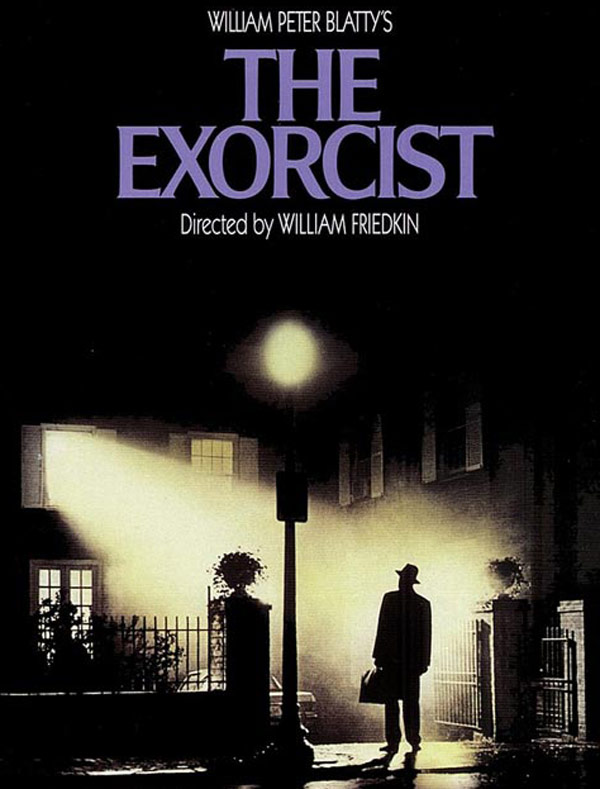
Fuse #8? Hasn’t a thing in the entire world to do with children’s literature. Here’s the scoop. When I graduated from college I was given my grandmother’s dilapidated 1989 Buick Century. The paint job had long since peeled away thanks to a permanent parking in the lot next to her nursing home, but I didn’t care. It was my first wheels. So I park on the street one day in good old Richmond, Indiana and after I take the key out of the car the automatic locks start leaping up and down and up and down. Convinced that my car is possessed (she was christened Linda Blair from there on in) I eventually discovered that the lock situation was killing my battery.
So I’ve just graduated, I’m broke, and I take it into the shop for repairs. The repair guy takes one look at it, opens the glove compartment, and removes Fuse #8. I am told that if I just take that fuse out, it won’t kill itself and he doesn’t charge me a cent. Mind you, Fuse #8 controls the horn, the radio, and the automatic windows, but it’s not like I care. That man was a saint. Fast forward a couple of years and my husband’s looking for a good name for his new film production company. He really wants to call it A Widow Be Damned Production since he’s having rights-related difficulties with Erskine Caldwell’s widow. I counter with A Fuse #8 Production. It’s got everything! A number. A weird word. My suggestion is summarily rejected but I vowed from there on in that I would name SOMETHING A Fuse #8 Production someday. And so I did. Since then I’ve wanted to name something Tin Can Phone, but nothing appropriate has presented itself yet.
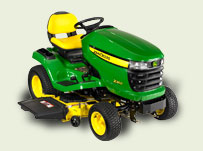
Thanks, Betsy. You’ve been wonderful. Good luck with your writing. And thanks, especially, for the great job you do at Fuse #8 — it’s always an entertaining, informative read. As a parting gift, please accept this John Deere “Select Series X300 Tractor,” featuring Edge Xtra Deck, Twin Touch Pedals, V-Twin Engines, and Cast-Iron Front Axles. It comes with a four-year warranty, or 300 hours, whichever comes first.
Awesome! I’ve had this John Deere Striping Kit that fits 48″ & 54″ Decks for the X300 and X500 kicking around my tiny New York apartment for about a year or so. Finally some way to make use of it! Cheers and thanks so much for having me here on your blog. It’s been a hoot.
—–
If you enjoyed this interview with Betsy, you might like interviews with other stars of the kidlitosphere, the bloggers behind Literate Lives (Bill and Karen) and The Happy Nappy Bookseller (Doret).
Come Spring, school visit season begins in earnest, and my schedule becomes sprinkled with weekly visits to both far- and near-flung locales. I’m grateful for the work and the opportunity to promote my books, meet with students and teachers, and hopefully inspire somebody along the way. At the same time, it’s a fish-out-of-water experience. Writers work in solitude, clicking on keyboards in lonely rooms, trying to resist the sirens’ call from the Girl Scout cookies in the cupboard: “Take a break, have a seat, chillax, eat a cookie. Have two or three!”
On the day of a school visit, we are plunked amidst dozens, even hundreds, of squirming school children and treated as celebrities. Suddenly we are entertainers, expected to be delightful, clever, wise, and talented. We even have to comb our hair. The irony is that we are placed in this role because we are good at being alone, unkempt, semi-successfully fending off cookies.
Still, I really do enjoy it, and sometimes even love it. But wow, that’s hard work.
Anyway, as some of you know, I was recently in Dublin, Ohio, visiting Bailey Elementary as the invited guest of Bill and Karen, the considerable brainpower behind the Literature Lives blog. They’ve been writing about the experience, and I think it’s a worthwhile read for any educator involved in author visits. In one particular post, Bill offers some excellent tips for a successful author visit. And believe me, every author I know wishes they could be treated as well on a visit. I’d like to take all the credit for its success, but honestly, I think the specific author contributes something less than 25% toward the overall outcome. The rest is up to the schools, the PTO, the teachers involved. The more you put into it, the more you get out; the more students bring to the session/s, the more they take away. It’s that simple.
I’ve got a plane to catch today, hoping to meet up with Bill and Karen at Literate Lives for a two-day school visit. I’m really looking forward to it. When my kids were younger, I really didn’t want to leave the area. But now that they’ve more or less stabilized, I hope to make longer trips, conquer new frontiers. For those interested in author visits, the key for me is that I need at least 2-3-4 days of work to make traveling worthwhile and affordable for all concerned; I can’t go to Texas for a day.
As for today, it’s snowing lightly, but steadily, and the travel plans are up in the air. Or exactly the opposite — not up in the air. Fingers and toes are crossed.
In the meantime, Matthew Cordell and I just received two nice reviews for our new picture book, Mighty Casey (Feiwel and Friends, March, 2009). Here’s a tasty excerpt fromPublishers Weekly:
Set against ample white space, Cordell’s endearingly geeky kids take center stage (mid-game distractions include tree-climbing, a bee sting and a bathroom break on the left field fence). It’s hard to envision a reader who won’t take to these underdogs. Ages 4–8.
When the score is tied, and bases are loaded, Casey comes up to bat. Does this sound familiar? The ink and watercolor drawings vary in size and are full of energy and movement as the players engage in different activities. The faces are expressive and fun to look at. This is a great baseball book for all those T-ball and Little League players out there.