Tag Archive for James Preller Bystander

Poster In the School Lobby . . . and a Quick Memory of Craig Walker

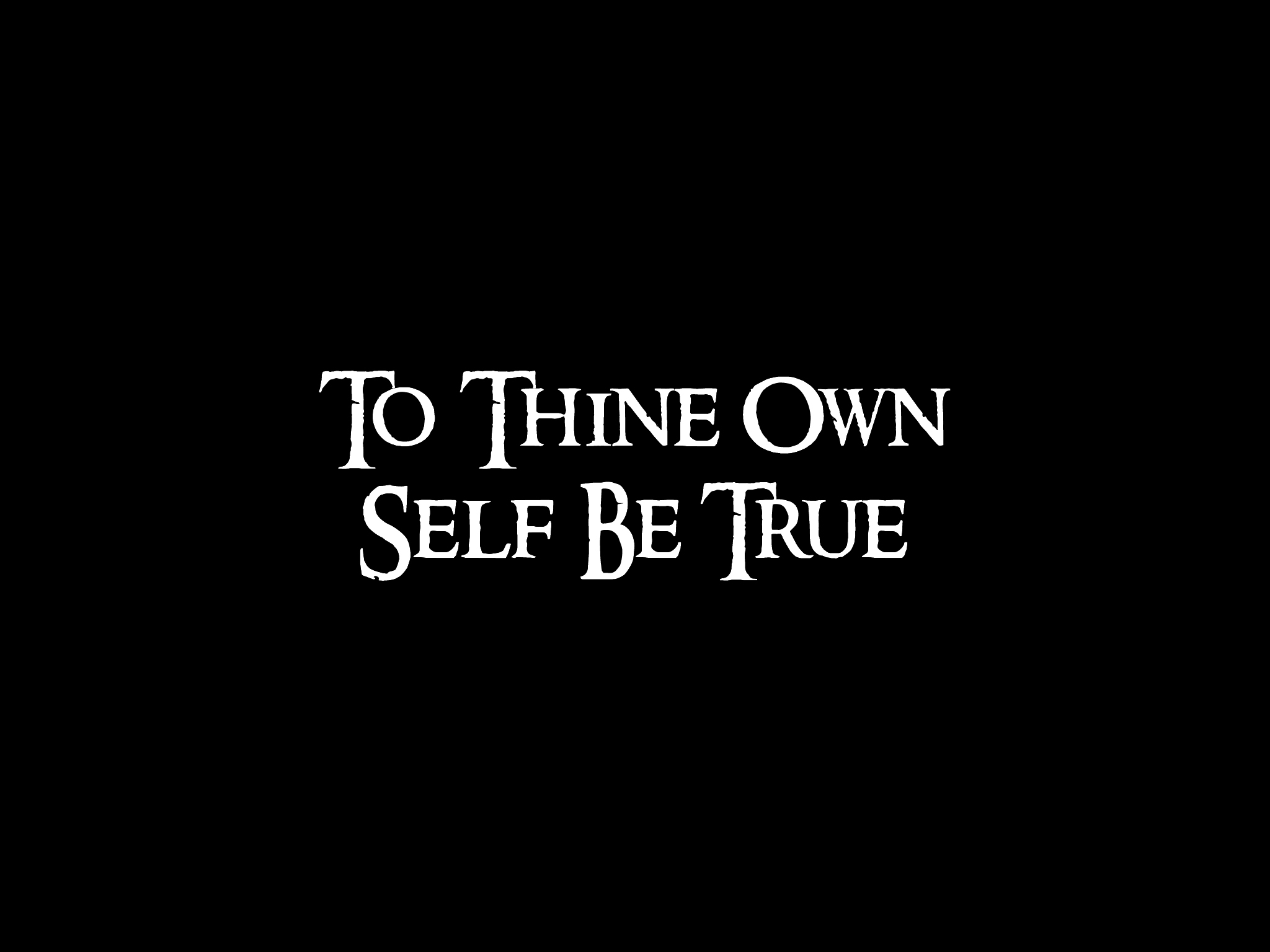
Here’s a quick snap of a poster in the lobby of our local middle school:


photo-22

Since the time I wrote Bystander, I’ve been invited into many middle schools. Often the funds for my visits have come out of a school’s “anti-bullying” budget, or some similar cookie jar. After a series of sensational tragedies involving bullied children became public, various government agencies got involved. Legislation was passed, and many schools attempted to address the core issues.

They felt compelled to . . . do something. Or in the most cynical reading possible, administrators at least recognized the need to protect themselves from lawsuits. A kinder and generally more accurate take is that the extra attention, the extra funds, gave the good people in those schools the opportunity to do something meaningful, to make a difference in the lives of these young people. They care. Because I’ll tell you, I’ve met the best of these folks, I’ve spent time with them, and I am awed by the goodness in their hearts — their motivations and intentions. I’m honored to play a small role in their larger mission.

Witness the flowering of hundreds of bully-prevention programs throughout the land.

At the same time, yes, I know there are teachers who roll their eyes, check the clock, and wonder when they can get back to teaching. There’s a curriculum to be covered and, ultimately, tests to be given, results to be measured.

On the whole, not perfect, it’s a multi-faceted issue, and we’re all trying to figure it out. But a good process, I think.

I’ve seen that the more progressive schools have gradually moved on from that narrow (and sometimes too negative) focus to address the larger issues covered under the umbrella of “Character.” I’m glad about that.

Best of all, I am seeing a greater emphasis on kindness.

Wedding, Walker 2My old pal, Craig Walker, used to joke that everything you ever wanted to know about love was on the Supremes “Greatest Hits” LP. And by that he meant, there’s nothing earth-shatteringly new that anybody can possibly say on the topic. There will be no new revelations forthcoming. We’ve heard it all already, and so often that it comes out like a tired cliche. No, you can’t hurry love. And you do keep me hanging on.

220px-Supremes_Greatest_HitsWhen it comes to the bad behavior associated with bullying, we can ask those involved, “How would you like it?” “How would it make you feel?” And maybe we can say something about doing unto others. Or being kind. Or a dozen other fairly obvious things that remind us how to be a good (read: caring, compassionate, thoughtful) person in this world. We can also tell them, in clear language supported by real consequences, that bullying is unacceptable.

I do believe that it’s part of every school’s mission to reinforce these messages, every day, in a thousand small ways. I’m glad that sign is in our lobby. It’s a minor thing, sure, easy to dismiss or ignore, but it’s still a signal amidst the noise. A lighthouse visible from the stormy sea.

All and all, not a terrible question to ask ourselves before we act, speak, or post:

Is it kind?
REPOST: Thoughts On Bullying, Bystanders, and Middle Schoolers

Note: This was first posted over at The Nerdy Book Club, a great sight for fans of children’s books. Recommended.

EVERYBODY ELSE IS ALREADY TAKEN

“To be yourself in a world that is constantly trying to make you something else is the greatest accomplishment.” – Ralph Waldo Emerson.

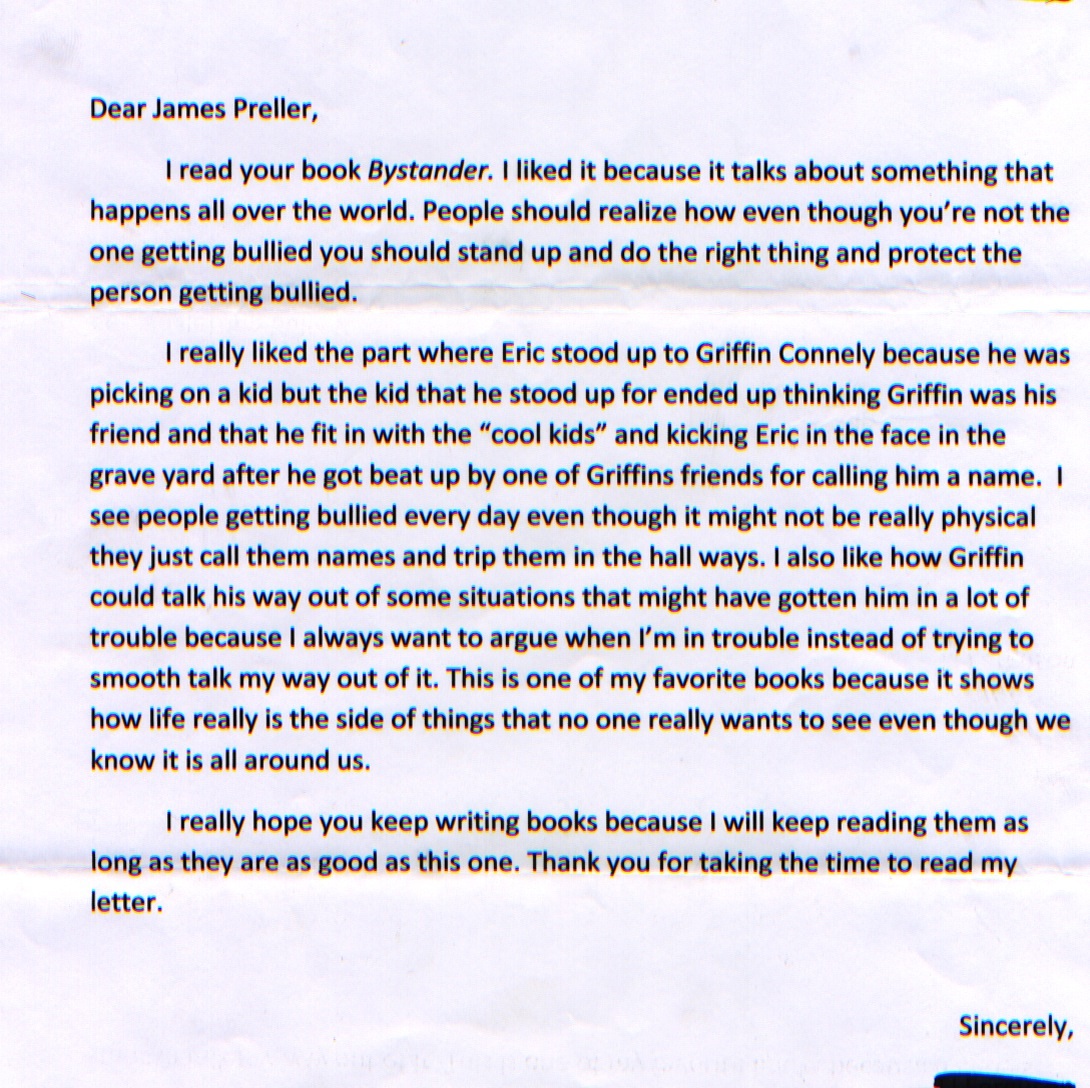
After I wrote the book BYSTANDER (Macmillan, 2009), I began to receive invitations to speak at middle schools. I was wary at first of being perceived as anybody’s “anti-bullying program.”

I wrote a book. Not a pamphlet, not a list of discussion questions, not a nonfiction guide to bullying. I could not offer a handy list of ten ways to make your school a bully-proof zone. I didn’t even believe in it.

I wrote a story –- that was the tool at my disposal.

Stories are essential to our lives. How could we live without them? We watch television, go to movies, tell tales to our friends and neighbors, conjure dreams at night, play complex video games, read books. Humans are storytelling creatures. We seem to need stories. Something inside us craves stories, we hunger for them, ravenous.

Why is that?

Stories function differently than nonfiction. The characters have a way of worming inside our souls. Robert McKee, in his book, STORY, claims that “Stories are equipment for living.”

Equipment for living.

Our lives race past us, a frantic blur, and we move from the next thing, to the next, to the next, with barely a moment’s reflection.

Stories give us pause. They give our lives form and shape. And time. We turn a page. We consider. We piece together the meaning of our days through the stories we hear.

And we ask of these stories the same question, over and over again: What is a good life? How are we to conduct ourselves here on this earth?

Well-told stories, as Harper Lee so beautifully demonstrated in TO KILL A MOCKINGBIRD, allow us to walk in someone’s else’s shoes. Remember that remarkable scene at the end of the book? When Scout walks Boo Radley home, climbs up to his porch, and for a moment turns and looks at the world from his perspective?

Scout concluded: “Atticus was right. One time he said you never really know a man until you stand in his shoes and walk around in them. Just standing on the Radley porch was enough.”

That’s story.

It’s also called empathy, understanding, compassion.

Here’s McKee again: “A culture cannot evolve without honest, powerful storytelling.”

Story isn’t an escape from reality. It is a light that shines upon the dark corners of our world, the secret places, the hidden fears and hopes and dreams.

It is why books matter, and why, I now know, some teachers have embraced BYSTANDER –- among other novels — as a way to explore this complex topic.

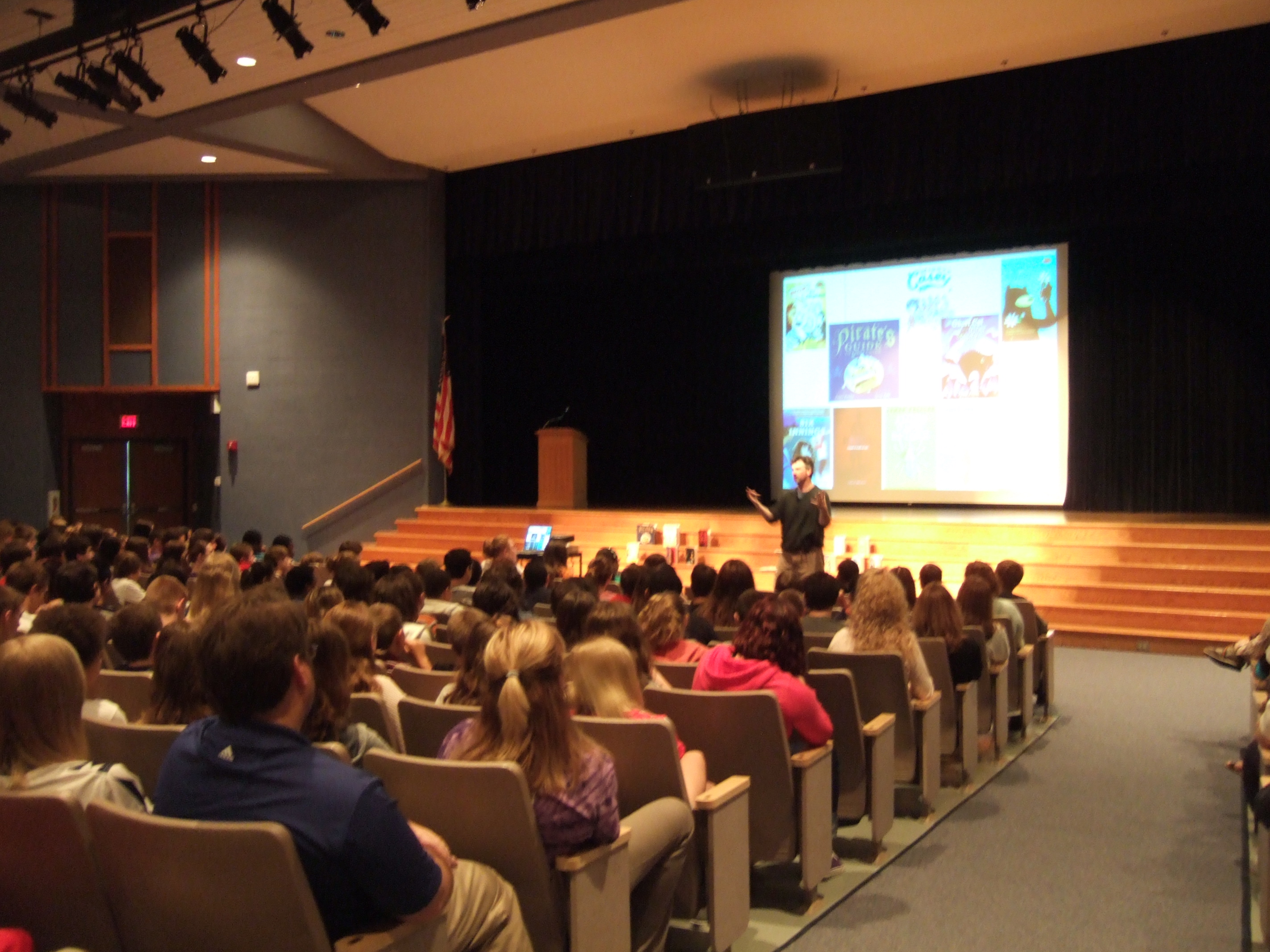
I’ve stood on a stage in auditoriums in front of 500, 600, 700 middle school-age children. Or as they refer to them in Ireland, “young people.” I like that. Young people. So much more intrinsically respectful than kids, little lambs eat ivy.

Despite my experience visiting places like Oklahoma and South Carolina, Illinois and Connecticut, Florida and Michigan, I’m still in the process of learning how to talk about bullying. Still growing into my own shoes. Still learning to speak above a whisper.

One of the central ideas embedded in the book – an idea I came to understand only through the passage of time – also happens to be one that’s incredibly difficult for me to directly convey to middle school students. So I don’t try to tell it, per say, so much as hope it leaks out over everything, like sunlight through the edges of a drawn blind. But I think it’s worth saying to you, here.

Research shows that bullying peaks in middle school. Why is that?

Let’s recall Emerson’s quote from up top, and agree that one of the greatest achievements in life is to become, simply, one’s true self. It sounds easy enough, but as we know, it is not. I’m a father, I have three children, including a 7th-grader and a 9th-grader. I watch their awkwardness and insecurities and struggles.

To be content in your own skin.

To not look to others for your cues.

To accept and trust who you are, to follow your own inner compass.

These are not easy things.

At no time in life is it tougher than in middle school, when peers begin to replace parents as prime influencers. How to dress, what to talk about, what to watch on television, how to act, where to sit, whom to befriend, whom to avoid. This is how we forge identity, hammering out our awareness of self (which is a created thing after all, the “self” we decide to become). At middle school, many of these daily details are powerfully influenced by the pack.

Yet a primary aspect to becoming a true individual is the casting off of those concerns. It’s a challenge for anybody to stand up against the crowd. For a middle schooler, it’s close to impossible. On a deep level, in terms of self-identity, they see themselves as the group. The group is them, the individual swallowed by the great whale. And we are all Pinocchio, trapped inside the dark belly, fumbling for a light, yearning to become a real boy.

This dynamic is how young people find their place in the world. We watch others to learn about ourselves. We tell stories. We listen. And then when it comes to bullying, the adults in their lives tell these young people to not worry what anybody else thinks.

“Who cares what anyone thinks!”

Well, they care. They care so much.

In my heart, I believe the lasting answer to bullying is to become a genuine, authentic, free-thinking, responsible individual. The best definition of responsibility I’ve heard is “the ability to respond,” to act according to the courage of your convictions.

People are good, I absolutely believe that. And the closer people hone into to their true selves, the better and more moral they become.

Be yourself. In doing so, we all become far more likely to allow others the freedom to be their selves.

Shakespeare: “This above all: To thine own self be true!”

Or, if you prefer, Oscar Wilde: “Be yourself. Everybody else is already taken.”

Are Students Sick & Tired of Anti-Bullying Messages? And What About You?

I’ll admit it. Sometimes I have doubts. Not about bullying, exactly — I know it’s a serious issue, a matter of life and death — but I fret about the effectiveness of talking about it.

You could call it an occupational hazard.

Does anyone hear the message anymore?

Anti-bullying rhetoric seems everywhere these days. Trending hot on Twitter. Almost fadish. And I sometimes wonder if kids have tuned it out. In my travels, I’ve talked to many teachers who have expressed that worry.

This year, I’ve visited schools in OH, MA, FLA, MI, NJ, NY, SC, PA, and CN — often because I wrote the book, Bystander. I’ll arrive at a school where all the middle schoolers, grades 6-8, have read and discussed my book. They’ve wrestled with the issues, hopefully identified with characters, felt compassion, empathy, anger. Or, I guess, some of them have just been bored by another book they didn’t get to select themselves. In most cases, my novel is only one small piece of a comprehensive anti-bullying agenda.

But as I’ve said before, I wrote a book. A story. Not a brochure on how to make your school a “bully-free zone.”

Despite the amazing letters I receive, I still wonder what I can say on a school visit that won’t come off as yet another lecture to this audience. What can I say that might make a difference. And if, perhaps, they simply can’t hear it anymore.

Is it worth beating on that same old drum?

Then I opened up The New York Times and read Nicholas D. Kristof’s op-ed piece from Thursday, May 17. And I’m reminded, yet again, why this matters so very much; and how real people — the children in our village — are powerfully effected every single day; and that anything we can do is far, far better than sad resignation.

As an author and father of three children, ages 11, 12, and 19, I believe that the core of this issue comes back to simple values. Do unto others. The importance of thinking to yourself, “How would that make me feel?” Identifying with others. Caring. Our fundamental humanity.

The issue of bullying is about the importance of compassion, tolerance, kindness, and empathy — at a time in life when empathy does not come easily to many middle schoolers. Stories can help. Like Wonder, by R. J. Palacio, to cite one recent, brilliant work of children’s literature. I read it recently and then pressed it into my 5th-grade daughter’s hands. You must read this, I said. I loved the way, like any great book, Wonder brought us into the hearts and minds of different characters. How we experienced forms of bullying, of painful isolation, from the inside out. I loved Palacio’s message of kindness and compassion.

Anyway, I digress.

Here’s an excerpt from Mr. Kristof’s op-ed piece:

Plenty of adults are skeptical about the fuss over bullying. “How come the thin-skinned kids nowadays can’t handle the bullying that made us better, stronger adults?” one man wrote to me on Twitter.

He should read what Madison Jaronski, 15, of New Hope, Pa., wrote:

“Tears have been flooding down my face; breathing is a task that now seems impossible. I draw my legs closer and closer into my chest as I try to transform the pressure into reassuring comfort. I begin to slowly rock myself, and by now my tears have colored my pillow black. …

“All of my accomplishments and enjoyable moments are overshadowed by the pain and harassment that was thrust upon me. Just looking at my surface, you would see a confident young woman, as sturdy as a rock. You would never think that I was broken, broken into a million pieces like shattered glass, all because of the work of a group of senior boys.”

You want to reach out to these kids and envelop them in a big warm hug and tell them that they are smart, sensitive human beings, a thousand times better than their tormenters.

To read the winning essays, go here. Just do it.

You will be blown away.

Here’s a brief sample from one winning essay, written by Lena Rawley, age 17, from Montclair, NJ:

Teenage girls are cruel super-humans from a distant galaxy sent here to destroy us all. They have the self entitlement of a celebrity heiress and the aggression of a Roman Gladiator. Like vampires they feed off the blood of the weak. They’re pubescent monsters. Adolescent boogeymen.

While my observations may be coming from a point of bias, that doesn’t mean they are faulty in accuracy. As a teenage girl myself, I think I know teenage girls quite well. Not only was I a former teenage mean girl, but I was tortured, tormented, isolated and socially maimed by them as well.

—–

Just came across this school that featured a booktalk about Bystander, way back in 2011. I appreciate that this kind of thing has been happening in many schools across the country, and sometimes on a schoolwide scale, but this one is especially sweet since I grew up in Nassau County, too. I just love the idea of parents and kids coming together and talking about this stuff — that this book, my book, offers a safe springboard for those conversations. Wow.

—–

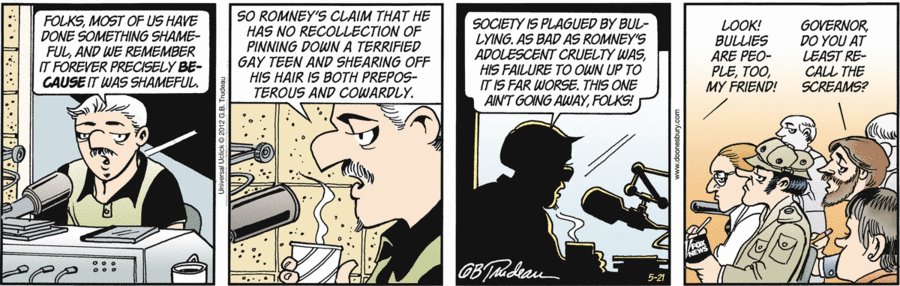
Lastly, here’s a recent Doonesbury . . . still kicking it after all these years.

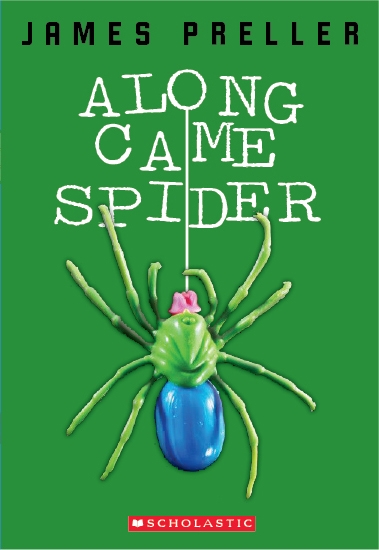
James Preller Interview: “Along Came Spider,” The Writing Process, Asperger’s, Atticus Finch, and More

The facts are fuzzy. A while back I answered ten questions by somebody who was writing a piece to be published . . . somewhere. Hey, it seemed legit at the time.

I do know that my book, ALONG CAME SPIDER, was featured in Michigan — some 1,600 copies were distributed to 4th-graders in 34 public schools — and there was a contest to “win an author,” that prize being me. Which is why, oh wild wonders, I’m winging where I’m winging next week. Grand Rapids, better batten the hatches.

What follows are my answers to the aforementioned ten questions.

1. Where did you grow up? What college did you attend?

The youngest of seven children, I was born in a blizzard in 1961, and grew up in Wantagh, on the south shore of Long Island, NY. I was an indifferent, distracted student in high school. For college, I stayed within the SUNY system and went to Oneonta –- which I loved. That’s where I became a serious, committed student.

2. What/Who motivated you to become a writer?

Look, I wanted to pitch for the New York Mets. When that didn’t work out –- and it became clear very early on –- I had to move on to Plan B. As a teenager, I kept a journal, wrote poems, scribbled lyrics to imaginary songs. Maybe it was a product of being the youngest, but even though I was intensely social, I was always able to be alone. For writers, that’s essential. You have to be okay with solitude.

3. How many books have you written?

I first published in 1986, and my career has been a long journey of trying different things, making tons of compromises along the way. Let’s say that I didn’t hit my first one out of the park. I wrote for food, I wrote to pay the bills. I’ve done more than 80 books overall, I’ve lost count. There are 40 in the Jigsaw Jones series. I’ve learned something from each and every one. But instant success? That was not my path. And I’m okay with it. Really. No, really!

4. In your opinion, what is the major theme in “Along Came Spider?”

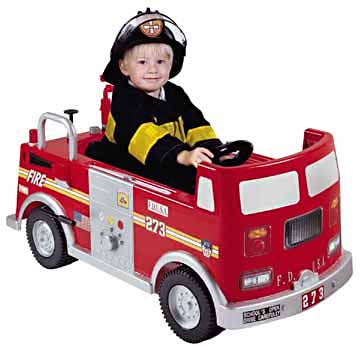
It’s a book about the struggle to find your place, about fitting in, and some of the roots and tender shoots of bullying. It’s about being a friend, hopefully a good one, and what those responsibilities might be, which is not always so easy or so clear. In a memorable review for “Spider,” one reviewer wrote, and I quote from the opening, “I’ve read a lot of books recently about girls trying to make sense of friendships and themselves, so it was a delightful surprise to find and read an advance review copy of a book that deals with boys trying to find out where they belong . . . .” Isn’t that amazing? An experienced reviewer expressing surprise that here was a book about boys having . . . feelings. Struggling with friendship. Could it be that boys are more than just farts and fire trucks? I certainly think so. (Full disclosure: Farts are still funny, always, and fire trucks are awfully cool. It’s just that maybe there’s more.)

5. Before this interview, have you heard of the One Book, One City for Kids program? Do you think that this a beneficial program that should continue in the future?

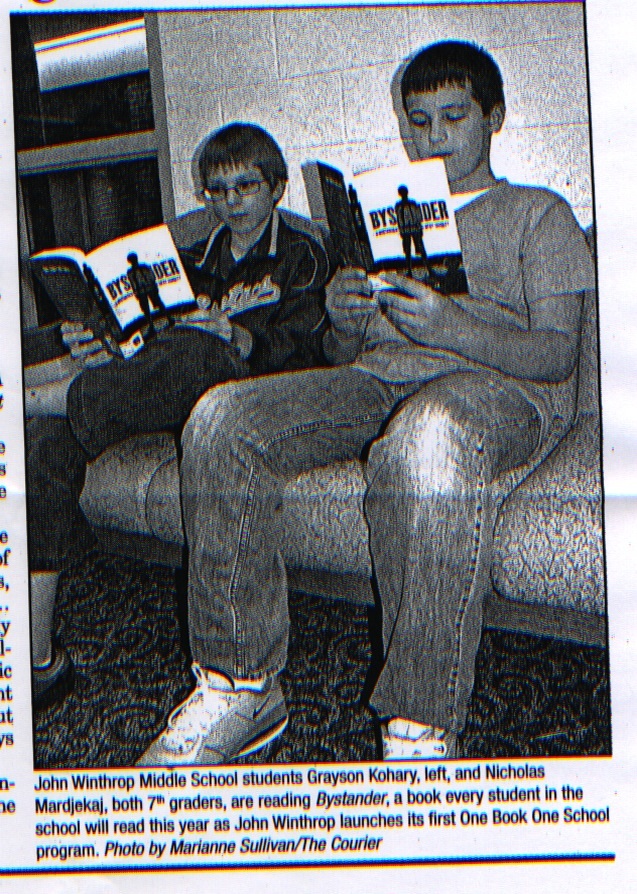
I’ve come across the “One Book, One School” concept, particularly with my book, BYSTANDER, which deals with bullying in the context of a middle school. I’ve been able to visit many schools around the country where, say, all of the 7th grade has read that book. First off, to be clear: that’s extremely flattering, an honor I never expected. The shared reading experience across a broad spectrum is a powerful idea. Reading is such a private experience, alone with a book, it’s when readers are free to be most authentically themselves –- even when we’re not so sure who that self is, exactly. But in the school environment, I think books can serve as diving boards, departure points, starting places for conversations. When a book is shared between friends, or classrooms, or the community, it gives everyone common ground –- a shared literary experience — and a foundation for all sorts of creative, thoughtful activities. I’m completely sold on the concept. I should add that I also believe that the majority of reading, in school and at home, should be self-selected, not assigned.

6. What age groups do you generally write for?

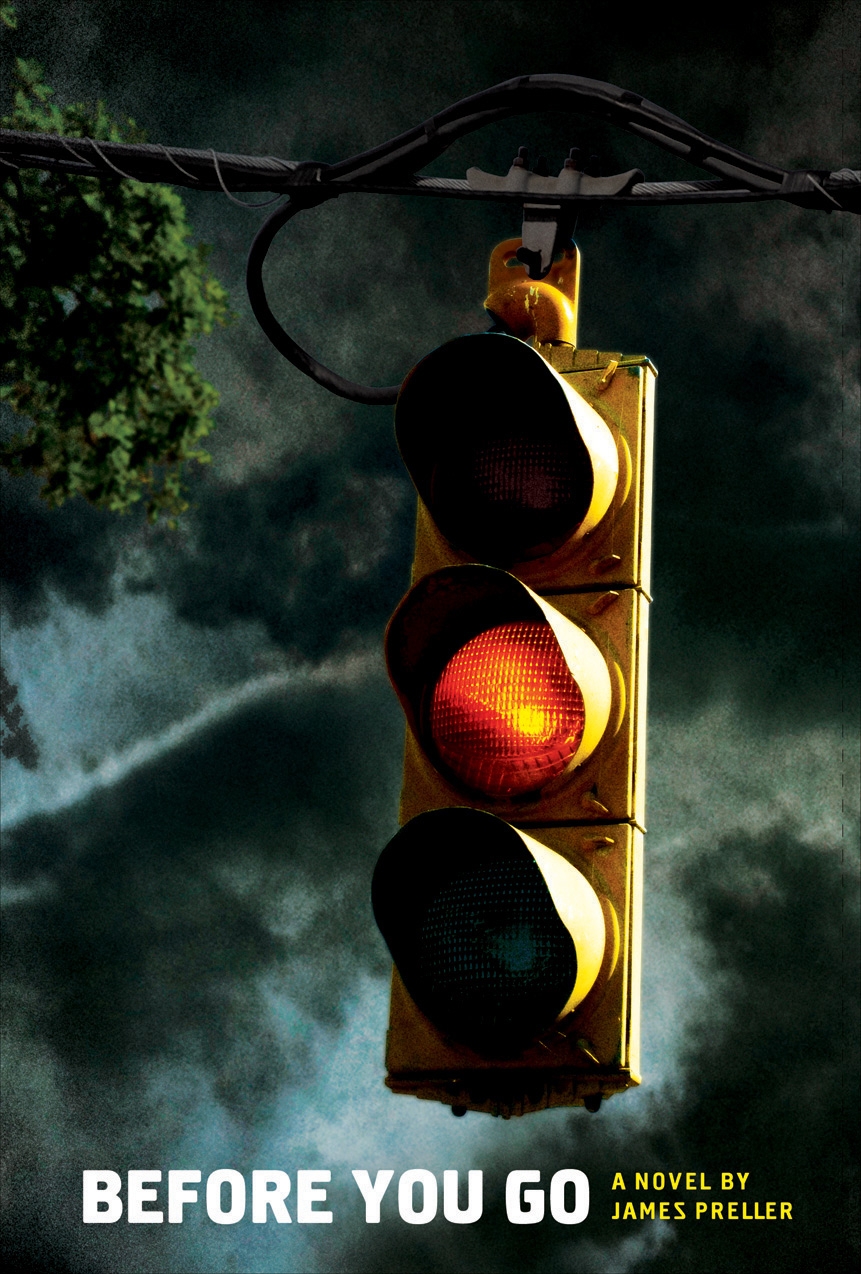
I am either a jack-of-all-trades or wildly unfocused. It’s your call. I’ve written picture books that are right for the youngest readers, whereas my latest book, BEFORE YOU GO (Macmillan, July 2012), is for young adult readers, grades 7/8-up, though I believe adults would enjoy it too. And I’ve written for every age in between.

7. How will this book benefit the children who read the story?

I hope it offers what “story” gives every reader –- an opportunity to walk around in someone else’s shoes, as Atticus Finch advised in TO KILL A MOCKINGBIRD. To see how someone else lives, and thinks, and feels. I really believe that’s the root of empathy, compassion, understanding, and tolerance. I believe in books and the power of literature. I want my own three children to be readers –- to learn, yes, but also for the great pleasure it gives.

8. Was this book inspired by an occurrence in your life or something that you witnessed?

I spent a year visiting a fifth-grade classroom, off and on at random times. I’d bop in, sit in the back for a few hours, hang out during P.E., then disappear for a few weeks. I made observations, took notes, and waited for a story idea to emerge out of that experience. After a while, I began to notice a few students who were outsiders, misfits, and that’s where I focused my attention. I wondered what would happen with them in Middle School, a less forgiving environment. I think I’ve always been drawn to the outsider. At that point, I read a lot of books on autism, and Asperger’s, and again felt an affinity to those kids on the spectrum. A lot of Trey’s character grew out of that research, and whatever I could sense from my own experiences, observations, intuitions. Essentially, I went in like a pile of dry grass and tinder, just looking for that spark.

9. Do you have anything specific that you want to say to your readers?

Thank you. Seriously, thank you. A book is a living thing between a writer and a reader, like an electrical connection. Without the reader, pfft, there’s nothing. I don’t necessarily have a specific message or lesson to impart.

10. Are your books used for other literacy programs around the United States?

As I mentioned above, BYSTANDER has been featured in many schools in the past year, now that it’s available in paperback. Beyond that, I’m really not sure. You write the book and send it out into the world –- hopefully it finds readers along the way. Some books fade away, others stick around for decades. You just never know.

Fan Mail Wednesday #141 (Bystander)

There’s a great line in the last paragraph of this letter: “I really hope you keep writing books because I will keep reading them as long as they are as good as this one.”

He didn’t add, because it was unnecessary, “But if they suck, no dice.”

I replied:

Dear ____:

Thanks for your great letter. I know you wrote it a long time ago –- you’ve probably forgotten about it by now – but I want you to know that I really, really appreciate that you took the time to read my book, BYSTANDER, and send along a typed letter.

I have a new book coming out in July, titled BEFORE YOU GO. It has a little bit of mild language in it, as they say, some alcohol, but not much. I guess it’s up to individuals as to where they draw the line on those issues. The main characters are ages 16, 17. Essentially the setup is this: Opening scene, four unnamed teenagers drive on a dark road. The car spins out of control, hits a tree. One passenger dies. Next page, we rewind six weeks into the past, and gradually meet all the characters. The reader doesn’t know who is going to be in the car, or who will die. The book catches up to the accident about 2/3 of the way through, so it is divided into two sections: “Before” and “After.”

I’m also in the middle of writing a crazy (and fun, and funny) book about about a 12-year-old zombie, but I don’t like to talk about books until I finish them.

Thanks for reading my book, and thinking about it. I loved your line, “This is one of my favorite books because it shows how life really is, the side of things that no one really wants to see even though we know it is all around us.

Smart guy, ______.

My best,

JP