Archive for Interviews & Appreciations

Revisiting THE FIVE CHINESE BROTHERS — A Chinese American Perspective with Phoebe Yeh, VP and Publisher at Crown Books

–

We recently witnessed the kerfuffle regarding Dr. Seuss Enterprises’ decision to no longer publish six titles that it deemed offensive. It brought to mind an experience I had back in the late 1980s when I worked at Scholastic. So I reached out to my old friend, Phoebe Yeh, to ask her about it. Like me, Phoebe was young at the time, an editorial assistant for our beloved friend, Craig Walker. These days Phoebe is kind of a big deal, a widely respected VP/Publisher of Books for Young Readers at Crown, an imprint of Random House Children’s Books.

Honestly, I’m just grateful she answered my email. 

“Jimmy? Jimmy who?”


Phoebe, thanks for taking some time out for this topic. I know that it’s close to your heart. We met in 1986, back when I was a junior copywriter at Scholastic and you were hired as Craig Walker’s editorial assistant. We were both earning salaries in the (barely) five figures. I remember talking with you about the 1938 book, The Five Chinese Brothers by Claire Huchet Bishop. It was your mission in life, it seemed, to produce a new, authentic retelling of that ancient Chinese folktale. You were deeply offended by Kurt Weise’s illustrations. Can you remember what your feelings were at the time?

Yes, indeed.  And even though more thirty years have passed, my opinion about The Five Chinese Brothers hasn’t changed. Full disclosure: I grew up reading this book. As a child, I took the illustrations for granted, the slanty eyes, the yellow skin tone.

–

–

Fast forward. I’m basically in my first real job after college. I think I must have had a lot of nerve. I marched myself into my boss’ office even though I knew I was going to complain about a book that sold like crazy for See Saw Book Club (kindergarten/first grade readers).

I shared my reservations with Craig Walker — also sharing that it wasn’t like the author, Claire Bishop, had even come up with the premise. I had read Chinese versions of the story about the brothers with the super powers but Bishop had added whipped cream or some such to her version. And everyone knows, many Chinese people are lactose intolerant so adding this detail made no sense.

–


Craig was incredibly supportive and felt that we should bring up the idea of publishing a new version with our editor-in-chief, Jean Feiwel.  The Seven Chinese Brothers by Margaret Mahy, illustrated by Jean and Mou-sien Tseng, became my first acquisition as an editorial assistant (still virtually unheard of -– usually you don’t start acquiring until you are, at least, an assistant editor).  And prideful though it sounds, this version is still in print.

What was challenging for me was that I LOVED that book as a kid. It was such a great story. One brother drinking the whole ocean! Another brother with the unbreakable iron neck! I read it over and over again. And I wasn’t the least bit offended by any of it! So talking to you, on one level, I could intellectually understand where you were coming from . . . but I didn’t feel you, if you know what I mean. It was a long time ago, I had a lot to learn (still do!), and I wondered at first if perhaps you might be over-reacting. What was I missing?

–

–

Jimmy, you weren’t missing anything.  How would you know?  How could you know? I didn’t know either, when I was reading the book as a kid.  But by the time I was at my first job, I had read Maxine Hong Kingston and Zora Neale Hurston, other women writers who weren’t “taught” in high school, poetry and novels about the European exploitation in African and Caribbean nations.  I subscribed to a weekly newspaper, Asian Week that enumerated crimes and other discriminatory incidents against Asian Americans.  My second encounter with The Five Chinese Brothers was informed by this context.

I knew that there was a way to retain the humor, the absurdity without ridicule.  And since I don’t have slanty eyes, there should be a way to show the brothers more authentically. To be fair, an educator colleague who was raised in Taiwan, doesn’t have the same issue with The Five Chinese Brothers.  But she also recognizes that Chinese Americans have a problematic history: we are the only immigrant group who had not one but two exclusion acts forbidding entry; the trauma of building the Transcontinental Railroad, etc etc so in the mid 80’s,  I was interpreting the Bishop book from a vastly different lens.

I’m curious. Do you think your version of Seven Brothers could be criticized by today’s standards for going with a white author from New Zealand? In today’s world, would you have worked harder to find an “authentic” retelling by a Chinese American author?

We signed up Margaret Mahy, a non-Chinese American author after a fruitless search to find a Chinese American who was interested in writing a children’s book. I tried everyone — Maxine, Bette Bao Lord, Nien Cheng, etc and I think this was before Amy Tan. I didn’t approach Larry Yep because I erroneously thought he only wrote MG. So I found an author who could do justice to the humor. To her credit, Mahy was worried about authenticity/sensitivity but I knew I could walk her thru it because of my background. I didn’t speak a word of English until I was 3. I took Chinese (language) classes in college and lived in Taiwan for a year after college. And I felt confident that I had context and resources if questions arose. So besides being a gifted writer, Mahy knew what she didn’t know, a key, I believe, to writing about a protagonist who isn’t from your background. The illustrators had enormous context and experience. This also made me feel that we could do justice to this new version.

I remember your great pride and deep satisfaction when you signed up a new, updated retelling. That was a book you fought for. And I can still see the pleasure on your face on the day when the Tsengs’ art came into the office. As a Chinese American, can you express what it meant to you then — and what it means to you today — to make that kind of difference in a children’s book?

–


I was thrilled (and relieved) when The Seven Chinese Brothers received critical attention. And that it sold, proving my point that a new version would resonate. I loved seeing it in bookstores. But even better, finding it in libraries and school classrooms.

Fast forward to a midpoint in my publishing career, when I signed up Ellen Oh to write her first children’s book, Prophecy (Ellen  later became a co-founder of WE NEED DIVERSE BOOKS). But guess what book was the first time she saw Asian characters: The Seven Chinese Brothers.

–


Recently I had a similar moment with another Asian American who was creating children’s books for MOMA.  Unlike Ellen, who grew up in Brooklyn, this gentleman was raised in New England.  He told me the same thing.  Until The Seven Chinese Brothers, he hadn’t seen a children’s book with Asians depicted without mockery.  Who knew that one book could have this kind of impact?

–

–

Things are so much better now but in the mid-80’s when I started in children’s publishing, there was a dearth.  I’m profoundly grateful to Craig and Jean for giving me a chance, one that has pretty much informed the rest of my children’s book career.

Thanks for sharing your thoughts, Phoebe — and for the  meaningful, important work you continue to do. Proud of you!


FUN FACT: The food at Phoebe’s wedding, somewhere in Chinatown, was amazing. On long winter nights, I still think about that meal thirty years later. But also: Jigsaw Jones has a best friend and a partner named Mila Yeh. So, yeah, that’s where I borrowed that name. A direct lift from Phoebe — because I was seeking something that evoked for me the qualities of tough, smart, loyal, fierce, kind.

–

–
A Conversation with Alexandria Giardino, Author of “Tree + Me”

–
–
“Telling stories is a way to bond, to share
and connect emotionally,
even across great differences and divides
of time and space.
When I write, I am asking the reader
to really see something with me —
to share our imaginations.”

— Alexandria Giardino


–

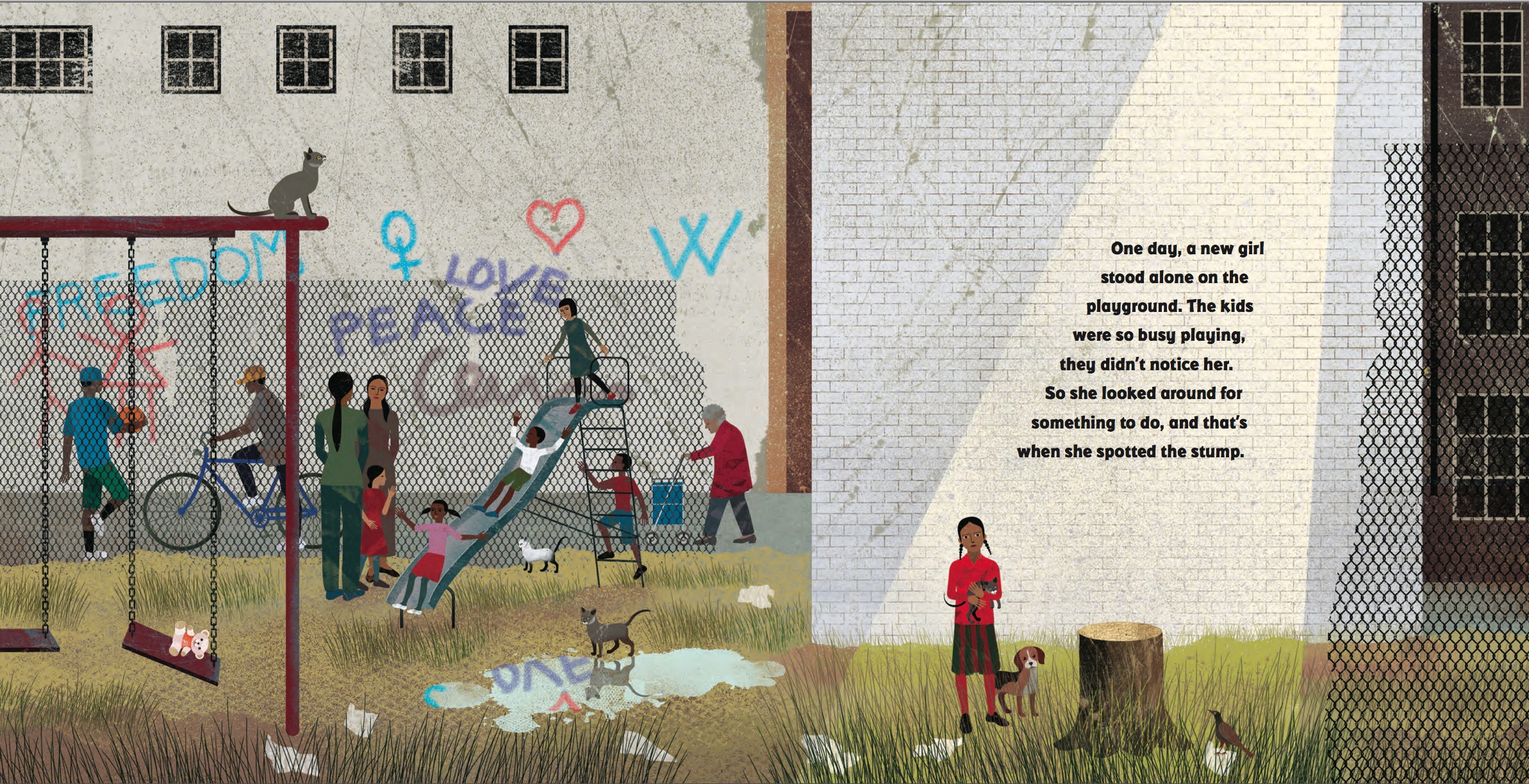
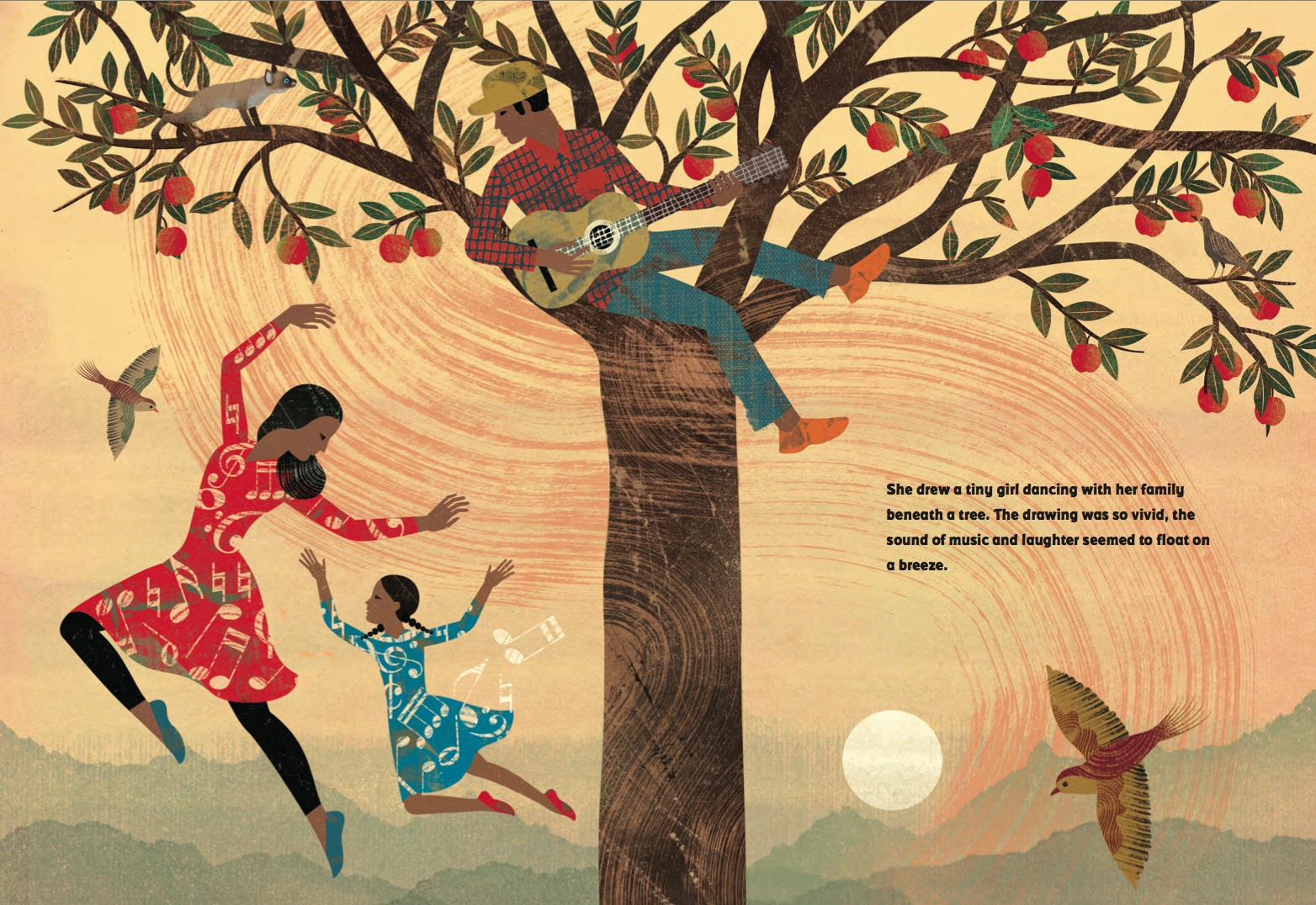
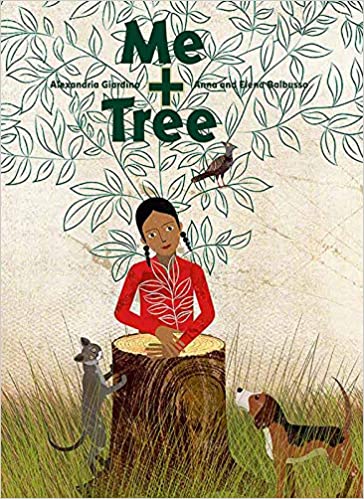
I’m happy to say that I made a new friend recently. Yeah, true fact! It’s not always easy in these Covid times. Her name is Alexandria Giardino, and she’s the author of a new picture book, Tree + Me, gorgeously illustrated by Elena and Anna Balbusso. In a starred review of the book, Kirkus concluded, “Lovely—a perfect segue into discussions about loneliness, empathy, refugees, and more.” So I reached out to Alexandria because I was eager to talk about this book and learn more about its author. It turns out that we shared a lot in common — trees, dogs, nature, poetry, art, music — and found it remarkably easy to talk about our interests and passions. So, yeah, we’re pals now. Five bucks says you’ll like her, too.


–

You mentioned elsewhere that this book was, in part, a reaction to Shel Silverstein’s The Giving Tree.

This is definitely my reply to Silverstein’s work. I hadn’t read The Giving Tree since I was a child, and I had really fond memories of it. When I read the story to my son, I was completely conflicted. Old feelings of being touched by the bond between the boy and the tree were mixed up with new feelings of despair that the book’s true message is about taking, not about giving. Like, it could be called The Taking Boy.

But you did something refreshing, in that you brought it to a positive place.

I know there are important feminist readings of the story and also environmental ones. I wanted my own reply to be about mutual giving. To me, that is a basis for a true bond.

And so you got the idea that this lonely young girl would tell her story to the tree.

–

–
Telling stories is a way to bond, to share and connect emotionally, even across great differences and divides of time and space. When I write, I am asking the reader to really see something with me — to share our imaginations. I imagined a girl who was sensitive enough to know that a tree has a story to tell too, and that her story and its story might be deeply bonding.

I think talking to trees is a good thing to do, anyway.

I confess that I’ve always loved trees, too. It’s probably what drew me to your book. Peter Wohlleben’s The Hidden Life of Trees: What They Feel, How They Communicate, was a powerful, illuminating text that explored the science behind tree-to-tree communication. And in fantasy literature, we have a great tradition of “magical” trees — Tolkien’s Treebeard at Isengard! — and so on. It’s nice to see those notions supported by hard science.

Science is always challenging the word fantasy. Like, what once seemed fantastical is actually quite explicable! Oh, science, I love you. I admire Wohlleben’s book, and I still need to read The Overstory.

Yes! The Overstory was one of my favorite books of the past decade. Loved it.

This year there are four other tree-related picture books coming out, and I reached out to those authors/ illustrators, saying, hey, let’s be forest friends. And being awesome and generous kidlit people, they said, yes, let’s! So we have some fun things brewing to share our love of trees, including a bundled give-away for teachers and librarians that we are doing in March-April. Stay tuned for that.

While looking at your website, it strikes me that the act of “a creative response” is important to you. Your book Ode to an Onion was inspired by one of Pablo Neruda’s poems. And on March 13, you are presenting an online craft workshop, “Countering the Classics,” encouraging participants to seek way to counter classics by using their own voices. It becomes a living, and inclusive, conversation.

–

–

I love talking. Some of my happiest memories are times when I took a long walk with someone, and we got into a deep talk. So, that passion is definitely part of my creative life. I also believe we have every right to claim a literary heritage and have conversations in it, with our ancestors and our descendants too. Neruda is part of my heritage, and so is Silverstein. Who ever thought they’d be in the same family tree?

For a picture book writer, there’s always that –- gulp – moment when the art comes in. I guess that was a good day?

Ok, so there is a twist to my “gulp” moment because it is not as simple as seeing artwork and being happily surprised, or possibly disappointed. When I saw the early artwork that the Balbusso sisters sent in, I was shocked. I felt like they “saw” something in me, or sensed something about me, that led them to create art that just truly blew me away.

Specifically, what I mean is that I am a major Santana fan. And their earliest drawings looked like the Abraxas album cover. Even the book’s opening page — with the colorful tree rings — looks like a vinyl record. And the palette they chose had a very late Sixties vibe. My editor, who does know how much I love Santana, called me and said, “Alex, you are NOT going to believe your eyes when you see this artwork.”

Honestly, that gulp moment was like, well, we are in tune.

The art is stunning. And mind-blowing in that they are not only sisters, but twins. Talk about communication! Those two must have some serious telepathy going.

I’m a deep believer in some abilities that we can’t yet fully understand yet. But, you know, science will eventually show us. Also, I so look forward to the day I can meet them. I bet they are fascinating women. We’ve been emailing back and forth, dreaming of the day when I get to Milan, so we can go out for a meal together.

–

–

Is there anything of you in our heroine’s story?

Loneliness and longing for deep connection and true friendship. I have lived in a lot of different places, and I have often been an outsider, even unable to speak the local language. I have often taken refuge in nature because of that. I would have totally talked to a tree stump as a lonely kid.

I love that crucial moment when she whispers, “I see you.” To be honest, I have a similar moment, in a very different context, in my upcoming novel, Upstander. A mother says it to her daughter. Honestly, I think that’s all anyone really wants. Just to be recognized, seen, valued.

Thank you for telling me about your book. As I mentioned earlier, I think most of us long for that deep sense of being understood and loved. That is, to be seen. That actual line came late in revisions. But where this story started in my imagination is with the image of the final moment. I always saw the sprout breaking through. I felt that moment in my heart.

Actually, that is how I seem to write. I am one of those writers who sees the last scene first, and then has to write back from it to the beginning — that green shoot at the end of the book is everything. It is life coming back after such loss and despair.

I’d love to learn a little more about you, Alexandria. Where did you grow up?

As a kid, I moved around a lot, but my heart belongs to my first home, Oakland. As an adult, I continued to move quite a bit, including living for a long time in Mexico and Chile, and even a little time in Italy.

How did you come to children’s books?

I wrote my very first children’s books while living in Mexico City in the late 1990s. I am so glad I found my way to picture books because I love the marriage of story and art so much. And now I am also writing verse novels. I feel I have found my even truer voice there.

Can you tell us more about that verse-novel project? 

Oh yes! I am having the most profound experience writing this new novel. I have always felt like a poet, but I was just too shy to say so. This story is pouring out in verse, so I am going with it. It’s supernatural historical fiction, based on a woman whose story has never been fairly told. She deserves better.

Lastly, you are a “major” Santana fan. Does that mean you have Carlos Santana’s head tattooed on your back?

I saw him once live. I was able to get right up to the stage. He expressed so many emotions! At one point, he turned away from the crowd, lost in the music, channeling something divine. Now, I have tickets to see him in a concert with Earth Wind & Fire. The show was scheduled for last June, then COVID hit, and now it is rescheduled for some future date. I can think of no better place to be with people outdoors again, dancing while Santana and Earth Wind & Fire play. Please, lord, let that concert happen one day.

Thank you, Alex, we share many interests. I feel like we could talk for days. Before we go back to the real world, should I cue up “Soul Sacrifice” — or do you have a different suggestion?

Ah, I love that song. But you know which one is really great too? “The Calling.” I get chills. The guitar talks straight from his heart. Thank you for this conversation. I feel so grateful for the ways we have connected here and for your willingness to connect.


Alexandria keeps up a clean, neat, tidy, informative website.

Also, you can learn more about her by using this amazing resource called Google. 


As for me, James Preller, I’m the author of the Jigsaw Jones mystery series. Coming this Spring, look for my new middle-grade novel, Upstander, which is a stand alone, prequel/sequel to Bystander. Both are Junior Library Guild Selections (along with Blood Mountain, below). Thanks for stopping by. Onward and upward with the ARTS!


–

–

A Conversation with Jordan Sonnenblick, Author of the New Memoir, “The Boy Who Failed Show and Tell”

–

Whew! I’ve been cleaning all day in anticipation of a visit from Jordan Sonnenblick, one of the most beloved middle-grade authors writing today. And by “cleaning all day” I mean to say, I just picked up an old yogurt container from the floor. It was kind of scuzzy. And by “picked up” I mean to say, pushed it into a corner with the side of my foot. Look — here comes Jordan now! 

–

–

Jordan, welcome. Sorry about the mess. Normally I have a whole fancier setup –- kind of a spa vibe with cool lighting — but, Covid, you know. Anyway! Yeah, that’s right, just shove that stuff aside. You can sit on that milk crate.

Thanks, man. But I’m a little bit picky. Do you happen to have a low-fat oatmilk crate?

Um . . . 

No? Okay, I will make do.

In the past, you’ve often used your own life as a basis, or at least a springboard, for your novels. What made this book, a true memoir, different for you?

The biggest difference was how easy the writing felt. When I’m writing a novel, I am constantly worrying — 24/7 — about the plot: What will happen next? Are the characters and the conflict developing well? Creating a memoir was awesome, because every morning when I woke up, all I had to do was sit down at the computer, see what actual event from my 4th-grade year was next on the timeline I’d made, and start writing down what had happened. Getting rid of all that uncertainty about the plot really allowed me to hone in on things like humor and getting my 4th-grade voice right.


Yes, the voice! I think you nailed that. How the heck do you do that? I mean, is it instinct? A natural feel for channeling your inner 4th-grader? Or are there specific things that you look for in the revision process? Vocabulary, sentence structure, or general worldview stuff?

I don’t know. But I can tell you that when I got my first book advance (for two first-person young adult novels), my wife said, “Hey, you’re finally getting paid to be immature!” So I’m thinking that when my instincts take over, a kid voice is what comes out.

I’d bet twenty bucks –- if I had it – that you really enjoyed writing this book. It comes through. It’s funny, closely observed — smooth and affectionate and true. For example, I liked your description of classmate Robert Falcone with his brand-new pack of 256 Crayola crayons.

But Robert’s coloring equipment is on a different level. His crayons come in a cardboard briefcase. With a plastic handle on the side.

Robert is like a professional fourth grader in a roomful of amateurs.

Robert was so incredibly cool! But yes, writing about all these real people and experiences was incredibly fun. That year of my life was quite bittersweet as I was living it, but reflecting back from where I am now was a pure pleasure.

I have a recurring thought about memoir writing. We hear Lucy Calkins and other highly-qualified educators give students this terrific advice, “Write about your own life, even the little moments that happen.” But I am sure that a lot of boys think, “Yeah, that’s totally boring. I wouldn’t even want to read that book.” If nothing explodes, what’s the point? You know what I mean? We grow up with the sense that our everyday lives aren’t interesting enough.

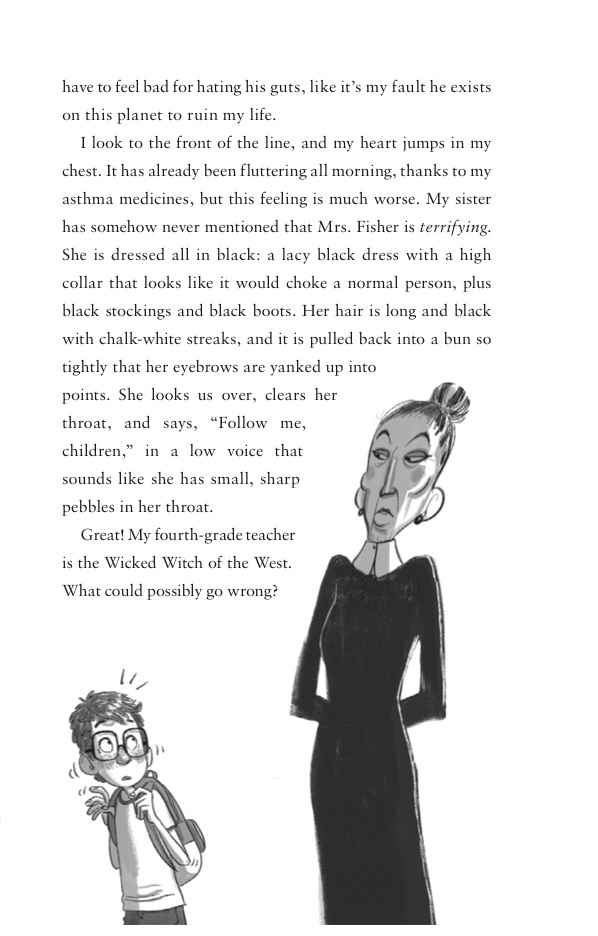
Yes, absolutely. Fortunately for me, my teacher at the beginning of fourth grade, Mrs. Fisher, was basically a villain out of Charles Dickens, and my health situation was pretty Dickensian, too — so I had lots of real adversity to play with. Everything is more exciting when the main character might suddenly stop breathing any second!


Vonnegut has a great writing rule that I sometimes share on school visits: “No matter how sweet and innocent your leading characters, make awful things happen to them –- in order that the reader may see what they are made of.”

Vonnegut is my all-time hero!

Yes, he’s up there for me, too. 

I have never seen a bad piece of writing advice from him. And the beauty of writing these memoirs is that, in focusing on just one short period of my childhood for each one, I could pick only the times when truly atrocious things were happening to me. I could have written an excruciatingly-boring book about my happy, charmed 1st-grade year, for example.

So you actually had a teacher who told your mother, “Jordan will never amount to anything.”

Yup. Not one of my proudest parent-teacher night experiences.

Because as a vulnerable kid, you thought that comment said something bad about you –- rather than something unforgivable about her.

YES! I mean, I knew my teacher was mean. But that didn’t necessarily transfer to knowing that she was wrong.

As a former teacher yourself, and as an ex-kid, I’m sure you have thoughts on this: What do you think makes a good teacher?

Well, that’s very interesting. Believe it or not, I originally sat down and wrote an entire memoir for adults about my own career as a teacher, and how the good and bad educational experiences of my childhood shaped my interactions with my students. But when I was done writing that book, I realized the real gold mine was in the childhood parts, so I pitched a two-volume childhood memoir to my editor at Scholastic, David Levithan. In this first volume, I think it’s pretty clear that, for me, a good teacher is the opposite of Mrs. Fisher. I was so very lucky that my second 4th-grade teacher, Miss Tuff, was the opposite of Mrs. Fisher, in every conceivable way. Where Mrs. Fisher had been cold, played favorites, and shown nothing to me but contempt, Miss Tuff was warm, loved every student equally (or at least, gave us all that feeling), and made each of us feel special, at a time in my life when I very much needed to feel special.

–


When I first coached Little League, I came into it with all this amazing knowledge to impart. Tips and techniques and entire life philosophies! But after a few seasons, I narrowed it down to simply this: I’m the guy who believes in you. That was my job. The booster of confidence. Even when a kid doubts him or herself, I was there saying, You can do it. And hopefully along the way giving them the tools to succeed.

Absolutely. I always say in teacher trainings that the most important thing a middle-grade teacher has to do, before anything else can even be possible, is keep the kids safe, reasonably happy, and interested in learning. Once that flame of interest (in school, in baseball, in anything) burns out, it’s incredibly hard to rekindle. Or, to put it another way, it’s easy to bruise a piece of fruit, but impossible to un-bruise one.

You really struggled as a ten-year-old in all sorts of ways. Asthma, feeling different, not fitting in. How do you feel about that kid now? Do you want to kick him in the butt? Do you want to hug him? Bring him to a Yankee game?

How ‘bout all of the above? Looking back at nine-year-old me, that kid was equal parts irritation, stubbornness, and nobility. I was a gigantic pain to several of the adults in my life (and a couple of the kids, too), but my strongest desire was to be good.

Oh, hey, I meant to ask you: What’s it like to be illustrated?

So, so cool! When my editor forwarded me the initial sketches by Marta Kissi, I was so excited I yelled for my wife and kids to come see. Without ever once talking to me, Marta absolutely nailed the feel of that electric year in my life.

I loved the last triumphant lines of the book: I have books. I have music. I am ready for anything. Is that still pretty much true? Or would you now include, say, a good pair of compression socks?

At this point, I would definitely throw my beloved wife and kids in there at the very top of that heap. But I will say this: without books and music, I never would have ended up with the wife or the kids, because those things completely turned my life around. Every good thing I have basically flows out of my love for books and music.

We see music become a big part of your life in the book. So I have to ask: Favorite Beatles album?

It has changed at different points in my life. But I will tell you that when we brought my first-born son home from the hospital, on the very first morning he woke up in his crib, I took him downstairs to our family room, laid him across my chest so we were both right between the speakers of my stereo, and put on side two of Abbey Road. I wanted that to be the very first music he ever heard. “Here Comes the Sun” –- what a perfect overture for life. Amirite?

Wow, what a coincidence. I tried something similar with my first born. Except I used Captain Beefheart’s “Trout Mask Replica.” Maybe, upon reflection, it was the wrong album. That kid is so messed up. 

[awkward pause]

Anyway! Last question: This goofy kid in the story, the one with glasses and asthma, any idea what ever happens to him? Is he gonna be okay?

 I might not go all the way to “okay,” but he does survive — and he stays goofy. I know this because the sequel, which comes out next year, takes place when that same goofball gets to middle school. The working title is The Boy Who Failed Dodgeball.

Ouch, that’s gotta hurt.

You’re not kidding! I always joke that the highlight of my Little League career was the 1980 season, when I led the league in concussions. But middle-school dodgeball was worse.

Thanks for coming by, Jordan. Good luck with the book. I’m not a teacher, but I imagine it could serve as a mentor text for any teacher trying to encourage her students to see the story in their own lives.

My pleasure. Thanks so much for having me, James!

Oh, please, Jordan, we’re pals now. You can call me “Mr. Preller.”


–

Readers can learn more about Jordan Sonnenblick, and all the books he writes, and his entire family, by hiding in the bushes near his house. Infra-red cameras are amazing these days. There are also ways to tap phone lines. Failing that, just Google the guy. He keeps a website and everything. 


As for me, I’m a writer, too. I’ve authored the Jigsaw Jones mystery series, along with many middle-grade books, including Six Innings, The Courage Test, The Fall, Better Off Undead and Blood Mountain. My upcoming book, Upstander (Macmillan, May 2021), is a prequel/sequel to Bystander. It was recently named a 2021 Junior Library Guild Selection. Clearly, you should buy it. 

And by “buy it” I mean: Yes, actual money!

Was that too subtle?


AS ALWAYS, THANKS FOR STOPPING BY! 


–

–

Amanda Gorman: As Drawn by Greg Ruth

–


My friend, artist Greg Ruth, shared this illustration of Amanda Gorman on Facebook. Like nearly everyone, Greg was astonished and inspired by Gorman’s presence, delivery, and poem at the Inauguration.

It is interesting to note that Greg executed this drawing in the recursive style of one single unbroken line, never lifting the pen off the paper. He said it seemed fitting, perfectly matching the fluidity of the poem. 

I loved this meme . . .


Some readers might recognize that Greg Ruth is the illustrator of many fine books and comics, including two that I wrote: A Pirate’s Guide to First Grade and the seldom-seen follow up, A Pirate’s Guide to Recess.

This piece is from Recess. 


–

I hope that this morning there are young people out there with renewed hope for the future, along with a thirst for the art and possibility of poetry, which has always been my first love as a writer.

Thank you, Amanda Gorman. Thanks, Greg.

–

–

–


I –

A Conversation with Liza Donnelly, Children’s Author/Illustrator and “New Yorker” Cartoonist

–

–

“People respond to my positive approach

and I love that.

People want hope, as do I.

It’s just as easy to be optimistic

as it is to be pessimistic.

It is a choice.”

— Liza Donnelly


–

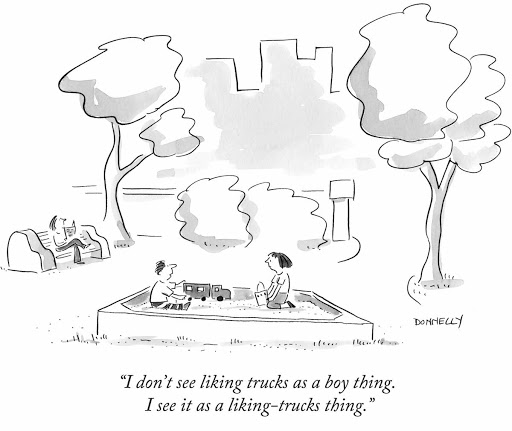
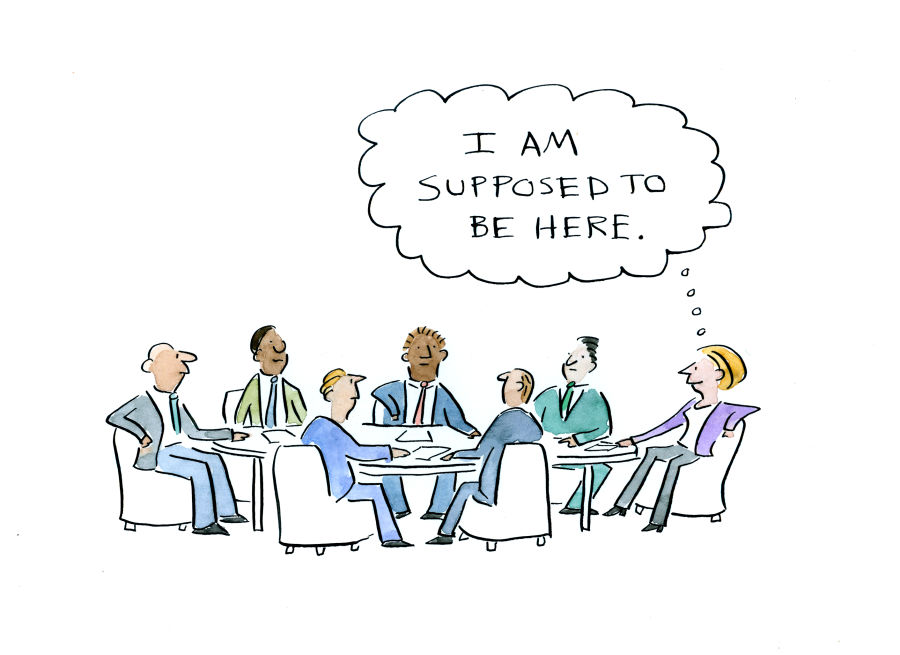
Liza Donnelly and I go back more than 30 years, except she never actually knew it. As a copywriter and book club editor for Scholastic in the late 80s and early 90s, I loved Liza’s imaginative dinosaur books. I also followed her cartoons in The New Yorker. In fact, there’s a long line of acclaimed New Yorker cartoonists who went on the publish in children’s books (most notably, William Steig). Recently, Liza popped up again on Facebook, and I was thrilled to see her new work. Early during the pandemic, I grabbed this image by Liza and used it for my Facebook Cover art: 

–


Beautiful, right? I figured it was time to invite her over to my swank offices her at James Preller Dot Com. After a hasty cleaning — Where did all this old cheese come from? —  I opened the windows, lit some incense, and eagerly awaited Liza’s arrival. Here’s she is now . . .


Greetings, Liza. Is everything okay? You look a little drawn. Oh, wait, wrong image!


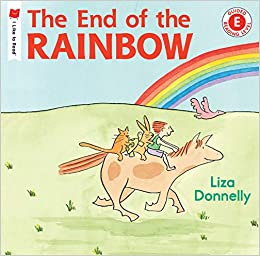
When I was a junior copywriter at Scholastic (working for a cool $11,500 a year), I wrote various book club kits: SeeSaw, Firefly, and Carnival. I especially liked your book, Dinosaur Day, which was the first in the series of seven books.

That’s great to know. That’s what I got paid in my first job at the American Museum of Natural History, probably around the same time! I enjoyed doing those books for Scholastic and was ready to have the Dinosaur series go forever…but alas it didn’t. The books now live on the internet however, and are e-books for kids. Thanks, Dinosaur Day was a favorite for me, too. I wanted it to be wordless but we ended up with minimal words.


I still remember, without having seen that book in decades, how the boy’s imaginal life connected to the objects in his room. I loved –- and still very much love –- that idea. The interior and exterior coming together, celebrating the imaginary journey.

That’s a great observation and I like how you put it, celebrating the imaginary journey. I wanted to show that the little boy was obsessed with Dinosaurs!

I knew you were a New Yorker cartoonist. So many of them got into children’s books, most notably William Steig, James Stevenson, others.

Yes! I was heavily influenced by Steig’s use of color in his books. I loved reading them to my daughters. My favorite was Brave Irene. Also Stevenson was great, a much different feel to his books. I was lucky to meet both men before years ago.

–

–

Stevenson seems a little forgotten these days. He was hugely popular on the book clubs, with favorites such as The Great Big Especially Beautiful Easter Egg (that kid running around with a mustache!) and What’s Under My Bed?  He also illustrated a number of Jack Prelutsky’s bestselling poetry collections (The New Kid on the Block, Something BIG Has Been Here, etc). It’s a wonderful honor for you to be a part of that tradition. When I found you on Facebook, I was immediately taken by your current work. The images you are putting out each day. Obviously, we’ve been living in uncharted times.

So true. I have found doing a cartoon a day and broadcasting it on Instagram as I draw (and talk about it) has been a wonderful way to connect with people. Also it helps me be connected with what is going on in the world because I do it every day in a rather public way.

–

–

On a personal level, I tend to go dark at times, which I attribute to my Irish background. I hold grudges and distrust the wealthy and I believe it’s a good idea to get rip-roaring drunk twice a year. Yet you seem intent on putting forward positive messages with your work.

That’s so funny you say that because I am also of Irish heritage, you undoubtedly noticed. I think the Irish may distrust the wealthy for sure and hold grudges (never heard that), and that they/we can go dark. I go dark all the time. But we also tend to be poetic and with the dark you have to notice the light. People respond to my positive approach and I love that. People want hope, as do I. It’s just as easy to be optimistic as it is to be pessimistic, it is a choice. That doesn’t mean I don’t notice how horrible things are in the world, I do.

I remember talking to my good friend, illustrator Jennifer Sattler, after Donald Trump was elected. We were like, How do we live in this new world? And she said that she heard someone’s podcast, she never could recall the source, where the speaker said, “Do what you’ve always done, but with new purpose.” That made a lot of sense to me.

That’s wonderful. I felt that way after 9/11. I was so distraught by the event that I was about to change careers and give up cartooning. Then I drew a cartoon about it and it was bought and run by The New Yorker (“Daddy, can I stop being worried now?) and I felt back on track. I decided to spend more time drawing about global politics than ever before. With Trump, it was not easy to figure out how to approach him because I don’t particularly enjoy ridiculing people.


In the meantime, you are still making books. What’s your most recent?

My most recent book was Women On Men, a collection of my cartoons and writing about women making fun (lovingly) of men. I also did two kids books for Holiday House in recent years. Interestingly, after I stopped with Scholastic in the 1990’s, I tried to sell these two ideas for books, and no one would buy them. I showed them to Holiday House after they sat in my drawer for ten years…and they bought both!


–

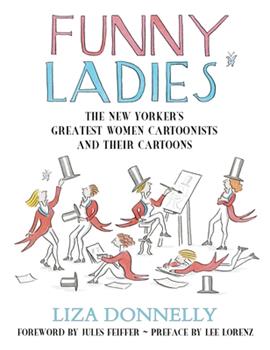
I am currently working on a new edition of my history of the women cartoonists of The New Yorker. It’s to be called Very Funny Ladies, due out this fall.


–

Thank you so much for your time, Liza. It’s really nice to connect with you after admiring your work for all these years. I very much appreciate what you are putting out into the world right now. How can people find you?

Thanks so much for reaching out! And for your kind words. I feel lucky to be able to do what I love, which is draw and connect with people. Folks can find me on Instagram, Twitter, and Facebook: @lizadonnelly.  Watch me draw every weekday at 5pm ET on Instagram and a new startup called HappsTV every day at 6pm ET: happy.tv/@liza . My website is lizadonnelly.com. A lot of my political cartoons and writing is found on Medium: lizadonnelly.medium.com And some writing and cartoons on The New Yorker website.


–

–


James Preller — um, that’s me, and so awkward in the 3rd person — is the author of the Jigsaw Jones mystery series, ages 6-8. C
oming this Spring, look for my new middle-grade novel, Upstander. Thanks for stopping by. Onward and upward with the ARTS!