Tag Archive for Preller Writing Tips

On Beatrix Potter: Soporific!

I’ve been slowly rereading my collection of Beatrix Potter, utterly charmed and impressed. I’m taking my time to extend the pleasure. They don’t make books like these anymore. It might be interesting to try to puzzle out why that’s true, but we’ll leave that for another day and for, yes, Bigger Brains than mine.

There’s so much to learn from Potter, so much to admire, though it makes me wistful to experience anew the loss of her talent — a nostalgic sense of how things used to be but are no longer.

Anyway, these are great books that seem as if they were beamed down from some other, more magical planet. 

Here’s the opening spread from The Tale of the Flopsy Bunnies:

There’s so much to say about Potter’s excellent work, but on this one page, three sentences, I’d like to focus on two things.

First, this is a fine example of how to introduce new, difficult words to young readers. Not to avoid that language, but to support the reader in the process. True fact: This is actually how I first learned “soporific,” when I read this book long ago as a new father. But notice what she does here: I have never felt sleepy . . .

(And notice, too, how I borrowed here italicization of “I,” a nice bit of emphasis.)

Potter gives us the meaning in the best way possible. She doesn’t stop (or stoop) to explain, doesn’t talk down to the reader. She provides the context clue that helps an attentive reader easily understand. Wonderful.

In addition, as a fan of William Steig — who also commonly used language that was above-level — I believe that these new, big, challenging words can actually draw readers into the story. Rather than slowing them down or breaking the magic, these big words can add a sense of mystery and allure. There’s something otherworldly about them. Intriguing. 

The love of language itself. 

Secondly, notice the writer’s voice. I once had an editor tell me that voice was the single  most important thing when looking at new manuscripts. She said that as an editor, she could help fix a lot of problems: tighten the plot, deepen the characterization, even help when the writing goes astray. But voice was the thing she couldn’t teach, couldn’t correct. Without a strong voice — the sound of the writing, the tone and personality of the writer — there was little she could do. Because it was only everything.

Read that page through again. The connection between writer and reader is immediate. Someone is speaking directly to us. There’s warmth there, and interest, and our attention is grabbed. Not by a car crash or some other dramatic event; we are captivated by the almost confidential, casual tone of this storyteller. By the words themselves. It feels like we are listening to an older family member recounting over dinner a marvelous experience. It’s as if the writer was somehow miraculously making eye contact with the reader. Gather round, children, to hear my tale. We tuck in at the kitchen table and listen up, knowing this will be good.

And so alone in a room, surrounded by distractions, we turn the page.

There are endless examples of this throughout Potter’s books. The tone, the unique conspiratorial vibe.

Let me tell you a story . . . 

I’ll leave you with a page from The Tale of Jemima Puddle-Duck:

“She set off on a fine spring afternoon along the cart-road that leads over the hill. She was wearing a shawl and a poke bonnet.”
Delightful.
But what is to come when silly Jemima, without a practical bone in her body, arrives over the hill?
I can’t adequately explain why I love that so much. Especially that clear, simple sentence, the aside, “She was wearing a shawl and a poke bonnet.” Once again we learn that a sentence doesn’t have to work that hard. It doesn’t have to have “look at me” flourishes that demonstrate craft and skill and a “mastery” over language by an egotistical author. No, the sentence just needs to help tell the story. Deliver the information and get out of the way. She was wearing a shawl and a poke bonnet.
Often the job of a sentence is not to be admired, but to disappear. To simply leave us at the beginning of the next sentence. 
By the way: Don’t know what a poke bonnet looks like? See the illustration on the facing page. That’s another way we help readers along. 
The older I get, the more I appreciate and admire restraint. 

WRITING PROCESS: The Research Feeds the Story — Going Beyond the Inciting Event

I’m working on the second book in an upcoming middle-grade adventure series, “The Survival Code.” The heavy lifting for the first book, Wildfire Escape, is largely behind me.

I should be writing the second one even as, temporarily distracted, I blog this post. The truth is, I am “writing” the book, though I’m not, well, exactly writing-writing. This current phase is a combo platter of research and thinking and brainstorming. It’s impossible to separate them into their own distinct stages. 

For this kind of book, the writing — defined here as words on a page — can’t happen until I figure out details of the plot. In this case, a wilderness adventure set in remote Alaska, I have a lot to learn. There are five characters in a car that careens off an isolated road into a heavy snow bank. The driver, the father, is badly injured. The weather is ominous. And there are four kids, ages 11-13, fighting for his life and their own.

I have the general idea sorted out. Two stay with the father, a medical emergency in a forbidding climate, while the other two go off for help, or shelter, or something. I’m still working that out. But parallel adventures.

Yesterday, I finished reading an incredible book, Where You’ll Find Me, by Ty Gagne. A work of nonfiction, it’s subtitled: Risk, Decisions, and the Last Climb of Kate Matrosova. I’m underlining passages, writing notes in the margins, and reimagining the story that I’m supposed to be, you know, writing. I might as well be scribbling: Eureka!

I stand here before you to defend my honor: This is writing.

The thinking is the writing.

One thing that surprised me about the first book, and once again fascinates me with this second story, is that my focus is not where I expected it to be. It not what I thought I’d be thinking about. You see, from the outset I wanted these kids to be adept at bushcraft. They were experienced in the outdoors life, able to build shelters, start fires, accomplish tasks in natural environments. That’s what I thought I needed to research. And those elements are still there in these stories, but to a lesser extent than I orginally imagined. Because through my reading, I keep returning to the realization that so much of survival is about attitude. I’m fascinated by the traits that help people endure critical situations, and the vulnerabilities that can lead them to potentially fatal mistakes.

One book that greatly informed Wildfire Escape had nothing to do with wildfires. Or, I guess, it had everything to do with surviving wildfires, without specifically being about one. Wait, let me back up: I thought I’d be researching wildfires in a really deep way. And I did. But it was not nearly enough. Because I had to write about characters who made decisions, who acted or failed to act. I kept wanting to know more about that mindset. To that end, the book that helped unlock their inner lives was The Unthinkable: Who Survives When Disaster Strikes — and Why, written by Amanda Ripley.

So why am I sharing this? Because most of the time, across the past 30 years for sure, I continually find that the book I set out to write . . . is not the book I ultimately write. I learn things as I move forward. My focus shifts. The research leads me in new, unexpected directions. The result is a different book entirely.

This happened with my latest middle-grade book, Shaken. I thought it was going to be about concussions. A 7th-grade soccer player suffers from a severe concussion. I’d have to learn all about that medical condition. And that was true. I talked to doctors, read up on things. But what I realized was the story was about a girl, Kristy, who has to pivot, and struggle, and reinvent herself on the fly. The concussion — like the wildfire, like the car accident, like the winter snowstorm — was merely the inciting event. The heart of the story was everything that happens after. 

The research is thrilling. One of the best parts of the writing life, in my opinion. The process fills me up and keeps it new. My brain goes a little haywire with sparks going off all hours of the day and night. I take a shower and wish to reach for pen and paper rather than soap and shampoo. I now have a new insight into Arlo, one of the book’s main characters. I now get how Naomi feels. The book is, I discover, about — in part — the relationship between Arlo and Naomi during a life-threatening crisis. Can they dig out an ice cave? Can they fashion snow shoes out of car mats? Sure, that stuff will be in there. But the real story is what drives them, the mistakes they make, and why, and how together, and at odds, they work to survive. Or not!

You ask if I am writing?

Um, do you mean words on a blank page?

Not yet. Or a little bit. 

But I’m doing something more important than that.

I’m thinking about it!


SHAKEN will be available in paperback on March 17th, 2026. Both books in the SURVIVAL CODE series will be out in May, 2027. Thanks for asking!


Fan Mail Wednesday Double Dip: #277 & #278!


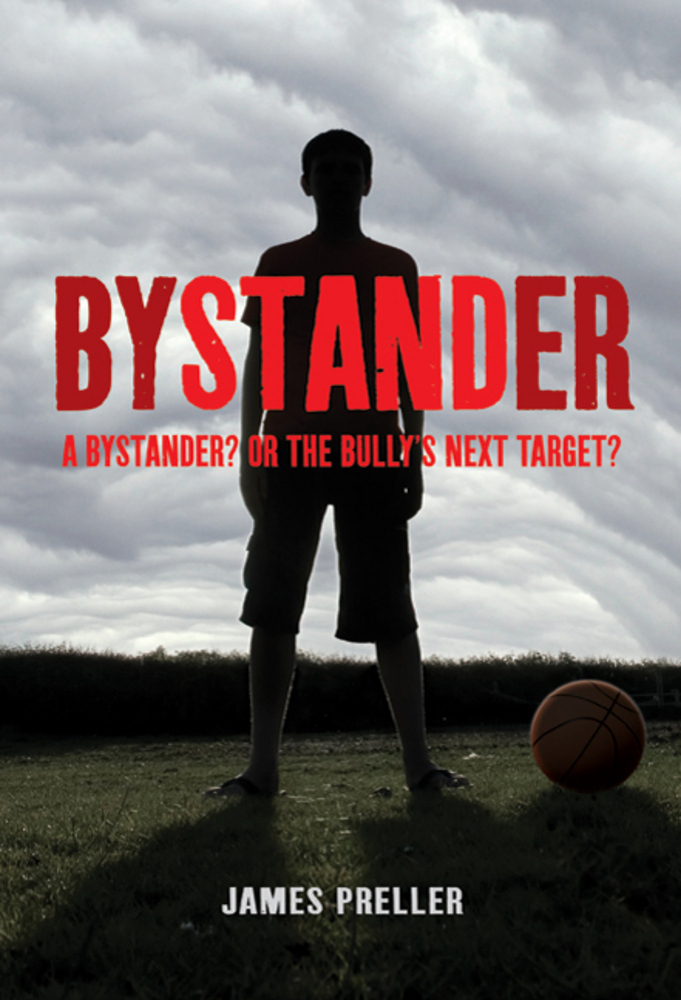
Two quick ones, featuring Bystander and Jigsaw Jones.

William zinged over a quick email:


In my class, we are going to read Bystander as a group activity, and I have one question. How did you become such a good author?

I replied:
William,
Every February I spend two weeks meditating in a yurt in Mongolia.
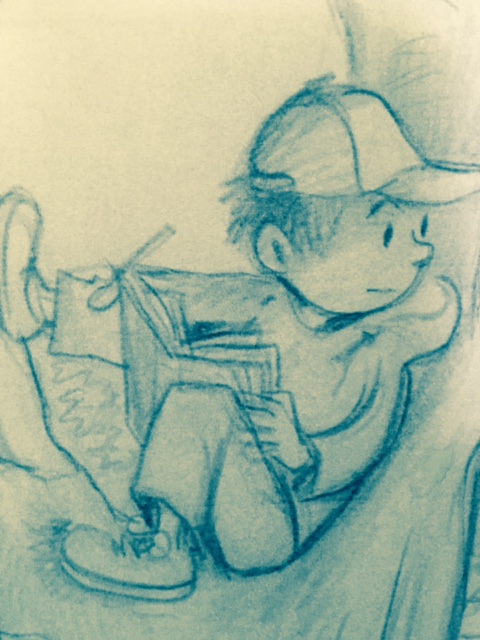
Pro tip!
That’s pretty much it.
Oh, and: I mostly learn from reading. Slowly, thoughtfully — not blazing through to get it over with, but reading as a writer.
And then, of course, now that I’ve written so many things for so many years, I learn from writing, too.
My best,
James Preller
SPECIAL BONUS MAIL . . .

Rees writes:


Hi Mr. Preller,
My mom is letting me use her phone and write to you. I have a book report to do about my favorite character. Mine is Jigsaw. What color are his eyes? What color is his hair? What do you think is special about him?

Thank you for your help.
Rees
2nd grade
(My mom helped with punctuation and capitals.)

I replied:
Rees,
You have a nice mom. Don’t drop the phone in the toilet or she’ll be mad. My wife, Lisa, has done that — twice!
Jigsaw has brown hair and . . . I don’t know what color eyes. If you look at drawing, it’s just black dots. 
You can say hazel and no one will ever know the truth.
There are many things that make Jigsaw special.  In no particular order:
* His honesty.
* His sense of fairness.
* His kindness — he’s a good friend.
* His determination.
Jigsaw isn’t perfect. He makes mistakes. But he never, ever gives up. 
Now give that phone back to your mom before I hear a splash.
Thanks for writing. I just finished writing a new Jigsaw Jones book, The Case of the Hat Burglar. It’s about how items from the school “Lost and Found” begin to disappear. Someone has been stealing them!
Your friend,
James Preller


Fan Mail Wednesday #157: Author Advice, Before You Go . . .

Dear Mr.Preller,

I am a big fan of your books.  I am in seventh grade this year, and two years ago, in fifth grade, you visited my school.  You talked about a book you were writing, about four teenagers/young adults, and they were in a car crash, and one of them died.  I was trying to find the book, but I don’t remember the title, and I was wondering if you just haven’t published it yet, and what the title is.
Also, when I am older, I hope to become an author.  So I was wondering if you have any helpful hints to writing a book, or publishing one.
Thanks so much, and please write back!
Sincerely,
A huge fan!
I replied:
Megan,

What a sweet note, thanks for remembering that I exist.

For remembering, that is, during your busy life, that oh, somewhere on this planet there’s a guy who came to my school two years ago.

The book is titled BEFORE YOU GO, and will be available on July 17th.

Helpful hints? Oh gosh. You know, the disappointing thing is that there’s nothing really new or profound to tell you. And it’s not like I’ve got it all figured out, by any stretch of the imagination. But #1, you’ve got to read. Widely, deeply. And pay attention as you read. By that I mean, sure, it’s fun to escape into a story, to get lost in a book. But I think writers also read on a different level, with more awareness about the craft. Such as, “Wow, I’m really scared right now, I can’t turn the pages fast enough.” Ask yourself, how did the author do that? If an author paints a vivid picture in your mind, if you can really see something, go back and reread that section. Notice the language.

In other words, think like a writer.

The other tip, I think, is there are no shortcuts. If you want to write, then you really should have a journal. And give yourself time to be alone, to be quiet with your thoughts, and put some of those words on the page. You don’t have to start to write your own amazing 400-page novel (unless, of course, that’s what you really want to do). Mostly, read and write, watch and live. Enjoy life, enjoy people. See them, try to notice things, imagine how you might describe someone you know, the way a friend maybe crosses her arms & squeezes the skin of her elbows when she’s nervous . . .

Hey, I’ve got to run. Sorry if this is a little disorganized, I’m feeling rushed today. Take care, Megan, and good luck!

JP

Fan Mail Wednesday #92 (Monday Edition: Writing Tips!)

I’ve been bad with the fan mail lately. Here’s one from a young writer:

Hi Mr. Preller,
I hope you remember me. You wrote a message in one of my jigsaw Jones books saying that I have talent and that I should keep writing.  Well I have been writing a lot since you taught me “show, don’t tell” in fifth grade at Hamagrael. Can you please give me some advice on how to  be a better writer? I am writing a novella, an anthology, and I am not  sure if I am ready to start a novel draft. How can I make a plot more interesting? What can you tell me about the editing and revising process?

-Peggy

To my surprise, I replied at some length:

Peggy,

It’s nice to hear from you again. Yes, I remember.

The only difference between a novella and a novel is length — and length is largely determined by story. Some stories take more time to tell. At some point, either in writing this novella or another story, you’ll find that the telling of it requires more words. The story will naturally grow longer, because there’s simply more to be said.

It’s a funny about plots, I always come back to a very simple idea:

Make something up!

Really, in some ways, it’s that simple. If you find the story drags, or if you sense that you are getting bored, it might be time to insert some new element into the story. A new conflict, a new obstacle, something. Or it might be the opposite — time to take something out, to cut the fat, eliminate (cautionary note: don’t worry too much about cutting early in the process; first you build, later you can trim). As a writer, I worry an awful lot about pacing, the speed of the story, how quickly the plot moves along. I learned some of those lessons while writing the Jigsaw Jones series, where I balanced the elements of the traditional mystery (problem, clue, clue, clue, solution: fence-post scenes that gave me a powerful through-line for the narrative), with all the little asides and explorations I like to include to provide depth.

Am I confusing you? I don’t mean to, but I remember you as being pretty smart, so I’m keeping my answer at a high level, writer to writer.

Sticking with Jigsaw, you can look at those stories as containing two separate strands: 1) The mystery, the propelling force that pushes plot forward to its conclusion, like an arrow shooting through the pages of the book; and 2) All the other stuff — the character development, small moments at the dinner table, or the classroom — that tend to deepen the story without particularly driving it forward.

So “story” usually runs in two basic directions: Forward or Down. Of course, the two can work together, and a specific comment about, say, a character’s fear of snakes will later have huge implications on plot. It’s not either/or. Remember Indiana Jones: “I hate snakes.” He says it early in the movie, almost as a throwaway line; later on, the seed planted, it grows into a pivotal scene in the film.

(And if you haven’t seen that movie yet, it’s time you did. Fabulous storytelling.)

As a writer, you should always try to be aware of what’s happening in your story. Ask yourself, What is the purpose of this scene? What is its function? What am I trying to do here? And then you write with that intention very much in mind; you have to know what you are trying to accomplish with each sentence. It could be that two people are great friends, it could be that Aunt Rosie has a cruel streak, or that Rachel is really lonely. But with each scene you write, you need to understand what you are doing and how it pushes along or deepens plot.

I’m not a great one for advice. I don’t like giving it, to be honest. Writers have to discover these things for themselves. But here’s a link to two recent blog posts by Lois Lowry that I found instructive. She’s a smart writer, highly aware of her craft.

Lois Lowry: thinking in scenes, etc.

Lois Lowry on character description: some details, but not too much.

Likewise, if you look at my blog, you’ll find a sidebar to the right. Under the heading CATEGORIES, you’ll find “The Writing Process.” It brings together dozens of blog entries that concern my experience as a writer. I don’t have the answers for you; every writer has to go down that road alone. But I do try to share my own experiences, the things I’ve learned about writing over the years. You might wish to randomly explore the links at your leisure.

Advice? Keep on writing, keep on reading — and pay attention to the world and the people around you. Value your individuality, the things inside you that no one else in the world can offer. Don’t be afraid to be yourself. There’s a lot of subtle forces in the world, peer pressure and societal expectations (and writing teachers included!), that will try to mold and shape you into something that conforms with everyone else. Resist that, especially with your writing. When you write, that’s where you should be most free, most truly Peggy.

Have a great summer and stay in touch.

JP