Archive for Interviews & Appreciations

James Preller Interviews . . . Lewis Buzbee, Author of “The Yellow-Lighted Bookshop.”

As a kid, I used to come home from St. Frances De Chantal Elementary in the late 60’s and early 70’s to find my grandmother sitting in front of the television, sipping brandy, watching the soaps. She especially loved “The Edge of Night.”  Then at 4:30, I’d get up and switch the channel for her, turning the big knob over to “The Mike Douglas Show.”
It was a daily, syndicated variety show, and Mike would begin each day’s show by singing a popular song. I loved it. I sat with Granny Good Witch — as we called my grandmother — for many, many hours watching Mike Douglas. He seemed like such a nice man.

One of the great things about the show was that he’d have guest co-hosts who would stay for the full week. It could be Sammy Davis, Jr., Richard Harris, Charo, Soupy Sales (photo, below), Barbra Streisand, whoever. Most famously, Mike snagged John Lennon and  Yoko Ono for the week-long co-host gig, February 14-18, 1972. It was an inspired invitation, and made for legendary, if at times uncomfortable, television.

That’s how I want to play it this week. I’m Mike Douglas, and my guest co-host will be author Lewis Buzbee, and he’ll be hanging out all week long. There will be laughs and there might be pie.

Originally, we set out to do a standard interview. But as happens with good conversations, we couldn’t stop talking. Lewis is a terrific guy, quick on his feet, with deep thoughts and insights, and a sense of humor, too. Mostly, he’s a book lover and a man of great passions (fortunately, I carry a taser). I know you’ll like him.

What follows is Part One of a Three-Part Mini Series, titled “The Never-ending Lewis Buzbee Interview.”

——

Hey, everybody, look — it’s my co-host for the week, Lewis Buzbee! The man who asks the question, “How do you press a wildflower into the pages of an e-book?”

Everything all right, Lewis? You look a little drawn. Ho-ho. Seriously, thanks for stopping by, Lewis. No, we don’t need to hug. I mean it, DUDE. That’s enough. I’m warning you! I keep a taser in my man purse . . .

. . . and I will tase you, bro. Go sit in the big comfy chair.

Don’t tase me, bro!
And don’t tase my bro, either.

Congratulations on your first children’s novel, Steinbeck’s Ghost. I definitely want to talk about that book later in the week. But first, I have to say: I loved The Yellow-Lighted Bookshop.
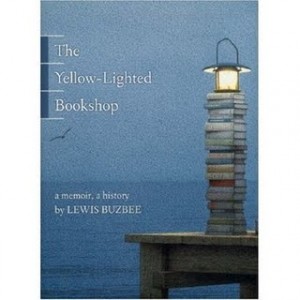
Thank you, Mr. Preller.

Please, not so formal. “Mr. Preller, Sir,” is fine. Your book opens with a confession of sorts:

“When I walk into a bookstore, any bookstore, first thing in the morning, I’m flooded with a sense of hushed excitement. I shouldn’t feel this way. I’ve spent most of my adult life working in bookstores, either as a bookseller or a publisher’s sales rep, and even though I no longer work in the business, as an incurable reader I find myself in a bookstore at least five times a week. Shouldn’t I be blase about it all by now? In the quiet of such a morning, however, the store’s displays stacked squarely and its shelves tidy and promising, I know that this is no mere shop. When a bookstore opens its doors, the rest of the world enters, too, the day’s weather and the day’s news, the streams of customers, and of course the boxes of books and the many other worlds they contain — books of facts and truths, books newly written and those first read centuries before, books of great relevance and of absolute banality. Standing in the middle of this confluence, I can’t help but feel the possibility of the universe unfolding a little, once upon a time.”

First, Mr. Buzbee, Sir, that was beautiful. But as I read your book, I kept worrying about your family. Do they have enough to eat? Does his daughter have new clothes for school? You seem to buy a LOT of books.

You know, we do buy a lot of books, but now that I’ve given up bookselling for the glitzy life of a writer, well, it’s just money, money, money.

It’s a funny question, though, that I get a lot. People assume if you buy hundreds of books a year that, well, it’s somehow superfluous spending. But people with $60,000 cars never get the same sort of grief. I mean 60 G’s for a car? You’ve gotta be kidding.

You’ve lived a life that’s been centered around the reading life. Tell us about your background.

I grew up in a very working class home in San Jose, California, where we had books, of course, and where my parents read for their own pleasure, but nothing too New York Review of Books about it. My parents, children of the Great Depression, looked at books as a way for their kids to get a better education. But I never set out to be a bookseller or a writer. It happened, and quite by accident. I was on my way to being a rock star,  when my life was changed by a high-school book report on Steinbeck’s The Grapes of Wrath.
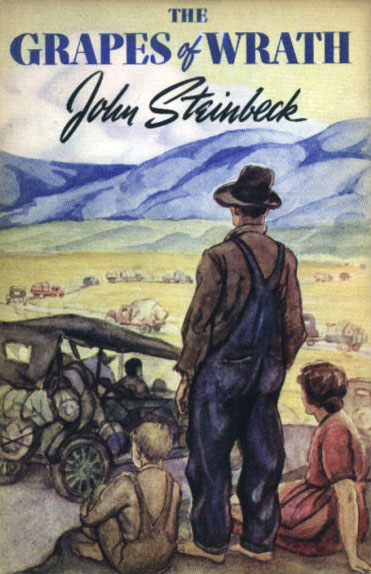
I was fifteen. I had never before felt anything so powerful, his words, and I had never felt so connected to the rest of the world either. After that, the other pieces of my life followed, if not purposefully, then easily. When I was eighteen, I got a job in a bookstore; I’d heard you got a discount on books. And when I discovered that booksellers sometimes got free books, well, that was it.

Can you remember a specifc scene in the book when the light turned on for you? I have to confess, I read it for the first time this summer — and I was staggered by the writing, the pure telling of it. Also, Steinbeck’s humanity, the strong feeling he so obviously had for those characters.

It’s that first chapter, the description of the Dust Bowl, one of those epic, overview chapters. Seeing the world described with such power — that’s magic isn’t it? You put some black squiggly lines  on a page, and an entire world appears.

And it was that sudden. I read that first chapter — somewhat grudgingly — and put the book down, deciding there and then that I would become a writer. Then I wrote my first short story, and it was only I finished that story, that I went back to the book. And the world just kept getting bigger and bigger.

The Yellow-Lighted Bookshop feels like an inevitability — this unlikely book that absolutely had to happen — and that it had to come from exactly you.

I knew a long time ago — many years into my writing career, and after my first novel, that I would have to write this book. Perhaps fifteen years before I actually sat down to write it. There were, I knew, a lot of books about the antique book trade, but nothing, really, that was a general appreciation of the new bookstore. I suppose I needed to write it, too, because, as I said earlier, the bookstore had given me so much. So much pleasure.

Easy, Lewis. Get back in the chair.

Not the ta —

BbzzzzzzzzttTTTT!

Man, I love that crackly sound! You should have seen your face, Lewis, the way your eyes bulged out! Hysterical. Now please continue . . .

Um, okay. Just let me get the feeling back in my arms and legs. I think I waited to write the book until my bookselling career — as both a bookseller and sales rep — had come to an end. I needed that distance. I never wanted to write a critique or an expose. It had to be an appreciation.

I can identify with that, because I knew I’d always have to write a baseball book of some kind or another. Baseball had seeped into every aspect of my life, as a boy, as a father, in my relationships with people, these powerful associations with my own mother, my sense of competition and play. It had to spill over into my writing.

There is a tired old maxim, write what you know. It’s often misinterpreted, of course. I think it has to be this: write what you love. Even if you’re arguing with it, or hating it at the moment, write what you love. Yes, I know bookstores, but thousands of other people know much more than I do about the business. No one, though, has quite loved the bookstore as much as I do. I’ve stared at it for decades, and always with love.

Yes, write what you feel. We can learn about all sorts of things, do research, find out, know. But unless the heart attaches to it, well, I don’t know how you can go to work each day.

I once had a student who offered up a great piece of advice — write about what you are most ashamed of. An interesting tack, that. It immediately calls you to powerful emotions.

Obviously, you analyzed the marketplace and decided: What the world needs now (besides love, sweet love) is a book that’s part memoir, part history of bookstores. Instant bestseller! Why James Patterson didn’t do it already is beyond me.

Well, that would have required Patterson to write much longer paragraphs. So, that answers that. But a psychotic murderer in the bookstore — hey, let me  write that down.

Actually, I did know the book would do well — it did quite well, thanks. Because I’ve spoken with too many people over the years who feel as deeply about the bookstore as I do. And I knew they would want to the words to express that feeling, words to help them see it new.
I love that observation, Lewis. Writers can provide that, I think; so can good public speakers. Many people don’t seem to have the language to articulate those feelings. We see it at weddings, funerals, toasts at family events. I’m always so grateful to those people who can kind of, I don’t know, say it for us.

Of course, I am thinking of all those copywriters at Hallmark.
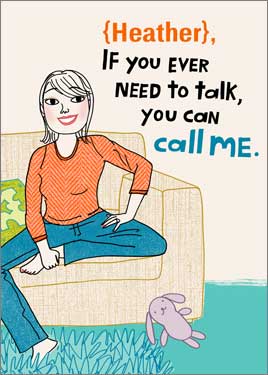
My mother is possibly the greatest supporter of Hallmark cards in the country, by the way. I get Thanksgiving cards from her! Thanksgiving cards? Amazing. And very specific ones — Thanksgiving cards that extol the virtues of a “very special son.”

I’m not dissing this, by the way, I’m glad people have that outlet. Otherwise, whoo, what a world.

There were so many moments in the book that I enjoyed — and not just that it came in at the optimal length of 225 pages — but sentences I had to underline, paragraphs where I’d put exclamation points in the margins. There’s a line you wrote, “to remember a book is to remember the child who read that book.”

It’s sort of a crib from Proust actually. I had the idea, of course, for a long time, but in his wonderful essay, “On Reading,” he helped me put words to it. When I remember a favorite book, I’m remembering, too, who I was at the time I read it. I just re-read Ray Carver’s first book of stories, Will You Please Be Quiet, Please?, and as well as being reminded of his genius and moved by the stories, I also remembered being a freshman in college who did nothing during spring finals week but read Carver instead. It was not a good semester grade-wise.

I guess that’s where the memoir aspect of this book became inevitable for you. You couldn’t talk about books without memories flooding back — it was impossible to separate the reading life from your actual life.

I knew that the memoir of a bookseller was bound to be pretty dull stuff. It’s not an amazing life, in that way. My father was a deep-sea diver for the Navy; now that’s a life worth writing about. I included the memoir bits kind of strategically. I wanted to put in enough of my own experience — but not too much — so that the reader would be able to relate to the memories, and yet still have enough space to put in their own memories. My memoir, as if were, is really only there as a touchstone.

But it’s true. I am a reader — and I would guess you are, too. In fact, anyone reading this, well, it goes without saying. But I’ve always been suspicious of people who want to separate the “reading” from the “life.” For many of us, reading is an integral part of life, not a vacation from it. And not in a self-help way, either. It’s just a part of what I do, and it influences how I go into the world, how I engage with it. I’ve always considered reading an active undertaking, not passive.

Wow, Lewis. Word.

——-

End of Part One. Please come back on Wednesday for Part Two (or click here right now!) of “The Never-Ending Lewis Buzbee Interview” — he’ll be here all week! We’ll talk about the Kindle, Star Trek, Facebook, Katharine Ross, the “death of the novel,” the twitterverse, and raise a glass to idiots everywhere!

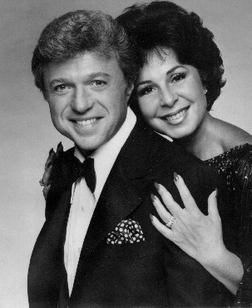
Next week my co-hosts will be: Steve Lawrence and Eydie Gorme!
Hills Gleam Dimly: Karla Kuskin (1932 – 2009)

“I put it down and I begin to understand it better.” — Karla Kuskin.

Karla Kuskin died in late August, 2009. I was away on vacation at the time, off the grid, not even looking at newspapers, so I missed it. I’d like to spend a few minutes today in appreciation of Karla Kuskin, to note a poet’s passing with due respect. At a time when much of children’s poetry aspires only to imitate Dr. Suess, here was a woman who wrote with sophistication and depth — feeling, heart, soul, and wit. Poems for children, yes; but she did not pander, she was not writing down; she lifted up.

I interviewed Karla many years ago, almost decades, for a profile that was eventually collected in this book, which I gather you can still find in some dark, dank corners of cyberspace. Worth checking out, I think: dated somewhat, but with golden nuggets inside. Awesome insights directly from Vera B. Williams, Aliki, Cynthia Rylant, Kevin Henkes, Eric Carle, Tony Johnston, Carlotte Zolotow, Barbara Park, James Marshall, and many, many others (75 in all). Anyway, I liked Karla immediately. She was unpretentious, yet serious about her craft; easy to talk to, genuine and funny. My highest compliment: She was a true artist.

The main challenge of the book was that my editors at Scholastic wanted the short profiles to work on two levels. For adults, as well as for children. In remembrance of Karla, here’s an excerpt from that book:

Though sense and silliness, bouncy rhymes and flowing rhythms, Karla shares her love of poetry with young children. A mood, a memory, a sound — anything can spark a poem. And anyone can write one, Karla believes. “Poetry can be as natural and effective a form of self-expression as singing or shouting,” she says.

Karla has always loved listening to the rhythm of words. She states, “I am a firm believer in reading aloud because, I suppose, I loved it so much as a child.” Grateful for a childhood in which reading was an everyday family activity, Karla believes that “when you are exposed to poetry when you are little, it stays with you for the rest of your life.

“When I am working on a book of poetry,” Karla says, “I jot down everything on any scrap of paper at hand; I pay attention to what’s going through my head. I’m much more aware of language, words, rhythm, description. I try to hang on to these ideas, because if I don’t write them down, they’re gone forever.”

It is Karla’s hope that readers of her poems will, in turn, write poems of their own. As she says, “If you read, you write.” Karla realizes that most children will not grow up to become professional writers. “The important thing about writing is that it helps the writer discover his or her own thoughts and feelings.

“In difficult times,” Karla confides, “I’ve always found that to write out what I feel is very helpful. I put it down and I begin to understand it better.”

Nice, right?

The New York Times ran a leisurely obituary, it wasn’t in hurry to be over, and it touched on highlights obvious and some less so. They concluded with this untitled poem by Karla, from Near the Window Tree, and I loved it.

Write about a radish

Too many people write about the moon.

The night is black

The stars are small and high

The clock unwinds its ever-ticking tune

Hills gleam dimly

Distant nighthawks cry.

A radish rises in the waiting sky.

Loudon Wainwright III, “History,” Revisited: Music Video Friday

Hopefully this will keep you entertained while I’m away for a week . . . hiking, sitting by fires, kayaking, reading, playing with my kids, reconnecting with Lisa, writing on a yellow legal pad by Rainbow Lake in the Adirondacks, and taking it real slow . . .

——-

Released in 1992, “History” by Loudon Wainwright III stands today as one of the great, mature, singer-songwriter statements of all time.

This is an album by a 46-year-old man at the crossroads of his life, a series of songs that reflect adult themes such as parenthood, middle age, nostalgia, masculinity, divorce, love, and death. Not that it doesn’t carry some of Wainwright’s trademark satire and humor (“The Doctor,” “Talking New Bob Dylan,” “People In Love”), but here is one of Wainwright’s more deeply personal efforts.

Oh, I’ll just say it: It’s a masterpiece and you should own it.

I’ll be off the grid for a week, so today I’m posting an extra healthy helping of videos in tribute to one of the great discs of the past twenty years — even if not that many folks realize it, except for some hardcore Loudon fans, various critics, and this guy, who called it the CD of the year. Loudon, by the way, is the former husband of Kate McGarrigle, and father of musicians Rufus Wainwright, Martha Wainwright, and Lucy Wainwright Roche. There are three live clips below, Loudon performing songs from “History,” plus a fourth recording of “Men,” another tune off the CD that I have mixed feelings about (but what a plaintive voice and melody, kills me every time). Let me know if you like ’em. He can go deep, and maybe you need to be in the right mood for it, but there are singular lines in these songs that cut to the heart and give it a twist. As a 48-year-old male, someone who has been “culturally marginalized,” my personal blip dropping off the radar, I hold this disk with ever-increasing appreciation. A great artistic achievement.

Also recommended: “Last Man on Earth,” and the soundtrack to “Strange Weirdos: Music from and Inspired by the Film Knocked Up — yes, that’s him playing Doctor Howard in the movie.

See you in September!

You need to a flashplayer enabled browser to view this YouTube video

HITTING YOU

long ago i hit you
we were in the car
you were crazy in the back seat
it had gone too far
and i pulled the auto over
and i hit you with all my might
i knew right away it was too hard and i’d never make it right

i was aiming for your buttock
but i struck your outer thigh
you had on a bathing suit
and right before our eyes
suntanned skin turned crimson
where the hand had hit
and my palm stung from hitting you so hard that i hurt it

against the law in sweden
charges can be filed
here it’s all too common
a parent hits a child

on your face i saw the shock
and then i saw the pain
then i saw the look of fear
the fear i’d strike again
then i saw your anger
your defiant pride
and then i saw one tear drop
the rest you kept inside

i said i was sorry and i tried to clean the slate
but with that blow i’d sewn a seed
and saw it was too late

these days things are awful
between me and you
all we do is argue like
two people who are through
i blame you, your friends, your school, your mother and mtv
last night i almost hit you that blame belongs to me

long ago i hit you
we were in the car
you were crazy in the back seat
it had gone too far
and i pulled the auto over
and i hit you with all my might
i knew right away it was too hard
and i’d never make it right

You need to a flashplayer enabled browser to view this YouTube video

THE PICTURE

There are pictures on the piano,
Pictures of the family,
Mostly my kids but there’s an old
Picture of you and me.
You were five and I was six
In 1952;
That was forty years ago-
How could it be true?

We were sitting outside drawing
At a table meant for cards,
And it must have been in autumn,
Falling leaves in the front yard,
With a shoebox full of crayons,
Full of colors oh so bright,
In a picture in a plastic frame,
A snapshot black and white.

You were looking at my paper,
Watching what I drew;
It was natural: I was older,
Thirteen months more than you.
A brother and a sister,
A little boy and girl,
And whoever took that picture
Captured our own world.

A brother needs a sister
To watch what he can do,
To protect and to torture,
To boss around-it’s true;
But a brother will defend her
For a sister’s love is pure,
Because she thinks he’s wonderful
When he is not so sure.

In the picture there’s a fender
Of our old Chevrolet
Or Pontiac-our dad would know,
Surely he could say;
But dad is dead and we grow old;
It’s true that time flies by;
And in forty years the world has changed
As well as you and I.

You need to a flashplayer enabled browser to view this YouTube video

A FATHER AND A SON

When I was your age I was just like you,
And just look at me now; I’m sure you do.
But your grandfather was just as bad
And you should have heard him trash his dad.
Life’s no picnic, that’s a given:
My mom’s mom died when my mom was seven;
My mom’s father was a tragic guy,
But he was so distant and nobody knows why.
Now, your mother’s family, you know them:
Each and every one a gem,
Each and every one a gem.

When I was your age I was a mess;
On a bad day I still am, I guess.
I think I know what you’re going through;
Everything changes but nothing is new.
And I know that I’m miserable; can’t you see?
I just want you to be just like me.
Boys grow up to be grown men
And then men change back into boys again.
You’re starting up and I’m winding down;
Ain’t it big enough for us both in this town?
Say it’s big enough for us both in this town.

When I was your age I thought I hated my dad
And that the feeling was a mutual one that we had;
We fought each other day and night:
I was always wrong; he was always right.
But he had the power and he needed to win;
His life half over, mine about to begin.
I’m not sure about that Oedipal stuff,
But when we were together it was always rough.
Hate is a strong word; I want to back-track;
The bigger the front, then the bigger the back;
The bigger the front, then the bigger the back.

Now you and me are me and you,
And it’s a different ballgame though not brand-new.
I don’t know what all of this fighting is for;
But we’re having us a teenage/middle-age war.
I don’t want to die and you want to live;
It takes a little bit of take and a whole lot of give.
It never really ends though each race is run,
This thing between a father and a son.
Maybe it’s power and push and shove,
Maybe it’s hate but probably it’s love,
Maybe it’s hate but probably it’s love.

You need to a flashplayer enabled browser to view this YouTube video

MEN

When a ship is sinking and they lower the lifeboats
And hand out the life jackets, the men keep on their coats
The women and the children are the ones who must go first
And the men who try to save their skins are cowards and are cursed

Every man’s a captain, men know how to drown
Man the lifeboats if there’s room, otherwise go down

And it’s the same when there’s a war on: it’s the men who go to fight
Women and children are civilians, when they’re killed it’s not right
Men kill men in uniform, its the way war goes
When they run they’re cowards, when they stay they are heroes

Every man’s a general, men go off to war
The battlefields a man’s world, cannon fodders what they’re for

It’s the men who have the power, it’s the men who have the might
And the world’s a place of horror because each man thinks he’s right
A man’s home is his castle so the family let him in
But what’s important in that kingdom is the women and the children

A husband and a father, every man’s a king
But he’s really just a drone, gathers no honey, has no sting
Have pity on the general, the king, and the captain
They know they’re expendable, after all they’re men

James Preller Interviews . . . Travis, of 100 Scope Notes!

I’ve enjoyed doing this semi-organized, possibly-ongoing series of interviews, especially when it comes to meeting important voices in the kidlitosphere. I hope you agree that it’s nice to get to know the people behind some of our more frequently-visited blogs. One such destination is the oft-entertaining, 100 Scope Notes. Travis has a lively mind, he’s young and insightful, and — to be perfectly honest — it seemed like it would be cool to hang out with him. I mean to say: If I didn’t enjoy it, I wouldn’t do it. I’m like a Roman Emperor that way, sort of a cross between Tiberius, Caligula, and Herod Agrippa, but with typing skills. But let’s move along, folks . . . because here comes Travis, hauling around a pile of books.

Greetings, Travis. It’s nice to finally meet you. Thanks for stopping by.

Well, it’s an honor. Sorry I’m late — I was away for a week visiting family.

How’d that go?

Great, but very filling. You ever have it happen where a trip back home all of a sudden becomes an eating tour? It’s like all decisions were based around food. I found myself saying things like, “Well, we can’t go to the ‘60s-style drive-in tonight, because I really wanted to get to the Italian restaurant with the moose head on the wall. And let’s not forget about the homemade cookie shop for dessert.” You can see how things can get out of hand pretty quickly.

Oh, I get it. You’re here for the cheese log.

You have one of those? If you’ve got a box of Toasteds crackers, it’s on.

You’ll be putting it on the Ritz, my friend. As the  1950’s ad campaign so truly proclaimed: “Nothing tastes as good as Ritz . . . but Ritz!”

So, tell me. You became a librarian in 2005, and started blogging back in the halcyon days of late 2007. That officially makes you a grizzled veteran of the blogosphere. Did you have a plan when you started?

Let me begin by saying I have played a lot of soccer in my day, and have thus taken many, many soccer balls to the head. I’ve always had a hard time remembering which books I’ve read and why I liked them or didn’t like them. My memory not what it should be, I began 100 Scope Notes mainly to record my thoughts and feelings about books I was reading. I also like the idea of making book reviews entertaining in their own right, so I’m always trying to accomplish that.

So it really began as a classic “web log” without any great ambitions. Did you think anyone would read it?

Hmm. Yes, I suppose I figured I could dupe a few shut-ins into reading my opinions, but I didn’t expect much more than that.

It’s very impressive what you’ve accomplished. (Listen to me, I sound like Yoda: “Lost a planet, Obi Wan has.”) Congratulations.

Thanks. Fun, it has been.

Grow up, where did you?

Northern Michigan. Are you familiar with the Mackinaw Bridge? Close to that.

A great place to grow up and very picturesque. I love it. Pretty far up there, however. Let’s just say that there were times in elementary school where I was slightly embarrassed to admit that I didn’t snowmobile for fear of getting shunned by my peers.

I find your blog very inspiring. I mean, authors tend to blog out of necessity, some sense of self-promotion. Other folks blog because it’s part of their job. But your blog, and others like yours, either by teachers or librarians or enthusiastic parents, comes from what appears to be a purer place, an abiding love of children’s books.

I definitely want the focus to be on books. Self-promotion isn’t really my bag. I have this completely unreasonable desire to Google my name and have it say “I’m sorry, that person must not exist, for we can find no evidence saying so”. I’ve been doing pretty well at that so far, although I guess this interview may hurt the pursuit of that goal. I’m a school librarian, so the blog is mostly for others in my profession. I use blogs I trust for finding great books, so I want to do the same for others.

So why children’s books? How did you get here?

That direction was not always clear. Roald Dahl was the first author I loved back in elementary school. In middle school I was huge into comics and then I went through a serious periodicals phase in high school . . .

Travis, hey, it’s perfectly natural for boys of a certain age. Bodies mature, maybe you discover your father’s (cough, cough) “periodicals,” as you prefer to call them, and . . .

Wow, I really walked right into that one.

I guess you did.

I had an agreement with the high school library aide where I could go behind the counter and grab the latest magazine issues before they went on the shelves. Thus I have perused more issues of Entertainment Weekly than I care to mention. When I went to college, I knew I wanted to work with the elementary school crowd. Getting back into children’s books stemmed from that. There are so many great books for kids that it was easy to get sucked back in. After I picked up my elementary teaching certification, I went back to school for library/media. Now I work in a school district with four elementary schools that I split time between.

You have an eye for book covers. I enjoy it when you highlight “Unfortunate Book Covers.” It pains you when a good book has a bad cover. Tell us a little bit about that. Do you think there are common mistakes?

I think folks who work in the book world can identify with this. You love a particular book and put it face out on the shelf, assuming that it will get snatched up right away. Most do, but occasionally there is one that seems to have been coated with child repellent. I’m glad that my hurt comes through, because it’s truly painful to see a great book sit just because its cover has seen better days.

Two of the books I’ve featured, Boy and Danny the Champion of the World, were especially difficult to call out, because I really, really love those books. I think sticking with a cover for too long is the most common mistake. I understand that there are lots of reasons why every book can’t get a makeover every ten years, but there are plenty of books that get passed over because they don’t look current. Really, there is an endless supply of these, so I see that feature popping up for quite a while.

I wonder if Jigsaw Jones falls into that category. He’s about that age.

Naw, I don’t find that that’s the case in the schools where I work. Actually, it’s pretty rare for series books to fall into the Unfortunate Covers territory. Readers get familiar with the characters and continue checking out books in the series, so a bad cover doesn’t have as much of a negative effect.

I enjoy your “cover controversy” posts, where you highlight look-alike covers. Do you have a larger point about imitation, or are you simply pointing out coincidences and trends just for the fun of it?

My whole motivation for pointing out similar covers boils down to something along the lines of, “Hey, look at that!” I would imagine that creating appealing covers is a difficult job, so I don’t get too frustrated that popular trends emerge. Although there are two cover types that I think have to go:

1. Girls in Victorian-era costumes.

2. Socks.

I think I speak for everyone when I say that we appreciate your courageous vow to keep us “updated with any new sock-related cover art developments.” You strike me as a talented writer. Intelligent, inquisitive, and funny. Do you write fiction? And I’m really hoping that your answer is, “Yes.”

Do nonsensical ramblings count as fiction? If so, then yes, I write fiction almost daily. If that description doesn’t cut it, then the answer is no.

You’re in –- “nonsensical ramblings” definitely qualifies. It’s probably how most writers get started.

While I once toyed with the idea of writing a collection of “inspired by real life” short stories, all I have to show for it is a list of chapter titles that I lost a few years back. I have been getting some encouragements lately, however (and I’m counting this question as one), including some from an author/illustrator whom I really respect. So a commitment of pen to paper may be in the cards at some point.

What have you gotten out of the blogging experience? I’m sure a lot of people look at it and think, “Oh dear, that seems like a lot of work.” What’s the payback?

I like the fact that the work I do on 100 Scope Notes makes me better at my job. I’m able to make better decisions in terms of book purchasing and recommending because I’m reading and writing about these things all the time. I also like the creative aspect of it, coming up with different ways of talking about children’s lit.

What makes a good blog?

I have a prepared statement for this. Here goes. Ahem:

1. Authority. How well do you know your stuff? Can you explain why you liked/didn’t like a book? (Note: Writing in all caps is not a good way to show authority).
2. Voice. Do I feel like I can connect and identify with you? Do you like Frisbee? Me too – we can hang out.
3. Opinions. Dude, you gotta take a stand. Did you like a book or not? Don’t be shy. Do you seem like a reasonable person who makes sound judgments? Did you like the song, “We Built This City”? If so, then your opinions are suspect.
4. Updates. There are exceptions, but as a general rule, if you only post once a month, I’m going to lose interest.

Well said. And for the record, I can say with 100% conviction that I hate the song, “We Built This City.”

What about author blogs. What do you like about them? And what don’t you like?

I like the behind the scenes stuff. It’s also a plus if they have an opinion of some of the book-related topics of the day. Also, it helps when they don’t do that “click here to read more!” thing, which really cramps the style of anyone checking out the site from Google Reader.

I find some of them fall into the trap of being too relentlessly self-promotional. Like, I know you are a big success and everything, but I’m kind of getting turned off here.

You’ve gotta have a good balance — talk about your books, but talk about not your books too.

You seem really exited about going to ALA in Chicago. Why is that? Don’t get out much?

The short answer is no. Here’s the long response: I’m excited because it sounds like cool things happen there. I’ve always wanted to attend the ALA conferences, but could never swing it. This time there is no excuse, as the conference site is just a couple hours away. I’m going to write some posts for 100 Scope Notes and the ALSC (Association for Library Service to Children) blog while I’m there, so that should be fun. I’m expecting a good time. I got a little too excited and made up some business cards. Currently, I’m busy planning out my food schedule for the trip. So far I’ve got Ann Sather for breakfast, Shaw’s Crab House for dinner, and — wait, this is sounding familiar.

I hear that Matthew Cordell likes cupcakes. You should try to meet him.

Say no more. I just added a chance meeting with Mr. Cordell to my itinerary.

Keep a cupcake in your pocket just in case. Why did you pick the name, “100 Scope Notes”?

It wasn’t a moniker that I’ve always had in my back pocket. When I knew I was going to start a blog, I wanted the title to be a library term. I cracked open my Dewey decimal classification guide and started looking around for something. In true librarian form, I always have Dewey nearby –- even in the car, where I keep a travel-sized reference in the glove compartment. Just kidding, but that would probably be a big hit if someone published that. Anyway, when I came to the term “scope note” I figured that would be a good choice. A scope note helps to clarify or define, which I thought was appropriate. I added the 100 because I thought it would be easier for people to remember and find if they were doing a search for it.

With today’s changing delivery systems, this age of New Media, are you concerned about the future of “the book”?

You know that section in Popular Science where they look back at an article that appeared in the magazine 60 years ago that says something like, “In 1996, civilization will rely on invisible, fudge-powered trains for travel,” and we all say. “ha-ha, look how silly we were”? I think making a prediction about where books are heading might come off a bit like that. But if I had to make one it would be this: In the year 2012 we will have invisible books that will somehow be fudge-powered.

You also review books for the School Library Journal. Lately there’s been some blog chatter about blog reviews, the quality or lack of quality, etcetera. Is there a difference when you post a review on your blog compared to the reviews you do for SLJ?

I have been keeping up on that blog vs. journal discussion and it makes for some interesting reading. There is definitely a difference between my reviews for SLJ and 100 Scope Notes. In SLJ I do my best to stick to a more professional format. The length guidelines really force you to make every word count. Writing this type of review has definitely made me more conscious of getting to the point and has made me a better writer overall.   Then I write a blog review and it’s like, “Hey, I can do anything I want here!” I like having the opportunity to do both styles. While some of my blog reviews are nontraditional, I still hold myself responsible for giving my honest opinion with information to back it up. I would like to think that the quality, while delivered in a different way, remains the same.

What do you think of negative reviews?

They’re essential. I don’t delight in writing negative reviews, but people need to know the truth.

But what if they CAN’T HANDLE THE TRUTH? (Um, sorry. That was my Jack Nicholson impression. Pretty intimidating, right?)

You need to a flashplayer enabled browser to view this YouTube video

I have yet to upgrade my VHS version of “A Few Good Men”, but I would say that’s pretty accurate. The rub is that I’m always looking to read books that I think I’ll enjoy, thus you’re likely to find more positive reviews on 100 Scope Notes. This fact makes professional journal reviews so vital as they review everything: good, bad, ugly, unreadable, and ridiculous.

If you could meet any author, who would that be? I mean, besides me.

Well, my other number one would have to be Jon Scieszka. Although now that he’s the Children’s Lit Ambassador, a meeting might be tough to pull off. Security detail, helicopters, body doubles, armored cars, you know how it goes. I also have some mixed feelings when it comes to meeting authors. I never really know how to chat them up. Do I steer down the “undying affection” road and just talk about the author’s books, or should I go with the more difficult to pull off, “You’re famous but I’m cool so I’m going to talk to you about other things” approach? It’s a tough choice so I usually just hedge my bets and remain uncomfortably silent. Any suggestions?

I think you treat them the way you treat anybody else, from the waitress at TGI Fridays to your neighbor to the high-powered executive. As equals, you know. At the same time, if he or she has written something that has touched you in some way, that means something to you, that’s always a nice thing to hear.

Ah, the old, “Imagine you’re at T.G.I. Fridays” approach. Very crafty, Preller. I will attempt this technique.

Oh, please, Travis. You can call me, “Mr. Preller, Sir.” Lightning round: Five websites you can’t live without?

Pitchfork Media
Yes, yes this music site has sort of gotten a bad rap lately due to large doses of hipster backlash, but I’ve been reading it for years and when they like an album, I often like it too. I also completely borrowed some of their ideas for my site.

A Fuse #8 Production
A great childrens lit blog: informative, funny, thought-provoking. This one was starting back when I was beginning my library career, and it’s been fun to follow ever since.

BuzzFeed
While I probably read every Entertainment Weekly from 1996-2004, I no longer have easy access to that magazine. BuzzFeed fills some of the gap. Slightly gossipy for my tastes, but they seem to have a thing for kid’s books, which I appreciate.

Facebook
No description needed

Question: I’m 48, so I know what I’m doing on Facebook, i.e., misguided nostalgia, reconnecting with people who didn’t like me the first time around. But a young fellow like yourself, what are you doing? Connecting with old preschool buddies?

No, no, of course not. Elementary school buddies.

Titlewave
Working at four elementary schools, I place a lot of book orders. Follett’s Titlewave site is the best in the biz as far as I’m concerned. Wow, I really sound like a pitchman right now, don’t I? Moving right along…

20×200
This site is cool. Artists create works and they sell different sized prints beginning at 20 bucks.

What music are you listening to these days?

Music is a big thing for me dating back to my saxophone virtuosity in middle school band. I was the second to last chair, but then the last chair guy moved to another school, so I was demoted for the rest of my days. I also was a DJ for my college radio station where I did theme nights. As you can imagine, themes such as “Depressing Songs” and “Songs I Can’t Stand” made for uplifting listening.

Oh, you are one of those “mixed tape” guys. Confession: I make a new playlist on my iPod every month of the year. And Travis, I just have to say: Are you feeling this, too? Because I think we’re starting to bond.

I’m a bit obsessive with the iTunes –- I rate all the songs and make ridiculous smart playlists, like, “Please list songs that I have skipped less than 10 times, but have played more than 20. Move songs with artist names that contain the word ‘Cougar’ off the list.” Between iTunes, GoodReads.com, and 100 Scope Notes, I occasionally feel like I just rate things all day long.

What are your five most played songs on iTunes? No cheating.

“This Must Be the Place,” Talking Heads. “No One Does It Like You,” Department of Eagles. “Karma Police (Live on David Letterman),” Radiohead. “Trains to Brazil,” Guillemots. “Soul to Squeeze,” Red Hot Chili Peppers.

Any recent favorites, discoveries?

I really could go on for awhile on this question, so I’ll just list a few things:

Jens Lekman, Night Falls Over Kortedala
The song “A Postcard to Nina” is one of my all time favorites

Camera Obscura, My Maudlin Career
I’ve talked about them a little on 100 Scope Notes. I would hazard to guess that this band may have more librarian fans than any other. This album should come wrapped in a cardigan.

Pete and the Pirates, Little Death
This is sort of a pop rock group. Great songs, but I still have trouble telling each song apart – I guess that means they’re consistent?

Fanfarlo, Reservoir
I just got this after hearing them on NPR’s All Songs Considered. I’m glad I did. Fans of Arcade Fire would likely get into this.

Would you burn me a CD, some kind of Travis hipster pop-geek mix?

I’m already mulling over some picks. I’ll just need your mailing address.

Five favorite movies?

Pulp Fiction
This seemed completely original when it came out. Memorable characters with dialogue that immediately draws you in.

Ratatouille
Every year Pixar comes out with a new movie some critic declares that it’s their best yet. Don’t believe them –- this movie is the best they’ve ever done. Successful on so many levels and entertaining the whole way through.

2001: A Space Odyssey
This one is sort of the classic “attention everyone, I have good taste” pick, but I loved it, and I really think it changed the way people think about movies. I’m still fairly shocked that this was actually in movie theaters in 1968. Things move slowly, but the tension that builds is crazy.

Cool Hand Luke
This one started a whole older movie craze for me. I didn’t think that watching a chain gang build roads and engage in egg-eating contests would be entertaining, but I was wrong.

Classic quote: “What we got here . . .  is a failure to communicate.”

School of Rock
There may have never been a role more tailor made for an actor than Dewey Finn for Jack Black. Hilarious.

“I pledge allegiance . . . to the band . . . of Mr. Schneebly.” I put that quote in my upcoming book, Bystander, partly because I love that movie so much.

Five favorite children’s books?

Holes
This book was like my reintroduction to children’s lit. In college I wasn’t reading many kids books. I picked this one up right as I was beginning my student teaching. Amazing. The storyline fits together so well. I thought, “Dang, this is what books for kids should be.” I’m actually kinda getting chills just thinking about how great that story is.

Where the Wild Things Are
Aught Nine is the year of the Wild Things. With the movie coming out, everyone is getting nostalgic for this classic. I have to say that of all the books I read as a kid, this one stuck with me the most.

What you said about Holes is true for me with Wild Things. I found that book soon after college and it totally changed my thinking about children’s books. Everything was suddenly possible. These books could have real emotional and psychological depth. Which is why, of course, I wrote Hiccups for Elephant.

The City of Ember
Sci-fi masterpiece. There is such a great buildup in this book. A serious page-turner.

Arnie the Doughnut
This picture book should be in every library. Funny, with a delightfully absurd ending that never fails to make kids smile. One of my all-time favorite read-alouds.

Charlie and the Chocolate Factory
As a kid, I was on a mission to hunt down every Roald Dahl book ever written (The Vicar of Nibbleswick was the most difficult to find back in those pre-internet days, by the way). “Charlie” was the one that sent me down that path.

Well, Travis, it looks like our time is up. Thanks for hanging out and eating my entire cheese log. I admire your alert, open, engaged mind — and for a skinny guy you’ve got quite an appetite. Enjoy ALA! Blog like there’s no tomorrow! And eat like a Roman Emperor!

I’m off to start fasting . . .

An Interview, a Few Links, and Song

Let’s take it around the horn:

1) I recently answered a few questions from the good folks at the pithily named blog, Books We Love from the Park Ridge Public Library Children’s Staff.

Here’s a taste of the goodness you’ll find there:

Do you find it hard to stop editing/revising, or do you have a definite ending point?

Well, deadlines help, because they force you to knuckle down. I generally know when a book is finished, and I’m all too happy to push myself away from the desk and say, “Done.” But when I read my so-called “finished” books — published books that have sat on my shelves for years — I still come across things I’d like to change, do differently. It’s never perfect, far from it. I forget who said it, but somebody once observed, “Books are never finished, they are abandoned.” That kind of makes sense to me.

(And so on and so forth.)

2) The ever-entertaining Julie Halpern, author, librarian, blogger, sugar addict, and pop culture vulture, had some fun tweaking an old 1991 book cover. It’s part of a new series of blog entries she intends to write, “Julie’s Most Awesome Book Covers.” If you like that kind of stuff — and who doesn’t? — then git on over there. Julie’s new book, Into the Wild Nerd Yonder: My Life on the Dork Side, is coming out someday. I don’t know exactly when; just ask her.

3) Sometimes we get busy and forget. So this is just a reminder of what great children’s book blogging looks like. Count me in as a big Peter D. Sieruta fan.

4) And while we’re talking blogs and swapping links, nobody does a better job at eliciting lively, thoughtful discussion in the comments section than Roger Sutton. He’s been having a very good week.

5) Sometimes I worry that with the influence of “American Idol,” and the over-the-top song stylings it favors (we used to call it “showing off”), people may have forgotten what a great vocal performance sounds like. The difference between real soulfulness and the trappings of soul. Click on this one, featuring Mavis Staples, and remember . . .

You need to a flashplayer enabled browser to view this YouTube video