–

–
–

–
I’ll be driving around, working on weekends, and showing up at various upcoming book festivals. If you can make it, yes, please, by all means stop by my table and say hello.
I’ll be signing books and eager to talk about school visits. Or if you wish, just write to me at: [email protected] and we can begin the conversation that way.
–
1) SEPTEMBER 30th, 2023
CHAPPAQUA CHILDREN’S BOOK FESTIVAL

–
This one is bananas. Something like 180 authors & illustrators, possibly the biggest children’s book festival in the States? Who is going to be there? Everybody.
–
2) OCTOBER 1st, 2023
MAPLEWOOD SOUTH ORANGE BOOK FESTIVAL
–

–
This is a new one for me, which is exciting and slightly anxiety provoking. I’m hoping for smaller, quieter, cozier. I’m hoping to see area teachers and librarians and maybe we can begin talking about school visits.
–
3) OCTOBER 7th, 2023
WARWICK CHILDREN’S BOOK FESTIVAL
–

–
Ah, sweet Warwick. A lovely town and a nice day in the park. If you’ve never visited Warwick, NY, here’s a good excuse. Please say hello. Here are some of the titles that *might* be there . . .

 .
. 
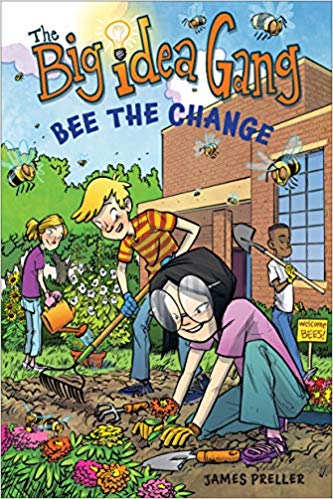
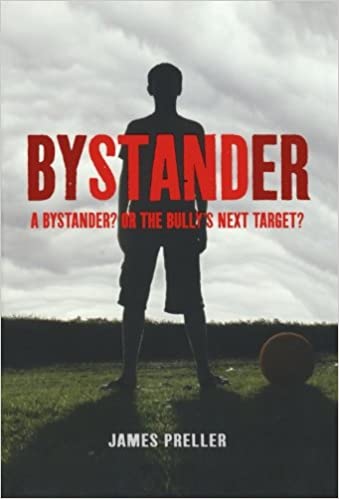


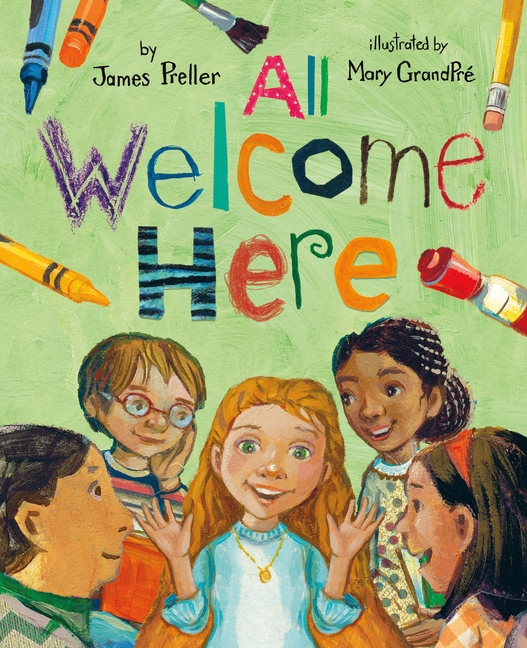

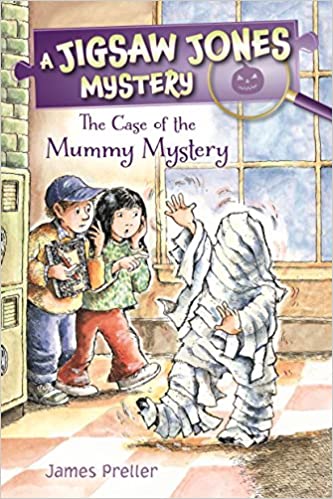
THANK YOU!
–
–
–
I go to the library fairly often. My job is one of solitude, of aloneness, and there are times when I just want to be among people. Watch them walk, listen to them talk, see what they are up to.
And the other thing about libraries is: that’s where the books are.
While I usually try to stay current, there are times when — well — it’s nice not to know. Not get hung up on what’s happening out there. The buzz, the trends, the hype, the books that make me think: Why, why, why? The work for any writer begins, primarily, with what’s happening in here. The rumblings of the head & the heart.
I am newly resolved to take ten picture books out of the library every time I visit. Read them, think about them. Be inspired or annoyed.
Here’s three from a recent batch that I particularly enjoyed . . .

–
The great Kevin Henkes does it again. Can he do no wrong? It occurs to me that he’s probably helped by a wise agent and discerning editors who help bring out the best in him . . . while maybe holding off the crummy ideas. Because even Kevin Henkes must have crummy ideas, right? Right?
Oh, God, I hope so.
The book begins:
There are big things and little things in the world.
The text is spare and the illustrations are simple and yet resonant. He’s so good. He has a full page illustration of pebbles and it could break your heart. It’s a small miracle in a book full of them. Somehow Henkes embues heart and soul into everything he does, that’s what I love about him.
–

–
But for this book, it’s the Voice that I so admire. He simply strikes a tone — kind, knowing (without being a know-it-all), gentle and wise.
This is a beautiful, lovely book.
–

–
Confession: I love Audrey Vernick. She’s my pal and she’s the greatest. If you don’t like Audrey, then you are dead to me. It’s that simple. But: Confession II: I don’t love everything she’s ever done.
Besides writing solo, Audrey has successfully teamed up with Liz Garton Scanlon, who is such a fine craftsperson with the soul of a poet. A writer’s writer. They made this book together.
And for me, this might be their best book yet. It’s expertly crafted and takes place in a world that will be instantly familiar to young readers.
It begins:
Room 107 has a cockatiel. Room 108 has a chinchilla. Even the Art Room has a bearded dragon!
[Writers: Not the rule of three, the comfortable pattern that readers enjoy.]
But in Room 109, Arlo’s classroom, there is a plant. A mostly green, hardly growing, never moving plant.
–

–
Again: the Voice here is unerring and the story unfolds with (mostly) realism and calm and great affection for Jerry (that’s the name of the plant).
Question: Is Voice the single most important aspect of a children’s book? Maybe yes.
Warmly illustrated by Lynnor Bontigao.
–

–
I’ll be honest. I am sick to death of overt message books. So obvious and pedantic. So adult-centered. And yet, of course, there’s nothing wrong with signals. Every story sends signals, embedded with values. So it becomes a matter of craft. Of art. How do you send the message without, you know, hammering someone over the head with it? So that maybe when it comes, you didn’t completely see it coming?
But wait.
First: The illustrations in this are tremendous. The colors rich — not cartoony — and not too vibrant. Carson Ellis is very, very good. You know instantly that you are in good hands.
–

–
There’s so much art and skill in how this book is put together. It begins with a single-page illustration of a window, a sky, some trees, two birds. The next page is a double spread: a few homes, more trees, and small (but centered) a mother and child about to take a dog for a walk. No words yet.
(I guess it really isn’t about a kitten!)
And then, whoa, the title page. Cool.
It begins:
This story is not about a kitten.
Turn the page, close up of a kitten cowering under a parked car:
A kitten, hungry and dirty, scared and alone, meowing sadly, needing a home.
The story builds cumulatively as the different members of the community step forward and come together in compassion, and affection, and common decency.
So, yeah, the message does come and it is pretty straight-forward. But how we get there, Dear Reader, that’s the difference.
–
This story is about the
stopping
and listening,
the holding
and bringing,
the offering
and asking
and the working together
it takes, sometimes, to get there.
–
An absolute marvel of a book.
–
–
My local newspaper, The Albany Times-Union, just ran a feature article about me.
Yes, I find that vaguely horrifying but also a good thing, I suppose.
It’s nice to be seen.
It’s funny, in this business people will commonly say things like, “If this book reaches just one kid, impacts just one child, it’s all worth it.”
And I always think: Yeah, no.
I’d like to reach a lot more than that.
Articles like this help.
Thank you, good folks at the Times-Union newspaper for making this happen. Just one question: What’s a newspaper?
Ha, ha, ho. Sorry, that hurts.
Naturally, it took me 48 hours before I could actually force myself to read Jim Shahen’s piece. Today I wrote and thanked him for making me not look too much like a total blithering idiot. Some writer!
Anyway, perhaps my out-of-town fans will enjoy reading this . . .
 His most recent work, the middle-grade mystery-thriller “Exit 13: The Spaces in Between,” came out at the end of July. “The Spaces in Between” is the second installment in the “Exit 13 series” (Preller describes it as a hybrid of “Schitt’s Creek” and “Stranger Things”) which tells the story of siblings Willow and Ash McGinn. On a family vacation, they’re forced to stop at the Exit 13 Motel where spooky mystery surrounds the business and its employees. Various confounding events to keep the family from checking out and resuming their trip, forcing the McGinn kids (and their goldendoodle Daisy) to get to the bottom of it all, lest they stay stuck at the Exit 13 forever.
The quick-paced, supernatural series is a tonal departure from “Upstander,” the book Preller released immediately preceding “Exit 13.” That one deals with the heavier issues of having a sibling struggle substance abuse and being a participant in bullying. For Preller, being able to explore different genres, themes and difficulty levels has been crucial in enabling him to sustain his writing career.
“I published my first book in 1986; I was 25 then, and I’m 62 now. I’ve spent more than half my life as a published author,” said Preller. “It’s kind of a lot, when you think about it. I’m a little unusual in the breadth of my work. Whatever memo there is about branding yourself, I missed it.
“The master plan, to the extent that I have any control over it, is to write quasi-literary middle-grade novels, but also have something more commercial for mass-market release,” he continued. “I’m a survivor, I just keep scrambling around and I’m fortunate to keep coming up with new material.”
A Long Island native, Preller was drawn to children’s literature shortly after graduating from SUNY Oneonta in 1983. Upon graduating, he moved to New York City and waited tables at Beefsteak Charlie’s to make ends meet while seeking lofty literary goals.
Soon after, he got a job at Scholastic and his professional ambitions took a turn.
 “I liked to write poems and took myself very seriously, but poetry wasn’t going to pay the bills at all, plus, I wasn’t very good at it,” he recalled. “I got hired as a junior copywriter at Scholastic and I saw ‘Where the Wild Things Are,’ I realized what a kids’ book could be: anything. A world of possibilities opened to me.”
In 1986, he sold, wrote and published his first book, the picture book “Maxx Trax: Avalanche Rescue” about a truck that takes action when an avalanche threatens to destroy the energy station and imperils his family.
“Maxx Trax” eventually sold 1 million copies and Preller’s writing career was underway. He left New York City for the space to start a family in a more affordable climate here in Albany County. From a work standpoint, Preller’s output was varied, writing a mix of early readers and film adaptations — “Space Jam,” “The Iron Giant” and “Godzilla” — for Scholastic. From 1998-2007 or so, he struck gold with the 42-book “Jigsaw Jones” series. Since then, Preller has balanced the lighter, preschool-and-elementary-aged material with books that reflect more serious themes.
 If there’s a throughline from “Maxx Trax” to something like “Upstander,” it’s that Preller tries to base all his work in reality. For his first middle-grade novel “Six Innings,” he relied on his own family’s experience with pediatric cancer as a reference. To add verisimilitude to the mountain hiking-based “Blood Mountain,” he regularly corresponded with a park ranger in Lake Placid. Even “Maxx Trax,” has a real-world connection: Maxx, like Preller, is the youngest of seven siblings.
“Every book is different and has its own challenges,” he said. “A lot (of the interest in mid-grade literature) was my own children getting older and wanting to write some things with a little more depth and grit in their content. I can go into deeper things than I can with ‘Exit 13’ or (the spooky story series) ‘Scary Tales.’
“I tell kids when I speak at schools, that even if you aren’t writing about a human, whether it’s super-powered trucks like Maxx Trax or writing about a dragon or a wombat, you’re still drawing upon your own emotions and experiences,” Preller added.
With the new “Exit 13” out in stores, Preller is now looking ahead. He has four more books under contract — a middle-grade novel dealing with a student-athlete coping with post-concussion syndrome and three picture books — that will keep him busy well into next year. And there’s another idea or two percolating for beyond then.
If Preller has it his way, he’ll sustain this level of activity for years to come, and hopefully continue inspiring kids to read.
“I’m 62 and live in a town with a lot of state workers who are retiring,” he said. “Do I want to still be publishing new books at 75? Absolutely.
“I have no ideas or high hopes when a book comes out and I’ve learned to let go of the outcomes,” Preller continued. “I’m very aware that this is entertainment and I just want to give the reader the best possible experience, so they’ll go, ‘Oh, I’ll read another book.’ ”
–

–
–