Tag Archive for James Preller

When the Video Guys Came Over

Dan and Ernie from Spoken Arts Media stopped by the house last week to film moi in a brief video segment. Spoken Arts creates audio and video adaptations of children’s books, which they sell in DVD form to the educational market. Amid their list of high-quality books and authors (Jan Brett, Patricia Polocco, Eve Bunting, more), Dan and Ernie planned to feature A Pirate’s Guide to First Grade. To make their product, Dan hired a professional actor to read the book, collaborated with illustrator Greg Ruth, and endeavored to film a brief segment with me, in which I’d introduce the book to young readers.

For your reference, here’s the Spoken Arts catalog.

My first instinct, I must admit, was this: “Well, no.” I’m not comfortable with that sort of thing. But I knew I had to do it. So after dodging Dan for a couple of months, we finally set a date. Dan told me that I had to write an introduction to the book, something about myself, the creative process, my inspiration for the book, whatever, and then I’d say it to the camera. No more than two minutes long.

“Can’t I just wing it?” I asked, lazily.

“Um, not a great idea,” Dan told me.

On the day before filming, I sat in the waiting area while my son, Gavin, took his weekly guitar lesson. I grabbed a piece of paper from a stack on the table and jotted down some quick thoughts.

Can you read that? I guess not. It’s upside down. Here’s a closer look at a detail.

Remember, please: This is scribbling on a scrap of paper while my middle schooler plays guitar. Just trying to get some primitive thoughts on paper. Even the handwriting’s pretty rough:

I was alone in my back yard — and yet [not] alone. Because I was living in an imaginative world of my own devising. I was the pitcher with the bases loaded, talking to myself, telling myself stories. It’s when I first learned, I believe, to become a storyteller, and later, a writer.

Here’s another close-up from that messy first draft, or sloppy copy. Almost all of this got chucked except for one sentence (can you guess which one?):

In the end, we are celebrating fictional worlds, the make-believe, the realm of the imagination where all is possible. The world between our ears. The world of books. So it’s important to me to end the book that way, where Red, in effect, trades our fiction for another — the world of make-believe . . . for a book!

Next morning, an hour before Dan & Ernie were scheduled to arrive, I printed out a cleaner, leaner version. Sometimes going to a computer can be a mistake for writers, because the result looks finished. All neat and typed, much more polished than those scratchings on looseleaf. Don’t be fooled by appearances, Dear Writer, there’s still more work to do.

Leaning against the bookshelf, I shared my draft with Dan and Ernie. They listened while I read. Made comments, suggestions. They taught me some things about writing for the camera, and clarified how my piece fit into the overall DVD package. The last line needed to lead directly into the heart of the DVD, which was the book itself. While they twiddled knobs and frowned at window glare, I scurried downstairs to write and print out a revised draft.

The dynamic was interesting, because I was the face, speaking for myself and my book, but I was also working for Spoken Arts. They were the ones investing time and money into this product. So I tried to give Dan and Ernie what they needed, while at the same time stay true to myself (whomever that might be on a random Tuesday).

Quick example: At one point, Ernie suggested that I go with a line that read, “In A Pirate’s Guide, I captured that childhood experience . . . .”

I paused, asked, “Does that sound arrogant? A little presumptuous? I’m not sure I can say that.”

We agreed to change it to, “In A Pirate’s Guide, I tried to capture . . . .”

We filmed using a teleprompter, and Ernie input the text. We continued to edit from one read-through to the next, debating details, noting where I got tripped up, until by the fourth attempt I rendered a  satisfactory complete take.

Watch: The segment begins with my back to the camera. I am typing at the computer, Dan says “Action!,” I swivel in my chair, smile feebly at the camera, and say . . .

–

Hi, I’m James Preller, and I wrote the book you’re about to see.

I guess you could say that I’m a professional daydreamer.

I have vivid memories of playing alone as a little boy, the youngest of seven children. I used to fight imaginary villans and create epic battles in my living room, hurling myself into the sofa, throwing mighty left hooks.

Sometimes I’d sprawl out on the floor with my crayons to draw pictures.

Most often, I’d go outside to throw a baseball against a pitch-back, imagining myself as a big league pitcher going against the game’s greatest hitters.

I was alone in my backyard — and yet not alone. Because I was living in a make-believe world of my own creation. I was the pitcher with the bases loaded, the pirate forced to walk the plank, the hero in the darkened alley.

All the while, I was telling myself stories, living in an imaginary world, and learning how to become a storyteller.

In A PIRATE’S GUIDE, I tried to capture that childhood experience, to celebrate the power of the imagination. It is a land of make-believe, a world of fantasy where anything is possible.

It is the world between our ears.

Let us now see how one lad uses his imagination, and discovers treasure, in A PIRATE’S GUIDE TO FIRST GRADE.
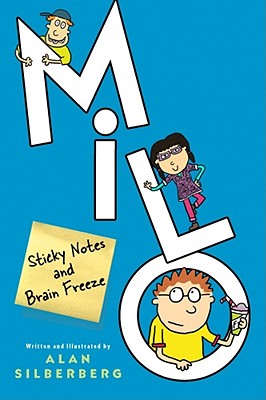
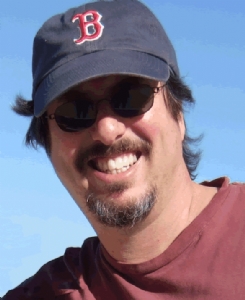
James Preller Interviews . . . Alan Silberberg, author of “MILO.” Part One (that’s right, there are “parts!”)

Readers can connect with Milo, by Alan Silberberg, in very different ways. I suppose that’s true of any book, we all bring our disparate selves to the text, but it seems especially true for Milo, a story for middle grade readers that embraces broad goofy humor on one end, and authentic, emotional grief on the other. Actually, that’s not true. Those qualities aren’t on separate ends, but are intermingled throughout. It’s a book where a boy can sneeze on someone’s neck in class, then return home to a house of fog and loss, where no one has quite figured out how to move forward after a death in the family. For me as a reader, it wasn’t the humor that hooked me. It was the humor combined with real emotional depth.

That rare thing in children’s books: a boy in full.

After I read Milo, I wanted to meet Alan because I sensed that he and I shared things in common. So I contacted Alan through his website and requested an interview. There was much I wanted to discuss, and our conversation flowed so naturally, that our Q & A went on slightly longer than The Reagan Years. I decided to break it up into two parts. I’m indebted to Alan for his time and patience and for the care he took in answering my questions.

(Whew. I’m relieved he’s not a Yankees fan.)

Alan! Hey, thanks for stopping by all the way from Montreal. Which is still in Canada, right? Could you please leave the soggy Uggs by the front door? Yeah, the moose, too. That’d be swell.

It’s true, Montreal is still in Canada. But you know, I’m from Boston (Go Red Sox!) so my heart — and shoveling technique — is from New England.

I gather that you didn’t initially set out to tackle this huge, daunting topic –- the death of a parent.

You are so right! When I started writing this book my goal was to write a pretty silly book that would include my cartoon illustrations. What started as a goofy look at a 7th grade kid starting a new school turned into something much deeper once I realized I had my own story to tell.

I know that this book grows out of your own personal experiences. Could you give us a little background on that?

My mom died of brain cancer when I was nine years old. It happened really fast too. It was a terrible time in my life and I guess I have always identified with that lost boy whose mother suddenly went away. In my family “death” never really got discussed so after she died we all just did our best to pretend we were okay, which on one level was comforting because I didn’t have to really deal with the grief and loss. With my sense of humor intact, I moved on from that life-altering event — but always dragging along a sad piece of me like a shadow.

“A sad piece of me like a shadow,” that’s nice. I just finished a young adult novel that grapples with some of the same feelings, where things unsaid are more important than what’s spoken. But I don’t suppose you’d let me steal that “sad piece of me” line, would you?

Be my guest. Just buy me an iced espresso some time. And a cookie. Chocolate chip is always nice.

At one point in the book, Milo says, “I miss a dinner table that doesn’t feel lopsided,” and I completely understood that line.  I mean, you got me right there. My oldest brother, Neal, died of AIDS back in ’93. And after that, I often said that our family became like a ship that listed to the side. The ballast was off, you know. We never sat in the water quite right after that.

I think that’s what loss does to a family — even the most messed up families are a balanced whole. And the loss of someone we love just throws that balance totally off. And I think it doesn’t matter at what age we lose someone — that loss sets us adrift. I like your boat metaphor.

You attempt to do something that’s not at all easy –- balancing some traditional, goofy boy humor with a sensitive, heartfelt story about deep, deep loss.

Once I knew that the silly story I started out to write was drawing deeper from my life I made the decision to stay true to who I was back then. Life was suddenly sad — but I was still a funny kid. I think it’s important to have a balance in a story like this because life isn’t all one thing or another and a story about loss can also be a funny story. Of course the cartoons help to give the book a lighter tone, but to be honest, some of the cartoons are quite poignant and a bit sad too.

I have to say, I’m often frustrated when I encounter these limited notions about “what boys like” and, consequently, “what boys are and can be.” So we see books with the goofball stuff –- with varying levels of originality — but not very much in the way of emotion. Because I guess there’s this idea that boys don’t “do” feelings. And perhaps they don’t, I don’t know. But at the same time: it’s real, it’s true, this stuff happens to actual boys. As I’ve said before, it can’t all be farts and firetrucks.

I know what you mean. I hear it all the time that a book is a “girl” book or a “boy” book and sometimes I think that’s just marketing. Whether boys, or girls for that matter, will be drawn to Milo is out of my hands. I have gotten wonderful feedback from kids who have loved the book and have had the experience of knowing first-hand that the book has helped kids dealing with loss. At the other end of the spectrum — I know kids who have read the book because they love the cartoons and think the story is “real” but still made them laugh . . . and made them think. At the end of the day I want Milo to find its way into the hands of kids who like a good story and especially those kids who are ready for the real emotions that I wrote about.

Tell me a little bit about the father. He’s suffering, too, but because we see him from Milo’s point of view, we just get this sense that dad is basically out of it. For Milo, he has to find help elsewhere –- because dad’s not emotionally available.

Milo’s whole family has suffered a loss and though the story is told from Milo’s point of view he experiences his dad as being kind of absent. There’s one cartoon I did where Milo says that he misses his dad almost as much as he misses his mom, because his dad is having a hard time too. I think that’s what can happen when one parent dies. The child can lose two parents.

There are a few helpful adults in Milo’s world, and I think you handle them realistically. They don’t swoop in and save the day. In fact, well, nobody does. Nobody can. But they do help.

I guess it would have been too easy to have some adult be able to make everything “okay” for Milo. But that just isn’t realistic. What I did want to explore though is how Milo learns how to grieve his mom’s death with the help of his older neighbor. She doesn’t make everything right for him but she is the one who opens a door that leads him to say the goodbye he never said. It was a healing part of the book to write for me because I got to be Milo and say the goodbye I never said too. And that all happened through Milo’s relationship with the neighbor character, who was based on one of the moms in my neighborhood who took me in after my mom died.

That must have been a remarkable moment when you were able to hand her the finished book.

It was actually bittersweet because the real Sylvia passed away just after the book came out. I had told her months earlier how she had inspired a character in my new book and she was very happy about that. I was told by her family that they were able to read some of the book to her before she passed and that she was very touched by it.

I’m glad you were able to honor her with that gift of recognition after all these long years. I also really liked Milo’s friendship with Marshall. They are just boys, you know, going to the store, spending their money on junk food, sitting down on the curb, goofing around like a pair of glorious idiots.

And yet at the same time, Marshall is clearly not a total clod. I’m not sure what I’m saying, exactly, other than I think your book respects the complexity of boys –- and as an ex-kid myself, and a father of two boys, I really appreciate that.

Thanks. I really liked creating the relationship between Milo and Marshall. It just felt right that these two would know each other and get along so well. Marshall is a bit left of center, but I was hopefully not writing a geeky character, just someone who lives life in his own unique way. Milo is more of an internal guy and Marshall is an extrovert — so the combo really works. Thinking back to the friendships I had back at that age and being the father of a son who just lived it also helped me channel their relationship.

Alan, let’s pick up this conversation on Wednesday. I assume you can stay over, right? You can sleep on the cot. In the closet. With the Uggs.

And the moose.

PLEASE COME BACK LATER THIS WEEK FOR THE THRILLING, DEATH-DEFYING CONCLUSION OF THE ALAN SILBERBERG INTERVIEW.

CLICK HERE AND BE MAGICALLY TRANSPORTED TO PART 2.

Fan Mail Wednesday #103 (The Video Edition!)

Any author can answer a letter the old-fashioned way — that is, pay their hired assistant Roxanne to stuff an envelope. But a video letter? That takes someone who can’t actually type!

This is for you, Ms. Aberman’s class at Edgewood Elementary in Scarsdale, NY. Thanks for your swashbuckling ideas, me hearties!

Ms. Ableman wrote:

Thank you for visiting our school and sharing how you became a writer. Your visit reinforced my message to the students that writers use things that really happened in their life to them with their writing ideas for books. Sharing your personal experiences demonstrated how drawing from personal experiences really makes your writing come to life.

As promised, my class came up with some ideas for your next pirate book. We hope you enjoy reading the ideas as much as my class enjoying coming up with the ideas for the next book. We can’t wait to read the next pirate book adventure.

Thank you again for allowing us to have a peek into your world as a writer and we look forward to many more James Preller books.

Very truly,

Ms. Aberman

Regarding the video response: I really am sorry for mangling the pronunciation of any of your names. Apollonia & Kasumi, I’m looking at you! I’m just really poor at that stuff, partly because I live under a dome in Delmar, NY. Also, I’m not skilled at video editing and, frankly, can’t spend too much time on my movie-making career — better to just blast it out. Forgive me. I am now going to walk the plank like the scurvy dog I am.

But first, this video message . . .

You need to a flashplayer enabled browser to view this YouTube video

COMING MAY 1st: “The 2nd Annual Hudson Children’s Book Festival” — Highly Recommended!

I don’t know how to say this except for . . .

You should go. YOU should go. You SHOULD go. Really, you should go.

It’s a great event. And an absolute privilege that it’s up in our neck of the woods (in my case, maybe the collarbone). If you value reading, if you want to send that message loud and clear to your children, if you want to make that reading/writing connection, if you want to have fun . . . come, come, come. Where and when else in your entire life do you get this opportunity?

It’s FREE. There will be more than 100 authors and illustrators — and not just the hacks! We’re talking hugely popular folks, rising up-and-comers, cagey veterans, with a range of titles of interest to preschoolers up to young adults.

You want names? Here’s some names: Aimee Ferris, Alan Katz, Alexandra Siy, Anita Sanchez, Ann Haywood Leal, Ann Jonas, Anne Broyles, Barbara Lehman, Bruce Hiscock, Charise Harper, Da Chen, Daniel Mahoney, Danielle Joseph, Daphne Grab, Donald Crews, Emily Arnold McCully, Eric Luper, Eric Velasquez, Eve. B. Friedman, Gail Carson Levine, Jacqueline Rogers, Jan Cheripko, Janet Lawler, Jennifer Berne, Jo Knowles, John Farrell, Kate Feiffer, Katie Davis, Kyra Teis, Karen Beil, Marc Tyler Nobelman, Mark Teague, Maryrose Wood, Megan Frazer, Melanie Hall, Michelle Knudson, MJ Caraway, Monica Wellington, NA Nelson, Nancy Castaldo, Nancy Furstinger, Neesha Meminger, Nick Bruel, Olugbemisola Rhuday-Perkovich, Pam Allyn, Peter Marino, Doreen Rappaport, Richard Michelson, Rose Kent, Seymour Simon, Siobhan Vivian, Suzanne Bloom, Sylvie Kantoroviz, Thomas Locker, and many, many more.

Seriously, it’s a staggering array of talent — with books for every kind of reader, of every age.

Do you know what else is FREE? Every kid who comes will be handed a free book, many of them signed by the authors. There are more than 2,500 books, many different titles, waiting for young readers. I spent a couple of hours signing labels the other day — WORST AUTOGRAPH EVER! Horrid southpaw scrawl, sigh.

On a personal note: We see a lot of mothers at these things. Where are the fathers? When we talk about the reading gap, and how boys are falling behind in literacy skills, how Johnny doesn’t like to read, I keep coming back to one basic thing: These boys need to see Dad reading. As fathers, it is the most powerful message about reading that we can send our children.

We open a book.

We share our enthusiasm.

We model the fine art of sitting in a chair and getting lost in a book — any book, of any kind.

We show them that reading is a Guy Thing.

So come on, dads, bring the kids to the Hudson Book Festival! Show ’em that you value reading.

ADMISSION IS FREE. FOR FULL DETAILS, CLICK LIKE YOU MEAN IT.

Hot News:

If you’d like to hear me, along with event coordinator Lisa Dolan, discuss the Festival on the WAMC Roundtable Show with Sarah Laduke, click here and hear us roar!


This Week’s Greatest Things (yes, plural!) Ever

You know those annoying, pestering people who have to share everything? Every great experience they ever had, they want you to have. They are constantly pressing books into your hands, making you stop to look at some stupid lake, insisting that you try a specific dish at a new restaurant, or listen to a song rightthisverysecond, or keep hounding you about a movie you absolutely have to see.

Confession: I’m one of those people. So here’s a round-up of some of the things I needed to share.

* My oldest boy, Nick, age 16, is a huge fan of The Office. We watched the wedding episode together last week. In it, Dwight wears his Three Wolf Moon T-shirt.

The shirt has become a cultural phenomenon, so as a surprise I bought it for Nick. And for a brief few moments, I became the coolest dad on the block (it’s a short block). As I type this, the shirt is currently #2 in clothing sales on Amazon, with 1,508 mostly hysterical reviews.

* At Children’s Book Day at Sunnyside, I sat next to author Charise Mericle Harper. She writes the Grace books. I got a really good feeling about her; she seemed real, not the least bit phony. I think we both have eight-year-old daughters. I’m charmed by her website (added to my blog roll), the creativity and humor. Her blend of hand-lettered text and illustration reminds me of Lynda Barry — and that’s a huge compliment. Anyway: Please read this about a bookstore signing gone bad, then good! It’s freakingfantastic.

* Last night, members of Monty Python celebrated their 40th anniversary. Have you ever asked yourself: Self, what are the 20 Greatest Monty Python skits ever filmed? Here’s a contender:

You need to a flashplayer enabled browser to view this YouTube video

* I recently discovered the joys of Debbie Ridpath Ohi’s Inky Girl blog (aptly subtitled: “Daily Diversions for Writers”). For your convenience and mine, I’ve posted the link under “Random Pleasures” on my blog roll. Debbie does many things well, but one of my favorite features is her “Comics for Writers” series.

* It takes a certain kind of typography nut/cheese freak to enjoy this site. Link sent to me by my old pal, Ellen Miles.

* Imagine that you lived in a movie. Who would be the most fearsome movie teacher of all? This site proposes 13 strong candidates. Can you think of any others?

* Lastly, I’m very excited because I just bought two tickets to see one of my all-time musical heroes, the great Ray Davies, “rock’s most literate songwriter.” I’ve never sat down to try to figure out  my list of Top 100 Songs of All-Time, and I probably shouldn’t, but I have to believe this tune would be near the top:

You need to a flashplayer enabled browser to view this YouTube video

A couple of other easy picks would be “To Live Is To Fly” by Townes Van Zant, “Girl from the North Country” by Bob Dylan (which Liam Clancy performs beautifully, here — with such depth of emotion, regret, loss: I need you to hear it and love it rightthisverysecond ) . . . and, hey, wait a minute! You can’t trick me into this impossible task. My brain would explode.