Archive for December 17, 2009

James Preller Interviews . . . Deborah Kovacs, Part Deux

If you missed Part One of the thrilling Deborah Kovacs interview, what are you doing here? Catch up by clicking here, then come on back.

Hum-de-dum, de-dum-dum.

Everybody else can watch this 40-second video while we wait:

You need to a flashplayer enabled browser to view this YouTube video

So, tell me, DJ, what makes a good interview from the standpoint of the interviewer. The research, the questions, the tone? What were your goals when you went into those interviews?

I wanted to connect in my own head and then in the readers’ heads with the real people behind those beloved works — to briefly see the world and their process through their eyes, and so, hopefully, to help their readers gain insight into both process and result. I am still very interested in the point of tangency between creators and their creations.

I think for me, it’s so important in interviews to stay alive to the moment. You know, to hear what’s being said and to respond. That’s why I’m disappointed by so many blog interviews, which are obviously just somebody typing out answers to a list of questions. Which is fine and good, just don’t call it an interview.

What I love about writing is that well-chosen words can retain their liveliness even centuries after they are first put down.

Oh. I guess what I love about writing is the cash money bling. But we’ve always been different that way!

Since last we worked together, you’ve written many books for children, often based on your passion for ocean life. Any particular favorites?

I have written a lot of books, both fiction and nonfiction, many of which draw upon the natural world. Years back I wrote a novel called Brewster’s Courage, a co-creation with my friend, illustrator Joe Mathieu, about a black-footed ferret who rides his bicycle from South Dakota to Louisiana to pursue his  love of Cajun music. I’ve always had a soft spot for that book.

Can we talk about that a little bit? I mean, here’s a fine book that you’re immensely proud of, and now it’s out of print. It can be a disappointing profession, can’t it?

That was something I had to learn to accept. It happens to all of us. But whenever I engage one-on-one with kids through that book, or any of the others, really, it’s still a huge kick. My reasons for writing it and the reaction I get to it have always been consistent, so I try to get joy from the first-hand experiences and try not to let the bigger picture cloud my thoughts.

My personal coping strategy is to I cry myself to sleep, muttering “It’s not fair, it’s not fair.” But whatever works for you! Tell us more about some of your titles.

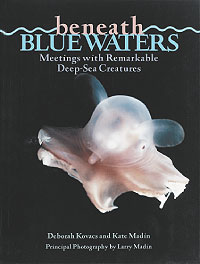
Another book I loved writing was Noises In the Night: The Habits of Bats, for which I spent some time in the jungle in Panama with a group of amazing tropical bat researchers.  I wrote several books in conjunction with Woods Hole Oceanographic Institution, including one about exploring the deep ocean, another about the crazy glow-in-the-dark jelly animals that look like fireworks and nightmares (that one was called Beneath Blue Waters: Meetings with Remarkable Deep-Sea Creatures, co-authored with Kate Madin), and another about what it’s like to go to sea on a research cruise.
What’s so compelling about ocean life, anyway?

So unexplored (estimates vary but it’s commonly stated that less than 10% of the ocean has been explored). Imagine that. Central to earth’s climate. The source of life on earth. The greatest untapped sources of energy. Shipwrecks. Doubloons. Those incredibly weird fish that have fishing rods growing off the ends of their noses.

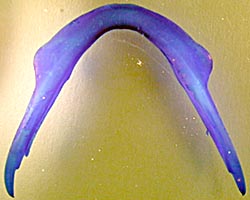
Not to mention some other fantastic ones like Opisthoteuthis agassizii, also known as “Dumbo.”
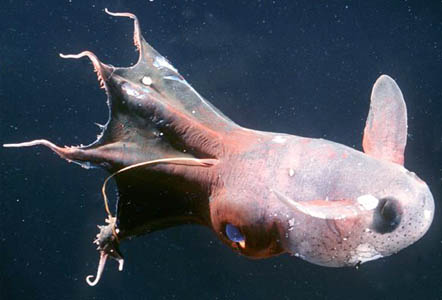
And probably my all-time favorite, Vampyroteuthis infernalis (loosely translated as “Vampire Squid from Hell”).
That’s disgusting, DJ, you’re like totally grossing out my Nation of Readers. So what are you writing right now?

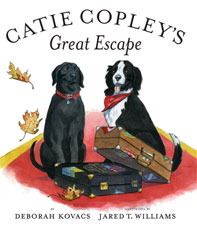
My two most recent books channel the brain waves of a dog who hangs out at the Copley Plaza Hotel in Boston (Catie Copley and Catie Copley’s Great Escape). I’ve got two other projects underway, one a memoir, one a poetry project. They may converge at some point, or the memoir may spend its energy and then make room for something else.

There’s also a novel that’s been “in development” for a very long time. I’ve got some nonfiction ideas that I’m pretty excited about as well. I’m also READING like crazy, piles (virtual: Kindle) of manuscripts and books every week. And on the “side” I’ve also been reading everything Dickens wrote. This will, of course, occupy me for the rest of my natural born days. How did he do it?

He drank a lot of Red Bull. But it’s surprising: Dickens keeps coming up around here. Lewis Buzbee mentioned him in an interview, then Carmen Deedy sang his praises, now you. Who would have figured that he’d be today’s “It” boy. What have you learned from him?

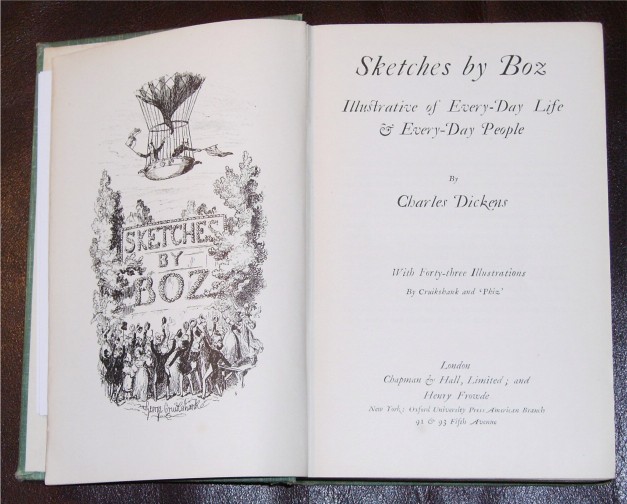
I’ve become immersed in his characterizations, both those in his novels and those in some of his earliest published work. As an exercise and perhaps eventually something more, I’m experimenting with character sketches inspired  by Dickens’ Sketches by Boz, his first published book.
I understand that you are now Editorial Director of Publishing at Walden Media. What in the world does that mean? Did they give you a nice chair? Free office supplies? What?

REALLY nice chair. Office supplies. Popcorn. Filtered water. Occasional Pelligrino. Our publishing group is a small division of the film studio Walden Media, which is based in Los Angeles, though our group is based outside Boston. I am Editorial Director of the group, so am responsible for the acquisition and publishing of a small but growing list of between 6-10 books a year mostly targeted to middle-grade readers. We worked on a joint-venture basis with Penguin Books for Young Readers for four years (2004-2008). We published a lot of great books with Penguin, the highlight being Savvy, a first novel by the incomparable Ingrid Law, which racked up a slew of honors and awards, culminating with a 2009 Newbery Honor.

Our movie colleagues are currently developing Savvy as a feature film. Since late 2008, we’ve been in partnership with HarperCollins, where we’re launching a joint imprint called Walden Pond Press in January. Our first book on the list is the heee-larious Cosmic by Frank Cottrell Boyce, who is also the author of Millions and Framed.  It was originally published in the UK, where it was shortlisted for the Carnegie Medal.

Last year, as I recall, you attended some kind of open panel discussion about the year’s best children’s books at ALA. I remember, because you kindly wrote to tell me all the nice things they said about my book, Six Innings. What was that like, sitting in on that process?

Any and all attendees of the midwinter meeting of the American Library Association are welcome to observe the deliberations of a group of librarians who determine the Best Books for Young Adults. They pull together a list of about 250 books, and discuss them all, then winnow down the list to their final selections. Your wonderful book was one of the titles under consideration, and it was a real thrill to hear all the great things they said about Six Innings. I figured you’d want to know what they were saying, so I took notes and sent them to you.

And I appreciated it, believe me. As you know, sometimes the universe seems indifferent to our best efforts. It’s so important to get that validation — even if, on some levels, we must proceed on faith when we don’t get it.

That’s one reason why school visits are really important. And you’ve got to admit, it’s pretty fun to be the “special visitor.”

I know that after a while those trips get old, but there’s nothing like it during the “proceeding on faith” phases.

Tedd Arnold told me that he felt it was important to keep in touch with young readers — what makes them laugh, what makes them tick — especially after his own kids got older. He said, “I don’t want to lose track of their squirmy little reality.” You must have been thrilled when Savvy was named a Newbery Honor Book.

Probably one of the best days of my life. It was such a powerful YES to all of us who believe in the book and in Ingrid Law, in her spectacular storytelling ability. I still get a lighter-than-air feeling when I remember the instant we got the news. I know that many of my friends and colleagues in the children’s book world have experienced such peak moments on more than one occasion, but I bet they would all agree with me that certain special moments are frozen in an amber glow forever.  Having collaborated with you in interviewing so many living legends way back when, it has been a thrill to be part of the team bringing a brand new legend to the world.

Any favorites for this coming year?

I loved The Brilliant Fall of Gianna Z by Kate Messner and Models Don’t Eat Chocolate Cookies by Erin Dionne. Secret Keeper by Mitali Perkins is beautiful as well. Mockingbird by Kathryn Erskine is incredibly moving. I recently read When You Reach Me by Rebecca Stead, and just thinking of it makes the theme song from the Twilight Zone play in my head. On the non-fiction side, I loved Charles and Emma by Deborah Heiligman.

You haven’t changed a bit, Deborah. You still have that same infectious enthusiasm for children’s books. I talk to you and I want to go read something. Where does it come from, do you think? Were you one of those little girls with your nose constantly in a book, dreaming of how one day you’d become an author?

Yes, I was. But the impetus to see myself as a writer as well as a reader goes back to a visit that Sydney Taylor (All-of-a-Kind Family) made to my school library when I was in fourth grade. I can still see her in my mind’s eye.

Reddish hair in an old-fashioned upsweep, long skirt, sitting on a tiny elementary school library chair, bookshelves behind her, awe-struck kids in front of her. I loved the books she wrote, and THERE SHE WAS. REAL.

A nice memory, and important for us jaded, gin-soaked authors to remember. Okay, lightning round. Five favorite children’s authors (note: you don’t need to list me, it’s assumed):

The list roves and changes, but here are current faves.

1.   Ingrid Law because I love the way the people in her books connect with each other.

Could you expand on that thought a little bit?

The central family, the Beaumonts, are outsiders because they have a family secret which is that at the age of 13 each Beaumont comes into a Savvy, a special supernatural power, which has to be brought under control, or scumbled. They are a fiercely loving tribe, who watch out for each other and protect each other from the unkind japes of the heartless folks who surround them. They are shy outsiders, at least at the beginning of the book. But by the end, the family members at the core story learn how to trust others and open themselves up to possibilities of friendship and love.

Thanks. But you still have to finish your list.

2.  Katherine Paterson because I love her dry frankness.
3.  Ann Scott-Moncrieff,  whose out-of-print classic, Auntie Robbo, is a book I reread often for its crisp and delicious characterizations. (JP Note: the entire book seems to be free online, here.)
4.   Madeleine L’Engle because she gives young kids the tools to imagine worlds beyond.
5.   Patricia Wrightson, an Australian author not well known in this country whose Nargun and the Stars was one of the scariest books I’ve ever read.

I heard the new Palin book is pretty frightening, by the way.

Oh, did she write a book?

Don’t you watch “The Late Show” with David Letterman? He’s mentioned it a few times, including some writing tips. Five favorite songs?

You could substitute many Beatles songs for #5, and this list does change, but CURRENTLY any one of these would do at just about any time.

1.  “Waterloo Sunset” by Kinks
2.  “Steal My Kisses” by Ben Harper
3.  “Yellow Moon” by the Neville Brothers
4.  “Moondance” by Van Morrison
5.  “Run for Your Life” by The Beatles

Any favorite websites you could recommend?

I enjoy reading what those in the Kidlitosphere have to say.

It’s late at night, you are sitting peacefully. There’s a drink in your hand and you are rereading a favorite book. What’s the drink? What’s the book?

The drink is Cointreau.

The book is Brat Farrar by Josephine Tey.

Well, DJ, my producer is waving frantically and it looks like we’ve run out of time. I really enjoyed catching up with you. You worked at Sesame Street during the heady Don Music days, wrote a wide variety of books, chatted with the most respected authors in children’s literature, edited manuscripts, worked on movies, on and on — and at the absolute center of everything you’ve done is your love for children’s literature. If not quite fame and glory, it sure looks like a brilliant career to me.

As a parting gift, please accept this 6,000 BTU window air conditioner (with remote!) that typically cools 150-250 square feet — just in time for the holidays!

Sorry, shipping not included.

By the way, here’s a fascinating TED program with Marc Pachter on “The Art of the Interview.” As always, I have a lot to learn.

Fan Mail Wednesday #71

I’m gong to interrupt my interview with Deborah Kovacs — click here for Part One — because “Fan Mail Wednesday” is upon us. Come back tomorrow for Part Two of the interview.

This one isn’t exactly fan mail — it’s more of a note from an old friend. I’ve changed the names for the usual reasons, but I believe the essences remain intact. I have to add that I’ve received 5-6 similar notes about Bystander, filled with stark memories, all from men. It’s strange to hear  exclusively from men, since we all know that women are the primary gatekeepers of children’s literature and make up the overwhelming majority of adult readers. That is: it’s cool (and rewarding) to hear from guys who have that visceral connection to the book.

Hi Jim,

I just finished Bystander today and wanted to let you know how much I enjoyed it. It’s still a real kick for me reading something you’ve written — holding a book, a hardcover, with your name on it. Amazing.

Needless to say, I could “relate to it ” as the kids say (oh wait, we were the kids who used to say that). It captures our home town perfectly. And 7th grade. 7th grade was a really traumatic year for me so your book brought up a lot of — mostly unpleasant — memories. That was the year everyone started splitting off into cliques. By the second day of school it seemed as though all the kids I’d known throughout elementary school were suddenly identifying themselves as either greasers or jocks, or else were being defined by others as “fags” (somehow the word nerd was not popular at that time).

I became a “hippie” — the only one in my grade, so I just didn’t make sense to anyone. My best friend Tommy changed abruptly and became a hellraiser, a mix of both greaser and jock. By the beginning of 8th grade we were not even speaking anymore. The clincher though was when his right-wing friend Chris, who hated my antiwar attitude, tried to get me to fight him — which I wouldn’t do (especially since Chris was a good 50 pounds heavier than me). So Chris basically pummeled me as I walked the half-mile home, unable to get me to fight back, my “friend” Tommy walking along just watching the whole thing. You got that part dead on, the guys just watching, not doing anything to stop it. I’m sure I must have done it too at some point.

I don’t remember any troubled kids with Griffin’s appeal. The top greasers I knew were either sociopaths or psychopaths (take your pick). One, by the way, was Richie K. I recall him once bending my fingers back until I was on my knees. Somehow I avoided getting thrashed, but he beat up a lot of other kids.

I’ll probably read this to my son fairly soon. He just turned 10 so he’s a little young, but he starts middle school next year, so by next summer we’ll read it together. I can absolutely see in him the ability to go either way, bystander or ally. I guess we all have that duality.

Anyway, it’s a real good book and I hope it’s doing well.

Take care,

B.

And in case you missed it last week,

some things never change.


James Preller Interviews . . . Deborah Kovacs, Part One

Back during the Archaean eon, the earth received a heavy bombardment of meteorites.

That’s about when Deborah Kovacs and I first met to discuss co-authoring a book for Scholastic Professional Books, eventually titled: Meet the Authors and Illustrators.

Wait, no, it wasn’t that long ago. Existence back then was not possible for current life forms due to the lack of oxygen, the absence of an ozone layer, and shortages of good, strong coffee. So let’s place this publishing event in 1991. A couple of years later, Deborah and I followed up with Meet the Authors and Illustrators: Volume Two. After that, we became more like Kiss during the solo album stage.

My sections from the previous two books, which concentrated on picture book authors and illustrators, was revised, updated, and recollected along with 15 new profiles for The Big Book of Picture-Book Authors & Illustrators (2001). Deborah went solo and wrote Meet the Authors, concentrating on writers of upper elementary and middle school books (there’s a bunch of sample pages here).

You can find the above titles where used books are sold. And you’d be fortunate, because those books are small treasures, filled with insights from the best artists and writers in children’s literature. For Deborah and I, working on those books was both an inspiration and a perspiration. It’s been a long time since Deborah and I chatted. But watch out, folks, here she comes strolling up my front walk! And guess what? These days she prefers to be called DJ (she’s like Sean Combs Puff Daddy P. Diddy that way — keeping it real).

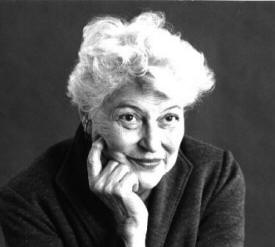
Deborah Kovacs, er, I mean, DJ! So great to see you again. You know, we did a couple of books together, our roles neatly divided, and now I feel forever linked to you. It’s sort of like we went to the 8th grade dance together only to stand at opposite ends of the same gymnasium.

I was the envy of all the girls in my class . . .

Not really us, but should have been.

I think of those interviews all the time. I took the picture book folks, while you profiled authors of longer works, including such luminaries as Jean Craighead George, Katherine Paterson, Madeleine L’Engle, Lloyd Alexander, and many more.  Who were some of your favorites?

I think of those interviews all the time too. I did 80 interviews in all — really all the greats of that time (early 1990’s). Along with those you mentioned, I often think of the conversations I had with Joan Aiken, Lynn Reid Banks, Virginia Hamilton, Elizabeth George Speare, really everyone involved. They were all so friendly, accessible, interested in the project, and above all generous. Every one of them a hero(ine) of mine, then and now.

I agree. I only intensely disliked one very famous author. Considering the ratio, that’s pretty good.

My ratio was the same. But I still enjoy that author’s work, and realize that it’s not an author’s responsibility to be personable.

It was such a privilege to talk to those people. I keep remembering snatches of advice, different comments that authors or illustrators made. That must happen for you, too. Can you think of any examples?

I was just thinking this morning about Jerry Spinelli telling me he wrote his first novels during his lunch hour at his job at Rodale, shutting his office door for one hour every day.

I remember Kevin Henkes almost sheepishly explaining that he could never get his young children down for a nap. So he’d drive them around in the car until they dozed off. Then he’d park, pull out a notebook, and write. When there’s a will, there’s a way.

I remember Elaine Konigsburg telling me that “the difference between being a writer and being a person of talent is the discipline it takes to apply the seat of your pants to the seat of your chair and finish.”

Very true. Sooner or later, the butt has to find the chair.

I remember William Armstrong explaining that central to his method of cogitation was the fact that he wrote in pencil and kept his pencil sharpener at the farthest possible place in his house from his workroom, so he would be forced to get up and walk around when he was thinking of an idea.

Oh, I like that. Charlotte Zolotow once gave me a phrase that I think of all the time. She was trying to answer that impossible question, where ideas come from. She talked about how they came to her when she was walking around, doing the dishes or any manual task, and said almost as an aside: “When you’re thinking that you’re not thinking.”

Even though I’m not an illustrator, I sometimes brainstorm by drawing pictures. There’s also a huge rock out in the field next to my house that has helped spark more than one good idea (you sit on it and do nothing at all, and usually, “something” comes).

Man, I’ve got to get one of those idea rocks. The truth is, I’ve never been good at sitting and thinking. It always seems to flow better when I’m involved in something physical — when I’m doing other stuff. You know what’s funny? I often think of a reference that author Phoebe Gilman said on this topic. She compared it to that classic Sesame Street skit, featuring Don Music. He bangs his head on the piano in despair, “Oh, I’ll never get it right!”

You need to a flashplayer enabled browser to view this YouTube video

This could start a whole other flood of conversation, but did you know that I started my career at Sesame Street, in the days when Don Music (and his gang) were in full force?

Was that you? I thought it was Beaker.

Beaker was on the Muppet Show, silly. Though he had some close relations on Sesame Street, specifically the Martians and the Two-Headed Monster. I was lucky enough to work at Sesame Street in the early days when all the original Muppet folks were around. Jim Henson has been a lifelong inspiration to me — really to everyone who ever worked with him, I bet.

That must have been a fantastic experience for you. I once worked at a Beefsteak Charlies, so I can relate. I mean, all the beer, wine, and sangria you can drink — that’s a certain kind of genius and the kids loved it, too. Anyway, I’ve always wondered, was Oscar really such a grouch? Any truth to the rumor that Don Music was forced to retire due to post-concussion syndrome? And is it also true that Bert and Ernie couldn’t stand each other off-set?

Those are all nasty, scurrilous rumors. I believe the folks who put this show together were (and are) among the world’s greatest creative and positive forces for the good of children. There are a couple of generations of people walking around the planet who had the benefit of this influence at a very early age. Of course, one could argue that with this great early influence, the world should be in better shape than it is.

Hey, I blame this whole Twilight thing on The Count. The resemblance is uncanny. Same nose, same eyes.

Anything else from those wonderful interviews you’d like to share?

I remember Madeleine L’Engle’s impressive presence, her height, resonant voice and sympathy. I remember Virginia Hamilton talking about how tortuously difficult it was to start writing a new book after M.C. Higgins the Great won the Newbery. Most of all, I will never forget Katherine Paterson describing her anguish at knowing she had to write the scene in Bridge to Terabithia when Leslie was going to die. She put off writing the scene as long as she could, and it broke her heart to have to finally put it in writing, because the story was based on an event in her son David’s childhood.

Also, it’s such a dramatic moment, pulling on those heartstrings, it had to be handled in exactly the right way. And she nailed it.

Many years later, when working at Walden Media (where I still work today)  I got to know Katherine and David and the rest of their family pretty well as we made the film of “Bridge to Terabithia” (on which David was a screenwriter and producer). My colleagues and I were so proud to support the family’s perspective as the film went through the inevitable grind of screenplay development.

I saw that movie! What a daunting task, to take a truly beloved, revered book and turn it into a film. You really don’t want to screw it up.

You just can’t.

Gosh, I wish some publisher would come along and ask us to write one of those books again. There’s been a whole new crop of talented folks.

Word.

——-

Sorry, faithful reader, but this concludes Part One of our interview with Deborah Kovacs. Scroll through to find Part Two when DJ talks about her own writing, bizarre ocean creatures, Charles Dickens, Sarah Palin, ALA Midwinter, her work at Walden Media, Ingrid Law (Savvy), and much more — including a list of some of her favorite books from 2009.

Okay lazybones, if you prefer, click here to leapfrog over to Part Two.

Pretty Lights on the Tree, I’m Watching Them Shine

Sometimes you can hear a song a hundred times and on a random afternoon it will hit you in a new way. Whap, right upside the head. As a huge Bob Dylan fan, that happens to me frequently, where I’ll suddenly appreciate, say, Dylan’s piano technique on “Blind Willie McTell” — and need to hear that song every day for weeks.

That happened to me recently with “Christmas (Baby, Please Come Home),” written by Ellie Greenwich, Jeff Barry, and Phil Spector.

Specifically, these simple lines:

Pretty lights on the tree
I’m watching them shine
You should be here with me

Those lines have all the qualities of a successful haiku except for the syllable count — that attention to concrete detail, the lean clear prose (no purple or wasted words), and a darting movement from exterior, objective reality to an interior emotional state, where “outside” and “inside” become linked through juxtaposition.

I admire lines that can be as unadorned as, “Pretty lights on the tree/I’m watching them shine.” I love how that straight description conveys an inner depth (I’ve talked about that quality before, most recently here). I think it’s difficult to pull off, using simple words, yet evoking a depth of feeling that lies somewhere below language.

“You should be here with me.”

And, absolutely, it’s Darlene Love’s vocal performance that puts it over the top.

A lot of people have done this song, with mixed results: U2, Death Cab for Cutie, Mariah Carey, John Martyn, Hanson, Bruce Springsteen, etc. But nobody, but nobody, touches Darlene Love’s version, produced by Phil Spector on this 1963 LP: “A Christmas Gift for You from Phil Spector.”

On this essential disk, Spector lends his signature “Wall of Sound” treatment to a number of secular holiday tunes, enlisting the vocal talents of the Ronettes, the Crystals, Bob B. Soxx & the Blue Jeans, and Darlene Love. A few years back, Rolling Stone magazine ranked it #142 on its list of 500 greatest albums of all time — not bad for a holiday album.

Here’s Darlene Love on a 1995 visit to “Letterman” — just a stunning version, given the full arrangement it so richly deserves. Violins and cellos, nine backup singers, a horn section, random percussionists pounding on the kitchen sink, and . . . snow!

You need to a flashplayer enabled browser to view this YouTube video

The snow’s coming down
I’m watching it fall
Lots of people around
Baby please come home

The church bells in town
All singing in song
Full of happy sounds
Baby please come home

They’re singing “Deck The Halls”
But it’s not like Christmas at all
‘Cause I remember when you were here
And all the fun we had last year

Pretty lights on the tree
I’m watching them shine
You should be here with me
Baby please come home

They’re singing “Deck The Halls”
But it’s not like Christmas at all
‘Cause I remember when you were here
And all the fun we had last year

If there was a way
I’d hold back this tear
But it’s Christmas day
Baby please come home

Here’s Bono and the gang giving it a go:

You need to a flashplayer enabled browser to view this YouTube video

In this recent cover by Death Cab for Cutie, Ben Gibbard eliminates the celebratory element that has crept into recent versions, to capture the sadness and longing that is at the song’s (true, I think) core.

If there was a way
I’d hold back this tear
But it’s Christmas day
Baby please come home.

You need to a flashplayer enabled browser to view this YouTube video

Come back on Monday for the first of a two-part interview with my old friend, author/editor Deborah Kovacs.

A Favorite Line from Charlotte Zolotow

I busted out the scanner to give you all a gander at a favorite page from a collection titled Snippets, by Charlotte Zolotow, illustrated by Melissa Sweet.

Published in 1993, Snippets is exactly that — forty-one brief passages gathered from Zolotow’s many books. As the subtitle says: A Gathering of Poems, Pictures, and Possibilities . . .

The pages read like small poems, offering concrete and sturdy observations, or hopes and dreams and wild imaginings.

God, I love that excerpt, which originally appeared in the book, A Father Like That. “You never were a boy. You don’t know.”

Charlotte Zolotow has an uncanny knack for getting to the heart of things.

She is, of course, a legend in children’s publishing. An author, editor, publisher, and educator whose work includes William’s Doll, The Storm Book, If You Listen, and Mr. Rabbit and the Lovely Present.

In an interview, Charlotte once told me: “Things that matter to children — that’s what I try to get into my books. Things that are very important, even if they aren’t important to the adults around them.”

A good thing to remember and, I hope, to share.