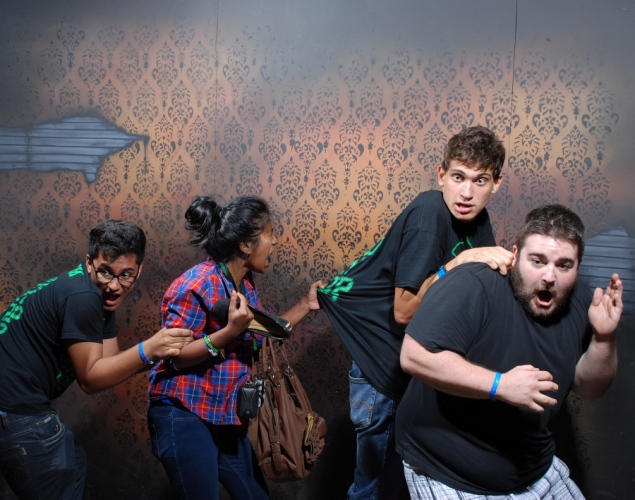
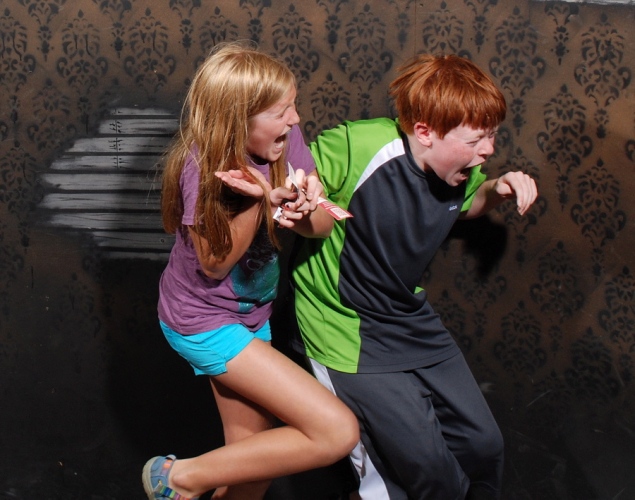
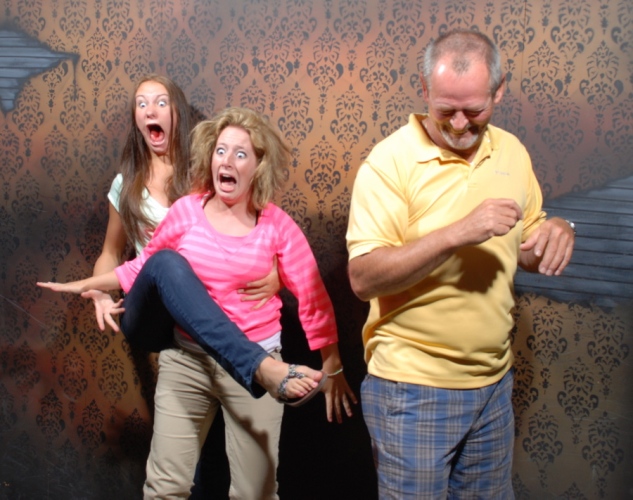
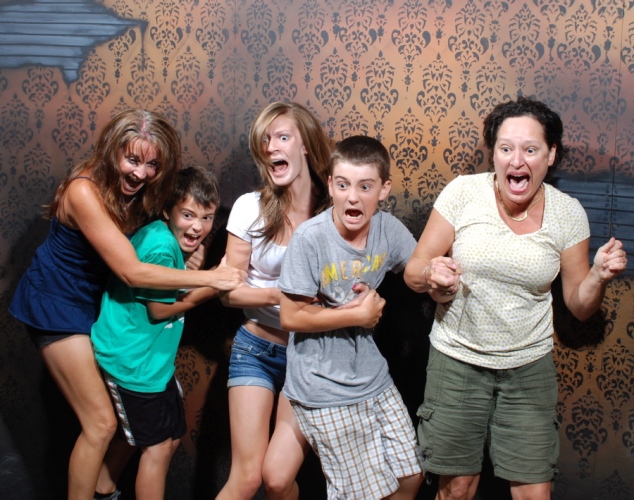
You have to love these photos taken by a hidden camera inside a haunted house at Nightmares Fear Factory in Niagara Falls, Canada. Hat tip to my friend Paul for the heads up, and the NY Daily News and Buzzfeed for the shots, though these images are now officially everywhere you look on the internet.
There was a nice piece on Lois Lowry, written by Dan Kois, in the October 3 edition of The New York Times. It’s worth reading. I’m not a fanboy by nature, but with Lois Lowry I make an exception. I hold her in the highest regard, with great respect and admiration for the integrity of our work — and, even moreso, her commitment to her work. I think of her in the way I thought of Arnold Lobel: the real deal, the genuine magilla.
In the article, Lowry made a comment that made me think. To set the stage, the year was 1978, and Lowry was to give a commencement address to a local middle school:
She was preceded to the lectern by the principal, who told the bored, uncomfortable kids that these were their golden years. When Lowry spoke, she told them the principal was misleading them. These weren’t their golden years at all. At best they were a dull beige. She reminisced about her own eighth-grade year, when she was obsessed with a girl in her class who had enormous breasts when Lowry had none.
The kids laughed. But when Lowry looked out at the parents, she later wrote, “their faces were like concrete.” She realized that day that she could talk to kids or she could talk to adults, but not to both: “And so I chose the kids.”
I love that: I chose the kids. I’ve asked myself if that’s always true of my own work, or even if it’s possible. With the Jigsaw Jones series, for example, I was always aware of the potential parent in the room, the mother reading the story out loud at bedtime. And I was aware of the gatekeepers, the teachers, the librarians. Even before that, my editors and publisher. You have to navigate through a lot of adults before reaching an actual kid. Maybe that was wrong, but I tried to please those adults, too.
I remember coming across Bugs Bunny cartoons as an young adult, and realizing (then) that they often threw in some grown-up humor, with references that few children would understand. I liked how it worked on dual levels. Anyway, that’s NOT the section of the article that got the biggest response. Lowry was asked about The Hunger Games, and she had the temerity to respond carefully, respectfully, and honestly:
“I could certainly see why kids love it. It’s suspenseful. The plot moves right along. But I was troubled by the fact that it’s children killing children.”
Here’s are few highlights and lowlights from the Old Gray Lady’s comments section. In fairness, you should read the entire article, since some of these folks are taking issue with Mr. Kois’ handling of the article, more than anything Lois Lowry specifically said. The YA crowd is a tough (and yet sensitive!) readership, and some of them shoot arrows:
A.J. asks:
Is Ms. Lowry somehow implying parents should censor their children’s reading habits if the book doesn’t rise to the level of hers? I hope not.
Herzliebster writes:
Where is it written that to praise one author one is obliged to disparage others? Or that there is only one right way to write a book — or even one right way to write a dystopian novel for teens? Since when is literature, or even one subgenre of literature, a zero-sum game?
Cynthia Bishop:
I am beyond sad for Lois Lowry’s loss of her son, and in awe of her writing ability. Nonetheless, to imply that there can only be one kind of ‘good’ book for children and teens, and that all books written for the latter are violent and negative is simply ridiculous.
Elizabeth Hutchinson writes:
Why must every discussion of children’s or young adult literature invariably devolve into some sort of dismissal, in this case, that “every young adult book published is a dystopian thriller packed with action sequences,” a claim so easily disproven as to need no examples? Even as the NY Times (and NPR and many others) force themselves to acknowledge the indisputable presence of the YA market, there is always an undercurrent of “less-than,” and why is that? Is its sheer popularity a threat to some other authority? Maybe.
To which Tamora Pierce replies:
Yes, the dismissal gets very old. Anyone who walks down the aisle can disprove it immediately, and yet journalists and pontiificators insist on doing it. Surely the days of dissing the fiction that shapes our adult minds should be over? What’s worse, these pronouncements are usually made by those who have made no effort to read what is available–and sadly, that includes Ms. Lowry.
Alice comments;
All kudos to Lois Lowry, but I’m not sure why granting those kudos requires the digs at the Hunger Games, a series of novels embraced by no less a literary critic than Stanley Fish (and on this website!).
Thom McCan:
Euthanizing a baby, worrying about another girl who has large breasts while she has none, violence by children. This is supposed to help children understand the world?
And at last, mercifully, there’s Donald:
As a former children’s librarian, I read this article with interest and pleasure. Having enjoyed Lowry’s “Looking Back: a Memoir” so much so that I have given it as gifts to several people, I was thrilled to get a little bit more of the back story of her son’s death. That said, I am a bit shocked to see all the negative and angry comments. Methinks these folks doth protest too much! Mr. Kois you have done a fine job interviewing a Newbery medal winner and a legend. Kudos.
And most beautifully, Jane Hinrichs:
This is a wonderful piece of journalism. The quotes the journalist chose and the direction he went is beautiful commentary on a quartet of books that are so rich in meaning and beauty I think everyone on earth should read them. Lois Lowry is a genius in her writing.
I am sorry for those who have commented against what she said and what was written. She said good things about The Hunger Games. Her criticism of it was not against the author or the writing, but she gives thoughtful questions about why children killing children is a good thing to highlight. We can disagree with her or agree with her, but to then slam her for her opinion is not a good thing. She doesn’t slam The Hunger Games author at all.
If you haven’t read Lois Lowry’s books I recommend them. I’d let my youngest child read them though the material is not all happy. But it is written in a way that will get them thinking about what life is about.
I basically took the summer off from blogging, so feel a little wobbly about it, my palms sweating on the handlebars, not sure I remember how to do this. I don’t know what happened, exactly, just somehow tired of the “James Preller” corporate thing. Ha. Mostly, I wanted to concentrate on other writings, as I’ve been deep in a new series that I’m writing for Feiwel & Friends. It won’t launch until The Fabled Summer of ’13, but I’ve nearly finished the third book in the series.
NOTE: I just reread this and had a chuckle about that “nearly finished” line. It only signifies that I’m an old pro when it comes to deadlines and editors: a manuscript that has not yet been handed in is always “nearly finished.” Any writer who says otherwise is a fool and a boob.
As for my new series, it feels like I’m that kid behind the snow fort, busily stacking up a supply of snowballs. Can’t wait to fire ’em out there. More on that topic another time.
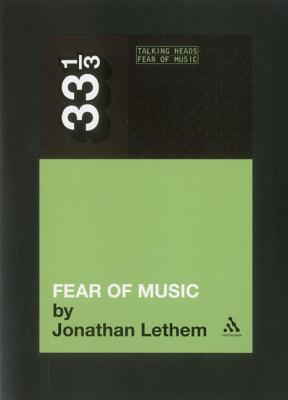
I’m usually a one-book-at-a-time guy, but I’m now reading three very different but equally remarkable books concurrently: Freedom by Jonathan Franzen, Fear of Music by Jonathan Lethem, and Good Poems, selected by Garrison Keillor.
Normally I don’t do that to myself, the three-books-at-once bafflement, but the mixture of long novel, short nonfiction, and poetry seem to complement each other nicely.
I have a long and sordid relationship with poetry, and I’m especially happy to find this sweet collection by Keillor, based on poems featured on “The Writer’s Almanac.”
Writes Keillor in the introduction:
Oblivion is the writer’s greatest fear, and as with the fear of death, one finds evidence to support it. You fear that your work, that work of your lifetime, on which you labored so unspeakably hard and for which you stood on so many rocky shores and thought, My life has been wasted utterly — your work will have its brief shining moment, the band plays, some confetti is tossed, you are photographed with your family, drinks are served, people squeeze your hand and say that you seem to have lost weight, and then the work languishes in the bookstore and dies and is remaindered and finally entombed on a shelf — nobody ever looks at it again! Nobody! This happens often, actually. Life is intense and the printed page is so faint.
Keillor, as curator, has a point of view. He likes poems that tell a story, poems that are direct and clear, that don’t sound too “written.” Poems that communicate. He quotes Charles Bukowski, “There is nothing wrong with poetry that is entertaining and easy to understand. Genius could be the ability to say a profound thing in a simple way.”
And I put a big star in the margin when Keillor described his former English major self — a tender self I identified with, all those lessons that have taken me so long to unlearn, the bad habits of academic thought, “back when I was busy writing poems that were lacerating, opaque, complexly layered, unreadable.”
I have a file drawer jammed full with opaque and unreadable poems.
Now I see that as my writer’s quest, this effort to write clearly (and yet, even so, to write interestingly, to achieve moments of “lift off”), to overcome my own big stupid fumbling ego, those temptations to craft “look at me!” sentences that dazzle and bore readers. Perhaps that’s the great gift of writing for children of all ages. They don’t go for the bullshit. You can deliver any kind of content — really, there’s nothing you can’t say in a children’s book — but please don’t overcook it.
One last phrase from Keillor, in praise of Maxine Kumin and Anne Sexton and, for that matter, all Good Poems:
“They surprise us with clear pictures of the familiar.”
So that’s how I’ve vowed to begin my days, by reading a few poems each morning. To sit in the chair, coffee at hand, and try on the silence. My favorite from today was Charles Simic’s “Summer Morning.”
You might enjoy it, too.
As a final treat, here’s Tom Waits reading “The Laughing Heart,” a poem by Charles Bukowski. Full text below.
your life is your life
don’t let it be clubbed into dank submission.
be on the watch.
there are ways out.
there is a light somewhere.
it may not be much light but
it beats the darkness.
be on the watch.
the gods will offer you chances.
know them.
take them.
you can’t beat death but
you can beat death in life, sometimes.
and the more often you learn to do it,
the more light there will be.
your life is your life.
know it while you have it.
you are marvelous
the gods wait to delight
in you.










On Lois Lowry and the Perils of The New York Times Comments Section
There was a nice piece on Lois Lowry, written by Dan Kois, in the October 3 edition of The New York Times. It’s worth reading. I’m not a fanboy by nature, but with Lois Lowry I make an exception. I hold her in the highest regard, with great respect and admiration for the integrity of our work — and, even moreso, her commitment to her work. I think of her in the way I thought of Arnold Lobel: the real deal, the genuine magilla.
In the article, Lowry made a comment that made me think. To set the stage, the year was 1978, and Lowry was to give a commencement address to a local middle school:
I love that: I chose the kids. I’ve asked myself if that’s always true of my own work, or even if it’s possible. With the Jigsaw Jones series, for example, I was always aware of the potential parent in the room, the mother reading the story out loud at bedtime. And I was aware of the gatekeepers, the teachers, the librarians. Even before that, my editors and publisher. You have to navigate through a lot of adults before reaching an actual kid. Maybe that was wrong, but I tried to please those adults, too.
I remember coming across Bugs Bunny cartoons as an young adult, and realizing (then) that they often threw in some grown-up humor, with references that few children would understand. I liked how it worked on dual levels. Anyway, that’s NOT the section of the article that got the biggest response. Lowry was asked about The Hunger Games, and she had the temerity to respond carefully, respectfully, and honestly:
Here’s are few highlights and lowlights from the Old Gray Lady’s comments section. In fairness, you should read the entire article, since some of these folks are taking issue with Mr. Kois’ handling of the article, more than anything Lois Lowry specifically said. The YA crowd is a tough (and yet sensitive!) readership, and some of them shoot arrows:
A.J. asks:
Herzliebster writes:
Cynthia Bishop:
Elizabeth Hutchinson writes:
To which Tamora Pierce replies:
Alice comments;
Thom McCan:
And at last, mercifully, there’s Donald:
And most beautifully, Jane Hinrichs: