About seven weeks ago I announced plans for my new blog, FATHERS READ. Some of you may have even answered my request for photos. I’m thrilled with what I’ve got — it’s a start — but I will need more. I suppose the second push can’t really begin until I have the site up and running and I have something tangible to show for our collective efforts.
Right now, after various delays, I’m thisclose to going “live.” I’ve struggled with a minor design issue (and less than speedy service) on the permanent header art. It’s frustrating, because I’m excited to share what I’ve got, which includes some killer photos and terrific contributions from authors and illustrators, too, including Lewis Buzbee, Jordan Sonnenblick, Matthew Cordell, Eric Velasquez, Don Tate, Peter Lerangis, and more.
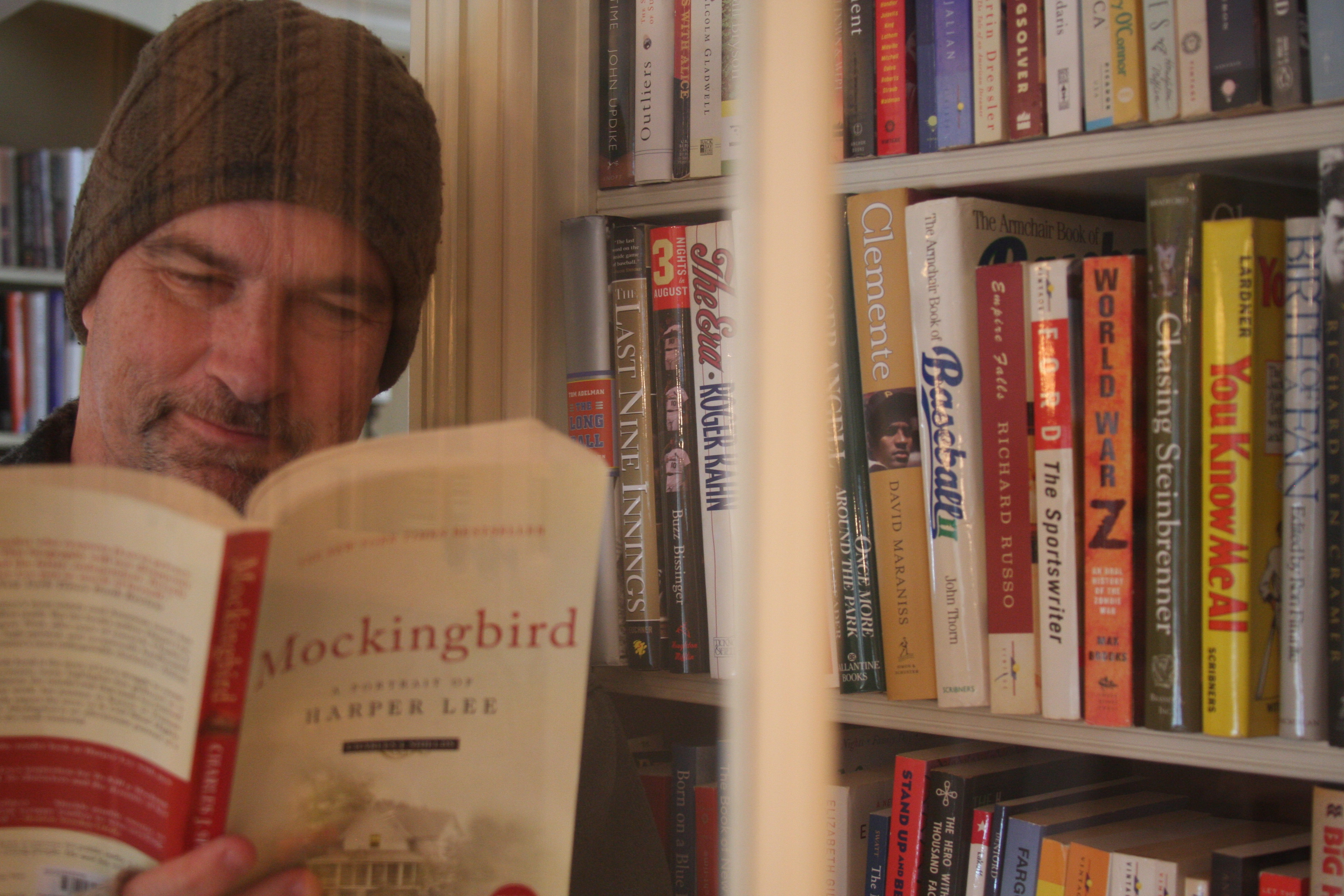
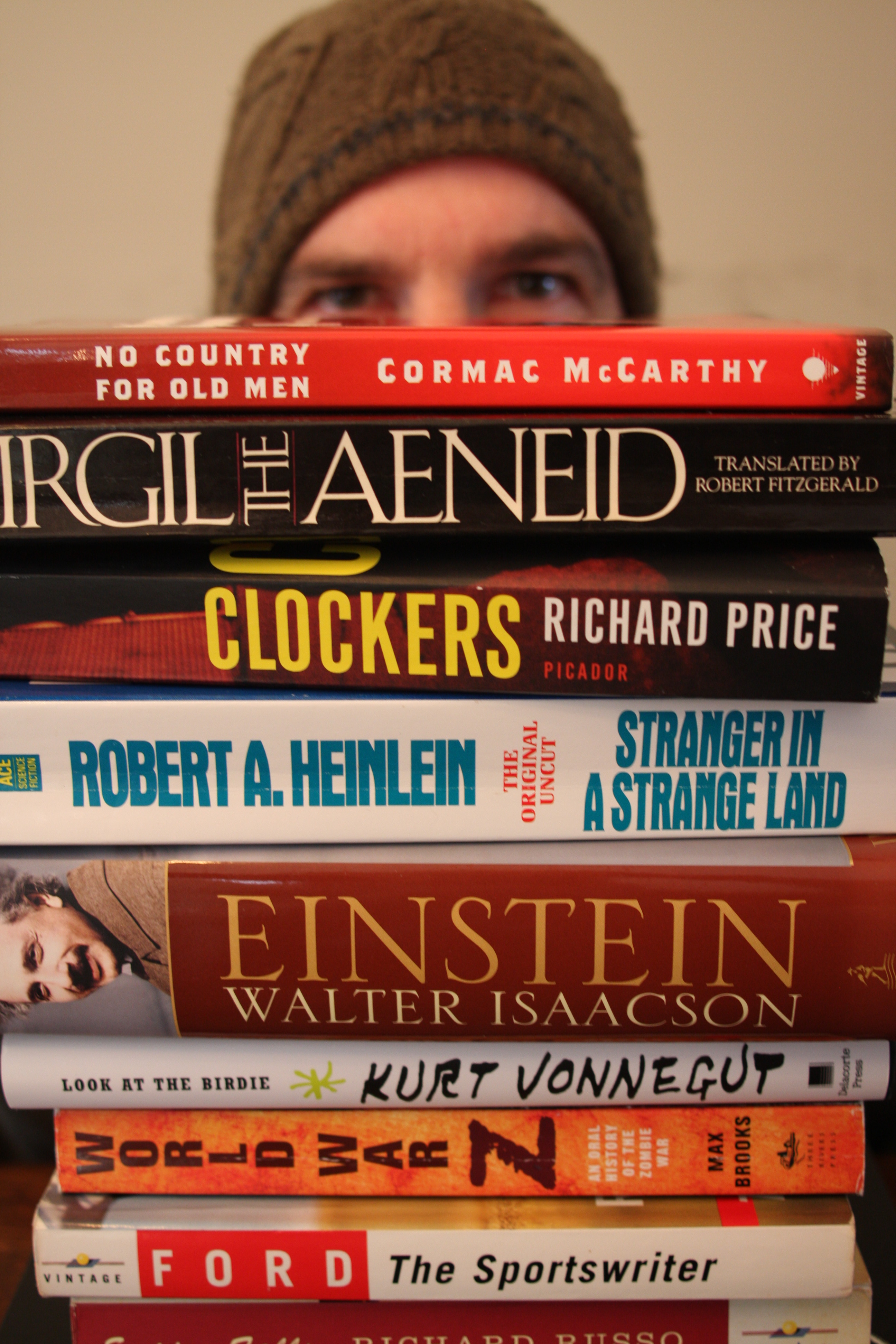
Anyway, I thought I’d share some outtakes from a recent photo session I did with my talented friend, Paul Barrett.
We were trying to come up with an image that would work in the header, and fooled around with a lot of different looks. This site won’t be about “me,” so I hope to find a shot that’s more iconic and less specifically “james preller,” if that makes sense. Nevertheless, Paul took a ton of great shots and here’s a few more, below.
(If you have a favorite, let me know. But it’s impossible to tell without seeing the overall design in place. In the end, the header photo will be just a minor supporting element.)
Here’s the current language about photo submissions:
FATHERS READ depends upon the active participation of its readers. I hope to store and feature dozens, hundreds, and possibly thousands of photographs of men reading.
Send your photos to [email protected] with your name and the name of those pictured, under the subject heading of “FATHERS READ.”
Photos cannot be guaranteed publication. If you do not see your photo on the site, please come back at a later date. It might take a while to roll them out. Now for a little legal mumbo-jumbo: When you submit a photo, you grant FATHERS READ a non-exclusive, royatly-free license to use the work to be used, copied, sublicensed, adapted, transmitted, distributed, published, displayed or otherwise under my sole discretion. At this point, I have no intention of using your photos for anything other than to post them here on the internet, with or without your name, as you so desire. If for any reason you wish to have a photo removed, just contact me and I will do it.
I’ve enjoyed doing this semi-organized, possibly-ongoing series of interviews, especially when it comes to meeting important voices in the kidlitosphere. I hope you agree that it’s nice to get to know the people behind some of our more frequently-visited blogs. One such destination is the oft-entertaining, 100 Scope Notes. Travis has a lively mind, he’s young and insightful, and — to be perfectly honest — it seemed like it would be cool to hang out with him. I mean to say: If I didn’t enjoy it, I wouldn’t do it. I’m like a Roman Emperor that way, sort of a cross between Tiberius, Caligula, and Herod Agrippa, but with typing skills. But let’s move along, folks . . . because here comes Travis, hauling around a pile of books.
Greetings, Travis. It’s nice to finally meet you. Thanks for stopping by.
Well, it’s an honor. Sorry I’m late — I was away for a week visiting family.
How’d that go?
Great, but very filling. You ever have it happen where a trip back home all of a sudden becomes an eating tour? It’s like all decisions were based around food. I found myself saying things like, “Well, we can’t go to the ‘60s-style drive-in tonight, because I really wanted to get to the Italian restaurant with the moose head on the wall. And let’s not forget about the homemade cookie shop for dessert.” You can see how things can get out of hand pretty quickly.
Oh, I get it. You’re here for the cheese log.
You have one of those? If you’ve got a box of Toasteds crackers, it’s on.
You’ll be putting it on the Ritz, my friend. As the 1950’s ad campaign so truly proclaimed: “Nothing tastes as good as Ritz . . . but Ritz!”
So, tell me. You became a librarian in 2005, and started blogging back in the halcyon days of late 2007. That officially makes you a grizzled veteran of the blogosphere. Did you have a plan when you started?
Let me begin by saying I have played a lot of soccer in my day, and have thus taken many, many soccer balls to the head. I’ve always had a hard time remembering which books I’ve read and why I liked them or didn’t like them. My memory not what it should be, I began 100 Scope Notes mainly to record my thoughts and feelings about books I was reading. I also like the idea of making book reviews entertaining in their own right, so I’m always trying to accomplish that.
So it really began as a classic “web log” without any great ambitions. Did you think anyone would read it?
Hmm. Yes, I suppose I figured I could dupe a few shut-ins into reading my opinions, but I didn’t expect much more than that.
It’s very impressive what you’ve accomplished. (Listen to me, I sound like Yoda: “Lost a planet, Obi Wan has.”) Congratulations.
Thanks. Fun, it has been.
Grow up, where did you?
Northern Michigan. Are you familiar with the Mackinaw Bridge? Close to that.
A great place to grow up and very picturesque. I love it. Pretty far up there, however. Let’s just say that there were times in elementary school where I was slightly embarrassed to admit that I didn’t snowmobile for fear of getting shunned by my peers.
I find your blog very inspiring. I mean, authors tend to blog out of necessity, some sense of self-promotion. Other folks blog because it’s part of their job. But your blog, and others like yours, either by teachers or librarians or enthusiastic parents, comes from what appears to be a purer place, an abiding love of children’s books.
I definitely want the focus to be on books. Self-promotion isn’t really my bag. I have this completely unreasonable desire to Google my name and have it say “I’m sorry, that person must not exist, for we can find no evidence saying so”. I’ve been doing pretty well at that so far, although I guess this interview may hurt the pursuit of that goal. I’m a school librarian, so the blog is mostly for others in my profession. I use blogs I trust for finding great books, so I want to do the same for others.
So why children’s books? How did you get here?
That direction was not always clear. Roald Dahl was the first author I loved back in elementary school. In middle school I was huge into comics and then I went through a serious periodicals phase in high school . . .
Travis, hey, it’s perfectly natural for boys of a certain age. Bodies mature, maybe you discover your father’s (cough, cough) “periodicals,” as you prefer to call them, and . . .
Wow, I really walked right into that one.
I guess you did.
I had an agreement with the high school library aide where I could go behind the counter and grab the latest magazine issues before they went on the shelves. Thus I have perused more issues of Entertainment Weekly than I care to mention. When I went to college, I knew I wanted to work with the elementary school crowd. Getting back into children’s books stemmed from that. There are so many great books for kids that it was easy to get sucked back in. After I picked up my elementary teaching certification, I went back to school for library/media. Now I work in a school district with four elementary schools that I split time between.
You have an eye for book covers. I enjoy it when you highlight “Unfortunate Book Covers.” It pains you when a good book has a bad cover. Tell us a little bit about that. Do you think there are common mistakes?
I think folks who work in the book world can identify with this. You love a particular book and put it face out on the shelf, assuming that it will get snatched up right away. Most do, but occasionally there is one that seems to have been coated with child repellent. I’m glad that my hurt comes through, because it’s truly painful to see a great book sit just because its cover has seen better days.
Two of the books I’ve featured, Boy and Danny the Champion of the World, were especially difficult to call out, because I really, really love those books. I think sticking with a cover for too long is the most common mistake. I understand that there are lots of reasons why every book can’t get a makeover every ten years, but there are plenty of books that get passed over because they don’t look current. Really, there is an endless supply of these, so I see that feature popping up for quite a while.
I wonder if Jigsaw Jones falls into that category. He’s about that age.
Naw, I don’t find that that’s the case in the schools where I work. Actually, it’s pretty rare for series books to fall into the Unfortunate Covers territory. Readers get familiar with the characters and continue checking out books in the series, so a bad cover doesn’t have as much of a negative effect.
I enjoy your “cover controversy” posts, where you highlight look-alike covers. Do you have a larger point about imitation, or are you simply pointing out coincidences and trends just for the fun of it?
My whole motivation for pointing out similar covers boils down to something along the lines of, “Hey, look at that!” I would imagine that creating appealing covers is a difficult job, so I don’t get too frustrated that popular trends emerge. Although there are two cover types that I think have to go:
1. Girls in Victorian-era costumes.
2. Socks.
I think I speak for everyone when I say that we appreciate your courageous vow to keep us “updated with any new sock-related cover art developments.” You strike me as a talented writer. Intelligent, inquisitive, and funny. Do you write fiction? And I’m really hoping that your answer is, “Yes.”
Do nonsensical ramblings count as fiction? If so, then yes, I write fiction almost daily. If that description doesn’t cut it, then the answer is no.
You’re in –- “nonsensical ramblings” definitely qualifies. It’s probably how most writers get started.
While I once toyed with the idea of writing a collection of “inspired by real life” short stories, all I have to show for it is a list of chapter titles that I lost a few years back. I have been getting some encouragements lately, however (and I’m counting this question as one), including some from an author/illustrator whom I really respect. So a commitment of pen to paper may be in the cards at some point.
What have you gotten out of the blogging experience? I’m sure a lot of people look at it and think, “Oh dear, that seems like a lot of work.” What’s the payback?
I like the fact that the work I do on 100 Scope Notes makes me better at my job. I’m able to make better decisions in terms of book purchasing and recommending because I’m reading and writing about these things all the time. I also like the creative aspect of it, coming up with different ways of talking about children’s lit.
What makes a good blog?
I have a prepared statement for this. Here goes. Ahem:
1. Authority. How well do you know your stuff? Can you explain why you liked/didn’t like a book? (Note: Writing in all caps is not a good way to show authority).
2. Voice. Do I feel like I can connect and identify with you? Do you like Frisbee? Me too – we can hang out.
3. Opinions. Dude, you gotta take a stand. Did you like a book or not? Don’t be shy. Do you seem like a reasonable person who makes sound judgments? Did you like the song, “We Built This City”? If so, then your opinions are suspect.
4. Updates. There are exceptions, but as a general rule, if you only post once a month, I’m going to lose interest.
Well said. And for the record, I can say with 100% conviction that I hate the song, “We Built This City.”
What about author blogs. What do you like about them? And what don’t you like?
I like the behind the scenes stuff. It’s also a plus if they have an opinion of some of the book-related topics of the day. Also, it helps when they don’t do that “click here to read more!” thing, which really cramps the style of anyone checking out the site from Google Reader.
I find some of them fall into the trap of being too relentlessly self-promotional. Like, I know you are a big success and everything, but I’m kind of getting turned off here.
You’ve gotta have a good balance — talk about your books, but talk about not your books too.
You seem really exited about going to ALA in Chicago. Why is that? Don’t get out much?
The short answer is no. Here’s the long response: I’m excited because it sounds like cool things happen there. I’ve always wanted to attend the ALA conferences, but could never swing it. This time there is no excuse, as the conference site is just a couple hours away. I’m going to write some posts for 100 Scope Notes and the ALSC (Association for Library Service to Children) blog while I’m there, so that should be fun. I’m expecting a good time. I got a little too excited and made up some business cards. Currently, I’m busy planning out my food schedule for the trip. So far I’ve got Ann Sather for breakfast, Shaw’s Crab House for dinner, and — wait, this is sounding familiar.
I hear that Matthew Cordell likes cupcakes. You should try to meet him.
Say no more. I just added a chance meeting with Mr. Cordell to my itinerary.
Keep a cupcake in your pocket just in case. Why did you pick the name, “100 Scope Notes”?
It wasn’t a moniker that I’ve always had in my back pocket. When I knew I was going to start a blog, I wanted the title to be a library term. I cracked open my Dewey decimal classification guide and started looking around for something. In true librarian form, I always have Dewey nearby –- even in the car, where I keep a travel-sized reference in the glove compartment. Just kidding, but that would probably be a big hit if someone published that. Anyway, when I came to the term “scope note” I figured that would be a good choice. A scope note helps to clarify or define, which I thought was appropriate. I added the 100 because I thought it would be easier for people to remember and find if they were doing a search for it.
With today’s changing delivery systems, this age of New Media, are you concerned about the future of “the book”?
You know that section in Popular Science where they look back at an article that appeared in the magazine 60 years ago that says something like, “In 1996, civilization will rely on invisible, fudge-powered trains for travel,” and we all say. “ha-ha, look how silly we were”? I think making a prediction about where books are heading might come off a bit like that. But if I had to make one it would be this: In the year 2012 we will have invisible books that will somehow be fudge-powered.
You also review books for the School Library Journal. Lately there’s been some blog chatter about blog reviews, the quality or lack of quality, etcetera. Is there a difference when you post a review on your blog compared to the reviews you do for SLJ?
I have been keeping up on that blog vs. journal discussion and it makes for some interesting reading. There is definitely a difference between my reviews for SLJ and 100 Scope Notes. In SLJ I do my best to stick to a more professional format. The length guidelines really force you to make every word count. Writing this type of review has definitely made me more conscious of getting to the point and has made me a better writer overall. Then I write a blog review and it’s like, “Hey, I can do anything I want here!” I like having the opportunity to do both styles. While some of my blog reviews are nontraditional, I still hold myself responsible for giving my honest opinion with information to back it up. I would like to think that the quality, while delivered in a different way, remains the same.
What do you think of negative reviews?
They’re essential. I don’t delight in writing negative reviews, but people need to know the truth.
But what if they CAN’T HANDLE THE TRUTH? (Um, sorry. That was my Jack Nicholson impression. Pretty intimidating, right?)
I have yet to upgrade my VHS version of “A Few Good Men”, but I would say that’s pretty accurate. The rub is that I’m always looking to read books that I think I’ll enjoy, thus you’re likely to find more positive reviews on 100 Scope Notes. This fact makes professional journal reviews so vital as they review everything: good, bad, ugly, unreadable, and ridiculous.
If you could meet any author, who would that be? I mean, besides me.
Well, my other number one would have to be Jon Scieszka. Although now that he’s the Children’s Lit Ambassador, a meeting might be tough to pull off. Security detail, helicopters, body doubles, armored cars, you know how it goes. I also have some mixed feelings when it comes to meeting authors. I never really know how to chat them up. Do I steer down the “undying affection” road and just talk about the author’s books, or should I go with the more difficult to pull off, “You’re famous but I’m cool so I’m going to talk to you about other things” approach? It’s a tough choice so I usually just hedge my bets and remain uncomfortably silent. Any suggestions?
I think you treat them the way you treat anybody else, from the waitress at TGI Fridays to your neighbor to the high-powered executive. As equals, you know. At the same time, if he or she has written something that has touched you in some way, that means something to you, that’s always a nice thing to hear.
Ah, the old, “Imagine you’re at T.G.I. Fridays” approach. Very crafty, Preller. I will attempt this technique.
Oh, please, Travis. You can call me, “Mr. Preller, Sir.” Lightning round: Five websites you can’t live without?
Pitchfork Media
Yes, yes this music site has sort of gotten a bad rap lately due to large doses of hipster backlash, but I’ve been reading it for years and when they like an album, I often like it too. I also completely borrowed some of their ideas for my site.
A Fuse #8 Production
A great childrens lit blog: informative, funny, thought-provoking. This one was starting back when I was beginning my library career, and it’s been fun to follow ever since.
BuzzFeed
While I probably read every Entertainment Weekly from 1996-2004, I no longer have easy access to that magazine. BuzzFeed fills some of the gap. Slightly gossipy for my tastes, but they seem to have a thing for kid’s books, which I appreciate.
Facebook
No description needed
Question: I’m 48, so I know what I’m doing on Facebook, i.e., misguided nostalgia, reconnecting with people who didn’t like me the first time around. But a young fellow like yourself, what are you doing? Connecting with old preschool buddies?
No, no, of course not. Elementary school buddies.
Titlewave
Working at four elementary schools, I place a lot of book orders. Follett’s Titlewave site is the best in the biz as far as I’m concerned. Wow, I really sound like a pitchman right now, don’t I? Moving right along…
20×200
This site is cool. Artists create works and they sell different sized prints beginning at 20 bucks.
What music are you listening to these days?
Music is a big thing for me dating back to my saxophone virtuosity in middle school band. I was the second to last chair, but then the last chair guy moved to another school, so I was demoted for the rest of my days. I also was a DJ for my college radio station where I did theme nights. As you can imagine, themes such as “Depressing Songs” and “Songs I Can’t Stand” made for uplifting listening.
Oh, you are one of those “mixed tape” guys. Confession: I make a new playlist on my iPod every month of the year. And Travis, I just have to say: Are you feeling this, too? Because I think we’re starting to bond.
I’m a bit obsessive with the iTunes –- I rate all the songs and make ridiculous smart playlists, like, “Please list songs that I have skipped less than 10 times, but have played more than 20. Move songs with artist names that contain the word ‘Cougar’ off the list.” Between iTunes, GoodReads.com, and 100 Scope Notes, I occasionally feel like I just rate things all day long.
What are your five most played songs on iTunes? No cheating.
“This Must Be the Place,” Talking Heads. “No One Does It Like You,” Department of Eagles. “Karma Police (Live on David Letterman),” Radiohead. “Trains to Brazil,” Guillemots. “Soul to Squeeze,” Red Hot Chili Peppers.
Any recent favorites, discoveries?
I really could go on for awhile on this question, so I’ll just list a few things:
Jens Lekman, Night Falls Over Kortedala
The song “A Postcard to Nina” is one of my all time favorites
Camera Obscura, My Maudlin Career
I’ve talked about them a little on 100 Scope Notes. I would hazard to guess that this band may have more librarian fans than any other. This album should come wrapped in a cardigan.
Pete and the Pirates, Little Death
This is sort of a pop rock group. Great songs, but I still have trouble telling each song apart – I guess that means they’re consistent?
Fanfarlo, Reservoir
I just got this after hearing them on NPR’s All Songs Considered. I’m glad I did. Fans of Arcade Fire would likely get into this.
Would you burn me a CD, some kind of Travis hipster pop-geek mix?
I’m already mulling over some picks. I’ll just need your mailing address.
Five favorite movies?
Pulp Fiction
This seemed completely original when it came out. Memorable characters with dialogue that immediately draws you in.
Ratatouille
Every year Pixar comes out with a new movie some critic declares that it’s their best yet. Don’t believe them –- this movie is the best they’ve ever done. Successful on so many levels and entertaining the whole way through.
2001: A Space Odyssey
This one is sort of the classic “attention everyone, I have good taste” pick, but I loved it, and I really think it changed the way people think about movies. I’m still fairly shocked that this was actually in movie theaters in 1968. Things move slowly, but the tension that builds is crazy.
Cool Hand Luke
This one started a whole older movie craze for me. I didn’t think that watching a chain gang build roads and engage in egg-eating contests would be entertaining, but I was wrong.
Classic quote: “What we got here . . . is a failure to communicate.”
School of Rock
There may have never been a role more tailor made for an actor than Dewey Finn for Jack Black. Hilarious.
“I pledge allegiance . . . to the band . . . of Mr. Schneebly.” I put that quote in my upcoming book, Bystander, partly because I love that movie so much.
Five favorite children’s books?
Holes
This book was like my reintroduction to children’s lit. In college I wasn’t reading many kids books. I picked this one up right as I was beginning my student teaching. Amazing. The storyline fits together so well. I thought, “Dang, this is what books for kids should be.” I’m actually kinda getting chills just thinking about how great that story is.
Where the Wild Things Are
Aught Nine is the year of the Wild Things. With the movie coming out, everyone is getting nostalgic for this classic. I have to say that of all the books I read as a kid, this one stuck with me the most.
What you said about Holes is true for me with Wild Things. I found that book soon after college and it totally changed my thinking about children’s books. Everything was suddenly possible. These books could have real emotional and psychological depth. Which is why, of course, I wrote Hiccups for Elephant.
The City of Ember
Sci-fi masterpiece. There is such a great buildup in this book. A serious page-turner.
Arnie the Doughnut
This picture book should be in every library. Funny, with a delightfully absurd ending that never fails to make kids smile. One of my all-time favorite read-alouds.
Charlie and the Chocolate Factory
As a kid, I was on a mission to hunt down every Roald Dahl book ever written (The Vicar of Nibbleswick was the most difficult to find back in those pre-internet days, by the way). “Charlie” was the one that sent me down that path.
Well, Travis, it looks like our time is up. Thanks for hanging out and eating my entire cheese log. I admire your alert, open, engaged mind — and for a skinny guy you’ve got quite an appetite. Enjoy ALA! Blog like there’s no tomorrow! And eat like a Roman Emperor!
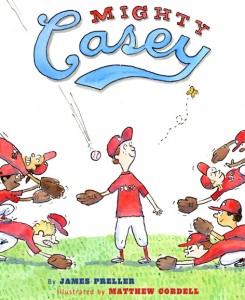
I’ve been doing a lot of school visits, book signings, and book fairs over the past two months. It’s been a lot of fun, distracting, joyful, happy, hard, and humbly rewarding. One of the highlights of my act — between juggling chain saws and wrestling live bears — has been reading Mighty Casey, illustrated by Matthew Cordell, to audiences up to 200 (squirming, wriggling) children. The book really goes over well (if I don’t say so myself), especially when I stop and go into great uproarious detail about Ronald the Runt, who has to pee, “and decided left field would do.” Kids love that part, and it’s absolutely true to my coaching experience. Happens every year. Some of those little boys just want to play and play until the lastpossiblesecond, not missing a thing, and they don’t always make it all the way to the bathroom.
When Ernest Thayer wrote the original “Casey at the Bat,” published in a San Francisco newspaper in 1880, he considered it a mere doggeral. He even used a pen name, to disassociate himself from the poem that would later (ironically) define his career.
I never really thought of Mighty Casey as a poem, per say. It rhymes and bounces along well enough, but it’s not, to me, poetry. Like most published books, it went through various drafts and revisions. And it was definitely made better through the help of my editor at Feiwel and Friends, Liz Szabla. As a rule, anybody with two z’s in their name has to be awesome. Name your child Buzzy and you are guaranteed a terrific kid. Anyway, here I am digressing once again, suggesting names for your children, which, let’s face it, is probably a personal decision and none of my business. But: Buzzy. Think about it.
I just came across an editorial letter from Liz, with comments and suggestions in response to the first draft of Casey (that is, the first draft that Liz saw; not the first draft I wrote). The way this works for Liz is like this: We’ll talk on the phone, go through things in a general manner, and she’ll follow that up with a more detailed “formal” letter. Most editors seem to work this way. Below you’ll find the bulk of that letter, with only a few passages removed to save the author from further embarrassment. I should also note, for those interested in the publishing process, that I didn’t see that first draft as a finished piece. It needed work and I knew that. But I had reached the point where I needed another eye, another point-of-view. I needed, that is, HELP! And Liz was there to catch me.
MIGHTY CASEY is mighty charming and we’ve enjoyed the time we’ve spent with it. I’m delighted now to be sending you our thoughts as well as a line-edited manuscript. You and I haven’t worked together before – please know that all my suggestions are open to further discussion if anything doesn’t feel quite right.
First and foremost, the Delmar Dogs are hilarious! Casey, as the unlikely hero, is wonderful. And the echoes of “Casey at the Bat” make Casey’s final triumph all the more satisfying, of course.
Let me break in here to comment that all editorial letters begin with a compliment. It’s a trick they teach you early on in Editorial School. The editor opens your ears by saying something positive. I tell this to kids who do peer writing in school: Always begin by saying something nice. Find a part in the story that you like and praise it. That way, you increase the chances of the writer hearing any critical suggestions you might later make. I’m saying: Liz didn’t fool me; I knew there was a big “but” in there somewhere.
You’ll see that I’ve make some suggestions and tweaks on the manuscript to fine-tune the rhythm or syntax in places. I won’t detail those suggestions here, but do let me know if I’ve fouled anywhere (heh, heh). Now onto a few issues to keep in mind as you consider the line-edit….
Note: the “line-edit” is the marked up manuscript, with more detailed comments and suggested changes in the dreaded red pencil. The general editorial letter comes along with a marked-up manuscript, which can be a cold thing, almost painful. Thus, the editorial letter serves as fabric softener to the line-edit’s starch. (Oh dear me, a laundry metaphor? Move on, people, there’s nothing to see here, nothing at all . . . .)
4th stanza
Although the “enjoyed…destroyed” rhyme is marvelous and unexpected, I can’t help but wonder if, in the fourth stanza, the parents’ feelings about the game are at odds with the Dogs’ pride at trying their best. To say that the adults don’t “enjoy” the games is a bit of a disconnect with the spirit of the Dogs. Still, I certainly see how it might be tough for the parents to see their kids trounced, and if this is what you intend, then let’s leave it. But if you want to work on another layer of subtlety – that is, the kids’ pride being stoked by their parents’ empathy, then I believe it’s worth exploring.
This is an example of an editor forcing the writer to think. I had to go back and look at what I was attempting to achieve in that stanza. I suspect Liz’s motherly instinct was to keep the parents cheerful and positive, whereas I wanted the recognition of how tough it can be to sit in those stands sometimes. In the end, I pretty much kept this stanza as is, but Liz made me to think about it and justify those words in my mind.
13th stanza
I’m a bit confused about why so few spectators notice or cheer when Jinn Lee bloops a double and later scores a run. Here’s where I see the Dogs and the parents on their feet, pumping their arms in the air!
Liz was right — and she was right in many places — so I changed it. The revision now reads: “When Jinn Lee clubbed a homer/The crowd stood and cheered.”
18th stanza
As Casey steps up to bat, there are a few things readers should know: How many outs are there? That is, is he the team’s last hope? If he strikes out, do they lose? If the situation is clarified, then you’ll really ratchet up the suspense in this last section.
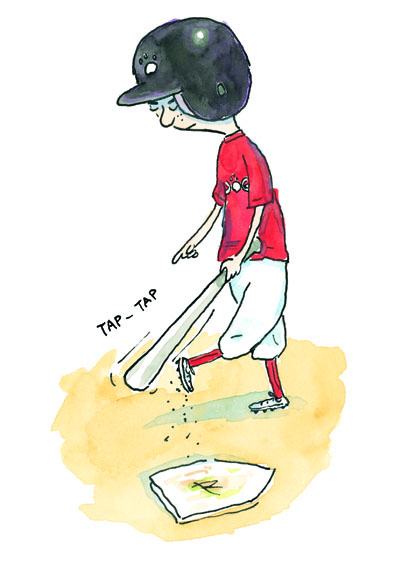
Again, just some essential details that I completely neglected to add. Or perhaps assumed. The facts were there, but I didn’t make them clear, clear, clear. This is a common kind of editorial suggestion — to “pause a beat” — forcing the writer to slow down, to really set the scene for the reader. Sometimes we’re in such a rush to get to the next thing, we don’t always properly build up to that Big Moment. It’s a Hitchcock trick. Once you’ve built up suspense, it’s time to slow things down. Think of those movie shots when we see close-ups of the killer climbing the steps, footfall by footfall. The doorknob slowly, slowly turns . . . or Casey taps his cleats.
The finale
I suspect the ending could have more zing to it…. The mother crying and the father’s heart bursting with pride seem stereotypical amid all the other fresh action and description. The fact that they’re stereotypical does fit the tone and conclusion of “Casey at the Bat,” but I believe descriptions that are as fresh as the rest of the story will complement the tone and mood you’ve established and make for a stronger ending. Also, the “bursts with pride” description echoes the language of the 3rd stanza (“bursting pride”). Would you consider echoing some of the language in the ending for “Casey at the Bat” instead? “[H]earts are light…men are laughing…little children shout…”?
The very last line is also in need of some zing. “Three cheers” feels predictable and “our side” seems too general and not exciting or punchy enough for a conclusion. Perhaps you can work “Delmar Dogs” into the final line, so that it appears in the opening and conclusion, just as “Mudville” does in “Casey at the Bat.” What do you think?
Hey, I knew the ending wasn’t right (to put it kindly). I probably even said so when I handed in that first draft to Liz. I was struggling with it. I remember interviewing James Marshall, tape recorder rolling, back in the early 90’s. He said something that always stuck in my head, simple and profound: “It’s always the ending that gives me the most trouble. The ending is what people remember. If the book fizzles in the end, they remember the whole thing as a fizzled book. It’s important to have a very satisfying ending for the reader. They’ve entered a world and now they are leaving it. So it’s a puzzle that has to be solved. I remember with one of the Miss Nelson books, it took us [the author Harry Allard and I] two years to come up with an ending we liked.”
Liz concluded her letter:
This is already so much fun – I believe that with some fine-tuning, it will be an even more dramatic and satisfying experience. Jean and I look forward to seeing what you come up with, Jimmy.
Please call or email me if you have any questions, or want to discuss any of these issues further.
Aren’t I fortunate to have such a warm, insightful, supportive editor? Liz made me think. She offered ideas and suggestions, but always made it clear that it was my book, my decisions. She got me to get back to work, keep hauling those rocks — but without feeling bad about myself, or my book. Instead I was energized, enthusiastic, ready to roll up my sleeves. Now you can see why so many authors dedicate books to their editors. We know we couldn’t have done it quite so well without a lot of help from the unseen hand of a talented editor.
Every time I read Mighty Casey out loud to a group of kids — when they laugh in the right parts, when they lean in to learn what happens next, when they burst into applause at the end — I always think of Liz and my publisher Jean Feiwel, and wish that they could be with me to share in the moment. The applause is also for them.
I first encountered Doret Canton and her singular blog when I read this post back in May, 2008. She was saying nice things about my book, Six Innings, so, naturally, I fell madly in love. In today’s world, that means: We read each other’s blogs. I recently asked if she’d be willing to be interviewed. And, hey, look, here she comes now . . .
Note: Not really Doret.
Doret, though we’ve corresponded sporadically over the past year, I really don’t know much about you. So let’s start with some basic facts: Who are you?
Well, you know my first and last name and I’ll throw in my middle initial for free: Doret A. Canton. I am from the Bronx, N.Y.
Though for some reason I never got an accent. I’ve been in Atlanta since 1996 and I still don’t have an accent. I am pretty sure I am immune to them. I didn’t learn about children’s literature in an air-conditioned classroom or office but rather on the unforgiving retail floor. Now I can pretty much hold my own in a conversation about children’’s literature, and if need be I’ll fake the funk.
Doret, I’ve been faking the funk all my life. In the “kidlitosphere,” you represent an under-served population and offer, I think, a valuable perspective on children’s literature. You are a bookseller. And an African-American. And definitely not “inner circle,” whatever that may be.
As a minority, I know how it is not to be represented or to find your stuff in the back corner. So on my blog and the displays I do at work I always strive for balance. About a year ago, I looked at the YA table and I noticed it was all girl-centered titles except for Stormbreaker, by Anthony Horowitz. My first thought was OMG, how did I let that happen? What does that say to the teenage boys who pass this table? Now the table its about 50/50, and I feel much better showing it to teenage boys and mothers who have sons. When the holidays roll around I check the calendar so I know when Hanukkah begins so I can get the books out on time. I may not always achieve balance . . .
. . . but I always strive for it. It’s the same with my blog. I just want people to come and discover authors they may not find elsewhere.
What motivated you to blog?
Before I started my blog, I was a bloghopper, leaving one or two comments. I finally wanted to start my own after finishing a YA book by an African-American author because I knew there was nowhere to talk about it. I noticed there didn’t seem to be many African-Americans blogging about children’s and YA lit. So I said, Why not? When I was thinking on blog names I knew I wanted something that reflected my melanin. So people who visited would know which box I checked in the last census.
When I started a little over a year ago, I didn’t know where I was going to go with it but I knew I wasn’t going to review only African-American authors. I enjoy reading many authors, styles, and genre. I wanted that reflected on my blog. (No one puts this bookblogger in a reading corner!) It was really slow going in the beginning. I was like, “Hello, is anyone reading?” I started to feel like that always-falling-down tree in the forest that no one hears. Early on I was lucky enough to get some nice links from Kelly Herold over at Big A Little A and Jen Robinson. Those links felt like welcomes and encouragement. So thank you, ladies!
I know what you mean. Those few people who reach out, provide links, and write comments are so important. Validation, you know; it’s not all navel gazing.
So what have you learned along the way? Any surprises?
I’ve learned to always be willing to stand by what I say and never blog angry. Site meter checking is the blogger equivalent to authors checking their Amazon ranking. For a while I was obsessed with checking my site meter to see who stopped by. I still get a kick out of seeing when someone from another country has visited. I love it when authors take the time to leave a comment. It means a lot.
I had been thinking about trying to get to know you better for a while -– I’m curious about you, and you’ve always been nice to me -– but one of your recent blog posts sealed the deal. As you wrote in the poem: “I don’t like to play the Card/But this time I am licking the back/smacking it on my forehead and calling/B.S./And that’s what this rant is about.” Have you gotten any response from that self-proclaimed rant?
I’ve only gotten positive responses for the rant. It would be easy for me to go on about authors of color being under-represented online but I don’t want to come across as the angry Black girl — besides, do it too much no one will listen. I decided I was better off exposing the few people (and I am not being humble, I have site meter, remember) who visit my blog to diverse reviews.
I love how you inject your personality into your book reviews. These aren’t “official” reviews from some kind of anonymous, official, sanitized source of wisdom: It’s Doret Canton talking books. For example, this quick review of Pureby Terra McVoy. You began it this way: “I thought this was very good. I liked it so much I’ll forgive the pink cover and just pretend I don’t see that cherry.”
I try to have fun with my reviews. I just hope my love or enjoyment of the books comes through. If you want something more professional, go to Kirkus or SLJ or someone with a degree. I simply do me and that makes it fun. To do anything else seems like work. One time I did up my review game for Zetta Elliott‘s YA novel, A Wish After Midnight. For two reasons: 1) It was a self-published book, and I wanted to give people a reason to take a chance on it; and 2) I wanted to prove to myself that I could write a slightly more professional review. But I did stay true to me. Towards the end of the post I have, “Don’t roll your eyes” in parenthesis. I like to think of that as my Duckie prom moment. Remember, Duckie got dressed up for prom but still wore his crazy shoes?
Um . . . nope. I have no memory of a Duckie. In crazy shoes or otherwise. But don’t let that stop you.
I won’t. Whenever I can fit in an 80’s movie reference like “Pretty In Pink,” I’ll do it. I think a good review is honest with a little heart in it. That statement probably doesn’t include New York Times reviews, but since I have yet to understand one from beginning to end, I am not entirely sure.
Well, I loved Lisa Von Drasek’s review of Six Innings in The New York Times Book Review. But I do think that’s what’s great about your blog, specifically, and great about blogging, generally. No one needs authorization to blog (read: speak your mind); you just do it. Now more voices can be heard. The dialogue has become more open and inclusive.
One of the great things about blogging is freedom, to share. There is no order to my blog but that’s my choice. One of the beautiful things about blogs is individuality.
It’s like what you said before, about not knowing where it might lead. You start a blog and then, gee, you wonder, What is this, exactly? What have you gotten yourself into, you know? So you make it up as you go along, and gradually it becomes perfectly itself. But please, Doret, let’s turn the conversation back to me. You’ve said that you enjoy my recurring “Fan Mail Wednesday” feature. What about it do you like?
I love Fan Mail Wednesday, wish more authors did it. I like the way you take the time to interact with your fans. Your responses are fun, honest, witty and show much respect and appreciate for your fans. Can you bring back the dog who was speaking to President Obama?
Thanks for that. A funny thing about those two “letters to the president” my dog wrote: They were by far the two most popular posts on my blog. You can imagine how much I resent Daisy for that. Now I feel like Daisy, my Goldendoodle, should have her own blog. But the problem is I have this job that gets in the way –- and a career to relentlessly, shamelessly self-promote.
Speaking of which: Look everybody, more pictures
of me, Me, ME! Look: I’m SQUINTING!!!
You know, Doret, I get a kick out of it when you complain about customers, little things that happen in the store. It’s like we’re co-workers, there’s a confidential/conspiratorial tone to it, and I can imagine you rolling your eyes as you type, shaking your head, muttering, “Oh Lord.”
Earlier when I said I learned about children’s literature on the unforgiving retail floor, I wasn’t kidding. Some customers don’t play — you had better know what you’re talking about. Don’t try and fool them, they’ll catch you and call you out on it. Some costumers are just crazy. Some are just plain mean. (Emily Post, where are you? Please tell these people to get off their phones while receiving help.) Complaining about customers on my blog is a good way to get it out of my system. Plus they add a little more bite to the bookseller in my blogger name. If there was a musical for the book industry, I’d be singing and dancing (off-key and off-beat), “It’s a Hard Knock Life” (with the Jay Z beat), while picking up book reshelves and giving customers the evil eye. Every once in a while screaming, “Books are not coasters!”
No, not coasters – but they do make great furniture. Every house should be filled with them. Doret, you are obviously crazy about baseball. What are the baseball books you are recommending this season?
I love talking about sports books because they can turn non-readers into readers. Here are eight new baseball books that I’ve read and reviewed:
The Prince of Fenway Park by Julianna Baggott. I loved this one. So far this is my favorite baseball book of the year.
Babe Ruth and the Baseball Curse by David A. Kelly, illustrated by Tim Jessell. This was a great early chapter baseball book. I’d highly recommend it for baseball fan parents who are looking for something a little longer to read to their child.
Mudville by Kurtis Scaletta. I loved the way the main characters were developed.
Mighty Casey by James Preller, illustrated by Matthew Cordell. As always I really enjoy your text J.P., but it’s Cordell’s light and easy illustrations that make it okay for me to add it to this list (don’t want people to think I am playing favorites). And that really did look like pee!
Baseball Crazy edited by Nancy E. Mercado. Great collection of baseball short stories, from authors such as Jerry Spinelli, John H. Ritter, Sue Corbett, and more.
Top of the Order by John Coy. If a parent came to me and said my son hates reading but loves baseball, I would show them this book. Coy took the time to create four characters and situations boys could relate to. This book could show many reluctant readers that reading isn’t so bad.
The Girl Who Threw Butterflies by Mick Cochrane. It’s about a girl who pitches on her eighth grade baseball team, with a wicked knuckle ball.
Change-Up Baseball Poems by Gene Fehler, illustrated by Donald Wu. I loved everything about this collection of poems. The text and the illustrations are a beautiful match.
These next four I haven’t read yet, but I’m looking forward to them:
The Brooklyn Nine by Alan Gratz. I know this is a great baseball book when non-baseball fans are giving it great reviews.
Ray and Me by Dan Gutman. I take Gutman’s baseball card adventure series for granted because its always so good. I do plan on reading this one. It’s about Ray Chapman, the only major league baseball player to get hit by a pitch and die in a game.
You Never Heard of Sandy Koufax? by Jonah Winter, illustrated by Andre Winter. I saw this reviewed over at Fuse #8. My first thought was, That’s a beautiful baseball book I must read. The Baseball Talmud by Howard Megdal. This is the history of Jewish players in major league baseball.
In a recent email, you asked me about, “your Mets.” It used to be “our Mets.” What happened? You haven’t crossed over the to Dark Side (read: Yankees), have you?
I could never cheer for the Yankees.
I agree, it’s like rooting for a Swiss watch. Roger Angell, who is one of the great pure writers of the past fifty years, says that people have more “Mets” in them than “Yankees” — that we’re more shaggy dog than exalted champion.
That quote couldn’t be more perfect, and I will always root for the Mets.
Okay, Lightning Round:
Five favorite books you love pressing into customers hands?
1. Tales from Outer Suburbia by Shaun Tan
2. Marcelo In the Real World by Francisco X. Stork
3. Flygirl by Sherri Smith
4. Carter Finally Gets it by Brent Crawford
5. A Crooked Kind of Perfect by Linda Urban
6. Fairy School Dropout by Meredith Badger
(Six is the new five!)
Favorite music?
Neo-Soul, Pop, Rock and Jazz.
Favorite movies?
Anything with a good story line that doesn’t rely on special effects.
What other sites can you recommend that celebrate diversity in children’s literature?
To be fair, I do run across a few other reviews of authors of color at other blogs — but its not nearly enough. I am not going to do the percentages, that’s too much math for me. If I was to take a guess, even including the blogs I’ve mentioned, reviews of authors of color wouldn’t make up 5% of the kidlitosphere. That’s simply not right and there’s no excuse. It’s 2009, we have our first Black president; this should not be an issue. I don’t want anyone to stop reading and talking about the books they enjoy, but be more open and inclusive. Everyone should check out Diversity Rocks Challenge. It was started by Ali from Worducopia. This is a pressure-free challenge that encourages bloggers to add more color to their reading list I don’t do challenges — I am too lazy — but the Diversity Rocks Challenge requires no effort. After reviewing an author of color you simply link it to the site. That’s it, you come and go as you please. Also check out Crazy Colored Summer Reads over at Crazy Quilts. Edi has compiled a great list of titles featuring teens of color.
Thanks for that info, Doret. Lastly: Ali or Frazier?
Ali.
Doret, my friend, thanks so much for stopping by. I really enjoy you and love that you are out there, shouting loud, staying proud. Keep up the great work.
Shouting loud, staying proud — with those four words I am almost tempted to put up a Black power fist. Instead I’ll say thank you, James, for finding me interesting enough to want to interview. And please bring back Daisy, her fans are waiting.
Over at Feiwel and Friends, they are celebrating the publication of Mighty Casey like it’s 1999. They are even blogging about it. Please click the link because Matthew Cordell just interviewed . . . me! Their blog is pretty great even without us (imagine that!) because other F & F authors and illustrators contribute often, most recently John Coy and Maria von Lieshout.
Here’s two brief excerpts from that longer piece.
—–
MC: I can assume that many writers, like many illustrators, are particular about how they work and where they work. Where do you like to do your writing? And what are your tools? The pen, the old-timey typewriter, word processor, or personal computer?
JP: Matt! Let me begin by saying — and since this is your first interview, no one would expect you to know this, but — you don’t actually have to sit on my lap during an interview. It’s not like a Santa thing.
MC: Whoops!
—–
MC: What do you see are the major differences in crafting picture books vs. novels? With the novel format, you generally have the space to open up and write more at length. Less confined, I’d imagine, than picture books, where you really have to choose words wisely. Do you prefer writing one over another?
JP: Well, there are two things at play here: picture books are dependent upon illustrations, so the writer is already in a strange position. With novels, you have more control over the finished product. Secondly, novels probably better suit my sensibilities. I find that I can’t force a picture book, which tends to be concept-driven and needs to perfectly distill an experience to its essence. With a novel, you have more opportunity to wander in and out of different rooms, and I think that better reflects how my mind natively operates.