Tag Archive for James Preller

PHOTO ALBUM: 18 Real Places Featured in “THE COURAGE TEST”

I enjoyed compiling these images, which mirror the journey taken by the characters in The Courage Test. The only caveat I’ll add is that scrolling through the photos and reading the captions might give readers a false idea of the story. Though my focus here is on literal place, the book is not a travelogue. There’s a plot and everything. Really!
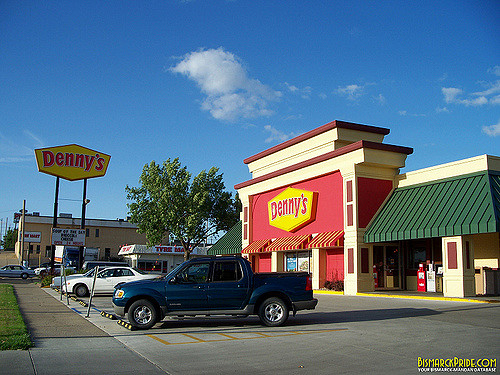
 

3829282826_95f7da0c2a_z

Bismarck, North Dakota, page 20: “Are they fast at Denny’s? Good question. Yes, they are fast. You say your order out loud, and literally before you reach the end of the sentence there it is, steaming hot on the table in front of you. How is that possible? No one knows.”

OLYMPUS DIGITAL CAMERA

Page 30: At the Fort Mandan Gift Shop, Will buys a postcard and scribbles, “The soldiers on the expedition built a fort here, but it’s long gone. So the tourist board built an exact replica. Whatever! The tour guide told us it got as cold as 45 degrees below zero that winter. Brrrrr, chilly. The soldiers almost ran out of food, but fortunately the people of the Mandan tribe were super friendly. They had corn to spare! Otherwise those guys might have starved. We’d all be like, Lewis and Clark? Nope, never heard of ’em. Ha!”

montanas-missouri-river-canoe-5709

Floating east on the Missouri River in the White Cliffs region. Page 48: “I am glad to be on the river, pulling a paddle through the water.”

942435_529289920468138_1825453825_n-631x450

Pages 50: “And then he lurches forward, his long, jerky strides eating up the trail in that falling-forward way of his, until we come to a plaque titled DECISION POINT.”

whitecliffs

Page 57: “I glimpse my first sight of strange rock formations. These are called the Breaks, rocks that have been folded, faulted, uplifted, and left here, like old, dead soldiers from another, long-ago war. White sandstone cliffs begin to rise higher and higher on both sides. It feels like we’re traveling through a great stone maze built by ancient gods.”

montanas-missouri-river-canoe-11998

Page 85: “That night, we camp where the Corps of Discovery camped more than two hundred years ago. Meriwether Lewis and his men. Under the same starry skies, staring into the same fire, beside the same chalky cliffs.”

grand-union-hotel

Page 91, Fort Benton: “As a treat, he decides to spring for the swanky Grand Union Hotel in the heart of downtown. It’s a beautiful old brick building near the river. I am grateful to have a television and a big, soft bed with sheets and pillows. A working toilet isn’t half bad, either.”
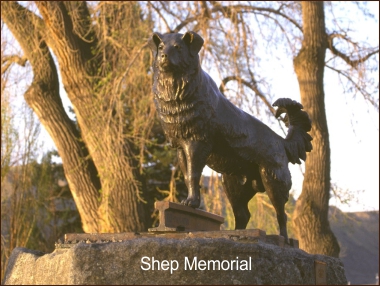
shep3

Park in Fort Benton, near Grand Union Hotel. Page 96, Will writes another postcard: “This is a statue of Shep, an important dog in the town of Fort Benton. They say that Shep hung out at the train station every day for five years waiting for his master to return. Unfortunately, his master was dead, but Shep made it into Ripley’s Believe It or Not! Worst of all, Shep died when he got hit by a train. True fact! Old, weird America.”

1513684_407393982730932_635255340_n

Dillon, Montana. Page 112: “I can see my father watching me through the Dairy Queen window. His expression is curious, alert. He’s seated across from Maria Rosa, who is biting into an enormous burger.”
lemhipass1

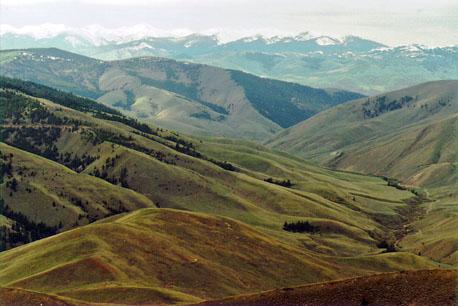
Lemhi Pass area, page 123: “My father says, ‘Lewis stood somewhere close to this spot. He looked at those mountains — remember, no white American had actually seen the Rockies up close before — and he knew without a doubt that unless they had horses to help carry their load, they’d all die, wandering in that maze of bare rock and stone. To make matters worse, he’s trying to find a tribe, the Shoshones, who prefer to stay hidden.”
4122341917_8d439eacd2_z

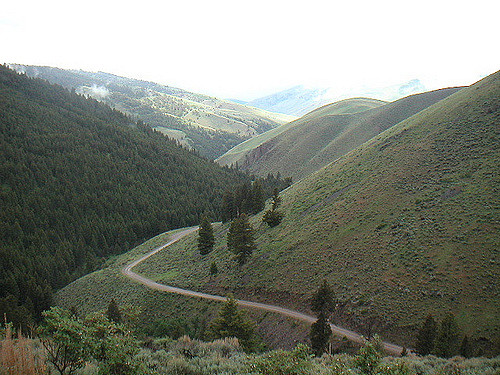
Page 125: “We return to the car and roll down a semi-terrifying, one-lane road — narrow and steep, with wicked, sharp turns — and we find an old campsite off Agency Creek Road.”

6a00d8341c66c653ef00e54f452b868834-640wi

The Lolo Trail in the Bitterroot Mountains, page 134: “The next few days should be tough. This will be my first time doing true backcountry hiking. There are no stores, no cozy hotels. We are carrying everything on our backs — food, sleeping bag, tent, clothes, and, oh yes, bear spray.”

black-bear-cub-and-mom-l

Page 150: “A bear cub is the worst possible thing anyone can find on a remote mountain trail. There’s movement in the thicket up ahead. Something big coming through, branches snapping under the weight. A black nose pokes through. Followed by the massive head and shoulders of the wildest, most dangerous beast I’ve ever seen.”
14-1

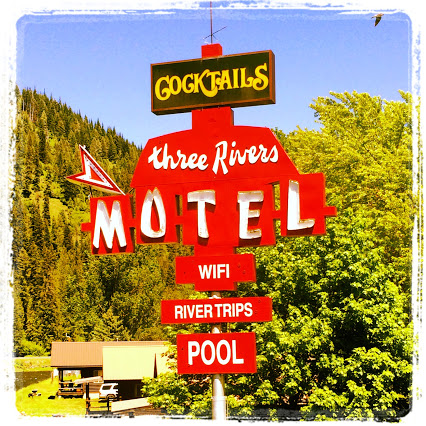
Page 158, Idaho, Highway 12: “My father puts on the blinker when we come to a big red sign that reads, THREE RIVERS MOTEL: COCKTAILS, WI-FI, POOL.” [Note: I took a little creative license here.]
filename-3r-5-2012-jpg

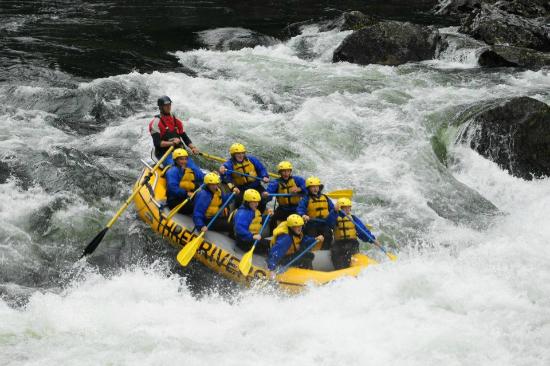
Page 179: “The first hour is probably the most exciting sixty minutes I’ve had in my entire life. And then with a lurch the boat suddenly tips down, and there’s a bounce and a jostle, and Dan cries out, ‘Big bump! Lean in!’ Before I can react, I’m popped backward into the air like a rag doll.”
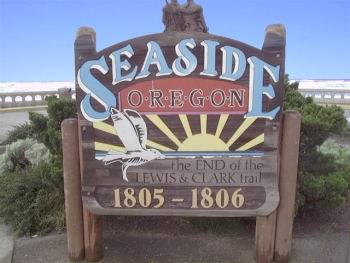
seasidesign

Page 184: “Seaside is a beach town, with a long boardwalk, high buildings off the shore, and a stunning sand beach.”
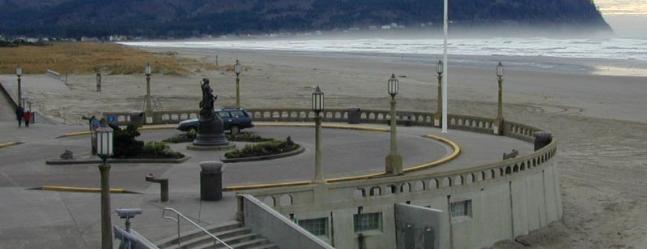
home-page-10

Page 187-188: “At the instant my first step reaches the water, I feel a bolt of ice-cold surge up my body. But I’m moving too fast; there’s no turning back now. And then I’m laughing — we’re both howling and screaming and yelping in shock and surprise — splashing and shivering.”
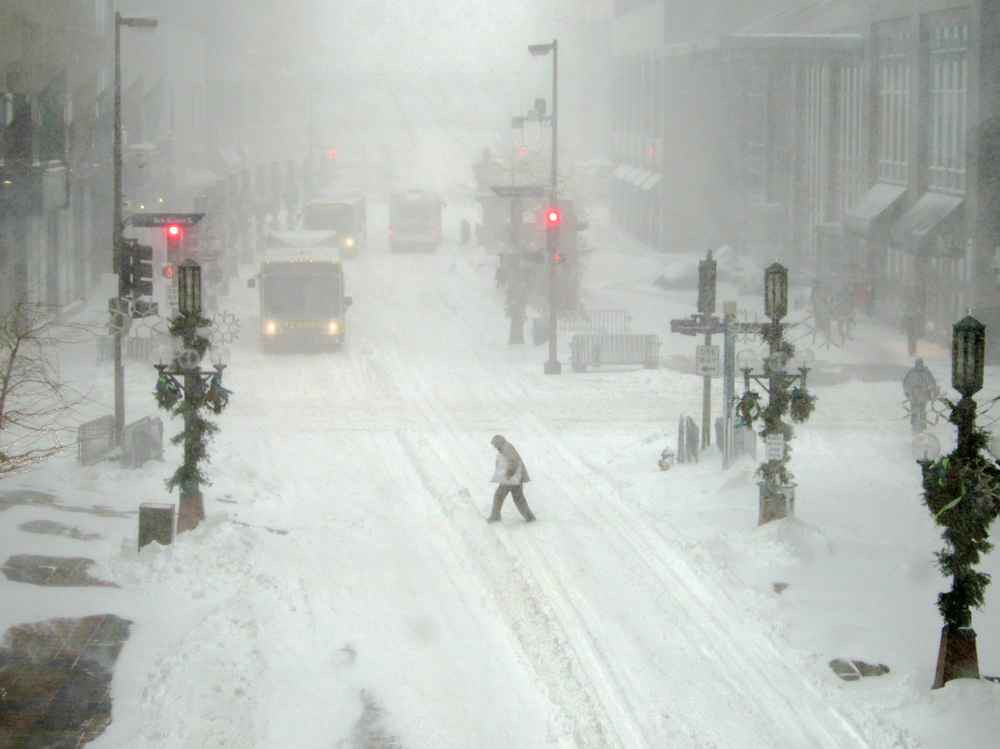
tmg-slideshow_l

Page 203: “Time passes. Autumn comes and goes, now winter lingers. We don’t mess around when it comes to winter here in Minneapolis, Minnesota.”

The Courage Test is a 2016 JUNIOR LIBRARY GUILD SELECTION.

“A middle grade winner to hand to fans of history, adventure, and family drama..”School Library Journal.

couragetestfrontcvr-199x300“Preller traverses both domestic drama and adventure story with equally sure footing, delivering the thrills of a whitewater rafting accident and a mama bear encounter, and shifting effortlessly to the revelation of Mom’s illness and the now urgent rapprochement between Dad and Will. Whatever young explorers look for on their literary road trips, they’ll find it here.The Bulletin of the Center for Children’s Books.

Preller stirs doses of American history into a first-rate road trip that does traditional double-duty as plot device and coming-of-age metaphor. . . . Also, along with helping a young runaway find a new home, Will survives a meeting with a bear and a spill into dangerous rapids — tests of courage that will help him weather the bad news that awaits him at home.”—Booklist, Starred Review


5 QUESTIONS with AARON BECKER, creator of “JOURNEY”

61oxvlhk6il-_ux250_


Greetings, Aaron. Let’s talk about your book, Journey. You do a masterful job in that opening spread, making full use of the copyright page, establishing the core elements of the story to come. Journey begins with a bored girl on her front stoop. Inside her home, through a cutaway device, we see her father looking at the computer, her mother talking on the phone, her sister staring at an electronic device. The world is dull and monochromatic –- except for one red scooter and, off to the side, almost unnoticed, a boy with a purple piece of chalk. Is that how this story started for you? As a reaction against our hyper-involvement with technology?

Yes, to the extent that much of my childhood was spent hoping my Dad would get off the home computer. I never saw the computer as an answer to life’s biggest questions; to me it was clear that there was more value in my imaginary play than anything I could gain on a machine’s screen.

journey_cover1

Next comes what I consider the essential illustration to the story. And my favorite. The girl is alone in her room: bored, bored, bored. I love that critical moment, because I’m a huge believer in the positive value of boredom. Most people have an aversion to empty space –- on the radio, silence is called “dead air.” Thanks to technological progress, we can now pick up a phone and scroll through Instagram at the first momentary lull. Crisis averted. Many of us seem to have lost our ability to work our way through (and beyond) that boredom.

This is the crux of it. It’s interesting too, because during the lead up to the election, I depended a lot on the internet as a source of comfort to ease my concerns for the outcome that I feared. I was aware of this, and even went so far as to go on a writing retreat away from the news cycle the week before the vote. Now that we’re on the other side, I can see so clearly that these tools were a false comfort to begin with. It’s been much easier for me to stay off social media and news websites this past week, and not just because I don’t want to see evidence that we have a new President. It’s more that I realize there’s no use in building one’s sense of reality on something that is so removed from our actual physical existence on Earth. In a sense, I felt betrayed by technology once again. It’s a lesson I hope to remember.

lanterns

I’m sorry, what, were you talking? I was just checking my . . . [puts away phone]. It occurs to me that if you gave your central character an iPhone, she would have never gone on that journey. You would have lost an entire trilogy.

I do think there’s a loss. When I was a kid, I watched way too much junky TV after school (which, I would like to add was brought on by actual policy from Reagan’s FCC that allowed toy makers to create half hour commercials as entertainment for children) and I often think this hampered my brain’s ability to function as an adult. But I’m also not entirely convinced that we were that much better off before. People have a lot more access to different types of storytelling (and stories) than they ever have. It’s a busy landscape to navigate and I’d like to think that the children out there today that can manage the overload will come out with some pretty amazing stories to tell. That said, I’m not sure I could survive it. When my friends were all moving onto advanced gaming consoles, Pac Man was about all I could handle. One joystick and no buttons.

pallonezia

I think when people are bored, they ultimately have two choices: 1) Stay bored (and become boring themselves), or 2) Get creative, do stuff, make things happen. Quick story: I witnessed this dynamic when we took our kids on vacations in the Adirondacks. We often rented a cabin on a lake with no Wi-Fi, no TV, no town, no stores. For the first half hour, every year, they were lost. What now? Then, you know, they got busy. They built forts, went fishing, swam out to the pier, played cards, explored the grounds, looked for frogs, read, drew. All thanks to that wonderful boredom!

I was bored for most of my childhood. School was excruciatingly boring. At home, my family was of the serious academic variety and I was the only one interested in play. So I had to figure it out on my own. I didn’t need the Adirondacks; it was like that for me 24/7. I was industrious. I used the Styrofoam from my Dad’s computer boxes to build stuff. And in 5th grade, I moved down into the basement to decorate my own universe. I should also add that three of my close friends from elementary school in Baltimore, who suffered the same boredom as I did on all fronts, have gone on to distinguished careers as writers including a Pulitzer Prize finalist, a New York Times staff writer, and a children’s book author. Go Baltimore City Public Schools!

Stuck in a room, another famous children's book character had to imagine his escape from boredom. Illustration by Maurice Sendak from WHERE THE WILD THINGS ARE -- but everybody knows that.

Stuck in a room, another famous children’s book character had to imagine his escape from boredom. Illustration by Maurice Sendak from WHERE THE WILD THINGS ARE — but everybody knows that.

In the girl’s bedroom, you scatter little clues about her character. The air balloon hanging from her ceiling, the drawings of the pyramids, the map of the world on her wall –- and even, very small, a plane flying outside her window. That’s important to you, isn’t it? The sense that we’re living in a great big world.

I think I’ve always been looking for a way out, and so to that end the world offered possibilities. It’s not that my home life was terrible. I just wasn’t getting what I needed so I looked beyond it for an answer. I’d imagine most of us can relate to that!

Obviously, your book owes a debt to Crockett Johnson’s Harold and the Purple Crayon. The device, the crayon, is the same, but the execution could not be more different. Also, the basic plot is timeless: using the imagination as escape, as a way to explore new worlds. Were those books important to you as a child?

haroldbed

Actually, I was never a big fan of that book! I think the drawings bugged me somehow. But I do remember that when I finished Journey someone mentioned the similarity and so I looked at it as an adult. I was amazed at the similarities in the story! I probably would never have made Journey if I was aware that there was something so similar already out there!

Yes, I hear that. I was talking about this issue with Jessica Olien recently. There’s a freedom in not-knowing. I mean, I’m aware of authors who avidly read Publishers Weekly and stay up-to-the-moment about what’s being published. But I’m the opposite, because my tendency is the same as yours: “Oh, rats, it’s already been done.” Creatively, I feel better off not knowing too much. A little bit goes a long way. I’m not a librarian or a publisher; I’m a maker. Our work has different requirements.

I’m a big fan of picture books and illustration in general, so I’ll often go to stores that do a nice job of curating their shelves (like the one at the Eric Carle Museum here in Amherst) and pick out a few books to take home that I like. But I’ve never been interested in following trends or trying to interpret the market of what sells or is popular with critics. I feel like I have this chance with the books I make to create something akin to actual fine art, in that I feel like I’m making something entirely fueled by my own curiosity and interests. The minute I start to create books that I think will sell well is the minute I might as well go back to working as a hired gun for advertising or film. 

Amen, brother! During her journey, our female protagonist experiences great beauty in the natural world. But there are also dark forces at work. The soldiers and guards who seek to capture and control. Are you saying, in effect, that there are forces that conspire against our imagination?

taikuns_ship

I’ve always thought that the emperor and his soldiers are interested in capturing the purple bird because it represents something they can’t understand or access. They’re aware that the bird has some sort of magical quality to it and it frightens them. But the girl just wants to set it free. She doesn’t hesitate. The emperor represents that force inside of us that might more against that spontaneity of creation. Self-doubt, jealousy, envy, fear. We all have it.

We hate what we do not understand. Except for your art! I have no idea how you do it, Aaron, but I love your work. What materials do you use to create these illustrations? Smoke and mirrors and what else? Forgive me, I’m no Julie Danielson; I’m a little lost when it comes to talking about artwork.

Pencil sketch, opening spread.

Pencil sketch, opening spread.

I start with pencils until the story is working. Then I build some 3D models in the computer to aid in the perspective of the architecture; these models get printed lightly out onto paper and I do another, more detailed pencil drawing for each spread. Then I scan that pencil in the computer so that I can print it out very lightly onto watercolor paper as the basis for my ink drawing. From there, it’s just like a traditional water color painting. Journey took me about a year and a half to produce. It’s laborious but it’s the only way I know!

back_lanterns-use

This is a wordless book, and your very first. Congratulations on such a jaw-dropping accomplishment, for it is a debut book that announced the arrival of an exciting new voice. I enjoyed thinking about your story long after I first encountered it in the wild. Did it have words in early iterations? The wordlessness seems to open up the potentialities of story in ways that wouldn’t be possible if it included text.

Thanks. I do feel like I made the book I wanted to make and the success that has followed has been just one giant blessing. I didn’t plan on it being wordless. But my when I fished my first draft, which was literally a series of small thumbnail sketches on one big sheet of paper, I realized that adding words would only be redundant. The story was already there.


There are currently three books in Aaron Becker’s “Journey” Trilogy: Journey, Quest, and Return. If readers are feeling bored, you can find Aaron’s website by searching high and low on the interwebs. It might inspire your imagination.


ABOUT THE “5 Questions” INTERVIEW SERIES: It’s a little project I’ve assigned myself, hoping to reach 52 authors & illustrators in the course of a year, always focusing on one book. I almost called it “Author to Author” but I didn’t want to push myself to the front of it, though that is part of what makes these interviews unique. We’re in the same leaky boat.

Coming next week, my great pal Matthew Cordell (Wish) You can hit the “SUBSCRIBE” icon and, hopefully, it will work. Scheduled for future dates, in no particular order: London Ladd, Lizzy Rockwell, Matthew Phelan, Bruce Coville, Jeff Mack, Jeff Newman, and more. To find past interviews, click on the “5 Questions” link on the right sidebar, under CATEGORIES, and scroll till your heart’s content. Or use the handy SEARCH option. 

Guest so far:

1) Hudson Talbott, “From Wolf to Woof”

2) Hazel Mitchell, “Toby”

3) Susan Hood, “Ada’s Violin

4) Matthew McElligott, “Mad Scientist Academy: The Weather Disaster”

5) Jessica Olien, “The Blobfish Book”

6) Nancy Castaldo, “The Story of Seeds”


Six Critical Life Messages That Every Child Should Hear, by Barbara Coloroso


UPDATE: I originally posted this in April of 2010, as a tribute to the influence I felt from Barbara Coloroso while writing the book Bystander. In these troubling times, I felt it was time to remember her wise words, which she delivers in 90 seconds.

——–

In previous blog entries, I praised this book by Barbara Coloroso . . .

. . . a title that has informed, enlightened, and guided my own work as a writer, coach, and father.

She’s awesome, that’s all there is to it.

I came across this short video this morning. In less than 90 seconds, Barbara delivers a message that every teacher and parent needs to hear and remember — so that the children in our world hear those same things from us.

You need to a flashplayer enabled browser to view this YouTube video

Talking: Writing Process, Roald Dahl, Works In Progress, Lewis & Clark, and the Danger of the “Info Dump.”

Illustration by the amazing Quentin Blake, from DANNY CHAMPION OF THE WORLD -- a book that helped inspire THE COURAGE TEST.

Illustration by the amazing Quentin Blake, from DANNY CHAMPION OF THE WORLD — a book that helped inspire THE COURAGE TEST.

Deborah Kalb runs a cool website where she interviews a staggering number of authors and illustrators . . . and she finally worked her way down to me.

Please check it out by stomping on this link here.

Here’s a quick sample:

Q: You wrote that you were inspired by Roald Dahl’s Danny the Champion of the World to focus on a father-son dynamic in The Courage Test. How would you describe the relationship between your character Will and his father?

A: Yes, I came late to the Dahl classic and was struck that here was a loving book about a boy’s relationship with his father — not the kind of thing I’ve seen in many middle-grade children’s books. I found it liberating, as if Dahl had given me a written note of permission.

In The Courage Test, William Meriwether Miller is a 12-year-old with recently divorced parents. His father has moved out and moved on. So there’s tension there, and awkwardness; William feels abandoned, and he also feels love, of course, because it’s natural for us to love our fathers.

I wrote about this at more length, here, back a couple of years ago. In the unlikely event you are really fascinated by my connection to the Dahl book . . .

5 QUESTIONS with MATTHEW McELLIGOTT, author/illustrator of “MAD SCIENTIST ACADEMY: THE WEATHER DISASTER”

msa2-jacket-green-mockup

Here we are, oh sunny day, the latest installment of my “5 Questions” interview series with luminaries of the children’s book world. Here comes my friend, Matt McElligott!

msa2-author-portrait


Matt, I’m looking at the second book in your “Mad Scientist Academy” series, The Weather Disaster. And all I can think is, Boy that looks like a lot of work! Seriously, I’m exhausted. So I’m just going to take a brief nap and, yawn, we’ll pick this up later. Zzzzzzzzzz.

You’re not the first person to tell me my books put them to sleep! 

Okay, I’m up! For readers who might be unfamiliar with this science series, you are essentially taking a nonfiction topic and giving it a fresh, contemporary spin. All told in an appealing format that’s a hybrid between the graphic novel and traditional picture book. As someone who has admired your work for many years, it strikes me that this series –- which is spectacular in every way — represents a culmination for you, a distillation of your many and varied talents. I don’t think you could have done this ten years ago. All of your past work informs this one book: your intellectual curiosity, your love of comic books and old Hollywood movies, your silliness, your experience with book design and storytelling, plus the signature McElligott sense of what kids genuinely like. How did this series begin?

The sentiment is much, much appreciated. And I agree completely -– I don’t think I could have done this ten years ago, and I’m not sure I could even do it now without the tremendous help of my wife Christy. It really is a lot of work. Not only does the story have to be compelling, but it also has to deliver a lot of real science along the way, hopefully while still captivating the reader. Finding that balance has been, by far, the trickiest part of putting these together, but I can honestly say I enjoy every part of it.

msa-weather-spread

The idea began with a suggestion from my longtime editor, Emily Easton, who felt that there was a real opportunity for a new series that could make science accessible for kids. We spent about a year and a half trying out various ideas and approaches until it finally started to gel. The graphic novel format came from both my love of classic comics and a practical need to fit all the information into thirty-two pages.

There must have been a point, early on, when you thought to yourself, “Uh-oh.” Just that pure terror of, What have I gotten myself into? Can I actually do it?

Boy, you nailed it with that question. The feeling of terror hit me a couple weeks into the first book and has lingered ever since. There are roughly a hundred illustrations in each book, and the thought of how long it will take to draw the next book keeps me up at night. I’ll spend about a year, maybe a little more, researching, plotting, sketching, and illustrating pretty intensely until it’s finished. But the good thing is that I’m not in it alone. I happen to be married to a very talented woman who’s a whiz at both researching and drawing (we met thirty years ago in art school) and we can divide up many of the tasks to keep everything manageable. Three books in, and we’re still married!

msa-weather-balloon

Now correct me if I’m wrong, but your cruel editors don’t allow you to just make up stuff for this book? Is that true? So you’ve actually got to know what you are talking about? What’s the research process like? In this book you thank an actual weatherman, Jason Gough. Otherwise known as a, cough-cough, “stratospheric meteorologist.”

Oh, no. I make most of it up. (That part about how rain forms? That totally came to me in a dream.) Seriously, there’s a ton of research for each book, and meeting real scientists has been one of my favorite parts. For The Weather Disaster I worked with Jason Gough, and for the Dinosaur Disaster I worked with a man named Carl Mehling, a paleontologist who’s in charge of all 32,000 fossils at the American Museum of Natural History. For the upcoming Space Disaster, I worked with the astronomer Bob Berman, who you may know from his work on the radio station WAMC.

All of these scientists were so helpful, patient, and fully willing to engage my strange questions. (“Say, Jason, if you needed to create a tornado from scratch, how would you do it?”) Best of all, they embodied a perfect combination of science and imagination, and I was really lucky to find them. I’ve posted interviews with Carl and Jason on my website, and will be posting more soon.

Matt, you and I are both active with school visits. And I always recommend you to media specialists. The funny thing is, they usually say, “Yeah, he was already here.” At which point I figure out that I’ve been invited because they are working their way down, down, down the list. Not that I mind playing second fiddle –- I’m happy to be in the orchestra! But talk to me a little about your experience in schools. I mean, there you are at home, slaving away on these impossible books. Then you get out of the house! What do you hope to achieve when you visit a school? And also, if you don’t mind me cobbling questions together, what do you think that you get out of your school visits?

Don’t sell yourself short –- you have quite a reputation in the schools! I suspect you’re there because the teachers are actually working their way up the list. (Preller? Why not? Anyone’s got to be better than McElligott.)

I get paid in Ramen Noodles and old Lotto tickets. I think that’s a big part of my appeal.

I love your questions about author visits. The first is pretty straightforward: I hope the kids see that authors are real people, that making books is a thing that real grownups do, and that the writing and illustrating process can be hard, but is totally worth it. (Authors, after all, get to control the world.)

On school visits, Matt always shows readers the joy of . . . the thrill of . . . nevermind!

On school visits, Matt always shows readers the joy of . . . the thrill of . . . nevermind!

As for what I get out of the visits, I’m not sure anyone’s ever asked me that. I know I get to share my love of books –- that’s a big part –- and get to meet future authors and illustrators, as well as terrific librarians and teachers. But I also get to represent something bigger than myself, a duty I take very seriously. When a school hosts an author, and when they present the author/illustrator as someone of importance, the school is sending a message about the value of the arts that kids are almost certainly not getting anywhere else. I’m honored to be that representative, if even for just a day.

I like that, we are ambassadors from a distant land. I’ve never been comfortable with the “rock star” aspect of being a visiting author. Sometimes we get put on a pedestal. But when you view it as beyond the self, that we are representing something bigger than “Jimmy” or “Matt,” then it makes more sense.

Ambassadors is such a great word for it. We may be the only authors some of those kids will ever meet. If we’re funny, if we’re engaging, if it shows that we love our jobs, they’ll assume that all authors are that way. Those kids will come away with the idea that reading and making books is something they want to do too.

I recall Tedd Arnold telling me in an interview that he enjoyed checking in with their “squirmy reality.” That phrase always stuck with me. You get to look at those faces, and interact, and reconnect with the fact that, hey, a second grader in October is still really, really young. The visits land us in their world. You know what? It’s like going on a safari! You drive the jeep, Matt. I’ll grab the pith helmets!

tumblr_m7bk9kxo731qcidxzo1_500

Exactly! It’s field research, and we can learn so much from studying the indigenous population of the elementary school.

You’ve tackled dinosaurs, you’ve wrestled with weather. What’s your next topic?

I can tell you that next up is The Solar System Disaster, out next summer. After that, maybe the ocean? Or maybe the science of belly-button lint. It’s probably between those two.

Well, I think we’ve all learned something today. Every book in this series is a disaster.

In more ways than one!


MATT McELLIGOTT keeps a terrific website which you can visit by clicking, madly, here


AND IF YOU’D LIKE TO READ PREVIOUS “5 Questions” interviews, thank you — just click on the names below. Coming next week: Jessica Olien and her blobfish! And after that: London Ladd, Matthew Cordell, Lizzy Rockwell, Nancy Castaldo, Matthew Phelan, and more (but not necessarily in that order).

* Hudson Talbott

* Hazel Mitchell

* Ann Hood