Tag Archive for Books for Boys

Books for Boys?!

School Library Journal recently ran a review for Along Came Spider. Written by Elizabeth Swistock, you can read it in full by clicking wildly right here and scrolling insanely downwards.

I think Ms. Swistock gives an accurate, sympathetic review, while noting that “several of the traits that Preller describes could be associated with autism spectrum disorder, but Trey’s condition is never stated outright.”

Not naming Trey’s condition was a conscious choice. Maybe that was a mistake on my part, I don’t know. But for the record, I saw Trey as a boy with high-functioning Asperger Syndrome. What I felt at the time, correctly or not, was that most kids wouldn’t perceive things that way — they’d be dealing with the near reality of a quirky boy, not an abstract label, so I tried to hug close to that perspective. In today’s inclusive classrooms, these are daily encounters for most children.

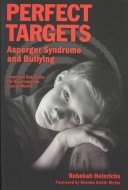
By the way, here’s one of the many great books I found on the subject, Perfect Targets: Asperger Syndrome and Bullying, by Rebekah Heinrichs.
For the purposes of Along Came Spider, I didn’t see the behaviors exhibited in the book as “bullying” per say, since I hate to see every incident of like or dislike — or even one-time acts of physical violence — thrown under the notorious bullying umbrella. Vast topic, too big for this entry. I’ll have a lot more to say on that later, when we get closer to the publication of Bystander (Feiwel & Friends, Fall, 2009), a dramatic novel that takes a closer look at bullying in a middle school environment

The interesting part of the review comes at the end (doesn’t it always?). Ms. Swistock concludes:

The fact that Trey and Ava are extremely self-aware and kindhearted is a redeeming quality, but the book could prove too uneventful for its intended audience. That’s too bad because Trey is a sweet character and Preller’s message is a good one.

I want to repeat the key phrase there: too uneventful for its intended audience.

Let’s be clear: I have no argument with the reviewer. She very well may be correct. It’s not been a huge seller. Though it is a book about boys — that also features strong female characters — it might not fit into the category of The Type of Books That Boys Like. There’s not a lot of action. It’s a friendship story. Maybe it would be boring for typical boys, whomever or whatever that might be. I loved the observation made by Karen Terlecky at Literate Lives in the very first review of Spider:

I’ve read a lot of books recently about girls trying to make sense of friendships and themselves, so it was a delightful surprise to find and read an advance review copy of a book that deals with boys trying to find where they belong . . . .

I wonder: Did I accidentally write a girlie book about boys? And is such a thing possible? Or unwelcome? Or needed? Can it be that a He-Man such as myself is, deep down, just a wuss?

I am genuinely interested in this topic and invite your comments. It’s something I’ve been puzzling over for a while now. I haven’t reached any wise conclusions. But maybe that’s what blogging should be: that it’s okay, maybe even preferable, to open things up for discussion, rather than attempt to neatly wrap things up, tie down all the loose ends.

On a diagnostic level, we can all agree that boys don’t read as much as girls. We can see the divides in our educational system. But it becomes far trickier when we encounter it on a prescriptive level, when we read that we need more . . . books for boys.

Because, of course, what IS a book for boys? Following the standard clichés, we’ll see well-intentioned publishers roll out a bunch of sports titles and a series of picture books about trucks and dinosaurs. Boys love that stuff! Oh yeah, and gross stuff, too — boys love disgusting things. Farts and vomit! Bodily functions! Smashing things! Underwear! And on and on.

And you can see where that kind of reductionistic thinking leads us. Exactly nowhere. Where Boy becomes Caricature, effectively ignoring the vast number of outliers, the sensitive ones, the insecure boys, ignoring the notion that boys may be All That and So Much More.

What is a book for a boy? What do boys like? To answer that, we have to address the idea of what is a boy? I guess what worries me is when those answers get too restrictive, too limited, when publishing for boys does a disservice to what boyness is all about, in all its sprawling, messy glory.

“Oh, here comes a boy. Do I have a book for you!

Deleted Scenes 2: Six Innings

When revising Six Innings, I eliminated about 25% from the first draft (for more on that topic, click here). One of the plot lines that got axed involved Alex Lionni’s relationship with his father, a man utterly disinterested in sports who gets involved as an assistant coach after his divorce.

During this editorial stage, we generally minimized the role of adult characters. There was another scene when Mr. Lionni called Coach Jeff Reid and, despite his woeful lack of baseball knowledge, asked to help with the team. He was a man in pain, looking for some way to connect with his son. But, but, but.

As writers and editors, we often wrestle with the issue of balance, fiction’s inverse relationship of “pace” and “depth.” It’s a push-pull situation: pace/depth; plot/character. To move fast, you have to travel light; but if there’s not enough meat, nobody cares how quickly the story goes. So you are always making choices, bargaining. Slow it down, speed it up, linger here, hurry forward, skip the stone across the water, or let it sink below the surface.

The deleted scene below is backstory, character development, an exchange that took place about two years before the championship game of Six Innings.

“Here, Dad.”

Alex tossed a baseball to his father in the parking lot after the game.

Casper Lionni muffed it, at the same time fumbling the thick book (an epic poem, Homer’s The Iliad) that he’d tucked under his arm. The book fell with a thud. The ball bounced away and rolled under a Honda Odyssey.

“My bad, I’ll get it,” Alex said.

The boy stretched out on the pavement, reached under the minivan and recovered the ball.

This time, he handed it to his father.

Mr. Lionni wore a puzzled expression.

Alex explained, “If you hit a home run, they let you keep it. See,” he pointed to some writing on the ball, “Coach even wrote down the date.”

“Neat.” Mr. Lionni moved to return the ball to Alex.

“No, keep it,” Alex said.

“Me?”

“Yeah, Dad,” Alex said. “I think batting practice really helped last week. Not to mention the new goggles. So, um, thanks. I want you to have it.”

“But Alex,” Mr. Lionni protested. “This is your home run ball.”

“That’s okay,” Alex replied. “I’ll hit another.”

They did not speak of the problems at home. How Alex’s father was moving to an apartment, how everything was turning upside down. Sometimes it was better not to talk about these things. At this moment, in a parking lot beside a baseball diamond, Casper Lionni tucked a baseball into his jacket pocket. He ran his thumb over the seams. “Thank you, Alex,” he said. “I’ll treasure this.”

And so he would.

The ball would be displayed in a plastic cube on a mantel in the living room of his apartment. The place he called, awkwardly, his “new bachelor pad.” On silent nights, when Alex was away sleeping in the old house, Mr. Lionni would remove the ball from the clear plastic cube. He would hold the home run ball in his hands, thumb feeling the raised red seams, thinking about victories and loses, trying to understand how things had ever come to this, how a lifetime could have possibly led him here, alone in an apartment, filled with regret.

“How about we stop at Jim’s Tasty Freeze for some ice cream?” he suggested. “We’ve got a home run to celebrate.”

Alex Lionni thought that was a most excellent idea.

NOTE: I have to add that it tickled me when Mr. Lionni dropped The Iliad, and fumbled the “homer” ball, which rolled under a Honda Odyssey. Clever, huh? But not, I hope, “look at me” clever.

Or Elmore Leonard wouldn’t approve.

For the record, I’m fine with those cuts. It’s a matter of pulling back and trying to look at the whole, as opposed to becoming too attached to the specifics of a given scene. It also comes back to trust, and with Six Innings I had faith in my editors, Liz Szabla and Jean Feiwel. To keep the zip and zing of the thing, some decent background material winds up on the cutting room floor. It was more challenging with Six Innings, since I was interested in an ensemble piece, an Altmanesque approach that included many characters, many plates spinning at once. A strategy that works against a singular forward focus. Of course, the game itself became that focus, the engine that pulled everything else up the mountain and down the track.

Here’s a sixty-second example of a deleted scene from “Harry Potter and the Sorcerer’s Stone.” It’s a boring scene and, though it may have told us a tiny bit about Harry’s friendship with Ron, and coyly foreshadowed the chess game, it would have brought the movie to a crashing halt:

You need to a flashplayer enabled browser to view this YouTube video

Fan Mail Wednesday: #15

Okay, imagine that I’m holding a large cardboard box filled with thousands of paper scraps. I roll up my sleeve, reach in my hand, stir things up a bit, and pull out a note. Wow — what are the odds? — this one comes from a young friend who lives in the area!

Mr Preller:

I read your book Along Came Spider. I thought that it was really great. I like how you added Sam L____ into your book. I picked up on that pretty fast. Why did you chose the name Satchel? I was also wondering did you use a part of the Bible in your book when Spider denies his friendship to Trey three times before feeling bad about what he had done?

Max

I replied:

Dear Max:

My compliments: You are an astute reader! Yes, our mutual friend, Sam, did inspire one attribute of the book character, Satchel Lewis. Not that Satchel is much of a presence. He is referenced only once, in a brief paragraph on page six:

Next to Joseph sat the kid in shorts, Satchel Lewis. He took pride in being the first boy in shorts after winter and the last in pants in the fall. He basically wore shorts unless it was, like, twenty degrees below and windy.

My feeling is that there are kids like that in every school. I’ve met so many boys who refuse to wear winter coats (too bulky), who walk around on snowy days wearing shorts and a light sweatshirt. (They are, I say with a shiver, certifiably insane.) I figured he was a type of kid that readers would recognize and think, “Yeah, that’s just like _____.” The trick with writing this type of realistic fiction, which is set in a typical school environment, is that it’s important for readers to identify with that world, to say, “Yes, I know this place; and I know a kid just like that.”

As for why I chose the name Satchel, no real reason, though I do admire the old baseball player, Satchel Paige, who once advised: “If your stomach disputes you, lie down and pacify it with cool thoughts.

I grew up on Long Island and went to St. Frances de Chantel, a Catholic elementary school in Wantagh, from grades one through six. From a young age I was aware of the Bible and the gospel stories concerning Jesus. When I was writing that particular playground scene, where Spider tries to distance himself from Trey, I was reminded of that moment in the Bible when Peter three times denies his association with Jesus. Also, I have to admit to being influenced by the soundtrack to the 1970 rock opera by Tim Rice and Andrew Lloyd Weber, Jesus Christ Superstar. There’s a song on there called “Peter’s Denial.” I listened to it countless times while gawking at the lyric booklet, full of shock and amazement. Back then, as a nine-year-old, that album seemed so rebellious, so dangerous; my mother did not approve, but my four older brothers thought it was the coolest thing ever. Just listening to it seemed like a revolutionary act. So I put that echo in my book, that connection, loosely tying Peter and Spider together, because it felt right to me.

The core of Along Came Spider is about trying to do the right thing, trying to be a decent person in the classroom, on the bus, out on the playground. You know that question, asked by Cain to God: Am I my brother’s keeper? What is our responsibility to our “brothers,” in the broadest sense of the word? But sometimes even the best of us falter (yes, even future saints like Peter), because it’s not always easy to be good, and right, and just, and fair, and loyal, and true. The value is in the struggle. In the trying.

One last thing: Yikes, all of the above sounds like heavy sledding. I wanted the story to be light, and easy to read, and funny. A sugar-coated vitamin, I suppose. Hopefully it reads that way.

Thanks for writing.

JP

Deleted Scenes: Six Innings

During the revision process for Six Innings, I cut more than 10,000 words. It was a very difficult time for me, filled with doubt and uncertainty. But I trusted my wise & experienced editors, Liz Szabla and Jean Feiwel, and understood their concerns. We all wanted the same thing — for this book to be as good as it could be. So I semi-sadly started hacking away.

My original concept for the book was to use a single game as the structural skeleton, on which I’d hang riffs and character studies, the stories that would add flesh to the book. Well in the first draft, that technique got a little confusing at times, and the through-line of the game itself got muddled, so in revision we cut out a bunch of off-the-field moments to achieve, we hoped, better balance. Some sections I simply lopped away like Van Gogh’s ear, some made it through unscathed, while still others survived in severely truncated form. That was the case with the selection below, which was reduced to a couple of brief paragraphs on pp. 53-54. I always liked it; hey, we all did. This was a classic case of removing something that was, in isolation, good (or so I thought), but that in our view did not do enough to serve the narrative arc. This happens with movies all the time. To preserve the narrative flow, the forward march of things, some decent material winds up on the cutting room floor. (And, I guess, eventually winds up on a blog somewhere.)

Here’s a 38-second example of a deleted scene that never made it into the final cut of a popular movie:

You need to a flashplayer enabled browser to view this YouTube video

Back to Six Innings. This is how one section appeared in an early unedited draft, before I stopped by with a machete:

* * * * *

TYLER WEINBERG

“Ty-Ty Smash”

Naked except for a drooping diaper, two-and-a-half year-old Tyler Weinberg swaggered around in his backyard. As usual, he held a large stick in his hand. Tyler spied a squirrel and moved toward it, mischief blazing in his eyes.

“Ty-Ty smash,” he announced to the birds in the bush.
Whap! He smacked the stick on the lawn. Hee-hee. The sound made him laugh. Whap, whap!

“Ty-Ty smash,” he repeated happily.

Whoosh, thwack. He whipped the stick against the hammock, still damp from last night’s rain. The squirrel watched transfixed, alarmed, yet curious. Its tail flicked nervously. The creature sized up the approaching pink-bellied menace and decided: Trouble. A final twitch of the tail and the gray creature scurried a few feet up the trunk of an oak tree, just beyond, it thought, harm’s reach.

Tyler Weinberg pushed against the tree with both hands. He tried knocking it down. Again he swung the stick, leaping to reach the squirrel. Thud, thwap, crack; thud, thwap, crack. Again and again.

The squirrel complained bitterly: Tcccccckkkkkssss.

Thud, thwap, oomphff.

A glorious peel of laughter erupted in the backyard. A whoop of triumph.

Whap, whap, whappp!

The back door flew open, banged closed. “WHAT’S GOING ON OUT HERE?” Tyler’s mother, Amy Weinberg, screamed. “TYLER! TYLER, GET AWAY FROM THAT SQUIRREL! PUT DOWN THAT STICK THIS INSTANT!” Her voice was rising, shrilly climbing toward hysteria. She barreled forward incautiously and twisted an ankle on a battered toy truck.

Tyler turned to his mother and grinned, triumphant.

“Ty-Ty smash,” he explained proudly.

He was holding a dead squirrel by the tail.

And so a slugger was born.

Tyler — or “Red Bull,” as he came to be called by his coaches — was simply one of those boys suffused with an excess of energy. Super-charged. He could not sit still. In truth, he could barely sit at all. Knees popping up and down, toes tapping, fingers fidgeting, brain a blur, arms akimbo. Bouncing was better. Jumping, running, leaping, pouncing, flouncing, crawling, cavorting, gamboling — all good. But best of all, the single act that calmed Tyler, that focused his scattered energies and made his heart soar?

Smashing things.

The world was his piñata. And there he stood, dizzy and daffy and blindfolded, a big stick in his grip, eager to swing and swing again. To batter, bash, smash, and shatter. The boy liked to clobber things. He became a one-boy wrecking crew. And the bigger he grew, the harder they fell: Crash, bash, boom. Broken lamps, cracked windows, whatever was in his path. Especially, and most happily, baseballs.

Fan Mail Wednesday: #14

Holy cow, here’s one from Texas:

Dear Mr. Preller,

We discovered your Jigsaw Jones series at the beginning of summer as part of a Scholastic mystery books collection. At first we were reading 2-3 chapters a day, but it didn’t take long for us to be reading a book a day. My boys, Jonathan (6) and Andrew (5), drop everything they are doing and sit still for the entire time it takes to read one of your books. There aren’t a lot of mystery books for this age group, so we were delighted to find you! I also appreciate finding books that are about boys specifically, although Mila seems like a really great best friend. Thanks to you I have spent some quality time with two little guys who rarely stop moving!

Jonathan has this to say:

I like your Jigsaw books a lot. My favorite character is Jigsaw. I wonder how you know the secret codes. I wonder if you make them up or if you were a spy or something.

Andrew says:

“He needs to keep on writing Jigsaw Jones cause it’s a nice book. I like to read it. My favorite part is when Jigsaw Jones finds out the case.

Sincerely,

Esther

Under advisement, I decided not to mess with Texas, so I replied:

Dear Jonathan and Andrew:

Thanks for writing to me, you guys, and thanks especially to MOM for typing the email. I’m so glad to hear when young readers like my books, because I really do believe that reading is important. If you want to get smart, crack open a book!

Jonathan, I usually get ideas for secret codes by reading books about, um, secret codes. I have a bunch of them on my bookshelf. Sometimes I’ll make up my own codes. I was never a detective when I was a kid, but as the youngest of seven children — four brothers and two sisters — I did do a lot of spying on them, especially when my brother, Billy, had a girlfriend over! Good old Janice Snellbaker! I think I loved her! I even had a “spy scope” that let me see around corners. It may have been the greatest thing ever.

Andrew, I have good news and you are the first person I’m going to tell: I’m writing a new “Jigsaw Jones” book right now. I mean, I should be writing it . . . except I’m writing to you, instead. I got a phone call the other day from a young, talented editor at Scholastic — the company that makes the books — and he asked if I wanted to write a new Jigsaw Jones mystery. I asked, “When?” He answered, “Now!” So I looked into my empty wallet and cried, “Let’s do it!”

Thanks so much for writing all the way from The Lone Star State! I visited the Alamo once, and as a boy your age I thought Jim Bowie was the coolest cowboy ever. He sure did own a big, big knife, sometimes called “The Arkansas Toothpick.”

Your friend,

James Preller