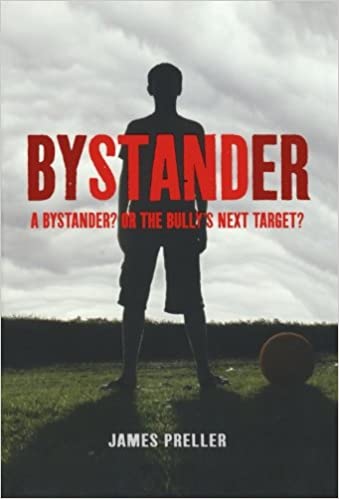
“Listen Up, People!” I’m Interviewed on The “Kidlit Love” Podcast!

How much is too much Jimmy? I think we’re about to find out. Just STOMP THIS LINK and listen to as much as you can stand.

Wait, what?
I was asked by the effervescent Stephanie Affinito to participate in her Kidlit Love Podcast. Stephanie is a lot of amazing things — a professor, a podcaster, a yoga enthusiast, a notebook-hoarding fanatic, a mother, a sharer, a bookaholic, a woman on a mission — but what I most appreciate is that she’s a sensitive, thoughtful reader.
A book person.
That is, Stephanie is my kind of people. 
I’m so grateful for Stephanie’s enthusiastic support and so glad to see my powerful little book receive such a sweet, sympathetic response.
That link again? This. 

School Visits, Reminder

School visits for the Spring have picked up, March and May are filling up, but visits are still not at pre-pandemic levels. A host of factors, I’m sure. Please keep me in mind. Happy to answer questions. Write to me at [email protected] and we can get the conversation rolling.

I am fairly unique as an author, since I have a wide range of age-appropriate titles, K-8, most of them at paperback prices. 

And I also Zoom with smaller groups, typically in a half-hour Q & A format (cheap!). 

FAN MAIL WEDNESDAY #337: Zoom Visit Followup!


I haven’t shared many letters recently. Partly that’s because fan mail has dropped off (the pandemic and, I gather, my own popularity) and partly because many have felt repetitive or just, you know, not worth blogging. 

However!

I enjoyed a fast, easy, inexpensive Zoom Visit with an enthusiastic class a while back. It happened, we did it, life moved on. What impact did it make? Who knows!

So it was especially lovely to receive this email the other day: 


Dear James Preller,

My students are still enjoying Bystander! Someone loved the Upstander book so much, that I haven’t seen it since I loaned it to them. What a great problem to have as it is being shared from student to student! 🙂 Students really connected to your characters.
Here in Summerside, PE, students are wondering if you will ever write Griffin’s story. They think a Bystander part two would be amazing.
The want to know what authors inspired you and if you are working on anything new?
Thank you for your time and all the best to you and yours.
Stacy T______
Summerside Intermediate School
Canada
I replied:
Stacy,
It’s nice to hear from you. And yes, a “missing” book is encouraging news!
I haven’t spent a lot of time exploring Fan Fiction, but I love the idea of these characters living on in the writing of young readers. Maybe some of your students would like to give it a shot?
Part of why I’m attracted to Griffin’s story is because I think it would give us a more sympathetic, nuanced understanding of “the bully.” I enjoyed writing about Griffin again in Upstander, though I dreaded revisiting the ketchup scene, which had only happened “off stage” in Bystander.
I am currently writing a wilderness survival story for grades 3-5 involving wildfire. I want to make it fast-paced and exciting. At this stage, I haven’t started writing — I’m doing research, reading a lot, and taking notes. Every writer is different. But for me, I seem to require a long period of rumination before actually setting words down on the page. Unfortunately, all this pondering, or marinating, looks a lot like doing nothing at all. I don’t have a lot to show for it. Yet!
I’m also revising a picture book manuscript. I love picture books, but it’s very hard to get them published. A have at least 10 that I think are perfectly publishable. But no publisher seems to agree.
Rats!
My best,
James Preller

ADDENDUM: A Closer Examination of Dialogue in Ann Patchett’s TOM LAKE, Pt. 2

In a previous post, I explored one scene from Ann Patchett’s novel, Tom Lake. I omitted all of the spoken dialogue from a kitchen table scene in order to highlight all the other written aspects that bolster such a scene: the attribution, the descriptions, the interior thoughts, the stage directions, and so forth. 

Now in retrospect, I realize that I should have included the dialogue, too, as a footnote. That will follow here. To me, it’s another interesting way to appreciate what a “real” writer does to make a talky scene come alive in the mind of the reader. 

Typing out the dialogue now, I find myself really missing those little stage directions throughout. Emily draining the wine glass. Emily balancing the fork. Lara’s interior musing. Joe stepping outside to look at the cherry trees. In fact, it could be argued that it’s not so much about the details to support the dialogue, but that the primary work is in all the stage directions — for lack of a better term — while the dialogue itself is the secondary character. 

More might be said by what is unsaid. 

To me, that’s a profound lesson for a writer. Because that’s life, isn’t it? We don’t always have the words. 

Here’s the dialogue only, from pages 142-144:

EMILY

“Or not.”

JOE

“Or not what? Not enough time? Is this going to be a very long engagement?”

BENNY

“We’re not having children.”

JOE

“You don’t know that.”

EMILY

“I know that.”

LARA

“You don’t want children?”

EMILY

“I don’t know if I want them but I’m sure i”m not going to have them.”

[pause]

EMILY

“I know this isn’t the way you planned things. I know it’s not what you want.”

LARA

“It isn’t about what we want.”

BENNY

“Crops used to fail once every fifty years. The crops have failed twice since I was born. The winters are milder, the lake is warmer, the trees aren’t staying dormant long enough. They bloom too early, the freeze kills the buds.”

JOE

“Why are you saying this? What do you think we don’t already know?”

BENNY

“Sooner or later we’re going to have to stop putting in cherry trees.”

JOE

“No.”

MAISIE

“I really cannot stand this.”

BENNY

“It’s not going to be cold enough for them anymore. We’re going to have to start thinking about wine grapes, strawberries, asparagus.

JOE

“So plant the grapes. It doesn’t mean you don’t have children.”

NELL

“It sort of does. Once you think about it.”

JOE

“You, too? Have the three of you signed a pact?”

NELL

“I have no idea what I’m going to do. But I’ll tell you, I think about it.”

MAISIE

“Who doesn’t think about it?”

EMILY

“I can eat vegetables and ride my bike and stop using plastic bags but I know I’m just doing it to keep myself from going crazy. The planet is fucked. There’s nothing I can do about that. But I’ll tell you what, I’m going to spend my life trying to save this farm. If anybody ever wonders what I’m here for, that’s it.”


CULTIVATING CREATIVITY, Part 5: Nick Bruel, Suzy Levinson, and Nancy Castaldo

Since this is the 5th post in this award-winning series (not really), you probably don’t need an introduction.

Here’s some links:

Part 1: The Letter

Part 2: Travis Jonker, Paul Acampora, Michelle Knudsen

Part 3: Diana Murray, London Ladd, Jeff Mack

Part 4: Vikram Madan, Lizzy Rockwell, Matthew McElligott


NICK BRUEL


I feel like the hardest part of cultivating ideas is respecting that they exist.  Let me explain… I had a teacher in college who posited that ‘writer’s block’ did not exist.  Instead, what we called ‘writer’s block’ was, in fact ‘pride’.  As creators, we are often guilty of imagining our ideas but self editing and not making them real because we’ve decided that they are simply not good enough to meet our standards.  I have come to believe this is true.  Here is how I combat this.  I have a disorganized mind and a disorganized office to accompany it, so when it’s time for me to contemplate a project I will simply take sheets of printer paper and write down every idea that comes to mind, good or bad, and not worry for a moment about the order in which they come.  When this happens, two things are possible… 1) Maybe it’s a lousy idea.  That’s okay.  I can either move on to the next or develop it into what I want.  It doesn’t matter, because I’ve made my idea real by writing it down and giving myself the opportunity to go back to it later, assuming I do.  2) Maybe it’s a pretty good idea; I just needed to make it real in order to recognize it.  This can happen more often when we think.  I will then stuff all of my idea sheets into a manila envelope that I label with a marker, and this only serves to keep my ideas collected together.  In the long run, all I’m doing is exercising a loosely organized form of daydreaming.

For 20 years now, Nick Bruel has been herding Bad Kitty into one enormously popular sack, er, book, after another. And if you know anything about herding cats, you know it couldn’t have been easy. Nick keeps the series fresh and energetic and timely, and somehow manages to keep Bad Kitty under control. Well, not exactly control, but you get the idea. A remarkable achievement, still rolling along. Congratulations, Nick!


SUZY LEVINSON


In recent years I’ve noticed that my creative practice feels less like a practice, and more like a series of random, haphazard events. I’ll have a good idea, lightbulb-style! I’ll write fast, revise even faster, put the story out into the universe like some kind of speed demon! Then I’ll go utterly brain-dead for about a month, twiddling my thumbs until the next idea presents itself.

This doesn’t feel like the most productive use of my time.

In an effort to cultivate a more reliable creative practice and combat Brain-Dead Month, I’ve been mindfully gathering tricks that will shake me up and make stories fall out. I think my favorite’s the “fun title” trick, which works as follows: I’ll come up with a title, usually incorporating some kind of wordplay, the kind of title I can imagine popping on a bookstore shelf. I’ll go online to make sure the title’s not taken already. I’ll type the title at the top of a blank Word doc, type “by Suzy Levinson,” paginate into fourteen and a half sections, write the flap copy, and then all I have to do is write the story. Yes, it feels like working backwards, but it’s surprisingly effective.


Readers will have to wait for Suzy Levinson’s next poetry collection, Dinos That Drive (coming in 2025!), but until then, don’t miss the book that turned this reader into a huge fan, Animals in Pants. Brilliant and hysterical. Animals in pants? What kind of twisted, demented mind comes up with this stuff?! And where can I get more??!!


NANCY CASTALDO


That’s easy. My creativity and my curiosity are sparked when I travel. I always carry a notebook or my phone so that I can easily jot down an idea when it arrives. An idea can arrive when I might be visiting a farm in Italy or just taking the train along the Hudson River near my home— which brings me to the second way I keep my home fires burning. I don’t stop thinking about what I already know and how that knowledge connects to everything else in the world. Sometimes you just have to be curious about the things that are familiar and see where that rabbit hole takes you.


Nancy Castaldo has written award-winning books about our planet for over 25 years. She writes to inform, inspire, and empower readers about the world around them. She’s interested in wolves and whales, farms and seeds, rivers and dogs and astronauts and . . . the list goes on (seemingly) forever. And when Nancy is interested in a topic, a book often follows.


James Preller's Blog

News, Notes & Inside Info from a Children's Book Author

Skip to content ↓