Archive for Uncategorized

Fan Mail Wednesday #142: Penguins & Other Pleasures

Come on, people. Number 142, give it up!

Here’s a lovely one, from Jessica in California . . .


I replied, of course:

Dear Jessica:

Thank you for your typed letter, complete with smiley icons. It’s nice to hear from my biggest fan. I’m glad that you told me a little bit about yourself –- how you like handball and soccer and wish to see a penguin someday.

In the meantime . . . LOOK!

You are right about Jigsaw, part of the fun is watching him slowly piece together the mystery. He talks to people, asks questions, snoops around. It wouldn’t be any fun if he solved the case too easily. Mila tests Jigsaw’s brainpowers for two reasons: 1) To keep him sharp; and 2) Because he loves that stuff!

For the codes, there are many good books on codes in the library. That’s how I learned about them. Most of the codes I copied from other books, others I changed a little bit, usually taking complicated codes and making them simpler for younger readers. I put a coded message in every book, just for kicks.

I started writing the Jigsaw Jones series in 1997, and for 10 years straight worked steadily on them. These days, I’m exploring different things. I’m currently starting on a new series of scary stories, called “SHIVERS.”

Unfortunately, I don’t have a photo to send. But you can swing by my blog at Jamespreller.com. There’s all sorts of stuff on there, including photos.

My best,

James Preller

James Preller Interview: “Along Came Spider,” The Writing Process, Asperger’s, Atticus Finch, and More

The facts are fuzzy. A while back I answered ten questions by somebody who was writing a piece to be published . . . somewhere. Hey, it seemed legit at the time.

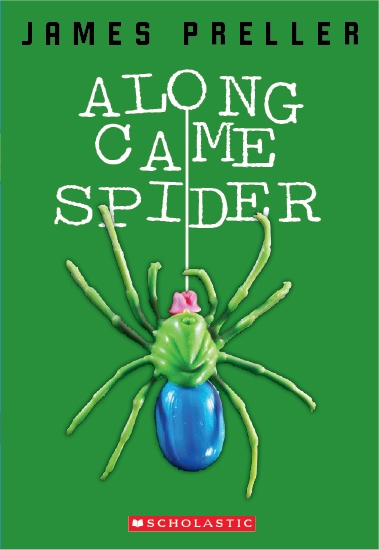
I do know that my book, ALONG CAME SPIDER, was featured in Michigan — some 1,600 copies were distributed to 4th-graders in 34 public schools — and there was a contest to “win an author,” that prize being me. Which is why, oh wild wonders, I’m winging where I’m winging next week. Grand Rapids, better batten the hatches.

What follows are my answers to the aforementioned ten questions.

1. Where did you grow up? What college did you attend?

The youngest of seven children, I was born in a blizzard in 1961, and grew up in Wantagh, on the south shore of Long Island, NY. I was an indifferent, distracted student in high school. For college, I stayed within the SUNY system and went to Oneonta –- which I loved. That’s where I became a serious, committed student.

2. What/Who motivated you to become a writer?

Look, I wanted to pitch for the New York Mets. When that didn’t work out –- and it became clear very early on –- I had to move on to Plan B. As a teenager, I kept a journal, wrote poems, scribbled lyrics to imaginary songs. Maybe it was a product of being the youngest, but even though I was intensely social, I was always able to be alone. For writers, that’s essential. You have to be okay with solitude.

3. How many books have you written?

I first published in 1986, and my career has been a long journey of trying different things, making tons of compromises along the way. Let’s say that I didn’t hit my first one out of the park. I wrote for food, I wrote to pay the bills. I’ve done more than 80 books overall, I’ve lost count. There are 40 in the Jigsaw Jones series. I’ve learned something from each and every one. But instant success? That was not my path. And I’m okay with it. Really. No, really!

4. In your opinion, what is the major theme in “Along Came Spider?”

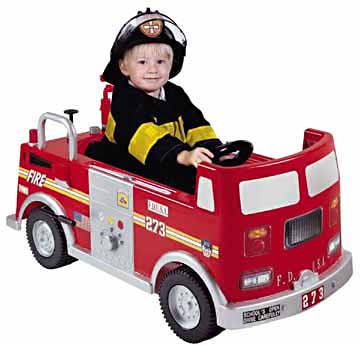
It’s a book about the struggle to find your place, about fitting in, and some of the roots and tender shoots of bullying. It’s about being a friend, hopefully a good one, and what those responsibilities might be, which is not always so easy or so clear. In a memorable review for “Spider,” one reviewer wrote, and I quote from the opening, “I’ve read a lot of books recently about girls trying to make sense of friendships and themselves, so it was a delightful surprise to find and read an advance review copy of a book that deals with boys trying to find out where they belong . . . .” Isn’t that amazing? An experienced reviewer expressing surprise that here was a book about boys having . . . feelings. Struggling with friendship. Could it be that boys are more than just farts and fire trucks? I certainly think so. (Full disclosure: Farts are still funny, always, and fire trucks are awfully cool. It’s just that maybe there’s more.)

5. Before this interview, have you heard of the One Book, One City for Kids program? Do you think that this a beneficial program that should continue in the future?

I’ve come across the “One Book, One School” concept, particularly with my book, BYSTANDER, which deals with bullying in the context of a middle school. I’ve been able to visit many schools around the country where, say, all of the 7th grade has read that book. First off, to be clear: that’s extremely flattering, an honor I never expected. The shared reading experience across a broad spectrum is a powerful idea. Reading is such a private experience, alone with a book, it’s when readers are free to be most authentically themselves –- even when we’re not so sure who that self is, exactly. But in the school environment, I think books can serve as diving boards, departure points, starting places for conversations. When a book is shared between friends, or classrooms, or the community, it gives everyone common ground –- a shared literary experience — and a foundation for all sorts of creative, thoughtful activities. I’m completely sold on the concept. I should add that I also believe that the majority of reading, in school and at home, should be self-selected, not assigned.

6. What age groups do you generally write for?

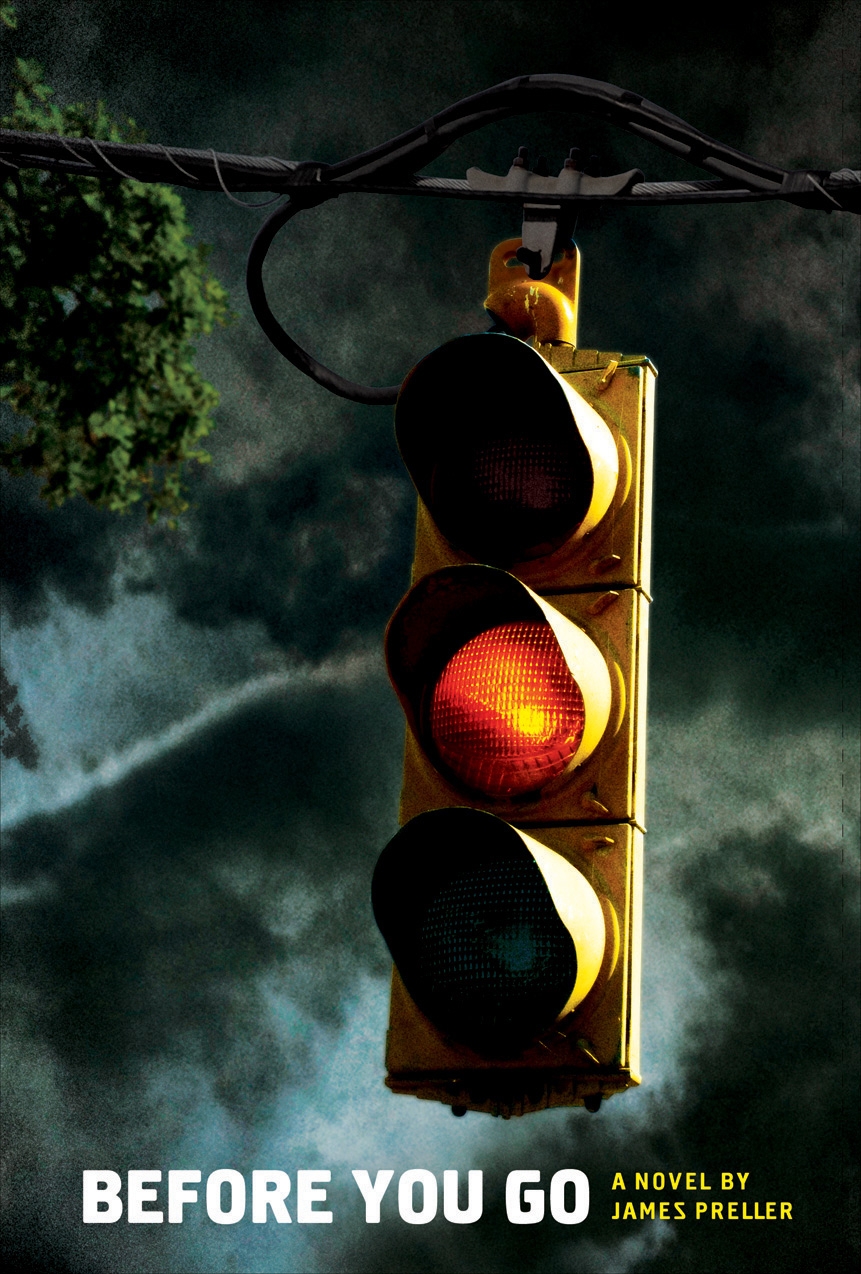
I am either a jack-of-all-trades or wildly unfocused. It’s your call. I’ve written picture books that are right for the youngest readers, whereas my latest book, BEFORE YOU GO (Macmillan, July 2012), is for young adult readers, grades 7/8-up, though I believe adults would enjoy it too. And I’ve written for every age in between.

7. How will this book benefit the children who read the story?

I hope it offers what “story” gives every reader –- an opportunity to walk around in someone else’s shoes, as Atticus Finch advised in TO KILL A MOCKINGBIRD. To see how someone else lives, and thinks, and feels. I really believe that’s the root of empathy, compassion, understanding, and tolerance. I believe in books and the power of literature. I want my own three children to be readers –- to learn, yes, but also for the great pleasure it gives.

8. Was this book inspired by an occurrence in your life or something that you witnessed?

I spent a year visiting a fifth-grade classroom, off and on at random times. I’d bop in, sit in the back for a few hours, hang out during P.E., then disappear for a few weeks. I made observations, took notes, and waited for a story idea to emerge out of that experience. After a while, I began to notice a few students who were outsiders, misfits, and that’s where I focused my attention. I wondered what would happen with them in Middle School, a less forgiving environment. I think I’ve always been drawn to the outsider. At that point, I read a lot of books on autism, and Asperger’s, and again felt an affinity to those kids on the spectrum. A lot of Trey’s character grew out of that research, and whatever I could sense from my own experiences, observations, intuitions. Essentially, I went in like a pile of dry grass and tinder, just looking for that spark.

9. Do you have anything specific that you want to say to your readers?

Thank you. Seriously, thank you. A book is a living thing between a writer and a reader, like an electrical connection. Without the reader, pfft, there’s nothing. I don’t necessarily have a specific message or lesson to impart.

10. Are your books used for other literacy programs around the United States?

As I mentioned above, BYSTANDER has been featured in many schools in the past year, now that it’s available in paperback. Beyond that, I’m really not sure. You write the book and send it out into the world –- hopefully it finds readers along the way. Some books fade away, others stick around for decades. You just never know.

Fan Mail Wednesday #138 (Bystander)

Posting this from a hotel in Ohio . . .

I replied:

Dear ______:

I know you wrote it a long time ago, and maybe you forget what you wrote, but I’m writing to thank you for your letter.

It blew me away.

I’m glad that it touched you, inspired you to aspire to become a better, kinder person. I’m confident that you already are.

To answer your question, no, I was never bullied as a child. I suspect I was more like you, a bystander, a floater, and it took me a long time before I opened my eyes to see, as you wrote, “that regular people can make a difference.”

My best,

JP

Memories: Working at Scholastic, 1986.

That’s me with the antenna. Wait, no, I’m in the middle.

I started at Scholastic as a Junior Copywriter for $12,500 a year, hired partly because of a writing sample, an opinion piece I wrote about the subway shooter, Bernie Goetz (no lie), and also because I was the first young, heterosexual male to enter the building in the last six years — besides the mail room guys, of course. There were three other copywriters working on the book clubs: Bill Epes, Karen Belov, and Cynthia Larkins. I may have muffed those spellings. My primary responsibility was the K-1 SeeSaw Book Club. I sat in a cubicle and banged away on a typewriter. Computers came in less than a year after I arrived, a transition that caused great upheaval. We threw away our little bottles of liquid white-out, learned how to boot up with an MS-DOS 5 1/4 floppy disk, and so on.

An aside: I just breezed through the brilliant biography, STEVE JOBS, and it so captured the changes of technology through my life. If you are around my age (51 yesterday), or maybe any age, you’ve got read it. The author, Walter Isaacson, also wrote the biography, EINSTEIN, that I raved about previously.

At Scholastic, in the old 730 Broadway location, I worked in-house for almost five years, rising all the way to lower-middle obscurity. Another memory: I remember when they instituted a new policy no longer allowing people to smoke at their desks. Suddenly you had to go down to the 8th floor to the “smoker’s lounge.” Many of us feared that our old-school copyeditor, the chain-smoking Willie Ross, would lose her mind completely. Such a violation of personal liberty, an outrage perpetrated by the PC police, and I was  sure the laughter I heard came from the belly of Big Brother.

I continued on with Scholastic as a consultant and favored freelancer. Launched and ran the Carnival Book Club out of my home in Albany, as both editor and promotion manager. Wrote some books, started doing Jigsaw Jones in 1998, and on and on. I assumed my time at Scholastic would go on forever. But not quite. I used to really, really love that place, and I know I’m not alone in that regard.

The man on the left of the photo is my great pal Craig Walker. In life you don’t get to know too many people who become mentors, people you respect and admire and love, and for me Craig heads that very short list. He was one-of-a-kind. There was a long stretch of about 15 years or so when we were really, really good friends. We probably ate lunch together three times a week for four years, usually in the cheapest, no-nonsense dives we could find. Or was that the bars we frequented? The truly remarkable thing about Craig is that so many people felt that way about him. Our relationship was special. Our friendship was unique and powerful. Dozens upon dozens of people could make that same claim — and they’d all be correct. He was just one of those guys that made you think, “I wish I could be more like him.” Craig is gone now, but as I’ve written before, I try to remember everything.

1986, the day we watched Game 6 of the 1986

World Series at Brenda Bowen’s parents’ summer

place. Me and Craig.

Let’s see, yes, that’s art director Scott Hunt next to me. I thought of Scott a few days ago when, reading the book, I LOVE IT WHEN YOU TALK RETRO, the author Ralph Keyes explained the origin of one of Scott’s go-to words, “skosh.” As in, “Let’s move that type down a skosh.” Confusingly, it came from the Korean War, but was adapted from a Japanese word, sukoshi, meaning “a small amount.” Reading about those origins, I wondered if perhaps Scott’s father spent time in Korean conflict, hanging out with Hawkeye, Trapper John, Hot Lips, and the gang. Scott used to complain that his father was a gung-ho outdoors type, always taking the children on camping trips and forced hikes up impossible mountains. Scott would say, “I hated those hikes. I just wanted to stay home and watch movies!”

And to the right, that’s Cynthia Maloney, a Kansas gal. Cynthia used to wear a deerskin vest the like of which you have never seen, in Manhattan, no less. She had the messiest desk on all three floors. I’d ask her about something, an important memo or whatever, or a mechanical board she had to review and sign, and she’d turn to this tilting mountain of paper and, after a considered time, miraculously extract the key document from the perilous pile. Cynthia was older than I was, married with children, but I always had a secret crush on her, the way you do in office life, ten cubicles down, a world away. She might have been the nicest person in the place.

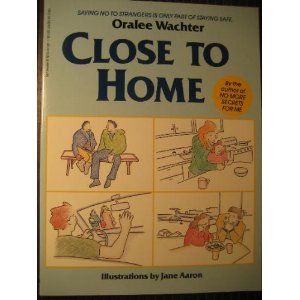
Anyway, we started a preschool book club, called it FIREFLY, and as far as I know it’s still going strong today, 25 years later. I wrote all the promotional copy, including every book description, for several years. At the time, it was a big, risky project. Craig’s editorial meetings were hilarious and legendary. Scholastic of that time was led by a supremely talented trio: Jean Feiwel in editorial, Barbara Marcus (my first real boss) in marketing, and wise old Dick Krinsley, steering the ship. Around then I had the honor of writing their first hardcover catalog — it included a total of four books by, um, Harry Mazer, Anne Mazer, Julian Thompson, and somebody else. Oh, what was it? Something about child safety, I think. A book cover that Craig likened to those Heimlich posters you’d see in restaurant bathrooms. He’d say something along the lines of, “I don’t know if it’s a good thing that every time I look at the book cover, I think of choking victims.”

Jean Feiwel, do you remember that book?

Ah, forgive me, memory lane.
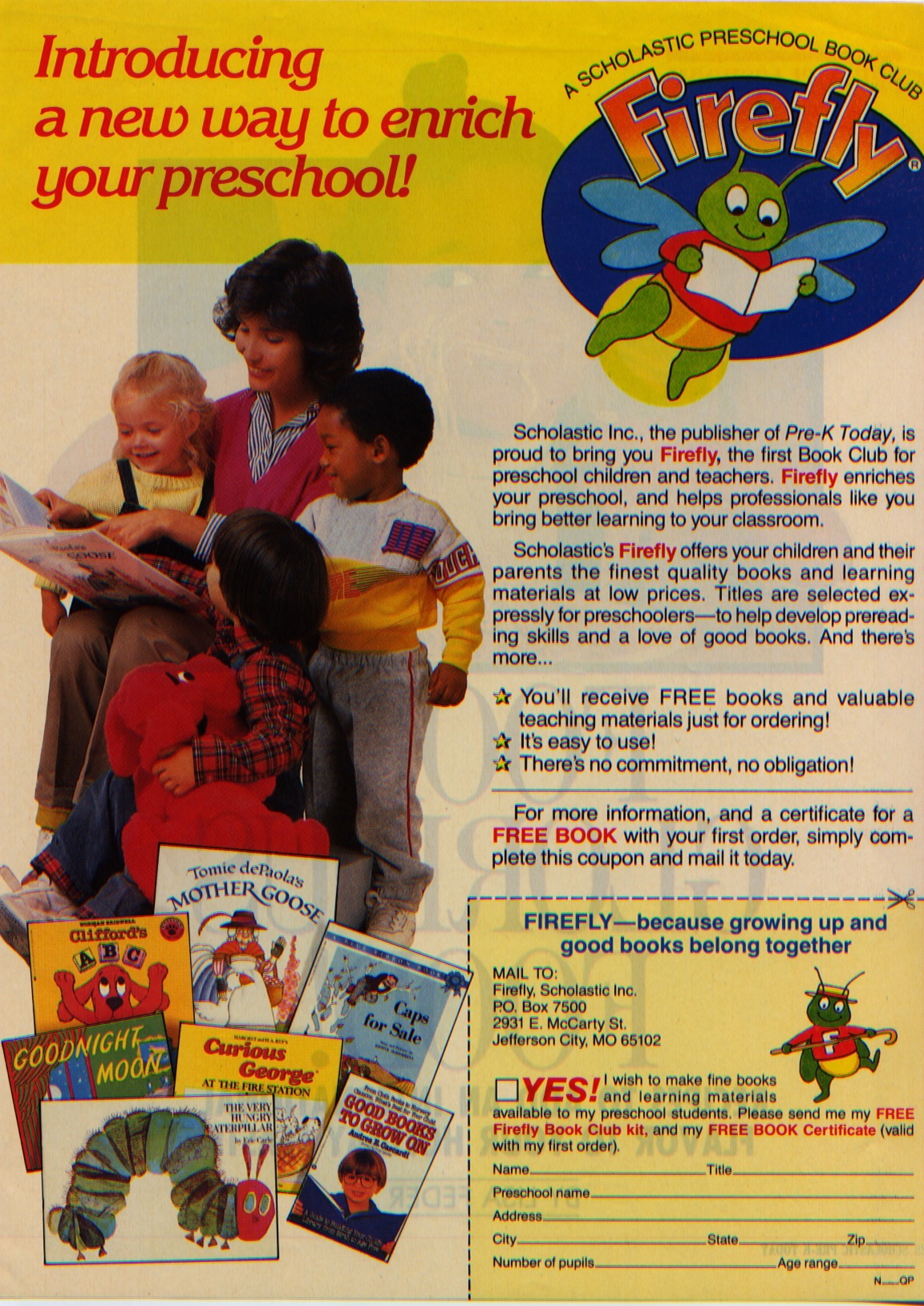
This is an advertisement  I wrote at that time. A full-page ad was a huge extravagance, and you wouldn’t believe how many people fussed over this, and revised it, and changed it again and again. That was my line, “Because Growing Up and Good Books Belong Together.“

POSTSCRIPT:

Jean wrote and gave me the name of that elusive title, CLOSE TO HOME by Oralee Wachter!

Craig had a flare for exaggeration, but the point stands:
Soul Christmas Playlist

This will be my last post until 2012. I want to thank you for stopping by — I really do appreciate your interest and your support.

I wish you a healthy, happy holiday season.

I love Christmas music, all of it, of every stripe. And while there’s no beating Bing or Frank or even Burl, here’s some R & B/soul holiday tunes you might enjoy . . . because Otis and James are pretty cool, too.

You need to a flashplayer enabled browser to view this YouTube video

Merry Christmas, Baby, Otis Redding

You need to a flashplayer enabled browser to view this YouTube video

Gee Whiz, It’s Christmas, Carla Thomas

You need to a flashplayer enabled browser to view this YouTube video

Presents for Christmas, Solomon Burke

You need to a flashplayer enabled browser to view this YouTube video

Santa Claus Is Coming to Town, Ray Charles

You need to a flashplayer enabled browser to view this YouTube video

I Saw Mommy Kissing Santa Claus, Amy Winehouse

You need to a flashplayer enabled browser to view this YouTube video

Christmas Comes But Once a Year, Charles Brown

You need to a flashplayer enabled browser to view this YouTube video

Santa Claus, Go Straight to the Ghetto, James Brown

You need to a flashplayer enabled browser to view this YouTube video

Jingle Bells, Booker T. & the MG’s

You need to a flashplayer enabled browser to view this YouTube video

I’ll Be Home for Christmas, Fats Domino

You need to a flashplayer enabled browser to view this YouTube video

I Want a Rock n Roll Guitar, Johnny Preston

You need to a flashplayer enabled browser to view this YouTube video

Back Door Santa, Clarence Carter