Archive for Bystander

Fan Mail Wednesday #71

I’m gong to interrupt my interview with Deborah Kovacs — click here for Part One — because “Fan Mail Wednesday” is upon us. Come back tomorrow for Part Two of the interview.

This one isn’t exactly fan mail — it’s more of a note from an old friend. I’ve changed the names for the usual reasons, but I believe the essences remain intact. I have to add that I’ve received 5-6 similar notes about Bystander, filled with stark memories, all from men. It’s strange to hear  exclusively from men, since we all know that women are the primary gatekeepers of children’s literature and make up the overwhelming majority of adult readers. That is: it’s cool (and rewarding) to hear from guys who have that visceral connection to the book.

Hi Jim,

I just finished Bystander today and wanted to let you know how much I enjoyed it. It’s still a real kick for me reading something you’ve written — holding a book, a hardcover, with your name on it. Amazing.

Needless to say, I could “relate to it ” as the kids say (oh wait, we were the kids who used to say that). It captures our home town perfectly. And 7th grade. 7th grade was a really traumatic year for me so your book brought up a lot of — mostly unpleasant — memories. That was the year everyone started splitting off into cliques. By the second day of school it seemed as though all the kids I’d known throughout elementary school were suddenly identifying themselves as either greasers or jocks, or else were being defined by others as “fags” (somehow the word nerd was not popular at that time).

I became a “hippie” — the only one in my grade, so I just didn’t make sense to anyone. My best friend Tommy changed abruptly and became a hellraiser, a mix of both greaser and jock. By the beginning of 8th grade we were not even speaking anymore. The clincher though was when his right-wing friend Chris, who hated my antiwar attitude, tried to get me to fight him — which I wouldn’t do (especially since Chris was a good 50 pounds heavier than me). So Chris basically pummeled me as I walked the half-mile home, unable to get me to fight back, my “friend” Tommy walking along just watching the whole thing. You got that part dead on, the guys just watching, not doing anything to stop it. I’m sure I must have done it too at some point.

I don’t remember any troubled kids with Griffin’s appeal. The top greasers I knew were either sociopaths or psychopaths (take your pick). One, by the way, was Richie K. I recall him once bending my fingers back until I was on my knees. Somehow I avoided getting thrashed, but he beat up a lot of other kids.

I’ll probably read this to my son fairly soon. He just turned 10 so he’s a little young, but he starts middle school next year, so by next summer we’ll read it together. I can absolutely see in him the ability to go either way, bystander or ally. I guess we all have that duality.

Anyway, it’s a real good book and I hope it’s doing well.

Take care,

B.

And in case you missed it last week,

some things never change.


“Bystander” Reviewed: The Reading Zone, etc.

My thanks to Sarah at The Reading Zone for her thoughtful review of Bystander, which you can read in full here.

I thought this passage was particularly interesting:

What I really loved about this book is the fact that it doesn’t end with the teacher or another adult solving the problem and dealing with the bullies.  Eric and his friends need to decide for themselves how to handle the situation.  As a teacher, I admit to being a little frustrated at first when I read the last page.  But then I realized it is exactly what tween are looking for.  They don’t need us stepping in all the time and solving their problems.  They need to learn how to work within their own cliques and peer groups.  As much as we might want to see the bully “get what he deserves,” that isn’t always realistic and kids know that.  So kudos to James Preller!

The ending to this book has gotten some attention, not all of it positive, in part because there is no clear (or happy?) resolution. Though I contend that many loose ends can be inferred: most of Griffin’s friends have started distancing themselves from him, Griffin is involved in petty crime and we know that the police are investigating, and Eric and Mary have gained new insights and strength. Note that bullying tends to peak in middle school, whereas in high school many of the Griffin types tend to lose their group appeal (upon which their behavior depends).

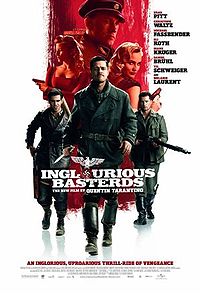
But, no, Bystander is not a revenge fantasy in the mold of “Inglourious Basterds.” (Loved that movie, btw.)

From the outset, I was determined to avoid the easy wrap-up, the unrealistic solution — mostly because that’s what I was writing against, all those simplistic “bully books” that tied everything up in a neat bow. I just don’t think it helps to pretend these are simple issues with clear resolutions. At the same time, I do understand that fiction depends upon artifice: most of us thirst for that big payoff at the end. I recall the famous test screenings for “Fatal Attraction,” when the audiences clearly wanted to see Glenn Close get it, and in as horrific a manner possible, before the credits rolled (and the studios listened — and made gobs of money, too; to read more on that, click here and scroll down to “alternative ending”).

In my book, Eric’s father doesn’t magically appear to save the day. Griffin, the book’s antagonist, doesn’t seem to have learned any big lessons. But look at the book’s title. That’s the focus here — with the silent majority — and, I believe, where there’s the best hope for meaningful progress. It’s not unlike the world wide war on terror, in the sense that there’s no easy victories to be won and it’s a disservice to pretend otherwise; Afghanistan (or Iraq, or Iran, or Pakistan,  etc.) can’t be fixed in twelve months or five years. The struggle is ongoing. It’s not something that can be definitively “won” and walked away from, mission accomplished, satisfied with a problem removed.

On a related note, there was a recent discussion over at Read Roger, titled “too damned long,” about the length of book reviews. Opines Mr. Sutton, who is a master at stirring the pot:

Vine reviews, customer reviews, and, sorry, blog reviews–they are all too damned long. That’s the problem I have with ’em. Just because the technology allows one to prattle on forever should by no means encourage one to do so.

As an author, still fairly new to the world of reviews — none of the books in my paperback Jigsaw Jones series, with 40 titles, ever got a print review as far as I know — I confess that I find myself unimpressed with many reviews, print or otherwise. But the most disappointing is the brief review, which amounts to a quickie plot summary with an opinion-based sentence tagged on at the end. I guess those reviews serve a purpose, but where’s the thought, the engagement? So if anyone wants to write at length about a book, good or bad — and here’s somebody who consistently takes the care to do it extremely well — I for one appreciate the effort, both as a reader looking for books and as someone who has perpetrated more than a few myself.

In our time of Twitter book reviews — thumbs up or thumbs down in 140 characters or less — I want to thank you, again, Sarah, for not only reading my book but for giving it your time and consideration. It was also nice to see you purchased your copy — ca-ching! Baby needs a new iPod nano.

Oh, yes, one last thought that pertains to bullying, from Martin Luther King, Jr.:

“Cowardice asks the question, ‘Is it safe?’ Expediency asks the question, ‘Is it politic?’ But conscience asks the question, ‘Is it right?’ And there comes a time when one must take a position that is neither safe, nor politic, nor popular but because conscience tells one it is right.”

Around the Web: Bystander, The Kidlitosphere, and a Grand Conversation

I confess: I sometimes have misgivings about the kidlitosphere. At times it feels like just another clique, and one dominated by women. I recognize that one woman’s ceiling is another woman’s floor; a “clique” could easily be described as a “community” — a source of strength and positivity.

There’s nothing wrong with women, of course. It’s just that I’m a guy. I have a male point of view. For example, the writers I most love tend to be men. Actually, that’s not true: They are men. I’m just like that second grade boy who won’t pick up a Junie B. Jones book (I know, I have two sons, and I’ve tried to press those books in their hands). If it seems like girl stuff, I’m not all that interested. Or at least, there are hurdles, dispositions, to overcome. Sorry. I have a gender bias. That’s not news, right?

The nature of this clique, or community, has always been at the center of the children’s book world, back from my earliest days as a junior copywriter at Scholastic in the late 80’s. Women, women everywhere. They were the editors, the librarians, the teachers, the reviewers —  and now, the bloggers.

Just to make myself crazy, I did a quick look at the 101 names listed as judges of the Cybils. By my estimation, which involved a little guesswork, 86 of them are women. That’s a lot, right? I’m not complaining, exactly, and I certainly don’t blame anybody.  If more men were around, then . . . more men would be around. It’s our fault: guys need to step up or shut up, I suppose.

I don’t know if I have a thesis point. I’m mostly just typing out loud. Other than to say that as a man in a woman-dominated kidlitosphere, I feel like an outsider. And I wonder if there might be some connection to boys and reading. If they feel as disconnected as I sometimes do.

Yet through this blog I’ve made some meaningful connections. A few friendships here and there. Last year I was invited to Dublin, Ohio, by Bill and Karen from Literate Lives. I still go back to their blog from time to time, because they inspire me with their enthusiasm, their dedication, their sense of purpose. Clicking on today, I saw that Bystander was the recent topic of discussion on a Tuesday night, as part of Bill’s annual “Grand Discussion” series. Check it out, here.

Bill even sent me this photo:

I was supposed to be a part of it, through an iChat link-up. But I couldn’t figure out the technology in time, to my great disappointment. If there was a lake next to my computer, you would have heard a groan of frustration followed by a splash. It’s one more hurdle I’m going to have to figure out, because it seems like a great way to connect with readers.

Thank you, Bill, for the friendship and the support.

——-

In other news, Musings of a Book Addict recently reviewed Bystander and had some nice things to say. But that’s assumed, isn’t it? I mean, if she didn’t have nice things to say, I wouldn’t link to it. I’m superficial that way.

For the full review, click here. For those short on time, here’s the money quote:

I see the problem of bullying in my school everyday. Sometimes it takes the form of a kid saying something mean to another. Sometimes it is a child saying something nasty about the other kid’s parents. All of it is a form of bullying. However, most kids don’t realize that just standing around saying nothing, doing nothing, when they witness bullying is just as bad. This was an awesome book and one I look forward to placing on my shelves at school.

Bystander: Chapter 2 (and some thoughts on adverbs)

Click here in case you missed Chapter 1 a couple of weeks back — that is, I mean, if you want to. And don’t worry, there are 34 Chapters in the book; I’m not going to give away the entire thing.

One note about craft: I made it my mission to eliminate adverbs, particularly where it concerned dialogue. It’s interesting to me how that rigor affected tone, helped give it a  lean directness. It even affected the chapter titles, which are all one word in length: ketchup, school, slander, friend, shiner, locker, threat, etc. The narrator doesn’t often explain what characters are thinking, doesn’t intrude. There it is, this is what they are doing; good dialogue delivers the meaning without ornamentation. Let the reader figure out the whys and wherefores. Removing adverbs also forces you to demand more of your verbs; it forces you, I think, to write better. When it comes to dialogue, I favor “said” in most cases. Again, that conscious choice is about invisibility — the writer getting out of the way. So when Eric thinks at the end of the chapter, No choice at all, he doesn’t think it “immediately” or “sadly” or “angrily” or “remorsefully” or “suddenly.” He just thinks it.

On a side note, I recently finished a book for a different publisher where a copyeditor kept trying to insert adverbs into the final revise. And I kept hitting delete, delete, delete. Don’t get me wrong. The copyeditor helped in many ways, suggesting improvements throughout. I’m grateful for the help. But adverbs in dialogue? Almost always the answer is no, no, no.

2

[pretty]

THEY CAME SOON AFTER, AS ERIC HAD GUESSED they might. Four of them on bicycles. Three boys and a girl.

Eric was alone on the court, standing at the foul line. He dribbled twice, caught the ball in both hands, feeling for the lines of the ball with his fingertips. Foul-shooting was a ritual, a practiced set of precise patterns. He took a deep breath, blew the air out, bent his knees, eyes fixed on the rim. Elbow up and out, wrist flicked. The ball shivered through the mesh. Perfect.

The hunters came from around the far side of the big brick building. They weren’t pedaling hard, didn’t seem in any big hurry. They were talking and laughing as they rode, glancing around, the trail gone cold. Eric retrieved the ball and stepped back to the foul line. He glanced behind him, in the direction where the ketchup-boy had fled. There was no sign of the boy; he had vanished like a ghost among the tombstones. That left just Eric. And now the bike-riders were headed his way, four sailboats fixed on a distant shore, tacking this way and that in zigs and zags, but surely aimed toward the boy on the court in red basketball shorts, white new kicks, and a sleeveless tee.

The shaggy-haired boy in the lead pulled up right in the middle of the court, halfway between the foul line and the basket. He stayed on his bicycle seat, balanced on one leg, cool as a breeze. The boy looked at Eric. And Eric watched him look.

His hair fell around his eyes and below his ears, wavy and uncombed. He had soft features with thick lips and long eyelashes. The boy appeared to be around Eric’s age, maybe a year older, and looked, well, pretty. It was the word that leaped into Eric’s mind, and for no other reason than because it was true.

The other three stayed on their bicycles and slowly circled the perimeter of the court, riding behind Eric and then back around and around, the noose of their circle drawing tighter each time. They, too, said nothing, as if content to wait for instructions.

Eric wondered if something bad was about to happen. And he wondered, too, if there might be anything he could do to avoid it. A part of him watched the scene unfold as if he wasn’t in the middle of it, as if it was in a movie or something, as if he watched from an overhead camera, the cyclists circling like vultures around a carcass.

“You didn’t see anybody come by here, did you?” the boy asked.

“Looks like a French fry,” a skinny, hatchet-faced boy added. He laughed, and the third boy joined in. Eric glanced at them, avoiding eye contact, then turned to look directly back at the leader, the one who had asked the question.

“I’ve been shooting around,” Eric explained with a shrug. “I didn’t really –-“

“Nobody, huh,” the brown-haired boy said, sliding off his bike and dropping it carelessly to the ground. He didn’t look that big or that strong, but he moved with an easy confidence. There was toughness there, a hardness beneath the long lashes and full lips. The boy held out his hands, clapped once. Said, “Let’s see that ball, huh.”

Eric didn’t hesitate. He made a sharp bounce pass to the boy. “Sure, here,” he said, as if there was nothing he wanted more than to hand over his ball to this stranger.

The other two boys deposited their bikes on the grass. The girl –- with a high, round forehead and straight blond hair parted in the middle –- remained seated on her bike, wrists dangling over the handlebars, silently watching.

“You new around here?” the boy asked. He dribbled the ball a little awkwardly, his skills unrefined.

Eric nodded. Yes, he was new. Eric sensed that he’d have to be careful; this encounter could go either way. It could turn out okay, or go very bad. Threat hung in the air, though no one had said or done anything wrong. It was just a feeling Eric got. A knot in his stomach.

The boy turned to the hoop and took a shot that clanged off the metal backboard and bounced away. He grinned and shrugged, eyes smiling. “I’m not really one of those basketball guys,” he explained. “My name’s Griffin. Most everybody calls me Griff.”

“I’m Eric.”

Griffin gestured toward the school building. “You gonna go to school here? What grade you in?”

“Yeah,” Eric answered. “Seventh.”

“Lucky you.”

One of the other boys, the heavy, raw-knuckled one, snorted, “You any good at homework? We could use somebody to do our homework.”

The hatchet-faced boy laughed. His large front teeth protruded slightly, and his black hair was limp and ragged. Eric instinctively disliked him. Weasel, he thought.

Griffin smiled at Eric. “Don’t pay any attention to these guys,” he said. “They think they’re funny. Anything for a laugh, right, Cody?”

The ugly one, all beaked nose and buckteeth, blew a bubble and let it burst. “Good times,” he chirped. “Good times.”

“I feel sorry for you,” Griffin said to Eric. “You move here — and all we’ve been trying to do is figure out how to break out of this place!”

Griffin had a way about him, a certain kind of natural leadership that Eric respected. Words came easily to Griffin, his smile was bright and winning. Eric felt almost envious; Griffin seemed to possess a quality he lacked, a presence.

“So, tell us,” Griffin continued, commanding the court. “Why did you move here?”

“Well, it wasn’t my idea,” Eric confessed. “My parents . . . sort of . . .”

He trailed off. Better keep that part to himself.

“You don’t talk a lot, do you,” Griff noted.

Eric tilted his head, shrugged, embarrassed.

“He’s a shy boy!” the big one squealed.

“Shut up, Drew P.,” Griff said. “Get me that ball, will ya?”

And Drew P. got him the ball.

“Droopy, Droo-pee,” Cody chimed in a mocking, singsong voice.

“Get a life,” Droopy snapped back.

Griffin shook his head, as if the dialogue disappointed him. He explained to Eric, “His name is Drew Peterson. The other day we started calling him ‘Droop’ and ‘Droopy.’ Get it: Drew P.” Griffin smiled. “I don’t think he’s crazy about it.”

Eric didn’t respond, just listened and nodded.

Griffin weighed the ball in one hand. “You mind if we keep this?”

“What?”

“The ball, Eric,” Griffin said. “You don’t mind if I keep it for a while, do you? As a souvenir?”

“Yep, yep, yep!” Cody chirped.

Eric started to answer. “I, um –-“

“Um . . . what?” Griffin interrupted, his face a mask now, hard to read. “You think maybe you have a choice?”

The two other boys moved a little closer to Eric, one on each side. They seemed to grow in stature. A little taller, a little fiercer, the way a dog looks when its hackles are raised.

Eric did the math. Three against one, not counting the girl. She wasn’t doing anything, just standing by, watching.

No, no choice, Eric thought. No choice at all.

.

Excerpted from Bystander by James Preller. Copyright © 2009 by James Preller. Published in 2009 by Feiwel and Friends. All rights reserved. This work is protected under copyright laws and reproduction is strictly prohibited. Permission to reproduce the material in any manner or medium must be secured from the Publisher.

Bystander: Chapter 1

1

[ketchup]

THE FIRST TIME ERIC HAYES EVER SAW HIM, David Hallenback was running, if you could call it that, running in a halting, choppy-stepped, stumpy-legged shamble, slowing down to look back over his shoulder, stumbling forward, pausing to catch his breath, then lurching forward again.

He was running from, not to, and not running, but fleeing.

Scared witless.

Eric had never seen the boy before. But in this town, a place called Bellport, Long Island, it was true of most kids. Eric didn’t know anybody. He bounced the basketball, flicking it with his fingertips, not looking at the ball, or the rim, or anything else on the vast, empty grounds behind the middle school except for that curly-haired kid who couldn’t run to save his life. Which was too bad, really, because it looked to Eric like he might be doing exactly that—running for his life.

Eric took a halfhearted jumper, missed. No lift in his legs. The ball bounced to the left wing, off the asphalt court and onto the grass, where it rolled and settled, unchased. Eric had been shooting for almost an hour. Working on his game or just killing time, Eric wasn’t sure. He was tired and hot and a little bored or else he would have bounded after the ball like a pup, pounced on it after the first bounce, spun on spindly legs, and fired up a follow-up shot. Instead he let the ball roll to the grass and, hands on his hips, dripping sweat, watched the running boy as he continued across the great lawn in his direction.

He doesn’t see me, Eric thought.

Behind him there was the sprawling Final Rest Pet Cemetery. According to Eric’s mother, it was supposedly the third-largest pet cemetery in the United States. And it’s not like Eric’s mom was making that up just to make Eric feel better about “the big move” from Ohio to Long Island. Because, duh, nobody is going to get all pumped up just because there’s a big cemetery in your new hometown, stuffed with dead cats and dogs and whatever else people want to bury. Were there pet lizards, tucked into little felt-lined coffins? Vietnamese potbellied pigs? Parakeets? People were funny about pets. But burying them in a real cemetery, complete with engraved tombstones? That was a new one on Eric. A little excessive, he thought.

As the boy drew closer, Eric could see that his shirt was torn. Ripped along the side seam, so that it flapped as he ran. And . . . was that blood? There were dark red splotches on the boy’s shirt and jeans (crazy to wear those on a hot August afternoon). Maybe it was just paint. The whole scene didn’t look right, that much was sure. No one seemed to be chasing after the boy. He had come from the far side of the school and now traveled across the back of it. The boy’s eyes kept returning to the corner of the building, now one hundred yards away. Nothing there. No monsters, no goblins, no ghosts, no thing at all.

Eric walked to his basketball, picked it up, tucked it under his arm, and stood watching the boy. He still hadn’t spotted Eric, even though he was headed in Eric’s direction.

At last, Eric spoke up. “You okay?” he asked. Eric’s voice was soft, even gentle, but his words stopped the boy like a cannon shot to the chest. He came to a halt and stared at Eric. The boy’s face was pale, freckled, mushy, with small, deep-set eyes and a fat lower lip that hung like a tire tube. He looked distrustful, a dog that had been hit by too many rolled-up newspapers.

Eric stepped forward, gestured to the boy’s shirt. “Is that blood?”

The boy’s face was blank, unresponsive. He didn’t seem to understand.

“On your shirt,” Eric pointed out.

The boy looked down, and when his eyes again lifted to meet Eric’s, they seemed distant and cheerless. There was a flash of something else there, just a fleeting something in the boy’s eyes: hatred.

Hot, dark hatred.

“No, no. Not. . . bl-blood,” the boy said. There might have been a trace of a stutter in his voice, something in the way he paused over the “bl” consonant blend.

Whatever it was, the red glop was splattered all over the boy’s pants and shirt. Eric could see traces of it in the boy’s hair. Then Eric smelled it, a familiar whiff, and he knew. Ketchup. The boy was covered with ketchup.

Eric took another step. A look of panic filled the boy’s eyes. He tensed, stepped back, swiveled his head to again check the far corner of the building. Then he took off without a word. He moved past Eric, beyond the court, through a gap in the fence, and into the cemetery.

“Hey!” Eric called after him. “I’m not—”

But the ketchup boy was long gone.


Excerpted from Bystander by James Preller. Copyright © 2009 by James Preller. Published in 2009 by Feiwel and Friends. All rights reserved. This work is protected under copyright laws and reproduction is strictly prohibited. Permission to reproduce the material in any manner or medium must be secured from the Publisher.

To read Chapter 2, a click right here will jump you to it!

Note, readers of Bystander might also like my 2015 book, The Fall, a companion book that addresses some of the same concerns and issues from an entirely different perspective. Click here for more info. Thanks.