Does anyone read Acknowledgments? I mean, I know that some folks do, but I doubt there are many young readers among that number. We knew that the Acknowledgments section was a useless body part, a pretentious sixth digit, folderol to skip past, along with Forwards and Prefaces and Introductions and (the aptly named) Appendixes. The story was elsewhere and that’s all we wanted, thank you very much.
In any event, an alert acknowledgment-reader might note that I mentioned Jack Rightmyer’s mustache as a source of inspiration for my new middle-grade book, Justin Fisher Declares War!, due for release August 1, 2010.
Here is the mustache in question, attached to the face of a young, first-year teacher who is desperately trying to look all growed up. Definitely a Groucho Marx thing going on here, as if it were smeared on with greasepaint.
Pretty inspiring, don’t you think? I interviewed Jack back in January 2009, because I had read and enjoyed his book, A Funny Thing About Teaching. You can find that interview in full by clicking here. During our conversation, Jack recalled his experiences as a first-year teacher, fresh out of college. This snippet comes from that discussion:
Tell me about that advice you got in the teacher’s lounge, “Don’t smile until Christmas.”
I think a lot of the veteran teachers saw me as this young twenty-two-year old kid who was going to get chewed up and spit out by the high school classes. I actually grew a mustache the summer before I began teaching so I could look a bit older.
Oh, that’s hysterical. Nobody would dare mess with The Mustache! Was it one of those baseball mustaches, you know, nine hairs on each side? Or were you like some studly Keith Hernandez?
A photo is worth a thousand words . . .
Good God, Jack! I just fell off my chair! Warn me next time you do that. That photo is so great, it should have its own website. Anyway, you were saying about the advice other teachers gave you . . .
These teachers cared about me. They wanted me to get off to a good start, and they felt I needed to come down hard on the students. Before my first class, some of these teachers got me so worked up I felt like I was going in as a prison guard and not as an English teacher.
At the time of that interview, I was in the beginning stages of writing Justin Fisher. Early on, I knew the book would turn on a contentious relationship between a teacher and fifth-grade student. At first, the teacher was classically bad — and pretty one-dimensional. It wasn’t working. My conversation with Jack helped me see that teacher in a sympathetic light, humanized him for me. The teacher, Mr. Tripp, was struggling just as much as Justin, both unhappy, both trying to be something they weren’t.
In Chapter Five, “You’re Going to Thank Me Later,” Justin becomes a little obsessed with Mr. Tripp’s upper-lip region. Here’s a brief excerpt:
By mid-October, the mustache was fully formed, brown bristled, thick as a push broom.
“Mr. Tripp? Mr. Tripp?” Justin interrupted a Wednesday geography lesson. “Is it hard to grow a mustache?”
“Not now, Mr. Fisher. We’re in the middle of –“
“Why’d you grow it?” Justin persisted.
The teacher’s forehead wrinkled and his brows lowered. He returned his attention to the map on the wall. “As I was saying,” he continued with his back to the class, “an isthmus is a narrow strip of land connecting two larger pieces of land . . . .”
Teachers had no idea how uncomfortable it was to sit in those hard wooden chairs. It was impossible to sit up straight all day long — but that was exactly what Mr. Tripp expected. Sit down and be still. How could anyone survive fifth grade without going a little crazy?
Justin’s solution: to tip his chair as far back as possible. He’d lean it on two legs, lift his hands off the desk, balance there for as long as he could, then catch himself at the last second. It was a habit that inspired Mr. Tripp to create The Justin Fisher Rule: All four chair legs on the floor at all times! After that, Justin had to pick his spots.
The problem with Justin’s daredevil game was that when he pushed it too far, the chair crashed to the floor.
Addressing the daily challenges that new teachers face in front of a class, this humorous, personal account shares the lessons learned from one mans lengthy teaching career. Imparting practical advice in an engaging manner, these truthful tales transport readers through a wide array of settings—urban and suburban schools, from sixth grade through college. Future educators will discover methods for using levity to build trust with their students and learn how to detect and avoid common pitfalls in the classroom. Offering advice on discipline, testing, bullying, and coaching, this memoir provides a fresh perspective on maintaining control of the class, while sharing the importance of using humor as a way to brush off the minor stresses of the job.
My friend, Doret Canton, of The Happy Nappy Bookseller blog, goes around the horn with nine authors of children’s baseball books. It’s a pretty cool lineup with some heavy hitters, sure to score runs in bunches.
Doret’s come up with a fun, inventive way of sharing her passion for baseball and baseball books, with each author answering interview questions over a series of days.
Here’s the lineup:
1. Gene Fehler, Change-up: Baseball Poems
2. Linda Sue Park, Keeping Score
3. Kurtis Scaletta, Mudville
4. Alan Gratz, Brooklyn Nine
5. Julianna Baggott, The Prince of Fenway Park
6. James Preller, Six Innings
7. Jennifer E. Smith, The Comeback Season
8. Carl Deuker, Painting the Black
9. Mick Cochrane, The Girl Who Threw Butterflies
Alongside this company, I’m like that kid at second base, murmuring to himself, “Don’t screw it up, don’t screw it up, please God don’t let me screw it up.”
By the way, I interviewed Doret back about a year ago. She’s a passionate, voracious reader and I love her attitude. You wanna get real? Go talk to Doret. But don’t believe my word for it, decide for yourself.
After spending time with Doret, you’ll definitely want to put on a squeeze play.
Sorry, you’re going to have to wait a minute. I know you’re in a big hurry and everything. People nowadays expect their blog entertainment to run like clockwork, click, click, click on that mouse. Well, go grab a seat. There’s some old Field & Stream magazines on the table.
It shouldn’t be too much longer. Please have your co-pay ready.
I’m waiting for author Kurtis Scaletta, who agreed to come here all the way from his home in Minneapolis for an interview. But you know how that goes, bad weather, costly delays: snow, ice, Vikings . . .
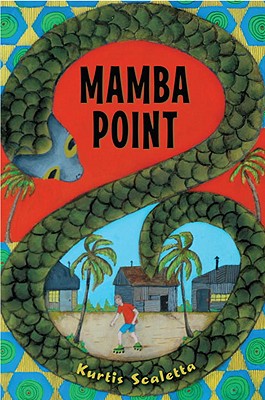
Seriously: Kurtis is an original new voice in children’s literature. His first book, Mudville, earned him wide acclaim, including being named one of the Top 10 Sports Books for Youth in 2009 by Booklist. His next book, Mamba Point, is due out in July, 2010. Even better, Kurtis claims to be writing a completely crazy book, hopefully for 2011. The truth is, I’m rooting for Kurtis Scaletta — and I know that after meeting him, you will be, too.
Hey, Kurtis. Finally, you’re here! Thanks for coming all the way from Minneapolis. Take off your wet things. Yes, the snow pants, socks, and mittens, too. I’ll throw them in the dryer while we talk. Here’s a terry cloth bathrobe and some bunny slippers.
Thanks. It’s great to be here in balmy Albany. Your orange tree is doing great. Um, do you mind turning on the A/C?
Not a problem. Are you bothered by the noise from the steel drum band in my backyard? I could ask them to stop, but like most of my neighbors in upstate NY, I could listen to “Shake, Shake Senora” all day long — and frequently do.
I actually listened to a lot of Caribbean music while writing the last one, but more Marley and less Belafonte.
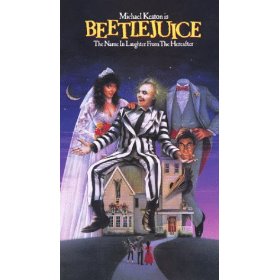
Now that you mention Harry Belafonte, I remember that song gets featured nicely in Tim Burton’s “Beetlejuice.” But don’t try to sidetrack me, Kurtis. I’m onto your tricks. We’re primarily here to talk about me. I mean, Mudville. The book turns on what strikes me as just a wonderful, imaginative leap –- a rain delay that lasts 22 years. Do you remember the circumstances of getting that idea? Was it a lightning bolt moment?
It’s kinda predictable, but I was watching a baseball game that went into a rain delay and one thing led to another. I did already have some of the characters in mind and I was trying to figure out what to do with them.
But that was a fantastic idea, literally, and introduced an element of magic realism into the story. Have I got that right? Is it something you resisted at first? Or do you have an interest in speculative fiction?
I like to tread a fine line between the improbable and impossible. All of my books do it. I call them “tall tales” myself. Sounds less pretentious. I mean, I ain’t Marquez or Borges. I read a lot of speculative fiction when I was younger, especially Harlan Ellison, but I don’t really see myself in that arena.
Are you excited about Mudville coming out in paperback?
Definitely. Something about the Yearling logo makes it especially neat. I remember a lot of great books having that horsey from when I was a kid.
It’s cool because Six Innings is coming out in paperback around the same time. Come to think of it, we should be bitter rivals. Where’s my trident?
Yeah, I guess other kids baseball writers are in competition. Unfortunately, they’ve also proved to be decent dudes. I’ve met John H. Ritter, Mick Cockrane, and John Coy, and in all three cases had to pocket my shiv.
Ah, disappointing. Nothing quite beats a brawl between children’s authors. After Mudville, was there an expectation that you were going to follow with another sports book?
I did worry for a while that I would be expected to deliver a series of sports books. I figured I could write one or two, but I’m not Mike Lupica and I have a lot more interests besides sports. I remember my wife saying, “In seven years when you’re writing the lacrosse book, you’ll wonder what the heck you’re doing.” But when I started talking to my editor about ideas for a second book, she was more taken with the Africa book than other suggestions, which included sports books. So I chalk that up to landing at a great house with a great editor.
I had a similar experience after Six Innings. I remember when your lovely wife said to me . . .
She encouraged you to write the Africa book, right?
Exactly! She’s been helpful in so many, many ways. I was wondering, how do you deal with reviews? You received such wonderful notices for Mudville. Are you thick-skinned, or more of a whimpering baby like me?
I really appreciated the good reviews, and the non-mention in one major outlet actually hurt more than the slam in another. I mostly just want people to know I exist, I think.
Are you hungry? I’ve got a Yodel, a Ho-Ho, or a Devil Dog. Which one do you want? Orange soda or root beer? And yes, Kurtis, it’s raining gum drops. That’s the way we roll here at jamespreller.com.
Yeah, and I guess the definitive word is “roll,” with that kind of diet. I’ll have the Yodel and the Orange pop, thanks.
Sorry, all out. Here’s a can of tuna fish and a hammer.
I’ll bring the tuna home. My five cats will appreciate it.
Five cats? I’m not going there. You went to school for writing, didn’t you? So is it safe to assume that you believe writing can be taught?
Well, the truth is that it was 17 years ago and I mainly had to figure out what to do with myself. But I do think I benefited from working with my advisor Elaine Ford, who is a terrific writer and was very frank and helpful with her feedback on my works in progress.
I can’t deal with “frank and helpful.” I’m more of a looking-for-false-praise kind of guy.
I’ve read that a lot of sensitive geniuses are like that. Anyway, it was a long time before I actually got published, but that had to do with me and not the University of Maine. Still, I think creative writing is in a weird position where there is both an abundance of non-academic “how to” manuals and workshops but very little serious scholarship on teaching and learning and very little about best practices or pedagogy that is based on evidence. My day job in higher ed is showing here I think.
Kurtis, you have a pretty active blog and I enjoy reading it. Do you think it’s helped you professionally? And if so, in what ways?
Now I use my blog as a way to connect to readers, librarians and teachers, but the biggest help it’s given me was before I got published. Before I had my professional authorial blog I had a book review blog, now defunct, and a personal/chatty blog, also defunct. Blogging was a turning point for me as a writer because I started writing every day and I met and started talking to other writers and people who care about kids books. My day job is not in writing or literature and I was way out of the loop, so I’m glad I got connected to a community and started writing again.
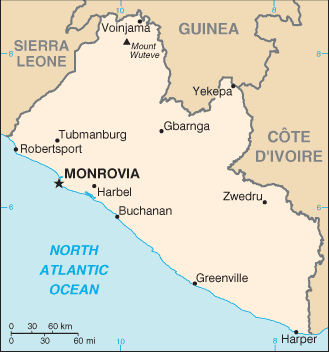
You have a new book coming out, Mamba Point, inspired in part by your experiences living in Monrovia, Liberia. That’s not near my old haunts on Long Island, is it?
Well, they’re on the same ocean, so sure. Just a skip across the pond.
So the story involves . . . dancing?
You’re just trying to get me worked up, aren’t you? One of my missions now is to get people to learn the difference between a mamba, which is a deadly snake, and a mambo, which is a risque latin dance.
A confusion that has led to many senseless deaths, I might add.
Seriously, because those mambo dances are tougher than they look!
Do not confuse the Mamba with the Mambo. Kurtis Scaletta is here to help.
Please, Kurtis, continue about your book.
Mamba Point is about a kid who moves from a small midwestern air force town to Montrovia, Liberia, in 1982. He’s worried about making new friends, just starting to get curious about those creatures called girls, and mostly wants to read comic books and play games. So far, that’s pretty autobiographical. But this kid is harassed by a black mamba… at first he’s scared out of his wits, but ends up kind of befriending it. They have a kind of connection. Then there’s a little adventure story thrown in, for good measure. Needless to say, that gets pretty far away from my own experiences. But there’s a lot of stuff that’s straight from my own life, and a lot about what it’s like for an American kid to move to Africa.
We both felt the death of J.D. Salinger, in my case more than expected. You mentioned “The Laughing Man” as your favorite Salinger story. What’s so great about it?
There’s lots to love about that story. The outer story is the typical spare, haunting modern story we all read in lit classes, but then there’s a completely ridiculous, endless, laugh-out-loud adventure story that’s narrated throughout. And there’s a pretty sweet baseball scene, too.
You’ve also written elsewhere about your admiration for the books of Betsy Byars.
You identify with the misfit, don’t you?
That was definitely what attracted me to her books. In the late 70s/early 80s when I reading her books, there was often a quirky misfit kid at the center. I really connected with them. I think she’s one of by biggest influences; I think I learned a lot of what I know about creating characters from Betsy. I really became aware of it in the middle of writing Mamba Point.
Do you read a lot of children’s books?
Yep. More than I read grown-up books. You kind of have to know what’s going on in the industry, so I read a lot so I know how to position my own books in a crowded marketplace. I do try to work in a couple of grown-up books but it’s hard to keep up as it is. Right now I’m in the middle of several books including The Evolution of Calpurnia Tate and Marchello in the Real World. They are both great.
Okay, tell me about this new “work-in-progress.” But it has to be in 139 characters or less; I’m tougher than Twitter and I think it’s time people knew it.
Wake, ME is about a small town in Maine that’s taken over by a giant fungus and couple of kids who believe it portends the town’s doom.
I want that book right now! Lightning Round: I know you’re into music, Kurtis. Give us ten songs on your imaginary mixed tape.
This one goes to eleven: “Train Whistle Blues” by Merle Haggard; “Driver 8” by R.E.M., “Play a Train Song,” by Todd Snider, “Waiting for a Train” by Jimmie Rodgers, “The Train Carrying Jimmy Rodgers Home” by Greg Brown, “Trains” by Ryan Adams, “Let the Train Blow the Whistle” by the Old 97s, “Freight Train Blues,” by The Weary Boys, “King of the Road” by Roger Miller, “Downbound Train” by Bruce Springsteen, and “Downtown Train” by Tom Waits (not Rod Stewart). Sorry, I have a one track mind.
Got any Oscar favorites? Best Picture of the Year?
I seriously love “Up.” It’s probably the only nominated movie I saw, and I don’t think it’ll win best picture (just best feature-length animated film), but the first 15 minutes of that movie are beautiful. It’s a really wonderful and imaginative story after that, and the dog was great, but it’s that long prologue that gets to me. Sniff. That being said, the smart money is on “Avatar.”
I thought the opening minutes of “Up” were extraordinary, compressed storytelling. Beautiful. After that, I didn’t care so much. I’m going to go with “The Hurt Locker.” Five favorite blogs?
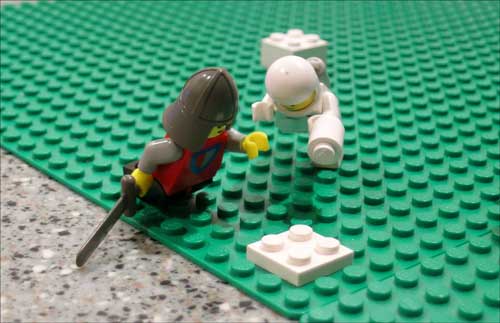
Oh, I loved bat-girl! “Less stats, more sass.” She also did those incredible Lego recreations of great (and not-so-great) moments in Twins baseball history.
I’m glad she’s appreciated even outside of Twins’ territory. You might also know her alter ego, Anne Ursu, who’s written a terrific fantasy series for kids. My wife says her grown up books are good, too, but I don’t really read grown up books.
I’m your reverse in that way; I read mostly adult.
Besides the time issue, I’m like an open pitcher of milk in the refrigerator. It’ll take on the taste of whatever’s around it. So when I read something, especially something really stylized, it affects my own voice. So I have to avoid getting deeply immersed in a novel when I’m writing. And these days I’m almost always writing. Kids books, I can usually read in a day, and shake it off.
Interesting, and again, that’s the exact reason why I don’t read them — especially when I’m deep into my own writing, when it’s an absolute no-go for me. We’re like two peas living in completely different apartments.
I worry about having too much consciousness about the marketplace. You start to hear about what sells and what doesn’t, and become too familiar (I think) with the conventions of the business — a business that’s often predicated on ripping off ideas from the bestseller list. Follow that to the end and you’re writing about a boy wizard with a sassy friend who falls in love with a smoldering vampire who’s really a geek who . . . and on and on. It seems like too much information can get in the way of originality. Thoughts?
It’s more about voice than subject matter. I’ll read a collection of essays by David Sedaris and start writing like David Sedaris, even though I’m still writing my own completely original work about the boy wizard who falls in love with a fairy, but to win her love he has to battle the vampires in dystopia with his werewolf buddies and his pet dragon. Or I’ll read Cormac McCarthy and start writing like Cormac McCarthy, even though I’m working on a tween romance.
You know what I like about you, Kurtis? Even though you strike me as having this heightened awareness of the business, you went out and wrote Mamba Point, a personal, deeply-felt story that has NOTHING to do with the trends of the marketplace. Last I looked, kids were not clamoring for more books set in Liberia. Yet you wrote from the heart. And that sound you hear is cheering, my wishing you success with this story.
Okay, whew. I hate it when Jamespreller.com gets all soggy. It seems like we’ve drifted a fair distance from our original list of bloggy goodness. By my count, you’ve only listed four.
Well, you know, I know a billion writers with blogs, but yours stands out. A newby writer like me learns stuff about the profession of writing. I also like the reader mail, which I’d love to do myself but I don’t get enough of to do. I think your blog is a good example of what writer/bloggers should do, connecting with teachers and readers. So much of it ends up being us writers just talking to each other.
That’s very kind of you to say, thanks. But I can tell from the buzz of my Kenmore dryer that your clothes are dry and it’s time for you to depart balmy Albany — alas, before you had time to visit nearby Cohoes, just ten miles north on 787, alleged home of Kilgore Trout — to brave the Minneapolis winter. As a parting gift, please accept this rare, 1988 VHS edition of “Beetlejuice.” It may look like it’s just a crummy old tape found in the bottom of my closet, but that doesn’t mean it’s not true.
Um. So, thanks for the interview . . . yeah. Are you sure you don’t have an extra Yodel?
Oh, fine. Knock yourself out.
——-
FOR MORE INTERVIEWS . . .
If you enjoyed this interview with Kurtis Scaletta, you might not like the others. They aren’t very good.
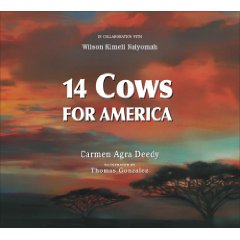
I was happy when I came across the book, 14 Cows for America, written by a long-lost friend, author and storyteller Carmen Deedy. We’ve since exchanged a few emails, caught up on our lives (to the extent that’s possible), and shared the unlikely hope that maybe someday we’ll find ourselves in same place at the same time. Usual stuff: “We’ll have lunch!” To date, it’s happened exactly once. In the meantime, Carmen is someone I’ll be rooting for, cheering from the sidelines. A true talent and a smart, singular woman. Today, I’m glad you’ll get to meet her. Because look, here she comes now . . .
Carmen, wow, great to see you again. We’ve met only once, a long time ago. Was it Paris, sometime after the war?
The Germans wore grey, I wore blue –– or was it plaid?
Oh, wait, I remember now. It was at a convention center in Raleigh. My bad. It’s so easy to confuse the two. So it’s been about fifteen years. At that time, as I recall, you had recently published The Library Dragon. Between then and now, your career has really blossomed.
That’s a generous assessment, old friend. Actually, I spent a whole lot of years as a single mom, and for nearly five of them I did very little writing. School author visits, a good bit of editing, but writing? Not so much. Getting three lovely and creative and maddening young women through adolescence while keeping the roof over our collective heads pretty much sucked every ounce of creative life out of me. “I am woman, hear me whimper,” was the sum and substance of my feminist credo in those days.
I’m fuzzy on the timeline. You’re an internationally known storyteller who has performed at The Kennedy Center and the Folger Shakespeare Library. You gave a talk to the TED folks –- and I’m pretty sure they invite only brilliant people with fertilizer ideas worth spreading. You were (or still are?) a regular contributor to NPR’s “All Things Considered.” Did that all happen after the girls were grown?
Nope. Just wasn’t doing a great deal of writing. The aforementioned events were short and sweet and helped bring in the bacon, as it were. But I couldn’t seem to carve out many stretches of time to write during those years.
Do you see yourself as primarily a storyteller, rather than a writer? What’s the distinction?
The distinction? Um, the WRITING STUFF DOWN part. Storytelling, on the other hand, is the ancient art of live narrative. In other words, someone (preferably carbon-based, as opposed to a dvd, mp3, etc.) opens his or her mouth and, without props, video enhancement, sets or backdrops, or fellow performers, conjures up an entire world –– makes something out of nothing if you will –– employing only the spoken word.
Ah, but I didn’t answer your question. Do I think of myself as a writer or a storyteller? Short answer: a writer. Nonetheless, one art form informs the other.
How does a person become a professional storyteller? Do you just hang out a sign on the front lawn? I mean, forgive me, but it seems like such a phony baloney job. Bankers must look at you and say, “You re a . . . what?!”
My dear Mr. Preller, if I am applying for a loan, I never say I’m a storyteller (and, by the by, saying you’re a writer doesn’t gain you much traction with the banking lot either). I say raconteur. It’s sooooo continental.
I know as a writer of children’s books, I’ll often get those baffled looks from some folks at parties after they ask the usual question: “So: What DO you DO?” You know who I mean, the guy in the suit with the big job. And he’ll always follow up my answer with another question, not even bothering to feign disinterest, “Any books I might know?” This from a guy you can’t imagine having read a children’s book –- even as a kid. So I’ll answer something like, “How ‘bout those Yankees!”
I think it’s pretty common for most people, particularly those who don’t make their living from writing, to read a children’s book and think, “Piece of cake.” When I hear that, I usually smile sweetly, lean in, and whisper, “Dare ya.” The truth is, of course, that children’s picture books do not occupy the same place in the literary world as, say, the works of Leo Tolstoy. But you do have to say a lot with a little — and in that respect, writing a picture book is kind of like taking War and Peace — and turning it into a haiku.
When you started as a storyteller, an old friend came to see one of your early shows. Afterward, she told you, “The truth? I don’t think you’re a storyteller.” How did you overcome that? Is there enough ice cream in the world to heal that wound?
Never underestimate the curative powers of Rocky Road, my friend.
Where do the stories come from?
Brooklyn, NY. It’s the last place you look. But I suppose you want an answer that’s a bit more serious-minded, so I will say this: stories swirl around us constantly: in the subway, at the lunch counter, around the corner from the cereal aisle. They are everywhere, vying for the writer’s attention. Tragically, I can be a mite distractible; I know I’ve let some great ones pass me by.
Your new book, Carmen, 14 Cows for America . . . wow.
What a remarkable story, beautifully told. It’s already gotten some great press. You must be thrilled.
I am very happy that it’s been so well received.
There are a lot of great lines in the book, but the ones that conclude the book really hit me:
“Because there is no nation so powerful it cannot be wounded,
nor a people so small that they cannot offer mighty comfort.”
Those words were especially resonant, like a bright, burning quiver shot to the heart. Do you remember when you first wrote those words? Did you realize –- you must have realized! -– how good it was at the first instant?
I have a nameless elementary school girl to thank for that. Not the precise words, of course, but the sentiment. She reminded me of Aesop’s fable –– the lion and the mouse –– big things need small things, said she. From the mouth of babes.
Yes, but you heard her. You listened. Maybe that’s the real secret to good writing.
Maybe. Then again, maybe I just got lucky.
It’s an interesting perspective to think of 14 Cows as a retelling of “The Lion and the Mouse.” How did the book come about?
I read about the gift in April of 2002 in The New York Times. I sat on my porch stoop and wept. It would be many years and a great deal of research later before I would hold a finished manuscript and eventually find the protagonist, Kimeli Naiyomah, and ask for his blessing. Little did I know that he would join us as a sort of cultural consultant, and even adding his own end note to the book. It has been, in many ways, an strange and wondrous and indescribable journey.
To me, with such a huge story, I’m impressed by your economy of language. I would have been overwhelmed, not knowing where or how to begin. How did you find that voice? Did you have a first sentence, an image? I guess I’m asking, what was the door that first opened for you, allowing you into the story?
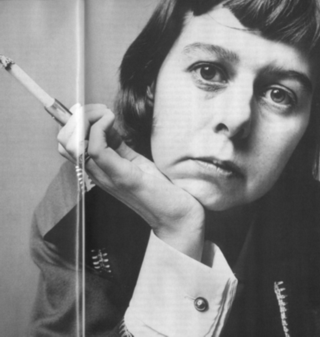
I was at the Carson McCullers House, in Columbus, Georgia.
I had been granted a writing fellowship and was having a devil of a time getting the story down. I should note here that this was, by now, 2007. I had notes, articles, documentaries, and sundry documents that I had compiled and hauled to Columbus; it amounted to years of research and only served to further overwhelm me. I wasn’t new to picture book writing and well knew the perimeters. I had fewer than 32 pages to work with. I was near despair, when I woke up one morning and reminded myself that this was a story for children, and needed to be told simply, just as I would have liked to hear the story when I was a child. To sustain a sense of immediacy, I opted for the present tense. That kept it simple, as well.
Well, you succeeded brilliantly. Lightning round. Five favorite foods?
My mom’s arroz con pollo (chicken and rice), Vietnamese Bubble Tea, chicken pot pie, watercress salad, Thai mango and sticky rice, coq au vin, my dad’s empanadas . . . sorry. It’s not that I can’t count, it’s just that I LOVE food.
Or yeast rolls. What ever happened to yeast rolls in school cafeterias? Now it’s low-fat granola bars. I tell you, my friend, we are witnessing the de-evolution of our race.
As my mother would say, “We’re going to hell in a hand basket.” Still one of my favorite expressions. I love channeling my parents that way, filling my mouth with their words. Now that my father is gone, I make a point of keeping those echoes bouncing around. It’s strangely satisfying to repeat a phrase that he used to say, keep it alive, like a postcard with “Love always” written on the back.
I know what you mean about those voices that linger in our heads. My wonderful and wickedly wise dad love of Cuban aphorisms. Among my favorites: Our wine may be bitter, but it’s our wine. (This one in 7th grade when I was complaining about my mother, my hair, zits, and the banality of reading Steinbeck.) He who laughs alone is remembering his own mischief. (This, when I caught him sitting at his desk, howling to himself, in what he thought was a solitary moment. I never learned what marvelous memory he was recalling, but it only served to increase his mystique as a Man of Mystery.) And my favorite, one that touches on love and true camaraderie, When you cry, I taste salt.
That’s a beautiful line. Of course, the bitter wine aphorism reminds me of a great line spoken by Lt. Frank Drebin in “The Naked Gun” movie: “It’s a topsy-turvy world, and maybe the problems of two people don’t amount to a hill of beans. But this is our hill. And these are our beans!” Next impossible question: Five favorite books?
Shadow of the Wind, A Prayer for Owen Meany, Charlotte’s Web, Great Expectations, The Book of Unholy Mischief.
A diverse, challenging list. What do you admire most about Dickens, or if you prefer, Great Expectations?
Well (coyly), one of my new books (not out yet) is about a street cat, a tower raven, and Charles Dickens. I just re-read Great Expectations this summer, and there were places where I laughed out loud. What a wordsmith, what a keen observer of human nature. Dickens made you see the human being within the characters. Why, even the loathsome and repulsive Miss Haversham (the elder) becomes a pitiable creature by book’s end. And his descriptions, and the marvelous names for his characters . . . ya know, I AM aware that it’s not cool to love Dickens anymore. I mean, a full page devoted to describing a room? But, oh, what a room . . . (I am officially out of the nerd closet now, and I want you to know I’m okay with that.)
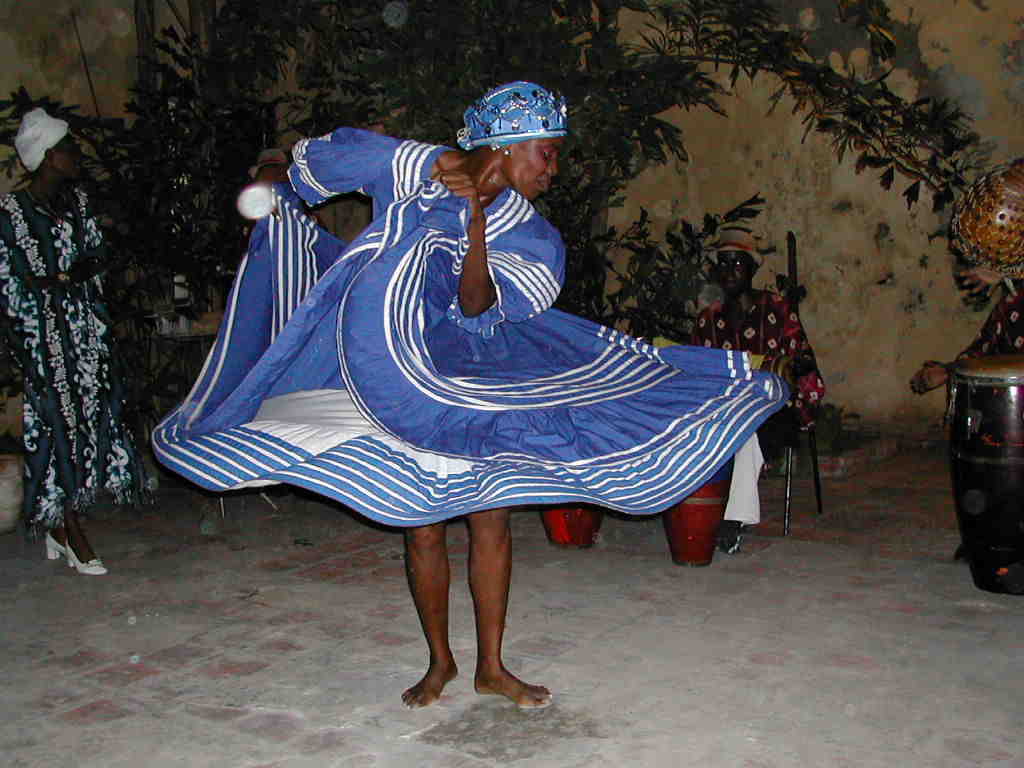
Five things about your native homeland, Cuba, that you miss?
My family, heat that penetrates your bones, my first language, cobble stone streets made for perambulation, the sea and its sticky brine perfume.
Politics, briefly: What is your hope for the future of American-Cuban relations? I have a friend from England, a drummer, who visits all the time and loves it there. I’m jealous of him, and jealous of Sky Masterson.
I wish there was openness. Am I wrong about that?
Pass.
Okay, you are on your front porch at your home in Georgia, peaceful under the stars. There’s a song playing and a drink in your hand. What’s the song? What’s the drink?
Carlos Gardel singing “Volver” . . .
. . . accompanied by a whiskey and soda, twist of lime.
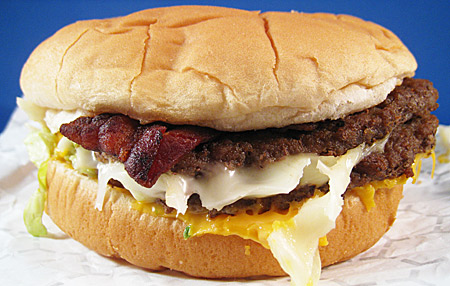
Thank you very much, Carmen. It’s really great to catch up with you again. I mean this: I’m so proud of you and all that you have done with this lovely, meaningful book. I hope it finds a place in every library in America. As a parting gift, please accept this (still warm!) cheeseburger from Sonic Drive-In.*
Does it come with plantains?
* No Masai cows were injured in the making of this cheeseburger.
As a kid, I used to come home from St. Frances De Chantal Elementary in the late 60’s and early 70’s to find my grandmother sitting in front of the television, sipping brandy, watching the soaps. She especially loved “The Edge of Night.” Then at 4:30, I’d get up and switch the channel for her, turning the big knob over to “The Mike Douglas Show.”
It was a daily, syndicated variety show, and Mike would begin each day’s show by singing a popular song. I loved it. I sat with Granny Good Witch — as we called my grandmother — for many, many hours watching Mike Douglas. He seemed like such a nice man.
One of the great things about the show was that he’d have guest co-hosts who would stay for the full week. It could be Sammy Davis, Jr., Richard Harris, Charo, Soupy Sales (photo, below), Barbra Streisand, whoever. Most famously, Mike snagged John Lennon and Yoko Ono for the week-long co-host gig, February 14-18, 1972. It was an inspired invitation, and made for legendary, if at times uncomfortable, television.
That’s how I want to play it this week. I’m Mike Douglas, and my guest co-host will be author Lewis Buzbee, and he’ll be hanging out all week long. There will be laughs and there might be pie.
Originally, we set out to do a standard interview. But as happens with good conversations, we couldn’t stop talking. Lewis is a terrific guy, quick on his feet, with deep thoughts and insights, and a sense of humor, too. Mostly, he’s a book lover and a man of great passions (fortunately, I carry a taser). I know you’ll like him.
What follows is Part One of a Three-Part Mini Series, titled “The Never-ending Lewis Buzbee Interview.”
——
Hey, everybody, look — it’s my co-host for the week, Lewis Buzbee! The man who asks the question, “How do you press a wildflower into the pages of an e-book?”
Everything all right, Lewis? You look a little drawn. Ho-ho. Seriously, thanks for stopping by, Lewis. No, we don’t need to hug. I mean it, DUDE. That’s enough. I’m warning you! I keep a taser in my man purse . . .
. . . and I will tase you, bro. Go sit in the big comfy chair.
Don’t tase me, bro!
And don’t tase my bro, either.
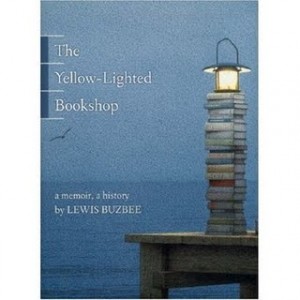
Congratulations on your first children’s novel, Steinbeck’s Ghost. I definitely want to talk about that book later in the week. But first, I have to say: I loved The Yellow-Lighted Bookshop.
Thank you, Mr. Preller.
Please, not so formal. “Mr. Preller, Sir,” is fine. Your book opens with a confession of sorts:
“When I walk into a bookstore, any bookstore, first thing in the morning, I’m flooded with a sense of hushed excitement. I shouldn’t feel this way. I’ve spent most of my adult life working in bookstores, either as a bookseller or a publisher’s sales rep, and even though I no longer work in the business, as an incurable reader I find myself in a bookstore at least five times a week. Shouldn’t I be blase about it all by now? In the quiet of such a morning, however, the store’s displays stacked squarely and its shelves tidy and promising, I know that this is no mere shop. When a bookstore opens its doors, the rest of the world enters, too, the day’s weather and the day’s news, the streams of customers, and of course the boxes of books and the many other worlds they contain — books of facts and truths, books newly written and those first read centuries before, books of great relevance and of absolute banality. Standing in the middle of this confluence, I can’t help but feel the possibility of the universe unfolding a little, once upon a time.”
First, Mr. Buzbee, Sir, that was beautiful. But as I read your book, I kept worrying about your family. Do they have enough to eat? Does his daughter have new clothes for school? You seem to buy a LOT of books.
You know, we do buy a lot of books, but now that I’ve given up bookselling for the glitzy life of a writer, well, it’s just money, money, money.
It’s a funny question, though, that I get a lot. People assume if you buy hundreds of books a year that, well, it’s somehow superfluous spending. But people with $60,000 cars never get the same sort of grief. I mean 60 G’s for a car? You’ve gotta be kidding.
You’ve lived a life that’s been centered around the reading life. Tell us about your background.
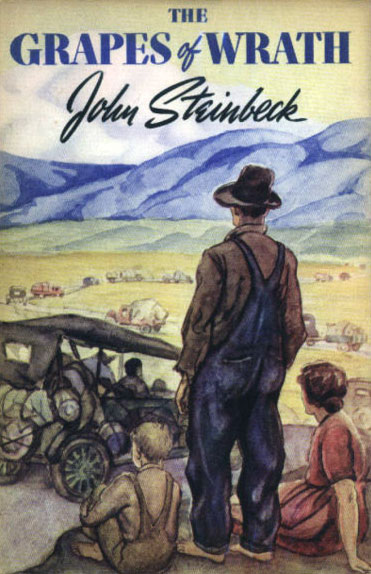
I grew up in a very working class home in San Jose, California, where we had books, of course, and where my parents read for their own pleasure, but nothing too New York Review of Books about it. My parents, children of the Great Depression, looked at books as a way for their kids to get a better education. But I never set out to be a bookseller or a writer. It happened, and quite by accident. I was on my way to being a rock star, when my life was changed by a high-school book report on Steinbeck’s The Grapes of Wrath.
I was fifteen. I had never before felt anything so powerful, his words, and I had never felt so connected to the rest of the world either. After that, the other pieces of my life followed, if not purposefully, then easily. When I was eighteen, I got a job in a bookstore; I’d heard you got a discount on books. And when I discovered that booksellers sometimes got free books, well, that was it.
Can you remember a specifc scene in the book when the light turned on for you? I have to confess, I read it for the first time this summer — and I was staggered by the writing, the pure telling of it. Also, Steinbeck’s humanity, the strong feeling he so obviously had for those characters.
It’s that first chapter, the description of the Dust Bowl, one of those epic, overview chapters. Seeing the world described with such power — that’s magic isn’t it? You put some black squiggly lines on a page, and an entire world appears.
And it was that sudden. I read that first chapter — somewhat grudgingly — and put the book down, deciding there and then that I would become a writer. Then I wrote my first short story, and it was only I finished that story, that I went back to the book. And the world just kept getting bigger and bigger.
The Yellow-Lighted Bookshop feels like an inevitability — this unlikely book that absolutely had to happen — and that it had to come from exactly you.
I knew a long time ago — many years into my writing career, and after my first novel, that I would have to write this book. Perhaps fifteen years before I actually sat down to write it. There were, I knew, a lot of books about the antique book trade, but nothing, really, that was a general appreciation of the new bookstore. I suppose I needed to write it, too, because, as I said earlier, the bookstore had given me so much. So much pleasure.
Easy, Lewis. Get back in the chair.
Not the ta —
BbzzzzzzzzttTTTT!
Man, I love that crackly sound! You should have seen your face, Lewis, the way your eyes bulged out! Hysterical. Now please continue . . .
Um, okay. Just let me get the feeling back in my arms and legs. I think I waited to write the book until my bookselling career — as both a bookseller and sales rep — had come to an end. I needed that distance. I never wanted to write a critique or an expose. It had to be an appreciation.
I can identify with that, because I knew I’d always have to write a baseball book of some kind or another. Baseball had seeped into every aspect of my life, as a boy, as a father, in my relationships with people, these powerful associations with my own mother, my sense of competition and play. It had to spill over into my writing.
There is a tired old maxim, write what you know. It’s often misinterpreted, of course. I think it has to be this: write what you love. Even if you’re arguing with it, or hating it at the moment, write what you love. Yes, I know bookstores, but thousands of other people know much more than I do about the business. No one, though, has quite loved the bookstore as much as I do. I’ve stared at it for decades, and always with love.
Yes, write what you feel. We can learn about all sorts of things, do research, find out, know. But unless the heart attaches to it, well, I don’t know how you can go to work each day.
I once had a student who offered up a great piece of advice — write about what you are most ashamed of. An interesting tack, that. It immediately calls you to powerful emotions.
Obviously, you analyzed the marketplace and decided: What the world needs now (besides love, sweet love) is a book that’s part memoir, part history of bookstores. Instant bestseller! Why James Patterson didn’t do it already is beyond me.
Well, that would have required Patterson to write much longer paragraphs. So, that answers that. But a psychotic murderer in the bookstore — hey, let me write that down.
Actually, I did know the book would do well — it did quite well, thanks. Because I’ve spoken with too many people over the years who feel as deeply about the bookstore as I do. And I knew they would want to the words to express that feeling, words to help them see it new.
I love that observation, Lewis. Writers can provide that, I think; so can good public speakers. Many people don’t seem to have the language to articulate those feelings. We see it at weddings, funerals, toasts at family events. I’m always so grateful to those people who can kind of, I don’t know, say it for us.
Of course, I am thinking of all those copywriters at Hallmark.
My mother is possibly the greatest supporter of Hallmark cards in the country, by the way. I get Thanksgiving cards from her! Thanksgiving cards? Amazing. And very specific ones — Thanksgiving cards that extol the virtues of a “very special son.”
I’m not dissing this, by the way, I’m glad people have that outlet. Otherwise, whoo, what a world.
There were so many moments in the book that I enjoyed — and not just that it came in at the optimal length of 225 pages — but sentences I had to underline, paragraphs where I’d put exclamation points in the margins. There’s a line you wrote, “to remember a book is to remember the child who read that book.”
It’s sort of a crib from Proust actually. I had the idea, of course, for a long time, but in his wonderful essay, “On Reading,” he helped me put words to it. When I remember a favorite book, I’m remembering, too, who I was at the time I read it. I just re-read Ray Carver’s first book of stories, Will You Please Be Quiet, Please?, and as well as being reminded of his genius and moved by the stories, I also remembered being a freshman in college who did nothing during spring finals week but read Carver instead. It was not a good semester grade-wise.
I guess that’s where the memoir aspect of this book became inevitable for you. You couldn’t talk about books without memories flooding back — it was impossible to separate the reading life from your actual life.
I knew that the memoir of a bookseller was bound to be pretty dull stuff. It’s not an amazing life, in that way. My father was a deep-sea diver for the Navy; now that’s a life worth writing about. I included the memoir bits kind of strategically. I wanted to put in enough of my own experience — but not too much — so that the reader would be able to relate to the memories, and yet still have enough space to put in their own memories. My memoir, as if were, is really only there as a touchstone.
But it’s true. I am a reader — and I would guess you are, too. In fact, anyone reading this, well, it goes without saying. But I’ve always been suspicious of people who want to separate the “reading” from the “life.” For many of us, reading is an integral part of life, not a vacation from it. And not in a self-help way, either. It’s just a part of what I do, and it influences how I go into the world, how I engage with it. I’ve always considered reading an active undertaking, not passive.
Wow, Lewis. Word.
——-
End of Part One. Please come back on Wednesday for Part Two (or click here right now!) of “The Never-Ending Lewis Buzbee Interview” — he’ll be here all week! We’ll talk about the Kindle, Star Trek, Facebook, Katharine Ross, the “death of the novel,” the twitterverse, and raise a glass to idiots everywhere!
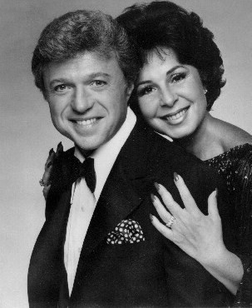
Next week my co-hosts will be: Steve Lawrence and Eydie Gorme!