“I happen to think that a book is of extraordinary value
if it gives the reader nothing more than a smile or two.
It’s perfectly okay to take a book, read it, have a good time,
giggle and laugh — and turn off the TV. I love that.”
— Barbara Park (1947-2013)
–
I was surprised and saddened to read that Barbara Park passed away on November 15th at the young age of 66. I never met Barbara in person, but I certainly got a strong sense of Barbara through her books. Every reader knows and feels this experience. When we read the best books, when we feel that electric connection, there is a communion that endures beyond time and space and even death.
In my career, I’ve had the opportunity to interview more than a hundred authors and illustrators. One of them was Barbara Park, who was genuine in every way. We spoke sometime in the late ’90s, and a bunch of those interviews were later compiled in a Scholastic Professional Book called, rather klunkily: The Big Book of Picture-Book Authors & Illustrators.
Good luck finding it. The book is long out of print (big sigh), but there are treasures within. It’s worth seeking out on eBay or wherever. I seriously wish I could write another someday.
I enjoyed memorable, lively conversations with so many great artists. A few of my favorites were Molly Bang, Aliki Brandenberg, Ashley Bryan, Barbara Cooney, Mem Fox, Kevin Henkes, Karla Kuskin, James Marshall, Bill Martin, Patricia Polacco, Jack Prelutsky, Faith Ringgold, Lane Smith, Peter Spier, Bernard Waber, Vera B. Williams, Charlotte Zolotow . . . and, of course, Barbara Park.
Barbara was warm, and kind, and modest, and funny, and absolutely genuine, just as you’d expect.
Here’s what ended up in the book, which was intended to be shared with students:
Best-selling author Barbara Park did not take the usual path to becoming a writer. “As a kid, I didn’t even read much,” Barbara confesses. “I bought books from the school book club because I liked the smell of them. It was nice to have this pile of new books. But I really had no great desire to read them!”
Barbara was a lively, active child with a motormouth and a sharp sense of humor. She had a great many interests, but writing was not one of them. “To me, writing was an assignment, period. I was no particularly imaginative. I didn’t sit around and make up stories to entertain my friends. But I was always the class clown. In high school I was voted ‘Wittiest,’ which, let’s be honest, is just a nice way of saying ‘Goofy!'”
It wasn’t until after college, marriage, and the birth of two children, that Barbara began to think seriously about writing. “I wanted to see if I could put my sense of humor to work. Because, sad to say, it was the only thing for which I’d ever got any recognition. I thought, Maybe I can write funny.”
Working at home while her two boys were in school, Barbara concentrated on books for middle-grade readers. Barbara lists The Kid in the Red Jacket, My Mother Got Married (and Other Disasters), and Mike Harte Was Here as personal favorites. She considers her best work to be Mike Harte Was Here. Many readers agree. In a stunning achievement, Barbara addresses a boy’s tragic, accidental death with writing that is at once deeply heartfelt and — amazingly — joyously funny.
In all of her books, no matter the seriousness of the theme, Barbara’s humor spontaneously bubbles to the surface. In fact, Barbara has made something of a career out of focusing on funny, irreverent, wisecracking kids who, like her, just can’t walk away from a punch line.
Though Barbara’s books are moral in the truest sense of the word, she steers clear of heavy messages and “life lessons.” Says Barbara, “I happen to think that a book is of extraordinary value if it gives the reader nothing more than a smile or two. It’s perfectly okay to take a book, read it, have a good time, giggle and laugh — and turn off the TV. I love that.”
In the early 1990s, Barbara was approached by Random House with the idea of writing a series for younger readers. It scared her half to death. Barbara admits, “There was some question as to whether or not my dry sense of humor would be picked up by younger kids.”
In the end Barbara decided that she’d have to write to please herself, to be true to her own sensibilities. “I can’t change my sense of humor,” Barbara explains. “If I did, it wouldn’t even be me trying to write this book. It would be me trying to write like somebody who didn’t think like me!”
Barbara soon created the irrepressible character Junie B. Jones. This best-selling children’s character, who often said and did all the wrong things, elbowed her way into the spotlight. Barbara didn’t have to look far for inspiration. “Junie B. is me in an exaggerated form,” Barbara admits. “I think the core of most of my characters is me. I mean, where else is it going to come from? It’s got to be from you.”
Though Junie B. is in kindergarten (with a move to first grade coming soon), Barbara has an uncanny knack for inhabiting her world. She says, “I’ve never had a problem becoming five years old in my head. I really think that you basically stay the same person all your life. I fell the essence of me hasn’t changed.”
Junie B. is by no means perfect. She acts out in class, she’s not always respectful, and she tends to massacre the English language whenever she opens her mouth (which is often). An ideal role model? Forget about it. Junie B. is much more than that — with her foibles and mistakes, she is as genuine as her readers. Junie B. is a pretty terrific kid doing her best to get it right — and happily succeeding most of the time.
NOTE: I’ve been blogging at this site since May, 2008, which is like 120 in Blogger’s Years. My strong suspicion is that a lot of the oldies-but-goodies have not been seen by my current readership, so I decided to give this one a new airing. I still often think of Mr. Newkirk’s great book and insights. This was originally posted on March 6, 2011.
I recently read Thomas Newkirk’s outstanding book, Misreading Masculinity: Boys, Literacy, and Popular Culture. I sent him a complimentary email and, to my great surprise, he agreed to an interview. My reasons were selfish. I simply wanted to learn more from this very smart, insightful man.
Back in college, I had an English teacher who taught me an important question: So what? I mean, okay, boys don’t read as much as girls. They do other things well. What’s the big deal?
I think there are two responses. Reading well is so tied to school success — and to liking school — that it is unethical to write off a big percentage of boys as non-readers.It may have been possible in previous times to drop out or barely finish school and go on to good jobs. But that is not the case now.
I think the bigger argument that reading is a deeply pleasurable and enlightening activity — or can be. I don’t want boys to miss out on it.
Thomas Newkirk.
One of the things I loved about your book was how you wove in small pieces of memoir, little stories from your life, and connected those experiences to the book’s larger themes. You tell a wonderful story about how as a young man you visited the library in Harvard. You saw a dusty old scholar with a suitcase full of index cards and suddenly recognized the absolute weirdness of the literary life. Silent, isolated, inactive –- and how utterly strange it must appear to a non-reader. As book lovers, I don’t think we fully appreciate the perspective of the non-reader, how foreign it must look to a boy who typically chooses action, companionship, and noise.
Reading doesn’t have to be silent and isolated — although it must appear that way to readers who have never been in what Nancie Atwell calls “the reading zone.” When we enter that zone — identifying with characters, visualizing, hearing the voices of the narrator and characters — we are NOT alone. And if reading can be shared in friendship groups, talked about, it becomes even more social. C.S. Lewis once said that we read to learn that we are not alone, and I believe that.
You made a funny comment, when exploring the tension between literacy and the code of the real boy: “What better disguise could there be for Superman than to turn him into a writer!” It’s just not a very masculine endeavor, is it, shutting one’s self away from the active world, isolated and alone, sitting in a chair in silence. How much more un-boy can you get?
But I think technology is changing that. To compose with the resources of the Internet — to make digital stories, to navigate the various social networks, to create animation. We have recently seen how exploiting these social networks can bring down dictators. This is writing that is anything but isolated. Maybe school writing and reading is too isolated, but digital literacy is anything but.
At one point, you note, “Boys often feel than an open show of enthusiasm for schoolwork, particularly in the language arts, can undermine their identity as a ‘real boy.’” It seems like boy culture –- the codes of behavior — can be a major obstacle for boy readers.
Absolutely. I remember the African American journalist comment on the social pressure for African American boys to see trying at school as being “white.” His comment was: “With friends like that who needs enemies?” One reason parents look desperately for charter and private schools is to find places where trying and excelling at academics is part of the school culture.
As an adult, I enjoy reading closely observed, realistic fiction. Life’s little moments. I love Richard Ford and nothing ever happens in his novels. It takes him twelve pages to go to the store to pick up some muffins. And that fits in perfectly with a classroom emphasis on memoir writing. But I can vividly recall that as a boy I wanted things to HAPPEN in my stories. Otherwise, why write about it? So I think when boys are pushed to write about, say, their trip to the beach, about real things, they are bored and disappointed. A bomb didn’t explode? A shark didn’t attack? Why bother writing about eating chicken salad sandwiches with Uncle Max?
There has been a lot of the imposition of adult tastes on students — who may find fantasy and adventure genres more appealing. I don’t think that means that we give up on asking students to read and write realistic genres — but we need to be open to other tastes as well. Fantasy allows us to escape, to be bigger and braver than we are, to suspend the limitations of time and space. I think we all need that freedom as well.
Many years ago, not long after 9/11, I volunteered in my oldest son’s 3rd grade classroom. One boy, typical of many you discuss in Misreading Masculinity, wrote a story that included exploding bombs. I learned from his teacher that the mandated response was for us to forward the story to a school counselor who would contact the boy’s parents: “Billy’s writing about bombs again!”
Yes, unfortunately, many schools have given up on making meaningful distinctions here. I have never understood, for example, why it is OK to read about violence, even the gruesome violence of Beowulf, and that’s ok, even culturally valued. But if a kid writes something like that, it’s off to the guidance counselor. For me the key question is this: does the writing seem threatening to anyone; does it make anyone feel unsafe or targeted. If is does, it fails to meet the basic rules of any school. But if a kid writes a Star Wars take-off and a space ship explodes, does anybody really feel threatened by that?
I guess it’s natural for us, as enlightened adults, to want boys, or any students, to value what we value. We want them to read and appreciate what we consider to be good books. When those values aren’t shared –- when, say, they like low-brow stuff, AKA, “crap” –- the tendency is for us to see it as a deficiency in them. There’s something wrong with boys.
I think we all like some AKA crap. No one is high brow all the time. So it seems to me OK to ask kids to value what we value; but we also have to understand the appeal of what they like. It can’t be all one or the other. We have values and goals for their reading and writing; but we won’t win the cooperation of students if our attitude toward their culture is one of dismissal. Teaching is a cross-generational trade.
As a man who came to reading through my boyhood love of sports, where I’d dive into the morning paper (pre-ESPN, thank goodness) for the stats and scores and stories, I liked that you included a nod to “the literature of sports tables.” I can read a box score and imagine a half-dozen story lines.
Yes, it’s so rich in information — the scores by quarters or innings. Who’s hot and who’s not. It is still my favorite page in the sports section. I am convinced that one advantage boys have in math is their early immersion in sports statistics.
At times you use the term, “school literacy.” How do you distinguish that from ordinary literacy? Is it a matter of “school-approved” literacy?
School literacy is necessarily a limited subset of possible literacies. It traditionally focuses on the verbal over the visual; on high culture over popular culture; on print over oral expression; on realism over fantasy and escapism; on extended formal writing over informal and expressive writing.
It resonated with me when you gave a historical perspective on oral vs. silent reading, linking it to a “cult of efficiency.” We know that speed readers are taught to eliminate sub-vocalization, and instead to scan chunks of language, eliminating meaningless words. Yet as a writer, some of the best advice I can give is to read what you’ve written aloud, to really hear what you’ve written, the sound and rhythm of the words. That is, it’s the total opposite of what most of us do in silent, sustained reading!
I am convinced that even when we read “silently” we are attending to the intonations of language. In other words, “silent” reading is not really silent. That’s why writers will often read their work aloud to revise—even though almost all their readers will not read it aloud. But I would argue that they still register sound in some way, internally. I will expand that idea in my new book, The Case for Slow Reading. Stay tuned.
You argue for television as a legitimate source of writing topics. Why do you see television as an under-valued resource?
I think schools see TV, the Internet, and video games as the enemy. And this makes some sense—studies show that many students spend way too much time with this media, often multitasking. But I believe that TV can teach dialogue, conflict, characterization, narrative, humor. The visual narratives can provide scaffolds, or cultural props, for students to use in their writing — if teachers let them. They can write parodies or alternative versions with their friends co-exiting with fictional characters — Darth Vadar and the kid down the street — all in the same adventure.
I hesitate before opening this can of worms, since much of my livelihood depends upon the approval of gatekeepers (editors, teachers, librarians, bloggers, book purchasers) who are overwhelmingly female. Clearly, the world of children’s books is a woman’s world. Is that, in your opinion, part of the problem when it comes to boys literacy?
One challenge is to look at books from the boy’s point of view. I don’t think gender is an absolute barrier here. What’s needed is an open mind, a sense of curiosity. What makes this boy tick? What are the themes, passions, competencies in his life that I can build on? To teach we all need to get outside ourselves, and into someone else’s skin. I know many female teachers who are wonderful at this. And it seems to me that when a boy senses a female teacher cares about what he cares about, that boy will be open to other things the teacher asks of him.
Finally, can you recommend any other books on this topic?
I’d read Ralph Fletcher’s Boy Writers. I’d also watch the PBS documentary “Raising Cain.”
I loved Fletcher’s book and commented on it before, so I second the nomination. Thanks, Thomas, for taking the time out to answer my questions. You’ve certainly given me a lot to think about. And I’ll be looking forward to your new book, The Case for Slow Reading. I posted on that subject back in September, 2010, and led with a quote by . . . Thomas Newkirk: “Teachers can enhance students’ pleasure and success in reading by showing them how to slow down and savor what they read.”
My best to you. Keep up the great work. And here’s a clip from “Raising Cain.”
Thomas Newkirk is Professor of English at the University of New Hampshire. He has studied literacy learning at a variety of educational levels — from preschool to college. His book,Misreading Masculinity, was cited by Instructor Magazine as one of the most significant books for teachers in the past decade. He is also the author of Holding On to Good Ideas in a Time of Bad Ones: Six Literacy Ideas Worth Fighting For and The Performance of Self in Student Writing.
On Monday, July 25, Sue Fondrie was announced as the grand prize winner of the 2011 Bulwer-Lytton Fiction Contest. As a longtime fan (and occasional perpetrator) of spectacularly bad writing, I blogged that sucker up and, to my surprise, Sue dropped by with a comment. Medium story short: She agreed to satisfy my curiosity by answering a few questions.
Sue, I loved and admired your amazing sentence. Congratulations on the sweet, sweet victory. Tell us a little bit about yourself. What do you do for a living?
Is this victory sweet? I think it soured people on writing, really.
Not true! I think it takes a real appreciation of language to create something that egregiously bad. Just look at the popularity of the contest. We are delighted and charmed. Seriously: Great job.
For a living, I work with future teachers as an associate professor of Curriculum and Instruction at the University of Wisconsin Oshkosh. I teach the secondary English methods courses, the middle school education course, supervise student teachers in English language arts, and generally help students become teachers.
Let us gaze in awe once again upon your award-winning sentence:
“Cheryl’s mind turned like the vanes of a wind-powered turbine, chopping her sparrow-like thoughts into bloody pieces that fell onto a growing pile of forgotten memories.”
How long did it take you to craft it? I can’t believe something that over-cooked could have been completed in a first draft.
Don’t tell anyone, but I cranked it out in a few minutes, initially. Then, as I always recommend to my students, I let it sit for a few weeks and then came back to work on it some more. Hmm, maybe I should’ve let it sit longer . . .
Have you entered the contest in previous years? What appeals to you about bad writing?
I’ve never entered before, although I’ve been following it for almost 20 years. What’s not to love about bad writing? It makes my own mediocre efforts seem acceptable.
You are an associate professor at a university, the land of ivory towers, usually a bastion for writing that is dry, tedious, filled with arcane language. The academic world has it’s own brand of bad. But your purple prose draws inspiration from . . . where, exactly? Can you site any specific sources? Just a hunch, but have you been reading the Twilight series?
If you read any of my academic writing, you’d see that dry and tedious describes it perfectly. I credit my Bulwer-Lytton win to being raised in a household of people who love a good pun and like to play with language. We often had long pun-filled contests on a central theme. And like any good teacher educator, I’ve read the Twilight series.
Bill Watterson, creator of Calvin and Hobbes,
knows a few things about academic writing.
What next? I mean, is there a second sentence in the works? A chapter, a book? Do you have serious writing aspirations?
Sadly, I had but the one sentence in me. I’m going to rest on my rapidly decaying laurels. As for serious aspirations, I’m a superior technical writer and an appalling creative one. I’ll have to stick with academic efforts and the occasional (bad) fan fic effort.
Good luck, Sue. Thanks for stopping by. Your parting gift is on the way — a signed copy of my recent book, Bystander. And if you ever do write that next sentence, I’ll be eager to read it. In the meantime, I’ll be left with only forgotten memories and sparrow-like thoughts . . .
I recently read Thomas Newkirk’s outstanding book, Misreading Masculinity: Boys, Literacy, and Popular Culture. I sent him a complimentary email and, to my great surprise, he agreed to an interview. My reasons were selfish. I simply wanted to learn more from this very smart, insightful man.
Back in college, I had an English teacher who taught me an important question: So what? I mean, okay, boys don’t read as much as girls. They do other things well. What’s the big deal?
I think there are two responses. Reading well is so tied to school success — and to liking school — that it is unethical to write off a big percentage of boys as non-readers.It may have been possible in previous times to drop out or barely finish school and go on to good jobs. But that is not the case now.
I think the bigger argument that reading is a deeply pleasurable and enlightening activity — or can be. I don’t want boys to miss out on it.
Thomas Newkirk.
One of the things I loved about your book was how you wove in small pieces of memoir, little stories from your life, and connected those experiences to the book’s larger themes. You tell a wonderful story about how as a young man you visited the library in Harvard. You saw a dusty old scholar with a suitcase full of index cards and suddenly recognized the absolute weirdness of the literary life. Silent, isolated, inactive –- and how utterly strange it must appear to a non-reader. As book lovers, I don’t think we fully appreciate the perspective of the non-reader, how foreign it must look to a boy who typically chooses action, companionship, and noise.
Reading doesn’t have to be silent and isolated — although it must appear that way to readers who have never been in what Nancie Atwell calls “the reading zone.” When we enter that zone — identifying with characters, visualizing, hearing the voices of the narrator and characters — we are NOT alone. And if reading can be shared in friendship groups, talked about, it becomes even more social. C.S. Lewis once said that we read to learn that we are not alone, and I believe that.
You made a funny comment, when exploring the tension between literacy and the code of the real boy: “What better disguise could there be for Superman than to turn him into a writer!” It’s just not a very masculine endeavor, is it, shutting one’s self away from the active world, isolated and alone, sitting in a chair in silence. How much more un-boy can you get?
But I think technology is changing that. To compose with the resources of the Internet — to make digital stories, to navigate the various social networks, to create animation. We have recently seen how exploiting these social networks can bring down dictators. This is writing that is anything but isolated. Maybe school writing and reading is too isolated, but digital literacy is anything but.
At one point, you note, “Boys often feel than an open show of enthusiasm for schoolwork, particularly in the language arts, can undermine their identity as a ‘real boy.’” It seems like boy culture –- the codes of behavior — can be a major obstacle for boy readers.
Absolutely. I remember the African American journalist comment on the social pressure for African American boys to see trying at school as being “white.” His comment was: “With friends like that who needs enemies?” One reason parents look desperately for charter and private schools is to find places where trying and excelling at academics is part of the school culture.
As an adult, I enjoy reading closely observed, realistic fiction. Life’s little moments. I love Richard Ford and nothing ever happens in his novels. It takes him twelve pages to go to the store to pick up some muffins. And that fits in perfectly with a classroom emphasis on memoir writing. But I can vividly recall that as a boy I wanted things to HAPPEN in my stories. Otherwise, why write about it? So I think when boys are pushed to write about, say, their trip to the beach, about real things, they are bored and disappointed. A bomb didn’t explode? A shark didn’t attack? Why bother writing about eating chicken salad sandwiches with Uncle Max?
There has been a lot of the imposition of adult tastes on students — who may find fantasy and adventure genres more appealing. I don’t think that means that we give up on asking students to read and write realistic genres — but we need to be open to other tastes as well. Fantasy allows us to escape, to be bigger and braver than we are, to suspend the limitations of time and space. I think we all need that freedom as well.
Many years ago, not long after 9/11, I volunteered in my oldest son’s 3rd grade classroom. One boy, typical of many you discuss in Misreading Masculinity, wrote a story that included exploding bombs. I learned from his teacher that the mandated response was for us to forward the story to a school counselor who would contact the boy’s parents: “Billy’s writing about bombs again!”
Yes, unfortunately, many schools have given up on making meaningful distinctions here. I have never understood, for example, why it is OK to read about violence, even the gruesome violence of Beowulf, and that’s ok, even culturally valued. But if a kid writes something like that, it’s off to the guidance counselor. For me the key question is this: does the writing seem threatening to anyone; does it make anyone feel unsafe or targeted. If is does, it fails to meet the basic rules of any school. But if a kid writes a Star Wars take-off and a space ship explodes, does anybody really feel threatened by that?
I guess it’s natural for us, as enlightened adults, to want boys, or any students, to value what we value. We want them to read and appreciate what we consider to be good books. When those values aren’t shared –- when, say, they like low-brow stuff, AKA, “crap” –- the tendency is for us to see it as a deficiency in them. There’s something wrong with boys.
I think we all like some AKA crap. No one is high brow all the time. So it seems to me OK to ask kids to value what we value; but we also have to understand the appeal of what they like. It can’t be all one or the other. We have values and goals for their reading and writing; but we won’t win the cooperation of students if our attitude toward their culture is one of dismissal. Teaching is a cross-generational trade.
As a man who came to reading through my boyhood love of sports, where I’d dive into the morning paper (pre-ESPN, thank goodness) for the stats and scores and stories, I liked that you included a nod to “the literature of sports tables.” I can read a box score and imagine a half-dozen story lines.
Yes, it’s so rich in information — the scores by quarters or innings. Who’s hot and who’s not. It is still my favorite page in the sports section. I am convinced that one advantage boys have in math is their early immersion in sports statistics.
At times you use the term, “school literacy.” How do you distinguish that from ordinary literacy? Is it a matter of “school-approved” literacy?
School literacy is necessarily a limited subset of possible literacies. It traditionally focuses on the verbal over the visual; on high culture over popular culture; on print over oral expression; on realism over fantasy and escapism; on extended formal writing over informal and expressive writing.
It resonated with me when you gave a historical perspective on oral vs. silent reading, linking it to a “cult of efficiency.” We know that speed readers are taught to eliminate sub-vocalization, and instead to scan chunks of language, eliminating meaningless words. Yet as a writer, some of the best advice I can give is to read what you’ve written aloud, to really hear what you’ve written, the sound and rhythm of the words. That is, it’s the total opposite of what most of us do in silent, sustained reading!
I am convinced that even when we read “silently” we are attending to the intonations of language. In other words, “silent” reading is not really silent. That’s why writers will often read their work aloud to revise—even though almost all their readers will not read it aloud. But I would argue that they still register sound in some way, internally. I will expand that idea in my new book, The Case for Slow Reading. Stay tuned.
You argue for television as a legitimate source of writing topics. Why do you see television as an under-valued resource?
I think schools see TV, the Internet, and video games as the enemy. And this makes some sense—studies show that many students spend way too much time with this media, often multitasking. But I believe that TV can teach dialogue, conflict, characterization, narrative, humor. The visual narratives can provide scaffolds, or cultural props, for students to use in their writing — if teachers let them. They can write parodies or alternative versions with their friends co-exiting with fictional characters — Darth Vadar and the kid down the street — all in the same adventure.
I hesitate before opening this can of worms, since much of my livelihood depends upon the approval of gatekeepers (editors, teachers, librarians, bloggers, book purchasers) who are overwhelmingly female. Clearly, the world of children’s books is a woman’s world. Is that, in your opinion, part of the problem when it comes to boys literacy?
One challenge is to look at books from the boy’s point of view. I don’t think gender is an absolute barrier here. What’s needed is an open mind, a sense of curiosity. What makes this boy tick? What are the themes, passions, competencies in his life that I can build on? To teach we all need to get outside ourselves, and into someone else’s skin. I know many female teachers who are wonderful at this. And it seems to me that when a boy senses a female teacher cares about what he cares about, that boy will be open to other things the teacher asks of him.
Finally, can you recommend any other books on this topic?
I’d read Ralph Fletcher’s Boy Writers. I’d also watch the PBS documentary “Raising Cain.”
I loved Fletcher’s book and commented on it before, so I second the nomination. Thanks, Thomas, for taking the time out to answer my questions. You’ve certainly given me a lot to think about. And I’ll be looking forward to your new book, The Case for Slow Reading. I posted on that subject back in September, 2010, and led with a quote by . . . Thomas Newkirk: “Teachers can enhance students’ pleasure and success in reading by showing them how to slow down and savor what they read.”
My best to you. Keep up the great work. And here’s a clip from “Raising Cain.”
Readers, note: Please check out my other blog, FATHERS READ, for more on the subject of boys literacy. I’ll be away on school visits for most of the week.
Thomas Newkirk is Professor of English at the University of New Hampshire. He has studied literacy learning at a variety of educational levels — from preschool to college. His book, Misreading Masculinity, was cited by Instructor Magazine as one of the most significant books for teachers in the past decade. He is also the author of Holding On to Good Ideas in a Time of Bad Ones: Six Literacy Ideas Worth Fighting For and The Performance of Self in Student Writing.
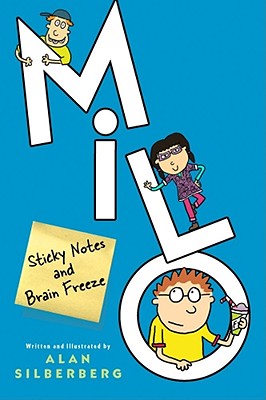
Readers can connect with Milo, by Alan Silberberg, in very different ways. I suppose that’s true of any book, we all bring our disparate selves to the text, but it seems especially true for Milo, a story for middle grade readers that embraces broad goofy humor on one end, and authentic, emotional grief on the other. Actually, that’s not true. Those qualities aren’t on separate ends, but are intermingled throughout. It’s a book where a boy can sneeze on someone’s neck in class, then return home to a house of fog and loss, where no one has quite figured out how to move forward after a death in the family. For me as a reader, it wasn’t the humor that hooked me. It was the humor combined with real emotional depth.
That rare thing in children’s books: a boy in full.
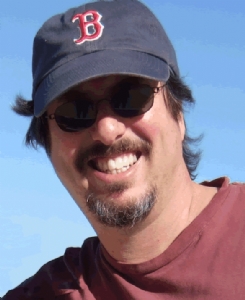
After I read Milo, I wanted to meet Alan because I sensed that he and I shared things in common. So I contacted Alan through his website and requested an interview. There was much I wanted to discuss, and our conversation flowed so naturally, that our Q & A went on slightly longer than The Reagan Years. I decided to break it up into two parts. I’m indebted to Alan for his time and patience and for the care he took in answering my questions.
(Whew. I’m relieved he’s not a Yankees fan.)
Alan! Hey, thanks for stopping by all the way from Montreal. Which is still in Canada, right? Could you please leave the soggy Uggs by the front door? Yeah, the moose, too. That’d be swell.
It’s true, Montreal is still in Canada. But you know, I’m from Boston (Go Red Sox!) so my heart — and shoveling technique — is from New England.
I gather that you didn’t initially set out to tackle this huge, daunting topic –- the death of a parent.
You are so right! When I started writing this book my goal was to write a pretty silly book that would include my cartoon illustrations. What started as a goofy look at a 7th grade kid starting a new school turned into something much deeper once I realized I had my own story to tell.
I know that this book grows out of your own personal experiences. Could you give us a little background on that?
My mom died of brain cancer when I was nine years old. It happened really fast too. It was a terrible time in my life and I guess I have always identified with that lost boy whose mother suddenly went away. In my family “death” never really got discussed so after she died we all just did our best to pretend we were okay, which on one level was comforting because I didn’t have to really deal with the grief and loss. With my sense of humor intact, I moved on from that life-altering event — but always dragging along a sad piece of me like a shadow.
“A sad piece of me like a shadow,” that’s nice. I just finished a young adult novel that grapples with some of the same feelings, where things unsaid are more important than what’s spoken. But I don’t suppose you’d let me steal that “sad piece of me” line, would you?
Be my guest. Just buy me an iced espresso some time. And a cookie. Chocolate chip is always nice.
At one point in the book, Milo says, “I miss a dinner table that doesn’t feel lopsided,” and I completely understood that line. I mean, you got me right there. My oldest brother, Neal, died of AIDS back in ’93. And after that, I often said that our family became like a ship that listed to the side. The ballast was off, you know. We never sat in the water quite right after that.
I think that’s what loss does to a family — even the most messed up families are a balanced whole. And the loss of someone we love just throws that balance totally off. And I think it doesn’t matter at what age we lose someone — that loss sets us adrift. I like your boat metaphor.
You attempt to do something that’s not at all easy –- balancing some traditional, goofy boy humor with a sensitive, heartfelt story about deep, deep loss.
Once I knew that the silly story I started out to write was drawing deeper from my life I made the decision to stay true to who I was back then. Life was suddenly sad — but I was still a funny kid. I think it’s important to have a balance in a story like this because life isn’t all one thing or another and a story about loss can also be a funny story. Of course the cartoons help to give the book a lighter tone, but to be honest, some of the cartoons are quite poignant and a bit sad too.
I have to say, I’m often frustrated when I encounter these limited notions about “what boys like” and, consequently, “what boys are and can be.” So we see books with the goofball stuff –- with varying levels of originality — but not very much in the way of emotion. Because I guess there’s this idea that boys don’t “do” feelings. And perhaps they don’t, I don’t know. But at the same time: it’s real, it’s true, this stuff happens to actual boys. As I’ve said before, it can’t all be farts and firetrucks.
I know what you mean. I hear it all the time that a book is a “girl” book or a “boy” book and sometimes I think that’s just marketing. Whether boys, or girls for that matter, will be drawn to Milo is out of my hands. I have gotten wonderful feedback from kids who have loved the book and have had the experience of knowing first-hand that the book has helped kids dealing with loss. At the other end of the spectrum — I know kids who have read the book because they love the cartoons and think the story is “real” but still made them laugh . . . and made them think. At the end of the day I want Milo to find its way into the hands of kids who like a good story and especially those kids who are ready for the real emotions that I wrote about.
Tell me a little bit about the father. He’s suffering, too, but because we see him from Milo’s point of view, we just get this sense that dad is basically out of it. For Milo, he has to find help elsewhere –- because dad’s not emotionally available.
Milo’s whole family has suffered a loss and though the story is told from Milo’s point of view he experiences his dad as being kind of absent. There’s one cartoon I did where Milo says that he misses his dad almost as much as he misses his mom, because his dad is having a hard time too. I think that’s what can happen when one parent dies. The child can lose two parents.
There are a few helpful adults in Milo’s world, and I think you handle them realistically. They don’t swoop in and save the day. In fact, well, nobody does. Nobody can. But they do help.
I guess it would have been too easy to have some adult be able to make everything “okay” for Milo. But that just isn’t realistic. What I did want to explore though is how Milo learns how to grieve his mom’s death with the help of his older neighbor. She doesn’t make everything right for him but she is the one who opens a door that leads him to say the goodbye he never said. It was a healing part of the book to write for me because I got to be Milo and say the goodbye I never said too. And that all happened through Milo’s relationship with the neighbor character, who was based on one of the moms in my neighborhood who took me in after my mom died.
That must have been a remarkable moment when you were able to hand her the finished book.
It was actually bittersweet because the real Sylvia passed away just after the book came out. I had told her months earlier how she had inspired a character in my new book and she was very happy about that. I was told by her family that they were able to read some of the book to her before she passed and that she was very touched by it.
I’m glad you were able to honor her with that gift of recognition after all these long years. I also really liked Milo’s friendship with Marshall. They are just boys, you know, going to the store, spending their money on junk food, sitting down on the curb, goofing around like a pair of glorious idiots.
And yet at the same time, Marshall is clearly not a total clod. I’m not sure what I’m saying, exactly, other than I think your book respects the complexity of boys –- and as an ex-kid myself, and a father of two boys, I really appreciate that.
Thanks. I really liked creating the relationship between Milo and Marshall. It just felt right that these two would know each other and get along so well. Marshall is a bit left of center, but I was hopefully not writing a geeky character, just someone who lives life in his own unique way. Milo is more of an internal guy and Marshall is an extrovert — so the combo really works. Thinking back to the friendships I had back at that age and being the father of a son who just lived it also helped me channel their relationship.
Alan, let’s pick up this conversation on Wednesday. I assume you can stay over, right? You can sleep on the cot. In the closet. With the Uggs.
And the moose.
PLEASE COME BACK LATER THIS WEEK FOR THE THRILLING, DEATH-DEFYING CONCLUSION OF THE ALAN SILBERBERG INTERVIEW.
CLICK HERE AND BE MAGICALLY TRANSPORTED TO PART 2.






)