Tag Archive for James Preller family

My Pecha Kucha: Baseball’s Red Thread

I gave a Pecha Kucha presentation a couple of years back at our local Opalka Gallery on the Sage Campus in Albany. The other day I came across the text for it, which comes close to what I actually said that evening (my talk was pretty closely memorized, no notes). I thought I’d share it here, because it brings together two things I love, baseball and my mother, and I happen to be missing both of them these days. The images here are the ones I used for the original talk.

BUT FIRST: WHAT IS PECHA KUCHA?

I grabbed this off the web:

Pecha Kucha is a presentation form of 20 images for 20 seconds. The slides change automatically and the speaker must synchronise their speech with the images. It’s sometimes also called a 20×20 presentation. So the entire presentation always lasts for exactly 6 minutes and 40 seconds.

It started in Tokyo in 2003, designed by architects, Astrid Klein and Mark Dytham. It was soon adopted by fans of alternative presentation styles. Similar to the short-length focus of an elevator pitch, Pecha Kucha relies upon concision and brevity. By applying a limit on the number of slides, the presenter is forced to streamline their content. It also forces the speaker to prepare and practice, as there is no option to go back or skip ahead. Pecha Kucha is also a very visual presentation style. It is based on single powerful images. Striking visuals enhance any presentation. They captivate the audience in a more immediate way than written words.


On the outside there are two cowhide coverings stitched together with waxed red thread. There are exactly 108 stitches in the sewing process of a major league ball. I feel like that red thread has been woven through the fabric of my life.


If you’re a kid, sooner or later you’ve got to unravel one of these things. Inside there’s a rubber-covered cork core and four types of yarn. It’s the yarn I like best, because a yarn is also a long story. My yarn, today, is about baseball. But that’s not entirely true.


My mother was the big baseball fan in our house. A huge Mets fan. The games were always on when I was growing up. She’d listen on the radio or watch on TV, snapping the games off in despair when the Mets were losing. And they were often losing.


Speaking of yarn: There were always balls of it my house. Everywhere you turned. My mother did most of her best work while watching the Mets on television. We still wrap ourselves in her blankets. This remains the world’s second best use of yarn.


My mother married in 1948. Seventy-two years ago. Around that time, she threw away her collection of Brooklyn Dodger baseball cards. My father had no interest in baseball. It was time, she thought, to put aside childish things.


It was my mother who taught me how to play catch. I was her little southpaw, the youngest of seven. And I’d ask her, “Am I graceful, Mom? Am I graceful?” And she would always answer, “Oh yes, very graceful.”


Some nights she’d let me stay up to watch the end of the games. My tired head on her lap, her hand in my hair, a cigarette in the other. She liked “little” Buddy Harrelson the best. Mom always seemed to have a crush on little shortstops.


Around this time I invented my own baseball games. I’d write out the lineups for two opposing teams and play imaginary games. I’d roll the dice. A 2 was a HR, a 3 a triple, 4 was a ground out, and so on. Then I’d play again, and again.


I filled notebooks doing this. Today I’m a professional writer. And I often think that it began back then. There I was, pen in hand, filling pages, fueled by my love of the game.


In the morning I reached for the newspaper. I loved the boxed scores. Each boxed score reveals a story. I eventually moved beyond the numbers to the articles. Those were the first writers I loved. The game had turned me into a reader.


The first time I saw a color television set was in my grandparents’ home on 100th Avenue in Queens Village. My grandfather was sitting in a leather chair, smoking a cigar, watching baseball. I stood transfixed. The grass was impossibly green.


I grew up. Along the way, I lost my friend, Craig Walker, to cancer. This photo was taken on the day we watched Game 6 of the 1986 World Series. The ball rolled through Buckner’s legs and we stood and we cheered and we hugged, ecstatic.


Quick Craig story: My mother was pleased and surprised to see Craig, more than two decades ago, at my second wedding. “Craig! I didn’t know you’d be here.”

“Oh yes,” he said. “I come to ALL of Jimmy’s weddings.”

Funny guy.


In 2009, I published my first baseball book. Writing it, then finally placing that book on the shelf with my collection of baseball books, I felt like I’d come home. Baseball, of course, is a game about coming home. I dedicated it to my pal, Craig.


You strike the ball and you journey out like the hero Odysseus in Homer’s Odyssey. First base, second base, third base . . . and finally to return home again.

Safe. Triumphant.

Into your mother’s arms.


I began playing hardball again in my late 30s. This is my son, Gavin, who’s now in college. These days I play in two extremely old man’s baseball league, ages 45-up and 55-up. Don’t laugh, for in our hearts we are young.


Look at these guys. My teammates. We take the field, smack our gloves, and look to the sky from where the high fly falls, drifting back and back, saying, “I’ve got it, I’ve got it, I’ve got it.”

And most of the time, but not always, we make the catch.


Today my mother is 94 years old. Still a Mets fan. But these past seasons something changed. For the first time, she’s lost track of the Mets. She can’t remember the players, or summon the old passion she once had for the game. It’s all become a great blur in her mind.


And to me –- my mother losing the Mets — feels like the end of something important. A symbol, a metaphor. A red thread, cut.


And so hanging by a thread, we return home -– to baseball, to my mother, my sense of well-being. It’s gotten so I can’t think of one without the other. It’s all interconnected. And I now understand that my love for baseball is really just an expression of my love for the other.

Thank you.

Love in the Time of COVID-19

Today is my mother’s 94th birthday. She lives in a retirement community, Peconic Landing, in Greenport, Long Island. She requires advanced care and her mind has gone cloudy with only occasional patches of sun.

Our original plan was to travel down to visit this weekend, spend the night, surprise her with cake, balloons, and small gifts. But that was before the virus. Before the world changed. From what we’ve been told, as of two days ago, Peconic has already experienced three virus-related deaths. It now begins to wash like a great wave through the community, affecting healthcare workers and elderly patients alike. I don’t know if I’ll ever see my mother again.

These are hard times. For much of it, we are strong and brave and something close to our regular selves. Other times, we might feel that weight drag us down. For a few minutes, alone in my room, the tears come. I tried to call, something that I’ve all but given up on in the past. Thanks to the help of the staff, the call gets through. Our conversation becomes confused very quickly. Eventually, in the muddled silence, I hang up. Goodbye, I say.

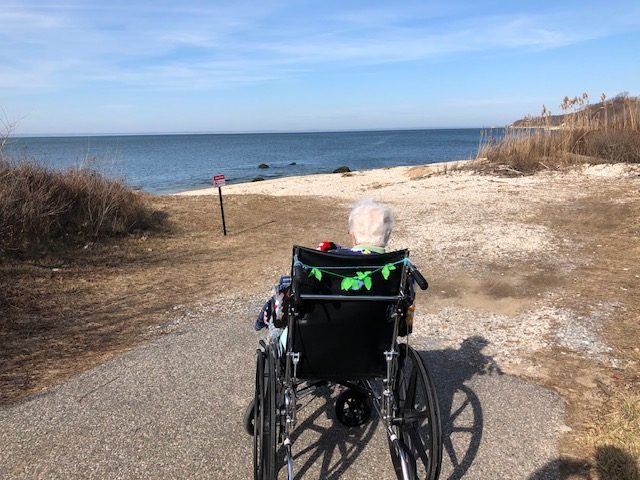
It’s far better to see her in person, face to face, squeeze her hand, push the wheelchair outside, look out into the bay. My mother enjoys a cup of Lipton tea with sugar and still, amazingly, eats like a stevedore. That’s one of her signature expressions, which I love. Such a visit is not possible right now, will likely never again be possible.

Yet here in upstate, the sun is shining and the sky is blue. It’s the first day of Spring. Our two youngest children, Gavin and Maggie, are home with us. Our oldest, Nick, is healthy and working at home in New York City, supposedly the new epicenter of America’s coronavirus epidemic. My wife, Lisa, a midwife, is an amazing woman, doing important work. She touches lives in deeply meaningful ways. I’m infinitely proud of her.

There is still so much to love in this world. The trees, the clouds, the morning’s dawn chorus, our friends and family. Forgive me, if for a moment, I forget. I think we all have to forgive ourselves during these lapses. These moments when we feel it closing in around us. I’d planned on getting some work done this afternoon, attempting to make a bright, upbeat video for young readers who might have enjoyed my books. Throw it on Youtube, maybe somebody would find it. That’s something positive, right? But now? I’m not feeling it. Work can wait until tomorrow. This effing virus. Oh Mom, oh my family, this small mercy is not the ending I wanted to write, not the first day of Spring I had imagined with balloons, and small gifts, and cake. 

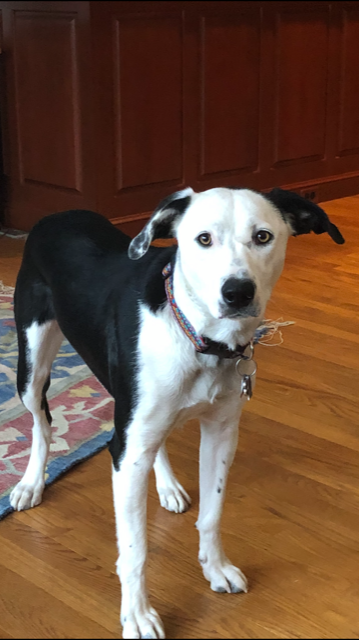
Photo: My Dog Echo


This is the creature who secretly writes my books.

Echo was a rescue dog, and the cliche is true: we do often wonder who saved who.

He’s part border collie, part who-knows-what. Fifty pounds, 17 months old, and faster than email.

He’s great off-leash and we walk miles together every day, almost never in the neighborhood or on leash.

It’s a great thinking time for me. Often, I never say a word. If I clap my hands, he comes running. It’s kind of cool.

Some random shots, mostly from this winter, taken along the Hudson river, an Albany golf course, and a couple of other spots. We’ve got about 8-10 different routes we usually take.


REPOST, UPDATE: “Watch Me, Dad!”

Here we are, that odd little stunted week before Thanksgiving. Of course we want to work hard and be good citizens, but the holiday approaches. Thoughts of family, mostly. And in my case, the Prellers are a bit scattered these days. Nick down in NYC, drawing the short straw at his new job, asked to work on Wednesday and Friday; we won’t be seeing him this Thanksgiving. Gavin is in France, working on an organic farm, opening his heart and mind to the world. Figuring it out, we hope. And Maggie, our youngest, is back home from her first semester at college. 

Gavin and Maggie and one of our black cats. Long ago.


It can be a lot, college. My wise friend referred to it as “adjustment fatigue.” It’s all new: a roommate, a new town, dorm life, classes, eating in a cafeteria, away from home, all of it. So now for a few days she’s back with us. You think we’re happy, you should see the dog. 

Anyway, found this Maggie-centered post from 10 years ago and thought I’d share it again . . . time, it flies.

Lisa went out with Maggie last night to buy a new pair of basketball shoes, as they call ’em these days. Used to be sneakers, but whatever. Maggie was thrilled; she’s very excited about playing hoops on the grades 3/4 travel team. She practiced dribbling all night — in the kitchen, in the living room, wherever it might give me a headache. Lisa and I watched and said, “Good, good, keep at it.”

At bedtime, Maggie asked if she could bring her basketball to bed with her. She wanted to sleep with it. Yeah, sure, knock yourself out, just don’t forget to brush your teeth.

This morning I drove Maggie to school. We were running late. Maggie, of course, wore her spotless new kicks. Just before climbing into the car, she said: “I can run faster now.”

“You can?”

She nodded, smiled. Oh yes.

“Put down your backpack,” I said. “Let me see.”

“Where do you want me to run?”

“I don’t know, across the front lawn to Don’s driveway.”

She walked to the far end of the lawn, methodically got herself into running position, and said, “Tell me when to go.”

“Go,” I said.

She raced across the yard.

“Good,” I said. “Now run back on the street. Let’s see how they do on cement.”

So she did, just as hard and determined as she could.

“Wow, Maggie, that was a lot faster — and I mean a lot. Those are pretty fast shoes.”

She smiled, proud and happy, pleased with her new powers.

Don’t you just love being a parent?

College drop-off day. Not all grown up . . . but I’m getting there!


Baseball Comes Round Again: Recalling “Six Innings” and How Cancer Came Into Our Lives

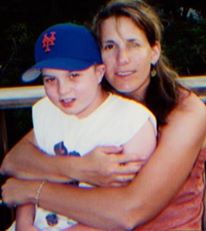
I sometimes tell this story on school visits, if I am in the right mood and have the right group before me. My oldest son, Nick, is a two-time cancer survivor. First diagnosed at age two. It was a hard time. The nurses at the pediatric oncology unit at Albany Medical Center would say to me — and let me tell you, those are truly inspiring human beings who will always have a special place in my heart — “You are an author, you should write about this.” At the time, I couldn’t conceive of it, happy to just navigate the parking garage without getting into an accident. Mentally, just gone. Nick recovered, only to relapse again in 4th grade. All he wanted to do was run with the pack, play travel soccer, be a kid. I watched him face it all with strength and courage; and let us remember, there is no courage without fear leading the way, linked hand in hand. I watched Nick’s friendships, the way certain boys rallied around him. And to this day I can’t think about any of it without tears streaming down my face. 

Nick with Lisa holding him tight.

Around that time I started writing a book called Six Innings. A book about a Little League baseball game, and moreso, about the kids who played it. A lot of characters to dream up. As a useful storytelling device, and as a faithful recording of how things worked at my local Little League, I wanted there to be a kid announcing the game. “Now batting, Cleon Jones,” that kind of thing. And I vividly remember sitting in my chair, staring at the computer, when the thought came: What’s this kid’s story? And it hit me, Oh, he’s sick. He’s very sick. And so I gave that kid cancer. 

Six Innings is a baseball book, full of plays and on-field drama. But it is also about those kids, their lives and hopes and conflicts. I mean, there’s a lot of baseball in this book, so it’s not for everyone. Below I’ll share one scene that comes directly from our experience. When Nick relapsed, and we had to go through it all over again, our doctor came to our house for a family meeting. We sat together in the living room, stunned and serious and scared. She laid it all out before us, Nick included. While many details were altered, Nick’s response was the exact response I gave to the character, Sam, in the book, almost word for word. 

Six Innings was named an ALA Notable, and I’m proud of that. And it’s still in print, and I’m grateful for that. And Nick is strong and healthy and living in NYC, and goodness, I don’t even have words for it.

Here’s a scene from Six Innings. Thank you for reading: 


And now they gave it a name. Sam had osteosarcoma. Or, well, osteosarcoma had him. The two words — Sam and osteosarcoma — were joined now, entangled, entwined, forever linked. Buried inside the big word, he discovered the letters to his own name, s-a-m. It was there all along.

Doctor Shrivastava looked from one to the other: Sam, his father, his mother. Mostly though, and to her great credit, the raven-haired doctor with milk chocolate skin spoke directly to Sam, kept meeting his eyes, looking at him with sharp-eyed clarity and infinite kindness. She was nice. There was goodness in her. Sam felt it.

So. That was that. But what did it mean? It was as if doctors spoke only secret words no one could understand: biopsy, retinoblastoma, metastasize, limb salvage, and chemotherapy. Somehow all those words were stuck into Sam like darts, but they didn’t seem real. All Sam really knew, judging from the way his mother kept chewing on her lower lip, the way his father reached for Sam’s hand and squeezed, was this: Not good.

Sam’s mother kept scribbling on the legal pad, flipping pages, writing furiously. In Sam’s family, she was in charge of facts. For reasons no one could explain, Sam had contracted the most common type of bone cancer. It usually appeared in teen boys, often during growth spurts. A tumor grew in Sam’s leg. Doctor Shrivastava wanted to remove the bone before the cancer could spread. She said that they would replace the bone with a metal rod.

How weird was that?

This surgery, she said, would take place in about twelve weeks. During that time, and for nine months afterward, Sam would have to take some very strong medicine. The medicine, or chemotherapy treatment, would destroy the bad cancer cells in his body — but they would also make him feel very sick sometimes.

At a certain point, Sam stopped listening. He closed his eyes. It was dark, and he was swirling in an inky sea of words, drowning in the dark, mystic language. He needed to get away. Fly to some other place. He was tired of listening, tired of hushed conversations, of doctors and their white coats.

Dr. Shrivastava looked at Sam. “Most patients fully recover,” she assured him.

Sam stifled a yawn. He had been stuck in this office forever.

“Can we go now?” he asked his parents.

“Sam? What?”

“I want to go to Mike’s house,” he announced. “He just got the new MLB game on PlayStation. He says it’s awesome.”

“Mike’s house?” his mother repeated. “Sam, I . . . ?”

“It should be fine,” Dr. Shrivastava intervened, checking her wristwatch. “Perhaps that’s enough for one day.” She looked at Sam, smiled warmly. “Mike is your friend?”

Sam nodded, yes, of course. Mike was his friend.