

Archive for Readings
J. K. Rowling: Quote of the Day
Category: Readings / Tags: It is impossible to live without failing, J.K. Rowling quote, Preller quote of the day
Raymond Carver: Quote of the Day
In this age of desperate self-promotion, of tweets and status updates and high-cost book trailers, of authors being told, over and over again, about the importance of having a web presence, and — God help me, I’ve heard this — “the value of leveraging the media for maximum impact” — I am comforted by this quote, from one of the masters.

“Writers will be judged by what they write.” — Raymond Carver.
Taken from a terrific interview from the Paris Review, conducted by my most respected pal, Lewis Buzbee, with Mona Simpson.
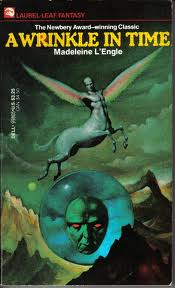
Confession: I Finally Got Around to Reading “A Wrinkle In Time”
“. . . one thing I’ve learned is that you don’t have to understand things for them to be.”
— Madeleine L’Engle, A Wrinkle In Time.
When I was a kid, growing up in the 60’s, I didn’t read many children’s books. P.D. Eastman, of course, whom I liked better than Suess, some of the Little Golden Books, and later, the Hardy Boys. Frank and Joe, I think their names were. I have no memory of either of my parents reading to me, ever. It may have happened, must have happened, but I can’t recall it. I was the youngest of seven, born in 1961, and bed time wasn’t the hour-long ritual it’s become for so many kids today, with reading and talking and snuggling and sharing, etc. When I was a kid, it was more like, “Good night. And don’t forget to brush your teeth.”
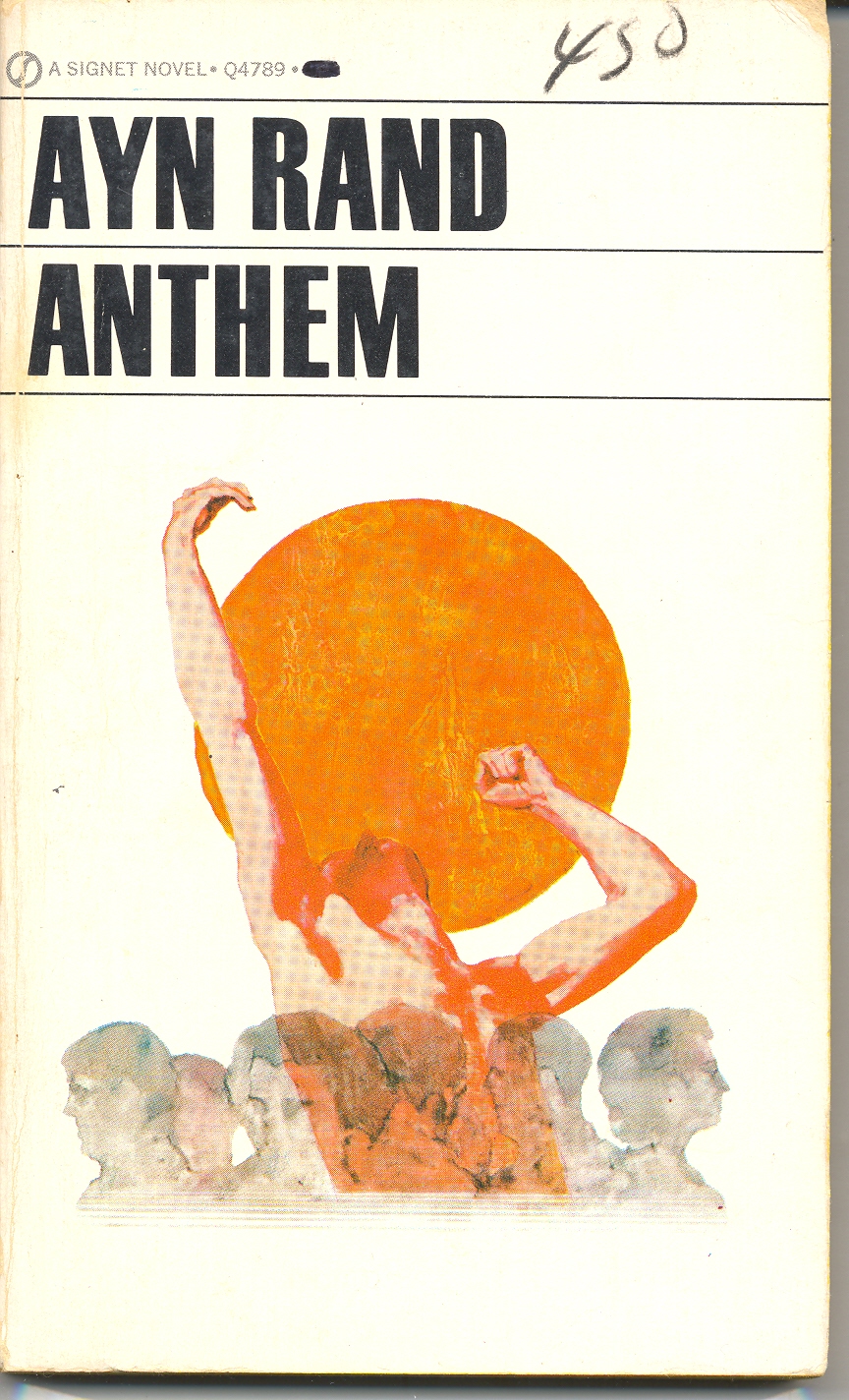
The words that formed my reading habit came from the sports pages of The New York Daily News and The Long Island Press. I still maintain that my writing style, such as it is, was probably more influenced by Dick Young than anybody else: I faithfully read his column for many (formative) years. I also remember, as I reached my middle grade period, talking to my older brothers and sisters about books. They were readers, all of them, and loved Bradbury and Vonnegut and Brautigan and Robbins, so I picked up those books. I have a vivid recollection of writing a book report in 7th grade on any book I wanted. I chose Anthem by Ayn Rand, probably because it was a slenderest paperback on the family bookshelf.
I also read sports biographies, being an ex-boy, and still hold a special fondness for Go Up for Glory Bill Russell. It hit me like a thunderbolt, and for a time I was determined to grow into a very tall black man who’d willingly pass up a shot in order to set a fierce pick and then gladly roll into the paint, looking for the put-back.

Anyway, I basically missed the entire canon of children’s literature. I didn’t read Where the Wild Things Are until I worked at Scholastic as a junior copywriter in 1985, hauling in $12,500 a year, thank you very much. These days I still try to fill in the holes, though I’ll admit it: I love adult literature. After all, I’m an adult. Those are the books that lit my fuse. I am not giving up my grown-up books.
Now, about A Wrinkle In Time. I liked it. Some parts — the first few chapters, especially — I really, really admired. Other parts — after the tessering, and into the full-blown fantasy — I didn’t care for as much. It reminded me of the original Star Trek series (my brothers loved Star Trek and we watched it religiously). In sum: Dated, kind of corny, a little obvious, but entertaining and fast-paced and intelligent and provocative, too. There’s a quality to the book, a beating heart that you seldom find in most books, and after a while the beating of your own heart seems to match it, thump for thump, and book and reader are one. It must have been ground-breaking at the time, I suppose, especially for the targeted audience. Today it reads a little like cliche, perhaps because it’s been so idolized and mimicked over the decades.

The problem: I’m not twelve anymore. And that’s what I wished for while I was reading the book. I wished I could have read it as a kid, experienced it with youthful eyes and heart. I’d bet the concept of “IT” might have blown me away, as opposed to now, when it feels too familiar and hackneyed. Very B-movie. So my appreciation comes from a distance; even that word, “appreciation,” feels cold and analytical and, I’m afraid, exactly right. I understand that it is widely considered one of the all-time greats of children’s literature, but I did not love the book on a visceral level; it didn’t speak to me. Not across so many years and these wrinkles in time on my face. I feel bad about that, like somehow I’ve let down the home team. But there it is, I said it.
I was born in 1961; L’Engle’s book was published in 1962. We should have grown up together, thump for thump, beat for beat. But, alas, we didn’t. And I think that was the main difficulty.
A few random lines I liked . . .
* But it was still not possible to think about her father without the danger of tears.
* “Why must everything happen to me?” she demanded of a large teddy bear.
* Mrs. Whatsit tugged at her second boot. “I said,” she grunted, shoving her foot down in, “that there is” — shove — “such a thing” — shove — “as a tesseract.” [Note: I read that sentence over and over, marveling at the punctuation.]
* “Maybe I don’t like being different,” Meg said, “but I don’t want to be like everybody else, either.”
Category: Family, Readings / Tags: A Wrinkle In Time, Ayn Rand, Dick Young sportswriter, Favorite lines from a wrinkle in time, Go Up for Glory Bill Russell, James Preller book review, Kurt Vonnegut, L'engle quotes, Little Golden Books, Madeleine L'Engle, P.D. Eastman, Preller reading as a kid, Ray Bradbury, Review a wrinkle in time, review wrinkle in time, The Hardy Boys, watching Star Trek as a kid
Fan Mail Wednesday #125 (further thoughts on bullying)

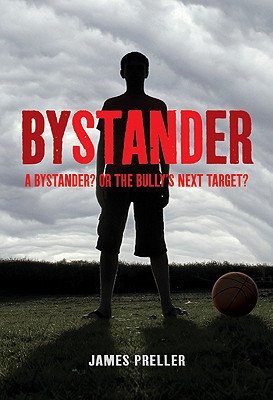
As part of a late summer assignment, I received a terrific letter from Zander in Brooklyn, including his answer to the question, “What will happen to the characters in Bystander after the story?”
Here’s an excerpt from that letter . . .
Thanks so much for answering my questions. I really loved your book! I did a little writing about what I thought might happen to some of the characters in the future. I was wondering if you have ever thought about this? Do you think Griffin will continue to be a bully? What about the other characters? I also have to ask the obvious question — were you a bully or where you bullied in school? If not, why did you want to write this book? I’m really looking forward to your answers.
Zander
What I think will happen to the characters after the story:
I think Griffin will still be the bully, but he will be a lone bully with no clique by his side. About twenty pages before the book ended, Griffin’s gang separated from him; they were fed up with Griffin and his ways and felt bad for the people they hurt and picked on. Griffin may form a new clique, but I think the same thing will happen that happened to the original click, they will get fed up with Griffin’s ways. Eventually, Griffin will probably find out that this whole bully thing isn’t working out for him and turn over a new leaf, but I’m not so sure about that either; it’s not exactly Griffin’s way. The other problem is the relationship between Griffin and Griffin’s father. If the way Griffin’s father acts changes, Griffin will change with him. You see, Griffin mimics his father’s actions, and if those actions change, I have a good feeling that a new Griffin will be born. If they would go into therapy, this could be achieved. But since that didn’t happen in the story, it’s unlikely that it will happen now. Thus having Griffin stay the same.
I also think that Mary and Eric will still hang out a lot, they might be considered boyfriend and girlfriend, but I’m not sure. I also think that Griffin’s original clique will turn into Eric’s clique, or Griffin’s original clique will accept Eric as a member; either way, Mary will no longer be Eric’s only friend. Before I finished the story, I thought to myself that it would not be a “…and they all lived happily ever after” ending, and I was right. If the story continued on, I still think this would be true, but it would be a cheerier ending than it is now.
Part of my reply . . .
Hey Zander,
Thanks for reading my book. I like the angle you took on it, thinking about what might happen to the characters after the story is finished and the final pages read.
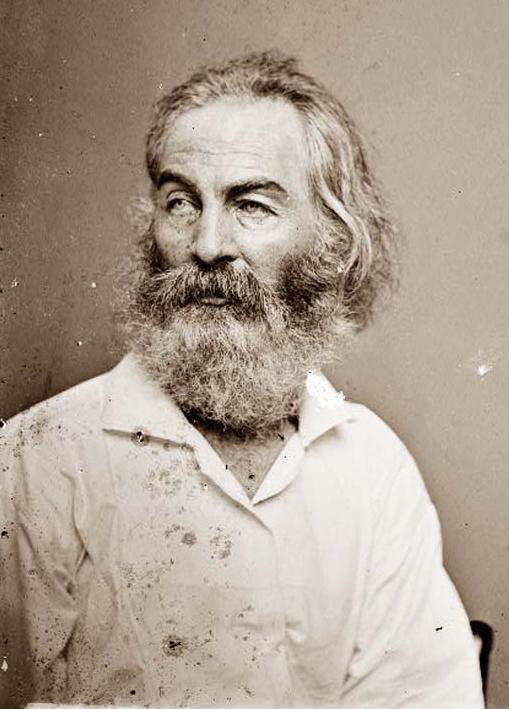
No, I was not a “bully” in school. But to be honest, that’s a big label and not something I like to stick on anybody. It’s not often accurate to tag people with easy labels. I believe there are bully behaviors, there are times when some of us might act in unkind ways, but that’s rarely ever the sum of the whole person. A so-called bully might also be a loyal friend, a good teammate, a loving pet owner, an adventurer, a son, a comic, a student, an athlete, and, yes, even victim. Research shows there’s often a duality. Someone engaged in bullying might be a victim of it in another part of his life (Griffin), while a target of bullying will frequently turn around to bully someone else (David). It’s a common dynamic. The bully part is just one aspect of character, something he sometimes does, not the whole person. And in that way, I think we all have a bit of a bully, and victim, inside us. Walt Whitman wrote, “I am large; I contain multitudes.”
I’m not saying that bullying isn’t real. That there isn’t genuine hurt and, sometimes, devastating loss. We’ve all heard those tragic stories and I don’t diminish that pain for a second. But I think with that label we tend to turn every “bully” into a monster, and I suspect it’s subtler than that. Often the bully — or more accurately, the person engaged in bully behavior — is misguided, unknowing, doesn’t empathize fully, doesn’t really understand the effects of his behavior. I’m not ready to throw all bullies into the dungeon and throw away the key. I think most of us are good, decent people capable of making mistakes, poor decisions.
My primary reason for writing Bystander is that I wanted to tell a good story. I write realistic fiction, and I try very hard to be true to that word, “realistic.” I want my characters and situations to feel authentic, relatable. I want readers to identify with the story, to maybe see themselves, or someone they might know. Robert McKee, in his book Story, makes a strong case for the importance of “story” in our lives. We are surrounded by stories, and seem to hunger for them: movies, television, talk on park benches, at dinner tables, around fires, on stages and in books. McKee calls stories our “equipment for living,” and makes the bold claim: “A culture cannot evolve without honest, powerful storytelling.”
Wow. What do you think of that, Zander? Story is the fiction writer’s craft, a finer tool than a how-to book, or a nonfiction guide to a problem. Story doesn’t provide answers so much as it, hopefully, clarifies some of the questions. Not facts, but truths. And always the most important question is this: How to walk this earth? What kind of person are you going to be?
Well-told stories, as Harper Lee so beautifully demonstrated in To Kill A Mockingbird, allow us to walk in someone else’s shoes. If you haven’t seen the movie, I urge you to check it out. There’s a beautiful scene at the end of the book (and movie), when Scout walks Boo Radley home, climbs up the steps to his porch, and for a moment turns and looks at the world from his perspective.
That’s story.
It’s also called empathy, understanding, compassion. McKee’s “equipment for living.”
I first landed on the theme of bullying through conversations with my editor. I did research, read books, talked to experts, visited middle schools, and I gradually began to formulate the character of Griffin Connelly. The story grew out of that, until I became convinced that the focus had to be on the bystander, the silent observer.
From the beginning, I felt that Griffin was a boy on the wrong path. Obviously there are issues at home with his father. The mother is gone somewhere, his sisters have moved away, too. We know that Griffin has been stealing, and we know that the police suspect his involvement. Unless there’s some kind of dramatic change, I don’t see things ending well for Griffin Connelly.
I thought your analysis of the characters was insightful. I agreed with all of it. No, I did not write a happily-ever-after ending. But I’ve never been a guy who needs those kinds of endings in movies or books. I bristle when everything is all tied up in a tidy bow at the end.
To me, that’s not life. That’s not realistic. Real life is messier than that, and not so simple, and I wanted my book to reflect that.
Thank you for your thoughtful response to my book.
JP


Category: Bullying, Bystander, Fan Mail, Readings / Tags: A culture cannot evolve without honest powerful storyte, best books on bullying, best bullying books for middle school readers, Boo Radley, Books on Bullying, Bullying, Bystander lesson plan, characteristics of a bully, Good books for anti-bullying programs, Harper Lee, James Preller Bystander, Robert McKee quotes, Robert McKee Story, To Kill a Mockingbird, walk in someone's shoes, Walt Whitman, What is a bully, What will happen to the characters in Bystander after t


)
