Archive for Bystander

Books for Boys?!

School Library Journal recently ran a review for Along Came Spider. Written by Elizabeth Swistock, you can read it in full by clicking wildly right here and scrolling insanely downwards.

I think Ms. Swistock gives an accurate, sympathetic review, while noting that “several of the traits that Preller describes could be associated with autism spectrum disorder, but Trey’s condition is never stated outright.”

Not naming Trey’s condition was a conscious choice. Maybe that was a mistake on my part, I don’t know. But for the record, I saw Trey as a boy with high-functioning Asperger Syndrome. What I felt at the time, correctly or not, was that most kids wouldn’t perceive things that way — they’d be dealing with the near reality of a quirky boy, not an abstract label, so I tried to hug close to that perspective. In today’s inclusive classrooms, these are daily encounters for most children.

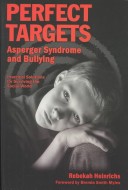
By the way, here’s one of the many great books I found on the subject, Perfect Targets: Asperger Syndrome and Bullying, by Rebekah Heinrichs.
For the purposes of Along Came Spider, I didn’t see the behaviors exhibited in the book as “bullying” per say, since I hate to see every incident of like or dislike — or even one-time acts of physical violence — thrown under the notorious bullying umbrella. Vast topic, too big for this entry. I’ll have a lot more to say on that later, when we get closer to the publication of Bystander (Feiwel & Friends, Fall, 2009), a dramatic novel that takes a closer look at bullying in a middle school environment

The interesting part of the review comes at the end (doesn’t it always?). Ms. Swistock concludes:

The fact that Trey and Ava are extremely self-aware and kindhearted is a redeeming quality, but the book could prove too uneventful for its intended audience. That’s too bad because Trey is a sweet character and Preller’s message is a good one.

I want to repeat the key phrase there: too uneventful for its intended audience.

Let’s be clear: I have no argument with the reviewer. She very well may be correct. It’s not been a huge seller. Though it is a book about boys — that also features strong female characters — it might not fit into the category of The Type of Books That Boys Like. There’s not a lot of action. It’s a friendship story. Maybe it would be boring for typical boys, whomever or whatever that might be. I loved the observation made by Karen Terlecky at Literate Lives in the very first review of Spider:

I’ve read a lot of books recently about girls trying to make sense of friendships and themselves, so it was a delightful surprise to find and read an advance review copy of a book that deals with boys trying to find where they belong . . . .

I wonder: Did I accidentally write a girlie book about boys? And is such a thing possible? Or unwelcome? Or needed? Can it be that a He-Man such as myself is, deep down, just a wuss?

I am genuinely interested in this topic and invite your comments. It’s something I’ve been puzzling over for a while now. I haven’t reached any wise conclusions. But maybe that’s what blogging should be: that it’s okay, maybe even preferable, to open things up for discussion, rather than attempt to neatly wrap things up, tie down all the loose ends.

On a diagnostic level, we can all agree that boys don’t read as much as girls. We can see the divides in our educational system. But it becomes far trickier when we encounter it on a prescriptive level, when we read that we need more . . . books for boys.

Because, of course, what IS a book for boys? Following the standard clichés, we’ll see well-intentioned publishers roll out a bunch of sports titles and a series of picture books about trucks and dinosaurs. Boys love that stuff! Oh yeah, and gross stuff, too — boys love disgusting things. Farts and vomit! Bodily functions! Smashing things! Underwear! And on and on.

And you can see where that kind of reductionistic thinking leads us. Exactly nowhere. Where Boy becomes Caricature, effectively ignoring the vast number of outliers, the sensitive ones, the insecure boys, ignoring the notion that boys may be All That and So Much More.

What is a book for a boy? What do boys like? To answer that, we have to address the idea of what is a boy? I guess what worries me is when those answers get too restrictive, too limited, when publishing for boys does a disservice to what boyness is all about, in all its sprawling, messy glory.

“Oh, here comes a boy. Do I have a book for you!“

Around the Horn: The “Me, Me, Me!” Edition

Weird confluence of things in a 24-hour period, with five books colliding. Let’s recap:

* In the mail yesterday, the first hot-off-the-presses copy of Mighty Casey!

I love this book, it’s beautifully published, and I’m so happy that it brought Matthew Cordell into my world. That said, it’s always oddly deflating to receive the finished book. It’s over, done, finished. After all that build-up, years in the making. It’s like that Jerry Leiber and Mike Stoller song from the tailend of the Brill Building era: “Is That All There Is?” If you don’t know this 1968 tune, here’s how it opens, as spoken and sung by Peggy Lee:

I remember when I was a very little girl, our house caught on fire.
I’ll never forget the look on my father’s face as he gathered me up
in his arms and raced through the burning building out to the pavement. I stood there shivering in my pajamas and watched the whole world go up in flames. And when it was all over I said to myself, “Is that all there is to a fire?”

* In the mail today, the first-pass galleys to Bystander (Fall, ’09), my “bully book” set in a middle school. To me, this is more exciting, because we’re in the thick of it. Here’s my first chance to see this book set in type. I’ll see the typeface, the way they handled chapter openings, the leading, margin width, the feel and heft of the whole thing. I’ll find out how it pages out, the length. And I’ll read it through again, pen in hand, for the 50th time (approximation). This pass represents my last chance to make corrections before it goes to bound galleys, otherwise known as “uncorrected” review copies. Even so, there will be more opportunities to overthink the whole thing.

* I got word last night from Shannon Penney that Along Came Spider was reviewed by Booklist (see below). For some reason, this book has been deadly quiet, met with a collective yawn. Not reviewed at all in PW, SLJ, Horn Book, any of the traditional venues. So I’m grateful to John Peters at Booklist for reading it, and for the review:

The lifelong friendship between two fifth graders—one with a mild spectrum disorder—hits the rocks but emerges intact in this perceptive tale from the author of Six Innings (2008). Feeling conflicted but wanting to fit in better with his classmates at Spiro T. Agnew Elementary, Robert (nicknamed Spider) uncomfortably tries to put some distance between himself and his buddy Trey, whose obsessions, lack of sensitivity to social cues, and general clumsiness have resulted in a reputation for being “out there.” Acting on Spider’s suggestion that he make other friends, Trey beats the odds and finds two: the school’s young librarian and a genial new classmate named Ava. Spider also makes another friend, and by the end discovers that there’s still room in his life for Trey. By regularly switching points of view, Preller gives readers a chance to see the situation from each boy’s angle and to consider the central insight that differences aren’t always as important as they seem.

* I posted yesterday about Jigsaw Jones: The Case of the Secret Skeleton. Scholastic is in the process of making the cover. And since I’m working with a new editor on this one, I need to check in and make sure I’ll get another chance to make corrections in galleys. Because — get this — it’s not perfect.

* Amidst all this background noise, I’m supposed to be writing a new book. I’m in the early stages of Joker (a working title I’m not loving), which mostly means jotting down notes, reading things, daydreaming, hoping to sort out in my mind some kind of shape and scope of this thing before jumping in with both feet. I want it to be funny, and that’s so much easier to describe than actually pull off. I don’t have the voice yet. Now I just kind of write and think, “This so blows.” I guess you could say we’re in the Self-Loathing Stage. Always fun.

Okay, here’s the immortal Peggy Lee:

You need to a flashplayer enabled browser to view this YouTube video

Character Is . . .

Often we read about painters or novelists who listened to a certain kind of music while they worked on a given project. It helps get them in the right frame of mind. For example, I understand that Matthew Cordell listened exclusively to early-20th century Hungarian circus music while doing the drawings for Mighty Casey. And you can almost hear it in the work:

For me, that’s true with what I read. When I was writing Bystander (Feiwel & Friends/Fall, 2009), I was determined for it to be true and accurate, reflecting current research and the realities of today’s schools. But I also wanted the book to have an unputdownable quality, tension running through the pages. It wasn’t a research paper; it was a story. So I focused my outside reading on thrillers and police procedurals (not my usual fare), just to be steeped in that sensibility. Within those genres, I prefer character-driven tales as opposed to puzzle boxes that emphasize plot twists and complexity. I was blown away by Richard Price, I liked the way Ian Rankin unfolded his John Rebus tales, and then there was my latest discovery, Michael Connelly. Who I think is really, really good.

After I finished Bystander, I again opened up the scope of my reading. Even so, I picked up a collection of essays, Writing Mysteries. Michael Connelly has a brief one in there, titled “Characterization.” Connelly has a clear style, and he doesn’t act like he knows any mystical secrets; he talks plainly about what he’s learned along the way, and what has worked for him.

He makes a couple of points I thought worth repeating:

“Character is defined by quality not quantity.”

As a visiting author in schools, I’ve attempted a few writing workshops and, at least, some in-depth discussions about “writing.” On the central topic of characters, we’d talk about the usual things, “Show, don’t tell,” and so on. We’d sometimes begin with a blank character and I’d encourage the students to build their character by adding details. It often took a while before our discussion got somewhere. Amidst the random jewels, I’d get a list of boring details: She has brown hair, her name is Mary, her eyes are blue, etc. Details, surely, but dull as bathwater. Clutter, not character. For they were not telling details. Connelly writes: “Your life as a writer must be the pursuit of the telling details of character.”

“Character is conflict.”

Connelly writes: “You should endeavor when you write to put obstacles in the path of your characters at every turn and at every level of their lives.”

Further along this same point, Connelly credits Kurt Vonnegut for this summary advice, and writes: “Make sure on every page everybody wants something, even if it’s a glass of water. Or words to that effect. What he was again saying is that character is conflict. All persons are defined by their wants and needs. Their desires.”

Character is need.

And maybe that’s where I am, thinking that’s the question I learned today. What does my character want? What does he need? Because there’s one thing I’ve believed for a long time, and that’s this:

Character is story.

Figure out what your character wants, insert conflict, obstacle, and you have the makings of story. It begins with character.