Archive for Bystander

When I Stood By and Did Nothing

As I write this, my bully-themed novel, Bystander, is due out in stores tomorrow, the 29th. There seems no better time to share John’s story . . .

During my work on the book, I naturally reflected on my own experiences with bullying. Different incidents I’d encountered, large and small. I remembered a boy in 7th grade, who was in my Junior High homeroom. To ensure his privacy, I’ll call him John.

John was teased a lot. He was short and unathletic. Defenseless, basically. In memory, going back through the gauze of thirty-five years, I remember John as an innocent, harmless kid.
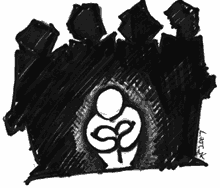
Drawing by Minhoon Kim

I felt sympathy for him. I tried to be nice to John: I wanted to be somebody who didn‘t pick on him. So I talked to John and, I sincerely hope, showed him some kindness.

Now we fast-forward across more than three decades. Thanks to one of the popular social networking sites, I came across John’s name again. There he was. That same boy. So I wrote to him.

You see, I thought of John many times as I wrote Bystander. He inspired me and, in some minor physical details, helped stand in for the book’s initial target, David Hallenback. I imagined John’s pain and his rage. To my knowledge, John was never punched, never pushed. Just teased. Ridiculed. An object of humor.

Good times, good times.

I’d like to think that I would have stepped in if it went too far. Surely I wouldn’t have stood  by and watched if things got violent. And even as I type those words, I am reminded of Hemingway’s ending to The Sun Also Rises: “Isn’t it pretty to think so?”

In my brief note to John, I never talked about my life as a writer, or bullying, or anything of that nature. I told him who I hung out with in school, wondered if he remembered me, and concluded, “I just remember you as a sweet kid, curly hair, in some homeroom class or something like that.”

I was stunned by John’s response. I’ve edited the following comments for the sake of brevity and anonymity, but otherwise won’t narrate much. John’s story speaks for itself.

Wow, Jim, it’s been 34 years. Now that’s insane. I never would have thought you would remember me. Yes, I remember you, too. You were quite funny. I looked at your pictures and you look the same,  a little older like all of us . . . Unfortunately, when I left Wantagh, I never looked back. I did not have pleasant memories of junior high. Being the sweet kid I was with curly hair which is straight now, unless I let it grow out. Many people that you may know or are friends with took advantage of my kindness both physically and mentally.

John, at this point in his response, named four people specifically. Popular boys, I knew their names. One of them was, in fact, a friend  of mine at that time. It occurs to me that if those four men were confronted with this story today, they might be surprised. Would they know? Would they even remember? John continued:

. . . that whole group was not very kind to me and really left a negative mark. If confronted today I would not be that sweet kid as you say. I don’t know but life goes on right. It’s been hard. I don’t wish what happened to me on any child or adult. In any case I am a lot stronger now and am not that easy going anymore. I would never let what occurred to happen again.

I wrote back to John, shared more memories and my sense of regret and failure — if only as witness. I was the “nice” guy who stood by and did nothing. I guess they don’t give out prizes for that. I apologized to him as best as I could. The pain was still so raw inside John, the anger so real. One mention of junior high and it all rose screaming to the surface.

John, thanks for your thoughtful, frank reply. I’ll be honest. I remember that. I remember how you were often treated unfairly. I think all of us have culpability, responsibility, for any bullying behaviors we witnessed. By doing nothing, we abdicated our responsibility, our humanity, and became just as guilty. Sometimes we fail to see how it feels for the victim; we lack empathy, compassion.

I don’t wish to share my full note to John, so again I’ve edited things out. I concluded:

I apologize for the hard times you had. I’m truly sorry. I hope that my memory is accurate, that I was kind to you. I always felt bad and tried to do the right thing, to treat you as the equal you always were. Thanks for reading this. And thanks, again, for writing to me with such heartfelt honesty.

John replied one final time:

Thank you for your kind words and you are correct, you were always nice to me not like the others. And if I never mentioned it THANK YOU. It was nice to have a friend or someone who may have not said anything but did not add injury, hurt or insult. Anyway I would love to read your book and if I could help you or anyone else in the future please let me know. It’s amazing sometimes why things happen in life and why people are brought together. God works many miracles.
For more background on this book:

Click here . . . or here . . . or here . . . or here.

Checkers, President Nixon’s Dog . . . in BYSTANDER

My new book, Bystander, hits the shelves on Tuesday, September 29th, 2009. And that’s a strange thing for an author, because it’s an anticipated date but also anti-climactic. A smile followed by a shrug: Okay, so? What now?

Allow me to dwell on the book a little bit before rushing off to the next thing. Consider it the blog equivalent to chilling the champagne before the cork is popped and the hangover drops.

One of the pleasures that came with writing this book was the setting, my hometown roots of Long Island, New York. I grew up in Wantagh, “The Gateway to Jones Beach,” lived there all through high school, the same address, the same phone number.

For Bystander, while thinking of Wantagh, I called the fictionalized town Bellport, combining the names of two nearby towns, Freeport and Bellmore. In the book, Eric drives with his mother along Wantagh Parkway, visits Jones Beach, walks the boardwalk, and even references a restaurant where I used to wash dishes. I’ll save those memories for another day, perhaps. Because today I want to talk about President Richard Milhous Nixon’s black-and-white dog, Checkers.

I attended Wantagh High School, 1976-79. Immediately across from the front parking lot was the Bide-A-Wee animal shelter and  pet cemetery. Famous, in its way, because according to legend it was the third largest pet cemetery in the United States. Nothing to sneeze at, that. Sure, it wasn’t one of the Seven Wonders of the World, but it represented our thin slice of fame nonetheless. And the slice grew even thicker, thanks to the fact that President Nixon’s famous dog, Checkers, was buried there.

This dog was no mere pet, for it managed to play a key role in winning sympathy for Nixon in the hearts and minds of American voters. I am referring, of course, to the famous “Checkers Speech” of September 23, 1952 (see clip, below). A speech that any American history buff well knows, for it helped save Nixon’s political career.

For a while, at least.

The speech was also significant, I should add, because, to quote Michael Kramer’s Communication Nation blog, it “changed forever how politicians used television in public persuasion.”

By high school, I was aware of the circumstances of Nixon’s speech, its historical significance, and so thought it was pretty cool — in a total goof kind of way — that the aforementioned dog was buried nearby. From time to time, on breaks from the drudgery of classes, my friends and I might wander into the cemetery . . .

pass deep into the vast grounds . . .

and finally reach our destination, toward the way back. This:

I remembered the grave usually had small American flags at each side, which my research confirmed, lending the site an odd sort of patriotic gravity. We remained suitably morose, lazing on the grass, killing time.

I set a pivotal scene at this exact location, this specific and somewhat bizarre place from my youth. To set up the excerpt, let me explain that Eric is being led into the cemetery by David Hallenback, who wishes to show him something both private and important.

——-

They hopped a short fence and entered the grounds.

“Where are we going, exactly?”

“It’s back here. You’ll see.”

Despite its proximity to the school, this was actually Eric’s first time inside the cemetery grounds. It wasn’t that creepy, the way a real cemetery –- a human cemetery –- could sometimes be. Eric couldn’t get too worked up about a dead Siamese cat. Still, he marveled at the size of some of the headstones. There were a few that were really huge. Most of the gravestones were modest in height, about thigh-high, but they were thick and looked heavy. They were light brown or gray, with a few shiny black ones sprinkled in. Each had the dog’s name engraved into it, complete with year of birth and death, and the last name of the owner.

Eric thought it was kind of comical. It was a cemetery, and that’s serious stuff, but the names on the tombstones were, like, Sparky and Mugsy and Luther and Bubbles.

A few had pictures of the (dead, buried, rotting) pet, and there were even little statues of dogs and cats at some of the grave sites. Eric noticed fresh flowers at a couple of sites and that gave him a chill, the thought of some lady weeping at a grave site over poor old Mr. Chuckles, the world’s perkiest Yorkshire Terrier.

He thought of Mrs. Rosen, the noon aide whose dog died over the summer. When she had talked to Griffin that day, she seemed really heartbroken over it. Maybe her dog was buried in here somewhere. What was its name? Daisy. He remembered something his father said, back a years ago when Eric was lobbying hard for a pet. Eric’s dad replied, “Dogs are built-in heartbreak. Ten good years, two bad years, some giant vet bills, then they die and break your heart. It’s not worth it, believe me.”

That was sooo his father. Mr. Half Empty.

“I wish I had a dog,” Eric said.

Hallenback remained quiet, distant. He hadn’t said a word since they entered the cemetery. Something on his mind, Eric surmised.

When they neared the far corner, Hallenback steered them to a low, granite tombstone. Several small American flags –- the type that kids wave at Fourth of July parades –- were planted in the ground at each side of the site. The tombstone read: CHECKERS, 1951-62, NIXON.

“Is this it? This is what you wanted to show me? Where President Nixon’s dog is buried?”

Hallenback appeared distracted, not listening. He was looking off in the other direction. A group of five boys emerged from the far side of the cemetery.

Eric knew each one of them. They were led by Griffin, with Cody at his side. By the look on their faces, Eric could see they meant trouble.

Hallenback was going to get creamed.

——-

Here’s a brief excerpt from the televised Checkers Speech, featuring most of the best lines in a classic of American rhetoric, including:

One other thing I probably should tell you, because if I don’t they will probably be saying this about me, too. We did get something, a gift, after the election.

A man down in Texas heard Pat on the radio mention the fact that our two youngsters would like to have a dog, and, believe it or not, the day before we left on this campaign trip we got a message from Union Station in Baltimore, saying they had a package for us. We went down to get it. You know what it was?

It was a little cocker spaniel dog, in a crate that he had sent all the way from Texas, black and white, spotted, and our little girl Tricia, the six year old, named it Checkers.

And you know, the kids, like all kids, loved the dog, and I just want to say this, right now, that regardless of what they say about it, we are going to keep it.

You need to a flashplayer enabled browser to view this YouTube video

Dr. Stanley Milgram’s Experiments . . . and an excerpt from BYSTANDER

In high school during the late 70’s, I became a fan of Peter Gabriel. I waited eagerly for his first solo album to come out in ’77, after leaving Genesis in ’75, and have followed his career with varying levels of enthusiasm ever since. His seventh CD, “So,” came out in 1986. It featured such hits as “In Your Eyes” and “Sledgehammer,” but also included an odd, atmospheric tune titled, “We Do What We’re Told (MIlgram’s 37).”

The lyrics were brief, basically a repeat of the title line, somewhat mechanically chanted: “We do what we’re told/told to do.”

I had heard of Dr. Stanley Milgram’s famous experiments by that time, and the song made me more curious, so I did some additional research.

For simplicity, let me quote from a site called “Songfacts“:

“This is about the social experiments of Stanley Milgram, a Yale professor who had subjects administer electric shocks to a person if they answered a question wrong. The person being shocked was an actor who writhed in pain as the shocks got larger. Milgram wanted to see if the subjects would administer the shocks when the experimenter told them to, even though they were causing apparent pain in the person. Almost all subjects administered the highest level of shock despite the actor pounding the wall in apparent agony.

Fast forward more than twenty years. I found myself thinking about bullies, and targets, and bystanders. I was reading books and blogs, talking to professionals, trying to conjure a story. The more I honed in on “bystanders,” the silent majority that holds the power and the hope, the more I recalled Milgram’s disturbing experiments. That song lyric by Peter Gabriel. The difficulty we have in standing up to authority, whether that figure wears a white lab coat or simply establishes himself as a cool kid on the playground. It’s hard to go up against that. So we do what we’re told.

For more on Milgram experiments, see the video clips below (when you’ve got some time).

I tried to give Bystander the qualities of  a thriller, the twisting knot of tension and conflict. Short chapters flowed into the next, integrated, pushing forward. But midway in the book, I gave the plot a pause — and because of that, I was uncertain if it was the right thing to do. I wasn’t sure about this little detour I wanted to take. In the midst of story, would the fit be seamless enough? That’s an apt metaphor for author, I think. We’re in the haberdashery business: cutting and ripping, stitching and joining seamlessly, until at the end it appears (we hope!) to work together as a unified hole.

In fact, I initially wrote the scene as a stand-alone chapter, and gave it to my editor, Liz Szabla, with the question: Does this work for you? In terms of moving the plot forward, I knew it didn’t. But sometimes plots need to plunge downward, not forward; a well-paced book is a creature different from a fast-paced book (though the two are often confused). When racing off to the next thing at breakneck speed, we sacrifice character and development. I also knew that my upcoming chapters would be increasingly dramatic, with action and conflict, so I felt like this was the right moment to slow things down. At the same time, as I said to Liz, I was willing to be talked out of including it.

Also, and maybe this is the thing: I liked the Milgram stuff. I found it fascinating, troubling, telling. I had to attempt to work it into the story, maybe more for me than for anyone else. Writing books, folks: It’s a balancing act. We’re all circus performers spinning plates, running around like clowns, trying to keep the elements of story from smashing to the ground.

—–

Excerpt from Chapter 18 of Bystander. I include this with some hesitation, because I don’t think it’s a representative excerpt, or one of the book’s shining moments, but . . . whatever:

Mr. Scofield wiped the chalk dust off his hands. He launched into a story. “In the early 1960’s, a Yale professor named Stanley Milgram wondered about the Nazi atrocities in Germany. The Holocaust. The slaughter of six million Jews. How was it, Milgram wondered, that these German soldiers could have committed such unspeakable acts? Someone had to light the ovens. Someone had to stand by and watch it happen. How could these ordinary men have allowed this to go on?

“So Milgram set up an experiment. He recruited forty volunteers. They were average, everyday people like you or me.”

Eric’s eyes roamed around the room. A few kids had their heads on their desks, but overall, they seemed to be listening. Even Mary.

The volunteers, Scofield explained, were brought to a laboratory where they met a distinguished-looking scientist in a white lab coat. One by one, each volunteer met a man whom he or she believed to be a middle-aged accountant. After drawing the short straw, the accountant was selected to be the ‘learner’ in the experiment. “The volunteers did not realize,” the teacher said, “that the accountant was actually a professional actor, hired to play a role. The selection process was rigged.”

A boy called out, “They were punked!”

Mr. Scofield nodded. “Yes, you could say that.”

Each volunteer was assured that this was important research. They had critical jobs to perform. The accountant-slash-actor was taken to an adjacent room, where he was hooked up with wires to a large electrical generator. The scientist in the lab coat then asked the man a series of questions. If he replied incorrectly, the volunteer was instructed to flip a switch, delivering an electric shock to the accountant.

“Here’s where it gets interesting,” Mr. Scofield said.

“Finally,” Mary joked. The class laughed, but quickly grew quiet. They were already curious.

“The machine had thirty switches, all carefully labeled, ranging from 15 volts all the way up to 450 volts of electricity. With each shock,” Mr. Scofield said, “the volunteer was told to increase the voltage. The switches were not actually connected to the electrical generator, but the volunteers did not realize that.

“As the experiment progressed, the accountant began to moan in pain, then scream, then frantically pound the walls. He begged and pleaded for them to stop the experiment. Hearing this, fourteen out of forty volunteers refused to continue. But twenty-six others ignored the cries and completed the experiment. They delivered all thirty shocks, all the way to the maximum level.”

Mr. Scofield looked around the room. “I’m sure that some of those twenty-six people – like you and me – began to have doubts. They sensed it was wrong. They wanted to stop. But each time, the scientist told them in a firm voice that it was essential to continue the experiment. So they followed orders.”

He pointed at the chalkboard. We do what we’re told.

“Do you understand?”

The class remained silent, thinking it through, not really getting it. Some watched the clock, began to gather books, the bell was about to sound.

“Think for yourself!” Mr. Scofield urged his students. His eyes seemed to linger on Mary. “It doesn’t matter what other people do. You have to look into your own heart.”

“What’s this got to do with us?” a boy asked.

“Everything,” the teacher answered. “It’s about having the courage to do the right thing.”

——

MILGRAM’S OBEDIENCE TO AUTHORITY EXPERIMENT 2009, PART ONE

You need to a flashplayer enabled browser to view this YouTube video

MILGRAM’S OBEDIENCE TO AUTHORITY EXPERIMENT 2009, PART TWO

You need to a flashplayer enabled browser to view this YouTube video

MILGRAM’S OBEDIENCE TO AUTHORITY EXPERIMENT 2009, PART THREE

You need to a flashplayer enabled browser to view this YouTube video

My Brother John . . . in BYSTANDER

When I was writing the first draft for BYSTANDER, I had to contend with the issue of the new boy in town, Eric Hayes. I knew he would have a problem with a bully — but why? My sense of bullies is that they are  cunning, predatory, keen and careful in the targets they select. So Eric, I decided, needed some kind of vulnerability. Something subtle, but nonetheless something that an astute boy could perceive, the way the wolf pack selects the weakest in the herd.

I thought of my brother, John, eight years my elder, who had been living with a diagnosis of Schizophrenia for many years. He had been married in college, and quickly had two beautiful boys, my nephews. But it could not last. John went through many stages of mental illness, from terrible times to placid years of dulled medication. He was unable to be a husband, and struggled to be any kind of father. As the boys grew older, the distance became more acute, their fragile relationship almost untenable. Everyone did their best. All of us. But it was not good enough. Not even close.

As I wrote the book, I allowed John to stand in as a loose model for Eric’s absent father, like a shadow cast by a guttering flame. I didn’t do much with the character, it was not where I intended the book to go, so I quickly explained him away, took a few traits from John, a few moments from his life (he used to send my son, Nick, these crazy CDs in the mail, out of the goodness of his wild heart, as some act of connection). Eric’s father in the book would do the same.

For Eric, it was simple. His father was not there anymore; and worse, he was sick in a challenging way, one that was difficult for a 13-year-old boy to understand. His father went off the meds, as my brother did, as so many others who suffer from mental illness do. Because the medications can bring their own kind of death.

So the mother took her two boys and moved to Long Island. There: I had what I needed for my story, Eric’s vulnerability. And I had that other important thing, a little bit of soul.

Here comes the bizarre part. One day after I turned in that first draft to Liz Szabla, I received word that John had died in his home in Virginia. Suddenly, irrevocably, gone. A final loss after endless years of loss. Heartache, suffering. I thought of his boys. What did they feel? How have they felt all these years? I thought of my book, and how John had hovered around its edges like a ghost, a spectral presence that was felt, but scarcely heard.

Liz and I talked about it. John’s tragic life and death. The book, in Liz’s view, was almost clean. It barely needed revision. Yet we both knew that I’d have to honor this strange almost spiritual coincidence, and dig deeper, and do more to flesh out this character, my brother, Eric’s father-in-the-mind.

I wrote a new chapter that focused on Eric and the absent father, Chapter 11. I added small pieces in a couple of other places. A scene at Jones Beach. Changed the ending of the book, the longing expressed in that final sentence. Here’s a few paragraphs from Chapter 11, with Eric reflecting on life with his father in Ohio, and later, without:

It was scary. Because his father was still around, drifting aimlessly from room to room. When things were okay, when Eric didn’t think about it too much, Eric could sit quietly in the same room with his father and feel . . . good. Pretend everything was okay. He still had a dad. Not just any dad, but his dad, his one and only. That guy over there, the innocent one with the gentle soul, who loved trees and music and laughter and his two sons, that swell guy whose thoughts were eating him alive.

Then some things happened — other memories now, the water of remembering rising ever higher — when Eric’s father lost control, smashed a mirror and some lamps, ripped down the blinds off a bay window — and was gone the next morning before Eric awoke. And here was the truly shameful thing, the horror in Eric’s heart: He was glad. Good riddance. Who needs to live with that?

People can lose a leg. People can get their hands stuck in machines and have their fingers torn off. Terrible car accidents robbed people of their sight, their ability to walk, their dreams and hopes of a healthy future. But there was nothing worse — nothing on this earth, of that Eric was sure — than losing your mind, your peace of mind, because that was like losing your self. It was losing everything.

His father was a walking absence, a faint duplicate, a watered-down version of his former self, without substance enough to cast a shadow.

There was no way Eric could tell Griffin Connelly that story. So he told bits and pieces and white lies. Eric wondered if Griffin sensed it, the whole truth, if somehow Griffin already knew, saw into Eric’s secret heart and smiled.

——

I dedicated the book in memory of my brother John, loving father to David and Ryan.

What Is a Smile If Not a Baring of Teeth?

The end of summer? Oh, let’s call it the beginning of autumn.

I’m excited to embrace the daily routine, my kids at school while I quietly hum along downstairs. We break out the sweaters, play soccer and baseball, rake leaves, build fires in the backyard, clean the gutters one last time, throw an extra blanket on the bed.

Blog-wise, I’m eager to get going on a lot of projects. I want to start talking about Bystander in earnest, background stories and such. That begins today, below. Honestly, I have notes for dozens of potential topics. I want to attempt a series of posts on “How to Plot a Mystery,” since so many teachers seem to work on that in the classroom. I’ve found some amazing videos to share, want to talk about books I’ve recently read (The Grapes of Wrath, In Fed We Trust, What the Heck Are You Up To, Mr. President?, Columbine, Swordfishtrombones, The Hunter, etc.), so many things to discuss!

Anyway, a cyberpage has turned. I’m energized and enthusiastic. I’m finishing a manuscript this week and starting another immediately.

Let’s talk about smiles . . .

I began my work on the book that would become Bystander by hanging out in the local library with a composition notebook. At the top of the first page of that notebook I see that I copied a line from Michael Connelly’s  Echo Park: “What is the bad guy up to?” I was excited. After writing 30-plus Jigsaw Jones mysteries for younger readers, I finally had a bad guy. It wasn’t going to be all benign misunderstandings and well-intentioned foul-ups; here, I had a character with potential for real darkness.

I see that I was reading Savage Spawn: Reflections on Violent Children, by Jonathan Kellerman. A powerful, disturbing book that looks at antisocial youth, from aggressive bullies to cold-hearted killers.

And right there on that first notebook page I started a list of potential “bully” characteristics. I wrote:

Smart, charismatic, charming, popular, superior, tortures animal?, trouble with police?, lights fires, COLD, raised by grandmother?, non-compliant, poor grades, not affected by discipline, causes fear, lucid, psychopathic?, free of angst, free of insecurities, (later, when caught, self-pity), preternaturally CALM.

I was in the first stages of character development — and for me, I’m at my best when character evolves into story, as opposed to plugging character into plot. That is: character first. With my focus exclusively on this “bad guy,” I even came up with a potential book title: Predator.

It became important to me that my main antagonist, Griffin Connelly, was divorced from the bully stereotypes we often see in books and movies. You know, the bully as gross coward, unlikeable lug, dim-witted brute, dirty, ugly, unpopular. It simply wasn’t realistic, and by turning bullies into  one-dimensional characters, we surrendered much of the complexity (and difficulty) of the topic (and story).

A quick plea: There’s a tendency to slot any topical book, such as this, into the bibliotherapy shelf. But Bystander is a story, a page-turner with thriller elements that a biased Jean Feiwel called, “Unputdownable.” It’s not a thesis paper. It’s a good, fast read. I hope boys find it.

Whew. I see that I’m letting this post get away from me, because I’m trying to talk about too much. So I’ll get specific:

I wanted Griffin Connelly to be  a great-looking kid, with charm and verbal dexterity and a great smile. He would be, in every sense of the word, attractive. All the surfaces would shine. The ugliness concealed.

His smile was one of the keys to his character. But what is  a smile if not a baring of teeth? The smile beams beatifically, but also represents a flashing of fangs. A threat. The wolfish grin. There’s menace under the surface.

Griffin Connelly was the kind of person who would smile at you while he stuck a knife in your back. And maybe, for pleasure, gave the blade a twist. The toothy smile was the mask he wore, this master of the mixed message.

Page 7, when Eric first meets Griffin:

The shaggy-haired boy in the lead pulled up right in the middle of the court, halfway between the foul line and the basket. He stayed on his bicycle seat, balanced on one leg, cool as a breeze. The boy looked at Eric. And Eric watched him look.

His hair fell around his eyes and below his ears, wavy and uncombed. He had soft features with thick lips and long eyelashes. The boy appeared to be around Eric’s age, maybe a year older, and looked, well, pretty. It was the word that leaped into Eric’s mind, and for no other reason than because it was true.

Some random examples now . . .

Page 11:

Words came easily to Griffin, his smile was bright and winning.

Page 18:

Griffin flashed a smile, that hundred-dollar smile he could turn on in an instant. He reached out his fist. “Are we cool, buddy

Page 50:

“Mrs. Chavez!” Griffin exclaimed, smiling cheerfully. “Please let me help you with that . . .”

Page 68:

There was no way Eric could tell Griffin Connelly that story. So he told bits and pieces and white lies. Eric wondered if Griffin sensed it, the whole truth, if somehow Griffin already knew, saw into Eric’s secret heart and smiled.

Page 78:

“You want to hang out, don’t you?” Griffin asked. He smiled, put an arm around Hallenback’s shoulder.

Page 130:

Griffin winked at Eric. Then gave that big Hollywood smile, and swept the hair from his eyes.

Page 130:

“What are you going to do? Punch me?” Griffin taunted, grinning.

Page 131:

“I’ll be seeing you around, Eric,” Griffin said. His smile was like a pure beam of distilled sunlight. His long lashes blinked, his cheeks pinkened. He wore a perfect mask of kindness and light.

Page 165:

Griffin smiled wide, folded his hands together, and said in a soft voice, “We’ll see about that.”

Page 186:

Griffin grinned through the insults.

——-

Presented in this way, it may seem a little much. But  in the context of the story, I suspect it’s unnoticed. The accumulated effect, I hope, is creepiness. Here’s a guy you can’t trust. Every threat comes with a smile. White teeth gleaming in the sunlight, fangs bared.

“My Grandma, what big teeth you’ve got?”

Don’t let that smile fool you.