
“We just keep reminding ourselves that the real Caitlin is already gone. It’s just her body texting.”
Archive for March 12, 2012
The Dublin Literacy Conference — featuring Donalyn Miller, Sharon Draper, Ruth Ayres, and Hot Tubs
I had a great time at the Dublin Literacy Conference back in February. I saw a couple of old friends, Karen and Bill from the Literate Lives blog, and finally met two women I’ve known almost exclusively through their terrific blog, A Year in Reading, Franki Sibberson and Mary Lee Hahn.
You can’t talk to either Franki or Mary Lee for long before you are promising to read a book or two that they absolutely loved. These are the ones that sounded most interesting to me . . .
Wonder, by R. J. Palacio

The One and Only Ivan, by Katherine Applegate.

I also heard a morning keynote speech from Donalyn Miller, The Book Whisperer. She was terrific and inspiring, and an expert on building a classroom community of voracious readers. Boys, girls, whoever walks into the room. Many teachers told me that Donalyn’s professional book was excellent — fast, accessible, illuminating, and motivating.

So that was cool, meeting her. Riding in a car with Donalyn in the back seat. We didn’t get much of a chance to talk, pulled in different directions, always seated at different tables, but it was a pleasure to become aware of her, sit in the auditorium and hear Donalyn’s thoughts, humor, and classroom-earned wisdom. The pedagogical stuff was solid, but she really won me over when she talked about specific students in her classroom, these small laser-like observations, like the boy who informed her that he did not read any books the previous year, except this: “I think I might have read Hatchet.” He wasn’t sure. At those points in her talk, I recognized that Donalyn knew these kids, stone-cold knew 6th-graders, and that she loved them. I was sold.
At lunch, Sharon Draper was the keynote speaker. Sharon is a force of nature, strong and lively and confident and outspoken, a woman to be reckoned with. My daughter has already read Out of Mind, so I brought home a copy of this book for my 7th grade son, and he’s reading it now.

Oh yeah, she also had the line of the weekend, quoting from (I think) an African proverb, but addressing all the changes in education these days, today’s sad and misguided emphasis on testing:
“If you want an elephant to grow, you feed it, you don’t measure it!“

My most unexpected pleasure came from a young woman I met. We got to talking, she was there to make a presentation, and I slowly realized that this was, holy wow, Ruth Ayres from the fabulous Two Writing Teachers blog.
Me: “I love your blog. You do such a great job. I think I’ve even commented a few times.”
Ruth: “I know!”
I guess I didn’t figure she’d know me, or care, but she did. Anyway, anyway. Ruth and Staci (the other writing teacher) do a “Slice of Life” Challenge through their blog. This is their fifth year, so it’s a slick presentation, there’s even a button thingy you can download or whatever, way beyond the capabilities of this bargain basement blog. Essentially, they invite teachers (and readers in general) to put their money where their mouths are. If you are going to teach writing, then write. And share it. And enjoy it.
By the way, Donalyn was on a parallel mission, calling on teachers . . . to read. It’s obvious, but there you go. A lot of teachers, for valid reasons, feel too busy to read. But even so: Read. No excuses.
To me, I’ve always maintained that teaching = enthusiasm transferred. You want them to catch the reading fever? It helps if you’ve already got the bug.
Next week I’ll share one slice of life from my visit, because I had a great encounter in a hot tub.

No, it’s not what you’re thinking.
Category: Around the Web, Happenings, The Gender Gap in Reading / Tags: A Year of Reading, Donalyn Miller, Dublin Literacy Conference, Franki Sibberson, If you want an elephant to grow, Katherine Applegate, Literate Lives, Mary Lee Hahn, Ruth Ayers, Ruth two writing teachers, Sharon Draper, Tears of a Tiger, The Book Whisperer, The One and Only Ivan, Two Writing Teachers, Wonder R.J. Palacio
Inside a Violin

This incredible “macro” photograph of the inside of a violin, taken by photographer Bjoern Ewers, is part of a print advertising campaign. The effect of the shot is startling. It appears like a vision, a world which you could visit, walk around in, live. A vast train station in a major city.
Hat tap to the great site, This Colassal, which I have listed on the right sidebar, aptly filed under CREATIVE INSPIRATION. Okay, here’s one more . . .

James Preller Interview: “Along Came Spider,” The Writing Process, Asperger’s, Atticus Finch, and More
The facts are fuzzy. A while back I answered ten questions by somebody who was writing a piece to be published . . . somewhere. Hey, it seemed legit at the time.
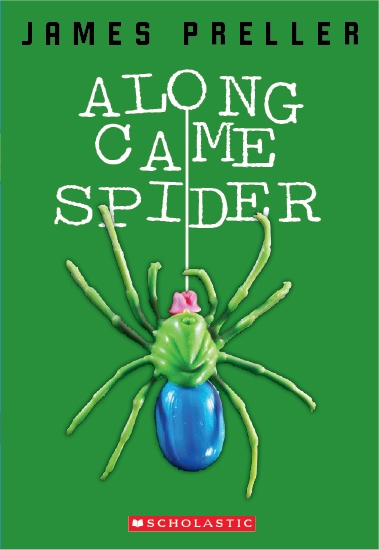
I do know that my book, ALONG CAME SPIDER, was featured in Michigan — some 1,600 copies were distributed to 4th-graders in 34 public schools — and there was a contest to “win an author,” that prize being me. Which is why, oh wild wonders, I’m winging where I’m winging next week. Grand Rapids, better batten the hatches.
What follows are my answers to the aforementioned ten questions.
1. Where did you grow up? What college did you attend?
The youngest of seven children, I was born in a blizzard in 1961, and grew up in Wantagh, on the south shore of Long Island, NY. I was an indifferent, distracted student in high school. For college, I stayed within the SUNY system and went to Oneonta –- which I loved. That’s where I became a serious, committed student.
2. What/Who motivated you to become a writer?
Look, I wanted to pitch for the New York Mets. When that didn’t work out –- and it became clear very early on –- I had to move on to Plan B. As a teenager, I kept a journal, wrote poems, scribbled lyrics to imaginary songs. Maybe it was a product of being the youngest, but even though I was intensely social, I was always able to be alone. For writers, that’s essential. You have to be okay with solitude.
3. How many books have you written?
I first published in 1986, and my career has been a long journey of trying different things, making tons of compromises along the way. Let’s say that I didn’t hit my first one out of the park. I wrote for food, I wrote to pay the bills. I’ve done more than 80 books overall, I’ve lost count. There are 40 in the Jigsaw Jones series. I’ve learned something from each and every one. But instant success? That was not my path. And I’m okay with it. Really. No, really!
4. In your opinion, what is the major theme in “Along Came Spider?”
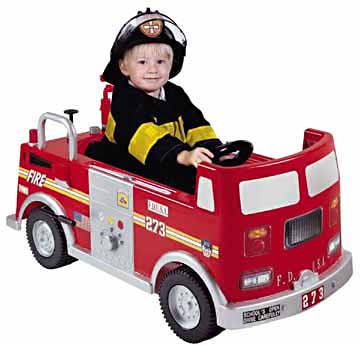
It’s a book about the struggle to find your place, about fitting in, and some of the roots and tender shoots of bullying. It’s about being a friend, hopefully a good one, and what those responsibilities might be, which is not always so easy or so clear. In a memorable review for “Spider,” one reviewer wrote, and I quote from the opening, “I’ve read a lot of books recently about girls trying to make sense of friendships and themselves, so it was a delightful surprise to find and read an advance review copy of a book that deals with boys trying to find out where they belong . . . .” Isn’t that amazing? An experienced reviewer expressing surprise that here was a book about boys having . . . feelings. Struggling with friendship. Could it be that boys are more than just farts and fire trucks? I certainly think so. (Full disclosure: Farts are still funny, always, and fire trucks are awfully cool. It’s just that maybe there’s more.)
5. Before this interview, have you heard of the One Book, One City for Kids program? Do you think that this a beneficial program that should continue in the future?
I’ve come across the “One Book, One School” concept, particularly with my book, BYSTANDER, which deals with bullying in the context of a middle school. I’ve been able to visit many schools around the country where, say, all of the 7th grade has read that book. First off, to be clear: that’s extremely flattering, an honor I never expected. The shared reading experience across a broad spectrum is a powerful idea. Reading is such a private experience, alone with a book, it’s when readers are free to be most authentically themselves –- even when we’re not so sure who that self is, exactly. But in the school environment, I think books can serve as diving boards, departure points, starting places for conversations. When a book is shared between friends, or classrooms, or the community, it gives everyone common ground –- a shared literary experience — and a foundation for all sorts of creative, thoughtful activities. I’m completely sold on the concept. I should add that I also believe that the majority of reading, in school and at home, should be self-selected, not assigned.
6. What age groups do you generally write for?
I am either a jack-of-all-trades or wildly unfocused. It’s your call. I’ve written picture books that are right for the youngest readers, whereas my latest book, BEFORE YOU GO (Macmillan, July 2012), is for young adult readers, grades 7/8-up, though I believe adults would enjoy it too. And I’ve written for every age in between.
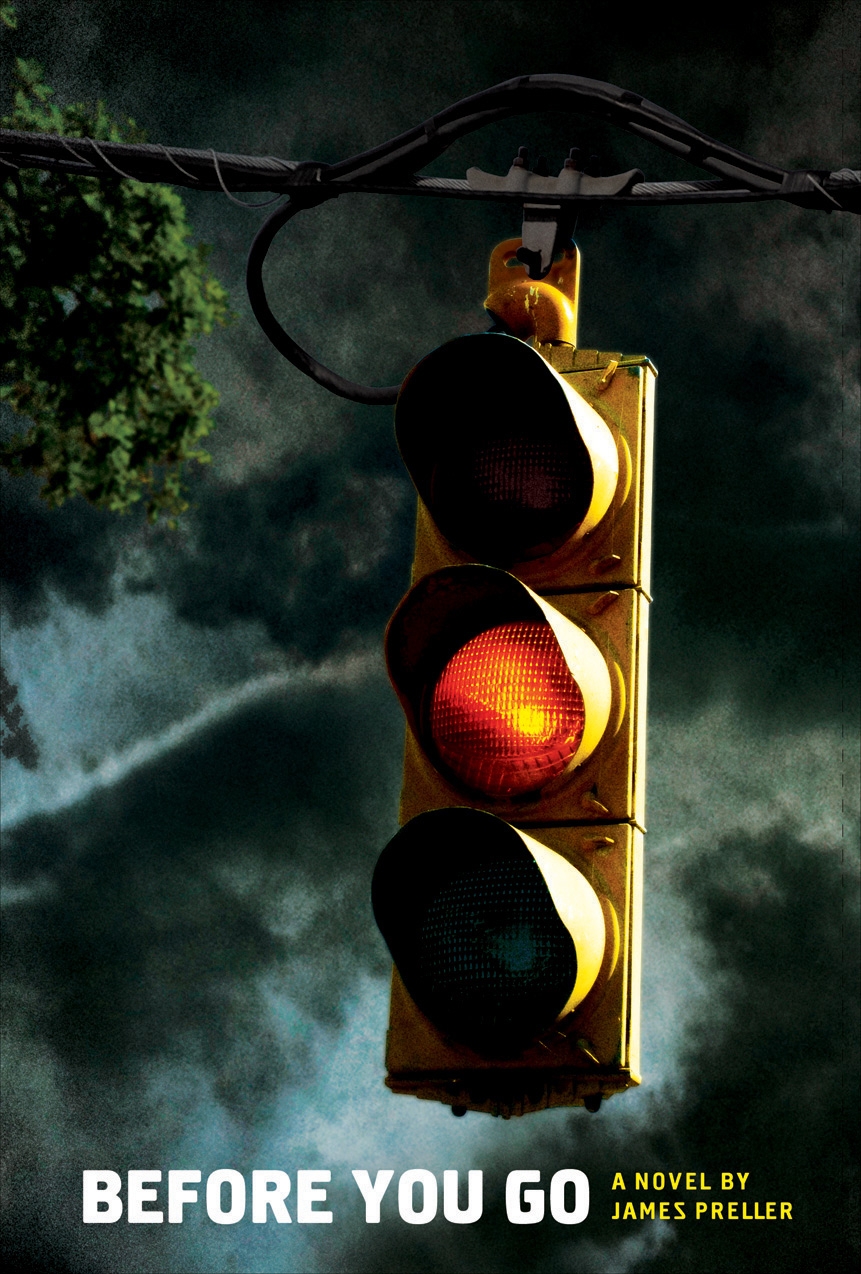
7. How will this book benefit the children who read the story?
I hope it offers what “story” gives every reader –- an opportunity to walk around in someone else’s shoes, as Atticus Finch advised in TO KILL A MOCKINGBIRD. To see how someone else lives, and thinks, and feels. I really believe that’s the root of empathy, compassion, understanding, and tolerance. I believe in books and the power of literature. I want my own three children to be readers –- to learn, yes, but also for the great pleasure it gives.


8. Was this book inspired by an occurrence in your life or something that you witnessed?
I spent a year visiting a fifth-grade classroom, off and on at random times. I’d bop in, sit in the back for a few hours, hang out during P.E., then disappear for a few weeks. I made observations, took notes, and waited for a story idea to emerge out of that experience. After a while, I began to notice a few students who were outsiders, misfits, and that’s where I focused my attention. I wondered what would happen with them in Middle School, a less forgiving environment. I think I’ve always been drawn to the outsider. At that point, I read a lot of books on autism, and Asperger’s, and again felt an affinity to those kids on the spectrum. A lot of Trey’s character grew out of that research, and whatever I could sense from my own experiences, observations, intuitions. Essentially, I went in like a pile of dry grass and tinder, just looking for that spark.
9. Do you have anything specific that you want to say to your readers?
Thank you. Seriously, thank you. A book is a living thing between a writer and a reader, like an electrical connection. Without the reader, pfft, there’s nothing. I don’t necessarily have a specific message or lesson to impart.
10. Are your books used for other literacy programs around the United States?
As I mentioned above, BYSTANDER has been featured in many schools in the past year, now that it’s available in paperback. Beyond that, I’m really not sure. You write the book and send it out into the world –- hopefully it finds readers along the way. Some books fade away, others stick around for decades. You just never know.

Category: Uncategorized / Tags: Along Came Spider, Along Came Spider Preller, aspergers in children's literature, Atticus Finch, austism in children's literature, Before You Go Preller, facts about james preller, James Preller biographical information, James Preller Bystander, James Preller Interview, on solitude, One Book One School, Oneonta, Preller Wantagh, To Kill a Mockingbird, what story gives every reader
“Best Day Ever”: A Chance Meeting at the Dublin Literacy Conference

–
This is Sreelakshmi. I met her at the Dublin Literacy Conference in late February. I was cooling my heels in the hallway of a cavernous high school, chatting with librarian Bill Prosser, waiting for the attendees to filter into the room before my session, cleverly titled “Meet Author James Preller.” A group of three high school girls who were working as volunteers stopped outside the room. One ducked her head inside, curious.
–
Bill asked if they needed help. Sreelakshmi told him that she was looking for James Preller. Bill jerked a thumb in my direction as if to say, “Sorry to disappoint you, but this is James Preller standing right here.”
–
Sreelakshmi turned to me, flustered and speechless. Disbelieving, even — her breath short and shallow. Tears began to roll down her cheeks. Finally, in fits and spurts, she told me how she still remembers reading those books, how much they meant to her, how she had no idea that I would be at the conference.
–
How this was now officially the best day in her life.
–
I almost cried myself. As an author, I don’t normally (read: ever!) get that kind of reaction. A reader so moved. We hugged, took a picture, and talked for a few minutes. Later we were able to visit some more. A kind teacher, George the Humorous, bought a book for her — I stupidly didn’t think of it — and I signed it. I am sure that her reaction says more about Sreelakshmi than it does about me or my books. She was touched by literature, moved by books, and it will always be that way for her. She is, you see, a reader. The genuine article. I’m glad about that, glad that I somehow played a role in that awakening, glad to be blessed so.
–
Later that day, I received an email that included the photo above.
–
Hello Mr.Preller!
It’s me again, the girl from Dublin who cried tears of joy to meet the author of a book series she loved as kid. It was amazing meeting you at the Literacy Conference today. Who’d have thought a day of volunteering for NHS would become the best day of my life thus far? I certainly did not.–
I want to thank you, again, for writing those books. Honestly, it was books like yours that made me love reading so much. I clearly remember reading The Case of the Rainy Day Mystery in third grade. It was such a good book that I went to the library for more, and every time I’d go to a new library (unfortunately, I’ve moved around a lot.), the Jigsaw Jones books were among the first books I’d look for. Your books made me smile and think about the mysteries — I always had a hard time figuring them out 🙂 . I still have a bit of a soft spot for mystery novels because of Jigsaw.
You know, I opened up The Case of the Double Trouble Detectives again, and I still found myself reading it through cover to cover. It’s been nearly ten years since I first read one of your books, but I still love them. Thank you for writing stories that I will love for the rest of my life. Jigsaw has been as real to me as my classmates in elementary school.
Thanks again for inspiring me to read,Sreelakshmi
No, thank you, Sreelakshmi. I will always remember you and your incredible reaction, I’m so happy we got the chance to meet.
