Tag Archive for James Preller

“Library” — An Animated Poem by Scroobius Pip


What is a Scroobius Pip? Well, from what I can gather, Scroobius is no relation to any of the “pips” that — or who? — hung out with Gladys Knight. Born David Meads, Scroobius is a poet and hip hop recording artist out of England. Essex, specifically. A word guy. According to The Independent: “Mellifluous magician, street scribe, punk-poet with pop sensibilities, Pip conjures truly modern verse of genuine incision.”

Looks like a lot of fun to hang out with, too.

JohnGallardo1


For what it’s worth, I dug around the interwebs and unearthed this comment to Mr. Pip from a fan. Too cool:

“Hey Scroobius Pip, You saved a life.

I just wanted to let you know that one of the main reasons i am alive and am able to type this is because of you. After being on the verge of suicide multiple times in the past, i stumbled upon your song “Magicians Assistant”. Your words filled my mind and distorted my view on my situation.

I will keep this short, but you changed the way i thought, and in turn snapped me the hell out of my mindset. It was a long journey, but recently i can look in the mirror and say im happy with my life. I just wanted you to know that, and i thank you from the bottom of my heart.”


PREACHING TO THE CHOIR ABOUT SCHOOL LIBRARIANS: So We Can All Sing Together, One Voice, Loud & Strong


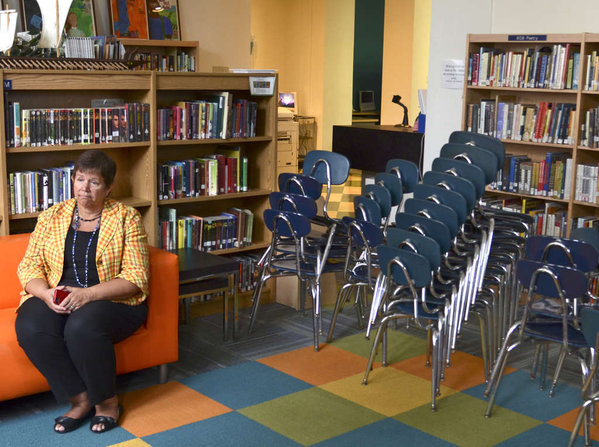
PHOTO: Tom Gralish.

PHOTO: Tom Gralish.

I’m primarily writing to pass on a link about school libraries. Maybe the article states the obvious. Essential stuff we already know, or certainly sense.  I realize that I’m preaching to the choir here. But what I’ve come to believe in life, and politics, is that it’s important to preach to the choir. That’s how we can all open the hymnal to the same page, how we all sing out together, loud and clear. Not a bunch of scattered voices, but a powerful choir.

choir-singing-300x166


Here’s the link to a terrific article by Carol Heinsdorf and Debra Kachel, “School Libraries Are Essential to Learning,” along with a copy of the first few paragraphs. Their immediate focus is on Philadelphia public schools, but this represents a national trend:

In 1991, there were 176 certified librarians in Philadelphia public schools. This year there are 11 and only five are known to be actually doing what they were trained to do. Five librarians for the nation’s eighth-largest school district.

Leaving Philadelphia’s public school libraries without professional staffing is a grave mistake. It will have consequences for the students for the rest of their lives. Study after study shows a clear link between school libraries staffed by certified librarians and student achievement.

In 2012, research showed that students who had school library programs and certified librarians were more likely to have advanced reading and writing scores on the Pennsylvania System of School Assessment (PSSA) tests. And they were less likely to have “below basic” scores.

The same study found that school library programs have their greatest impact on students who are economically disadvantaged, black, Hispanic, or have disabilities. African American students in schools with certified librarians are twice as likely to earn advanced writing scores as those in schools without librarians.

A Mansfield University paper that looked at studies done in 23 states verified that schools with a trained librarian – someone who teaches students and works with teachers to develop information and research skills – have a consistent positive effect on student achievement regardless of demographic and economic differences among students.

In my professional life, I’ve been fortunate to walk into hundred of schools around the country as a guest author.  Increasingly, I see libraries that are understaffed, and I meet librarians who are tasked to provide full-time services on part-time pay (and hours). On many days, these librarians are simply not in the building. In many schools, the library is increasingly marginalized and treated as non-essential — though, of course, no one on a school board ever admits to that out loud. “We may have cut the job in half,” they will tell anyone who’ll listen, “but it will not effect our children.”

Sorry, folks, but I’m calling bull***t.

This trend is true even in my own supposedly “quality” Bethlehem school district, in a relatively affluent suburb of Albany, NY. Former full-time librarians are now commuting between schools, splitting time and services. It’s a huge problem in New York, since the contract does not mandate a full-time librarian position (as opposed to, say, a P.E. instructor). A library should be the heartbeat of an elementary school. And in great schools, it clearly
serves that central, essential function. The librarian, or Media Specialist (if you prefer),
interacts with every child, in every grade, often across six years of learning. Consider that for a moment, the broad impact of that one person. A librarian works with and supports 640classroom teachers. And in response to this reality, the political leaders in our educational system can only think to fire those people, or force them to split schools, while they increasingly focus on standardized tests, purchasing more technology, saving pennies and wasting dollars.

It’s so maddening, and so wrong-minded, I could scream. And that’s why we preach to the choir. Because maybe if we all scream together, somebody will hear our cry.

Everything Was Swell Until the 6th Inning

I came across a photo today and figured I’d tell you about it. Blog fodder, you know.

This is me five years ago, after throwing batting practice on a hot night:

IMG_4249


It was the eve of the championship game for the 10-year-old All-Stars. Bethlehem vs. Colonie. I remember it clearly. My son, Gavin, got the nod as starting pitcher that day (I was coach, not manager, and did not make that decision), mostly by virtue of his being rested and available. He wasn’t our best arm, but on that day he was cool and in control. Gavin hit his pitch count limit after five innings and we had to pull him. Our team was ahead against a very resilient group from Colonie, leading 8-5. Time to go to the bullpen. At that moment, everything that could have possibly gone wrong, went wrong. Three outs from an elusive championship, those poor boys got smoked. It still makes me shake my head in grim wonder. We ended up losing by 10 runs, after one of the most brutal innings I’ve ever witnessed. I’ll never forget that game. I wanted to win, and I genuinely wanted for those boys to experience that championship feeling. Alas, and oh well.

It often amazes me how these games can linger in memory. When I wrote Six Innings, back in 2008, I was struck by how clearly I remembered Little League games that I had played back in the early 70s when I was 9-10-11 years old. It gave me the conviction to write the book in the first place. The games meant something to these kids. That I can vividly recall individual plays across 40 years is a testament to that fact. I can still see that ball rolling through Don Cognato’s spindly legs.

This is a place in life where these boys live. Where a lot of life’s momentous events are played out. It’s a cliche to say that a player leaves his heart out on the field, but that doesn’t mean it isn’t true. I know I left my heart on a lot of ballfields across the years, and I wasn’t the only one.

There’s a moment in Six Innings when I try to capture that feeling. Well, not a moment, exactly; I try to achieve it throughout the entire book. But there’s one particular moment when I suppose I try to elevate the language a bit, try to lift off above the turf. The staccato rhythms give way to longer, more poetic sentences. It happens after a thrilling play at the plate in the top of the 5th:

In that instant, everything freezes, a DVD on pause, then explodes into action. Both teams, the fans, the coaches — shouting, cheering, hooting, protesting — every emotion galvanized at once, a kinetic charge of energy rising up through the five layers of the earth’s atmosphere, their cries and dreams climbing from troposphere to exosphere, soaring into the velvet void of deepest space. A roar that happens on Little League fields every day, in every town, city, state, and country all over the world, from Logansport to Osaka, San Cristobal to Little Rock. The sound the game makes when it is played passionately, with young hearts.

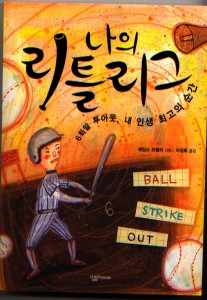
Hey, how’s this for cool? The cover of the Korean translation (uh, it’s the one on the left):

korean-six-innings-207x300          paperback-cover-six-innings-203x300


Fan Mail Wednesday #195: Ashley Wants Scary Books for Older Readers

postalletter-150x150

Here’s an email that resulted from a recent presentation I gave to grades 6-8 while down in Virginia:

Hello, Mr. Preller,

I go to Norfolk Collegiate and you visited my school just a few weeks ago. I never got to really ask you any questions, but yet I gave you book ideas. I’m the Freddy Krueger Girl and the Bloody Mary Girl, remember? I just wanted to ask you if you ever plan to write higher level Scary Tales Books. I remember you telling me about them and I wish you wrote some for beginning high school level or a bit higher since I’m in middle school, I still have a high reading level which narrows my selections from any interesting books like yours. Also I can’t wait for your Bystander sequel to come out and i’m looking forward to any new books in the works.

The Freddy Krueger Girl,

Ashley

You need to a flashplayer enabled browser to view this YouTube video

I replied,

Ashley! 

Thanks for your note. I very much enjoyed my brief visit to Norfolk Collegiate. That was grades 6-8, I believe.  Of course I remember you.  How many “Freddy Krueger Girls” do you think I meet? 
 
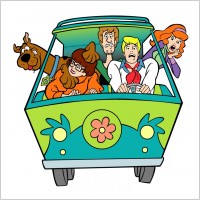
scooby_doo_1_110562I think writing a scary story for older readers would be great fun. In my current series, as you know, I try to be responsible to younger readers. I want to scare them, but I am not looking to traumatize anybody. I’m not seeking to drive 9-year-old readers into the sanitarium, locked up in a rubber room. So I mostly focus on entertainment, building suspense — the knot that twists and twists. I make sure that each story is safely resolved, and nobody gets hurt. At the same time, it’s not Scooby Doo — where the ghost is usually just a portly janitor dressed in a sheet — but it’s not truly horrifying, either. I try to straddle that middle zone of scary . . . but not too scary.
 
I sometimes joke on visits with elementary school students, “I’m sorry, but no one gets murdered in these stories. And I’m sad to inform you that there are no gory scenes with blood gushing out all over the place.”
They politely try to hide their disappointment.
 
All of which makes me think that it would be liberating to write a story for older readers like you where there were no rules. Where I could say, “Well, in fact, teenagers get murdered and there’s blood all over the place! It’s delightfully gory!”
 
Wouldn’t that be swell?
 
Thanks for your letter.
 
JP
 
P.S. Thanks for your interest in the quasi-companion book to Bystander, titled The Fall. It’s due out in August, 2015 — I think! As I said before, it’s not truly a sequel, but it does address many of the same themes from a different, slightly darker perspective. 

Fan Mail Wednesday #194: I Actually Give This Poor Kid Writing Advice

postalletter-150x150

Here’s a letter that did not have to travel very far. However, it’s a little tough to read, but I’m sharing it anyway. So there:

Scan 4


I replied:

Tyler,

Wow, thanks for the letter and thanks, too, for reading so many of my books. You inspire me to write more. Here are three titles that are coming out in the near and distant future: Scary Tales: Swamp Monster (Spring, 2015), The Fall (Fall, 2015), and Dead, But Cautiously Optimistic (Spring, 2016). 

paperback-cover-six-innings-203x300I hope that by now you’ve been able to track down a copy of Bystander. Usually I describe that book as best for grades 5-up, but I’d never stand in the way of a motivated reader. I have a deep affection for Six Innings, and I’m proud that it was named an ALA Notable Book. I poured a lifetime of baseball obsession into that single book, while also writing about my own son’s struggle with a serious illness. 

I have to confess that I always feel a shiver of uneasiness when asked about writing advice. I know many authors who give it confidently and freely. They even charge money to teach it. In my case, despite all these books, I still feel like I’m someone who should be taking advice rather than giving it. 

But, okay, fair enough: I must know something. Right? So read, read often and read widely. Read for pleasure, yes, but also read like a writer. By that I mean, pay attention to what’s happening on the page. Be aware that there’s a real person, an author, behind those scenes on the page, making choices with every word, every sentence. If you are excited, or scared, and laughing out loud — if you feel anything at all while you read — go back and try to figure out what the writer did to cause you to feel that way. We learn best by reading other writers. 

Also, of course, you’ve got to write. And by that I mean, write anything at all — notes, poems, song lyrics, snippets of dialogue, true stories, anything. Purchase your own blank journal. I love those ordinary composition notebooks you can find at CVS. It’s so important to have a place you can go with your thoughts. Remember that it’s impossible to write without deep thought, deep feeling. Writing is an act of concentration and focus. You’ll need to give yourself the greatest gift of all: time to think. Space to feel. It requires that you turn off the television, shut down the computer, put away the phone and games. Hey, I love all that stuff, but in order to write, you must go inside your own skull for entertainment.

At your age, I think it’s best to concentrate on short pieces. Little stories. Scenes. It’s very common for young writers to imagine a great, long, complicated story that would require a 100,00 words to tell properly. Problem is, 99% of the time those ambitious stories are never completed.

tools-belts-xxcge4-296x300I believe there’s value in finished work, and sometimes that’s a matter of adjusting your goals. Imagine that you were beginning to learn carpentry. You’d need to familiarize yourself with the tools of the trade. A hammer, some nails, a screwdriver, scraps of wood, a monkey wrench, etc. You’d begin, I’d hope, by attempting to build something relatively simple: a birdhouse, perhaps. You wouldn’t attempt a structure that was, say, a 2,000 square-foot log cabin for a family of five. Same thing with writing. Explore the tools. Play around with them. Write a scene with a heavy use of dialogue. Put together characters on a park bench, get them talking about something, describe someone’s room. 

Also: slow down. That’s one I have to keep learning in my own writing, over and over again. Don’t be in a hurry to get to the next scene, and the next, and the next. We all want to be done, bang out those two wonderful words: THE END! Instead, take your time with the scene you are writing. Go deeper, think harder. Find the details that are worth sharing. I’ve heard writing teachers call it “downshifting.” If you’ve captured a good moment, linger there for a beat, a few extra sentences. Throw a line into the water. See what else might be just under the surface. You might get a bite.

Anyway, Tyler. You asked for it. But do you see what I mean? It’s so hard for me to say anything that’s truly helpful. I wish I could give you the magic key, but I can’t. In the end, writing is all about you and the blank page. No one can really help all that much. I wish you the best of luck in your writing life. If somebody like me can do it, I’m sure that you can, too.

My best,

JP