Archive for Greatest Hits

What It Is: The Lynda Barry “Distraction”

I think it’s time we talked about the supreme awesomeness of Lynda Barry . . .

. . . and maybe a little bit about why I love her most recent book, What It Is.

I’m not practiced at writing reviews, but fortunately there’s already a ton of great material out there. I’ll bust out the links as we go, and you can get distracted just like me.

Let me back up for a minute. Here I am, okay, it’s Monday and I’ve got a lot of work ahead of me. I’m trying to figure out a new book, so I started the day determined to FOCUS and CONCENTRATE (two excellent candidates for 2009 OLWs, if you haven’t grabbed one already). But here am I, DISTRACTED by Lynda Barry. Rather than resist it, however, I’m thinking maybe that’s the entire point of her book, of creativity itself. Or at least an aspect of it: That you can’t always direct creativity. And that maybe it’s absolutely the worst thing you could do, like attempting to “master” nature, when what you need to do is ride that wave.

If I had a motto, it would be this: Follow Your Enthusiasms. Take that walk into the deep dark woods. And trust your instincts, even if you don’t know where you are going. So today it’s Lynda Barry. I can’t shake her out of my mind and I’m thinking that it’s wrong to try, like trying to push away a dream.

My distraction — this impulse I have today to “deal” with Lynda Barry’s work — to read her, watch her on youtube (genius clip beow!), to think and read and write about her, may be feeding my soul. It might even be, strangely, helping me work on this unwritten book. It may be exactly what I need, because really, who knows what we need? Or how “work” works? We only know what we want, or think we need, and often that may be the opposite of Need.

I mean to ask, is this UNPRODUCTIVE?

All I know is that I have to answer it, this tug. I am compelled to respond. I can’t and won’t push it away. And at the same time, I know that by doing this, writing about it, I will be able to get back to where I once belonged, start doing what I “need” to do.

It is a dance between conscious motivation and the wellspring of unconsciousness. No matter how busy you are, it’s seriously bad Mojo to push away the things that inspire you.

So I’m loving Lynda Barry’s most recent book, What It Is. Douglas Wolk wrote an excellent review of it at Salon. Here’s an excerpt:

Every page of Lynda Barry’s book demands to be stared at lingeringly and lovingly. What It Is is nominally a book about writing rather than cartooning; it’s jumbled and digressive, occasionally vague on the details. Even so, it’s likely to be useful and even inspiring to anyone who wants to make comics, or any kind of narrative art, for that matter, because what it’s meant to serve isn’t the mechanics of creative work but the creative impulse itself.

To give you a feeling for the book, check out these screen captures (some of these borrowed from the Pop Candy blog):

And on and on it goes. One amazing page after another. (Visually, it reminds me of what Vera B. Williams did with More More More Said the Baby, the way she felt compelled to fill each inch of every page with paint, had to pour everything into it.)

As a reader, and a writer, I’ve often sought out books that will feed my imagination. Books that inspire me. Books that I can use. And at the same time, when I’m writing, there are so many books that could get in the way, could stop me cold. Which is why a lot of writers don’t read novels when they are deep into working on a book. For example, I’m writing a school based-story, so I absolutely can’t go near anything by Andrew Clements.

But this book, What It Is, well, that’s just food. It sustains me, urges me forward. It is not a “how to” book but, come to think of it, a “Do” book (which aligns nicely with my OLW for 2009). A book you want to close after reading dreaming through a few pages. A book that goads you into action.

Lynda Barry also teaches workshops, “Writing the Unthinkable.” Her Myspace page is a revelation, staggeringly good. I’m stunned by how much I don’t know about this woman, though I’ve read her comics, it seems, all my life:

Now check out this three-minute clip from a bookstore talk. Isn’t she great? Don’t you love her? Aren’t you distracted and inspired and happy? I am.

You need to a flashplayer enabled browser to view this YouTube video

POSTSCRIPT: For more Lynda Barry goodness, click like crazy right here!

My Word for 2009

About a week back, I linked to One Little Word, a concept for the New Year when we are called upon to select a single word as more or less our theme/mantra for the coming year. As far as I can gather, it was first discussed a few years back by Ali Edwards at capture.create. She wrote:

Last year I began a tradition of choosing one word for myself each January — a word that I can focus on, mediate on, and reflect upon as I go about my daily life. Last year my word was something I wanted to bring into my life in a more tangible way. My word was play.

Ali went on to explain:

It can be something tangible or intangible. It could be a thought or a feeling or an emotion. It can be singular or plural. The key is to find something that has personal meaning for you. This is not your mother’s word or your spouse’s word or your child’s word – this is YOUR word.

For some reason, this simple concept struck me. The truth is, while I always appreciated the idea of New Year’s Resolutions — it seemed like an awful lot of work, all that thinking and resolving. It reminded me of Woody Allen’s line about fitness: “I tried lifting weights once, but they were so heavy.”

Undaunted, I resolved to come up with a really good word.

One stinking word! Even I could muster that. After all, I’m a professional writer (stand back, folks, don’t try this at home).

Then the overthinking and the doubt and worry began. What if people found out about my word? Was I supposed to share it? Say it out loud? Type it? Blog — gasp, shudder — about it?!

I glanced around the web and found people who had their own words, like SHINE and SERENITY and ACCEPTANCE and HEART and TRUST. They seemed pleased with their words, pleased with themselves, and mostly pleased with what their words said about them. Cool, I understood, this could be a new, easy way to feel good about myself without the actual hassle of doing something worthwhile. For example, your word could be GIVE, but it’s not like the Feds are going to check up on things. They’re too busy with Homeland Security. So you could profess to GIVE, but secretly be on the TAKE.

Nobody would be the wiser.

I considered REMEMBER, but worried it wasn’t original enough. Plus, I figured it was already taken by a lot of Jews and all those 9/11 people. Those folks are very big on REMEMBER, and for good reason. Nothing wrong with that. But I wanted my word to be different. A singular statement of my amazingness.

What about . . . FORGET? That was probably wide open. A word for the taking.

Sure, if it was two words, people might have grabbed FORGIVE and FORGET. But the rules are quite specific. You can only have one word. I figured while everybody was out busily grabbing FORGIVE, I could quietly pick up my FORGET and not have to wait on any long lines.

Picking a noble word is key. After all, it makes you look like a Good Person, and isn’t that the whole point? Trying to give the (possibly phony) appearance of a Good Person?

Person #1: What’s your word for 2009?

Person #2: My word? Oh, I couldn’t say.

Person #1: Come on, it’ll be fun.

Person #2: Forgive.

Person #1: Oh, wow, you must be a really good person.

You see that? It’s all about selling yourself. Look how easy it can be: “My word? LOVE, of course! It’s my word every year! Aren’t I fabulous and . . . urm . . . loving? Perhaps even deserving of a Cybil?”

No?

Of course, sad as this sounds, the first word that came to me was . . . ME.

I naturally wished it could be three words: ME, ME and ME. Could I invent a new word? MEMEME!

Then I distilled it.

MINE!

Perfect. Except . . . it wouldn’t look so great to family and friends. Strangers, too. So MINE! would have to be my secret word, on the down low, the word I don’t tell anybody, but think and dwell on like Gollum’s ring.

If anyone asks, my word for 2009 is . . . DO.

Just that.

My theme, my mantra. In the meantime, I remain open to the possibilities.

What’s your word? Come on. Bring it.

Books for Boys?!

School Library Journal recently ran a review for Along Came Spider. Written by Elizabeth Swistock, you can read it in full by clicking wildly right here and scrolling insanely downwards.

I think Ms. Swistock gives an accurate, sympathetic review, while noting that “several of the traits that Preller describes could be associated with autism spectrum disorder, but Trey’s condition is never stated outright.”

Not naming Trey’s condition was a conscious choice. Maybe that was a mistake on my part, I don’t know. But for the record, I saw Trey as a boy with high-functioning Asperger Syndrome. What I felt at the time, correctly or not, was that most kids wouldn’t perceive things that way — they’d be dealing with the near reality of a quirky boy, not an abstract label, so I tried to hug close to that perspective. In today’s inclusive classrooms, these are daily encounters for most children.

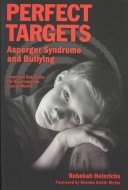
By the way, here’s one of the many great books I found on the subject, Perfect Targets: Asperger Syndrome and Bullying, by Rebekah Heinrichs.

For the purposes of Along Came Spider, I didn’t see the behaviors exhibited in the book as “bullying” per say, since I hate to see every incident of like or dislike — or even one-time acts of physical violence — thrown under the notorious bullying umbrella. Vast topic, too big for this entry. I’ll have a lot more to say on that later, when we get closer to the publication of Bystander (Feiwel & Friends, Fall, 2009), a dramatic novel that takes a closer look at bullying in a middle school environment

The interesting part of the review comes at the end (doesn’t it always?). Ms. Swistock concludes:

The fact that Trey and Ava are extremely self-aware and kindhearted is a redeeming quality, but the book could prove too uneventful for its intended audience. That’s too bad because Trey is a sweet character and Preller’s message is a good one.

I want to repeat the key phrase there: too uneventful for its intended audience.

Let’s be clear: I have no argument with the reviewer. She very well may be correct. It’s not been a huge seller. Though it is a book about boys — that also features strong female characters — it might not fit into the category of The Type of Books That Boys Like. There’s not a lot of action. It’s a friendship story. Maybe it would be boring for typical boys, whomever or whatever that might be. I loved the observation made by Karen Terlecky at Literate Lives in the very first review of Spider:

I’ve read a lot of books recently about girls trying to make sense of friendships and themselves, so it was a delightful surprise to find and read an advance review copy of a book that deals with boys trying to find where they belong . . . .

I wonder: Did I accidentally write a girlie book about boys? And is such a thing possible? Or unwelcome? Or needed? Can it be that a He-Man such as myself is, deep down, just a wuss?

I am genuinely interested in this topic and invite your comments. It’s something I’ve been puzzling over for a while now. I haven’t reached any wise conclusions. But maybe that’s what blogging should be: that it’s okay, maybe even preferable, to open things up for discussion, rather than attempt to neatly wrap things up, tie down all the loose ends.

On a diagnostic level, we can all agree that boys don’t read as much as girls. We can see the divides in our educational system. But it becomes far trickier when we encounter it on a prescriptive level, when we read that we need more . . . books for boys.

Because, of course, what IS a book for boys? Following the standard clichés, we’ll see well-intentioned publishers roll out a bunch of sports titles and a series of picture books about trucks and dinosaurs. Boys love that stuff! Oh yeah, and gross stuff, too — boys love disgusting things. Farts and vomit! Bodily functions! Smashing things! Underwear! And on and on.

And you can see where that kind of reductionistic thinking leads us. Exactly nowhere. Where Boy becomes Caricature, effectively ignoring the vast number of outliers, the sensitive ones, the insecure boys, ignoring the notion that boys may be All That and So Much More.

What is a book for a boy? What do boys like? To answer that, we have to address the idea of what is a boy? I guess what worries me is when those answers get too restrictive, too limited, when publishing for boys does a disservice to what boyness is all about, in all its sprawling, messy glory.

“Oh, here comes a boy. Do I have a book for you!

Shea Memory, Childhood Illness, and Six Innings

As these photos taken by Joe MacDonald show, the destruction of Shea Stadium continues into winter. Come spring, our attention will turn to the new home of the New York Mets, Citi Field, with its beautiful Jackie Robinson Rotunda, and the promise of a new season to come.

But I’m not ready to go there just yet. Instead, my thoughts linger on Shea. I’ve been to many games over the years. My first was in 1967, the Mets vs. Hank Aaron and the Braves. I saw the 5th game of the 1969 World Series. Some great victories and some crushing defeats. A lot of memories.

I learned to love baseball from my mother, a former Brooklyn Dodgers fan who, after the Dodgers fled to Los Angeles, adopted the expansion 1962 New York Mets as her hometown team. She faithfully gave her heart to this hapless bunch in orange and blue. As I grew up, she taught me how to throw and catch, and somehow sold me on the preposterous notion that Ron Swoboda, the Mets thick-necked rightfielder, was graceful. I used to ask her, as I minced across the lawn, “Am I graceful, Mom? Am I graceful?” She assured me that I was. I’ve come to see that my love of the game is impossible to separate from the love of my mother; I cannot imagine one without the other.

In the spring of 2003, my oldest son, Nicholas, was diagnosed with leukemia. It was a relapse. He had first been diagnosed in the summer of ’95, at 26 months. We had been there, done our hard times, and believed the worst was behind us. But again we settled into an exhausting routine of doctors and medicines, blood tests and spinal taps, the chemistry of hope and fear. Much, much harder for Nick the second time around.

Meanwhile, my father-in-law, Ed Ginsberg, a lifelong Yankee fan, contacted the New York Mets. He made phone call after phone call, telling one person after another Nick’s story. Weeks passed. While undergoing treatment, Nick got an infection. His immune system too compromised to fight it, Nick was forced to stay on IV-drips in the hospital for twelve long days until his temperature settled below 101 degrees. On one particularly bad day a letter arrived from Chris Brown, the New York Mets Community Outreach Coordinator. He invited Nicholas and three guests to a special day at Shea Stadium.

When Nick felt strong enough, down we drove from our home outside Albany, New York — Nicholas, his stepmother Lisa, his grandfather Ed, and myself. Chris Brown met us at the gate two hours before the game, shook our hands, and brought us inside to the secret, special places. He opened a door and led us onto the field, where Nick stared in wide-eyed wonder. We stepped into the dugout, felt the bats in their racks, eyed the neat rows of clean helmets, and snapped picture after picture. We walked into a long concrete hallway under the stands, where we stood nearly alone outside the Mets clubhouse door, as real live ballplayers — guys with names like Vance and Ty, Joe and Cliff — walked past us on their way to the indoor batting cages. Some players stopped and briefly chatted, signed baseballs, and smiled for photos with their arms resting on my son’s shoulder.

I couldn’t help but think of my mother, and how our love of the game had brought us to this singular moment. My boy, sick with cancer, smiling into the camera, a Sharpie and a signed baseball in his hand. All those games we had watched together, our spirits dashed by defeat and lifted in victory. All of that time and energy invested, all of that life we poured into the game — all of it, truth be told, a little absurd. After all it is just a game. Not life, not death, and certainly not childhood cancer. But standing in that gray basement of Shea Stadium, I knew with certainty that it all had been worth it.

We loved the game. And sometimes, amazingly, it loved us back.

—–

It was why I wrote Six Innings, why that book was so important to me. Because it’s all in there, all that stuff, a roiling wave that carries the words along, the love of the game, a lifetime of baseball, and sometimes the hard things that get in the way.

An Open Letter to President-Elect Obama

Dear President-Elect Obama:

It is with some difficulty that I type this, as I am a dog and not really a Mac person.

I’ll try to be brief. My name is Daisy. You probably receive thousands of letters each week from dignitaries, heads of state, and ordinary citizens. But, really, how many come from dogs?

Since you are likely curious, I’ll explain. I became a reader when I was a pup, confined to a small newspaper-covered quadrant of the kitchen. It was during this tense house-breaking period that I first sought solace in the written language of humans. Soon enough, I began to follow the Presidential election with great interest.

Hold on, I’ve got an itch behind my ear. Scritch-scratch, scratch scratch scratch SCRATCH, scratch scratch scratch, scratchy-scratch!

Ahhhh. Much better. I was recently chewing on a fuzzy, delicious tennis ball when I overheard a dinner conversation. I learned that your family will be getting a new dog when you enter the White House. I immediately went to the recycle bin to fetch the newspaper. I found the full text of your November 4 victory speech, and I quote:

If there is anyone out there who still doubts that America is a place where all things are possible; who still wonders if the dream of our founders is alive in our time; who still questions the power of our democracy, tonight is your answer.

Blah, blah, blah. I’m skimming, skimming . . . ah, here it is (!):

Sasha and Malia, I love you both more than you can imagine, and you have earned the new puppy that’s coming with us to the White House.

Clearly, this is the first true test of your administration. The eyes of the canine world are upon you. Don’t blow it on a lunatic Irish Setter or Pomeranian. Clearly, an Alaskan Husky is out (unless you want to be post-ironic, which I don’t think is the best way to kick off an administration — just my opinion).

You can imagine my thrill when I learned you are considering adopting a goldendoodle. As I am myself a goldendoodle — and proud of it! — I felt compelled to type this message. (And if somebody would ever trim my nails, it would be a lot easier!)

Speaking for my brothers and sisters everywhere, I urge you to go with the goldendoodle. We don’t shed. We are hypoallergenic. We are gentle with children. And we certainly don’t yap-yap-yap like some breeds (I blame Bush’s skittish Scottish terriers, Barney and the odiously named “Miss Beazley,” for much of went wrong the past eight years).

And, though I am loathe to sound egotistical, we are undeniably cute.

Photo: Diamonddoodles.com.

But, yes, your every decision will be scrutinized. So in the interest of full disclosure, I’ll admit this up front: We might not look so great when soaking wet. But then, who does? Joe Biden? I think not.

True, we have our critics. Some sneer and call us “designer dogs.” Some say we lack backbone. To which I respond: It’s true. In times of danger, I’ll flop on my back and submit. We’re like Gandhi in that respect. Besides, You don’t need a junk yard dog. You already have that scary Rahm Emanuel . .

. . . .and those creepy Secret Service guys.

Here comes the most sensitive issue of all. We are not quote/unquote “a recognized breed” by the (snooty, unpatriotic) American Kennel Club. Not a recognized breed?! Pause a moment and let that sink in. Does it resonate, just a little bit? Not a recognized breed. Yes, sadly, it’s true, even in today’s America, when we had thought we had come so far. But it represents a bold new opportunity for your presidency. For isn’t this in keeping with your call for change, for new ideas? Let’s turn away from the old way of doing things! I quote again from your acceptance speech:

It’s been a long time coming, but tonight, because of what we did on this day, in this election, at this defining moment, change has come to America.

Make a statement, President-elect Obama, Sir. You are the bright, shining symbol for the disenfranchised everywhere. Open your arms wide! Embrace us! Go with the goldendoodle. Recognize us as a breed. Let us lay down by your feet.

I’m begging you, as only a dog can beg: Throw us a bone here, will you?

Speaking for doodles everywhere, we will love your daughters with all our doggy hearts.

Yes! We! Can!

Now, if you’ll excuse me, I have a tail to chase.

Faithfully yours,

Daisy

– – – – –

UPDATE, 1/14/09: Back by popular demand, Daisy has recently typed a new open letter to president-elect Obama, very concerned with his impending decision between a Labradoodle and a Portuguese Water Dog for White House Dog. Thanks for stopping by . . . and click here for Daisy’s newest letter!