Archive for Greatest Hits

Dad’s Fertilizer & the Mortification of Us All: A Father’s Day Tribute

Dad was the father of seven children, a veteran of World War II who served in the Pacific. After the war, he graduated from Boston University in two and half years, because why in the world would anybody want to waste another minute in school. There was a life to be lived, a brass ring to grab, things to do. Let’s get on with it.

It was a different time, a different generation.

Dad settled with my mother on Long Island, became an insurance man, started having kids rapid fire in the Catholic fashion, built a business. I was the youngest in the family, the baby. On rare weekend days I’d tag along when my father needed to pop into his rented office on Wantagh Avenue for an hour or two. We never specialized in father-and-son type stuff, whatever that was, and I’m sure the word bonding did not apply to relationships back in those days, only glue, but I do recall those trips to his office. Dad’s place of business offered that most wondrous of commodities, office supplies — electric typewriters, staplers, a copier, boxes of paper clips and, best of all, tracing paper.

I marveled at its magical properties. Dad didn’t part with his supply easily, that stuff cost money, so I was thrilled and grateful whenever he brought a stack home. Those are nice memories for me, a lifetime away. I sometimes wonder: Whatever happened to that kid? That boy with the tracing paper? Where’d he go?

From around that time, somewhere in the mid 60’s, another day presses forward for attention. One spring morning we set off together — in the hazy gauze of remembrance, just me and dad — to a farm somewhere. Because dad knew a guy, a customer who had a stable and a few horses. He possessed, in others words, shit to spare. And the price was right.

I must have  been about five or six years old at the time, no older. We got to the farm, out east on Long Island probably, and I stood around while my father chatted with the owner of the place. Maybe I looked into the stable, fearfully eyed the horses. Did I want to feed one of them an apple? No, I did not. I was shy, watchful and quiet. Eventually my dad keyed open the car truck, borrowed a shovel, and filled it to the brim with horse manure. I stood by, mystified, awestruck. Trunk full, steam rising, we headed back home, where I watched my father spread the still semi-moist shit around the front lawn. It was good for the grass, he explained. Nature’s fertilizer.

My older brothers and sisters recall those times with profound mortification. Imagine the embarrassment they felt, the acute stabbing horror, especially those of a certain age, when the opinion of one’s peers meant only everything. I can’t say this plainly enough: My brothers hated it when dad spread horse shit on the front lawn — even worse, on hot days it smelled like holy hell, the stink filling your nostrils — and yet my father performed the same ritual every year.

And here’s the thing about my dad, really the essential memory of him. He didn’t care. Alan J. Preller simply did not give a hoot what anybody thought. He never did. He embarrassed us, he ticked off people, annoyed relatives, said what he thought and did what he did. Dad lived on his own terms, remarkably indifferent to opinion. And if that made him impossible at times, well, so be it. He wasn’t trying to please anybody.

My father passed away a few years back, coincidentally enough while spreading fertilizer out on the front lawn in Southampton, where he retired. He had moved beyond horse manure by then, thank God, nowadays they’d hang you in Southampton for that, but there was still no way he was going to push around one of those crummy lawn spreaders. No, dad preferred a Maxwell House coffee can, dipping it into a big bag of fertilizer, sprinkling it imprecisely across the yard with a grand sweep of his arm. And to be honest, it’s more fun that way. Believe me, I know.

There he was out on the lawn, doing what he always did, and that’s when his heart gave out, when he fell, when my father left us.

These days, when I’m particularly infuriating — insensitive, implacable, impossible — my exasperated wife, Lisa, will proclaim that I’m becoming just like my father.  I won’t listen to anyone, I’ll just do whatever I want. And as I age, it only gets worse. That’s her complaint. The funny thing is, I always hear it as a compliment.

Happy Father’s Day, folks. A good day to pull some weeds, mow the lawn, tend the garden and then, like my father often did, wander into the kitchen, reach into the bottom cabinet where he kept the bottle of Dewar’s, and announce, “It’s five o’clock somewhere.”

Here’s to you, old man. Cheers and memories.

James Preller Interviews . . . Thomas Newkirk, author of “Misreading Masculinity: Boys, Literacy, and Popular Culture”

I recently read Thomas Newkirk’s outstanding book, Misreading Masculinity: Boys, Literacy, and Popular Culture. I sent him a complimentary email and, to my great surprise, he agreed to an interview. My reasons were selfish. I simply wanted to learn more from this very smart, insightful man.

Back in college, I had an English teacher who taught me an important question: So what? I mean, okay, boys don’t read as much as girls. They do other things well. What’s the big deal?

I think there are two responses. Reading well is so tied to school success — and to liking school — that it is unethical to write off a big percentage of boys as non-readers. It may have been possible in previous times to drop out or barely finish school and go on to good jobs. But that is not the case now.

I think the bigger argument that reading is a deeply pleasurable and enlightening activity — or can be. I don’t want boys to miss out on it.

Thomas Newkirk.

One of the things I loved about your book was how you wove in small pieces of memoir, little stories from your life, and connected those experiences to the book’s larger themes. You tell a wonderful story about how as a young man you visited the library in Harvard. You saw a dusty old scholar with a suitcase full of index cards and suddenly recognized the absolute weirdness of the literary life. Silent, isolated, inactive –- and how utterly strange it must appear to a non-reader. As book lovers, I don’t think we fully appreciate the perspective of the non-reader, how foreign it must look to a boy who typically chooses action, companionship, and noise.

Reading doesn’t have to be silent and isolated — although it must appear that way to readers who have never been in what Nancie Atwell calls “the reading zone.” When we enter that zone — identifying with characters, visualizing, hearing the voices of the narrator and characters — we are NOT alone. And if reading can be shared in friendship groups, talked about, it becomes even more social. C.S. Lewis once said that we read to learn that we are not alone, and I believe that.

You made a funny comment, when exploring the tension between literacy and the code of the real boy: “What better disguise could there be for Superman than to turn him into a writer!” It’s just not a very masculine endeavor, is it, shutting one’s self away from the active world, isolated and alone, sitting in a chair in silence. How much more un-boy can you get?

But I think technology is changing that. To compose with the resources of the Internet — to make digital stories, to navigate the various social networks, to create animation. We have recently seen how exploiting these social networks can bring down dictators. This is writing that is anything but isolated. Maybe school writing and reading is too isolated, but digital literacy is anything but.

At one point, you note, “Boys often feel than an open show of enthusiasm for schoolwork, particularly in the language arts, can undermine their identity as a ‘real boy.’” It seems like boy culture –- the codes of behavior — can be a major obstacle for boy readers.

Absolutely. I remember the African American journalist comment on the social pressure for African American boys to see trying at school as being “white.” His comment was: “With friends like that who needs enemies?” One reason parents look desperately for charter and private schools is to find places where trying and excelling at academics is part of the school culture.

As an adult, I enjoy reading closely observed, realistic fiction. Life’s little moments. I love Richard Ford and nothing ever happens in his novels. It takes him twelve pages to go to the store to pick up some muffins. And that fits in perfectly with a classroom emphasis on memoir writing. But I can vividly recall that as a boy I wanted things to HAPPEN in my stories. Otherwise, why write about it? So I think when boys are pushed to write about, say, their trip to the beach, about real things, they are bored and disappointed. A bomb didn’t explode? A shark didn’t attack? Why bother writing about eating chicken salad sandwiches with Uncle Max?

There has been a lot of the imposition of adult tastes on students — who may find fantasy and adventure genres more appealing. I don’t think that means that we give up on asking students to read and write realistic genres — but we need to be open to other tastes as well. Fantasy allows us to escape, to be bigger and braver than we are, to suspend the limitations of time and space. I think we all need that freedom as well.

Many years ago, not long after 9/11, I volunteered in my oldest son’s 3rd grade classroom. One boy, typical of many you discuss in Misreading Masculinity, wrote a story that included exploding bombs. I learned from his teacher that the mandated response was for us to forward the story to a school counselor who would contact the boy’s parents: “Billy’s writing about bombs again!”

Yes, unfortunately, many schools have given up on making meaningful distinctions here. I have never understood, for example, why it is OK to read about violence, even the gruesome violence of Beowulf, and that’s ok, even culturally valued. But if a kid writes something like that, it’s off to the guidance counselor. For me the key question is this: does the writing seem threatening to anyone; does it make anyone feel unsafe or targeted. If is does, it fails to meet the basic rules of any school. But if a kid writes a Star Wars take-off and a space ship explodes, does anybody really feel threatened by that?

I guess it’s natural for us, as enlightened adults, to want boys, or any students, to value what we value. We want them to read and appreciate what we consider to be good books. When those values aren’t shared –- when, say, they like low-brow stuff, AKA, “crap” –- the tendency is for us to see it as a deficiency in them. There’s something wrong with boys.

I think we all like some AKA crap. No one is high brow all the time. So it seems to me OK to ask kids to value what we value; but we also have to understand the appeal of what they like. It can’t be all one or the other. We have values and goals for their reading and writing; but we won’t win the cooperation of students if our attitude toward their culture is one of dismissal. Teaching is a cross-generational trade.

As a man who came to reading through my boyhood love of sports, where I’d dive into the morning paper (pre-ESPN, thank goodness) for the stats and scores and stories, I liked that you included a nod to “the literature of sports tables.” I can read a box score and imagine a half-dozen story lines.

Yes, it’s so rich in information — the scores by quarters or innings. Who’s hot and who’s not. It is still my favorite page in the sports section. I am convinced that one advantage boys have in math is their early immersion in sports statistics.

At times you use the term, “school literacy.” How do you distinguish that from ordinary literacy? Is it a matter of “school-approved” literacy?

School literacy is necessarily a limited subset of possible literacies. It traditionally focuses on the verbal over the visual; on high culture over popular culture; on print over oral expression; on realism over fantasy and escapism; on extended formal writing over informal and expressive writing.

It resonated with me when you gave a historical perspective on oral vs. silent reading, linking it to a “cult of efficiency.” We know that speed readers are taught to eliminate sub-vocalization, and instead to scan chunks of language, eliminating meaningless words. Yet as a writer, some of the best advice I can give is to read what you’ve written aloud, to really hear what you’ve written, the sound and rhythm of the words. That is, it’s the total opposite of what most of us do in silent, sustained reading!

I am convinced that even when we read “silently” we are attending to the intonations of language. In other words, “silent” reading is not really silent. That’s why writers will often read their work aloud to revise—even though almost all their readers will not read it aloud. But I would argue that they still register sound in some way, internally. I will expand that idea in my new book, The Case for Slow Reading. Stay tuned.

You argue for television as a legitimate source of writing topics. Why do you see television as an under-valued resource?

I think schools see TV, the Internet, and video games as the enemy. And this makes some sense—studies show that many students spend way too much time with this media, often multitasking. But I believe that TV can teach dialogue, conflict, characterization, narrative, humor. The visual narratives can provide scaffolds, or cultural props, for students to use in their writing — if teachers let them. They can write parodies or alternative versions with their friends co-exiting with fictional characters — Darth Vadar and the kid down the street — all in the same adventure.

I hesitate before opening this can of worms, since much of my livelihood depends upon the approval of gatekeepers (editors, teachers, librarians, bloggers, book purchasers) who are overwhelmingly female. Clearly, the world of children’s books is a woman’s world. Is that, in your opinion, part of the problem when it comes to boys literacy?

One challenge is to look at books from the boy’s point of view. I don’t think gender is an absolute barrier here. What’s needed is an open mind, a sense of curiosity. What makes this boy tick? What are the themes, passions, competencies in his life that I can build on? To teach we all need to get outside ourselves, and into someone else’s skin. I know many female teachers who are wonderful at this. And it seems to me that when a boy senses a female teacher cares about what he cares about, that boy will be open to other things the teacher asks of him.

Finally, can you recommend any other books on this topic?

I’d read Ralph Fletcher’s Boy Writers. I’d also watch the PBS documentary “Raising Cain.”

I loved Fletcher’s book and commented on it before, so I second the nomination. Thanks, Thomas, for taking the time out to answer my questions. You’ve certainly given me a lot to think about. And I’ll be looking forward to your new book, The Case for Slow Reading. I posted on that subject back in September, 2010, and led with a quote by . . . Thomas Newkirk: “Teachers can enhance students’ pleasure and success in reading by showing them how to slow down and savor what they read.”

My best to you. Keep up the great work. And here’s a clip from “Raising Cain.”

Readers, note: Please check out my other blog, FATHERS READ, for more on the subject of boys literacy. I’ll be away on school visits for most of the week.

You need to a flashplayer enabled browser to view this YouTube video

Thomas Newkirk is Professor of English at the University of New Hampshire. He has studied literacy learning at a variety of educational levels — from preschool to college. His book, Misreading Masculinity, was cited by Instructor Magazine as one of the most significant books for teachers in the past decade. He is also the author of Holding On to Good Ideas in a Time of Bad Ones: Six Literacy Ideas Worth Fighting For and The Performance of Self in Student Writing.

The Writing Life

This is the 600th blog post at jamespreller.com.

Will anyone read this? Google Analytics informs me that about 250 “visitors” will swing by today. Whoever they are, taking whatever they want. Close friends, curious guests, lost surfers riding the wave. I’m here to say it does not matter. I’d write it anyway.

Slip the note into the bottle, plug it up, toss it over the side, sail on.

I joke about my “Nation of Readers,” but writing this blog (and most writing in general), is not much different from scribbling notes on a raft in the open sea. Why bother? To what end? Those questions seem wholly irrelevant.

For most writers, there’s little feedback. Blog readers rarely comment, books are written and go out of print with barely a ripple. Most bottles, like books, sink unopened to the ocean floor. Still writers persist in throwing material into the void. Or maybe, like me, they have a drawer full of poems and stories that few will ever read. And it strikes me that this is the essence of the writing life. If the planet was empty, an arctic solitude barren as a blank page, a writer would still write. Because to write is to continue on despite, or in  spite of, the resounding silence. Writing might be our response to that white silence.

Not that it isn’t disappointing at times. It so often is. I get very discouraged, downhearted.  A writer wants to connect. And I’ll sometimes ask myself, Why do this? Who cares? Yet still, yet still. The hand moves over the keyboard, or lifts up the pen, pad of paper on lap, and words lay smote like fallen soldiers.

There’s a fundamental contrary to this solitary-seeming process. For writing is yin to reading’s yang. Somehow when we read — that most exclusionary of acts, far from the madding crowd — we are profoundly not alone. We swim in words, words, an ocean of words. An electric current shivers through us. Miraculously we are connected to something, someone else. We remember that the world was created with words. They told us that story in school. And He said, “Let their be light,” and behold there was light. Writers take note: it was the saying made it so.

The boy with his book and the girl with her journal, in their quiet rooms: Not alone. The writer in his basement, the reader on a crosstown bus.

I recently read an interview with Lois Lowry. She was asked a frivolous question about fame and success. And she gave a great answer:

My guess if that very few writers think about—or aspire to—fame. Certainly I never did. I think most of us are propelled, as I was, and am still, by a love of stories and a fascination with language, its cadence and precision. And so we find ourselves playing with those two elements, combining them, thinking about them. I did that from a very early age. My first published work was a letter to a children’s magazine in 1947, when I was 10 years old. Part of it said, “I am writing a book.” I was always writing a book—or a poem—or a story—or simply a list. I had started doing that, maybe even somewhat obsessively, when I was 7 or 8. And I continued. I don’t recall when I first thought: I want to be a writer someday. It was always simply a part of me, and my only real aspiration.

It made me think of my own writing, and my experience so far with my new blog, Fathers Read. I’ve gotten some support, heard some nice things, but right now, today, very few people visit the site. In sum: It’s a great idea, I love it, and nobody cares. That’s not self-pity, just an accurate assessment of the way things are. The world never promised to come running with open arms. Now maybe I don’t know how to market this thing, maybe I need to Tweet faster or Facebook harder, or maybe I’d rather write than market. Again I’m confronted by the question that all writers face. What’s the point? Why bother? Isn’t this all just a waste of time?

As if, in my fantasy, the notion of choice enters into it. As if not writing was an option.

So another bottle goes into the water. Gurgle, gurgle, glub.

I mean to say: Thank you, dear reader, for stopping by. I’d do it without you, almost certainly, but it is infinitely better that you are here. Six hundred blog posts, a bunch of books, a lifetime of reading and writing later. Alone, and not alone. Thanks.

———

NOTE: The season for school visits is upon me. I’ll be away for much of the next six weeks, posting sporadically. It’s fun to get out and visit schools, but I’m such a homebody.

Getting Boys to Read: Two Authors Chat About It (part 2)

A while back, author Kurtis Scaletta and I shared on this blog an online chat we had on the wide-ranging topic of “the reading gender gap.” Specifically, we discussed an Associated Press article, written by Leanne Italie: “How to get boys to read? Try a book on farts.”

If you missed it the first time around, click here to read that conversation.

Today we’re back at it again, this time responding to a provocative piece written by Thomas Spence for The Wall Street Journal back in late September. I really encourage you to read it, and you can do so by banging on this link.

Here’s a few paragraphs from Spence’s article to set the stage:

One obvious problem with the SweetFarts philosophy of education is that it is more suited to producing a generation of barbarians and morons than to raising the sort of men who make good husbands, fathers and professionals. If you keep meeting a boy where he is, he doesn’t go very far.

The other problem is that pandering doesn’t address the real reason boys won’t read. My own experience with six sons is that even the squirmiest boy does not require lurid or vulgar material to sustain his interest in a book.

And now for the chat portion of today’s program:

JP: Kurtis!

KS: Hey, how’s the weather in Albany? It’s damned cold here.

JP: Nice, sunny. It’s December, so it’s all about sunshine. We can go grim stretches of gray without it.

KS: Yeah, I have to remember to take walks or I don’t see the sun. Dark on the way in, dark on the way home. Windowless cube.

JP: I’m typing from a windowless basement, so I feel your pain. Anyway, do you remember your first gut-reaction to Spence’s article?

KS: Yes, but every time I go back to it I feel differently. My gut reaction was to feel the same outrage and disgust as the author. Now I’m not sure it’s a fair piece.

JP: I agree. But let’s stay with the positive for a moment.

KS: The gist of his point was nicely summarized in one sentence: “If you keep meeting a boy where he is, he doesn’t go very far.” That’s my philosophy as an author of children’s books. I want to set high expectations for children. My experience as a child who loved reading and as a book club facilitator is that kids who love reading are reading a bit ahead of themselves, if that makes sense. I think of books as grappling hooks. Kids throw the hook up and then climb up to it. They deal with issues through literature, then confront them personally. And the truth is that books like Sweet Farts — which is about science project — might do that. But the treatment in the popular press is that boys can only be saved if we dumb down their books. It’s that message that worries me, not the books.

JP: Backing up a bit, Spence was reacting against — and at times, churlishly over-reacting –- to the AP article we discussed a month ago. This lazy idea that boys are somehow primitive creatures.

KS: I guess that’s it. Boys are dumb, you need to give them dumb books. Don’t bother giving them anything else, they won’t enjoy it because they’re all video-game-crazed and have the attention spans of gnats.

JP: Right, this sweeping negative caricature of boys.

KS: Like I’ve said before (even on your blog), to an extent when you say what boys like you are telling them what they like. You set expectations. Kids are always looking to adults to know who they are and how they’re supposed to behave. Man, I see myself doing it now that I have a kid, and he’s only a baby. Trucks on his sheets, sports themed jammies.

JP: I was reading an article the other day, and it focused on how boys influence the reading of other boys, this peer-checking system where, in groups, maybe it’s not so cool to admit to liking certain kinds of books. So the boys do it to themselves, too — to the point where some boys don’t even want to admit to liking books.

KS: Oh yeah. I remember as a boy that some books had to stay at home. Betsy Byars, Judy Blume.

JP: Right, bring one of those books to the lunch table and here comes the “Are you gay?” comment.

KS: Heh. But parents and teachers shouldn’t encourage that by creating “boy book” sections that are all farts and firetrucks. So we’ve been over this and I guess the question is, in the words of Boss Tweed, what are you going to do about it?

JP: Which is why we come back to the critical importance of male role models — of men reading, sending the powerful message that reading is a guy thing.

Art by Edward Gorey.

KS: And reading all kinds of stuff. But I think there has to be some kind of message sent to teachers and libraries and parents as well. “Stop selling boys short.”

JP: As of today, 15,024 Facebook users “liked” The Wall Street Journal article and it generated almost 200 comments. So it obviously touched a nerve.

KS: Wow.

JP: He is awfully unfair though. These broad swipes at R.L. Stine, for example, whom I see as a sincere, talented man with an uncanny gift for plot who writes lively, fast-paced thrillers that many kids (girls, too) genuinely enjoy.

KS: Yes, and I saw an interview with Raymond Bean that made me reconsider his book, Sweet Farts. I guess I’m jealous of the instant success of it based on a scatological theme, but it’s just about a kid’s science project. If you said, “Kurtis, a book about a science project for middle school readers is a big hit,” I’d think that was cool.

JP: Likewise, I think it’s easy to under-estimate the “Captain Underpants” series. In the hands of a lesser writer, those books might be awful. But I found them genuinely funny. It doesn’t read like pandering to me. My oldest son, Nick, now 17, loved them. He even wrote a piece of fan mail to Dav Pilkey. And Nick is still a reader today and a great student. I think we’re agreed: It’s not about the books — there are so many, many great books out there — it’s about the collective perception of boys and what they are capable of, what they may one day become.

KS: Exactly. All I can do is write the books I want to write and hope they’ll catch on.

JP: I’ve come to intensely dislike lists of “books for boys,” because they are so dependent upon limited (and limiting!) stereotypes. These lists are almost part of the problem, I think, because they seem to inevitably lead to the lowest common denominator — i.e., all boys love gross-out books!

KS: The problem with a boys book list that isn’t diverse is really two-fold. First, it sells boys short. Second, it makes boys who have different tastes feel like they aren’t proper boys. It’s something serious to think about. There’s so much emphasis on getting boys to read at all that we lose sight of the big picture. Books shape us. That’s why they’re important. It’s not just about doing well on the SAT. But that’s just the mainstream media. I’ve learned that scholars and teachers are having a completely different conversation.

JP: Previously you talked about books that are game-changers, those singular reading experiences that can turn kids into life-long readers.

KS: Yeah, the conversations I mean are at a much deeper level. They aren’t looking for ways to “trick” kids into reading. They’re looking at those books that Stephen Krashen calls “home run” books — single books that turn kids on to reading because they affect them in profound ways.
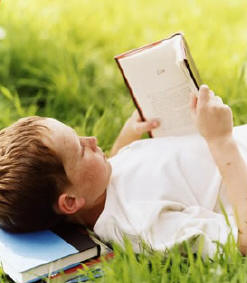
JP: Reading is such a private experience. Alone with a book. It’s when readers can be most authentically themselves — at a time in their lives, for these boys, when they are really uncertain about who that “self” is or might become. Great literature has done that for me. It’s helped shaped my thoughts, my feelings. When we say we want boys to read, those are the experiences we are hoping they’ll have.

KS: And William Brozo’s work has probably given me more thought about my own work than anybody else. He has written about the male archetypes in books.

JP: I read Brozo’s book on your recommendation.

KS: I haven’t figured it all out yet, but Krashen and Brozo have made me really thoughtful about my own work.

JP: How so?

KS: I mean that when I write books I’ll be thinking about the men my boy characters are becoming. It’s done instinctively in Mudville, but for the most part I don’t think more than a month ahead in the lives of my characters.

JP: Interesting. When I wrote Bystander, I clearly saw the character of Griffin very likely ending up in prison some day. On a somewhat-related note, when my son was very sick, it really put parenting issues to a test. It was so tempting to spoil a kid with cancer. Here, have whatever you want! But we’d remind ourselves, “We’re not raising a sick boy, we’re trying to raise a healthy adult.”

KS: I love that statement, Jim. I remember it from your blog. I was repeating it to everyone for a week at least . . . of course your wife gets the credit.

JP: She’s a great mother.

KS: Well, I’ve got to head off to work. Maybe we can pick this up in a future conversation. It’s a great topic. And one that writers might find useful.

JP: Thanks, I learn something every time we talk. And by the way, I’m really looking forward to your upcoming book, Tanglewood Terror. Is it a book for boys? Ha!

KS: Tanglewood Terror has some definite influence of Brozo, which I read while I was writing it. There’s a really rough-and-tumble boy, a football player, but he’s also sensitive. He cares a lot about home, family, wildlife. It was tricky to communicate that in his voice, since it’s a first person story. I wanted to show that there was no paradox there.

Gavin and me

JP: Quick story: My 6th-grade son, Gavin, is a pretty good athlete, and reasonably competitive. He wants to do well. This week in intramurals they are just now self-selecting teams for a four-on-four tournament. So last night one of his longtime friends called to see if he could team up with Gavin. However, his friend is not very good, to put it mildly. Now Gavin is conflicted and has to navigate some tricky issues. And I thought to myself, that’s exactly what Along Came Spider was about. It’s what being a human being is about, pulled in different directions. How do you do the right thing . . . and still win? And what is the right thing? And how important is winning? It’s not always clear.

KS: I can sympathize with his friend. I guess I’d say, in ten years you won’t remember who won this tournament, but the kid who gets dumped will remember it. But maybe that’s just my perspective as someone who was a liability on every team I was ever on . . . I guess I write about kids who are good at sports to get over it.

JP: True, but I can sympathize. He wants to compete, not get crushed by his peers. There’s a pecking order, and status in the pack to be considered. It’s hard for a young boy to willfully surrender that, at a time when athletic skill is the currency of the playground. My point is that in the final analysis — actually, I believe it’s our point — is that “boy” cannot easily be reduced to a handful of cliches. Each lad is vast and full of conflicting impulses and contradictions. Walt Whitman’s, I am large. I contain multitudes.”

KS: I love that line.

JP: So let’s stop here while we’re behind. I leave you with a look at Walt’s amazing face.

Patti Smith Commencement Speech: Direct from the Heart

I am a huge Patti Smith admirer, for many years now, but especially now after reading her fascinating memoir, Just Kids. A fabulous, uplifting book that could have been subtitled: “Portrait of an Artist as a Young Woman.” I’d love to hang out with her for an afternoon, or invite her to one of those miracle lunches when you can bring together a bunch of anybodys.

Patti Smith and Robert Mapplethorpe.

She is a true deep-to-the-bone artist.

Patti Smith recently earned an honorary degree from Pratt College and gave a commencement speech, which you can see in full. I recommend that you watch it.

You can also read the full transcript here, at the Smoking Bop Gun.

The ten-minute talk is filled with great moments, here’s just one of them:

I think of this like Pinnochio, because Pinnochio went out into the world. He went on his road filled with good intentions, with a vision. He went ready to do all the things he dreamed, but he was pulled this way and that. He was distracted. He faltered. He made mistakes. But he kept on. Pinnochio in the end became himself because the little flame inside him, no matter what crap he went through, would not be extinguished.

We are all Pinnochio.

And do you know what I found after several decades of life? We are Pinnochio over and over again. We achieve our goal. We become a level of ourselves. And then we want to go further, and we make new mistakes, and we have new hardships. But we prevail. We are human. We are alive. We have blood.

For a punk rocker and a tough-minded bird, Patti still has a lovely vulnerability and sweetness to her, a purity of intent, as evidenced in this amazing clip when she sang “You Light Up My LIfe” on the TV show, “Kids Are People Too.” She always, always speaks directly from the heart.

You need to a flashplayer enabled browser to view this YouTube video