Archive for Bullying

Eagles Players Pay Bully Victim a Visit

I had to pass this one along, now that I’m done blubbering.

As most readers know, 13-year-old Nadin Khoury was recently bullied and the attack was captured on video and posted on YouTube.

Nadin decided to speak out on the issue, and his recent appearance on “The View” ended with a very special surprise. And some tears fell.

You need to a flashplayer enabled browser to view this YouTube video

BYSTANDER in Paperback: New Cover, Old Hype

Good news for schools interested in using Bystander as part of a “One Book, One School” program, or on Required Summer Reading lists, or as part of an anti-bullying initiative: The book will be available this May in paperback.

Read: Cheap, cheap, cheap!

Or, at least, cheaper.

Take a look at the new cover . . .

“Preller has perfectly nailed the middle school milieu, and his characters are well developed with authentic voices. The novel has a parablelike quality, steeped in a moral lesson, yet not ploddingly didactic. The action moves quickly, keeping readers engaged. The ending is realistic: there’s no strong resolution, no punishment or forgiveness. Focusing on the large majority of young people who stand by mutely and therefore complicitly, this must-read book is a great discussion starter that pairs well with a Holocaust unit.” —School Library Journal, Starred Review.

“Plenty of kids will see themselves in these pages, making for painful, if important, reading.”— Publishers Weekly.

“Expertly written and rich on multiple levels, “Bystander” weaves a realistic tale of the bully, the bully’s targets and the physical and emotional pain that the victims suffer. It explores what might happen when someone decides to no longer be a bystander and to do something about the bully’s behavior.” — Kendal Rautzhan, Nationally Syndicated Columnist

“Should be required reading for students in middle school or just getting ready to enter middle school.” – Literate Lives.

The Tyranny of Silence

When I was working on Bystander, I kept running across different quotes by Martin Luther King, Jr. He would often express the same idea in subtle variations. Dr. King issued an indictment against the tyranny of silence, reminding us all of our responsibility to speak up. King believed in the common good. He had an abiding faith in his fellow man. If only we would stand up to be heard, then justice and democracy and human kindness would surely prevail over cruelty and prejudice.

Here’s a few of my favorite quotes from Dr. King:

“The ultimate tragedy is not the oppression and cruelty by the bad people but the silence over that by the good people.”

“Our lives begin to end the day we become silent about things that matter.”

“Cowardice asks the question, ‘Is it safe?’ Expediency asks the question, ‘Is it politic?’ But conscience asks the question, ‘Is it right?’ And there comes a time when one must take a position that is neither safe, nor politic, nor popular but because conscience tells one it is right.”

“In the end, we will remember not the words of our enemies, but the silence of our friends.”

New Beginnings

I love the idea of a new year, of turning the page and fresh beginnings, old failures pushed away and forgotten, a clean slate, room with space enough for wild new hope to grow.

Happy new year everybody.

I want to post about my 2011 Word of the Year — authentic — but don’t have time to get to it today. But that focus, those thoughts, really do connect to today’s post. I’m writing to share a really tremendous review of Bystander that I found on the blog, Teen Book Discussion . . . All Grown Up. It was almost spooky reading it, in a Twilight Zone kind of way, because it’s as if the reviewer, Brandy, climbed into my head and absolutely understood why I wrote the book the way I did.

It’s just so validating to have someone get out of a book what you, as the author, think you put into it. Click here to read the whole dang review.

The money quote:

This is the most realistic look at middle-school bullying I’ve read. It’s not a flattering portrait, but it is realistic, and I think that’s important. By “realistic,” I mean that the kids mock the “don’t be a bully” assembly; our hero admits that the kid being bullied sort of asks for it, even though that doesn’t make it right; school administration talks a good game but ultimately the bullying persists; in the end, the bully is still a bully, he’s just moved on to different targets. Because of its realism, I think this would make a great book for discussion and I’d love to see it replace the hokey Revealers that’s currently the 7th grade Required Summer Reading book. Unfortunately, because of its realism, I don’t think that will happen — much better to leave kids with the idea that three outcasts can write letters to their classmates about being bullied and not be mercilessly teased for it, or that lots of people sharing their stories of being bullied will make the bullies have this epiphany and suddenly become choir boys. Ahem.

One Book, One School: Some Photos & Reflections

I love this photo, somehow it says everything. This is why you write for children, those faces up there.

A while back I posted about how Bystander was being featured in some special “One Book, One School” reading programs. Lately I’ve been getting more requests in that area, and all I can say is that I love the idea of a shared reading experience that cuts across, and unifies, an entire school. It’s a tremendous honor when the educational leaders of a school select my book for that purpose. Stunning, amazing.

I was recently sent some photos by Joan Scott, the Library Media Specialist at Ephraim Curtis Middle School in Sudbury, MA. Here’s a few more:

For this particular visit, I was able to enjoy lunch with a select group of students. It’s just so much fun to sit down with these kids and really talk together — and for me, to hear them speak, and watch them fiddle with their Oreos, and listen as they share their thoughts and more than a few laughs.
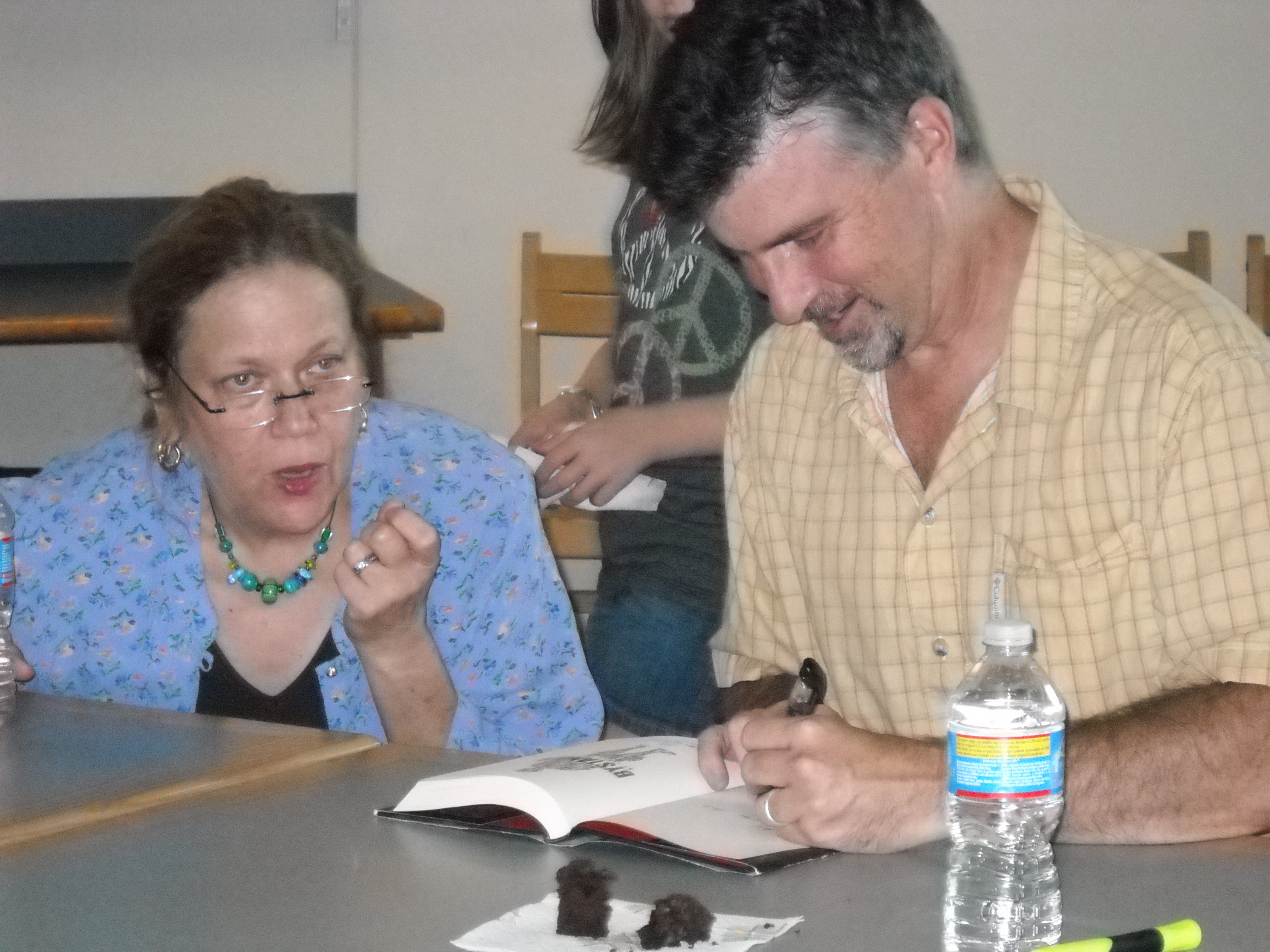
I’m sorry that I can’t recall the name of this particular teacher, but it’s a great opportunity for me whenever I get the chance to sit down with real teachers in the trenches and learn from their perspective.
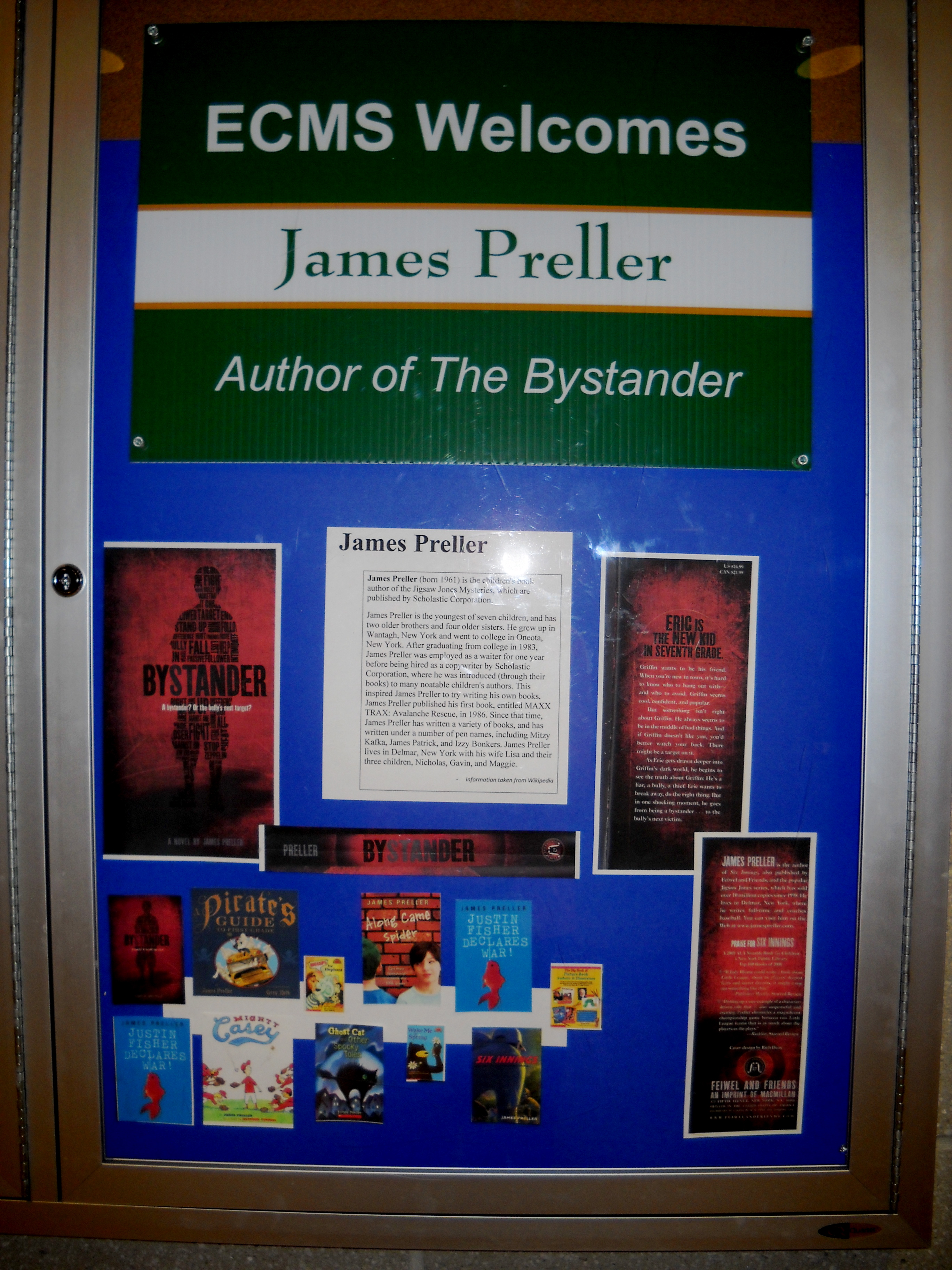
I’ve said it before. Just as in every other aspect of life, what a school puts into an author visit has a direct correlation to what the students get out of it. At Ephraim, the students were focused, prepared, and engaged — and that’s the key to a successful author visit, and a tribute to everyone at the school.
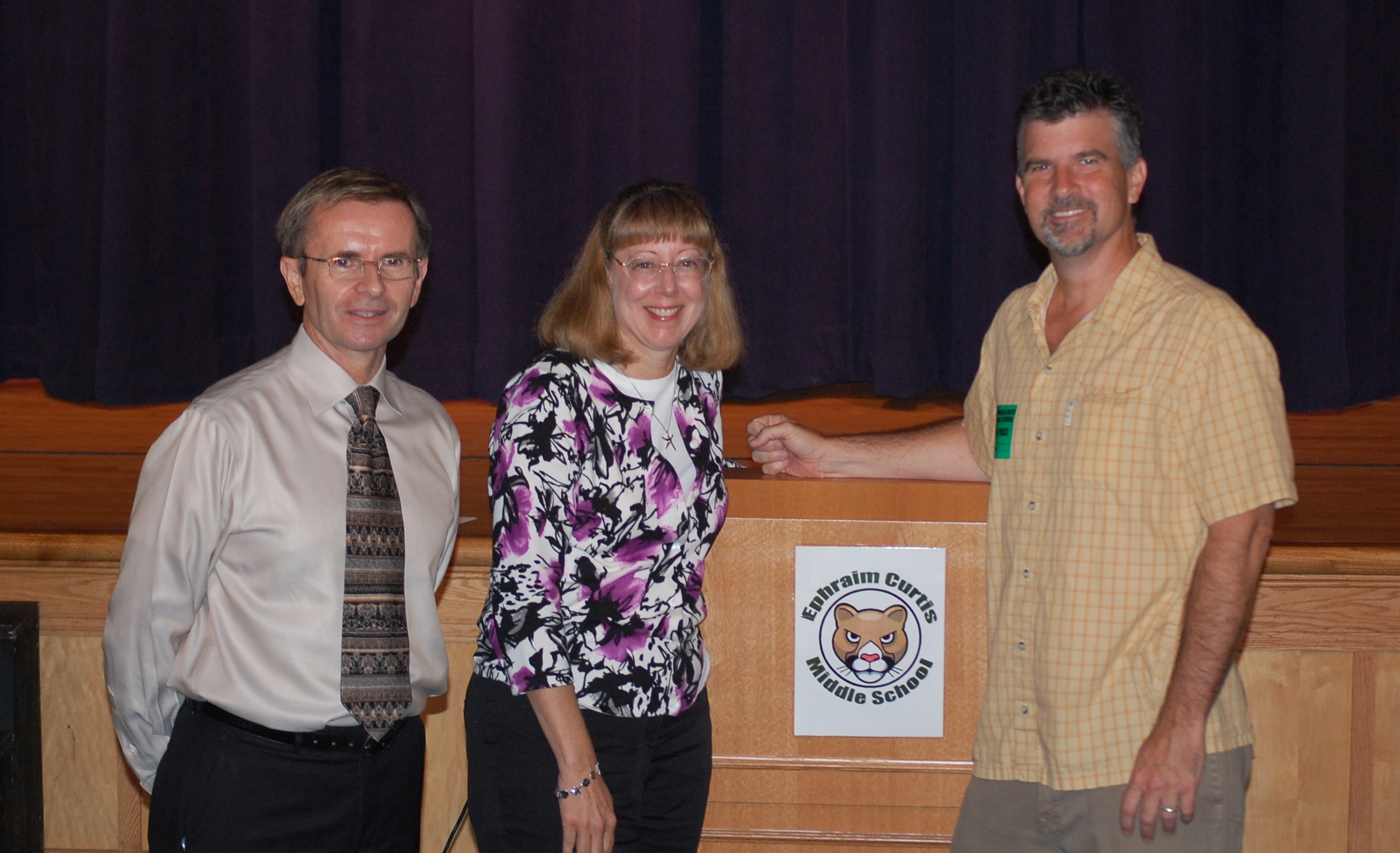
Here I am with the school principal Stephen Lambert and Joan Scott, who spearheaded the event. On some visits, I never meet the principal, as they are busy people with demanding jobs. Other times, I’ll meet one whose presence, whose attention and personal commitment, sends a powerful message to every student. This topic is important to us, we place value on this moment, and we care about you. Throughout the day, I chatted with this Principal Lambert and I can’t begin to express how impressed I was. Our conversations were wide and thought-provoking. Conclusion: This is a good man attempting to do the absolute best for the students and fellow educators in his school.

Honestly: Is this a remedy for bullying? Do events like this help? No one can say for sure. It can’t be measured. But I do believe that open honest dialogue, back and forth, feels like a crucial step in the right direction. Change can’t happen in a day. And a single book isn’t going to amount to much. But when an entire school comes together like this, the message is loud and clear:

We are a community of learners, we value things like respect and tolerance and compassion, because we understand that learning can’t begin without those qualities firmly in place.

In an interview earlier this year, I was asked: Is there anything that readers of [Bystander] can take from this story in order to better deal with bullies? I replied:

There are no easy answers. Quick story: My oldest son is sixteen. I often worried when he didn’t talk about his feelings. He’d clam up. Then I realized, he doesn’t necessarily have the vocabulary to even know what he’s feeling. To paraphrase Ron Burgandy in “Anchorman,” he was trapped inside a glass booth of emotion. Language is important, it’s a tool to help us perceive things, name things, understand. It’s common for kids to say something like, “Oh, I didn’t know that was bullying; I was just making fun of her shoes.” Like any good book, hopefully Bystander enriches the way readers understand their world.

I’m grateful I was able to spend a day at Ephraim Curtis Middle School, and inspired by their effort to address the issue with open, ongoing, thoughtful communication. Everybody pulling on the same oar. My thanks to everyone who helped make it possible. For those who may be curious, please know that Bystander will be published in paperback in Fall, 2011.