Archive for Blood Mountain

Fan Mail Wednesday #279: Chubby Hubby Edition

–

Here’s one that came from not far away, via a librarian-friend who lives in my community.

Don’t you like the envelope?

–

Adelaida wrote:

I replied:

Dear Adelaida,

Well, it seems like we have a nice connection, since I’m friends and neighbors with your wonderful librarian, Ms. Furlong. Her daughter, a senior, is in the same school and grade as my daughter, Maggie. Meanwhile, her husband is a craft beer-loving, long-suffering Mets fan. I’m the same way about the Mets, though I’m not really a fan of fussy anything, including craft beer, haircuts, clothing, etc. Keep it simple.

What were we talking about? Oh, your letter! So happy to hear from you. You asked a few questions, so let’s see:

1) Letters like yours come to me from time to time. It always feels like a gift from the universe, like a new star appearing in the night sky. I’m grateful and humbled and, mostly, just heartened to meet another person, like me, who is enthusiastic about books. Any books.

2) I like “Chubby Hubby” by Ben & Jerry’s.

3) Two of my three children are devout vegetarians, so they’ll hate this answer: If it’s a special treat, yes, I love a good steak. I’m eating less red meat these days, but!

4) My favorite book so far is the one I’m currently finishing, Blood Mountain. It’s due to my editor, Liz, in two weeks. Should be available a year from now. It’s really pushed me to be my best –- I’ve had to learn so much just to write it accurately –- and I’m never been more absorbed in my work. In short: “Hatchet” meets “Misery,” plus there’s a dog. A brother and sister get lost in the mountain wilderness for six days. It’s exciting and suspenseful and, I hope, powerfully written.

5) Oh: I’ve included a gift. Don’t tell anybody!

My best,

James Preller

Works In Progress: “The Big Idea Gang,” and More!

–


In a somewhat bizarre twist of fate, I have six new books coming out in 2019: one picture book of haiku, celebrating the inclusiveness of the school community: All Welcome Here, illustrated by legendary Mary GrandPre of “Harry Potter” fame; a new Jigsaw Jones title, The Case of the Hat Burglar, illustrated by R.W. Alley; and for older readers, a heart-pounding middle-grade /YA adventure novel, Blood Mountain, with a brother and sister, ages 11 and 13, lost in the wilderness for six days. The new year will also see the launch of a chapter book series, grades 2-4, the “Big Idea Gang,” beginning with two books in January. Above you’ll see a rough sketch by Stephen Gilpin — who is incredible — from the third title, Bee the Change. Each book loosely or directly links into persuasive writing concepts, children using their powers of persuasion to make a difference in their/our world. Honeybees played a big role in my middle-grade zombie novel, Better Off Undead, and I’m not done writing about them yet. Other titles in the series: The Worst Mascot Ever and Everybody Needs a Buddy (featuring playground “buddy benches,” of course). As usual, I’m hoping elementary school readers find these books.

Now eagerly booking school visits. Give me a jingle!

Teachers: Protect These Words!


–

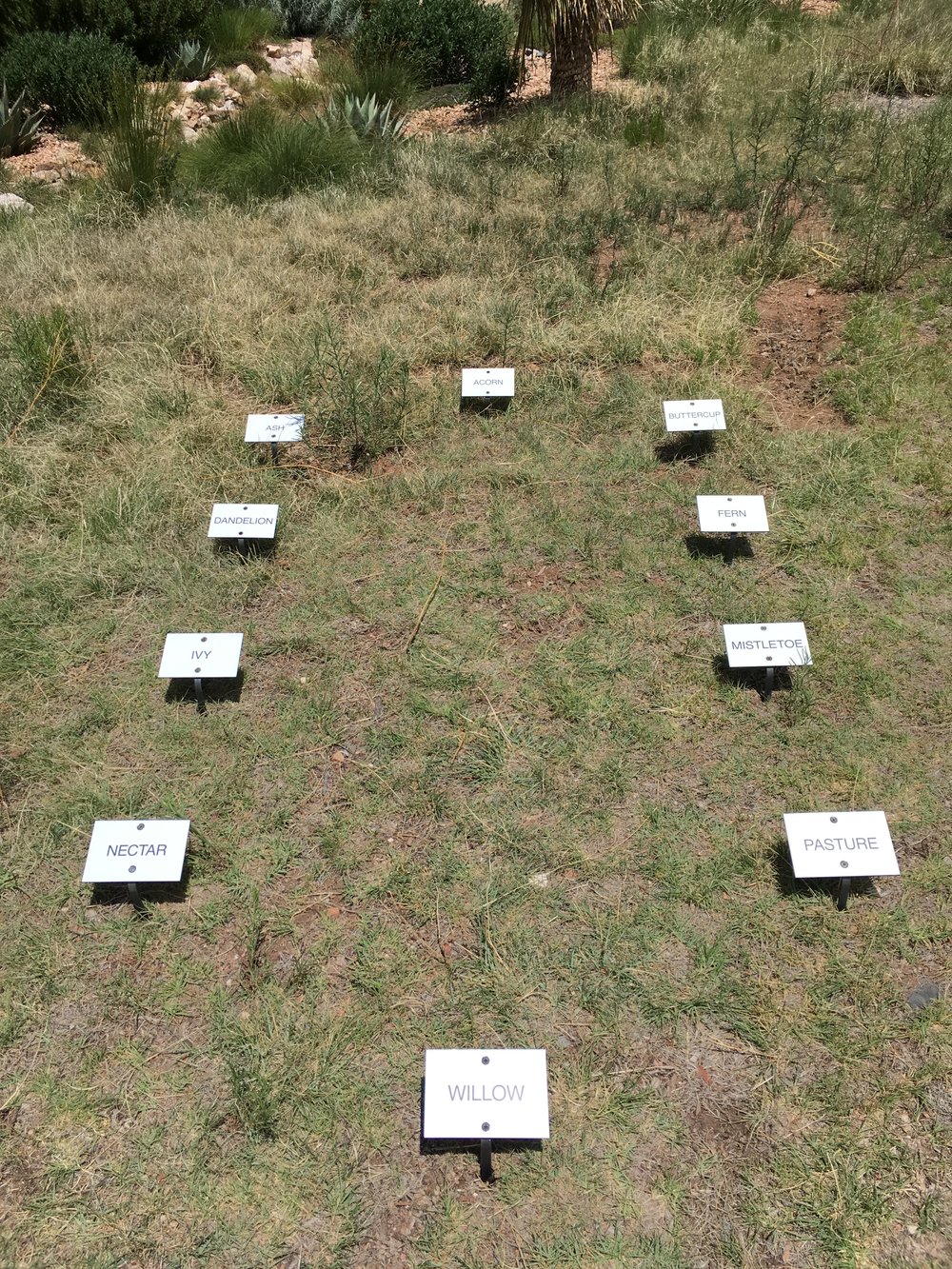
Words matter. Words are doors to perception, feeling, insight, understanding, connection. I feel this, strongly, and the ideas in this one sign are active and important in my current work in progress, a middle-grade adventure novel, Blood Mountain. (Think of it as “Hatchet” meets “Misery” — and there’s a dog.)

More and more I’m feeling the pull and importance of the natural world. Maybe it’s because of the internet and social media and cell phones and our disconnectedness with real things. As if we’ve been cut adrift, untethered, astronauts floating in space, clawing for air . . .

–


More on this issue another time. Thank you, Michael Namingha. And in the meantime, check out the books by Robert MacFarlane and, please, this post from me back in January: “Digging Up the Lost Words.”

But before you go, say it with me: acorn, ash, buttercup, dandelion, fern, ivy, mistletoe, nectar, pasture, willow . . .


DIGGING UP THE LOST WORDS: Inspired by Haiku & Candice Ransom

–

490

–

I’m blogging today to share an insightful article by children’s author Candice Ransom. I found myself nodding all the way through it, making connections to my own recent experience with haiku and, for lack of a better word, my effort, simply, to attend to things, to see the thing-specific, while desiring to learn the elusive words.

Ms. Ransom began her article, titled “Poetry from Stones” in Bookology magazine, this way: 

Outside my window right now: bare trees, gray sky, a brown bird. No, let’s try again. Outside my window, the leafless sweetgum shows a condo of squirrels’ nests, a dark blue rim on the horizon indicates wind moving in, and a white-crowned sparrow scritches under the feeders. Better. Even in winter, especially in winter, we need to wake up our lazy brains, reach for names that might be hibernating.

In November, I taught writing workshops at a school in a largely rural county. I was shocked to discover most students couldn’t name objects in their bedrooms, much less the surrounding countryside. Without specific details, writing is lifeless. More important, if children can’t call up words, can’t distinguish between things, they will remain locked in wintry indifference. Some blame falls on us.

Oxford Junior DictionaryA recent edition of the Oxford Junior Dictionary swapped nature words for modern terms. Out went acorn, wren, dandelion, nectar, and otter. In went blog, bullet-point, attachment, chatroom, and voicemail. Updating dictionaries isn’t new. And maybe cygnet isn’t as relevant as database, but it’s certainly more musical.  If we treat language like paper towels, it’s no wonder many kids can’t name common backyard birds.

When I was nine, my stepfather taught me the names of the trees in our woods, particularly the oaks. I learned to identify red, white, black, pin, post, and chestnut oaks by their bark, leaves, and acorns. Labeling trees, birds, and wildflowers didn’t give me a sense of ownership. Instead, I felt connected to the planet. I longed to know the names of rocks, but they kept quiet.

< snip >

–

I’m sorry, but I can’t resist quoting Ransom’s great piece at some length. She goes on to discuss a new book, recently discovered . . .

–

The Lost Words: a Spell BookSo imagine my delight when I found a new book for children, The Lost Words: A Spell Book. British nature-writer Robert MacFarlane paired with artist Jackie Morris to rescue 20 of the words snipped from the Oxford Junior Dictionary. Words like newt and kingfisher are showcased as “spells,” rather than straight definitions. MacFarlane’s spells let the essence of the creature sink deep, while Morris’s watercolors create their own magic.

On their joint book tour throughout England, MacFarlane and Morris introduced children to words—and animals. On her blog Morris writes: “I was about to read the wren spell to a class of 32 six-year-olds when the booksellers stopped me. ‘Ask the children if they know what a wren is, first, Jackie.’ I did. Not one child knew that a wren is a bird. So they had never seen a wren, nor heard that sharp bright song. But now they know the name of it, the shape of it, so perhaps if one flits into sight they will see it, hear it, know it.”

The Lost Words makes me want to take children by the hand and tell them the names of the trees and birds and clouds that illustrate our winter landscape. By giving kids specific names, they can then spin a thread from themselves to the planet.

–


Ah. Long, slow clap.

6792381Sometime in December, wary of time wasted on social media, the allure of Facebook, and my own (possibly connected) struggles as a writer, I decided to make a change. I felt empty, scattered, and discouraged. You know, the writer thing. I promised myself to begin each day by reading and writing haiku. It became my daily practice. Ten minutes, half an hour, even longer, however it worked for that day. Sometimes I’d go to my haiku before I made the morning coffee, and absolutely — this was a rule — before turning on my computer. On some miraculous mornings, I’d think of a haiku before my head left the pillow. 
–

UrP4fwuq1G3L+lCQHXVjJ4WD9n1O4!fHVzU32t1zotb2XltGqt5NH08Zg1lv!rMx0rUDeeqoUwC9Vrx87vEQ1D!qv90OwVUiNQfyiA+baMM=I’ve been reading Richard Wright’s marvelous late-period haiku poems, written at a time he was deathly ill, as if clinging to the world; rereading Basho’s A Haiku Journey; slowly leafing through various collections. I don’t read too many poems at a time; it’s not something to take at a headlong rush, another box to tick off. What I love about reading and writing haiku is that the practice forces me to slow down, to be present, to (try to) see the pear in the sunbeam, so to speak. People have asked what I’m going to “do” with the poems, and I explain that for me this has been
about the process, not the product. The poems are secondary. Possibly irrelevant. Most of them are “bad,” if you need to measure them that way. I try to avoid thinking about result. In this sense, for me, it’s like yoga. It’s something I am doing for myself, tuning to a different frequency. I’m not trying to “beat” your downward dog.
–
411ouV3CMiL._SX347_BO1,204,203,200_Haiku traditionally places a primary focus on nature. Seeing the moment, hearing the rain. This relates, of course, to William Carlos Williams’ 20th century directive, “No ideas but in things.” Or earlier, Tolstoy’s “God is in the details.” The necessity for the writer to move away from abstraction, the world of ideas, to see the particular thing itself. At least, to begin there. To be present in a world of multi-tasking and lost words. This of course spills over into relationships, parenting, conversations in coffee shops. It is . . . a way.
–

41CT8T98W7L._SX255_BO1,204,203,200_During this time, even before I found Candice’s article, I’d been troubled with an old failing of mine. I’m not terribly good at knowing the names of things. My brain is fuzzy. I love nature and the great outdoors, but I’m not a trained naturalist. I need to do better. So as part of my haiku journey, living this new enthusiasm, I’ve been reading about trees and nature. Watching videos. Buying field guides. Studying up. Trying to dig up the lost words.

Because I believe the words connect us to seeing deeply, the words enrich our perception of reality. The words connect us to some vital spark in this world: to nature, to our planet, to each other. I often suspect that our temporary president has never once sat on a mountaintop and appreciated the wonder and awe of nature. Just listen to him speak. Look at his policies. Read about how he eats. This temporary man has never gazed at a sunset without wondering how he might monetize it. Turn a profit. I believe he’s empty in that regard, like any non-reader, full only of avarice and self — nature as a thing to be used. It shows in his incurious mind, his disregard for the care and well-being of our planet.

He doesn’t know the words.

–

écologie mains