Archive for Along Came Spider

Fan Mail Wednesday #30

I’ve thought about whether I should pick this one or not, because it’s sort of grossly self-aggrandizing, but isn’t that what Jamespreller.com is all about? Hopefully my reply might be helpful to somebody out there. Note: As always, I’ve removed any names that would identify the writer or, in this case, her son.

Dear Mr. Preller,

I wish I could find the words to thank you for your newest book Along Came Spider.  My son, who is in the fifth grade, has been recently diagnosed with Aspergers Syndrome.  I’ve always known that he’s struggled with the whole playground rules and pecking order but after reading your book, I’ve gotten an even better understanding.  My heart breaks to see how his classmates talk to and treat him.  I’m coming to understand that it probably hurts and upsets me more than it does him.  He says he knows he weird and different from everyone else and while he’d like to fit in he’s also come to accept the fact that he won’t.  As a parent, that’s hard to hear.  I suppose I need to come to accept what my son has already accepted.  I’d like to think there are teachers and educators in the school systems similar to your characters who have these children in their eyesight and are willing to go the extra mile for them without a parent having to fight for it or for being afraid of administration.  We all have a part of us that likes to believe that everyone is there for the greater good.  I’m finding I have to fight tooth and nail for administration to see the need for special services.  Something as simple as your characters allowing Trey to have a special quiet place to escape to would be wonderful for my son.  Unfortunately, I am required to prove that he needs something as little as that and that means paying for private psychological testing, private OT assessment and therapy, and psychiatric consultations.  Short of the psychiatric consultations, the school system should have provided me with the other two but they refused.  I wish your book would be a “mandatory” reading for anyone in an educational setting. Instead of frowning upon, criticizing and singling a child out for their oddities, perhaps they would see the wonderful traits and characteristics children like Trey and my son possess.  Thank you once again for this incredible book.

J

I replied:

J,

Thank you for sharing that remarkable letter. I am truly touched. As much as this book touches upon Aspergers, it is also, I hope, relevant to any child who might be something of an outcast in school. As the trend continues to move toward inclusive classrooms, it’s so important for everyone to become more alert to these issues.

I profoundly recall when my oldest son, Nicholas, was diagnosed with leukemia at two years old. Suddenly we were thrown into a world that was confusing, frightening, overwhelming. We had to become instant experts. We would be called upon to be “strong” in ways we weren’t sure we were capable of. One great solace through all that was the slow realization that we were not alone. There were communities available, support groups, information. I mean to say: There’s help out there. And you are stronger than you think.

Here’s a few links that might be useful:

* Children’s Disabilities Information — featuring an annotated list of support groups for children with autism/Aspergers/PDD.

* The Parenting Aspergers Resource Guide by Dave Angel.

* O.A.S.I.S. — Online Asperger Syndrome Information and Support.

* A Directory for Asperger Syndrome — support groups and organizations.

Jana, the very fact that you read Along Came Spider tells me  you are already well on your way in finding the resources you need. For books, I’ve found the life and work of Temple Grandin . . .

to be particularly . . . insightful and inspirational.

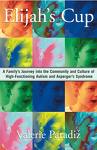
Another book that really got me thinking is called Elijah’s Cup by Valerie Paradiz. Subtitled, “A Family’s Journey into the Community and Culture of High-Functioning Autism and Asperger’s Syndrome,” it is a mother’s story, and she happens to be an incredibly gifted writer — insightful and honest.

Highly recommended. There’s so much great information out there, so many amazing books.

Good luck, my best to you and your son. Remember, you are not alone — and there’s a bright future ahead.

James Preller

Along Came . . . Another Blog from Ohio

Let’s face it, we can’t spend all day clicking links and reading blogs.

Right? We just can’t, much. Things to do and all that. But still, some folks make it hard. I just found a nice blog, curiously titled, Best Book I Have Not Read’s Weblog. It’s written by Kristine Something, a former fourth-grade teacher who now serves as a Curriculum Coordinator. Yes, another blogger from Ohio — who knew that Ohio was such a hotbed for book-crazed bloggers?

Kristine wrote about Along Came Spider yesterday, comparing it to Susan Patron’s The Higher Power of Lucky.

Kristine writes:

I think the fifth grade teachers are going to really enjoy sharing this book. Having this book as a shared reading experience will open windows to conversations about peer pressure and differences. I wish that the book had been around those first couple years I had a student similar to Spider, and struggled to find words to help nine year-olds accept/understand the differences in some of their classmates. Having a character in a book that can be discussed can really open conversation in an amazing way!

Thanks, Kristine. Honestly, that’s always been my hope with this book, that it would be a good “talking book” in an inclusive, community-minded classroom. For Kristine’s full comments, click here.

Meanwhile over at Literate Lives, Bill and Karen conclude their insane 28-day countdown to the Newbery. Bill somehow manages to squeeze Six Innings into Day 27.

I may have to move to Ohio. I’ve been reading, and absolutely LOVING, Ralph Fletcher’s important book, Boy Writers . . .

. . . and he gives a huge shout out to author Franki Sibberson (who suggested the book idea to him). Franki is yet another Ohio-based blogger, and you can find her at A Year of Reading. Do you see what I mean about Ohio? It’s like the little state that could.

They should make a new map. Delete the names of cities and insert the location of all the bloggers.

Fan Mail Wednesday #27: Signed Copies

I got this note all the way from Jersey! Actually, I figure the info in my response might help somebody else, so I thought I’d pass it along.

Dear Mr. Preller,

My name Jordan and I am eleven years old. I go to school in New Jersey. Your book, Along Came Spider, was a really good book. I have recommended your book to all of my friends. I couldn’t stop reading. Your characters really put a vivid picture in my mind. Trey was my favorite character. He has real guts to turn his hair green. Trey was also very funny. I will have to read some more of your books. I am so glad that I chose your book to read. Will you be willing to sign my copy of Along Came Spider if I sent it to you? You are a wonderful author.

Sincerely,
Jordan 🙂

I answered:

Jordan:

You are absolutely correct. I am a wonderful author! Heck, I’m a fabulously wonderful . . .

Wait, hold on. Not humble enough? Maybe I came off a little egotistical there, do you think? That wouldn’t be good for my carefully controlled image as a warm, kind-hearted children’s author. So let me try that again . . .

My Dear Jordan:

You are absolutely correct. I am a wonderful author! Thanks for your kind letter. I am really glad to hear your reaction to my book. You know, after you write a book, you just hope that people will find it, read it, like it. There are so many other great books out there. I’m grateful that you read mine.

I think Trey is funny, too. One of the great things about Trey is that he’s his own person. He goes his own way. At a time in school when so many kids worry about what everybody else thinks, Trey has a quirky little gift — he doesn’t really know what everybody thinks! So he’s free to be perfectly himself.

And while Trey has many difficulties in school, I also made sure to show that Trey had many, many strengths. He’s a nice guy. He’s smart. He knows all kinds of interesting (and not-so-interesting) facts. He loves nature (except squirrels, which he hates). Trey is very good at building things. And, yes, he has the singular courage to dye his hair green. Like you said, he has real guts.

As an aside, my own son once dyed his hair green, but under very different circumstances. Nick was sick and it was all going to fall out anyway, so he figured, might as well have fun with it. (Nick has guts, too.)

Anyway, yes, I’d be happy to sign your book. (Or anyone else’s, for that matter.) Just send me the book and be sure to include a self-addressed, stamped envelope so I can return it to you. My address is 12 Brookside Drive, Delmar, NY, 12054.

Thanks for writing.

JP

Fan Mail Wednesday #23

Every year I hope to be better with Fan Mail.

But I guess I might as well confess this, even if it makes me look like a creep: While I’m grateful for fan mail, and amazed, and often touched, there’s a part of me that sees it as more work. And expensive, too, because almost nobody sends a SASE these days. Part of the problem is me: I’ve never been happy with the idea sending back a standard reply. I put effort into my responses, and time. That is, when I’ve responded (I usually do). But sometimes I let time slip away. Tremendous guilt over that. So one unhappy aspect of Fan Mail for me is, “Oh, great. A new way to hate myself.”

Here inside the expansive offices of Jamespreller.com, I’ve instituted Fan Mail Wednesday. I like the blog approach, and the cost is right. I took a little break from that over the holidays, but now like a lion in a cage, hear me roar: Meow!

I got this email a few days ago:

Dear Mr. James Preller,

My name is Michael and I am a senior in high school. I recently came across your book, Along Came Spider. It was due to pure chance that I came across your book. I was at Barnes and Noble, meandering around and happened to be in the children’s section and picked up your book. Within moments of flipping through the first few pages, I lost myself in the story of Spider and Trey. At the end, I read your acknowledgments section and understood where you got the basic idea for your story from. However, I do not understand why you chose an autism spectrum disorder (which I presume from the descriptions of Trey that he had Asperger’s Syndrome). There were so many other conditions you could have chosen, or none at all. What compelled you to choose an autism spectrum disorder? Nor do I understand how you were able to so effectively capture the mind and imagination of a child with an autism spectrum disorder. Given the intense complexity of autism, the fact that you were able to accurately characterize autism in a child to such a degree of detail and depth is commendable and insightful.

In addition, the friendship between Spider and Trey was a unique twist and resonated many feelings and thoughts within me. I thank you for writing about such a friendship. I immensely enjoyed the story, especially the conflicting angst that Spider was going through as well as Trey’s understanding of friendship.

I replied:

Thanks for your letter, Michael. The quality of your writing is even more impressive than the quality of your reading! Very nicely done. First of all, I should note that I’ve contacted the people at Guinness, and it’s been determined that you are the first High School senior to read the acknowlegements section of a book, any book. Your name will be featured prominently in the 2010 edition of the World Records. (Actually, um, no.)

But I wonder: Did you really stand there in Barnes & Noble and read the whole book? Did you at least buy a muffin or something? How am I going to catch up to J.K. Rowling if all my readers do this? She’ll be in her yacht and I’ll be swimming alongside it.

To answer your question, I arrived at Asperger’s in a circuitous way. At first, I was interested in an outsider. I’m often drawn to themes of inclusiveness and exclusiveness. Which I guess is a fancy way of saying, “friendship,” how we treat each other. In order to create this character, this child who did not fit in, I needed specific characteristics. You achieve that through the accumulation of small details. I began by asking questions. What does he like? Is he good at sports? What does he dream about? What kinds of things upset him? Who are his parents? And so on. I not only asked those questions of myself, I talked to experts. One principal in particular, Laura Heffernan at Glenmont Elementary, gave me an hour of her time. We talked and talked. She kind of casually brought up “kids on the spectrum” and it resonated with me. I went to the library. I bought books and underlined passages, almost filled an entire notebook. What I learned fit my conception for this character. It worked for the story.

But you are right. I could have explored the same ideas, written the same essential book, by selecting a different condition or none at all. The dynamic in the relationship was, to me, more important that Trey’s particularities. Does that make sense?

I appreciate that you feel I effectively captured the mind of a child with autism. Honestly, I don’t really know if I did or not. But I tried to do my best. I’ve had good experiences, though. I recently had a mother come up to me, pull me aside — I could see the upset in her eyes — and say, “That’s my son. He was just diagnosed with Asperger’s.”

Well, there’s more. For reasons I don’t fully understand, I feel a connection with children with autism. It’s not an intellectual understanding. It’s not even experiential. But somehow I identify with many of those common symptoms. I don’t have autism, but in some small way I feel I can glimpse its shadow. Can’t everyone? Don’t we all have at least those shadow traits? Or not? All that said: I didn’t make that a big part of Along Came Spider. I didn’t feel qualified, or ready, or brave enough, or whatever. If you are still interested in the topic, I recommend the novel, The Curious Incident of the Dog in the Night-Time by Mark Haddon. He goes much, much deeper.

Thanks for reaching out and contacting me. I’m really grateful, and honored, to have a reader like you.

JP

Books for Boys?!

School Library Journal recently ran a review for Along Came Spider. Written by Elizabeth Swistock, you can read it in full by clicking wildly right here and scrolling insanely downwards.

I think Ms. Swistock gives an accurate, sympathetic review, while noting that “several of the traits that Preller describes could be associated with autism spectrum disorder, but Trey’s condition is never stated outright.”

Not naming Trey’s condition was a conscious choice. Maybe that was a mistake on my part, I don’t know. But for the record, I saw Trey as a boy with high-functioning Asperger Syndrome. What I felt at the time, correctly or not, was that most kids wouldn’t perceive things that way — they’d be dealing with the near reality of a quirky boy, not an abstract label, so I tried to hug close to that perspective. In today’s inclusive classrooms, these are daily encounters for most children.

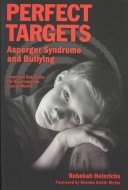
By the way, here’s one of the many great books I found on the subject, Perfect Targets: Asperger Syndrome and Bullying, by Rebekah Heinrichs.

For the purposes of Along Came Spider, I didn’t see the behaviors exhibited in the book as “bullying” per say, since I hate to see every incident of like or dislike — or even one-time acts of physical violence — thrown under the notorious bullying umbrella. Vast topic, too big for this entry. I’ll have a lot more to say on that later, when we get closer to the publication of Bystander (Feiwel & Friends, Fall, 2009), a dramatic novel that takes a closer look at bullying in a middle school environment

The interesting part of the review comes at the end (doesn’t it always?). Ms. Swistock concludes:

The fact that Trey and Ava are extremely self-aware and kindhearted is a redeeming quality, but the book could prove too uneventful for its intended audience. That’s too bad because Trey is a sweet character and Preller’s message is a good one.

I want to repeat the key phrase there: too uneventful for its intended audience.

Let’s be clear: I have no argument with the reviewer. She very well may be correct. It’s not been a huge seller. Though it is a book about boys — that also features strong female characters — it might not fit into the category of The Type of Books That Boys Like. There’s not a lot of action. It’s a friendship story. Maybe it would be boring for typical boys, whomever or whatever that might be. I loved the observation made by Karen Terlecky at Literate Lives in the very first review of Spider:

I’ve read a lot of books recently about girls trying to make sense of friendships and themselves, so it was a delightful surprise to find and read an advance review copy of a book that deals with boys trying to find where they belong . . . .

I wonder: Did I accidentally write a girlie book about boys? And is such a thing possible? Or unwelcome? Or needed? Can it be that a He-Man such as myself is, deep down, just a wuss?

I am genuinely interested in this topic and invite your comments. It’s something I’ve been puzzling over for a while now. I haven’t reached any wise conclusions. But maybe that’s what blogging should be: that it’s okay, maybe even preferable, to open things up for discussion, rather than attempt to neatly wrap things up, tie down all the loose ends.

On a diagnostic level, we can all agree that boys don’t read as much as girls. We can see the divides in our educational system. But it becomes far trickier when we encounter it on a prescriptive level, when we read that we need more . . . books for boys.

Because, of course, what IS a book for boys? Following the standard clichés, we’ll see well-intentioned publishers roll out a bunch of sports titles and a series of picture books about trucks and dinosaurs. Boys love that stuff! Oh yeah, and gross stuff, too — boys love disgusting things. Farts and vomit! Bodily functions! Smashing things! Underwear! And on and on.

And you can see where that kind of reductionistic thinking leads us. Exactly nowhere. Where Boy becomes Caricature, effectively ignoring the vast number of outliers, the sensitive ones, the insecure boys, ignoring the notion that boys may be All That and So Much More.

What is a book for a boy? What do boys like? To answer that, we have to address the idea of what is a boy? I guess what worries me is when those answers get too restrictive, too limited, when publishing for boys does a disservice to what boyness is all about, in all its sprawling, messy glory.

“Oh, here comes a boy. Do I have a book for you!