Archive for November 5, 2010

Stories Behind the Story: The Case of the Great Sled Race

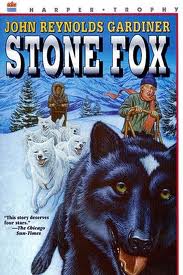
There’s actually quite a few things in this story, numero ocho in the Jigsaw Jones series, that I particularly like. I’m pleased by the way I used  John Reynolds Gardiner’s wonderful book, Stone Fox, to loosely parallel Jigsaw’s journey. Ms. Gleason is reading it aloud in class throughout the book.
I’m also happy with the emphasis Ms. Gleason puts on “the Five W Questions,” who, what, when, where, and why. As she explains to the class:

“Mr. Gardiner is a terrific writer. But we’ve got a lot of other work to do.” She walked over to the blackboard. Ms. Gleason said, “As you know, we should always be thinking while we’re reading. That’s how we understand what’s happening in the story. Today I’d like to talk about a few strategies that will help us think about what we’re reading.”

Later Jigsaw has this revelation:

I suddenly realized it was like solving a mystery. Reading was like detective work. Figure out the W questions . . . and you’ll catch the crook.

But today I’d like to focus on a different aspect of the book. My confession: I lifted the setup from the opening of Raymond Chandler’s great book, Farewell, My Lovely. Remember, folks, it’s not stealing . . . it’s an homage! Seriously, I don’t think any of my readers notice this, it’s just something I do for the fun of it, and as a sly little tribute to a favorite author.

Like tens of thousands of writers before me, I owe a huge debt to Raymond Chandler, who defined the voice of the hard-boiled detective for generations to come. In fact, when I first began this blog one of my earliest posts was an appreciation of Chandler.

In Farewell, detective Philip Marlowe meets up with big, bruising Moose Malloy outside a sleazy dance club. Moose is fresh out of prison, a tough guy searching for his lost love, little Velma. As always, you can’t read two paragraphs without coming across a great, startling sentence. Chandler gets a lot of credit for his tone, his out-sized similes, and funny one-liners. Such as: “Even on Central Avenue, not the quietest dressed street in the world, he looked about as inconspicuous as a tarantula on a slice of angel food.”

But to me, it was Chandler’s attention to detail, his concrete objective eye — like a great Imagist poet — that sets him apart as not only a memorable American stylist, but as a great writer, period. One quick example:

His skin was pale and he needed a shave. He would always need a shave. He had curly black hair and heavy eyebrows that almost met over his thick nose. His ears were small and neat for a man of that size and his eyes had a shine close to tears that gray eyes often seem to have. He stood like a statue, and after a long time he smiled.

You can learn a lot by giving Chandler a close reading. A shine close to tears that gray eyes often seem to have, indeed.

A few other quick lines, just to set the scene:

It wasn’t any of my business. So I pushed them open and looked in. A hand I could have sat in came out of the dimness and took hold of my shoulder and squashed it to a pulp.

Later:

He let go of my shoulder. The bone didn’t seem to be broken, but the arm was numb.

“It’s that kind of a place,” I said, rubbing my shoulder. “What did you expect?”

“Don’t say that, pal,” the big man purred softly, like four tigers after dinner. “Velma used to work here. Little Velma.”

So here’s how I handled the opening for Jigsaw, when he first meets up with Bigs Maloney (a name that intentionally echoes Moose Malloy):

Illustration by John Speirs, my apologies for the scan, it appears to be broken.

I was dragging my sled into the park when I spotted Bigs Maloney. Bigs was the roughest, toughest kid in second grade — but not taller than a grizzly bear and not wider than a soda machine. He was headed my way.

Bigs stared straight ahead, mumbling to himself. He stopped in front of me. “Velma,” he said. “I want my Velma back. You have to help me find her, Jigsaw.”

Bigs put his giant paw on my shoulder.

And squeezed.

“Lay off the shoulder, will you?” I pleaded. “I might need that arm someday.”

Bigs let go of my arm. He stared off into the distance. “I just want my Velma back,” he said. “You have to help me.”

It takes a return to Jigsaw’s basement office, and some tough questioning from Mila, to sort out the facts and propel the story forward:

Five minutes later, Mila was throwing questions at Bigs Maloney. “Who is this Velma you’re talking about?” Mila asked.

Bigs made a face, like he was disappointed in us. “Velma is a what, not a who,” he said.

“What kind of what?” Mila asked.

“A sled kind of what — that’s who!” Bigs shot back. “My Velocity Machine 2000. The fastest sled in town.”

Finally I understood. Vel-ocity . . . Ma-chine. Vel-ma.

“Oh,” I said. “Velma is the name of your sled!”

Bigs sneered. “And I’m gonna clobber the crumb who stole her.

Mila gave me a worried look.

“Listen, Bigs,” I said. “I don’t think clobbering anybody is such a great idea. We’ll help you find your sled. You know our rates. We get a dollar a day.”

For an added treat, check out this trailer for the 1975 film starring Robert Mitchum. His voiceover in the beginning is classic. I’d forgotten about the Joe DiMaggio reference, and now I feel better, since Hemingway did something similar in The Old Man and the Sea. We’re all standing on the shoulders of giants. I loved this movie back when I was in high school. As I recall, it was in the early days of HBO, when they’d play the same few movies over and over and over again.

You need to a flashplayer enabled browser to view this YouTube video

Fan Mail Wednesday #96

Dear Mr. Preller,
My son bought your Along Came Spider book at the school bookfair. At first I thought he chose it for the cover art, but he assured me he had read the back and the story sounded appealing. As a habit I try to read the books my children select. My son is just nearly on the autism spectrum -- so again, as a habit I try  to read books my children are interested in when I am unfamiliar with the  story.  First, I read it in one sitting and it nearly made me weep . . . as a  parent of a "Trey" and as a parent volunteer in our elementary school.  I  felt the story was just so well thought out and really hit the areas that a lot  of 9-11 year old boys have trouble with.  (Forgive me only having boys I'm  not sure how parents with daughters would feel.) I have recommended your book to  our school principal and will be talking to the school social worker about the  possibility of using it for a directed reading 'book club' for small group  instruction and Social Development curriculum.

Do you have discussion points available for your books if they were to be used as a book club book? Perhaps, one that you have already completed you could maybe email? I would like to lend our copy to the school social worker with some suggested book club discussion points. Our school also has an active social development committee and with all that goes on in the world of kids to navigate through books like Along Came Spider might be a helpful way to engage them in some dialogue both with their peers and their own feelings through self-dialogue as part of this curriculum.
I look forward to reading more of your materials.
Thanks again so much for taking the time to get back to me.
Lianne

I replied:

Lianne,

Thanks for your note. Your approval really means a lot, coming from someone with your personal experience.

Spider was named 100 Best Books for Reading and Sharing by the New York Public Library Association in 2008. I wrote a follow-up book, Justin Fisher Declares War!, that can be considered a very loose sequel. It takes place in the same school, Spiro Agnew Elementary, and some characters recur in minor roles (Trey, Spider, Ms. Lobel), though the emphasis is on several new characters in a different fifth-grade classroom. In addition, my book Bystander, set in a middle school environment, also focuses on similar issues of exclusion, bullying, and tolerance.

I am impressed by your commitment to social development in the school. Obviously, it’s essential to build a community of learners, with tolerance and respect as cornerstones to every classroom. I’ve heard from teachers who have used Spider as a read-aloud, for the reasons you pointed out: it can serve as a good conversation-starter.

It’s interesting that you asked about discussion points. Nothing like that has been formalized. However, I recently set up a Skype account and I’m interested in exploring those possibilities. If you’d be willing to work with a complete novice, we could arrange for a free 15-minute question-and-answer chat where we can talk about the talk. Obviously, we’d need to work out some details. Author Skyping has become all the rage lately, and I’ve been looking for a way that works for me. Generally, authors charge a fee ($100-$200), request that books are offered for sale, and that the gathered group is prepared with thoughtful questions.

What do you think?

You would be my guinnea pig!

JP

An early, rejected version of the cover,

which I still much prefer.

POSTSCRIPT: Lianne, and other curious readers, might be interested in this book, by Kathryn Erskine. Though Aspergers is much more likely to occur in boys, this book looks at it from a girl’s point of view. I own it, but haven’t tackled it yet. It’s on the stack, or the pile, or the list, and I’m sure that all readers can relate.

Overheard: “I don’t OBSERVE the game, Dad. I watch it. Like normal people.”

Those words were spoken by my hormonal son, Gavin, age 11. With any luck, he’ll reach 12.  We went to a playoff soccer game together, watched in silence for most of it. Every once in a while I’d say something, make some sorry stab at conversation. His response was limited, bordering on mute. I finally ventured something like, “You’ve been quiet. Do you have any observations? Anything?”

You already know his response.

Sigh. I’m learning how not to react. And some days, failing miserably.

Dipping My Big Toe Into the Cool Pool of Skype (does that sound too gross?)

I’ve been thinking about Skyping lately, you know, video conferencing with schools. My first reaction to Skype was negative — because that’s how I react to any new technology. At heart, I am a Caveman. Fire? Oh, please. It’s a passing fad.

It’s perfectly normal for me to say things like this:

“Hey, baby, don’t mess with my Eight-Tracks!”

Seriously, Skype just felt like another way of talking on the phone and I have certain, um, phobias about phone calls. I don’t like them. But I recently participated in an event for Banned Books Week that featured a Skype visit from author Lauren Myracle. She was wonderful; I loved her and came away sold on the potential of the medium.

My middle child, Gavin, 11, set me up with Skype last week. I need to practice, figure it out, and eventually I think I’ll offer 20-minute Q & A sessions to schools (for a modest fee, including book sales). I’ll need to think about the ins and outs before moving forward. But if anyone out there wants to help me practice with their classroom, for free, with extremely low expectations, please write and let me know.  I know that a Skype visit can never replace the impact of this . . .

.

. . . but it does offer an interesting alternative. Feel free to contact me via the “contact” icon up top. Label your email, “Free Skype Visit,” and we’ll take it from there. It would be a plus if you’ve done this before, because, as I said, I have not. It could be fun and that’s what we’re all about here at jamespreller.com.

Fun/24/7.