Tag Archive for Preller writing process

The Writing Life

This is the 600th blog post at jamespreller.com.

Will anyone read this? Google Analytics informs me that about 250 “visitors” will swing by today. Whoever they are, taking whatever they want. Close friends, curious guests, lost surfers riding the wave. I’m here to say it does not matter. I’d write it anyway.

Slip the note into the bottle, plug it up, toss it over the side, sail on.

I joke about my “Nation of Readers,” but writing this blog (and most writing in general), is not much different from scribbling notes on a raft in the open sea. Why bother? To what end? Those questions seem wholly irrelevant.

For most writers, there’s little feedback. Blog readers rarely comment, books are written and go out of print with barely a ripple. Most bottles, like books, sink unopened to the ocean floor. Still writers persist in throwing material into the void. Or maybe, like me, they have a drawer full of poems and stories that few will ever read. And it strikes me that this is the essence of the writing life. If the planet was empty, an arctic solitude barren as a blank page, a writer would still write. Because to write is to continue on despite, or in  spite of, the resounding silence. Writing might be our response to that white silence.

Not that it isn’t disappointing at times. It so often is. I get very discouraged, downhearted.  A writer wants to connect. And I’ll sometimes ask myself, Why do this? Who cares? Yet still, yet still. The hand moves over the keyboard, or lifts up the pen, pad of paper on lap, and words lay smote like fallen soldiers.

There’s a fundamental contrary to this solitary-seeming process. For writing is yin to reading’s yang. Somehow when we read — that most exclusionary of acts, far from the madding crowd — we are profoundly not alone. We swim in words, words, an ocean of words. An electric current shivers through us. Miraculously we are connected to something, someone else. We remember that the world was created with words. They told us that story in school. And He said, “Let their be light,” and behold there was light. Writers take note: it was the saying made it so.

The boy with his book and the girl with her journal, in their quiet rooms: Not alone. The writer in his basement, the reader on a crosstown bus.

I recently read an interview with Lois Lowry. She was asked a frivolous question about fame and success. And she gave a great answer:

My guess if that very few writers think about—or aspire to—fame. Certainly I never did. I think most of us are propelled, as I was, and am still, by a love of stories and a fascination with language, its cadence and precision. And so we find ourselves playing with those two elements, combining them, thinking about them. I did that from a very early age. My first published work was a letter to a children’s magazine in 1947, when I was 10 years old. Part of it said, “I am writing a book.” I was always writing a book—or a poem—or a story—or simply a list. I had started doing that, maybe even somewhat obsessively, when I was 7 or 8. And I continued. I don’t recall when I first thought: I want to be a writer someday. It was always simply a part of me, and my only real aspiration.

It made me think of my own writing, and my experience so far with my new blog, Fathers Read. I’ve gotten some support, heard some nice things, but right now, today, very few people visit the site. In sum: It’s a great idea, I love it, and nobody cares. That’s not self-pity, just an accurate assessment of the way things are. The world never promised to come running with open arms. Now maybe I don’t know how to market this thing, maybe I need to Tweet faster or Facebook harder, or maybe I’d rather write than market. Again I’m confronted by the question that all writers face. What’s the point? Why bother? Isn’t this all just a waste of time?

As if, in my fantasy, the notion of choice enters into it. As if not writing was an option.

So another bottle goes into the water. Gurgle, gurgle, glub.

I mean to say: Thank you, dear reader, for stopping by. I’d do it without you, almost certainly, but it is infinitely better that you are here. Six hundred blog posts, a bunch of books, a lifetime of reading and writing later. Alone, and not alone. Thanks.

———

NOTE: The season for school visits is upon me. I’ll be away for much of the next six weeks, posting sporadically. It’s fun to get out and visit schools, but I’m such a homebody.

It’s the Thought That Counts

I’m conflicted. I realize that some readers enjoy it when I open up about my writing process. At the same time, two thoughts pull me in the other direction: 1) It’s bad voodoo to talk about work before it’s finished; and 2) It seems a little pretentious to me, prattling on about my process.

But, anyway, the blog’s name is jamespreller.com so I guess I’m already shin-deep in pretension.

Lately I’ve been keeping a little spiral notebook on my desk, just to the left of the mouse pad (I’m a southpaw from Long Island, remember, and my fastball has natural movement). I jot down things, make “To Do” lists, etc. This morning I woke early and went immediately to work. We’ve got a snow delay, Lisa’s home until 10:00, so I need to make hay.

I wanted to get out a new post for my fabulous Fathers Read blog — please check that out people — knock out some fan mail, scribe a witty Facebook Status Update, and work on the new book. I had woken up thinking about it last night. This morning, before the coffee kicked it, I scribbled this in the aforementioned notebook:

Can you read that? It’s just enough to fuel my writing for the day.

Okay, to fill you in, there’s a scene that just happened. We’re in a middle school and our main character, a boy, endures a moment of petty cruelty. He stands at his locker, absorbing the verbal blow, and watches his foe lope down the hallway.

He thinks:

I so want to be his friend.

That was the surprising thought that woke me up. And it makes sense to me; it’s realistic for how kids think, especially in bullying situations, that paradoxical response, a middle-grade version of The Stockholm Syndrome. (BTW, not at all sure about the word “so” up there, which strikes me as lame and lazy, but I won’t fuss with that now; like birthday presents, when it comes to first drafts, it’s the thought that counts.)

Then another voice surprised me, a new character I hadn’t planned on. I mean, okay, I “planned” on there being more characters, just hadn’t figured out the details. No outline, nothing, just vague and formless thoughts. But before I could begin to conjure this one’s profile and backstory, there was her voice:

“No you don’t.”

In my notebook, as you might be able to decipher, I next wrote:

I turned to see _______ _______ standing next to me. A little awkwardly close.

This is what I think of placeholder text. I don’t have time to, or don’t feel like, actually visualizing the details right now. I know I need to describe her, set the scene, her lank hair and pale complexion, the way her arms hang limply at her side, but I’m just not ready to go there yet. What’s her name? What’s her story? And look at that sentence, “A little awkwardly close.” Again, I’m more interested in the idea — that she invades his space a little, and it’s uncomfortable — than the actual writerly part of things right now.

I had another notion, one I wasn’t sure about, and had to move quickly to get it down:

It was as if she could read my thoughts.

Hmmm. In this particular book, I want to be open to the magical, the psychologically true, so I can’t dismiss that possibility. Can she actually read his thoughts? Or was it just one of those things that happen happen when two people have a connection?

Now I have to think a bit. And write. Because usually it’s in the writing that we do our best thinking.

We don’t write what we know. We write to find out what we know.

Have a great weekend!

Stories Behind the Story: The Case of the Great Sled Race

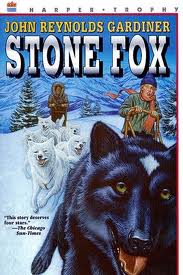
There’s actually quite a few things in this story, numero ocho in the Jigsaw Jones series, that I particularly like. I’m pleased by the way I used  John Reynolds Gardiner’s wonderful book, Stone Fox, to loosely parallel Jigsaw’s journey. Ms. Gleason is reading it aloud in class throughout the book.

I’m also happy with the emphasis Ms. Gleason puts on “the Five W Questions,” who, what, when, where, and why. As she explains to the class:

“Mr. Gardiner is a terrific writer. But we’ve got a lot of other work to do.” She walked over to the blackboard. Ms. Gleason said, “As you know, we should always be thinking while we’re reading. That’s how we understand what’s happening in the story. Today I’d like to talk about a few strategies that will help us think about what we’re reading.”

Later Jigsaw has this revelation:

I suddenly realized it was like solving a mystery. Reading was like detective work. Figure out the W questions . . . and you’ll catch the crook.

But today I’d like to focus on a different aspect of the book. My confession: I lifted the setup from the opening of Raymond Chandler’s great book, Farewell, My Lovely. Remember, folks, it’s not stealing . . . it’s an homage! Seriously, I don’t think any of my readers notice this, it’s just something I do for the fun of it, and as a sly little tribute to a favorite author.

Like tens of thousands of writers before me, I owe a huge debt to Raymond Chandler, who defined the voice of the hard-boiled detective for generations to come. In fact, when I first began this blog one of my earliest posts was an appreciation of Chandler.

In Farewell, detective Philip Marlowe meets up with big, bruising Moose Malloy outside a sleazy dance club. Moose is fresh out of prison, a tough guy searching for his lost love, little Velma. As always, you can’t read two paragraphs without coming across a great, startling sentence. Chandler gets a lot of credit for his tone, his out-sized similes, and funny one-liners. Such as: “Even on Central Avenue, not the quietest dressed street in the world, he looked about as inconspicuous as a tarantula on a slice of angel food.”

But to me, it was Chandler’s attention to detail, his concrete objective eye — like a great Imagist poet — that sets him apart as not only a memorable American stylist, but as a great writer, period. One quick example:

His skin was pale and he needed a shave. He would always need a shave. He had curly black hair and heavy eyebrows that almost met over his thick nose. His ears were small and neat for a man of that size and his eyes had a shine close to tears that gray eyes often seem to have. He stood like a statue, and after a long time he smiled.

You can learn a lot by giving Chandler a close reading. A shine close to tears that gray eyes often seem to have, indeed.

A few other quick lines, just to set the scene:

It wasn’t any of my business. So I pushed them open and looked in. A hand I could have sat in came out of the dimness and took hold of my shoulder and squashed it to a pulp.

Later:

He let go of my shoulder. The bone didn’t seem to be broken, but the arm was numb.

“It’s that kind of a place,” I said, rubbing my shoulder. “What did you expect?”

“Don’t say that, pal,” the big man purred softly, like four tigers after dinner. “Velma used to work here. Little Velma.”

So here’s how I handled the opening for Jigsaw, when he first meets up with Bigs Maloney (a name that intentionally echoes Moose Malloy):

Illustration by John Speirs, my apologies for the scan, it appears to be broken.

I was dragging my sled into the park when I spotted Bigs Maloney. Bigs was the roughest, toughest kid in second grade — but not taller than a grizzly bear and not wider than a soda machine. He was headed my way.

Bigs stared straight ahead, mumbling to himself. He stopped in front of me. “Velma,” he said. “I want my Velma back. You have to help me find her, Jigsaw.”

Bigs put his giant paw on my shoulder.

And squeezed.

“Lay off the shoulder, will you?” I pleaded. “I might need that arm someday.”

Bigs let go of my arm. He stared off into the distance. “I just want my Velma back,” he said. “You have to help me.”

It takes a return to Jigsaw’s basement office, and some tough questioning from Mila, to sort out the facts and propel the story forward:

Five minutes later, Mila was throwing questions at Bigs Maloney. “Who is this Velma you’re talking about?” Mila asked.

Bigs made a face, like he was disappointed in us. “Velma is a what, not a who,” he said.

“What kind of what?” Mila asked.

“A sled kind of what — that’s who!” Bigs shot back. “My Velocity Machine 2000. The fastest sled in town.”

Finally I understood. Vel-ocity . . . Ma-chine. Vel-ma.

“Oh,” I said. “Velma is the name of your sled!”

Bigs sneered. “And I’m gonna clobber the crumb who stole her.

Mila gave me a worried look.

“Listen, Bigs,” I said. “I don’t think clobbering anybody is such a great idea. We’ll help you find your sled. You know our rates. We get a dollar a day.”

For an added treat, check out this trailer for the 1975 film starring Robert Mitchum. His voiceover in the beginning is classic. I’d forgotten about the Joe DiMaggio reference, and now I feel better, since Hemingway did something similar in The Old Man and the Sea. We’re all standing on the shoulders of giants. I loved this movie back when I was in high school. As I recall, it was in the early days of HBO, when they’d play the same few movies over and over and over again.

You need to a flashplayer enabled browser to view this YouTube video

Asking “What If” Questions & Pulling on Threads: A Short Sample from “Justin Fisher Declares War!”

I’ve always loved the writing process, how a jumbled ball of yarn becomes an actual sweater. Conversely, it’s amazing to me — pulling on that thread and watching how the fabric unravels.

Back in September, 2008, I wrote this on my blog:

I have an idea for a character who gets into trouble at school. The book is about this kid, and, in part, the surprising relationship he builds with the school principal. But how and why does this boy get into trouble? What does he do? What kind of hilarious escapades can I conjure? Then one notion hit me over the weekend: He smuggles a goldfish into school!

I love that idea. I can WORK with that idea. That is: There are possibilities that appeal to my sensibilities. So then begins the series of questions: How does he do it? Why? What goes wrong (because something must go wrong)? I’ve already daydreamed over a host of options — involving a thermos, soup broth, and a swallowed goldfish — but I know I’m not there yet.

Below, please find a brief scene from my upcoming middle-grade book, Justin Fisher Declares War! (Scholastic, August 2010). The scene represents the realization of those bloggy wonderings. Yesterday I read this passage aloud to a group of foruth-graders. We’d been talking about the importance of asking “what if” questions. In this case, what if a boy wanted to smuggle a goldfish into school. How might he do it? The answer to that question is the scene you write.

If writing fiction is anything, it is asking “what if” questions, following the logic and playing with those possibilities — thinking it through. After all, “what if” questions are at the core of what’s now called “Speculative Fiction” and, I hasten to ask, what brand of fiction is not speculative? We’re all daydreamers here.

Here’s the scene:

Justin understood that he’d never get past the front door carrying his sister’s goldfish bowl. She’d freak out and wail like a siren, and his mother would end up yelling. No, Justin needed to come up with a foolproof plan. And after a few minutes of heavy-duty thinking, he did.

The next morning, he asked his mother for tomato soup for lunch.

“You never eat it when I give it to you,” she said.

“This is different,” Justin assured her. “I really need soup today, Mom. It’s like . . . Soup Day in school and . . . all the kids are bringing in different kinds of soups and –“

“Soup Day?” His mother raised an eyebrow.

“It’s a guy thing. You wouldn’t understand.”

“Okay, okay.” His mother relented. She opened the cupboard, shifted a few cans around, and said, “Sorry, we’re all out of tomato. How about chicken noodle?”

“Perfect,” Justin clucked.

Operation Goldfish was in effect.

At the next opportunity, Justin snuck into the bathroom, dumped out the soup, and rinsed the thermos clean. Then, on tip-toe, he entered the forbidden zone — his sister’s room. The room itself was hideous, a monstrosity of purple and pink, with Disney posters and stuffed animals. Justin couldn’t imagine how his sister managed to sleep in there.

Justin paused by the door, listening. Lily was downstairs, eating Pop-Tarts. Justin poured water from the goldfish bowl into the thermos, spilling only a small puddle on the rug. With a net, he fished out the goldfish and dropped it into the thermos.

What about air? Justin wondered, as he screwed the cap on. I can’t suffocate my sister’s fish.

He thought about trying to find a hammer and nail. Maybe he could drive small holes into the screw top.

“Justin? What are you doing up there?” his mother called. “You better get moving if you want to make it to school on time!”

“Coming!” Justin hollered. He placed the thermos back into his lunch box, stuffed that into his backpack, and hustled down the stairs. He figured he’d open and close the cap every hour or so, just to make sure the goldfish got enough air. He might have been a little mischievous, but he wasn’t a cold-blooded fish murderer.

I’ve called this “my rebound book,” since it comes after the more serious, precise Bystander. This one is loose, light, short, funny. Rereading my early notes from the blog, I realize that I changed Justin’s relationship from the principal to his classroom teacher, Mr. Tripp. That struck me as more immediate, more natural, and allowed me to make his teacher more sympathetic. Originally, I conceived of the teacher as sort of a one-dimensional uptight obstacle, but it got much more interesting when he became a well-rounded person — a first-year teacher, nervous and well-intentioned, who makes some mistakes in handling an attention-seeking student.

Aside: I think the single worst character in the Harry Potter series — the character I consider a major failure — is the one-dimensional Dolores Umbridge, appointed High Inquisitor of Hogwarts in the fifth book, Harry Potter and the Order of the Phoenix. Lacking all shade and substance, she ruined much of the book for me.

I hated her, but not in the way J.K. Rowling wanted me to hate her.