Archive for Readings

PREACHING TO THE CHOIR ABOUT SCHOOL LIBRARIANS: So We Can All Sing Together, One Voice, Loud & Strong


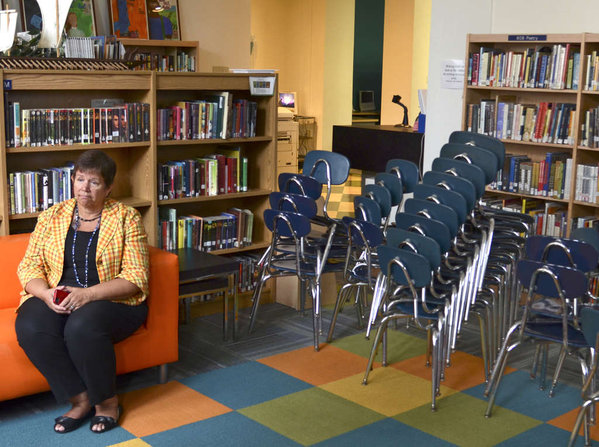
PHOTO: Tom Gralish.

PHOTO: Tom Gralish.

–

I’m primarily writing to pass on a link about school libraries. Maybe the article states the obvious. Essential stuff we already know, or certainly sense.  I realize that I’m preaching to the choir here. But what I’ve come to believe in life, and politics, is that it’s important to preach to the choir. That’s how we can all open the hymnal to the same page, how we all sing out together, loud and clear. Not a bunch of scattered voices, but a powerful choir.

choir-singing-300x166


Here’s the link to a terrific article by Carol Heinsdorf and Debra Kachel, “School Libraries Are Essential to Learning,” along with a copy of the first few paragraphs. Their immediate focus is on Philadelphia public schools, but this represents a national trend:

In 1991, there were 176 certified librarians in Philadelphia public schools. This year there are 11 and only five are known to be actually doing what they were trained to do. Five librarians for the nation’s eighth-largest school district.

Leaving Philadelphia’s public school libraries without professional staffing is a grave mistake. It will have consequences for the students for the rest of their lives. Study after study shows a clear link between school libraries staffed by certified librarians and student achievement.

In 2012, research showed that students who had school library programs and certified librarians were more likely to have advanced reading and writing scores on the Pennsylvania System of School Assessment (PSSA) tests. And they were less likely to have “below basic” scores.

The same study found that school library programs have their greatest impact on students who are economically disadvantaged, black, Hispanic, or have disabilities. African American students in schools with certified librarians are twice as likely to earn advanced writing scores as those in schools without librarians.

A Mansfield University paper that looked at studies done in 23 states verified that schools with a trained librarian – someone who teaches students and works with teachers to develop information and research skills – have a consistent positive effect on student achievement regardless of demographic and economic differences among students.

In my professional life, I’ve been fortunate to walk into hundred of schools around the country as a guest author.  Increasingly, I see libraries that are understaffed, and I meet librarians who are tasked to provide full-time services on part-time pay (and hours). On many days, these librarians are simply not in the building. In many schools, the library is increasingly marginalized and treated as non-essential — though, of course, no one on a school board ever admits to that out loud. “We may have cut the job in half,” they will tell anyone who’ll listen, “but it will not effect our children.”

Sorry, folks, but I’m calling bull***t.

This trend is true even in my own supposedly “quality” Bethlehem school district, in a relatively affluent suburb of Albany, NY. Former full-time librarians are now commuting between schools, splitting time and services. It’s a huge problem in New York, since the contract does not mandate a full-time librarian position (as opposed to, say, a P.E. instructor). A library should be the heartbeat of an elementary school. And in great schools, it clearly
serves that central, essential function. The librarian, or Media Specialist (if you prefer),
interacts with every child, in every grade, often across six years of learning. Consider that for a moment, the broad impact of that one person. A librarian works with and supports 640classroom teachers. And in response to this reality, the political leaders in our educational system can only think to fire those people, or force them to split schools, while they increasingly focus on standardized tests, purchasing more technology, saving pennies and wasting dollars.

It’s so maddening, and so wrong-minded, I could scream. And that’s why we preach to the choir. Because maybe if we all scream together, somebody will hear our cry.

Photo: Reading “The Little Engine That Could”

I found this photo tucked away in a file with a large group of promotional shots that were never used. Not sure what we were thinking here.

Of course, yes, The Little Engine That Could is that rarest of things: a perfect book. I should know, I read it to my kids more than a hundred times, I’m sure.

I just knew he’d make it over that mountain.

Watty Piper, forever!

IMG_8565

Brilliant: B.J. Novak Reads “The Book With No Pictures”

In this bunny eat bunny world, we’ve seen celebrity authors come and go. Mostly come, in droves, especially after Harry Potter put a spotlight on the profit potential of the children’s book biz. Ca-ching.

Everybody’s making millions!

For many of us non-celebrity authors and illustrators, dressed in our dreary clothes, clutching our cold coffee cups, it’s hard not to be a little, urm, disgusted at times. The crappy book by the “star” that gets a ridiculous amount of undeserved attention.

IMG_0369But that’s life, so we deal with it, and try to keep our petty thoughts to ourselves.

However, I hasten to add: not all celebrity books suck. Jamie Lee Curtis wrote some good ones, as I recall. Fred Gwynne — Herman Munster! — made a sincere  effort to create singular children’s books. By that I mean, my sense is that they actually worked on the books, actually respected the idea of a children’s book, and got into it for the “right reasons,” however we might differ in defining what those reasons are. It wasn’t just a way to cash in on something.

Anyway, this fresh, new effort by B.J. Novak is brilliant. Yes, absolutely, he came up with a clever idea. A great idea. But then he pulled it off over the course of an entire book. That’s not at all easy. And it’s beautifully published, too. Great job, all around.

Kids today, they sure do love the meta.

Enjoy this book with no pictures, folks. Go ahead, stomp on that link, surrender to the video. It makes me wish that I had a room full of kids to read this one too.

You need to a flashplayer enabled browser to view this YouTube video

Reading “Danny the Champion of the World”: And Wonderful It Was

I guess it’s true of most readers. We have these embarrassing gaps in our reading lives, all those books we didn’t get to, the awful holes we hope to one day fill. It’s an impossible task, a job (and a joy) that can never be completed.

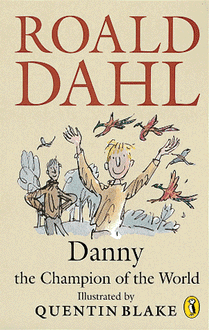
To that end, I’m currently reading Roald Dahl’s Danny the Champion of the World.

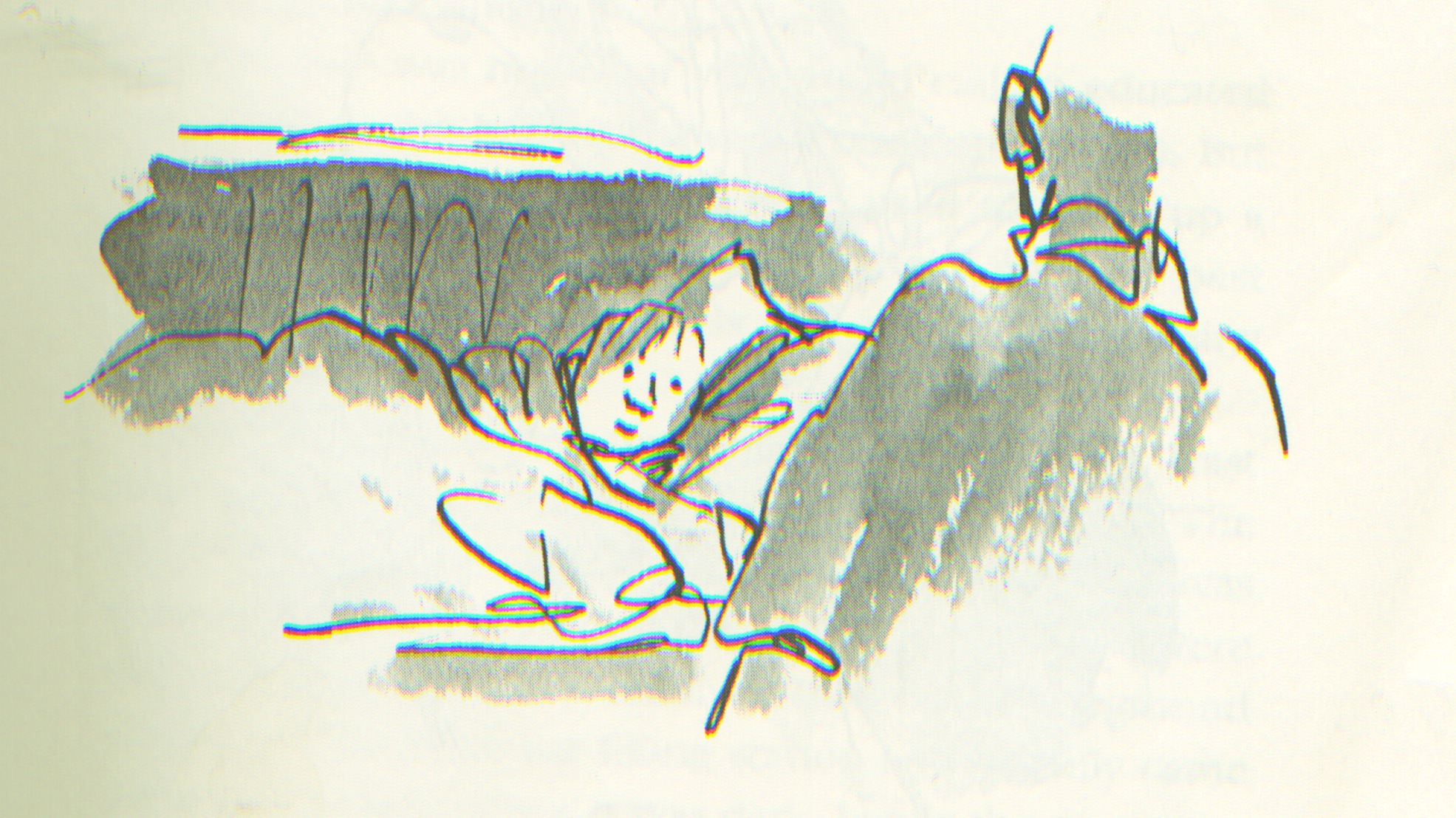
I haven’t finished it yet, and I’m disinclined to offer up a review. But I wanted to share a few thoughts, beginning with this incredible illustration by Quentin Blake.


Dahl


I keep returning to that page, staring at that picture. Just a few simple lines that capture such depth of feeling. There it all is, being a kid, looking up at a parent with love and wonder while snuggled up warm in bed. Two dots for eyes — two dots! — and yet they seem to express the essence of that relationship. The father registers only as a looming presence without detail, like a great tree in a forest. He is, simply, there. A force of nature and comfort. It’s amazing, I’m stunned by it, in awe of it. So that sums up an important part of today’s blog.

Wow: Quentin Blake.

Then there’s the storytelling of Mr. Dahl, which is a gift I’ll never have. The man tells stories. Whoppers. But here, today, I want to focus on Dahl’s writing style. I admire the clarity and directness. I’m also charmed by the Englishness — the strangeness to my American ears, the weird things they happily eat, the peculiar names of things — where every detail seems just a little other-worldly, even in a fairly straight-ahead, naturalistic novel such as this one. This is the distance of time and place. A different world, yet still familiar.

Here’s the paragraph that went before the illustration above. I keep reading it over and over again. Now I get to type it, feeling like a weekend musician at home with a guitar banging out a Beatles tune, channeling that great artistic beauty through my fingertips (I love typing out great passages from books):

I really loved living in that gypsy caravan. I loved it especially in the evenings when I was tucked up in my bunk and my father was telling stories. The kerosene lamp was turned low, and I could see lumps of wood glowing red-hot in the old stove, and wonderful it was to be lying there snug and warm in my bunk in that little room. Most wonderful of all was the feeling that when I went to sleep, my father would still be there, very close to me, sitting in his chair by the fire, or lying in the bunk above my own.

That paragraph, to me, is absolutely perfect. The writing is direct, specific, concrete (not abstract), interesting (lumps of wood) and for the most part, quite plain. I really loved living in that gypsy caravan. Few would claim that as an example of great writing — except for the obvious fact that, wow, that’s great writing. The absence of flash. An arrow doing its swift work, slicing to the next sentence.

danncover3The only tricky moment in this paragraph, where the language uplifts and surprises us, giving the reader temporary pause, occurs in that more elaborate third sentence, which was perfectly set-up by the direct predicate-verb structure of the previous two sentences. I really loved, and, I loved. Which leads to this: The kerosene lamp was turned low, and I could see lumps of wood glowing red-hot in the old stove, and wonderful it was to by lying there snug and warm in my bunk in that little room.

You heard that, right?

And wonderful it was.

Again, all I’ve got is wow. There’s so much there, the essence of being loved, of feeling secure, of being a child safe from harm, snug and warm. Can writing really do that? It feels like a small miracle. Is this why I love books?

And it all happens on page 7.

One Novel with a Perfect Ending

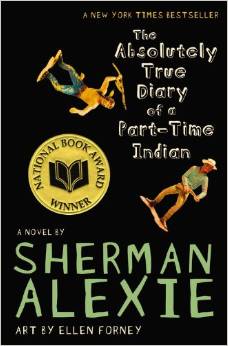
UnknownI finally got around to reading Sherman Alexie’s bestseller, The Absolutely True Diary of a Part-Time Indian. There’s just times in your life when you’ve got to rectify old wrongs, and this was one of them. I had to read that book.

I’d heard that it was a great book from many sources, including some trusted friends. (A curious phrase, by the way, “trusted friends.” As opposed to all those other friends we have, with crappy taste, the friends we can’t possibly trust.)

So I took Alexie’s book out of the library and read it. Now I am a member of the club and say without hesitation: Stop wasting your life and read it already! Today I’m not looking to review a book that’s already been reviewed hundreds of times. My focus is on the book’s final two paragraphs. To me, those six sentences felt exactly right, forming a poignant, understated conclusion.

I don’t think that reproducing it here involves any spoilers, or anything that could diminish your enjoyment of the book, so here goes:

Rowdy and I played one-on-one for hours. We played until dark. We played until the streetlights lit up the court. We played until the bats swooped down at our heads. We played until the moon was huge and golden and perfect in the dark sky.

We didn’t keep score.

I love the repetition of “we played,” repeated four times, the rhythmic, accumulative power of that device, the simplicity of the word choice, the interplay between light and dark, and that great, four-word conclusion. We didn’t keep score. Perfection.

Back four years ago, I wrote a decent post titled “Best Last Lines from Books,” and I think you might enjoy it. So click away, folks. It’s absolutely free.