Archive for Bystander

Fan Mail Wednesday #127 (Writing Advice)

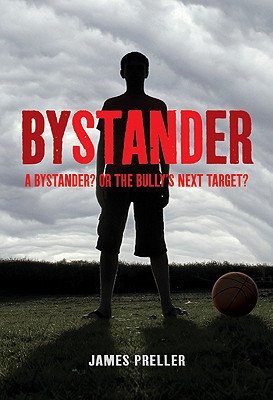
Certainly by this point, faithful readers of jamespreller.com have realized that for me, “Wednesday” is a mystical proposition rather than, say, an actual day. Fan Mail Wednesday happens when I get around to it, basically, and these days it’s been tough. I’m traveling like never before. On Tuesday I was in Hudson, NY, and yesterday in Deep River, CT. In both cases, everyone had read my book, Bystander. Teachers, administrators, students, everybody. Incredible. Even the janitor gave me hug (no, not really).

I gave my fancy new Power Point presentation and I think I’m getting the hang of this thing. Talking about Bystander — my writing process, yes, but also about the bullying themes in the book — really challenged me. In the end, I realized that I did not write an anti-bullying prevention program; I wrote a story. And that story, and literature in general, can be a powerful tool for standing in someone else’s shoes. For learning compassion, empathy.

Frankly, at this point, I sense that many of us are becoming a little sick to death of bullying as the pervasive “it” topic. As I darkly joked with an administrator yesterday, predicting the spat on new bully-themed books that are surely to come, “Bullies are  the new wizards.” But I do know that this subject matters. And matters deeply, urgently. Character matters. Building community matters. Caring, tolerance, relationships, peacefulness, civility — all these things are a vital part of school, and life. Bullying is just a subset of those overall goals. There is no learning until community exists.

Anyway, here’s an absolutely terrific letter from K . . .

Hi, it’s the girl that was going to email her piece of writing to you at Mt. Greylock Regional High School (AKA: K_____)

I’ve never actually written an email to an adult before, so I have no idea how or what to type. I wish I could’ve had more time to talk to you at the workshop — Bystander was AMAZING. I spent hours reading it and then had to hide it in my bed with a flashlight when I was supposed to be in bed. Please don’t tell my parents. (:

(Oh, and I have a question. I was dying to ask you but completely forgot to. When you were in the auditorium with us, you said you had some pictures in your books (I’m having a short-term memory loss at the moment, can’t remember which books they were…) that were done by somebody that also drew graphic novels, if I’m correct. Which graphic novels were they? I could’ve sworn I heard you say “Kanon” and “Clannad,” which are my two favorite books/shows ever. )

Your blog is also amazing. The picture of the little kid getting “eaten” by the shark costume made me smile. It made my day.

By the way, when I got home, I showed the paper that you signed to my little sister. She said that you actually showed up at her school, too. Lanesborough Elementary. And she was incredibly jealous about the autograph. She says hi, by the way. 🙂

And… I’ve decided to type out the writing piece that I wrote on here because I reaaally want your advice on how I can become better at writing. (I’m starting to think about being an author, it sounds fun. ♥)

—–

[K’s Writing Sample]

The adrenaline flowed through me, being the only thing that made me keep moving onwards. Whenever I slowed down, the fear crashed into my mind, interuppting all tired thoughts.

I was running from my once-best friend. Dakota, the girl I had once shared my feelings with and had fun with, was now hunting me down. Slowly, a little hand grasped my bigger one, our fingers entwining. Angel. I would never let you go.

Staring downwards, still running for my life, big blue eyes met my brown ones. They were curious, wondering what exactly what was happening, but overall, terrified. Her lower lip trembled.

“Why is she chasing us?” Was Angel’s question. I had no idea myself. Shaking my head, I turned away. Angel whimpered softly, and clutched my hand so tight my fingers went numb. “I’m scared.”

Smirking, trying to stay brave (although my insides were crashing apart), I turned back around. “Me too.”

“I miss Dakota,” Angel started wiping her face with her dirty sleeve. How long had we been running? Gritting my teeth to keep back tears, I sniffled.

“Me too.”

Then, like God despised the both of us, he performed his “magical powers,” and created a miracle. Rain. I finally let my tears go, collapsing to my knees as I called out Dakota’s name over and over again. Wide-eyed, Angel stared at my tear-stricken face. She gripped my shoulders, glancing around cautiously.

“What’s wrong?” Her horrified whisper made a lump appear in my throat. I swallowed.

“N-Nothing,” I stuttered, although the tears kept falling. Angel stroked my cheek, trying to stop the tears. How great, I thought despite myself, for a 6 year old to be comforting a 13 year old.

Angel sighed, and her eyes caught something glowing in the shadows.

“Celeste,” She whispered my name, terrified. I don’t like the tone of her voice…

“What?” I tried to stay somewhat calm-sounding, but not even her could miss the panic.

“Flashlight beam.”

Dakota.

I got up.

—–

So that would be it. ♥ If I ever do become a author, I’ll aim to make that a part of the first book that I publish. ♥ What do you think of it? 🙂

Sincerely, K_____

I replied:

Dear K_____,

Thank you for your fantastic email and writing sample. I loved visiting Mount Greylock. I don’t normally get the opportunity to teach writing workshops, since schools usually want me to see as many students as possible, and workshops are of necessity small and intimate. I feel inexperienced, like I really have no idea what I’m doing. Yes, I’ve been writing professionally for 25 years — I must know something! — but teaching is a different skill. And teaching writing, well, I’m not at all sure how to go about that.

Personally, I never really took writing classes. I did one workshop in college and didn’t like it. I tried another one some time later, for poetry, and it was okay. So my experience is that I’ve learned by reading — deeply, widely, attentively — and by doing. That is, by writing. Getting published, I’ve also had the opportunity to work with editors who’ve been very smart, so I’ve learned from them, too.

I have no memory of writing in school, though I suppose it must have happened. I did keep journals, though, in my teenage years and beyond. Note the distinction, “journal” not “diary.” I was never one for documenting the day. “Dear Diary, today I went to Auntie Em’s for lunch. We had grilled cheese sandwiches.” And so on. I used my journal to write thoughts, ideas, observations, poems, short stories. It was a place to go with my thoughts, and every writer needs a blank page.

The artist I mentioned was Greg Ruth, who illustrated A Pirate’s Guide to First Grade. You can learn more about Greg by clicking here.

Illustration by the insanely talented, Greg Ruth.

Your writing sample was very dramatic, very exciting — and left me, the reader, with so many questions. In short: I want to know more! I love how you drop us right into this thrilling moment, running for their lives (I think), frightened, desperate. And also, the relationship between the sisters, the hands clutching. This is exciting stuff. Even the name, Angel, is arresting. So, really, I think you’ve GOT TO KEEP GOING with this story.

What’s the deal with Dakota?

You can do that in at least three ways, it seems to me: 1) By seeing your sample as somewhere in the middle of your story, and going back to write what led up to this moment; 2) Through flashback, perhaps entering the thoughts, memories, of the main character; 3) By having Dakota herself appear, and all of this come out through dialogue. My point? You’ve grabbed us, gotten our attention, now you’ve got to answer our questions.

You wrote your piece in our workshop, probably not knowing the answers yourself. Don’t worry; that’s writing. Sometimes we write to figure it out, to discover, to learn. Think of it as a journey — and follow, follow, follow.

I don’t think that it’s productive to worry too much, at this stage in the journey, about getting things perfect. But as a reader, I did feel some confusion about Dakota. They were running from her . . . but missing her? They were running from her . . . but suddenly stopping to cry out her name? Has she transformed in some way? Is the real Dakota gone? What’s happening? You don’t need to answer every question in this one scene, but you do need each character’s actions to make sense and be consistent. Every moment has to ring true.

Thanks for your letter. And say hello to your sister. Good luck with the writing. And please, above all, HAVE FUN with it. Enjoy yourself. I like how in real life you have a younger sister. I think you could go deeper into that fictional relationship in your story. Sisters. It’s something you know in your heart.

My best,

JP

Bystander — the Play!

“Tell me and I will forget.

Show me and I will remember.

Involve me and I will understand.”

— Chinese Proverb

And on that note, look at this amazing, full-page newspaper ad . . .

Pretty cool, don’t you think?

The group that’s putting on the play, Concrete Temple Theatre, has even started their own website about it, called “The Bystander Project.”

Check it out by clicking insanely . . . here. The idea, from what I can gather, is for this adaptation to travel to other schools, other districts, where students will put on their own versions of the play. Which I think is absolutely brilliant, in terms of using drama to explore these issues in a safe but powerful way. What better way to learn empathy than to stand in the shoes of another character?

Don’t forget to SAVE THAT DATE: November 4, 2011. Maybe I’ll see you there.

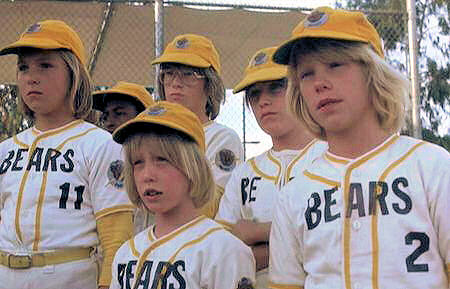
Appreciation: The Ending of “The Bad News Bears.”

To be clear up front, we are talking the 1976 original with Tatum O’Neil, Walter Matthau, etc.

By the way, a shout out to the names of these characters: Amanda Whurlitzer, Coach Morris Buttermaker, Ogilvie, Engelberg, Jimmy Feldman, Rudi Stein, Tanner Boyle, Ahmad Abdul Rahim, Kelly Leak and Timmy Lupus. The names seem perfect to me now, especially when heard through the muttering lips of Coach Buttermaker, “Listen, Lupus, you didn’t come into this life just to sit around on a dugout bench, did ya? Now get your ass out there and do the best you can.”

I’ve watched it several times, most recently about seven years ago. Great movie, though the language might startle you with its profanity and ethnic slurs. Pretty harsh by today’s politically-correct standards. The through-line of the movie moves inexorably toward the big, championship game. We’ve seen the Bears come together, struggle and lose, then learn to win, and now the stage is set for the film’s dramatic conclusion: The Big Game. We’ve seen this setup countless times before.

The first time I watched the movie, the game’s ending surprised me. It came down to a close play at home plate, the scrappy Bears about to tie it with two outs in the last inning . . . the baserunner slides, the catcher applies the tag, the dust rises . . . “Out!” the umpire calls.

Game over. The Bears lose.

What? Really?

For years I’ve marveled at (and appreciated) that decision by screenwriter Bill Lancaster and director Michael Ritchie. They didn’t allow the Bears to win the big game. Nope, they lost it. Because, when you think about it, winning was never actually the point to this story, not in a satire about Little League competition. But still, the Bears lost; it was shocking. Partly because you almost never see that in books and movies, for all sorts of reasons.

I might be more sensitized to endings than ever before, since I’ve been frequently queried about the ending to Bystander. I recently came across some of my early notes on the book that made it clear how I fully understood that my original ending lacked drama, it just didn’t hit it out of the park. I sensed that some readers might want more, particularly when considering their heightened feelings about fairness, justice. So I cooked up an alternative, a more satisfying ending, more complicated and conflict-oriented, and arrived at something pretty cool where the bad guy got it in the end. Not too shabby, way better from a purely dramatic point of view, but it didn’t satisfy me — because it didn’t ring true. Not to life as I knew it. So I reinstated my original ending, the one where life goes on without trumpets or tidy bows, unicorns or rainbows. The kid gets through it, basically. Survives. It gets better.

I don’t know what made me think of The Bad News Bears last night, but I remembered what happened in the scene immediately after the game. It was trophy time, that dreaded, heartless cheer, “Two, four, six, eight! Who do we appreciate?” The hated Yankees received a ludicrously-oversized trophy. And as consolation prize, the Bears were handed a dinky second-place trophy — and also, it should be recognized, offered grudging respect by the (still condescending) opposition.

It’s at this point, the movie’s true ending, when Tanner Boyle barks these immortal words:

“Hey, Yankees. You can take your apology,

and this trophy, and shove it straight up your ass!”

That was the film’s true ending, of course. It was never about the game. It was about winning respect, and self-respect. About being a team. In the end, Lancaster and Ritchie gave the Bears the much greater victory. There they were, hopping around like idiots, spritzing non-alcoholic beer on each other, happy and . . . triumphant. They lost the game, sure, so what, but ended the film on the perfect note. Pretty terrific, if you ask me.

See for yourself . . .

You need to a flashplayer enabled browser to view this YouTube video

“One Book, One School” — One Amazed & Grateful Author

Found this via Google Alerts today . . .

Every student at Passage Middle School is reading “Bystanders,” a novel about bullying by James Preller, during the school’s “One Book, One School” initiative. The school spent about $5,360 to purchase 1,100 copies of the book, said librarian Patrice Lambusta.

The school’s 980 students began reading it Sept. 19 and will continue through late October. Lambusta, who kick-started the initiative, said teachers and students spend 20 minutes each morning reading one day and participating in anti-bullying activities the next.

Activities include learning about cyber-bullying, taking quizzes about bullying, and discussions on being a bystander when a peer is bullied.

The Newport News program is a play on the national “One School, One Book” program that is reserved mostly for elementary schools, Lambusta said.

I am honored, and grateful. Thank you for believing in my book, Patrice Lambusta. Now if we can get every school in America to do this, I’ll give up this lonely career to pursue my lifelong dream of becoming a catwalk model.

Um, there’s lots on this blog about the book, just click on “Bystander” on the handy-dandy right sidebar under “CATEGORIES.” Or click here for a free sample of chapters 1 & 2.

Now if I can only learn how to walk a straight line . . .

You need to a flashplayer enabled browser to view this YouTube video

Fan Mail Wednesday #125 (further thoughts on bullying)

As part of a late summer assignment, I received a terrific letter from Zander in Brooklyn, including his answer to the question, “What will happen to the characters in Bystander after the story?”

Here’s an excerpt from that letter . . .

Thanks so much for answering my questions. I really loved your book! I did a little writing about what I thought might happen to some of the characters in the future. I was wondering if you have ever thought about this? Do you think Griffin will continue to be a bully? What about the other characters? I also have to ask the obvious question — were you a bully or where you bullied in school? If not, why did you want to write this book? I’m really looking forward to your answers.

Zander

What I think will happen to the characters after the story:

I think Griffin will still be the bully, but he will be a lone bully with no clique by his side. About twenty pages before the book ended, Griffin’s gang separated from him; they were fed up with Griffin and his ways and felt bad for the people they hurt and picked on. Griffin may form a new clique, but I think the same thing will happen that happened to the original click, they will get fed up with Griffin’s ways. Eventually, Griffin will probably find out that this whole bully thing isn’t working out for him and turn over a new leaf, but I’m not so sure about that either; it’s not exactly Griffin’s way. The other problem is the relationship between Griffin and Griffin’s father. If the way Griffin’s father acts changes, Griffin will change with him. You see, Griffin mimics his father’s actions, and if those actions change, I have a good feeling that a new Griffin will be born. If they would go into therapy, this could be achieved. But since that didn’t happen in the story, it’s unlikely that it will happen now. Thus having Griffin stay the same.

I also think that Mary and Eric will still hang out a lot, they might be considered boyfriend and girlfriend, but I’m not sure. I also think that Griffin’s original clique will turn into Eric’s clique, or Griffin’s original clique will accept Eric as a member; either way, Mary will no longer be Eric’s only friend. Before I finished the story, I thought to myself that it would not be a “…and they all lived happily ever after” ending, and I was right. If the story continued on, I still think this would be true, but it would be a cheerier ending than it is now.

Part of my reply . . .

Hey Zander,

Thanks for reading my book. I like the angle you took on it, thinking about what might happen to the characters after the story is finished and the final pages read.

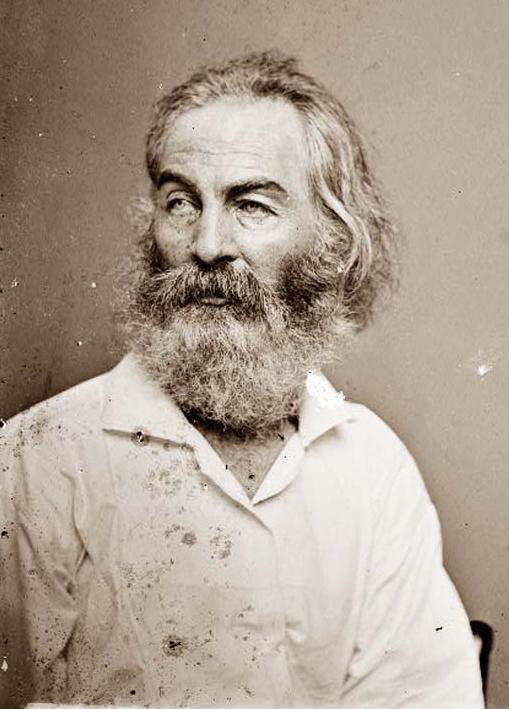
No, I was not a “bully” in school. But to be honest, that’s a big label and not something I like to stick on anybody. It’s not often accurate to tag people with easy labels. I believe there are bully behaviors, there are times when some of us might act in unkind ways, but that’s rarely ever the sum of the whole person. A so-called bully might also be a loyal friend, a good teammate, a loving pet owner, an adventurer, a son, a comic, a student, an athlete, and, yes, even victim. Research shows there’s often a duality. Someone engaged in bullying might be a victim of it in another part of his life (Griffin), while a target of bullying will frequently turn around to bully someone else (David). It’s a common dynamic. The bully part is just one aspect of character, something he sometimes does, not the whole person. And in that way, I think we all have a bit of a bully, and victim, inside us. Walt Whitman wrote, “I am large; I contain multitudes.”

I’m not saying that bullying isn’t real. That there isn’t genuine hurt and, sometimes, devastating loss. We’ve all heard those tragic stories and I don’t diminish that pain for a second. But I think with that label we tend to turn every “bully” into a monster, and I suspect it’s subtler than that. Often the bully — or more accurately, the person engaged in bully behavior — is misguided, unknowing, doesn’t empathize fully, doesn’t really understand the effects of his behavior. I’m not ready to throw all bullies into the dungeon and throw away the key. I think most of us are good, decent people capable of making mistakes, poor decisions.

My primary reason for writing Bystander is that I wanted to tell a good story. I write realistic fiction, and I try very hard to be true to that word, “realistic.” I want my characters and situations to feel authentic, relatable. I want readers to identify with the story, to maybe see themselves, or someone they might know. Robert McKee, in his book Story, makes a strong case for the importance of “story” in our lives. We are surrounded by stories, and seem to hunger for them: movies, television, talk on park benches, at dinner tables, around fires, on stages and in books. McKee calls stories our “equipment for living,” and makes the bold claim: “A culture cannot evolve without honest, powerful storytelling.”

Wow. What do you think of that, Zander? Story is the fiction writer’s craft, a finer tool than a how-to book, or a nonfiction guide to a problem. Story doesn’t provide answers so much as it, hopefully, clarifies some of the questions. Not facts, but truths. And always the most important question is this: How to walk this earth? What kind of person are you going to be?

Well-told stories, as Harper Lee so beautifully demonstrated in To Kill A Mockingbird, allow us to walk in someone else’s shoes. If you haven’t seen the movie, I urge you to check it out. There’s a beautiful scene at the end of the book (and movie), when Scout walks Boo Radley home, climbs up the steps to his porch, and for a moment turns and looks at the world from his perspective.

That’s story.

It’s also called empathy, understanding, compassion. McKee’s “equipment for living.”

I first landed on the theme of bullying through conversations with my editor. I did research, read books, talked to experts, visited middle schools, and I gradually began to formulate the character of Griffin Connelly. The story grew out of that, until I became convinced that the focus had to be on the bystander, the silent observer.

From the beginning, I felt that Griffin was a boy on the wrong path. Obviously there are issues at home with his father. The mother is gone somewhere, his sisters have moved away, too. We know that Griffin has been stealing, and we know that the police suspect his involvement. Unless there’s some kind of dramatic change, I don’t see things ending well for Griffin Connelly.

I thought your analysis of the characters was insightful. I agreed with all of it. No, I did not write a happily-ever-after ending. But I’ve never been a guy who needs those kinds of endings in movies or books. I bristle when everything is all tied up in a tidy bow at the end.

To me, that’s not life. That’s not realistic. Real life is messier than that, and not so simple, and I wanted my book to reflect that.

Thank you for your thoughtful response to my book.

JP