Archive for Bullying

“One Book, One School” — One Amazed & Grateful Author

Found this via Google Alerts today . . .

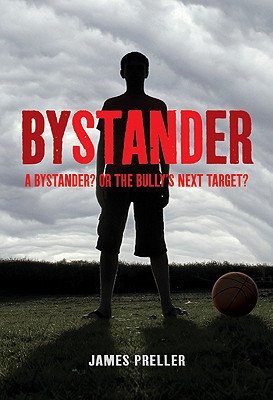
Every student at Passage Middle School is reading “Bystanders,” a novel about bullying by James Preller, during the school’s “One Book, One School” initiative. The school spent about $5,360 to purchase 1,100 copies of the book, said librarian Patrice Lambusta.

The school’s 980 students began reading it Sept. 19 and will continue through late October. Lambusta, who kick-started the initiative, said teachers and students spend 20 minutes each morning reading one day and participating in anti-bullying activities the next.

Activities include learning about cyber-bullying, taking quizzes about bullying, and discussions on being a bystander when a peer is bullied.

The Newport News program is a play on the national “One School, One Book” program that is reserved mostly for elementary schools, Lambusta said.

I am honored, and grateful. Thank you for believing in my book, Patrice Lambusta. Now if we can get every school in America to do this, I’ll give up this lonely career to pursue my lifelong dream of becoming a catwalk model.

Um, there’s lots on this blog about the book, just click on “Bystander” on the handy-dandy right sidebar under “CATEGORIES.” Or click here for a free sample of chapters 1 & 2.

Now if I can only learn how to walk a straight line . . .

You need to a flashplayer enabled browser to view this YouTube video

Bullying: When It’s Emotionally Too Painful to See Oneself as Powerless or Abusive

Just passing along a link to an excellent op-ed piece in the 9/22 edition of The New York Times, written by Danah Boyd and Alice Marwick, titled “Bullying as Real Drama.”

By all means go to the link and read the whole thing. Here’s a hunk of it, including what I think is the key insight: that it is very difficult, even painful, for children to identify themselves as either bully or victim, abusive or powerless.

Many teenagers who are bullied can’t emotionally afford to identify as victims, and young people who bully others rarely see themselves as perpetrators. For a teenager to recognize herself or himself in the adult language of bullying carries social and psychological costs. It requires acknowledging oneself as either powerless or abusive.

In our research over a number of years, we have interviewed and observed teenagers across the United States. Given the public interest in cyberbullying, we asked young people about it, only to be continually rebuffed. Teenagers repeatedly told us that bullying was something that happened only in elementary or middle school. “There’s no bullying at this school” was a regular refrain.

This didn’t mesh with our observations, so we struggled to understand the disconnect. While teenagers denounced bullying, they — especially girls — would describe a host of interpersonal conflicts playing out in their lives as “drama.”

At first, we thought drama was simply an umbrella term, referring to varying forms of bullying, joking around, minor skirmishes between friends, breakups and makeups, and gossip. We thought teenagers viewed bullying as a form of drama. But we realized the two are quite distinct. Drama was not a show for us, but rather a protective mechanism for them.

Teenagers say drama when they want to diminish the importance of something. Repeatedly, teenagers would refer to something as “just stupid drama,” “something girls do,” or “so high school.” We learned that drama can be fun and entertaining; it can be serious or totally ridiculous; it can be a way to get attention or feel validated. But mostly we learned that young people use the term drama because it is empowering.

Fan Mail Wednesday #125 (further thoughts on bullying)

As part of a late summer assignment, I received a terrific letter from Zander in Brooklyn, including his answer to the question, “What will happen to the characters in Bystander after the story?”

Here’s an excerpt from that letter . . .

Thanks so much for answering my questions. I really loved your book! I did a little writing about what I thought might happen to some of the characters in the future. I was wondering if you have ever thought about this? Do you think Griffin will continue to be a bully? What about the other characters? I also have to ask the obvious question — were you a bully or where you bullied in school? If not, why did you want to write this book? I’m really looking forward to your answers.

Zander

What I think will happen to the characters after the story:

I think Griffin will still be the bully, but he will be a lone bully with no clique by his side. About twenty pages before the book ended, Griffin’s gang separated from him; they were fed up with Griffin and his ways and felt bad for the people they hurt and picked on. Griffin may form a new clique, but I think the same thing will happen that happened to the original click, they will get fed up with Griffin’s ways. Eventually, Griffin will probably find out that this whole bully thing isn’t working out for him and turn over a new leaf, but I’m not so sure about that either; it’s not exactly Griffin’s way. The other problem is the relationship between Griffin and Griffin’s father. If the way Griffin’s father acts changes, Griffin will change with him. You see, Griffin mimics his father’s actions, and if those actions change, I have a good feeling that a new Griffin will be born. If they would go into therapy, this could be achieved. But since that didn’t happen in the story, it’s unlikely that it will happen now. Thus having Griffin stay the same.

I also think that Mary and Eric will still hang out a lot, they might be considered boyfriend and girlfriend, but I’m not sure. I also think that Griffin’s original clique will turn into Eric’s clique, or Griffin’s original clique will accept Eric as a member; either way, Mary will no longer be Eric’s only friend. Before I finished the story, I thought to myself that it would not be a “…and they all lived happily ever after” ending, and I was right. If the story continued on, I still think this would be true, but it would be a cheerier ending than it is now.
Part of my reply . . .

Hey Zander,

Thanks for reading my book. I like the angle you took on it, thinking about what might happen to the characters after the story is finished and the final pages read.

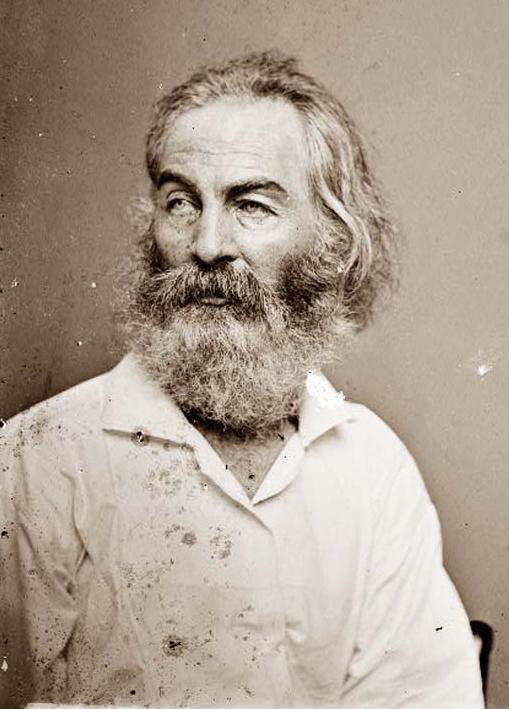
No, I was not a “bully” in school. But to be honest, that’s a big label and not something I like to stick on anybody. It’s not often accurate to tag people with easy labels. I believe there are bully behaviors, there are times when some of us might act in unkind ways, but that’s rarely ever the sum of the whole person. A so-called bully might also be a loyal friend, a good teammate, a loving pet owner, an adventurer, a son, a comic, a student, an athlete, and, yes, even victim. Research shows there’s often a duality. Someone engaged in bullying might be a victim of it in another part of his life (Griffin), while a target of bullying will frequently turn around to bully someone else (David). It’s a common dynamic. The bully part is just one aspect of character, something he sometimes does, not the whole person. And in that way, I think we all have a bit of a bully, and victim, inside us. Walt Whitman wrote, “I am large; I contain multitudes.”

I’m not saying that bullying isn’t real. That there isn’t genuine hurt and, sometimes, devastating loss. We’ve all heard those tragic stories and I don’t diminish that pain for a second. But I think with that label we tend to turn every “bully” into a monster, and I suspect it’s subtler than that. Often the bully — or more accurately, the person engaged in bully behavior — is misguided, unknowing, doesn’t empathize fully, doesn’t really understand the effects of his behavior. I’m not ready to throw all bullies into the dungeon and throw away the key. I think most of us are good, decent people capable of making mistakes, poor decisions.

My primary reason for writing Bystander is that I wanted to tell a good story. I write realistic fiction, and I try very hard to be true to that word, “realistic.” I want my characters and situations to feel authentic, relatable. I want readers to identify with the story, to maybe see themselves, or someone they might know. Robert McKee, in his book Story, makes a strong case for the importance of “story” in our lives. We are surrounded by stories, and seem to hunger for them: movies, television, talk on park benches, at dinner tables, around fires, on stages and in books. McKee calls stories our “equipment for living,” and makes the bold claim: “A culture cannot evolve without honest, powerful storytelling.”

Wow. What do you think of that, Zander? Story is the fiction writer’s craft, a finer tool than a how-to book, or a nonfiction guide to a problem. Story doesn’t provide answers so much as it, hopefully, clarifies some of the questions. Not facts, but truths. And always the most important question is this: How to walk this earth? What kind of person are you going to be?

Well-told stories, as Harper Lee so beautifully demonstrated in To Kill A Mockingbird, allow us to walk in someone else’s shoes. If you haven’t seen the movie, I urge you to check it out. There’s a beautiful scene at the end of the book (and movie), when Scout walks Boo Radley home, climbs up the steps to his porch, and for a moment turns and looks at the world from his perspective.

That’s story.

It’s also called empathy, understanding, compassion. McKee’s “equipment for living.”

I first landed on the theme of bullying through conversations with my editor. I did research, read books, talked to experts, visited middle schools, and I gradually began to formulate the character of Griffin Connelly. The story grew out of that, until I became convinced that the focus had to be on the bystander, the silent observer.

From the beginning, I felt that Griffin was a boy on the wrong path. Obviously there are issues at home with his father. The mother is gone somewhere, his sisters have moved away, too. We know that Griffin has been stealing, and we know that the police suspect his involvement. Unless there’s some kind of dramatic change, I don’t see things ending well for Griffin Connelly.

I thought your analysis of the characters was insightful. I agreed with all of it. No, I did not write a happily-ever-after ending. But I’ve never been a guy who needs those kinds of endings in movies or books. I bristle when everything is all tied up in a tidy bow at the end.

To me, that’s not life. That’s not realistic. Real life is messier than that, and not so simple, and I wanted my book to reflect that.

Thank you for your thoughtful response to my book.

JP

Fan Mail Wednesday #122 (Bystander Sequel)

Bryan writes:

Can you please make a second book for "Bystander"? I loved the book and wanted
to see more about eric and mary, griffin etc. It would probably sell. Thanks for
considering. 
I replied:
Bryan,
–
Thanks for your note. It’s funny, I get asked that question a lot. I recently learned that in 2011, there were more movie sequels than at any point in history. It’s just expected that if you liked a movie, they’d soon churn out another with the number “2” after it. It’s natural for young people today to expect a sequel.
–
It was different for my generation when sequels were the rare exception (I’m fifty, btw, but I feel forty-seven). The idealist in me tends to view sequels as these very cynical, marketing-based decisions. A crass bunch of fat cats sit around a big table, crunch the numbers, and proclaim, “Hey, we made a ton of money on this first movie. Let’s make another!” Same thing with books.
–
It simply doesn’t strike me as a pure artistic effort. Most of the time, anyway.
–
When I wrote Bystander, I buried myself in research about bullying. I came away convinced that I could write 100 different books on the topic, all from different perspectives. The ground was so fertile, there was so much to explore. But at the same time, I felt satisfied with my work. Bystander didn’t feel unfinished, and I didn’t have anything else that I was aching to say about these particular characters.
–
Moreover, today I also feel strongly that — wait — did you say, “It would probably sell“?
–
Ca-Ching!
–
Let me call my agent.
–
JP
–
P.S. Seriously, though I never intended to write a sequel, I take your request to heart. When I think about it, there are two characters I could imagine exploring in more detail. Mary, since she was only a minor character in the book, and her experiences with cyberbullying seem particularly relevant today; and Griffin, because even I am curious about what happens to him. It might be fun to write a book that centers on the bully. The bad guy who might have some unexpected depths of his own. Hmmm.

Author Skype Visits: Three Perspectives

Last week I posted about doing a couple of Skype visits, complete with follow-up comments from a teacher-librarian. Because Skyping is a relatively new (and powerful, and affordable) educational tool, I thought I’d recap my experiences in more detail. To that end, I decided to share a couple of different comments that came out of one post-visit debriefing. As background, Skyping is new to me as an author; this year I’ve been dipping my toe into the water, testing the temperature.

For the visit under discussion, I met with a combined classroom of two 6th-grade classes from the region of my parents’ old stomping grounds, Queens, NY. The students had all read my book, Bystander, and came prepared to ask questions — essential ingredients for a successful visit.

After the event, I received a note from the teacher, Adam, who was most instrumental in making the visit happen. He wrote:

James,

Today was fantastic — hands down one of my career highlights. I am proud of the work that the students have done on this topic and I am so impressed with how today’s Skype conference went. You certainly were able to capture and hold the attention of everyone who was in the Media Center today. Their insightful questions about specific characters along with your humor and honesty made the experience something that I will look back on for a long time to come as a moment in their lives that actually came alive. It was a perfect moment in the school day that makes it all worth everything that we do.

In a separate exchange, I heard from another event organizer, a parent. Liza wrote:

Great presentation today. I was sitting off to the side and could tell the kids really loved it. So much energy in the room! Great topic and technology.

I replied with a confession:

Skyping is a little weird, there’s a strange disconnect to it, so I find it hard to read the audience (whereas I think, live, that’s one of my strengths — I can tell when they are bored, when it’s time to stir them up or settle them down).

Liza responded with this observation:

Regarding Skype, the funny thing is that although you were experiencing “a disconnect,” the opposite was happening in the classroom. With your enlarged face on the whiteboard, it created the illusion that you were speaking/connecting with the audience and the energy level was palpable. I might even go so far as to say that the “gee-whiz factor” related to use of this technology make the experience more exciting to the kids than if you’d actually been in the room. From the audience’s standpoint, Skype/whiteboard is a wonderful and surprisingly intimate experience.

The origin of Skype, from The Wizard of Oz. Who knew?

Conclusion: Well, I think Liza said it, and I can only trust her opinion — a Skype visit can be an exciting, oddly intimate experience. As an author, and a 50-year-old guy dealing with (scary) new technology, it takes some getting used to. I appreciate the magic of it, the pure thrill of seeing those faces — from Kentucky or Queens, California or Maine — and answering their questions directly. Admittedly, I still feel a little removed, still feel like I’m alone in my office, voice echoing, the cats looking at me weird, but amazingly that doesn’t seem to be what happens on the other end.

I think it works well for an interactive, book-specific, Q & A session not more than 30 minutes in length. I know that it doesn’t replace the impact of a live author visit. That’s as far as I’ll go right now. Feel free to contact me if you are interested in exploring this new technology together. My fee for next year will be what appears as the industry standard, $150.