Archive for October 10, 2012

Fan Mail #160: The Wrong Guy

Here’s something a little different . . .

I replied:

Dear Trenton,

I am always happy to hear from a young reader who loves books. Any books. It was kind of you to write. However, I think there may be some kind of mix-up. Though I am James Preller — all day, everyday! — I did not write the book, Homework Hassles, which is part of the “Ready Freddy” series by Abby Klein.

I wonder if you meant to write to Ms. Klein? And maybe you think that her books are “the coolest books ever made.”

If so, I bet she’d love to hear that.

By the way, if you are looking for some candidates for the second-coolest books ever made, you might enjoy checking out my “Jigsaw Jones” mystery series.

My best, and keep on reading!

James Preller

My Three Amigos

The diagonal one is Nick, home from college for Columbus Day weekend. Maggie in the middle, age 11, next to Gavin, age 13. I’m to the left, holding up my end of the bargain.

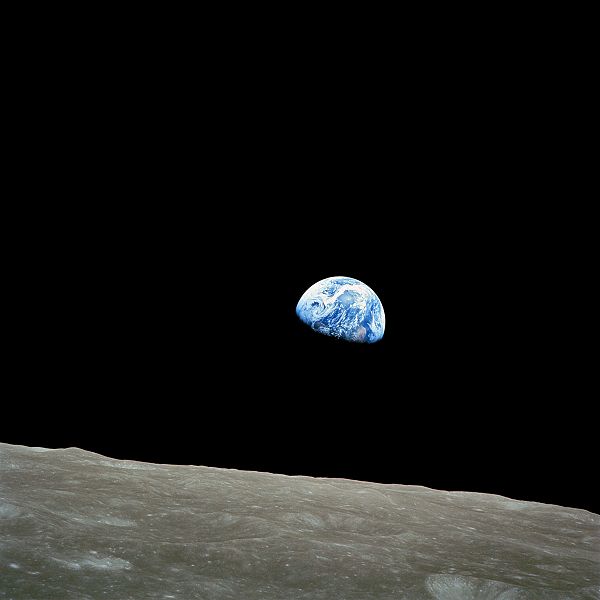
Earthrise: “Oh my God. Here’s the earth coming up.”

This photograph, known as “Earthrise,” was taken by astronaut William Anders during the Apollo 8 mission while in orbit around the moon.

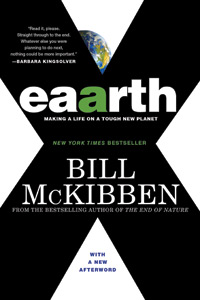
I’ve been reading Bill McKibben’s book, Eaarth — that’s not a typo, by the way — and he has a nice passage about the taking of that photograph, and it’s “heart-catching” perspective on our fragile planet.

I’ll type it out for you:

In December 1968 we got the first real view of that stable, secure place. Apollo 8 was orbiting the moon, the astronauts busy photographing possible landing zones for the missions that would follow. On the fourth orbit, Commander Frank Borman decided to roll the craft away from the moon and tilt its windows toward the horizon — he needed a navigational fix. What he got, instead, was a sudden view of the earth, rising. “Oh my God,” he said. “Here’s the earth coming up.” Crew member Bill Anders grabbed a camera and took the photograph that become the iconic image perhaps of all time. “Earthrise,” as it was eventually known, that picture of a blue-and-white marble floating amid the vast backdrop of space, set against the barren edge of the lifeless moon. Borman said later that it was “the most beautiful, heart-catching sight of my life, one that sent a torrent of nostalgia, of sheer homesickness, surging through me. It was the only thing in space that had any color to it. Everything else was simple black or white. But not the earth.” The third member of the crew, Jim Lovell, put it more simply: the earth, he said, suddenly appeared as “a grand oasis.”

But we no longer live on that planet. In the four decades since, that earth has changed in profound ways, ways that have already taken us out of the sweet spot where humans so long thrived. We’re every day less the oasis and more the desert. The world hasn’t ended, but the world as we know it has — even if we don’t quite know it yet.

Here’s a link to a fascinating review by Dave Gardner of McKibben’s book.

If you’ve got an hour to give, you might be inspired by watching this Bill McKibben lecture (he begins 14 minutes into the clip, after introductions).

But if you’ll only give seven minutes, here’s a good introduction to Mr. McKibben:

You need to a flashplayer enabled browser to view this YouTube video

One Thing I Did for Banned Books Week

Back in September, the Macmillan Children’s Publishing Group invited me to participate in “something special” that they had cooked up for Banned Books Week (September 30 – October 6).

Essentially, I was one of several authors invited to place three copies of MCPG’s most challenged books in public places during Banned Books Week.

I said, “Count me in.” And added, “Thanks for asking.”

A couple of weeks later, a letter from Marketing Director Elizabeth Fithian came along with three beautiful books: Speak by Laurie Halse Anderson, A Wrinkle In Time by Madeleine L’Engle, and The Book of Three by Lloyd Alexander.

Elizabeth wrote:

“Enclosed are the books we ask you to place in public areas. Please add a personal note in each book and if you are willing to do so, add your signature.”

I was concerned that the books might just sit there, or be disposed of, unless they were properly identified, so I adhered labels with that key word, FREE.

Here’s a closer look:

I enjoyed lurking about, leaving those terrific books in public places. Yes, that includes a bathroom. It was sneaky and mildly subversive and mostly fun.

Elizabeth also directed me to this two-minute video you might enjoy, put together by the Association of American Publishers:

You need to a flashplayer enabled browser to view this YouTube video

Writing Process: Using Index Cards, Developing Character, Creating an Outline

On school visits, I’m frequently asked about my writing process. I’m always a little stumped by this, since I’m not usually aware of having one, exactly. Certainly not a consistent one, from book to book, year to year, decade to decade. It changes.

Lately I’ve concluded there are times when I don’t want to write. I’ll start writing and grow bored before I get to the end of the sentence. My mind drifts, I’m not fully present. Which is a problem, since good writing is about focus and concentration. You have to be there.

My latest thinking is to accept this phase of my writing process — the non-writing part — and wait it out as productively I can. I’ve also come to understand that the Pre-Writing phase is deeper, more complicated and mysterious, that I originally imagined. It’s not just Brainstorming, it’s Serious Daydreaming. There’s more focus to it. If Brainstorming is wide, then this phase is narrower, more concentrated.

So my Writing Process, like Story itself, is something I make up as I go along. Only upon reflection can I really go, “Oh, that’s how I got here!”

Which brings me to my recent reliance on index cards. I don’t want to write, but I do need to remember and organize the story points in my head. So I scribble on cards. I can shuffle them later, and they will form a structure, or storyboard, for my story. It’s my way of creating an outline.

Here’s one example:

I had an idea for several students who are trapped in a school while scary things lurked outside. I needed to figure out these characters, who they were, why they were there, and whatnot. On this card, I hit upon a Telling Detail. One girl was the type who, as I wrote, “reminds the teacher when she forgets to give the homework assignment.”

It was like a door opening to character. I understood something essential about this girl immediately. And once you have character, then story ideas open up.

If character is the tree trunk; then story

is the many branches that grow from it.

–

Here’s a different kind of index card, for the same book:

I wrote: “SCENE: The Face in the Window.”

Because, again, I didn’t feel up for writing it. And that’s the exact word to describe it, “up.” I need a degree of ooomph, zip, energy, drive in order to write well. I need to feel like it, I guess. Or maybe: I need to be ready. Yet when I jotted those words down on the card, I had a concept for a full scene in my mind. It was going to be the first time the kids got a good look at the horror outside of the school. Soon they would see the face in the window.

Here’s a snippet from an unedited draft that grew out of that index card. It’s actually the part the comes right before the face appears in the window:

The wind was still. Not a leaf stirred. High above a full moon appeared like a cloudy eye that stared, unblinking, through the gathering mist.

“There, see ‘em?” Carter put a hand on Esme’s back and pointed.

Dark shapes moved through the grounds. Men and women, drifting aimlessly on shuffling feet, like lost sleepwalkers.

A murder of crows flapped and bickered near the figures, landing on heads and shoulders. None of the dark shapes seemed to mind.

“It’s people,” Miranda said. Her breath smelled like strawberry gum. She cracked it loudly and chewed.

“Yeah, but . . .” Esme hesitated, uncertain. “They don’t seem normal.”

“Nooooope,” Arnold agreed.

Could this be real?

Esme saw, or thought she saw, through the fog, a crow peck at the face of one of the figures. Again, and again, the black scavenger plucked at the man’s eyes.