Archive for August 12, 2010

Baseball, Gavin, Six Innings, Championship Games, etc.

I don’t like to brag, but.

Look at this kid, will ya.

That’s Gavin, right around his 11th birthday, back in June/July. We endured a heartbreaking All-Star experience and I had to let time pass before revisiting it.

This year, along with my friend Andy, I coached a team of ten-year-olds in the District 13 All-Star Tournament. We played five games and found ourselves in the Championship Game — a scenario not much different than what I wrote about in the book, Six Innings (now in paperback).

As it turns out, that was the problem. Six innings. Would it were five.

Somewhat unexpectedly, Gavin really shined in this tournament, played the best baseball of his life. Pitched a shutout, fielded great, hit a ton. He was focused and he cared and somehow it all came together for him.

As a parent, you love ’em whether they strike out or hit a double. And let me tell you — it’s easier when they hit the double.

So there he was on the mound to start the Championship Game against our talented arch-rivals. It was a tense game, all the boys felt it, and nerves got the best of many of them. Both sides made errors. By the top of the 6th, we were on top, 10-6. Gavin had pitched with poise and determination, but after throwing five full innings and 75 pitches, the Little League maximum for boys his age, it was time to turn the ball over to someone else.

We had a four run lead. We needed three more outs.

Never happened. Our rivals exploded for 11 runs (!) in the 6th — it was the longest, most brutal inning of my coaching career — and we fell, 17-10, with an ignoble thud. Gavin was seriously bummed. For my part, I slept less than two hours that night. Just tossed and turned and replayed it all in my head, over and over. It was a week before I could walk without a limp.

When you write a book, you can get that last out, the boy can kiss the girl, you can pick any ending you want. Real life, that’s a tougher thing.

So let’s look at that scene from Six Innings one more time . . .

Max takes the sign, nods, understands. He wants me to climb the ladder.

One last time, Max Young is alone in his daydreams, throwing against an imaginary hitter in a game of his own invention. He is the author and the instrument, the pitcher and the ball, the beginning and the end.

Max rocks back into his windup, he drives forward, the ball leaves his fingertips, comes in high and hard and true.

Angel Tatis hits nothing but air. Swing and a miss.

That’s it. Game over.

Max drops to his knees, flings his glove high into the sky. All the boys rush the mound, shouting, screaming, piling on . . . .

Sigh.

This Week’s Greatest Thing Ever: Kanye’s Tweets + New Yorker Cartoons

I remember immediately liking Kanye West when his first CD arrived. The single “Jesus Walks” sounded new and inventive, breathing fresh life into a surprisingly resilient musical genre that bordered dangerously close to growing stale and repetitive.

Over time, it was gradually revealed that Kanye was kind of a jerk, in the self-centered egomaniacal mold.

Talented, but yuck. That is: Perfect for the Twitterverse.

Since we’re in the Age of the Mash-up — for example, I recently praised the randomized pairing of Neitzsche quotes with Bill Keane’s Family Circus comics, called “The Nietzsche Family Circus” — it seemed almost predictable that some creative body would combine Kanye’s tweets with actual New Yorker cartoons.

Enjoy the postmodern meta-meta absurdity. Here’s a few to get you started . . .

The people who deserve all the credit can be found at #KanyeNewYorkerTweets (sorry, having trouble with the link).

Overheard: “One time I touched Grandma’s hair and it was hard. It was HARD!”

I don’t have a whole lot to add to that story, actually.

The line was recently spoken by my daughter, Maggie Ann, about my mother, Ann.

On Poetry: The Point of Diving into a Lake is to Be in the Lake

–

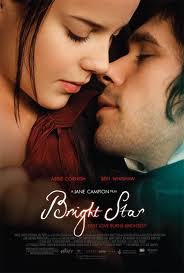
A while back I saw and enjoyed the film, “Bright Star,” written and directed by Jane Campion, based on the life of poet John Keats.

–

–

During the early stages of Keats’s relationship with Fanny Brawne, she lamented that she still didn’t know how to “work out” a poem.

And his response was so wise, so wonderful, that I’ll give it to you here — largely because I think of it often, and because I cheered silently when the lines were first uttered, because they perfectly expressed my own beliefs about poetry:

“A poem needs understanding through the senses. The point of diving into a lake is not immediately to swim to the shore but to be in the lake, to luxuriate in the sensation of water. You do not work the lake out, it is a experience beyond thought. Poetry soothes and emboldens the soul to accept the mystery.”

Beautiful, right? I learned that perspective on poetry a long, long time ago from a very good teacher at Oneonta named Patrick Meanor. Like any great teacher, he opened up many doors of perception and pushed us through. Thanks to him, I’m still walking down many of those same long, winding hallways.

Even while I strove, as a reader, for greater understanding and comprehension, I also learned to accept the untameable nature of poetry. Like nature itself, poetry wasn’t there to be mastered, some wild beast to be conquered with whip, chair, and cage.

If poetry was a howling wilderness, I refused to be its Cotton Mather.

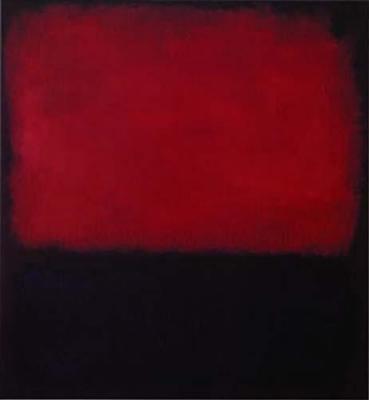
You had to experience the poem, like a Mark Rothko painting on a wall, be attentive in its presence. Somehow by demanding meaning, or ownership — but what does the red mean? — we entirely miss the mystery of great art.

–


You can’t pick over poetry like a cadaver on a metal table. To that end, I’ll quote another classic, “When I Heard the Learn’d Astronomer,” by Walt Whitman.

–

WHEN I heard the learn’d astronomer;
When the proofs, the figures, were ranged in columns before me;
When I was shown the charts and the diagrams, to add, divide, and measure them;
When I, sitting, heard the astronomer, where he lectured with much applause in the
lecture-room,
How soon, unaccountable, I became tired and sick;
Till rising and gliding out, I wander’d off by myself,
In the mystical moist night-air, and from time to time,
Look’d up in perfect silence at the stars.

–

–

Poetry soothes & emboldens the soul to accept the mystery.

–

–

–

–

The Soft Pretzel Bacon Burger . . . Just Seems Wrong

No one goes to Friendly’s anymore. Honestly, I don’t know how they stay in business.

No. One. Goes. There.

But still, you see the restaurants all over the place, parking lots empty except for a few battered Fords and some wind-blown litter, slatternly waitresses hanging out by the back door smoking cigarettes, a few families ducking in for their Fribble fix.

So they tinker with the menu, in the hope of finding some magical new combination that will bring the franchise back to relevancy.

Witness: The Soft Pretzel Bacon Burger. That’s right, they’ve done away with the bun and replaced it with . . . a very soft, pillowy even, pretzel.

Bon appetite!

As it turns out, I immortalized Friendly’s in Bystander. Go ahead, turn to page 44. Eric is out with his mother and younger brother, Rudy.

They are eating lunch at Friendly’s.

“How come the pictures on the menu look so much better than the real food?” Rudy wondered.

“It’s called advertising,” Eric told his little brother. “They try to trick you into buying the frozen clams casino. You’d be better off sucking on the menu.”

——-

Of course, I wrote that scene before the innovation of the new Soft Pretzel Bacon Burger. Or else it would have been an entirely different book. Sort of like, I don’t know, imagine The Phantom Tollbooth in the age of cell phones. Different, right?