–
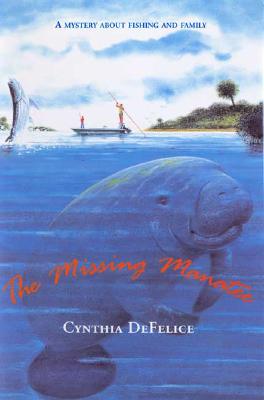
I have long followed and respected the work of author Cynthia DeFelice, who over the past 25 years has put together an expansive and impressive body of work. No bells, no whistles, no fancy pyrotechnics. Just one well-crafted book after another. There’s not an ounce of phony in Cynthia; she’s the genuine article, the real magilla. Last November, I was pleased to run into Cynthia at the Rochester Children’s Book Festival. Pressed for time, we chatted easily about this and that, then parted ways. But I wanted more. Thus, this conversation . . . I’m sure you’ll like Cynthia almost as much as her dog does.
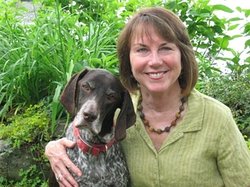
Greetings, Cynthia. Thanks for taking the time out of your busy schedule for this conversation. I feel like we have so much to talk about. We first met sometime in the early 90s, back when Frank Hodge, a bookseller in Albany, was putting on his elaborate, gushing children’s book conferences.
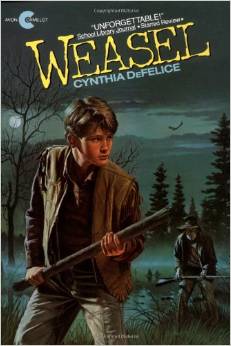 It’s nice to be in touch with you again. I’ll always remember those conferences with Frank Hodge. He made me feel validated as a fledgling writer. He left me a voice mail telling me how much he loved the book Weasel. I played it over and over and over! In 1992, the Hodge-Podge Society gave the first ever Hodge-Podge Award to Weasel. It meant the world to me. Those were great times for authors, teachers, kids, and for literature.
Frank forced me to read your book — and I loved it. So I’ll always be grateful to Frank for that; it’s important to have those people in your world, the sharers, the ones who press books into your hands and say, “You must read this!”
Well, good for Frank! He is definitely one of those people you’re talking about. His enthusiasm is infectious.
We’ve seen many changes over the past 25 years. For example, a year or two ago I participated in a New York State reading conference in Albany for educators. The building was abuzz with programs about “Common Core” strategies & applications & assessments & implementation techniques and ZZZZZzzzzz. (Sorry, dozed off for a minute!) Anyway, educators were under tremendous pressure to roll this thing out — even when many sensed disaster. Meanwhile, almost out of habit, organizers invited authors to attend, but they placed us in a darkened corridor in the back. Not next to the Dumpster, but close. At one point I was with Susan Beth Pfeffer, who writes these incredible books, and nobody was paying attention to her. This great writer was sitting there virtually ignored.
 To your point about finding fabulous authors being ignored at conferences, I hear you. It can be a very humbling experience. I find that teachers aren’t nearly as knowledgeable about books and authors as they were 10-25 years ago, and not as interested. They aren’t encouraged in that direction, and they don’t feel they have the time for what is considered to be non-essential to the goal of making sure their kids pass the tests. Thankfully, there are exceptions! You and I both still hear from kids and teachers for whom books are vital, important, and exhilarating.
But, yes, I agree with you completely that literature is being shoved to the side. Teachers tell me they have to sneak in reading aloud when no one is watching or listening.
When I was invited to speak at a dinner, along with Adam Gidwitz and the great Joe Bruchac, I felt compelled to put in a good word for . . . story. You know, remind everybody that books matter. In today’s misguided rush for “informational units of text,” I worry that test-driven education is pushing literature to the side. The powers that be can’t easily measure the value of a book — it’s impossible to reduce to bubble tests — so their solution is to ignore fiction completely. Sorry for the rant, but I’m so frustrated with the direction of education today.
Well, it’s hard not to rant. It’s disconcerting to think how we’ve swung so far from those heady days of “Whole Language” to today’s “Common Core” curriculum — about as far apart as two approaches can be. I think the best approach lies somewhere in the vast middle ground between the two, and teachers need to be trusted to use methods as varied as the kids they work with every day.
On a recent school visit in Connecticut, I met a second-year librarian — excuse me, media specialist — who was instructed by her supervisor to never read aloud to the students. It wasn’t perceived as a worthwhile use of her time.
Well, that is sad and just plain ridiculous. I was a school librarian for 8 ½ years. I felt the most important part of my job was reading aloud to kids
I didn’t realize you were a librarian.
–

Yes, I began as a school librarian. But, really, my life as a writer began when I was a child listening to my mother read aloud. And every crazy job I had before I became a librarian (and there were a lot) helped to form and inform me as a writer. This is true of us all. I had an actual epiphany one day while I was a librarian. I looked up from a book I was reading aloud and saw the faces of a class of kids who were riveted to every word… I saw their wide eyes, their mouths hanging open, their bodies taut and poised with anticipation – I was seeing full body participation in the story that was unfolding. I thought:
I want to be the person who makes kids look and feel like THAT.–
And that’s exactly who you became. Which is incredible. This can be a tough and discouraging business; I truly hope you realize how much you’ve accomplished.
Thanks, and back at you on that. I think we have to constantly remind ourselves that what we do is important. I think we’ve all had the experience of being scorned because we write for children. The common perception is that we write about fuzzy bunnies who learn to share and to be happy with who they are.
I loved your recent blog post about the importance of books that disturb us. I’m still amazed when I hear from a teacher or parent –- and occasionally even a young reader –- saying they didn’t like a book or a scene from a book because of something upsetting that happened in it. Conflict is the essence of fiction! No conflict, no story (or, worse, a boring, useless one). I love my characters, and I hate to make them go through some of the experiences they have, but it’s got to be done! Did I want Stewpot to die in Nowhere to Call Home? Did I want Weasel to have cut out Ezra’s tongue and killed his wife and unborn baby? Did I want Erik to have to give up the dog Quill at the end of Wild Life? These things hurt, and yet we see our characters emerge from the dark forests we give them to walk through, coming out stronger and wiser. We all need to hear about such experiences, over and over again, in order to have hope in the face of our own trials.
I admire all aspects of your writing, but in particular your sense of pace; your stories click along briskly. They don’t feel rushed, there’s real depth, but there’s always a strong forward push to the narrative. How important is that to you?
I love beautiful writing, I love imagery and metaphor, and evocative language. But all that must be in service to story, or I am impatient with it. I don’t like show-offy writing.
The ego getting in the way.
Yes. Even the best writers need an editor to keep that ego in check! I seek clarity — what good is writing that obscures and obfuscates? The purpose is to communicate, to say what you mean. That goes for all kinds of writing, not just writing for kids. Kids want to get to the point. So do I.
Can you name any books or authors that were important to your development as a writer? Or is that an impossible question to answer?
Impossible. Because there are too many, and if I made a list I would inevitably leave out a person or book I adore. Safer to say that every book I’ve read -– the good, the bad, and the ugly –- all are in there somewhere, having an effect on my own writing.
–
You are what you eat. Also, your love of nature — the great outdoors! — infuses everything you write.
Nature and the great outdoors, yes. My love of these things will always be a big part of my writing. I find that after a lifetime of experience and reading and exploring, I know a lot about the natural world, and it’s fun to include that knowledge in my writing. Sometimes I worry that kids are being cut off from the real world. But I do know lots of kids who love animals and trees and flowers and bugs, love to hunt and fish, to mess around in ponds and streams, build forts, paddle canoes, collect fossils — you name it. They give me hope for the future.
Where do you live?
On and sometimes in (during the floods of 1972 and 1993) Seneca Lake in beautiful upstate New York.
Is that where you’re from?
Nope. I grew up in the suburbs of northeast Philly. I came up here to go to college and never left.
Your books often feature boy characters. Why do you think that’s so?

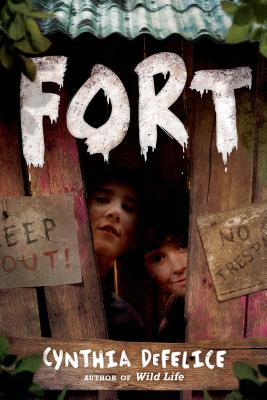
You’re right: more than half of my main characters are boys. I’m not sure why. And I don’t know why I feel so perfectly comfortable writing in the voice of a 10-11-12 year old boy. Maybe because my brothers and I were close and we did a lot together? Maybe because my husband still has a lot of boyish enthusiasm? At any rate, I am crazy about pre-adolescent boys, their goofiness and earnestness and heedlessness. My new book (coming out in May) is called
Fort. It features two boys, Wyatt and Augie (age 11) who build a fort together during summer vacation. I had so much fun writing it. (I have to admit, I love when I crack myself up, and these guys just make me laugh.)
While writing, are you conscious about the gender gap in reading? This truism that “boys don’t read.”
I am. Sometimes I am purposely writing for that reluctant reader, who is so often a boy. I love nothing so much as hearing that one of my books was THE ONE that turned a kid around, that made him a reader.
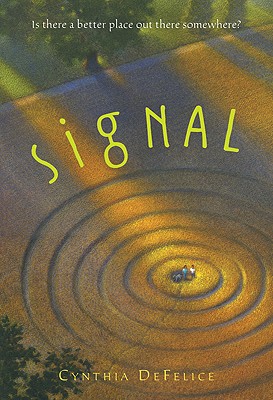
I just read Signal, so that book is on my mind today. I had to smile when Owen gets into the woods and his phone doesn’t work. No wi-fi. It’s funny to me because in my “Scary Tales” series I always have to do the same thing. If we want to instill an element of danger, there has to be a sense of isolation that doesn’t seem possible in today’s hyper-connected world. “What? Zombie hordes coming over the rise? I’ll call Mom to pick us up in her SUV!” So we always need to get the parents out of the way and somehow disable the wi-fi. You didn’t have that problem back when you wrote Weasel.

Thanks for reading
Signal. And, yeah, it’s really annoying that in order to be plausible in this day and age, you have to have a reason why your character isn’t on the phone with Mommy every time something goes wrong. (Another good reason to write historical fiction!) In
Fort, Augie lives with his grandmother and doesn’t have money for a cell phone, and Wyatt’s with his father for the summer. His parents are divorced, and (unlike Mom) Dad doesn’t believe in kids being constantly connected to an electronic nanny. So — halleluiah! Wyatt and Augie are free to do all the fun, dumb, and glorious things they feel like doing!
My friends and I built a fort in the woods when we were in high school. Good times, great memories, just hanging out unfettered and free. I included a fort in my book, Along Came Spider. For Trey and Spider, the book’s main characters, the fort represented a refuge. It was also a haven for their friendship away from the social pressures and cliques of school. A place in nature where they could be themselves. So, yes, I love that you wrote a book titled Fort. I’ll add it to my list! (You are becoming an expensive friend.)
Well, now that I’ve discovered your books, I can say the same. Money well spent, I’d say.
Where did the idea for Signal originate?
The inspiration for Signal came one morning as I was running on a trail through the woods with Josie, my dog at the time. She proudly brought me a white napkin with red stuff smeared on it. I thought, Whoa, is that blood? No, whew. Ketchup. But what if it had been blood? And what if a kid was running with his dog and she brought him pieces of cloth with blood stains? Eww. That would be creepy! And scary, and exciting, and mysterious — and I started writing Signal.
You’ve always been extremely well-reviewed. Readers love your books. And yet in this day of series and website-supported titles, where everything seems to be high-concept, it feels like the stand-alone middle grade novel is an endangered species.
I have been lucky with reviews. But, sadly, I think traditional review sources are becoming increasingly irrelevant, as blogs and websites and personal media platforms take over. That’s not good news for me because I am simply not interested in self-promotion. Can’t do it. Don’t want to do it. I just want to write the best books I can and let them speak for themselves. I know it’s old-school, but there it is. You said that a stand-alone middle grade novel is becoming an endangered species amid all the series and “high concept” books out there, and I think you’re right. But when that stand-alone book somehow finds its niche audience, when kids and teachers somehow discover it and embrace it as theirs . . . , well, it’s a beautiful damn thing, and it’s enough to keep me writing, for now.
For now?!
Well, my husband is 9 years older than I am and recently retired, and there are a lot of things we still need to do!
Like what?
We have a farm property we are improving by digging a pond, and by planting trees and foliage to benefit wildlife. We stocked it with fish, and enjoy watching it attract turtles, frogs, toads, dragonflies, birds and animals of all sorts. So we like to spend a lot of time there, camping out. We love to travel, and are headed next on a self-driving tour of Iceland. We also have four terrific grandchildren we like to spend time with. I could go on and on with the bucket list…
By the way, I agree about the blogs. I think we are seeing a lot more opinion — more reaction — but less deep critical thought. It’s fine and useful for a neighbor to tell you they hated or loved a movie, but it’s not the same as a professional film critic providing an informed, and hopefully insightful, critique. Yet somehow today it’s all conflated.
Well, there is a similar phenomenon with self-published books. I’m not a total snob about it, and there are plenty of good books that didn’t go through the process of being accepted by and edited by a professional at an established publishing house. But I’ll repeat that everyone needs an editor. And I’m often amazed at the brazenness of people spouting off in various social media platforms, often without being fully grounded in the subject they are pontificating about. But, hey, maybe I’m just getting to be an old fart.
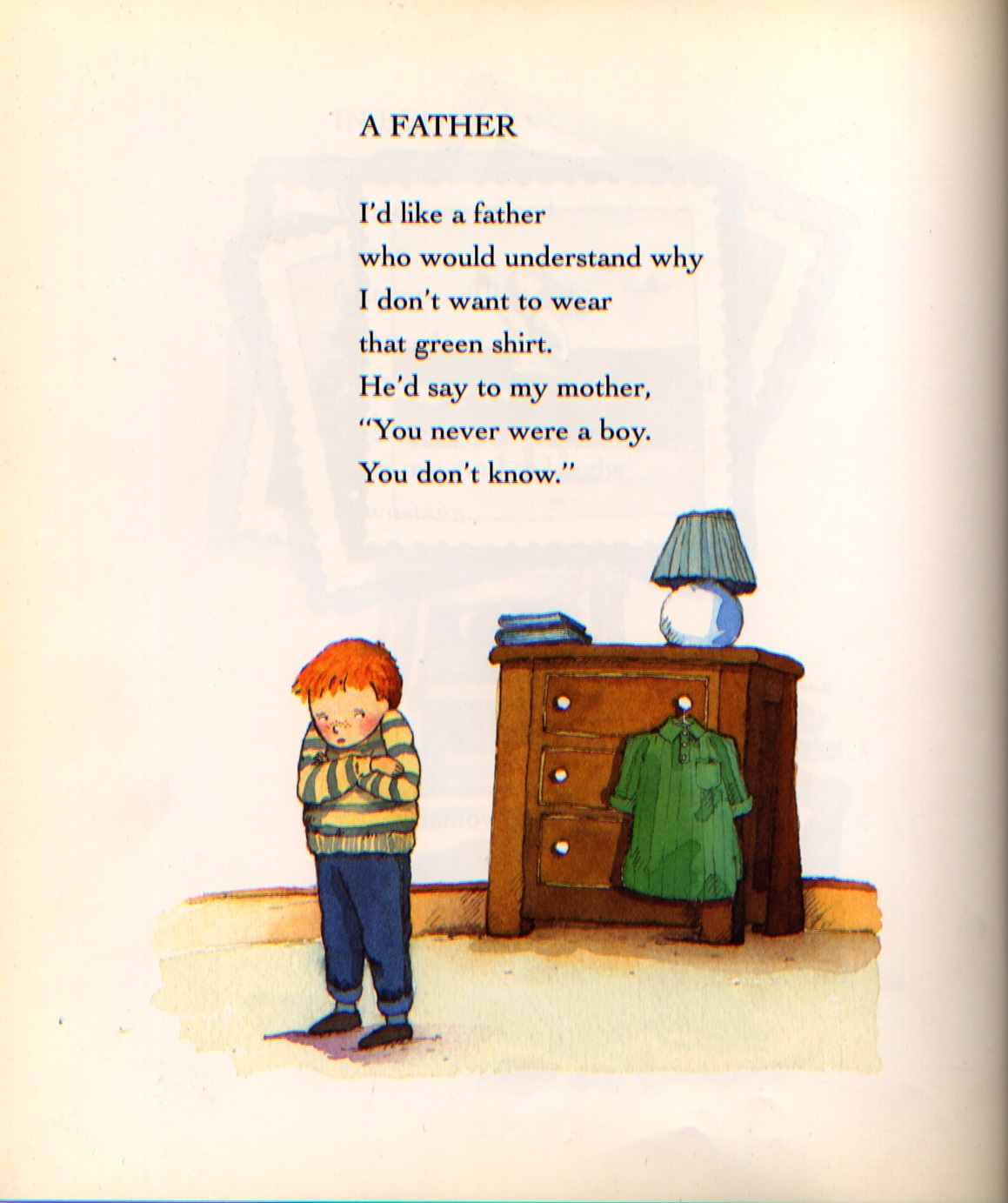
Yeah, I don’t Tweet either. We’re being left in the dust! My observation is that the “kidlitosphere” is comprised 90% of women. Of course, many of those bloggers are passionate, smart, generous women who genuinely want to see boys reading. But I always think of a favorite line written by one of my heroes, Charlotte Zolotow, where a boy imagines his father telling his mother, “You never were a boy. You don’t know.”
–

I don’t think it’s an ideal thing that the blogging world — which has become such an important source of information about books — is overwhelmingly female. Of course, the situation is not at all their fault.
That’s why it’s so great that there are writers out there like you, Bruce Coville, Tedd Arnold, Jon Scieska, Neil Gaiman, Jack Gantos –- who not only write books boys like, but are out there in schools demonstrating that REAL MEN read and write! I don’t know what we can do about the gender gap other than to be aware of it and to write the best books we can, books that both boys and girls will devour.
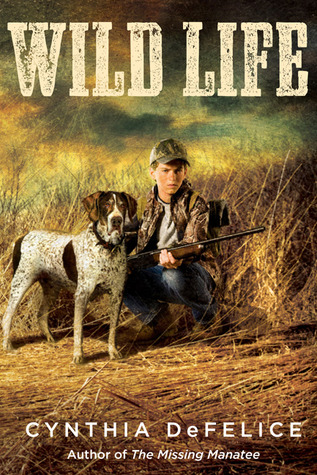
Tell me about Wild Life. Once again, you are mining the world of adventure — a boy, a dog, and a gun.
I never got as much mail from kids, teachers, grandparents and other caregivers as I did after that book came out. In our hyper-politically correct world, GUNS = EVIL. You can’t talk about them in school. So where does that leave a kid who spends his or her weekend hunting, who studies nature in order to be part of it, who hunts respectfully, with care, who is enmeshed in family history and tradition, who through hunting feels part of the full complexity of life?
 I had to keep silencing the censors in my head telling me I couldn’t put a gun in an 11 year old kid’s hands, unless it was a matter of survival in a book set back in “the olden days.”
I was amazed and immensely gratified to learn that a lot of kids found themselves and their interests represented in Erik’s story. I didn’t write it with an agenda in mind. I simply wrote it based on the experiences I’ve had when my husband and I take our bird dog on her yearly Dream Vacation to North Dakota to hunt pheasants.
Ha! I love that your dog has a Dream Vacation.
I get so much joy from watching her do what she was born and bred to do. I cherish our days out on those wide open prairies, and have learned to see the subtle and varied beauty of the landscape. I was just hoping to write a rip-roaring good story that incorporated all that wonderful stuff. Our hunting experiences have nothing whatsoever to do with “gun violence” of the sort you hear about on TV. It’s been interesting to hear from kids who really get that.
Yeah, I enjoy meeting those kids, often out in the western end of New York State. One of my readers from the North Country sent me this photo. Isn’t she great?

Oh, man, I love that! We can’t forget those kids are out there.
What’s next, Cynthia? Any new books on the horizon?
Possibly, just possibly, a sequel to Fort. But that’s all I will say, even if you use enhanced interrogation techniques.
–
 We do not waterboard here at Jamespreller dot com, and I resent the implication! Those are merely bath toys that happen to be . . . nevermind!
According to the rules of the interwebs, I see that we’ve gone way beyond the approved length of standard posts. Likely there’s no one left reading. It’s just us. So I’ll end here with a big thank you, Cynthia, for putting up with me. I’ve really enjoyed this conversation. I hope I’ll see you again in Rochester at the 19th Annual Children’s Book Festival.
Yes! I look forward to seeing you there. It’s an incredible event, and gets bigger and better every year.