I can’t wait until I’m an old man sitting in a rocking chair on my front porch, complaining about how the world’s gone plum crazy. That’s my default position: I’m naturally a cranky old man, even from when I was in diapers, my body just hasn’t caught up with my world view. Yet. The problem is that my essential attitude, “we’re all going to hell in a hand basket,” is so much more forgivable in an octogenarian with a bag of soggy Ritz crackers on his lap.
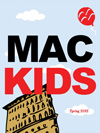
Anyway, the world is changing fast. Mac Kids — whoever or whatever they are, or that is (it’s so hard to keep track of publishers these days) — has come out with its Spring 2012 catalog in downloadable form. As I understand it, there’s no print version. It’s kind of sad, in some ways, since I hold a long affection for the object, but in other ways, very cool and democratic. Because you (yes, even mere you) can click right here and have access to the whole thing on your desktop.
There’s a bunch of cats available, but the one I’m referring to looks like this . . .
(I wonder, as an aside, if this new delivery system will be a case of reaching more people but less powerfully? I guess that’s the publishing question, measuring the trade off.)
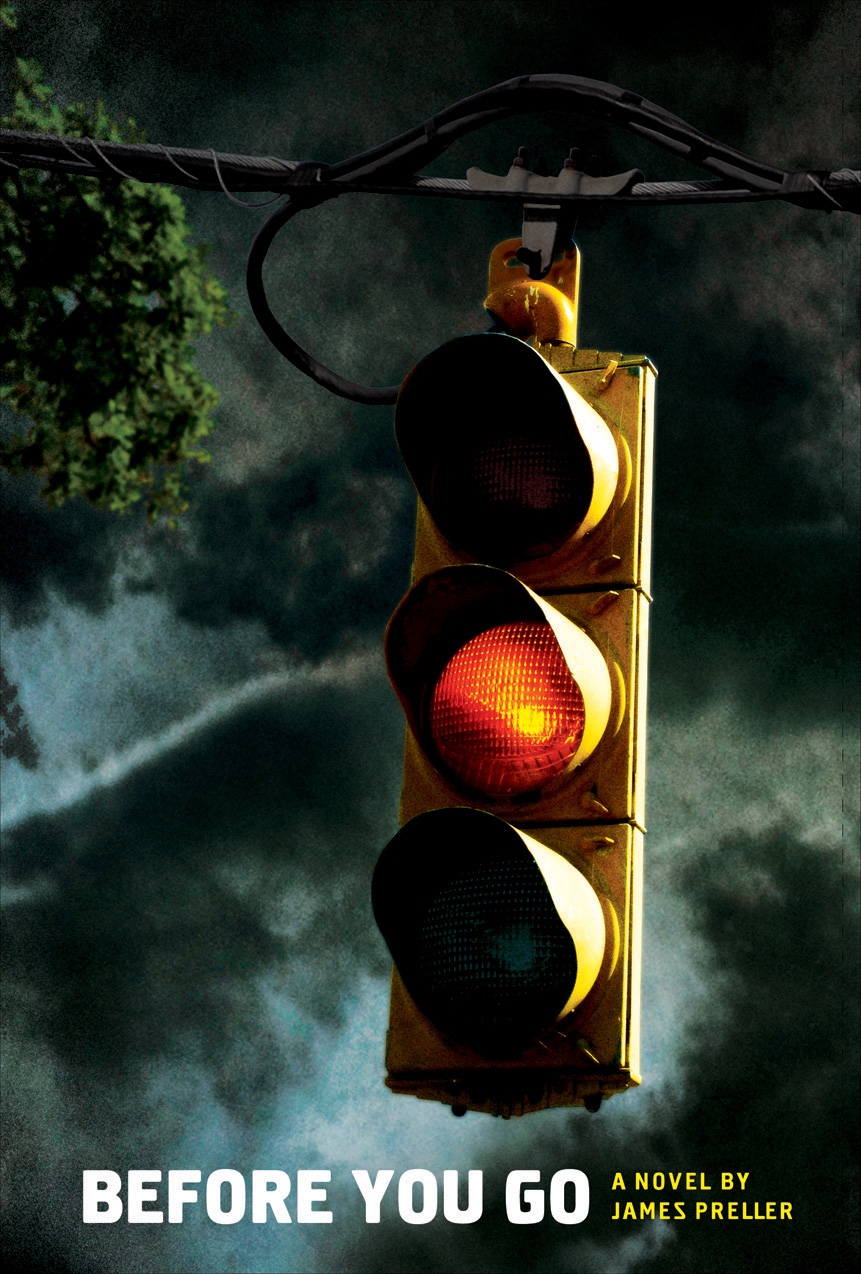
Once you download the catalog, you’ll find that my hotly-awaited YA debut, BEFORE YOU GO, gets the two-page treatment, including a nifty little Q & A with the author. See pages 38-39. You’ll also get a first peak at new books by Philip C. Stead, Amy Schwartz, Lewis Buzbee, Rachel Vail, S.A. Bodeen, Kate Banks, Phillip Hoose, George Ella Lyon, Ralph Fletcher, Alexandra Day, and many more. Seriously, it’ll make your head spin. So many books, so much talent and creativity. It’s an honor to be a small part of it.
Here’s the Q & A:
What was your inspiration for the story? What scene came to you first?
I imagined a fatal car crash on a lonely road. I have sharp memories of driving around with my friends at that age, a little bit of Springsteen’s “Darkness on the Edge of Town,” that feeling, the boredom and the rebellion. So the book starts with a quick, dramatic scene, then skips back six weeks into the past. Readers then meet the four teenage characters that were in the accident. The interesting thing is, that was my exact experience as a writer. I was like, Who are these kids? What’s their story? I had to write the book to find out.
People keep saying teen boys don’t read. True, in your opinion? Who is the perfect reader this novel?
A year before I began the book, the owner of a local bookstore made an offhand comment to me, “You should write a teen relationship story told from a boy’s point of view. Everything in YA these days centers on girls — there’s nothing realistic for boys,” she complained. So, yeah, after kicking it around for a while, I took up that challenge. I hope this is a story that will appeal to both boy and girl readers.
There’s a slight melancholy aspect to Jude. He suffered a loss in the past.
Yes, Jude is grappling with ghosts from some years before. A sister who drowned. In a way, this book’s arc is about our witnessing Jude open up again after he initially presented himself as somewhat shutdown, closed. Jude was half-asleep, and this is the summer of his awakening. For me, I’m the youngest of four brothers and two sisters. I’ve seen two of my brothers pass away, and I gave the eulogy for my father. When our family gathers now, it feels to me like a ship that’s listing to the side; we never sit in the water quite right; we’ll never be whole again. I think that’s how Jude feels, too.
In the story, Jude is a runner. Are you?
I slog, achy and complaining, Jude flies. I built up the running them during the first revision, it was there in the beginning and naturally grew into a larger metaphor, I guess. Jude’s father runs; so does Jude. But sometimes in life you’ve just got to spread your feet and take root. For Jude, that might mean going to the end of the earth — the ocean’s edge — and making a standing, and choosing life.
Lastly, I want to offer my open-armed welcome to all the debut authors and illustrators included here: Gina Rosati, Anna Banks, Emmy Laybourne, Mar’ce Merrell, Christine Tricarico, Ken Geist, Lynne Kelly, Jennifer Bosworth, Sarah Wylie, Leigh Bardugo, and anyone else I might have missed. What a thrill, what a great moment for you and your proud family. Congratulations. Enjoy it. Have fun. And don’t hesitate to shoot me an email if you have any questions, or comments, or whatever. But no, in advance, I have no idea how to read one of these small-print contracts. I just sign the damn things, cross my fingers, and hope they don’t take away my house. (Still missing that first born, a bit. He was kind of cute. But, Live & Learn — that’s what I say!)
It’s never a good sign when a reviewer confesses that he’s “not into children’s books that much.”
Basically, I get to read them out of necessity, mostly with my students. Such is the case with The Case of the Vanishing Painting by James Preller, the 25th booklet in the Jigsaw Jones Mystery Series which I read with one of my thirteen year old Thai students.
The blogger in this case is a Bangkok-based, Romanian-born writer, journalist and educator named Voicu Mihnea Simandan. And he actually turned out to be better than okay. He gave the book a thumbs-up:
The story is well-written and is likely to keep kids glued to its pages. When a painting goes missing, Jigsaw Jones and his partner, Mila Yeh, try to find out who stole it. As Parent’s Night approaches and the painting is needed for the art exhibition, little detective Jones tries hard at eliminating the usual suspects. Of course, the “thief” is the last person you’ll ever expect. As with all books for children, all’s well in the end and everyone’s friends with everyone again.
Mr. Simandan did not mention the book’s send-up of Stevie Nicks from Fleetwood Mac, so I thought I would: There’s a loopy, swirling, incense-burning, shawl-wearing substitute art teacher named Ms. Nicks:
Our whole class filed into the art room.
“Yuck, what’s that smell?” Bobby Solofsky complained.
Joey Pignattano blushed. “Maybe it’s me,” he admitted. “I think I stepped in something on the way to school.”
“It’s not you, Joey,” Mila said. “It’s that.”
Mila pointed to a wisp of smoke rising from a clay dish. The dish was in the palm of our substitute art teacher’s hand.
“Jasmine incense,” Ms. Nicks warbled. “It soothes the spirit and improves creativity.”
A few moments later:
“Center your energies,” Ms. Nicks whispered.
“Does that mean ‘sit down’?” Eddie Becker asked.
“I think so,” I replied.
Anyway, I digress. It turned out that Mr. Simandan was impressed by my Fathers Read project — it’s coming soon, promise! — and sent along a terrific photograph. He’s a gifted blogger and book lover with a lively mind, so he asked if I’d be willing to do an interview.
You can read it in full by clicking here. Our conversation rtouched upon my writing process, blogging, school visits, astral physics (no, not really), and we even discussed the future of reading:
VMS: Everyone seems to believe that children no longer read and, with the availability of affordable e-readers, many believe that, sooner or later, children will no longer want to hold books in their hands. Please comment.
JP: I’m not too worried about reading, per say, though I suppose that sustained attention for longer works might be in some danger. Maybe, I’m not even sure about that. I accept e-readers as a natural fact. Things change. I just downloaded some songs to iTunes, for example, and I grew up loving “albums.” But it’s still music, you know. However, however. I do very much believe in the value of THE TANGIBLE OBJECT, whether it’s a CD or a paperback book. I think there’s a relationship to the book that can’t quite be replaced by an e-reader.
My good friends have a daughter, Lucy, who spent this entire past summer carrying around Twilight in her hands. She read it over and over, the book was frayed and dog-eared, it was used, handled, and so obviously loved. I think the book expressed something essential for Lucy, it became part of her self-identity. She was the girl who carried around that book, a Twilight fan, and on some level she wanted the world to know that fact. Again, e-readers are fine. You want to read the new Michael Connelly novel, an e-reader might be the perfect choice. But I think we’ll always need some real books in our lives. We attach to them easier. They seem to mean more.
I should also add what I often say. Books are furniture. I can’t imagine a house without them.
I think anyone interested in boys and books (together, at last!) will appreciate the effort, commitment, and care that Carl has put into his new website. You should check it out! There’s thoughtful essays, lists, interviews (so far: Jessica Lee Anderson, Laura Manivong, Kurtis Scaletta, and Stephanie Stuve-Bodeen), links, and free pizza and beer for every visitor (no, I’m lying).
I was recently interviewed by author Kurtis Scaletta (Mudville, Mamba Point) over at his impressive, long-running site — 2 1/2 blog years and still kicking. That’s like 112 in human years, folks. Most blogs come and go like fruit flies.
If you are interested in the writing process, or about such topics as bullies, victims, and bystanders, please check it out by clicking right here. Thanks!
I’m back for Part Deux of our chat with my lovely and talented co-host this week, author Patty Duke Lewis Buzbee. (To catch up with Part One, click here.)
As a nod to tradition, let’s open the show with a brief musical interlude, which expresses in musical terms how I feel about Lewis . . .
They don’t write songs like that anymore. Anyway Lewis, one of the things that comes through in your writing is that you love books, the physical objects themselves.
Books are unique tools. I’ve been thinking a lot about this lately. A CD, say, or a DVD, those are great tools, too. And have some physical pleasures to them. Even certain iPods are lovingly designed. But those objects are just mediums for the message — the sound comes from space still — if only the space in your ears. Or the movie appears on the screen, over there. But a book is the thing it imparts. You cannot separate the two. And because of this, I think, we have decided that books can be beautiful, sensual objects.
A bookseller knows this. Next time you go into a bookstore, watch the browsers. So much of how we choose a book is done with our hands. We pick it up, stroke it, turn it over, weigh it in our hands. We’re buying the thing itself.
Is your book available on Kindle?
No. Not this one. But, hey, I’m open to it.
It was significant to some viewers of Star Trek when Captain Picard pulled down a leatherbound edition of Shakespeare, or whatever it was he read. Actually, I believe he was a fan of the hard-boiled detective genre. Viewers were reassured by that vision of the technological future, which — let’s face it — frankly scares the bejeezus out of us. And of course, I have to mention our shared enthusiasm for Battlestar Galactica, where frak is a word and books are revered, treasured links to a broken past. Those scenes when Admiral Adama is reading to Laura Roslin.
There’s a great scene where one of the detectives is reading to his horse, who is quite ill. They’re in the stall together, and he’s reading to the horse from Faulkner, “another great horseman,” he says. Very moving. And of course, the final scene in Bradbury’s Fahrenheit 451, where all those people have each memorized one book, to preserve it.
It’s clear that the Kindle-monster is here to stay, and too much lamenting will do us no good. But I assert — very strongly — that the book is not going to disappear in the next five minutes.
It’s not a question, really, of either/or, for me, either books or computers, it’s a matter of both. Hey, if someone’s fearful of losing books, there’s a simple remedy. Go buy a book, turn off your damn computer, and read. Simple. World saved. Lamenting about it on Facebook does nothing. Read.
I ordered my copy of The Yellow-Lighted Bookshop from Amazon.com. Does that make me a bad person?
Not at all. Listen, for years people complained about the chain stores, and the ruination . . . yadda, yadda, yadda. Truth is, chain stores have been crucial to keeping alive the literary culture, the publishing business, the diversity of the books we have available to us. The same is true of Amazon. It’s here, it’s not going away, and it does a lot of work on behalf of writers and publishers everywhere. I’m not a Luddite . . .
. . . I just happen to love books and bookstores. And I don’t believe that the bookstore will be replaced, completely, by Amazon. I mean, I still need to get out of the house now and then. And we are Americans, so shopping is what we do best. Books, more than ever, in many ways, are more current than ever. They are more widespread than ever, and there are more of them than ever. And we will want to go to bookstores to buy them.
Listen, if it gets to the point where we can do everything we need to do on a computer — and I can think of three things, off the top of my head, that you can’t do via computer — then go ahead and shoot me. Really don’t want to live in that world.
True or False: The novel is dead, literacy is dead, the computer has triumphed.
Pshaw. Not a chance. In the nineteenth century, with the advent of the bicycle, the op-eds of that day declared the death of literary culture. We would all spend so much time on our bicycles, we’d never read again.
Case in point: “Butch Cassidy and the Sundance Kid.” Katharine Ross and that bicycle. They never read a thing in that movie.
Uh, Ms. Ross to you. And frankly, if I had a bicycle and that woman and a trusty sidekick and a loaded revolver — I’d never read again either.
Please don’t let thoughts of Katharine Ross distract you. But, gosh. Look at her . . .
We were discussing the death of the novel . . .
The novel was declared dead, once again, in 1962, I think. Before One Hundred Years of Solitude, Catch-22, and a thousand other great and important books. Humans are storytellers, we need stories. And long stories. We will build them one way or the other.
Like I said, computers are cool, but they ain’t everything. They’re just another thing. We’re a little bit obsessed right now with them — because we just invented them. We really have no idea what we’re going to do with them yet. It’s been, what, thirty years since they became user-friendly. Books have been around a lot longer than that.
And I want to say, right here, I also don’t believe the whole, “oh, we have such short attention spans” argument. People have always had short attention spans. And long ones. Right now, you know at least a dozen people who can tell you every single thing that happened on every episode of The Wire, or something else. We have huge brains.
I think you are such a good writer. You have this clean, direct style — it’s never, “Look at me, aren’t I clever?” I think when we read a book, it’s so important to have that feeling, to know we’re in capable hands. That this author, like a good limo driver, can take us where we need to go.
Thanks so much. The check is in the mail.
But again with the books. The writers I’ve studied and feel most drawn to are those writers who want to communicate with readers, not impress them. Even at fifteen, I knew there was no real cache in being a writer — dude, I was gonna be a rock star. But at fifteen I also felt the power of communication, what John Irving calls one genius speaking to another genius. I strive to communicate. When I want to impress you, I juggle.
Lewis! Put down the chainsaw . . .
the bowling ball . . . and the live chicken. Right now! I’m not kidding around.
Oh, they’re not for juggling.
You are a sick, twisted man. Nevertheless, I have to say, you are one of the few published authors that I can enjoy on Facebook. You don’t see it as an endless promotional loop . . . and I thank you for that.
I am so done with networking. It’s one of the great fallacies, don’t you think, of the twitterverse — somehow it will make us all rich and famous. My new motto: working without a net. Facebook is one large Post-It note. I’m just amazed that there are writers who spend so much time promoting themselves there. Shouldn’t they be writing?
In the end, for me, all the self-promotion is just so tedious. But here I am, knee-deep in bloggy blogness. Yet I contend there’s a distinction. A reader comes here by choice. I’m giving this stuff away, folks. And I try to keep the self-promotion to a minimum, because it’s boring, borderline tacky, and I don’t think it works. But I do feel that new authors, especially, are getting the message loud and clear from publishers and friends: “You’ve got to promote yourself relentlessly! You have to get out there — and sell, sell, sell!”
Now for a commercial interruption from Dennis Cass, who has struggled with some of the same issues . . .
My publisher suggested that I go on Facebook. And I did. But what I found, instead of a new way to pester people, was a few actual friends. And when I hang out with my friends, I’m not trying to sell to them. And I’d expect the same courtesy from my brother, Al, who is in the insurance business. I don’t want to hear about his work, either. “Al is drowning in paperwork!” — he’d sound like another author, and we don’t need that.
I love it when I’m supposed to stand up and cheer for the most minor accomplishments, too. Oh, I finished a chapter; oh, I applied for a grant. I mean, I’m happy for everyone, but seriously, it’s like doing an end-zone dance for tackling someone on 2 and 7 in pre-season. Too much chattin’, not enough chewin’.
It’s hard to talk about this without sounding a little mean-spirited. And I’m sorry for that. But . . . just do the work and shut up already. Pass along some info every once in a while, sure. But too much is a turn off.
We do live in this weird “provincialism of the contemporary.” If it wasn’t invented in the last twelve seconds, it ain’t worth it, that’s the prevailing ethic. Twitter, Facebook, all the rest, they’re so new. Next year they could be the new Pet Rock. We don’t have a clue, as a culture, what any of this new technology means, or what we’re going to do with it, or really, how it will change us.
Me, I’m going old school for the release of my next book: blimps.
Gee, I hope it’s a good year.
Uh, Mr. Preller, please step away from the jokes; someone could get hurt.
My favorite thing I ever posted as a status update on Facebook was this: Go to blogblogblog.com to read my new blog about why there are too many blogs. People actually looked it up. And it turns out there is a website — it’s weird and Japanese.
So is my dry cleaner, but that’s a story for another day. You seem alert to all the little treasures and surprises in each bookstore. You mentioned one in Vermont, Bear Pond Books, where two signs hang near the front entrance, each with an arrow pointing to a different half of the store. One sign read, FACTS; the other, TRUTH. You had a great line about that, “I’ll let you figure out which was for Fiction and which was for Home Repair.”
With me, home repair is definitely in the fiction section. Ask my family. When something breaks in the house, my daughter says, oh, it’s okay, mom can fix it.
You obviously have great affection for booksellers of all stripes. Perhaps we could take a moment to raise a glass (don’t worry, I’m buying) . . .
. . . to the idea that, as you said in your book, “all readers should be grateful that there are people foolish enough, rash enough, courageous enough, and pig-headed enough to open bookstores.”
Here’s to idiots everywhere! The world would be awfully dull without them.



)

